
A Retention Money Guarantee Letter acts as a financial safeguard in construction contracts, allowing contractors to access retained funds early while ensuring project completion. It replaces the cash held by clients, improving liquidity and verifying performance standards. This document provides security for both parties until the defects liability period ends. Below are some ready to use templates.

Image cover: Comprehensive Guide and Templates for Retention Money Guarantee Letters
Letter Samples List
- Application Letter for Retention Money Guarantee
- Standard Retention Money Guarantee Letter
- Conditional Retention Money Guarantee Letter
- Unconditional Retention Money Guarantee Letter
- Facility Approval Letter for Retention Money Guarantee
- Amendment Letter for Retention Money Guarantee
- Extension Letter for Retention Money Guarantee
- Value Reduction Letter for Retention Money Guarantee
- Claim Demand Letter for Retention Money Guarantee
- Discharge Letter for Retention Money Guarantee
- Cancellation Letter for Retention Money Guarantee
- Counter Indemnity Letter for Retention Money Guarantee
Application Letter for Retention Money Guarantee
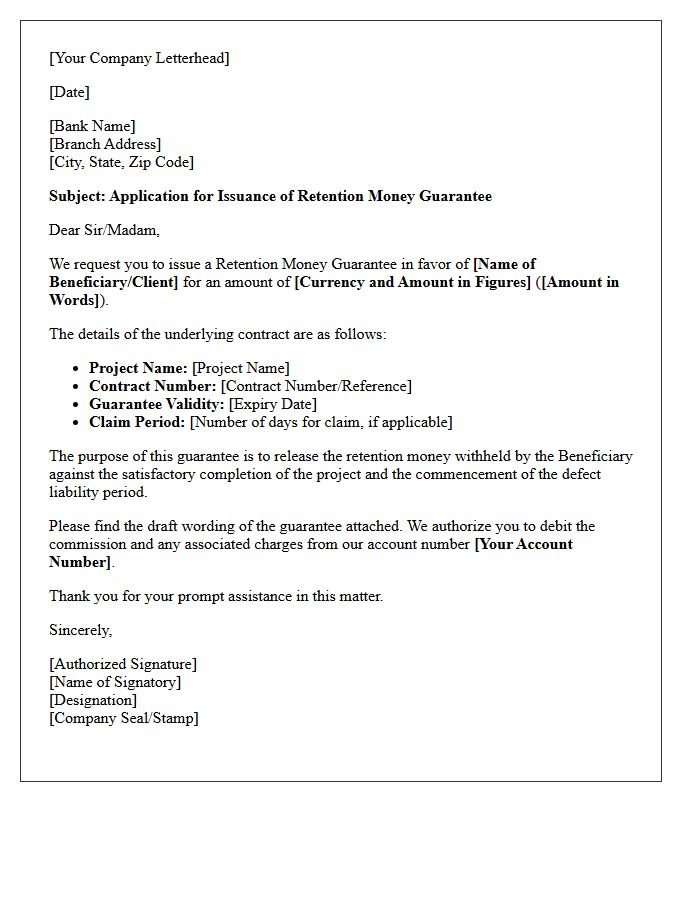
An application letter for a Retention Money Guarantee is a formal request sent to a bank or insurer to release withheld funds early. This financial instrument replaces the cash traditionally held by a client to cover potential defects in a project. It is crucial to highlight the contract reference, the specific amount requested, and the expiry date. Providing a bank guarantee improves liquidity and cash flow for contractors while ensuring the employer remains protected against poor workmanship during the maintenance period.
Standard Retention Money Guarantee Letter
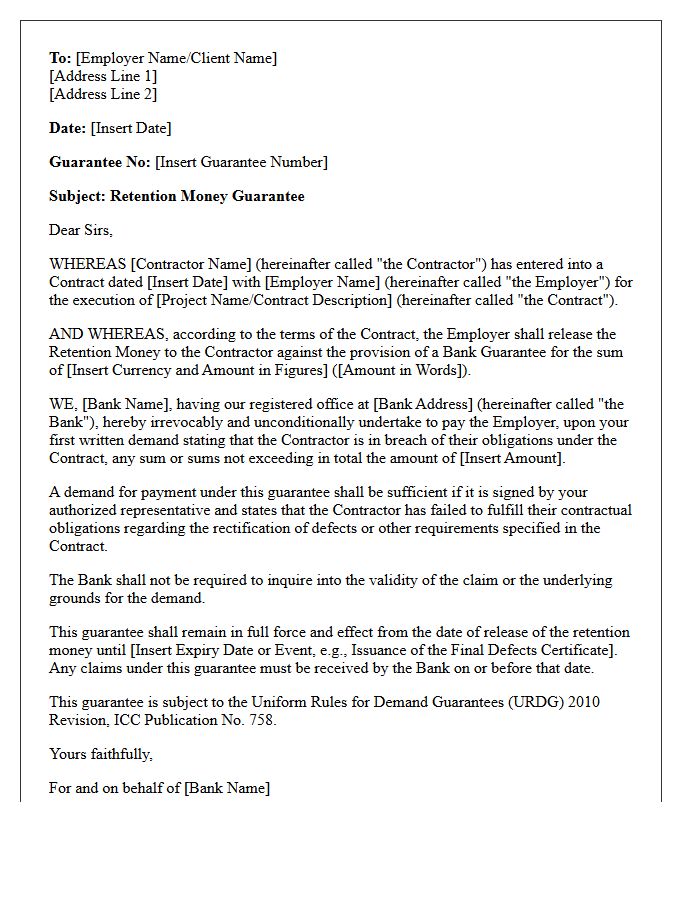
A Standard Retention Money Guarantee Letter is a financial instrument issued by a bank to release withheld funds to a contractor before the defect liability period ends. It serves as a security bond, ensuring the employer can claim compensation if structural faults appear or contractual obligations are not met. This arrangement improves the contractor's cash flow while maintaining protection for the project owner. If the contractor fails to rectify defects, the employer can invoke the guarantee to cover repair costs, making it a vital tool for risk management in construction contracts.
Conditional Retention Money Guarantee Letter
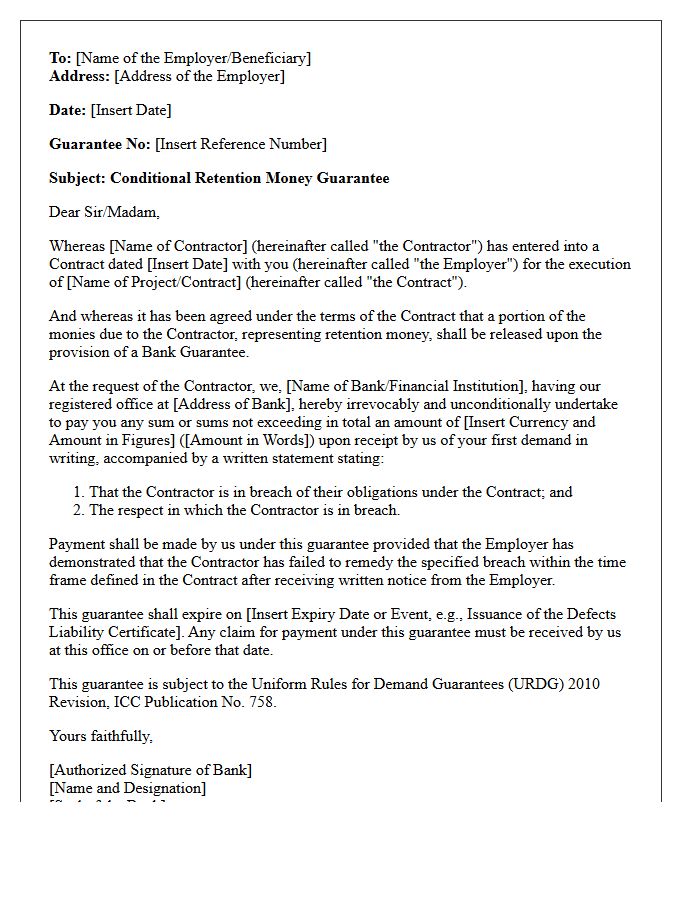
A Conditional Retention Money Guarantee Letter is a financial instrument issued by a bank to release withheld funds to a contractor before the defect liability period ends. It serves as security for the employer, ensuring that any construction faults identified later are corrected. The guarantee is "conditional" because the beneficiary can only claim payment upon proving a specific breach of contract or failure to rectify defects. This arrangement improves the contractor's cash flow while maintaining protection for the project owner against substandard workmanship or incomplete contractual obligations.
Unconditional Retention Money Guarantee Letter
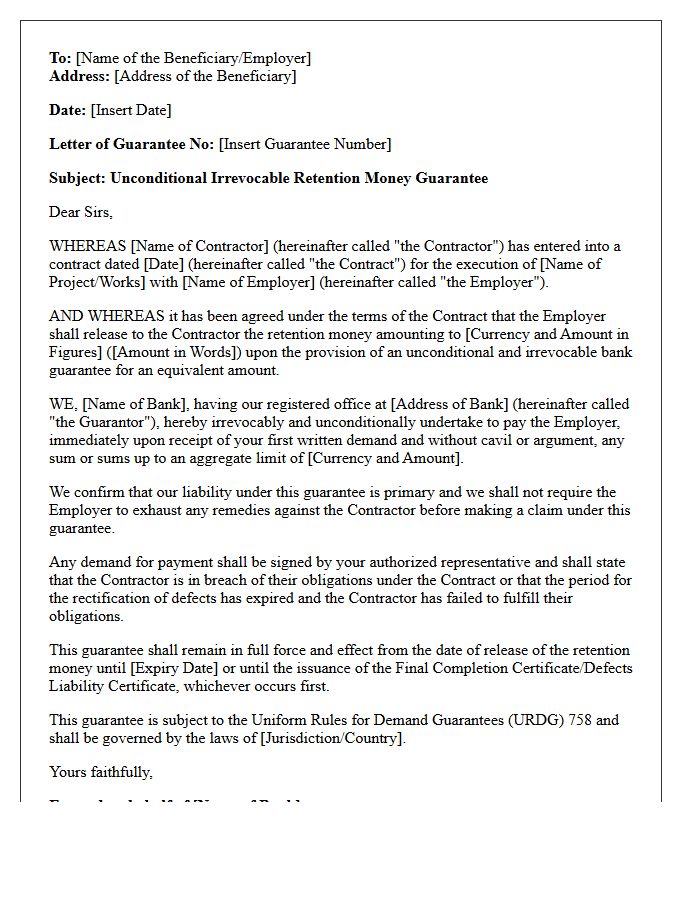
An Unconditional Retention Money Guarantee Letter is a financial instrument issued by a bank to release withheld funds to a contractor. It ensures the employer can claim the retention amount immediately without proving a breach of contract. This document serves as a cash substitute, providing liquidity to the contractor while protecting the employer against defective workmanship or incomplete tasks during the maintenance period. Its primary benefit is guaranteed payment upon first demand, offering a secure alternative to physical cash retention in construction projects.
Facility Approval Letter for Retention Money Guarantee
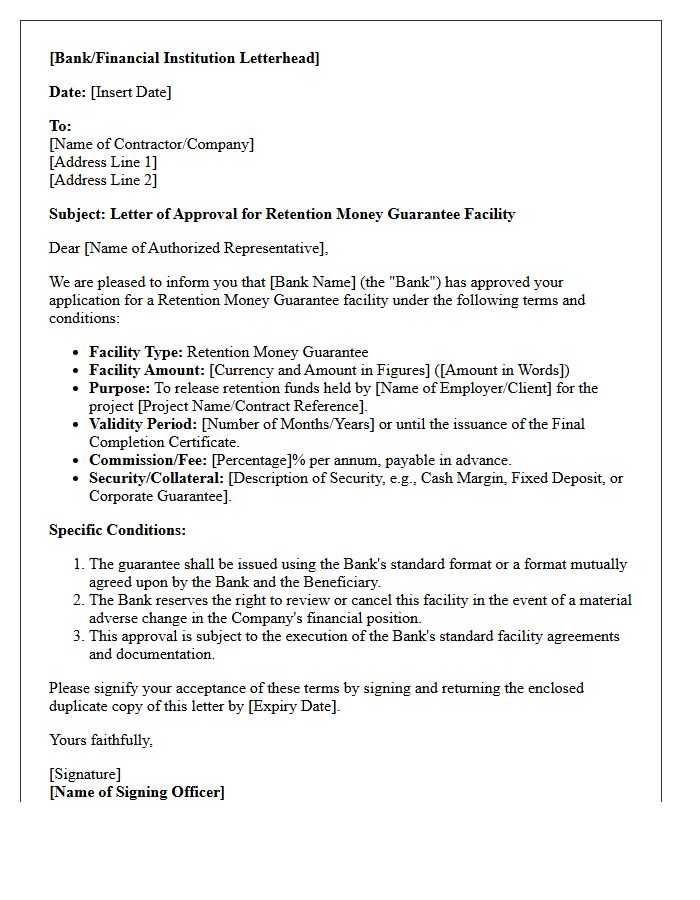
A Facility Approval Letter for a Retention Money Guarantee is a formal commitment from a bank to secure the release of withheld project funds. It outlines the specific credit limit, interest rates, and collateral requirements necessary to issue the guarantee. This document is essential for contractors to improve cash flow by replacing physical retentions with a bank-backed security. Understanding the validity period and claim conditions within this letter ensures that the contractor meets contractual obligations while maintaining liquidity for ongoing operational expenses.
Amendment Letter for Retention Money Guarantee
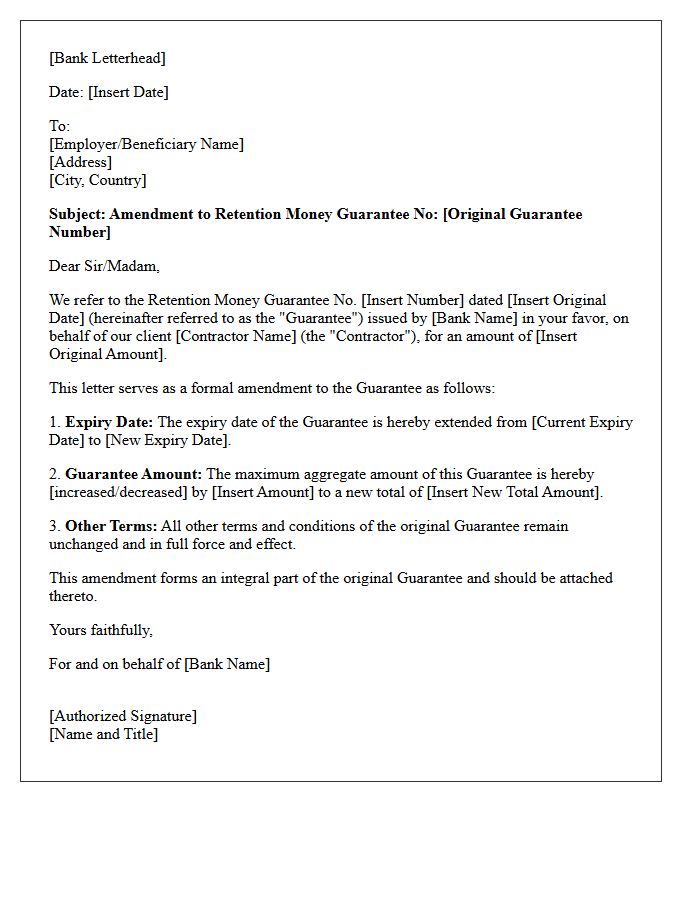
An Amendment Letter for Retention Money Guarantee is a formal legal document used to modify the terms of an existing financial security. It is essential when project timelines extend, necessitating an extension of the expiry date or a change in the guaranteed amount. This letter ensures that the beneficiary remains protected against potential defects while allowing the contractor to maintain liquidity. Both parties must formally agree to these revisions to ensure the guarantee remains enforceable under international banking standards and contract law.
Extension Letter for Retention Money Guarantee
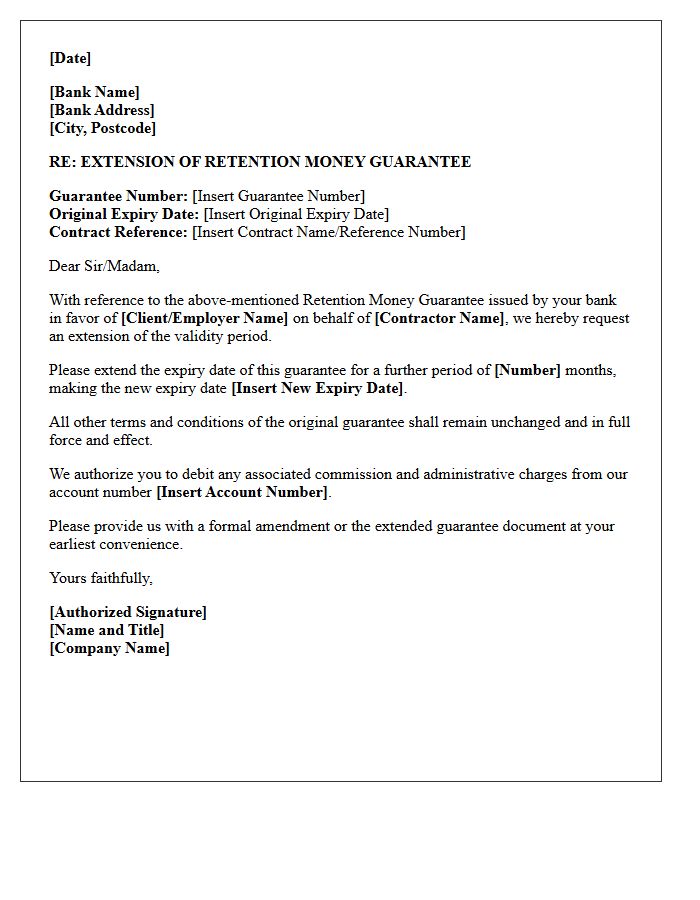
An Extension Letter for Retention Money Guarantee is a formal document issued to extend the validity of a financial bond held by an employer. It ensures that retention funds remain secured during project delays or the maintenance period. This extension is crucial because if the guarantee expires before the Certificate of Making Good Defects is issued, the employer may legally withhold cash from future payments. Contractors must submit this request to their bank promptly to maintain continuous financial compliance and avoid potential contract breaches or liquidity issues.
Value Reduction Letter for Retention Money Guarantee
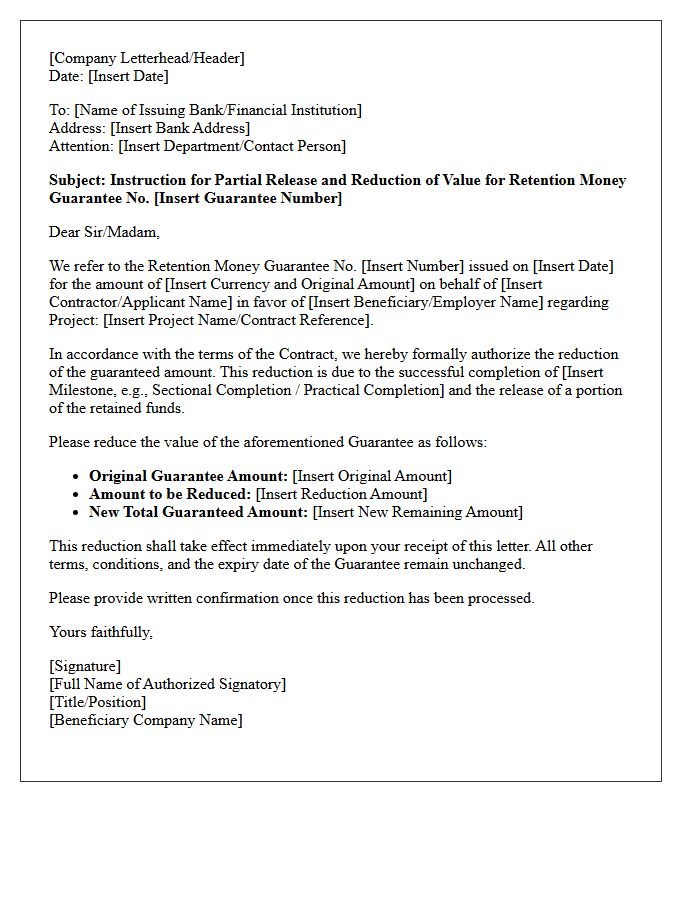
A Value Reduction Letter for a Retention Money Guarantee is a formal document issued by a beneficiary to a bank. It authorizes the gradual decrease of the guarantee amount as project milestones or defects liability periods conclude. This ensures the secured collateral or credit line is released proportionally to the contractor, improving liquidity while maintaining sufficient security for the employer. Accurate processing of this letter is essential to adjust financial obligations and ensure that the bank guarantee reflects the actual outstanding risk during the final stages of a construction contract.
Claim Demand Letter for Retention Money Guarantee
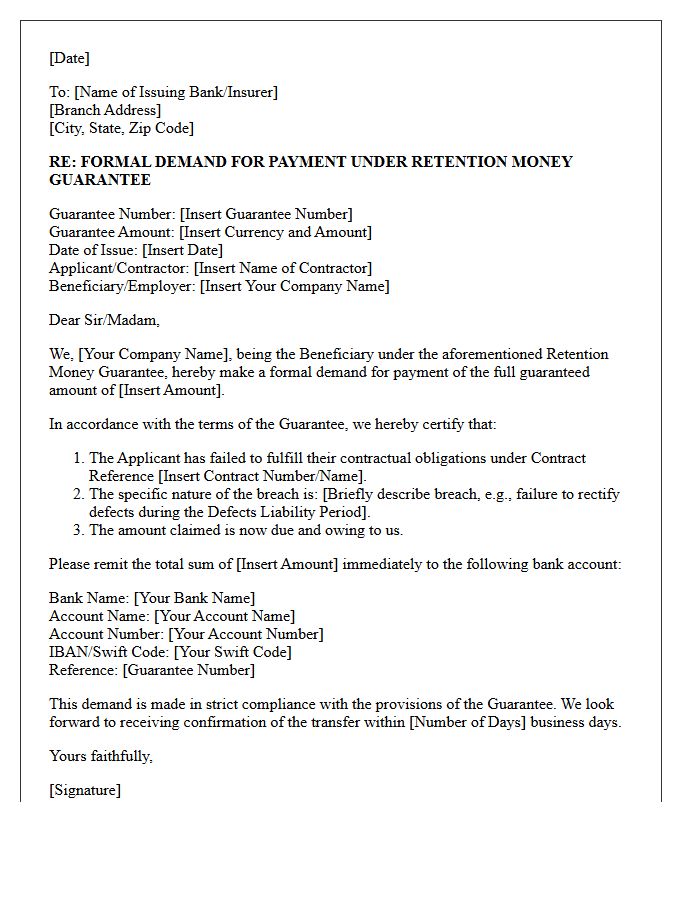
A Retention Money Guarantee claim demand letter is a formal legal notification sent to a bank or guarantor to release withheld funds. It is essential to ensure the exact wording matches the guarantee instrument's requirements to avoid rejection. The letter must clearly state the default event or the successful completion of the defects liability period. Precise compliance with submission deadlines and delivery methods is critical for a successful claim. Always reference the specific guarantee number and the outstanding amount to ensure a prompt and legally binding recovery of your capital.
Discharge Letter for Retention Money Guarantee
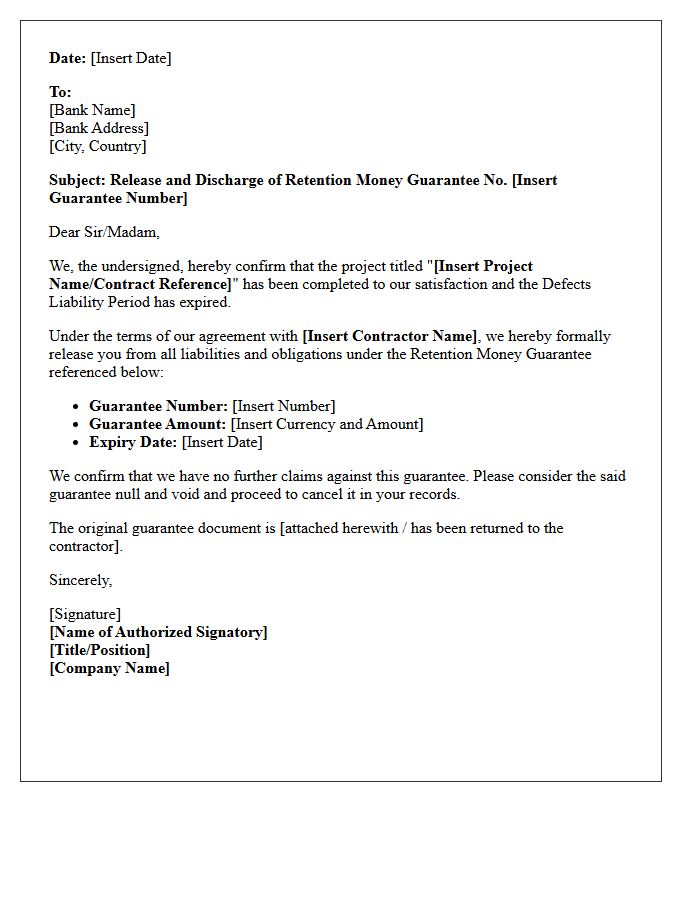
A discharge letter for a retention money guarantee is a formal document issued by a beneficiary to release a bank from its financial obligation. It confirms that the defects liability period has expired and the contractor has fulfilled all contractual duties. Once the bank receives this signed release, the guarantee is cancelled, allowing the contractor to reclaim their frozen liquidity. This letter is essential for finalizing project accounts and reducing contingent liabilities on the contractor's financial statements, ensuring the bond is no longer active or legally binding.
Cancellation Letter for Retention Money Guarantee
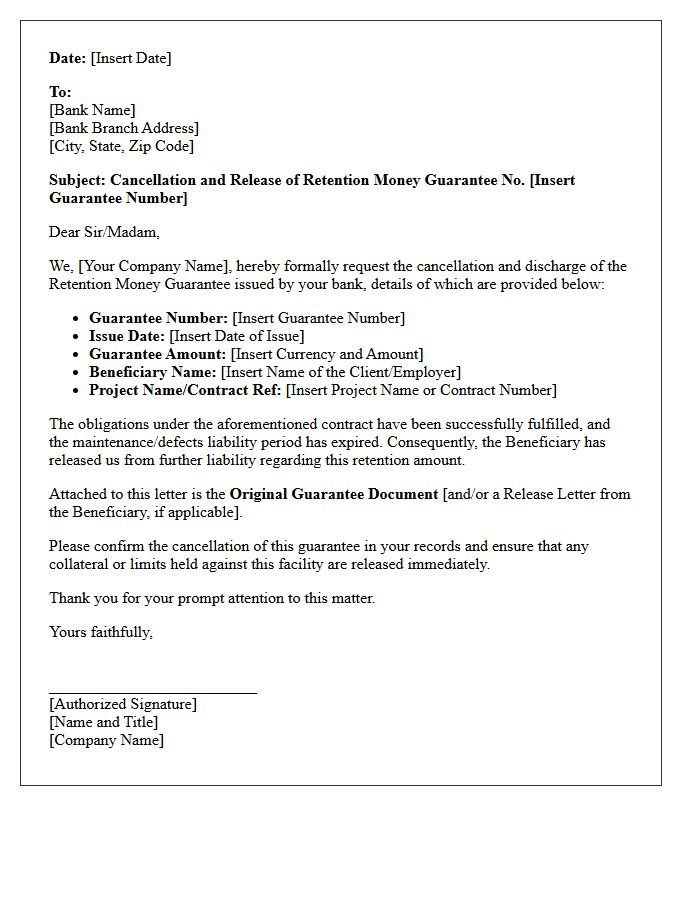
A cancellation letter for a retention money guarantee is a formal legal request to release financial liabilities held by a bank. Once a project reaches final completion or the defects liability period expires, the contractor must submit this document to the issuing bank. It confirms that all contractual obligations are met, authorizing the bank to terminate the guarantee. Providing an original release certificate from the employer is essential to avoid ongoing commission fees and restore the company's credit facility balance promptly.
Counter Indemnity Letter for Retention Money Guarantee
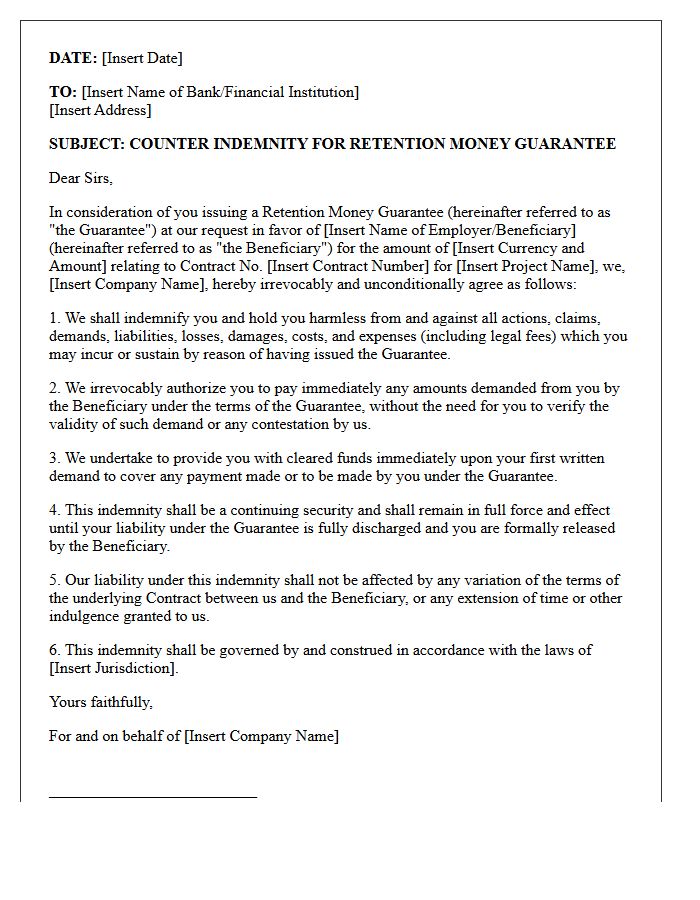
A Counter Indemnity Letter for a Retention Money Guarantee is a legally binding commitment where a contractor agrees to reimburse their bank for any payouts made to a client. This document shifts the financial risk back to the contractor, ensuring the bank is compensated if the guarantee is invoked. It is a critical requirement for liquidity management, allowing contractors to access withheld cash early while providing the client with security against potential project defects or non-performance during the maintenance period.
What is a Retention Money Guarantee Letter?
A Retention Money Guarantee Letter is a financial instrument issued by a bank or insurance company on behalf of a contractor. it allows the contractor to receive the full payment for a project immediately, rather than having a percentage (typically 5% to 10%) withheld by the client as a security deposit for defects.
How does a Retention Money Guarantee benefit the contractor?
The primary benefit is improved cash flow. Instead of waiting for the defects liability period to end-which can last 12 to 24 months-the contractor can access the retained funds immediately to reinvest in labor, materials, or other ongoing projects.
What is the difference between a Performance Bond and a Retention Money Guarantee?
A Performance Bond protects the client against a contractor's failure to complete the project according to the contract terms. A Retention Money Guarantee specifically replaces the cash retention held back from progress payments to cover potential repairs or defects discovered after the project is finished.
When can a client make a claim against a Retention Money Guarantee Letter?
A client can invoke the guarantee if the contractor fails to rectify defects or snags identified during the Defects Liability Period (DLP). If the contractor refuses to perform the necessary repairs, the client can claim the funds from the issuing bank to pay for a third party to complete the work.
When does a Retention Money Guarantee expire?
The guarantee typically expires upon the issuance of a Final Completion Certificate or a Defects Liability Certificate. This confirms that all contractual obligations have been met and no outstanding defects remain, at which point the bank's liability under the letter is discharged.


Comments