
A Customs and Excise Guarantee Letter is a formal commitment issued by a financial institution to ensure payment of duties and taxes to authorities. It facilitates smoother cargo clearance and regulatory compliance for international trade operations. This document mitigates risks for customs departments while supporting business cash flow. To help you get started, below are some ready to use template.
Image cover: Complete Guide to Customs and Excise Guarantee Letters: Professional Samples and Templates
Letter Samples List
- Customs and Excise Bank Guarantee Issuance Letter
- Temporary Import Duty Bank Guarantee Letter
- Bonded Zone Excise Facility Guarantee Letter
- Customs Clearance Irrevocable Guarantee Letter
- Deferred Payment Excise Tax Guarantee Letter
- Customs Guarantee Extension Request Letter
- Excise Guarantee Amendment Notification Letter
- Transit Goods Customs Bank Guarantee Letter
- Advance Release Customs Facility Guarantee Letter
- Excise Liability Bank Guarantee Cover Letter
- Customs Guarantee Claim Settlement Letter
- Excise Guarantee Cancellation Request Letter
Customs and Excise Bank Guarantee Issuance Letter
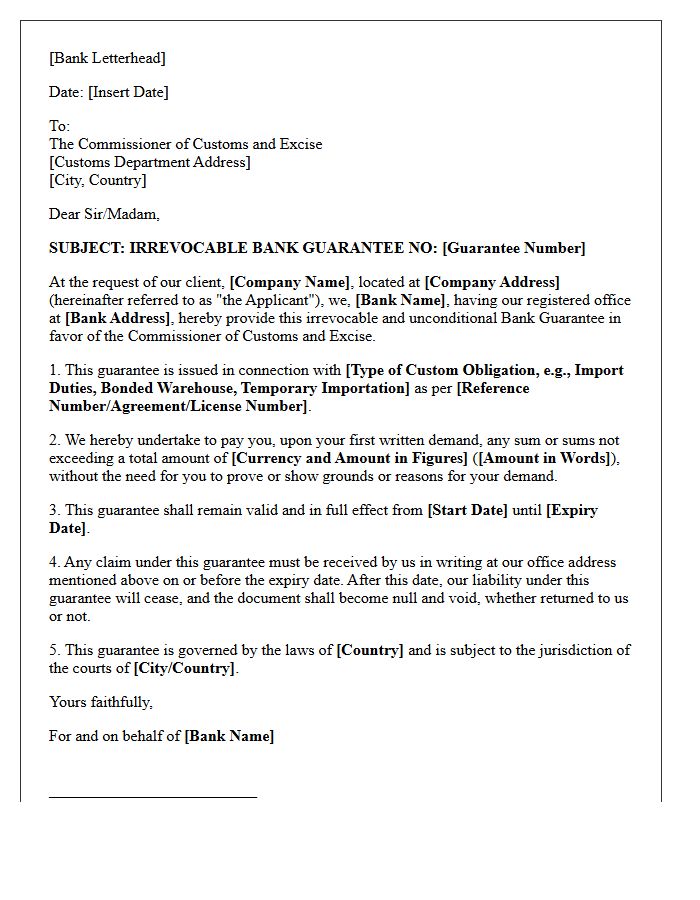
A Customs and Excise Bank Guarantee Issuance Letter is a formal commitment issued by a financial institution to guarantee that a taxpayer or importer will fulfill their financial obligations to the government. This document ensures the payment of import duties, excise, and related taxes in the event of a default. It acts as a security deposit, allowing businesses to clear goods quickly while maintaining compliance with national trade regulations. Obtaining this letter is essential for companies seeking to optimize cash flow and manage customs liabilities efficiently through a trusted banking partner.
Temporary Import Duty Bank Guarantee Letter
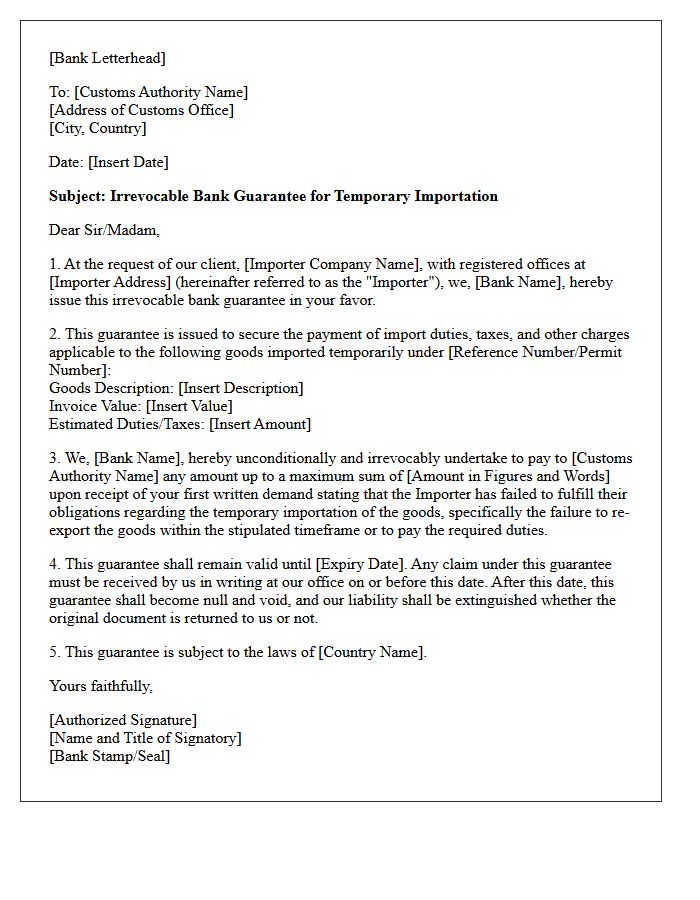
A Temporary Import Duty Bank Guarantee Letter is a financial instrument issued by a bank to customs authorities. It ensures the payment of import duties and taxes if goods are not re-exported within a specified timeframe. This mechanism facilitates the temporary admission of items for exhibitions, repairs, or testing without immediate tax payment. The letter serves as a legal security, guaranteeing that the government will receive its revenue if the importer fails to comply with re-exportation regulations or misses the mandatory deadlines under the customs regime.
Bonded Zone Excise Facility Guarantee Letter
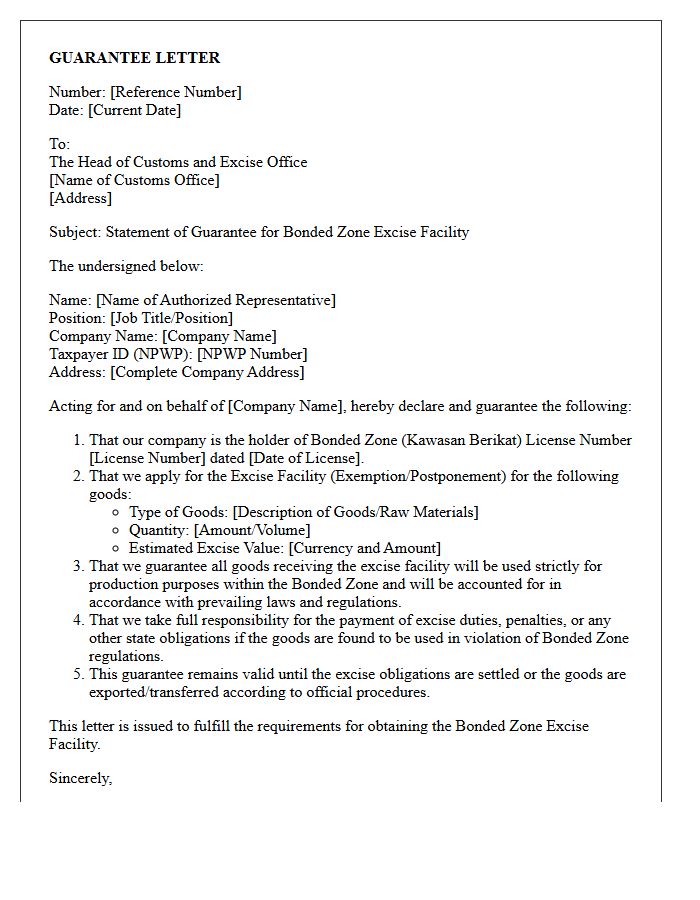
A Bonded Zone Excise Facility Guarantee Letter is a formal commitment used in international trade to secure tax exemptions on imported raw materials. This document serves as a financial safeguard for customs authorities, ensuring that excise duties and import taxes are covered if the goods are not re-exported as finished products. It is essential for manufacturers operating within designated zones to maintain liquidity and legal compliance. By providing this guarantee, businesses can defer payments, optimize operational cash flow, and streamline the logistics of large-scale manufacturing processes under regulatory supervision.
Customs Clearance Irrevocable Guarantee Letter
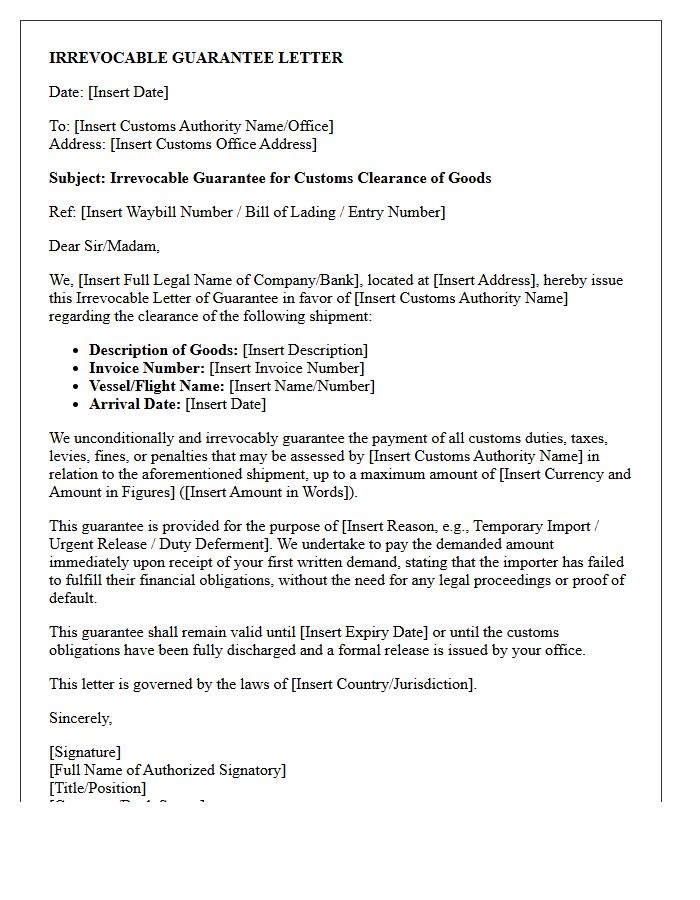
A Customs Clearance Irrevocable Guarantee Letter is a binding legal document issued by a bank or financial institution to customs authorities. It ensures that all applicable import duties, taxes, and fees will be paid by the guarantor if the importer fails to meet their obligations. This instrument facilitates the immediate release of goods before final payment processing. Once issued, it cannot be canceled or modified without the beneficiary's consent, providing customs with a secure financial security. It is essential for maintaining a seamless supply chain and avoiding costly port delays.
Deferred Payment Excise Tax Guarantee Letter
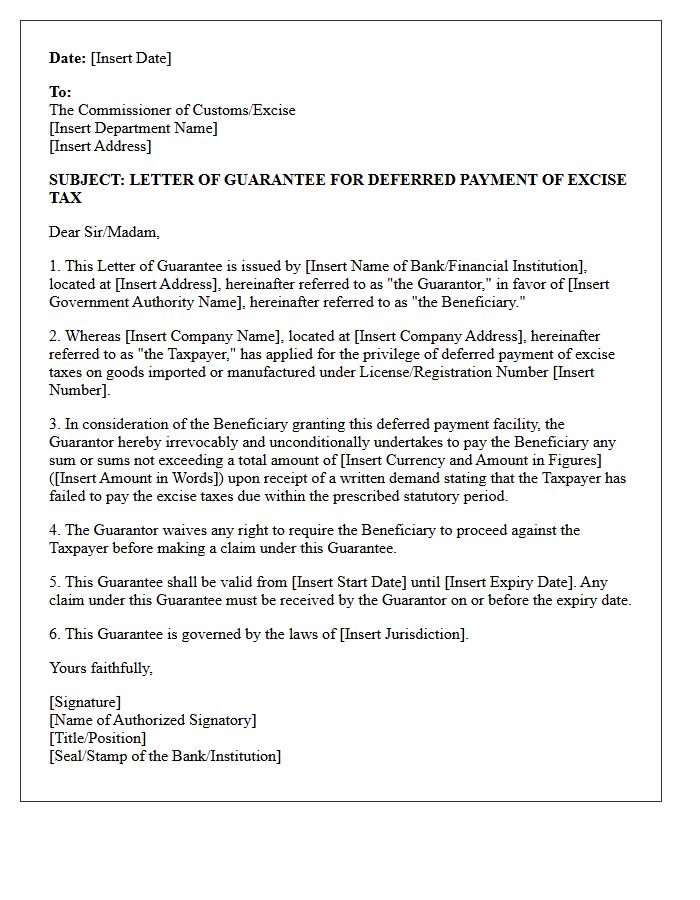
A Deferred Payment Excise Tax Guarantee Letter is a financial instrument issued by a bank to ensure customs compliance. It allows businesses to import goods immediately while postponing tax payments to a later date. This security bond guarantees that the government will receive the excise duty even if the importer defaults. By utilizing this guarantee, companies significantly improve their cash flow management and streamline international trade logistics. It serves as a vital risk mitigation tool for both tax authorities and high-volume commercial importers.
Customs Guarantee Extension Request Letter
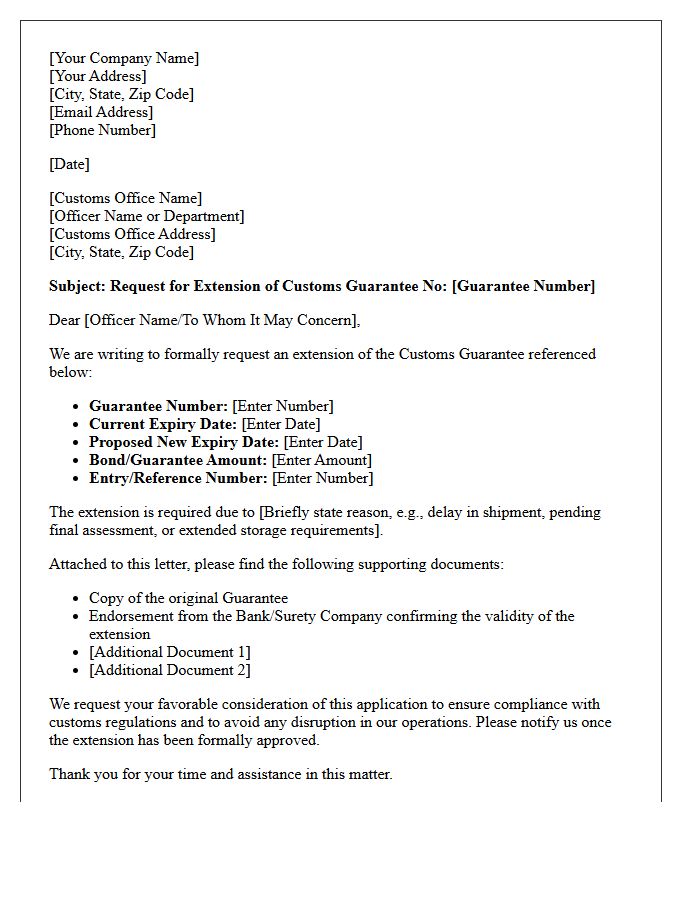
A Customs Guarantee Extension Request Letter is a formal document submitted to customs authorities to prolong the validity of an existing financial security. It is crucial to demonstrate valid reasons for the extension, such as ongoing clearing processes or delayed shipments. The letter must include the original guarantee reference number, the new requested expiry date, and the specific customs bond details. Timely submission ensures continuous compliance and prevents the suspension of import activities, avoiding costly penalties or shipment clearance delays at the border.
Excise Guarantee Amendment Notification Letter
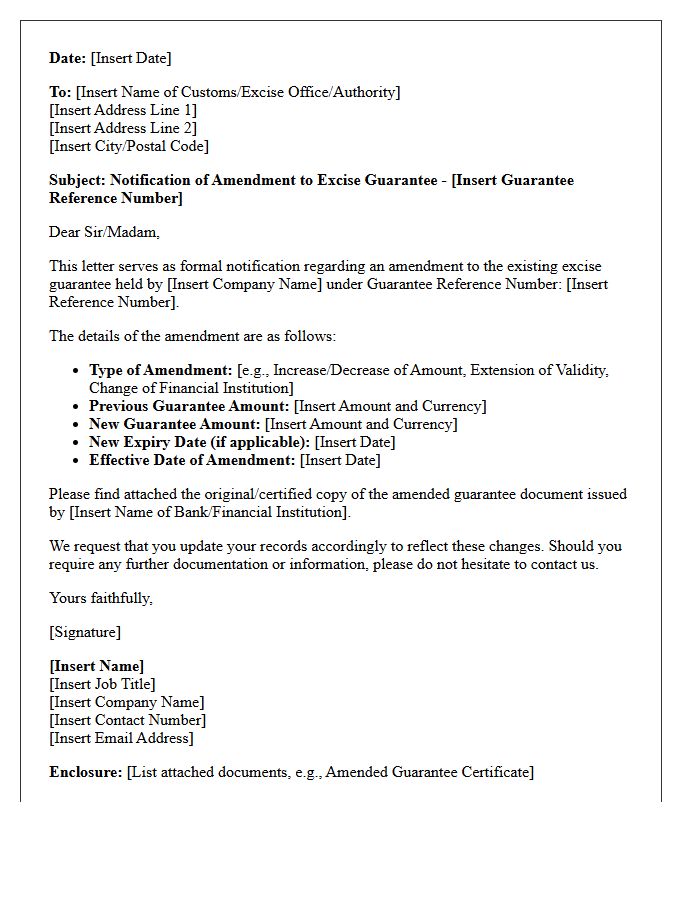
The Excise Guarantee Amendment Notification Letter is a critical document used to update financial security details for bonded goods. It formally notifies authorities of changes to an existing guarantee amount, validity period, or the issuing financial institution. Ensuring accuracy in this notification is essential to maintain regulatory compliance and prevent disruptions in trade operations. Businesses must submit this amendment promptly to reflect their current liability coverage accurately, ensuring that all excise duties remain protected under the revised terms of the security agreement with the revenue office.
Transit Goods Customs Bank Guarantee Letter
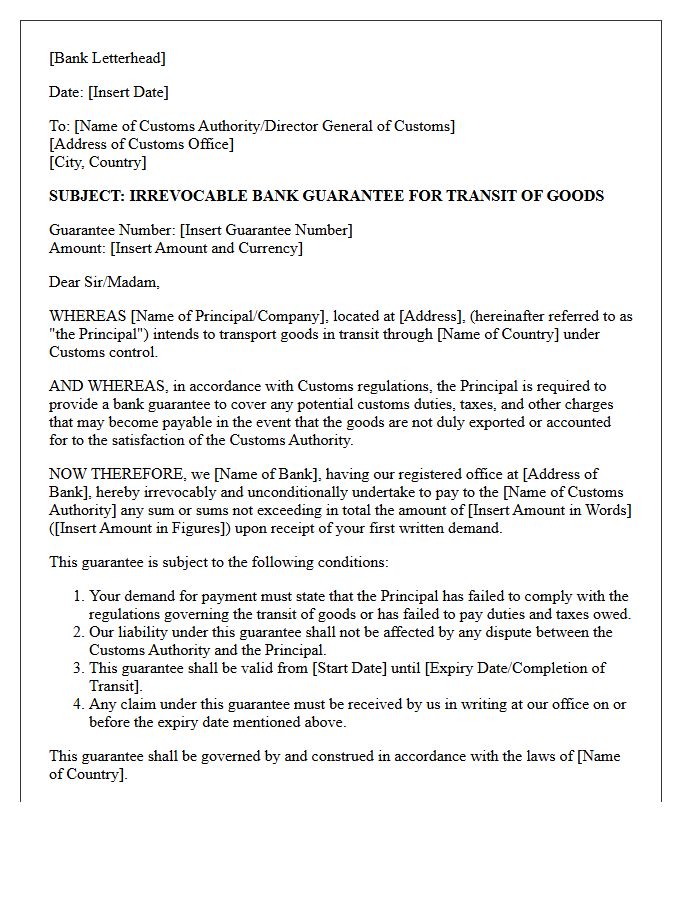
A Transit Goods Customs Bank Guarantee Letter is a financial instrument issued by a bank to ensure that customs duties and taxes are paid if imported cargo fails to exit a country or reach its destination. It acts as a security deposit for transit operations, allowing goods to move through territories without immediate tax payment. This guarantee minimizes financial risk for tax authorities while facilitating international trade. It is essential for logistics providers to maintain compliance with national customs regulations and avoid costly delays during the cross-border movement of commercial shipments.
Advance Release Customs Facility Guarantee Letter
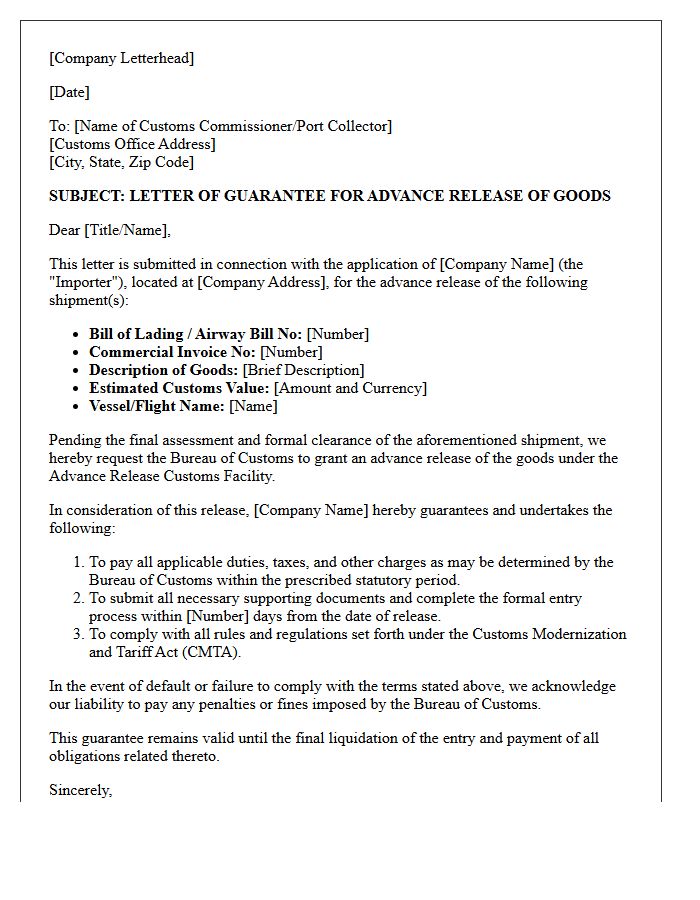
An Advance Release Customs Facility Guarantee Letter is a formal commitment issued by a bank or financial institution to customs authorities. It serves as a financial security ensuring that all applicable duties and taxes will be paid. This document allows importers to obtain the immediate release of imported goods before final duty assessment or payment is completed. By streamlining the clearance process, it minimizes port storage costs and prevents supply chain delays, making it a vital tool for businesses requiring efficient international trade logistics and bonded facility management.
Excise Liability Bank Guarantee Cover Letter
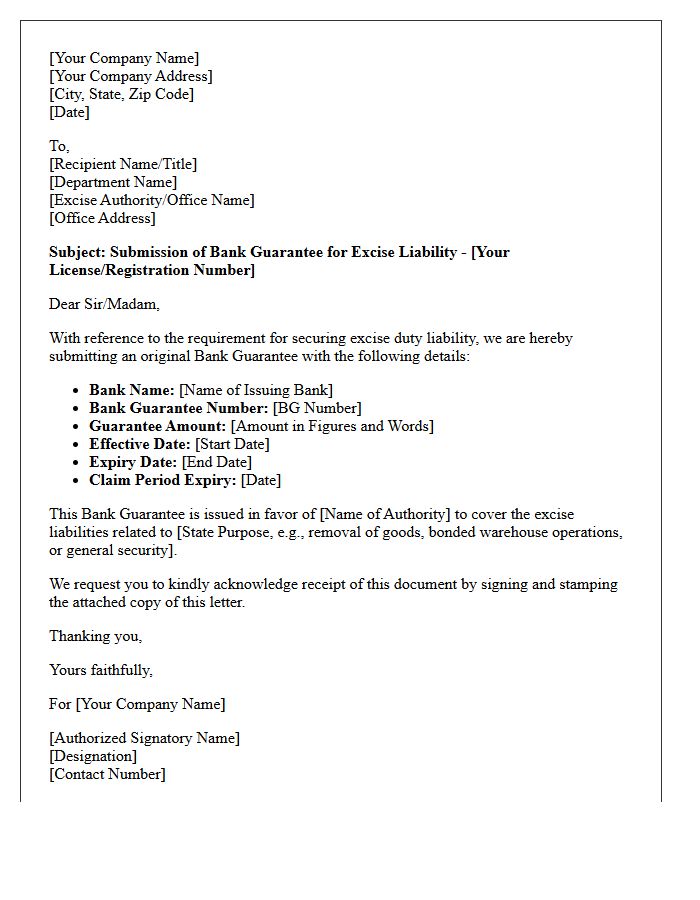
An Excise Liability Bank Guarantee Cover Letter is a formal document submitted to customs authorities or tax departments. It serves as an official transmittal for a financial instrument that ensures payment of excise duties. This letter must clearly state the guarantee number, the coverage amount, and the specific compliance obligations it supports. Ensuring accuracy in the beneficiary details and expiration dates is vital for legal acceptance. It acts as a bridge between the bank and the regulator, confirming that the financial security is active to cover potential tax liabilities effectively.
Customs Guarantee Claim Settlement Letter
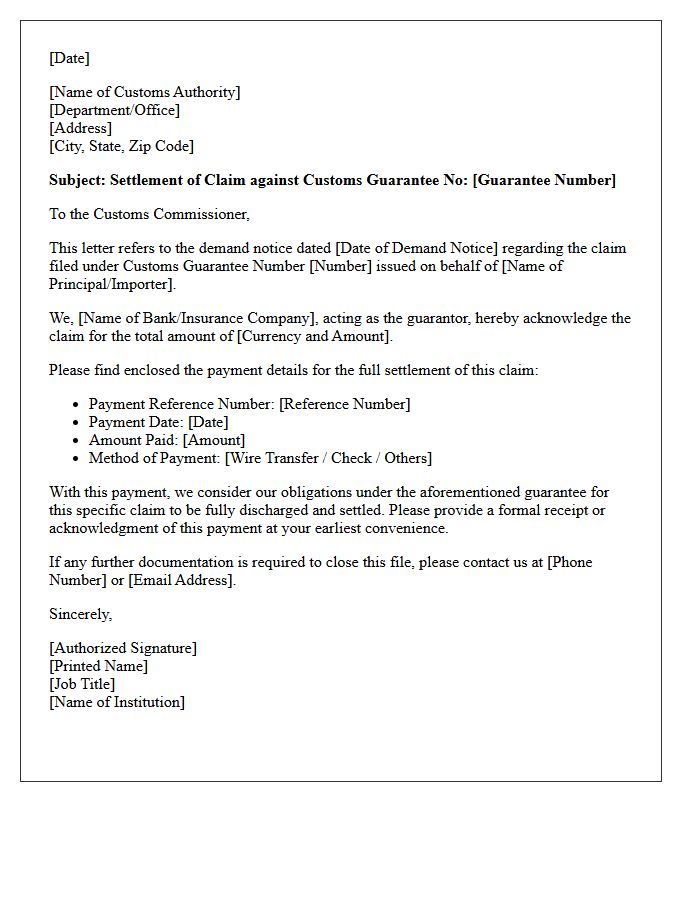
A Customs Guarantee Claim Settlement Letter serves as formal notification that a financial liability has been resolved between a guarantor and customs authorities. This document confirms the final payment of duties, taxes, or penalties previously secured by a bond. It is essential for importers to retain this letter to ensure the release of obligations and to update their credit capacity. Precise documentation prevents future legal disputes and verifies that all compliance requirements have been fully satisfied, officially closing the claim file within the international trade regulatory framework.
Excise Guarantee Cancellation Request Letter
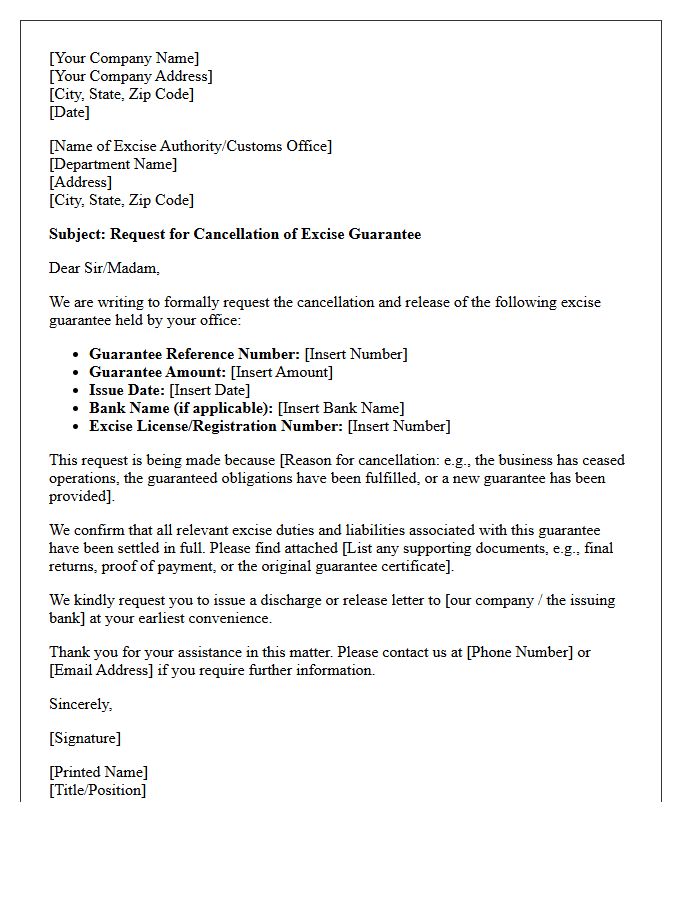
An Excise Guarantee Cancellation Request Letter is a formal document sent to customs or tax authorities to release a financial bond. To ensure approval, you must include the guarantee reference number, specific license details, and proof that all tax liabilities have been settled. Clearly state the reason for termination, such as business closure or guarantee replacement. A precise, well-documented letter expedites the refund process or the discharge of your liability, preventing unnecessary financial holds on your company's assets while maintaining regulatory compliance.
What is a Customs and Excise Guarantee Letter?
A Customs and Excise Guarantee Letter is a financial instrument issued by a bank or insurance company that ensures the payment of customs duties, taxes, and other charges to the government in the event that an importer or exporter fails to meet their financial obligations.
How does a Customs Guarantee Letter benefit importers?
It allows importers to clear goods through customs before the final payment of duties or during the resolution of a dispute, improving cash flow and reducing delays at ports of entry by providing a secure payment assurance to the authorities.
What are the different types of Customs Bonds and Guarantees?
Common types include Temporary Importation Guarantees, Transit Guarantees for moving goods between jurisdictions, Warehouse Bonds for stored dutiable goods, and General Term Bonds for frequent importers covering multiple transactions over a specific period.
Who is eligible to apply for a Customs and Excise Guarantee?
Any registered business entity involved in international trade, including importers, exporters, clearing agents, and freight forwarders, can apply for a guarantee letter through authorized financial institutions after meeting credit and collateral requirements.
What happens if a claim is made against a Customs Guarantee Letter?
If the customs authorities determine that duties or penalties have not been paid, they will call upon the guarantee. The issuing bank or insurer must then pay the specified amount to the government and subsequently seek reimbursement from the business that requested the guarantee.

Comments