
Receiving an unsubstantiated rejection letter for your loan modification request can be devastating. Many lenders fail to provide clear justifications for denials, leaving homeowners confused and frustrated. Our guide explores how to challenge these vague decisions and protect your property rights effectively. If you need help drafting a professional response, below are some ready to use templates.

Image cover: Winning Your Appeal: Strategic Templates for Loan Modification Hardship Denial Rebuttals
Letter Samples List
- Loan Modification Hardship Unsubstantiated Rejection Letter
- Insufficient Hardship Documentation Denial Letter
- Incomplete Financial Hardship Evidence Rejection Letter
- Unverified Income Loss Hardship Decline Letter
- Mortgage Modification Unsubstantiated Hardship Denial Letter
- Commercial Loan Hardship Proof Inadequacy Rejection Letter
- Unsubstantiated Hardship Claim Modification Decline Letter
- Unverified Medical Hardship Loan Rejection Letter
- Financial Hardship Verification Failure Denial Letter
- Unsupported Unemployment Hardship Modification Rejection Letter
- Unconfirmed Financial Distress Modification Rejection Letter
- Insufficient Hardship Evidence Final Rejection Letter
Loan Modification Hardship Unsubstantiated Rejection Letter
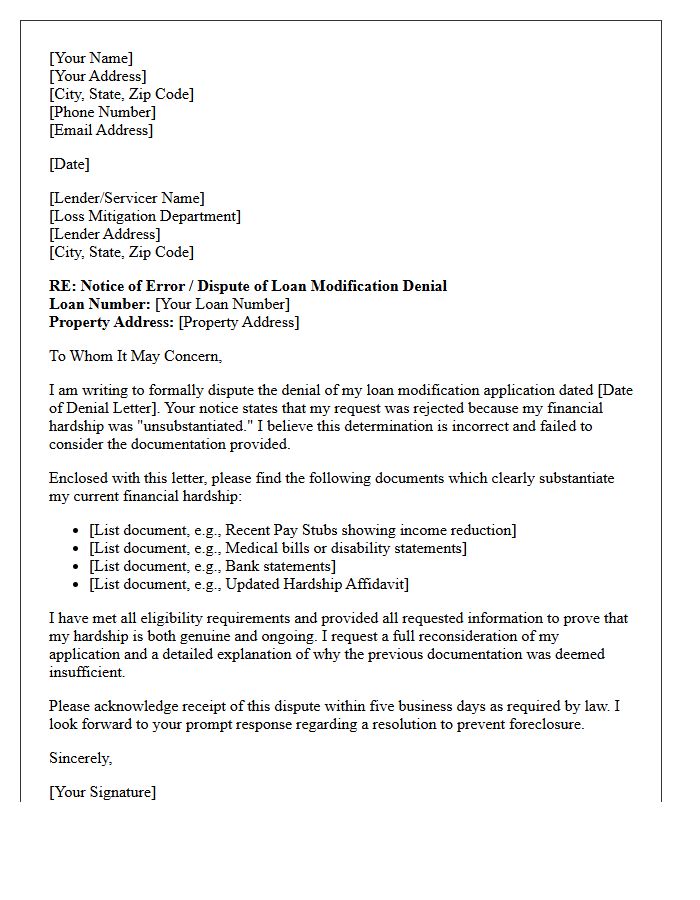
Receiving a Loan Modification Hardship Unsubstantiated Rejection Letter means your lender claims you failed to prove financial distress. This often occurs due to incomplete documentation or a perceived lack of urgency in your financial profile. To contest this, you must immediately request a detailed explanation of the specific "missing" evidence. Review your hardship letter and bank statements for inconsistencies. Filing a formal appeal within the required window is critical to prevent foreclosure while proving your financial hardship is genuine and supported by factual evidence.
Insufficient Hardship Documentation Denial Letter
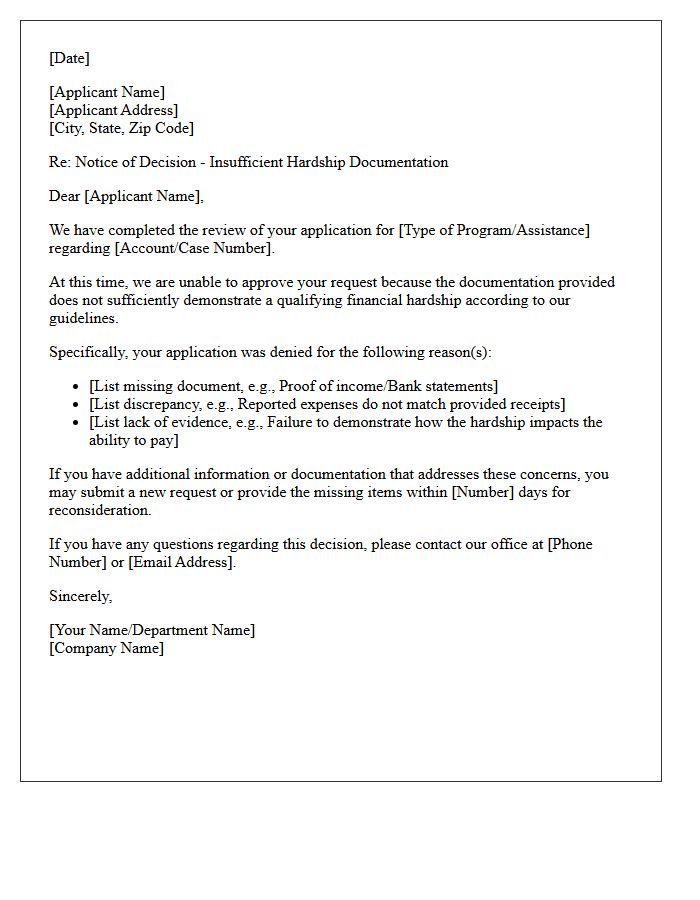
An Insufficient Hardship Documentation Denial Letter is a formal notice stating that your application lacked the specific evidence required to prove extreme financial or personal suffering. To reverse this decision, you must provide comprehensive evidence, such as medical records, tax returns, or bank statements, that clearly link your situation to the eligibility criteria. Simply stating a hardship is not enough; the documentation must be verifiable and detailed to meet legal or institutional standards. Always review the specific missing information mentioned in the letter before filing an appeal or re-submitting your request.
Incomplete Financial Hardship Evidence Rejection Letter
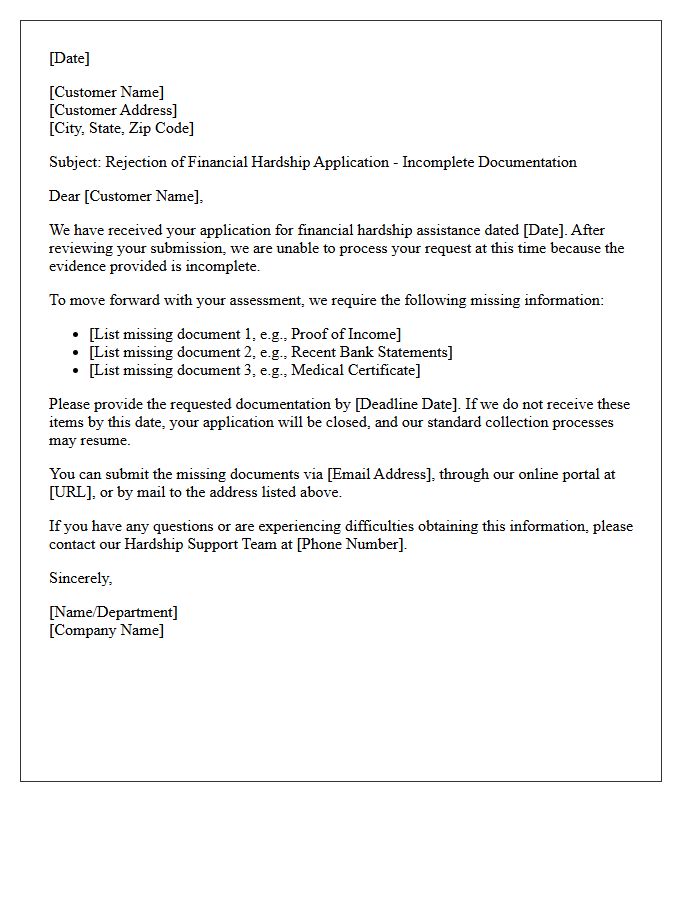
An Incomplete Financial Hardship Evidence Rejection Letter notifies applicants that their request was denied due to missing documentation. To resolve this, you must promptly provide the specific proof requested, such as bank statements, pay stubs, or tax returns. Failure to submit verifiable evidence prevents creditors or agencies from assessing your financial distress. Always review the deficiency notice carefully to identify exactly which records are absent. Resubmitting a complete application is essential to qualify for debt relief, loan modifications, or fee waivers and avoid permanent denial of your hardship claim.
Unverified Income Loss Hardship Decline Letter
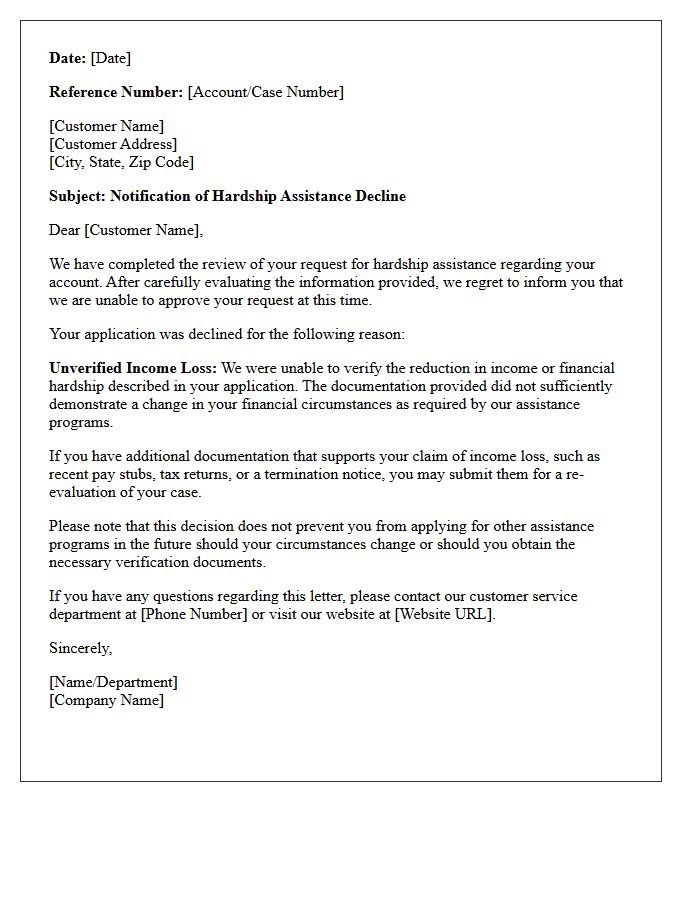
An Unverified Income Loss Hardship Decline Letter is a formal notice from a lender stating that a requested loan modification or relief plan was rejected. This occurs because the borrower failed to provide sufficient documentation to prove a significant financial setback. To reverse this decision, you must promptly submit objective evidence, such as pay stubs, tax returns, or bank statements, that clearly substantiates your loss of earnings. Accuracy in your financial disclosure is critical to demonstrating genuine hardship and regaining eligibility for assistance programs.
Mortgage Modification Unsubstantiated Hardship Denial Letter
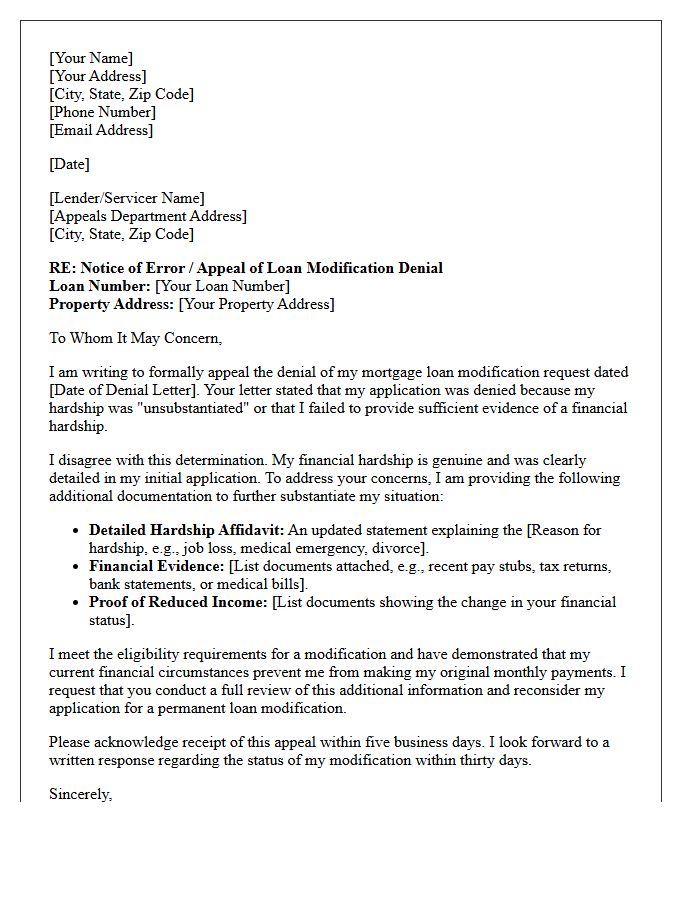
Receiving a Mortgage Modification Unsubstantiated Hardship Denial Letter means your lender believes you failed to provide sufficient proof of financial distress. To challenge this, you must immediately request a detailed explanation of the specific missing documentation or criteria. Often, these denials result from simple clerical errors or incomplete 1040 forms. You have a limited window to file an appeal or submit supplemental evidence, such as bank statements or medical bills, to substantiate your claim. Acting quickly is essential to prevent the foreclosure process from advancing during the re-evaluation period.
Commercial Loan Hardship Proof Inadequacy Rejection Letter
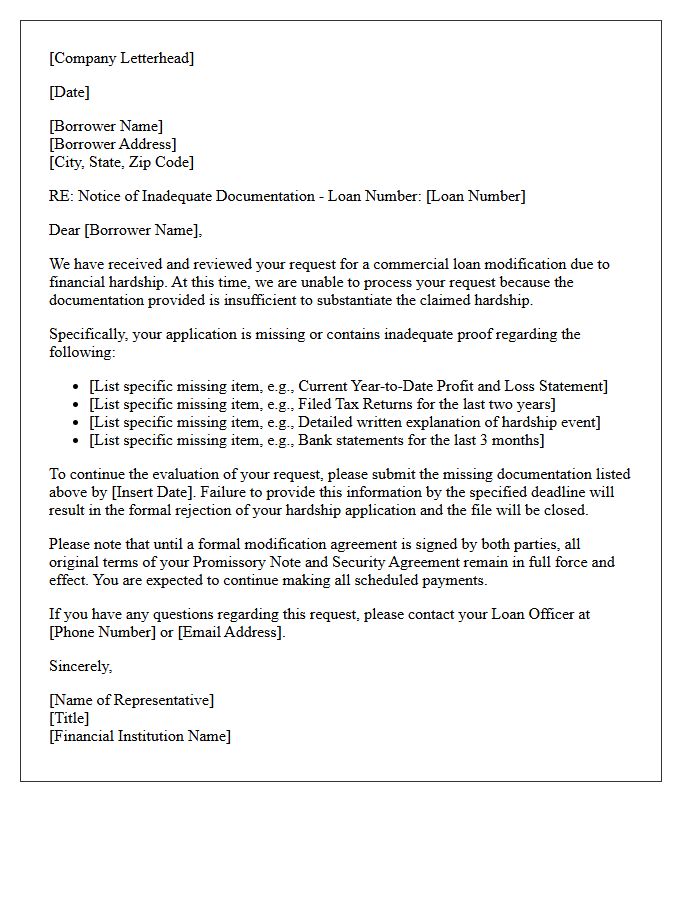
A rejection letter for commercial loan hardship proof inadequacy signifies that your financial documentation failed to demonstrate a legitimate economic crisis. Lenders issue these notices when profit and loss statements, tax returns, or cash flow projections lack sufficient evidence of involuntary distress. To successfully appeal, you must provide quantifiable data showing a sustained revenue decline or unavoidable operational costs. Simply stating business is slow is insufficient; you must prove the financial insolvency or external market factors that prevent regular debt service payments to justify a restructuring request.
Unsubstantiated Hardship Claim Modification Decline Letter
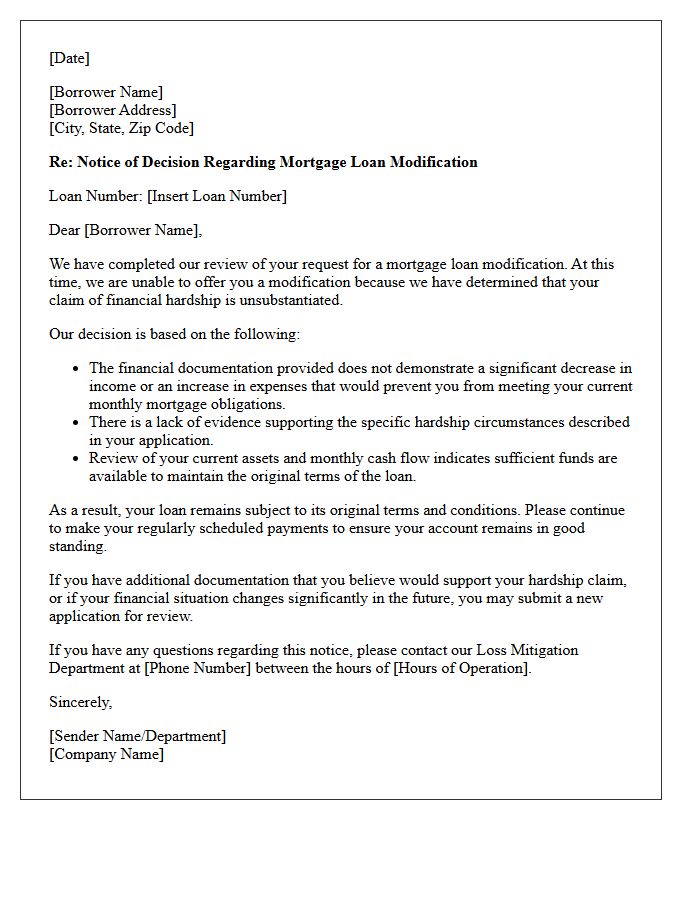
An Unsubstantiated Hardship Claim Modification Decline Letter is a formal notice issued by a lender when a borrower's request for a loan modification is rejected. This specific denial occurs because the applicant failed to provide sufficient documentation or evidence to prove financial distress. To avoid this outcome, it is critical to submit clear proof of income loss or medical expenses. Receiving this letter means your current repayment terms remain unchanged, though you typically have a specific window to appeal the decision or provide the missing information to reconsider your eligibility.
Unverified Medical Hardship Loan Rejection Letter
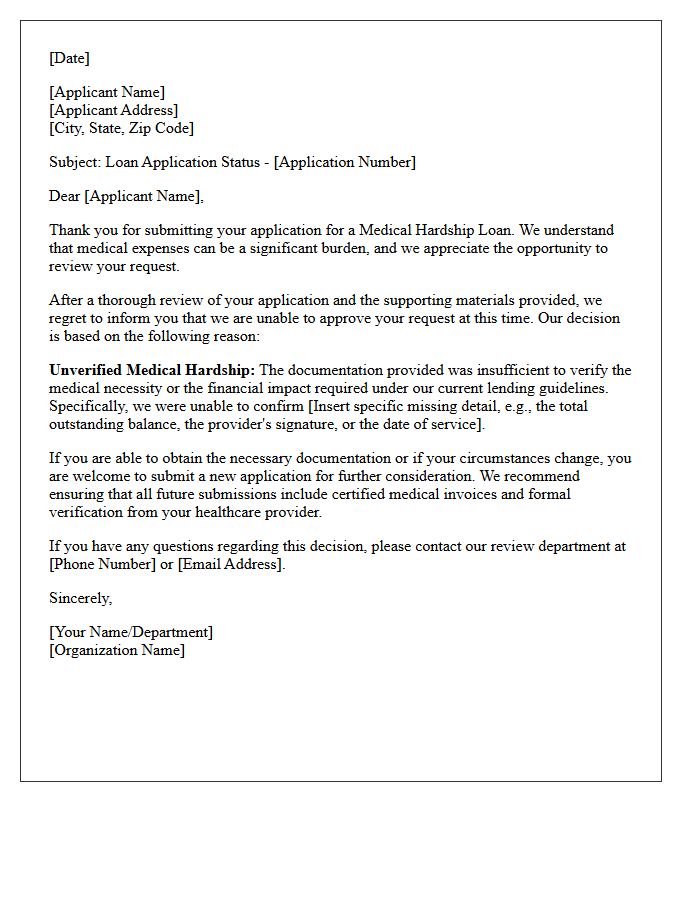
Receiving an unverified medical hardship loan rejection letter typically indicates that the lender could not confirm your financial distress or healthcare expenses. This often occurs due to incomplete documentation, mismatched records, or failing to meet specific eligibility criteria. To resolve this, carefully review the stated reasons for denial and ensure all medical bills or income statements are officially certified. Re-submitting accurate, verifiable evidence is crucial for a successful appeal or secondary application when seeking urgent financial assistance for healthcare costs.
Financial Hardship Verification Failure Denial Letter
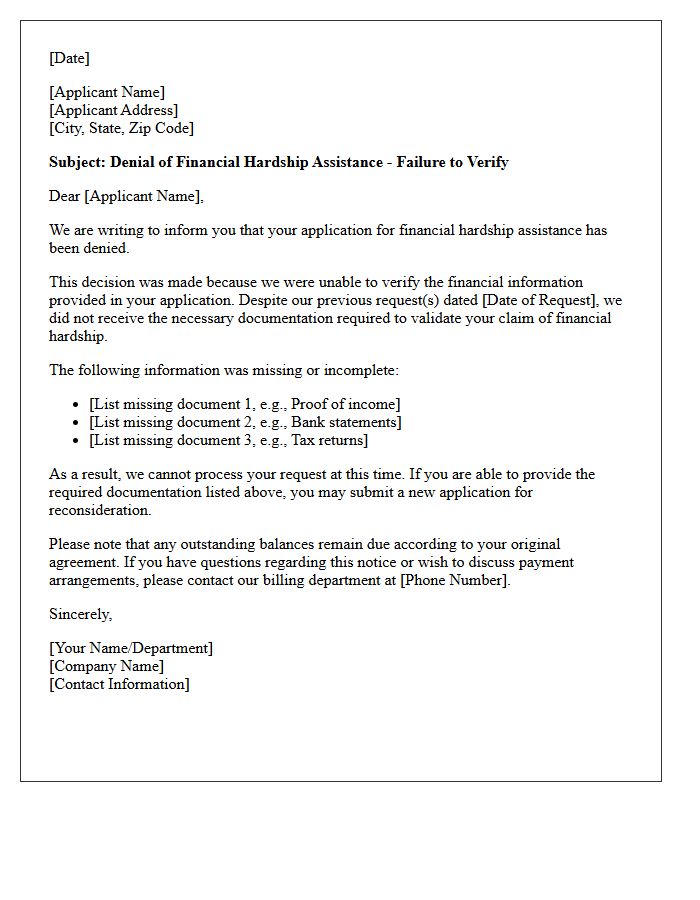
Receiving a Financial Hardship Verification Failure Denial Letter means your request for assistance was rejected due to insufficient or inconsistent documentation. To appeal, you must provide the missing evidence required to prove your economic instability, such as tax returns, bank statements, or pay stubs. This notice is not always a final decision; it often indicates that the lender or service provider could not verify your claims based on the provided paperwork. Promptly submitting the correct documentation is the most critical step to overturning this denial and securing financial relief.
Unsupported Unemployment Hardship Modification Rejection Letter
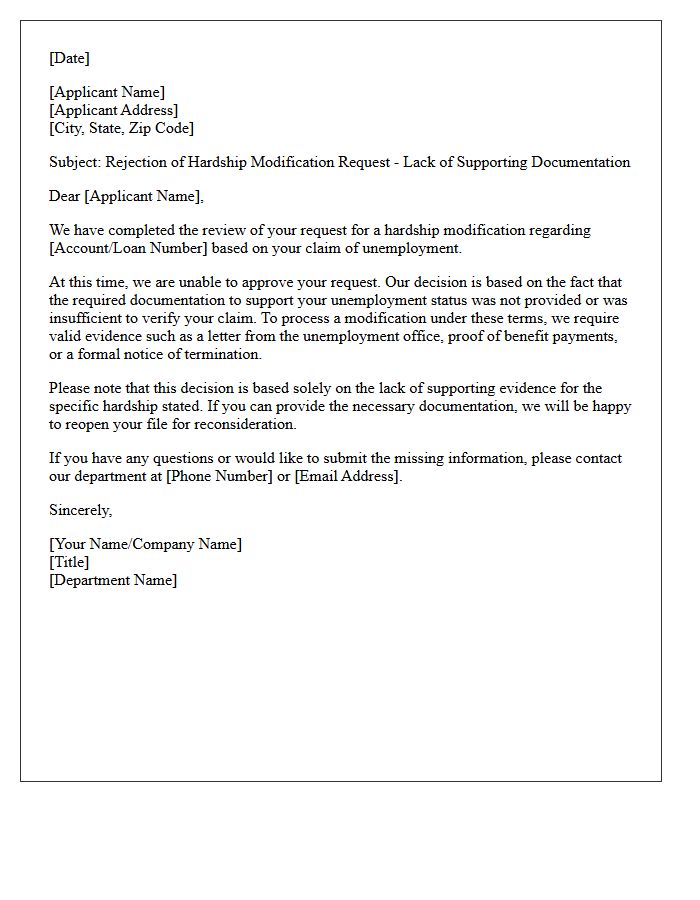
Receiving an Unsupported Unemployment Hardship Modification Rejection Letter indicates that your mortgage servicer denied your request because the financial documentation provided did not sufficiently prove your eligibility. This often happens if the duration of your unemployment is not verified or if your income-to-debt ratio falls outside program guidelines. To resolve this, you must carefully review the specific denial reasons listed and submit a formal appeal. Ensuring all proof of benefits and hardship affidavits are accurate and current is essential to successfully overturning the decision and securing a loan modification.
Unconfirmed Financial Distress Modification Rejection Letter
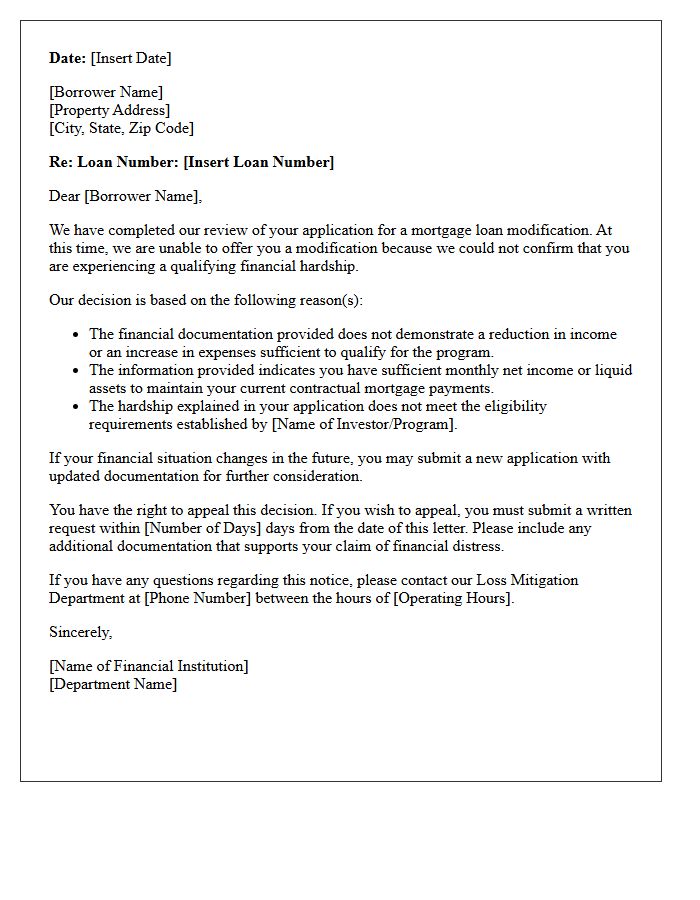
Receiving an Unconfirmed Financial Distress Modification Rejection Letter indicates that your lender denied a loan workout because your hardship documentation was incomplete or unverified. This formal notice means the financial evidence provided did not sufficiently prove an inability to maintain current payments. To reverse this decision, you must immediately address the missing information or clarify inconsistencies in your income and expense reports. Failing to resolve these discrepancies during the appeal period can lead to foreclosure proceedings, making it vital to submit a detailed, accurate financial package for reconsideration.
Insufficient Hardship Evidence Final Rejection Letter
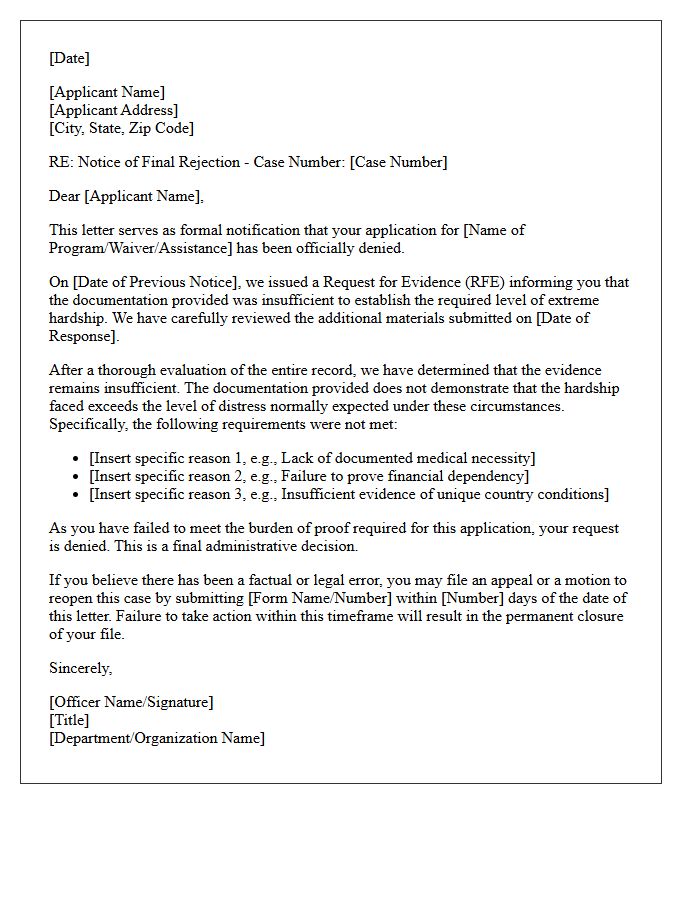
An Insufficient Hardship Evidence Final Rejection Letter serves as a formal notification that a waiver application has been denied due to a lack of extreme hardship proof. This document confirms that the applicant failed to demonstrate that a qualifying relative would suffer significant harm beyond common separation consequences. Receiving this letter indicates that the administrative review process is complete, often leaving reapplication or legal appeal as the only remaining options. It is crucial to address every specific deficiency mentioned in the notice to improve chances of success in future filings.
What does an "unsubstantiated rejection" mean in a loan modification hardship letter?
An unsubstantiated rejection occurs when a mortgage servicer denies a hardship application without providing a specific, evidence-based reason or failing to explain which financial criteria the homeowner failed to meet according to investor guidelines.
Can I appeal a loan modification denial if the hardship rejection is vague?
Yes, you have a legal right to appeal a denial if the rejection letter is unsubstantiated. You should request a detailed "Adverse Action Notice" that specifies whether the denial was based on Debt-to-Income (DTI) ratios, Net Present Value (NPV) calculations, or specific missing documentation.
What should I do if my lender claims my financial hardship is not "imminent" or "verified"?
If your lender rejects your claim as unverified, you must submit supplemental evidence such as medical bills, divorce decrees, bank statements showing a loss of income, or an updated Letter of Hardship that clearly links your financial deficit to your inability to make monthly payments.
How do I respond to a loan modification rejection letter that lacks detail?
Respond by sending a Qualified Written Request (QWR) or a "Notice of Error" to your servicer. Demand a itemized breakdown of the figures used in their evaluation, including the monthly gross income and expenses they calculated, to identify discrepancies in their decision-making process.
Are lenders required to provide a specific reason for denying a loan modification?
Under Consumer Financial Protection Bureau (CFPB) regulations, mortgage servicers are required to provide a specific reason for denial. An unsubstantiated rejection may be a violation of these rules, giving the homeowner grounds to file a formal complaint or seek a secondary review by a different loan officer.


Comments