
Receiving a Secured Credit Card Minimum Deposit Failure Rejection Letter typically indicates your application was denied because the required collateral funds were not successfully processed. This guide explains common causes for deposit failure, such as insufficient bank funds or verification errors, and provides actionable steps to resolve the issue with your issuer. To assist your appeal, below are some ready to use template.

Image cover: Sample Decline Letters for Secured Credit Card Minimum Deposit Requirements
Letter Samples List
- Secured Credit Card Minimum Deposit Failure Rejection Letter
- Rejection Letter for Incomplete Secured Credit Card Funding
- Minimum Security Deposit Unfulfilled Rejection Letter
- Insufficient Funds for Secured Credit Card Deposit Rejection Letter
- Application Rejection Letter Due to Missing Secured Deposit
- Failed Transfer for Secured Credit Card Deposit Rejection Letter
- Notice of Rejection Letter for Secured Card Minimum Deposit Default
- Unfunded Secured Credit Card Application Rejection Letter
- Required Minimum Deposit Deadline Expiration Rejection Letter
- Unsuccessful Deposit Processing Secured Card Rejection Letter
- Returned Payment for Secured Credit Card Deposit Rejection Letter
- Inadequate Funding Secured Credit Card Rejection Letter
Secured Credit Card Minimum Deposit Failure Rejection Letter
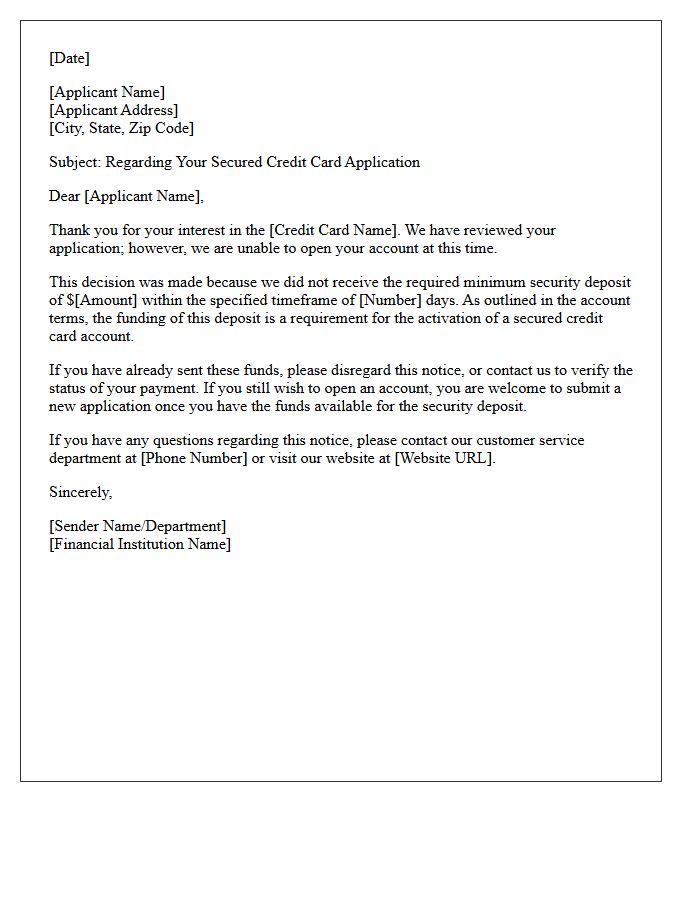
Receiving a rejection letter for a secured credit card due to minimum deposit failure usually means your initial funding transaction was unsuccessful. Banks require this collateral to establish your credit limit. Common reasons include insufficient funds in your linked bank account, incorrect routing numbers, or security blocks by your financial institution. To resolve this, verify your balance, ensure your account details are accurate, and reapply once funds are cleared. Failure to provide the deposit prevents account activation, as the security deposit is the primary requirement for approval.
Rejection Letter for Incomplete Secured Credit Card Funding
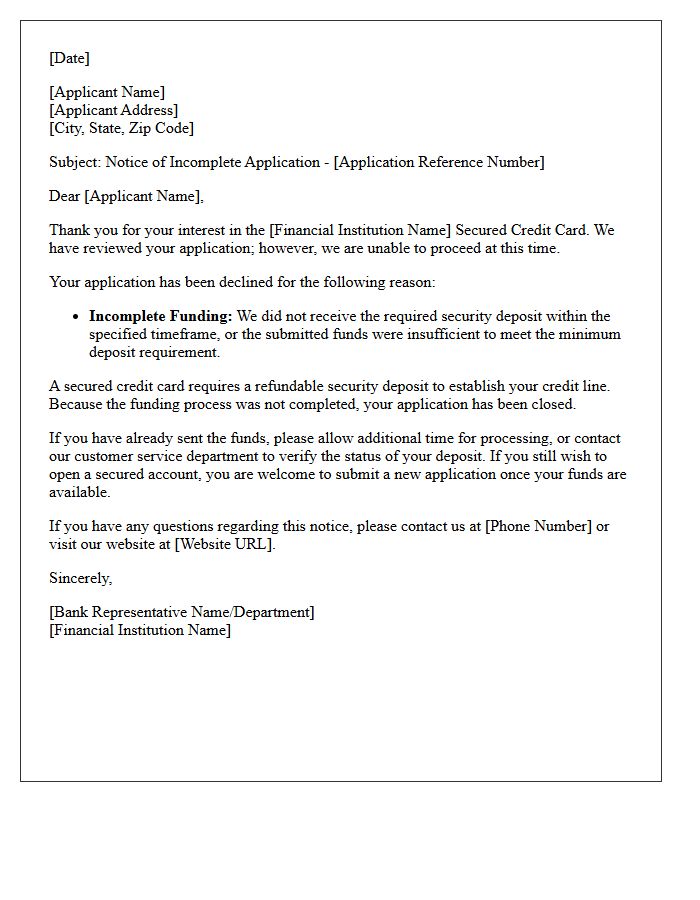
A rejection letter for incomplete funding occurs when an applicant fails to deposit the required security collateral within the specified timeframe. To finalize a secured credit card, the issuing bank must receive the initial deposit to establish the credit limit. If these funds are not verified, the application is automatically declined. It is essential to ensure your linked bank account has sufficient balance and to complete the transfer promptly to avoid application expiration. Receiving this notice does not necessarily reflect poor credit history, but rather a funding failure during the setup process.
Minimum Security Deposit Unfulfilled Rejection Letter
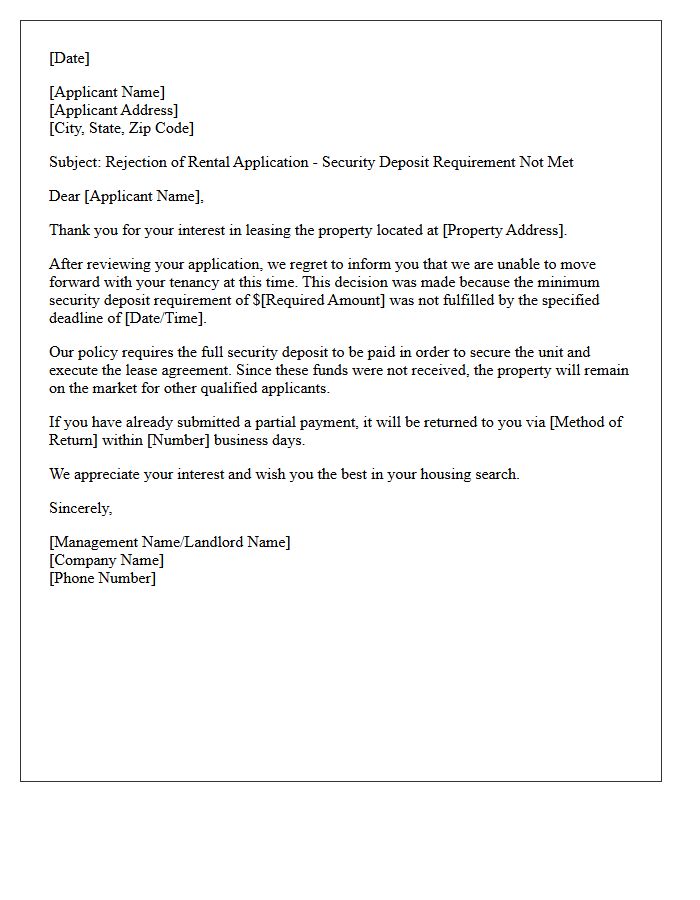
A Minimum Security Deposit Unfulfilled Rejection Letter is a formal notice sent to rental applicants who fail to provide the required upfront funds. This document legally denies the application because the financial criteria were not met. It is essential for landlords to issue this to maintain clear records and comply with fair housing standards. The letter should clearly state that the rejection is based on the failure to fulfill the mandatory deposit amount, protecting the property owner from potential liability or future payment disputes.
Insufficient Funds for Secured Credit Card Deposit Rejection Letter
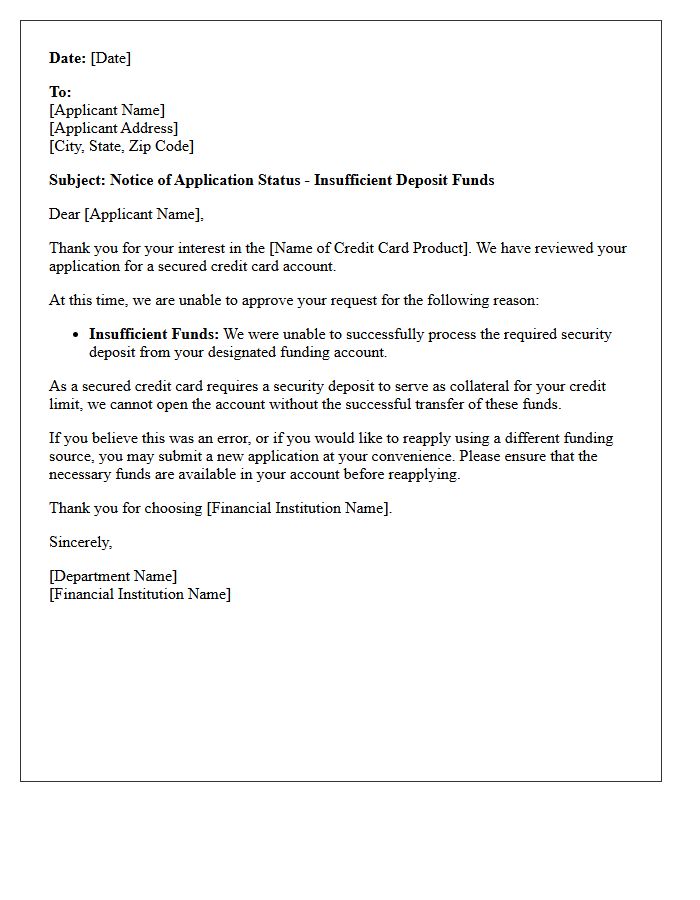
An Insufficient Funds rejection letter informs applicants that their secured credit card request was denied because the required security deposit could not be processed. This occurs when the linked bank account lacks the necessary balance to cover the collateral. To resolve this, ensure your account holds the full deposit amount before reapplying. This notice is not a reflection of creditworthiness but a failure of the funding transaction. Reviewing your financial statements and confirming available funds is the essential first step toward securing approval and building your credit history effectively.
Application Rejection Letter Due to Missing Secured Deposit
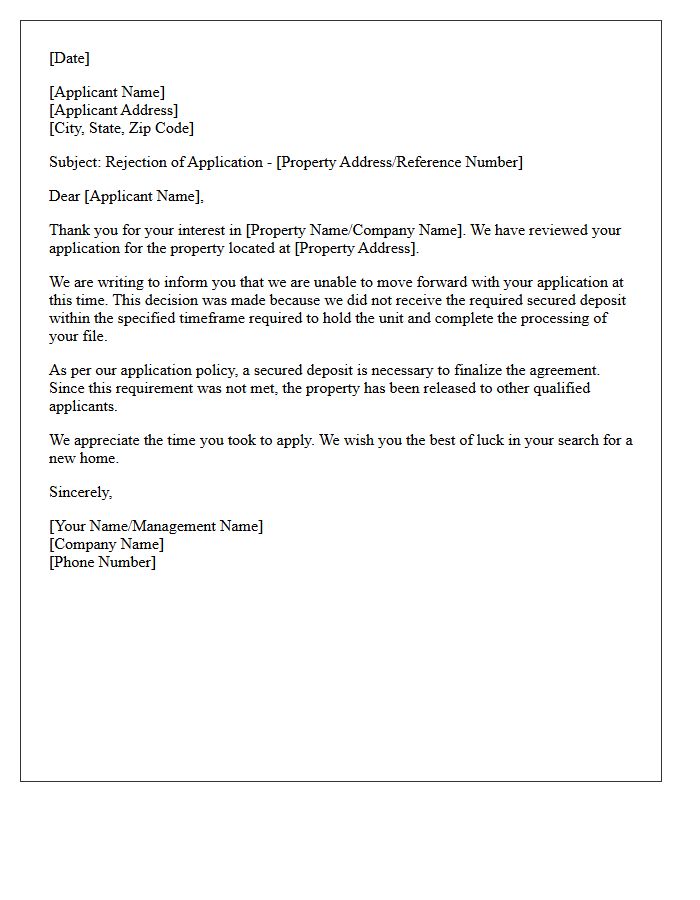
An application rejection letter due to a missing secured deposit serves as formal notice that a rental or credit request was denied. The primary reason for refusal is the applicant's failure to provide the required financial collateral within the specified timeframe. This deposit is essential to mitigate risk and guarantee the agreement. To avoid future rejections, ensure all funding requirements are met promptly. Applicants should review the adverse action notice to understand their rights and verify if any alternative payment methods or updated documentation can resolve the status.
Failed Transfer for Secured Credit Card Deposit Rejection Letter
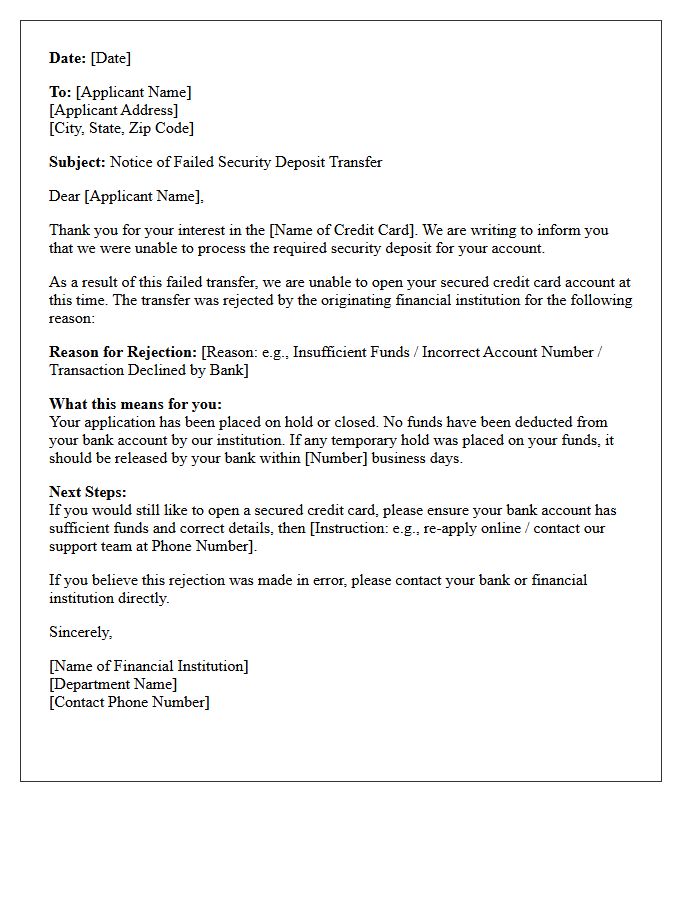
A Failed Transfer for Secured Credit Card Deposit Rejection Letter signifies that your application was denied because the required security collateral could not be processed. This often occurs due to insufficient funds, incorrect banking details, or transfer limits. To resolve this, verify your account balance and ensure your routing information is accurate before reapplying. Since a secured card depends on this deposit to establish your credit limit, a failed transaction prevents account activation. Review the specific reason cited in the letter to correct errors and successfully secure your new line of credit.
Notice of Rejection Letter for Secured Card Minimum Deposit Default
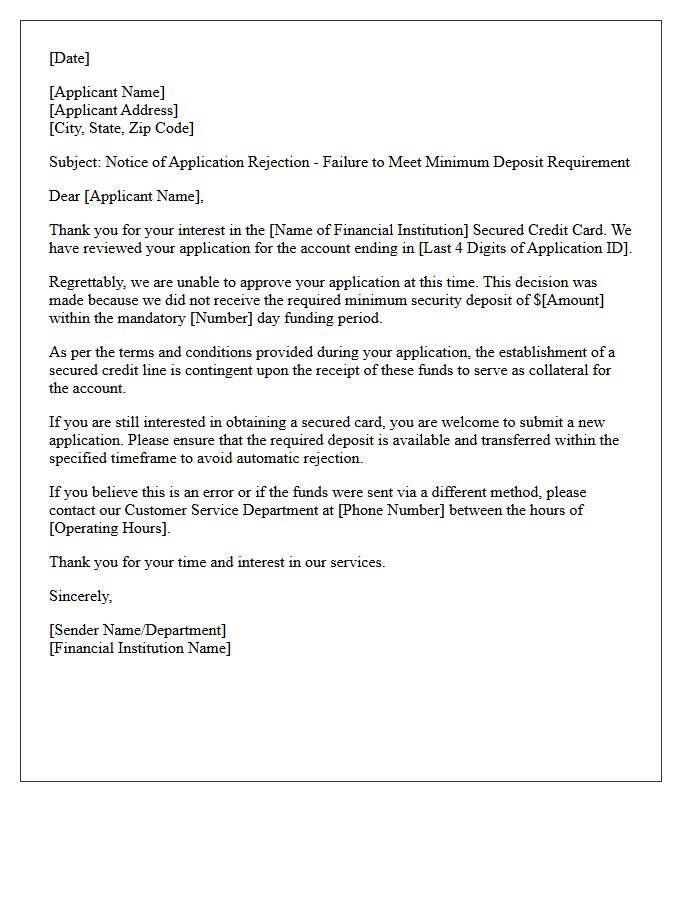
A Notice of Rejection Letter indicates your secured credit card application was denied because the required minimum security deposit was not received or processed. To establish your credit line, the issuer must successfully collect these funds as collateral. If your payment failed due to insufficient funds or incorrect bank details, your account cannot be activated. Review the notice to determine if you can reapply or if you must submit a new deposit. Timely payment is essential to finalize the agreement and begin building your credit history.
Unfunded Secured Credit Card Application Rejection Letter
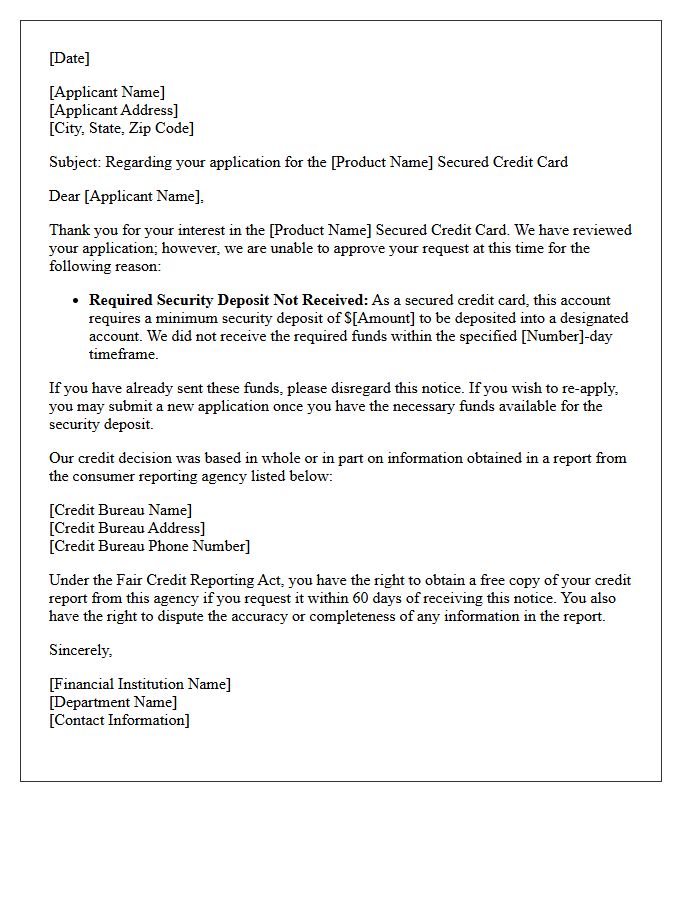
Receiving an unfunded secured credit card application rejection letter typically means your request was denied because the required security deposit was not received. Unlike standard cards, secured accounts require an upfront collateral payment to establish your credit limit. If you failed to transfer these funds within the specified timeframe, the issuer automatically cancels the application. To resolve this, you should review the letter for specific funding instructions and reapplying once your capital is ready, as this rejection is usually administrative rather than a reflection of your creditworthiness.
Required Minimum Deposit Deadline Expiration Rejection Letter
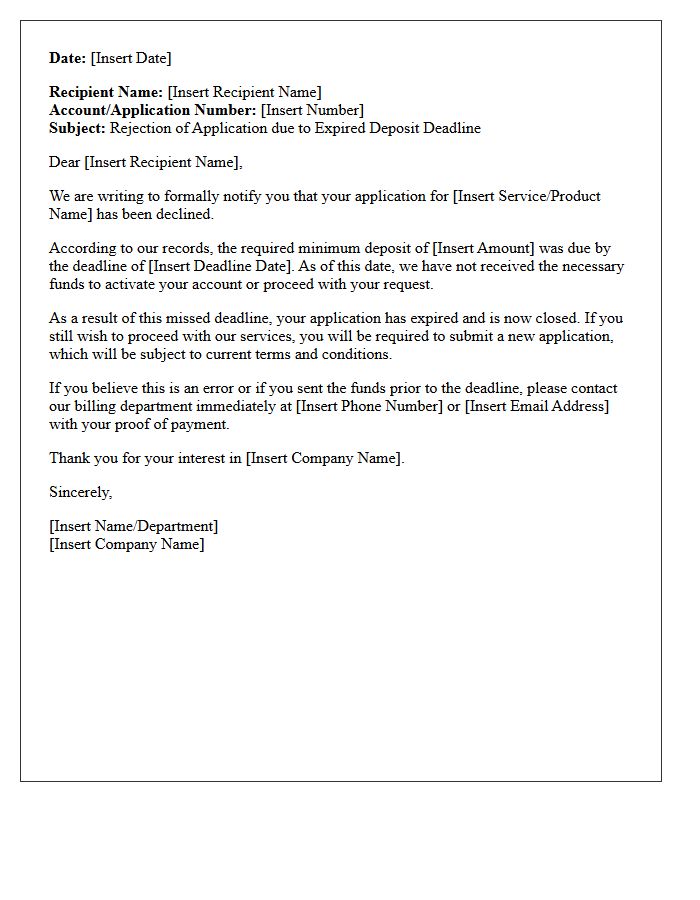
A Required Minimum Deposit Deadline Expiration Rejection Letter serves as formal notice that an application or contract has been cancelled. This occurs because the mandatory payment was not received within the specified timeframe. To avoid service termination or loss of position, applicants must strictly adhere to financial deadlines. Once the expiration date passes, the offer is typically voided, and a rejection letter is issued as a final procedural record of non-compliance. Promptly addressing deposit requirements is essential to maintain eligibility and secure your agreement.
Unsuccessful Deposit Processing Secured Card Rejection Letter
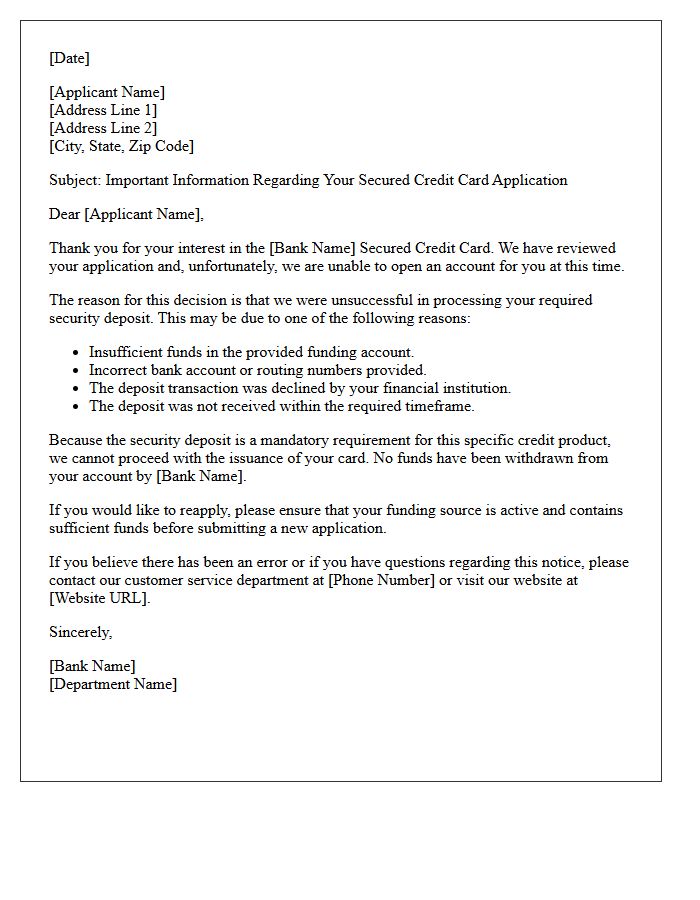
Receiving an unsuccessful deposit processing notice for a secured card means your application was declined because the required collateral funds could not be verified. Common reasons for this rejection include insufficient bank account balances, incorrect routing information, or security flags during the electronic transfer. To resolve this, ensure your funding source is active and contains the exact deposit amount. If your application is denied, the issuer will provide a formal letter explaining the specific failure, allowing you to correct financial details before attempting to reapply for the credit line.
Returned Payment for Secured Credit Card Deposit Rejection Letter
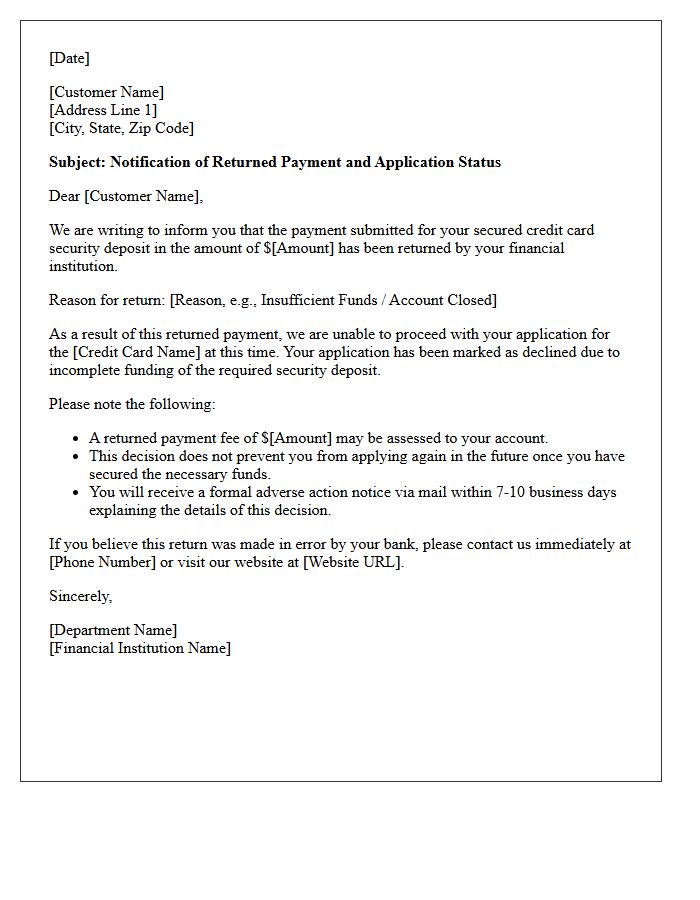
A Returned Payment letter signifies that your security deposit was rejected, often due to insufficient funds or incorrect banking details. This rejection prevents your secured credit card account from being activated. To resolve this, you must ensure your bank account has a verifiable balance and re-initiate the transfer immediately. Failure to address a returned deposit may result in application denial or a permanent closure of the credit line. Always double-check your routing and account numbers to maintain your financial credibility with the card issuer.
Inadequate Funding Secured Credit Card Rejection Letter
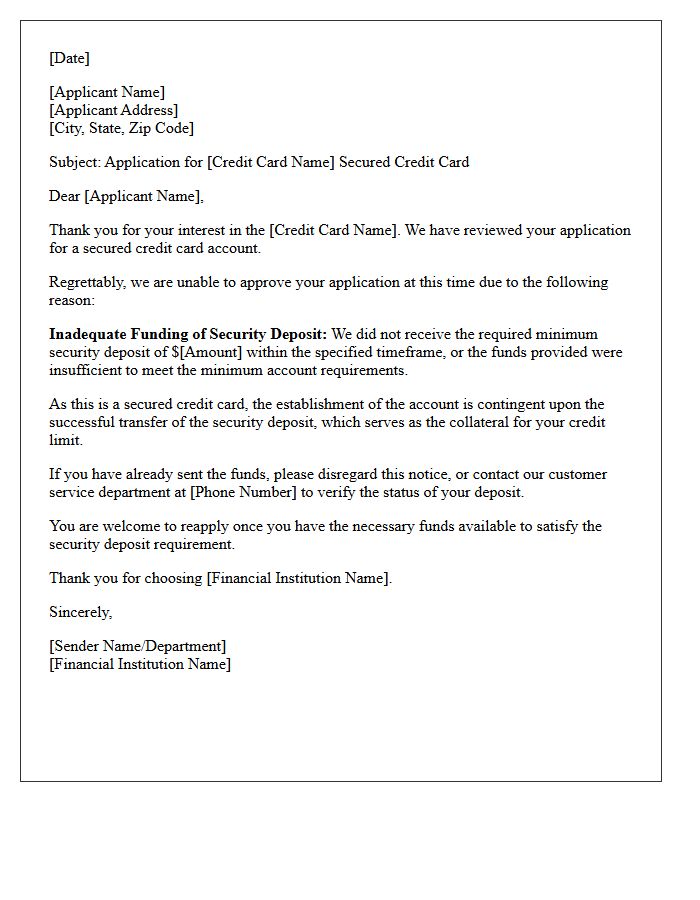
Receiving an inadequate funding rejection letter for a secured credit card means your security deposit was not successfully transferred. Banks require this collateral to establish your credit limit and mitigate risk. Common causes include insufficient bank account balances, incorrect routing numbers, or payment failures during the application process. To resolve this, ensure your funding source is verified and contains enough liquid assets to cover the required deposit before reapplying. Securing these funds is the essential first step toward rebuilding your credit history and improving your financial standing.
Why was my secured credit card application rejected due to a minimum deposit failure?
Your application was rejected because the initial security deposit required to open the account was either not received within the required timeframe or the transaction was declined by your funding bank.
Can I reapply if my secured credit card was denied for a failed deposit?
Yes, you can typically reapply immediately. A rejection based solely on a deposit failure is usually administrative and does not necessarily reflect your creditworthiness, though a new hard inquiry may be required depending on the issuer's policy.
Will a deposit failure rejection letter impact my credit score?
The rejection letter itself does not affect your credit score. However, the hard credit inquiry performed when you initially applied may cause a temporary, minor decrease in your overall credit rating.
What are the common reasons for a secured credit card deposit to fail?
Common reasons include insufficient funds in the linked bank account, incorrect routing or account numbers, daily transfer limits set by your bank, or the use of an unapproved payment method such as a prepaid card.
How can I ensure my security deposit is successful on my next application?
To ensure success, verify that your external bank account has sufficient liquid funds, double-check your ACH transfer details, and contact your bank in advance to authorize the specific transaction amount for the credit card issuer.

Comments