
Protecting user accounts requires immediate action when suspicious activity occurs. A Notification of Unauthorized Login Attempt alerts users to potential security breaches, allowing them to secure their credentials instantly. This guide explores essential security protocols and communication best practices to keep data safe. To help you get started quickly, below are some ready to use template.
Image cover: Security Alert: Unauthorized Login Attempt Templates and Samples
Letter Samples List
- Letter Regarding Unauthorized Login Attempt on Your Banking Account
- Urgent Letter of Notification Concerning Unrecognized Account Access
- Security Alert Letter for Suspicious Online Banking Login
- Official Letter of Notice for Failed Authentication Attempt
- Letter of Warning Regarding Unauthorized Mobile Banking Access
- Important Letter Notifying Unauthorized Account Login Attempt
- Client Advisory Letter on Suspicious Web Login Activity
- Letter of Alert for Unverified Device Banking Access
- Security Notification Letter for Blocked Account Login
- Letter of Action Required for Unauthorized Login Prevention
- Fraud Prevention Letter Detailing Unrecognized Login Attempt
- Account Security Letter Addressing Suspected Unauthorized Login
Letter Regarding Unauthorized Login Attempt on Your Banking Account
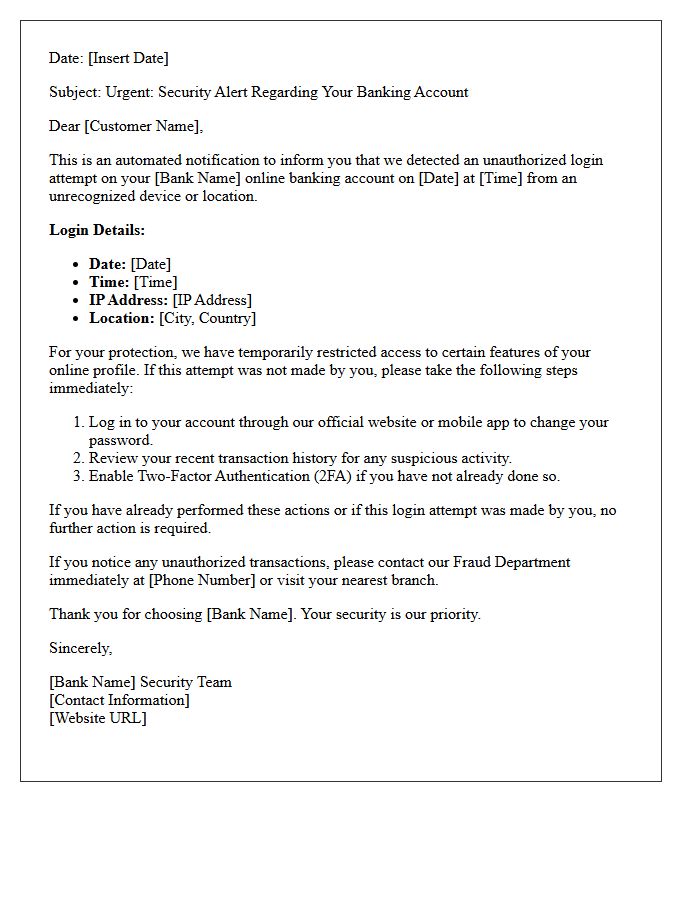
Receiving a letter regarding an unauthorized login attempt is a critical security warning. It indicates that someone potentially compromised your credentials. Immediately verify the source to avoid phishing scams. If the alert is legitimate, log in through the official bank portal to update your password and enable two-factor authentication. Review your recent transaction history for suspicious activity and contact your bank's fraud department if you notice discrepancies. Proactive monitoring and securing your digital identity are essential to preventing financial loss and ensuring long-term account protection.
Urgent Letter of Notification Concerning Unrecognized Account Access
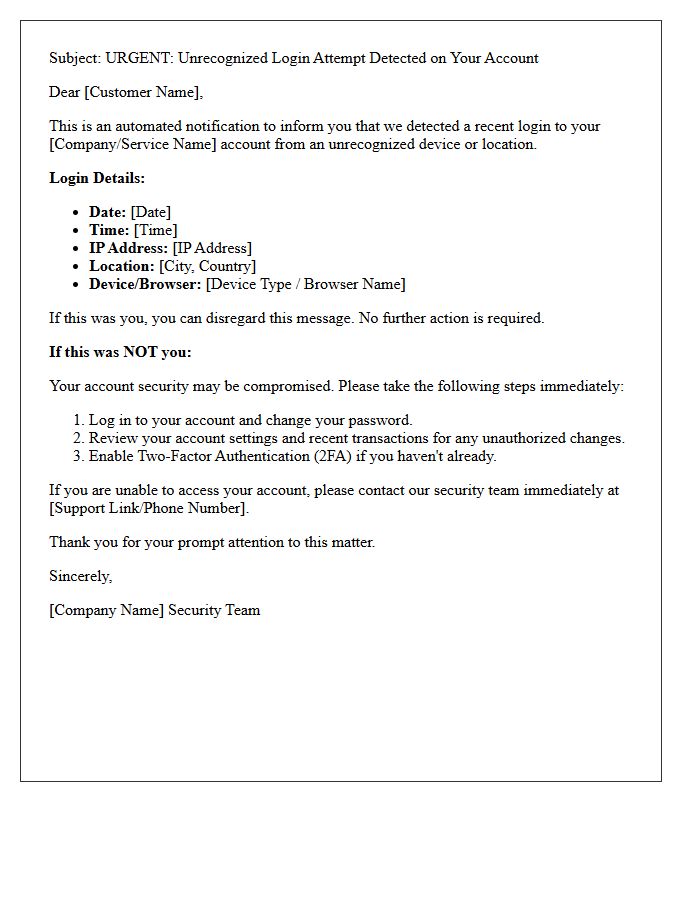
If you receive an Urgent Letter of Notification Concerning Unrecognized Account Access, you must act immediately to protect your cybersecurity. This alert indicates that an unauthorized individual may have bypassed your login credentials. To safeguard your sensitive data, manually navigate to the official website-avoiding suspicious links-to reset your password and enable multi-factor authentication. Promptly reviewing your recent transaction history and security settings is essential to mitigate potential identity theft or financial loss resulting from this unauthorized breach.
Security Alert Letter for Suspicious Online Banking Login
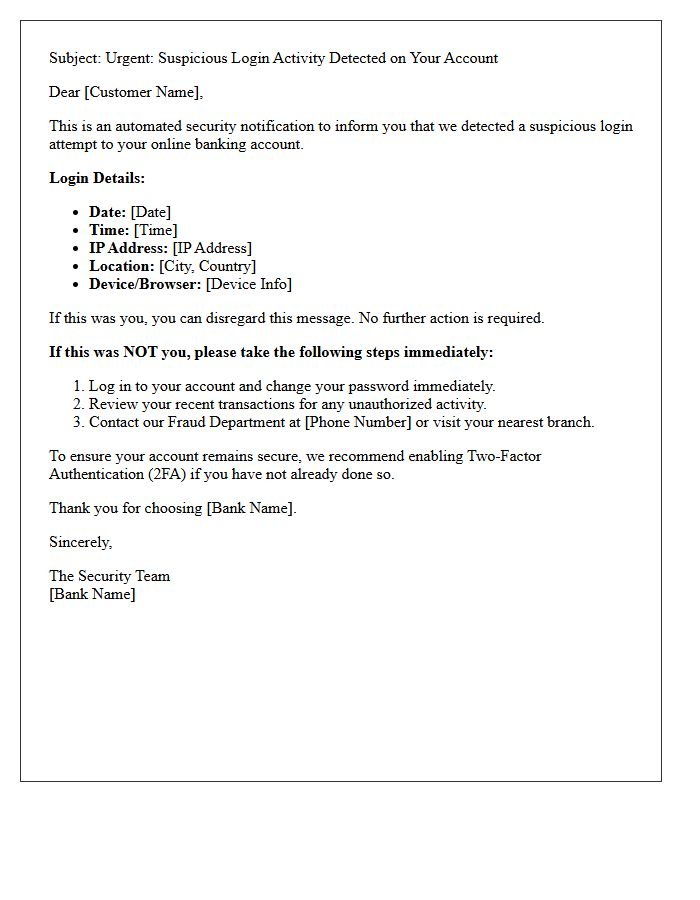
A security alert letter notifies you of a suspicious login attempt to your online banking account from an unrecognized device or location. The most critical action is to verify the activity immediately using the bank's official app or website. Never click links within the email, as they may lead to phishing sites. If the access was unauthorized, change your password and contact your bank's fraud department instantly to secure your funds. Protecting your login credentials and enabling two-factor authentication are essential steps to prevent unauthorized access and potential financial loss.
Official Letter of Notice for Failed Authentication Attempt
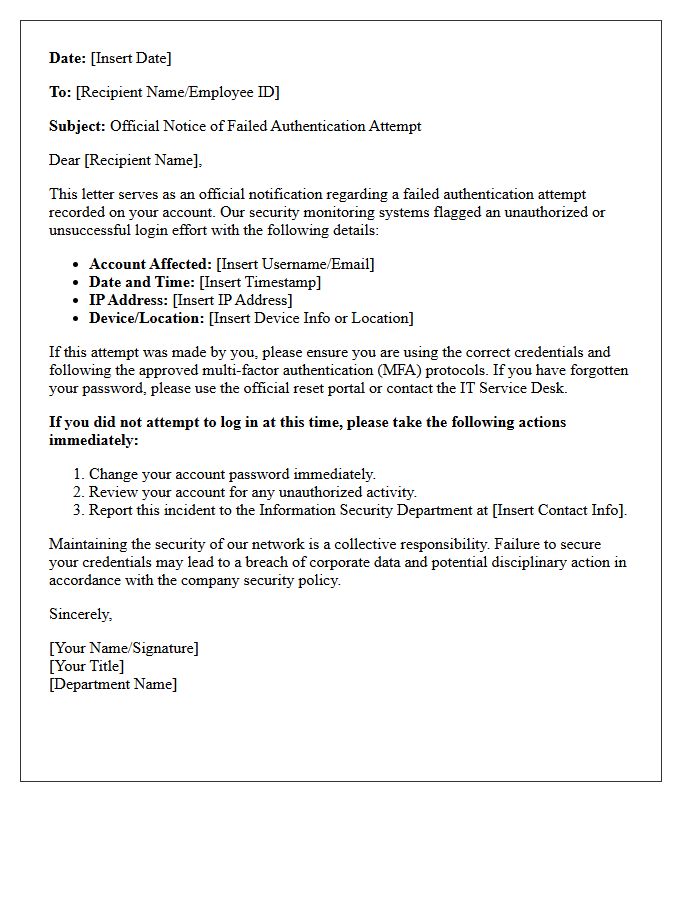
An Official Letter of Notice for Failed Authentication Attempt serves as a security alert regarding unauthorized access efforts. If you receive this document, it indicates that someone attempted to bypass your identity verification protocols. It is crucial to review the timestamp and location details provided to determine if the activity was malicious. Upon receipt, you should immediately update your credentials and enable multi-factor authentication to secure your account. Treating these notices with urgency prevents potential data breaches and ensures your sensitive information remains protected against evolving cyber threats.
Letter of Warning Regarding Unauthorized Mobile Banking Access
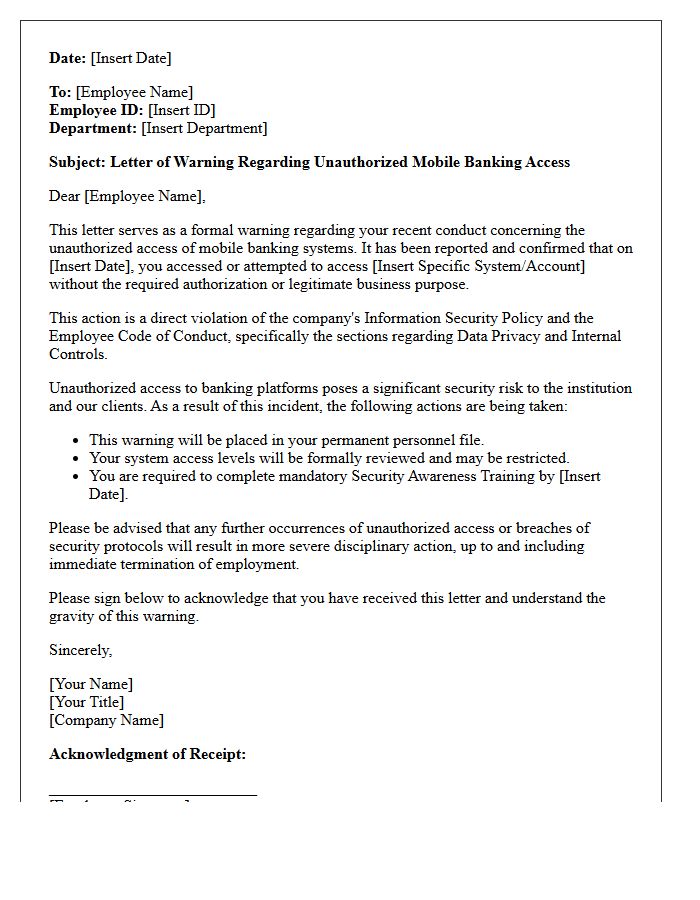
Receiving a Letter of Warning regarding unauthorized mobile banking access indicates a potential breach of security protocols. This formal notice often highlights suspicious login attempts or the use of unverified devices. It is critical to immediately update your credentials and enable multi-factor authentication to secure your funds. Failure to address these warnings could lead to account suspension or financial loss. Always verify the sender's authenticity to avoid phishing scams and contact your bank's official support line to confirm the security status of your mobile application and personal data.
Important Letter Notifying Unauthorized Account Login Attempt
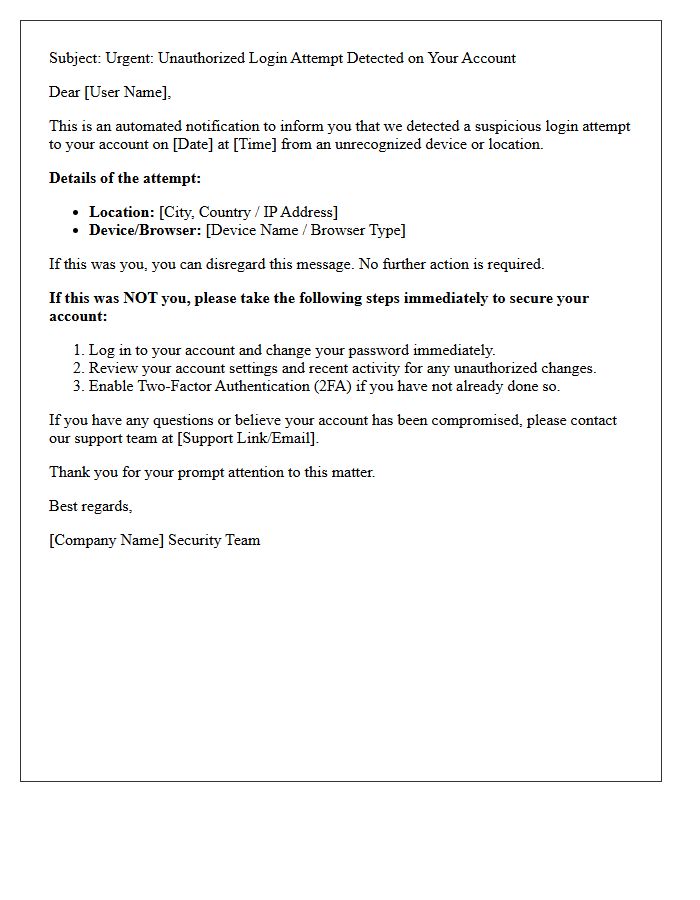
Receiving an unauthorized login notification is a critical security alert indicating that someone may have compromised your account credentials. If you did not initiate the access, you must immediately change your password using a secure, unique combination. Enable two-factor authentication (2FA) to add an essential layer of protection. Always verify the sender's email address to avoid phishing scams designed to steal sensitive data. Prompt action is vital to prevent identity theft, financial loss, or unauthorized data exposure. Security experts recommend reviewing your recent account activity logs to ensure no malicious changes were made.
Client Advisory Letter on Suspicious Web Login Activity
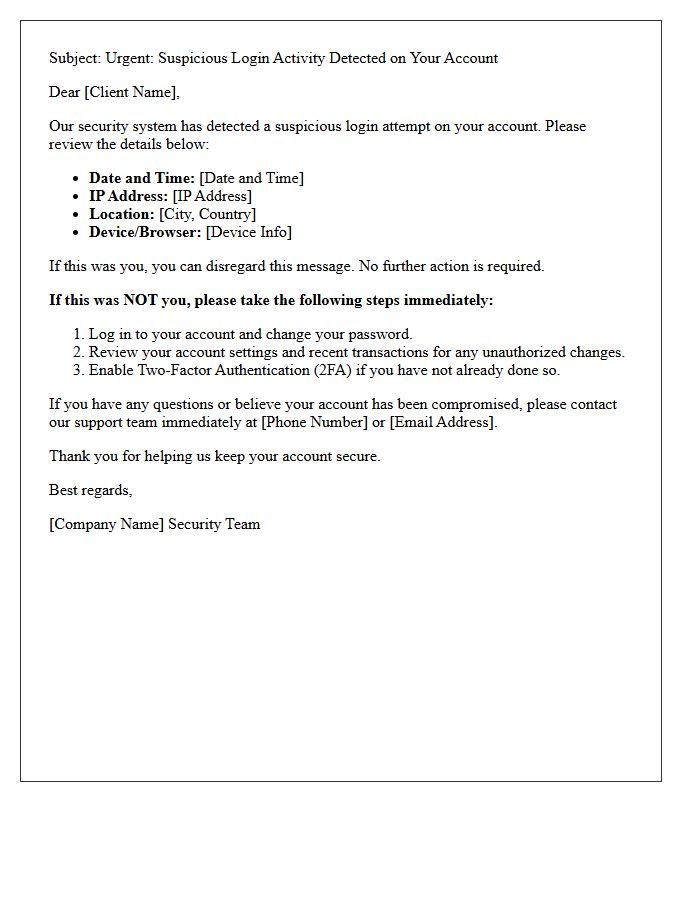
A Client Advisory Letter notifies users of potential security breaches involving unauthorized access attempts. Upon receiving this security alert, clients must immediately verify their recent account history and update their login credentials. These notices typically include details regarding the timestamp, IP address, and geographic location of the suspicious activity. It is critical to enable multi-factor authentication and contact official support channels to prevent identity theft. Timely communication ensures data protection and maintains the integrity of personal information against evolving cyber threats and phishing risks.
Letter of Alert for Unverified Device Banking Access
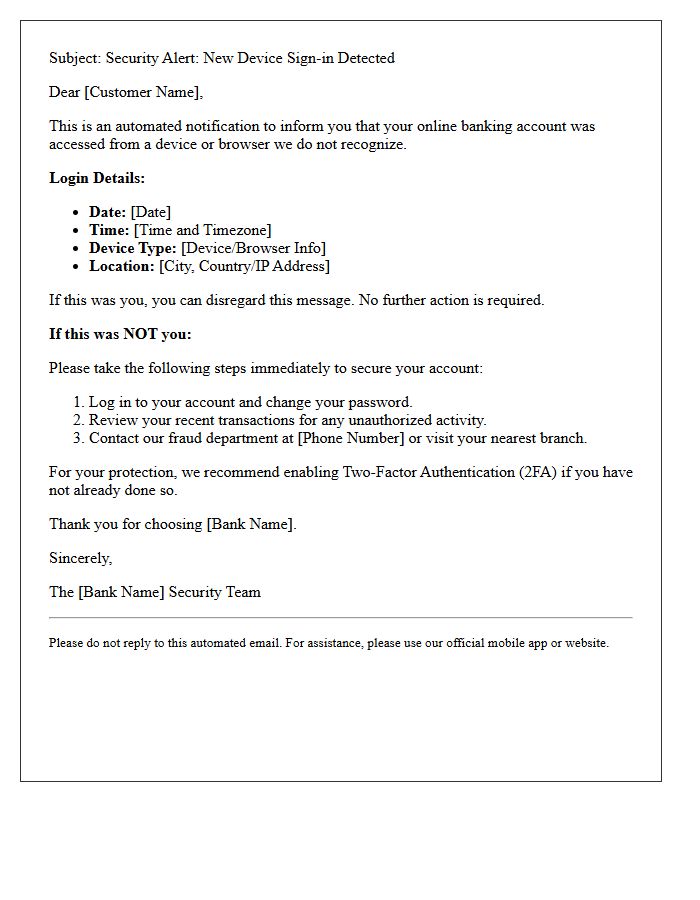
A Letter of Alert serves as a critical security notification from your financial institution regarding unverified device access. If you receive this, it indicates an attempt to log into your banking account from an unrecognized smartphone or computer. You must immediately verify the activity to protect your funds. If the login was not yours, change your password instantly and contact the bank's fraud department. Monitoring these alerts is essential for preventing unauthorized transactions and maintaining robust cybersecurity for your personal assets and sensitive financial data.
Security Notification Letter for Blocked Account Login
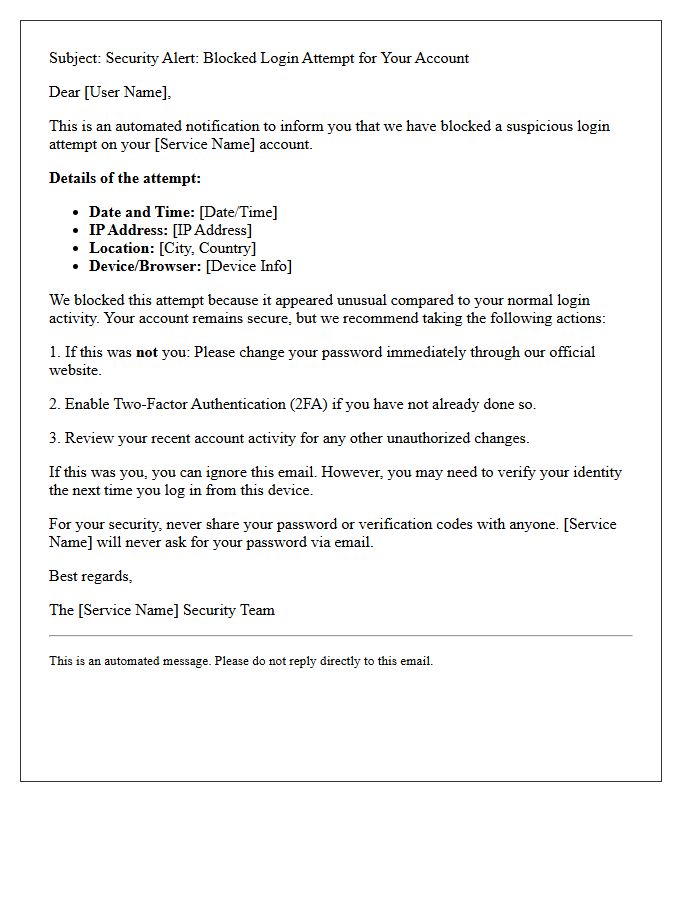
A security notification letter alerts you to a blocked login attempt on your account. This occurs when a system detects suspicious activity, such as an unrecognized device or an incorrect password. Upon receiving this security alert, you must immediately verify if the access was yours. If not, change your credentials instantly to prevent unauthorized access. Always check the sender's email address to avoid phishing scams and use official channels to secure your personal data and restore account access safely.
Letter of Action Required for Unauthorized Login Prevention
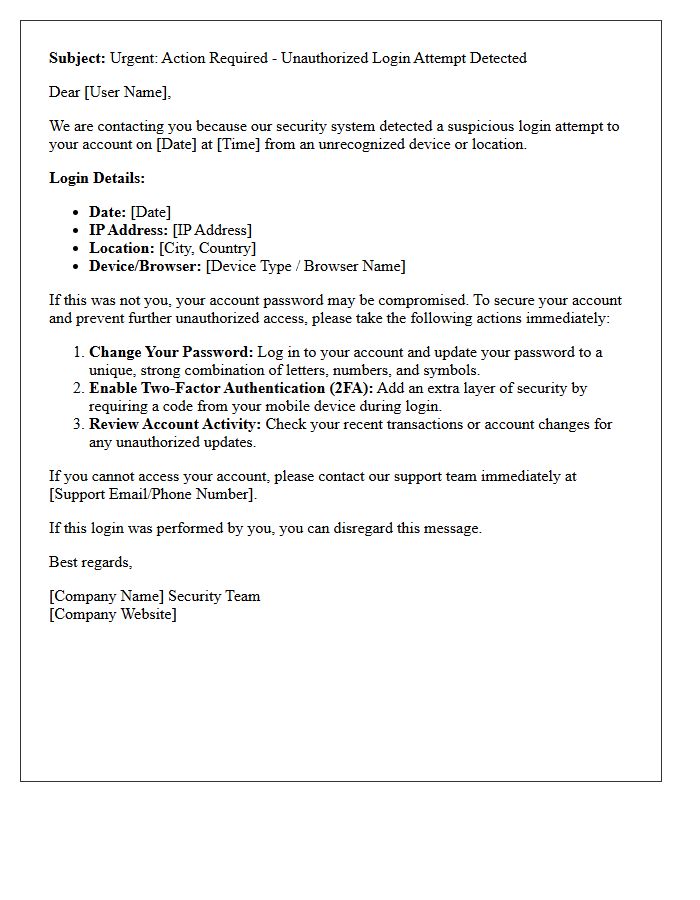
A Letter of Action Required is a critical notification sent when unauthorized login attempts are detected on your account. This formal request demands immediate identity verification or a password reset to prevent data breaches. Ignoring this notice can lead to permanent account suspension or identity theft. To ensure security, always access your account through official channels rather than clicking suspicious links. Promptly following the instructions is the most effective way to safeguard your sensitive information and maintain account integrity against malicious cyber threats.
Fraud Prevention Letter Detailing Unrecognized Login Attempt
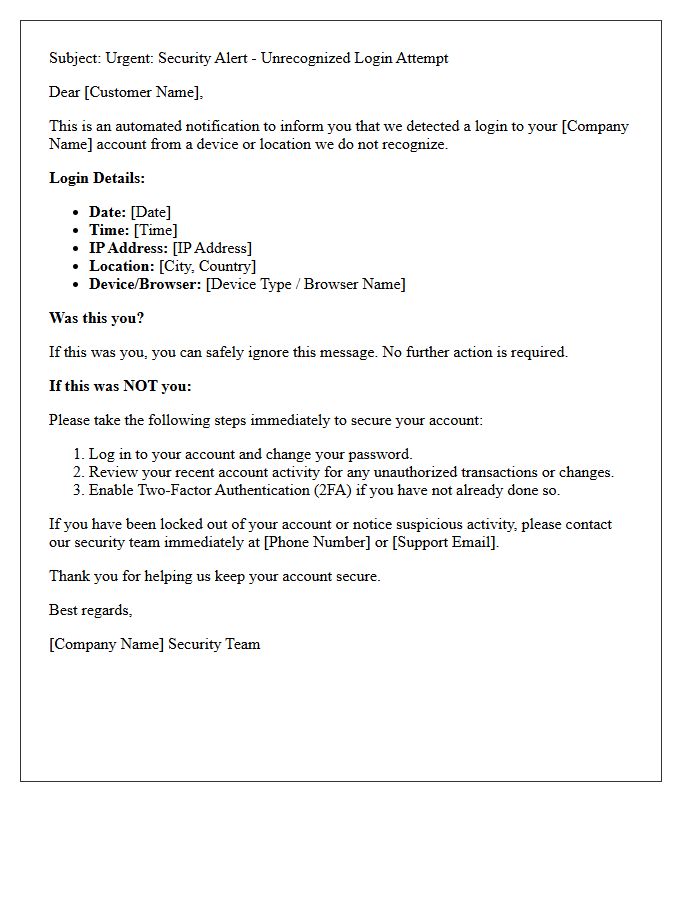
Receiving a fraud prevention letter regarding an unrecognized login attempt is a critical security warning. This document alerts you that someone tried to access your account from an unfamiliar location or device. It is essential to verify the sender's authenticity before clicking any links to avoid phishing scams. If the attempt was not yours, immediately change your password and enable multi-factor authentication. Protecting your account security requires prompt action to prevent unauthorized data access or financial loss. Always report suspicious activity directly through official institutional channels for maximum protection.
Account Security Letter Addressing Suspected Unauthorized Login
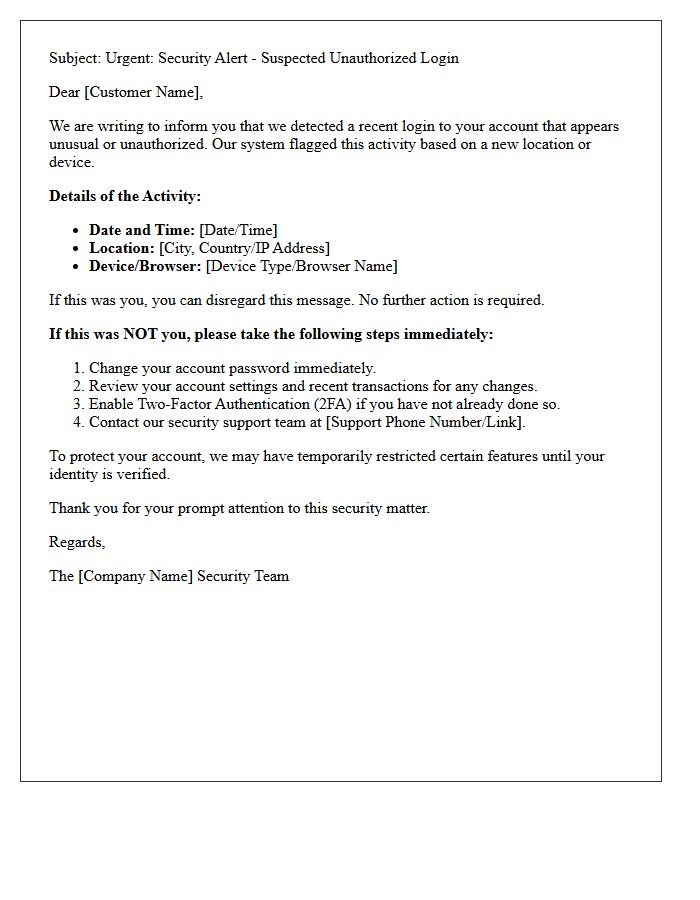
If you receive an Account Security Letter regarding a suspected unauthorized login, immediate action is vital. This alert indicates that your credentials may be compromised via an unrecognized device or location. To safeguard your data, change your password instantly using a unique, complex string. Enable Two-Factor Authentication (2FA) to add a critical layer of protection. Review your recent account activity for discrepancies and ensure your recovery contact details remain accurate. Never click suspicious links within the email; instead, navigate directly to the official website to secure your profile and prevent identity theft.
What should I do if I receive a notification of an unauthorized login attempt?
If you receive an alert regarding a login attempt you did not authorize, immediately change your account password and ensure that two-factor authentication (2FA) is enabled to secure your data.
How can I tell if a login attempt notification is legitimate or a phishing scam?
Legitimate security alerts will never ask for your password or verification code via email. Check the sender's email address for authenticity and avoid clicking links; instead, log in directly through the official website or app to review your security logs.
Why did I receive an unauthorized login alert if I didn't share my password?
Unauthorized login attempts often occur because your credentials were leaked in a third-party data breach or obtained through malware. Hackers use automated tools to test stolen email and password combinations across various platforms.
What does a "blocked login attempt" notification mean?
A blocked login notification means that the service provider detected a suspicious login-often from an unrecognized device or location-and prevented access to your account to protect your information.
Is my account compromised if someone attempted to log in?
An attempt does not necessarily mean your account was accessed. However, it indicates that your username or email is known to attackers. To prevent a full compromise, update your security settings and use a unique, complex password for every account.

Comments