
Receiving a Continuous Overdraft Account Closure Notice means your bank intends to close your account due to a prolonged negative balance. This formal notification outlines the required steps to repay the debt and avoid negative impacts on your credit score. Understanding your rights and responsibilities is essential for financial recovery. To assist you, below are some ready to use template.
Image cover: Notice of Closure for Continuous Overdraft Accounts: Letter Samples and Templates
Letter Samples List
- Continuous Overdraft Account Closure Notice Letter
- Final Account Closure Letter Due to Continuous Overdraft
- Notice of Account Termination for Prolonged Overdraft Letter
- Banking Institution Continuous Overdraft Closure Letter
- Letter of Account Closure for Unresolved Negative Balance
- Continuous Overdraft Policy Violation Closure Letter
- Excessive Overdraft Account Termination Notice Letter
- Letter of Closure for Continuous Overdraft Default
- Standard Bank Account Closure Letter for Overdraft
- Letter of Final Notice and Overdraft Account Closure
- Uncured Overdraft Balance Account Closure Letter
- Commercial Banking Continuous Overdraft Closure Letter
Continuous Overdraft Account Closure Notice Letter
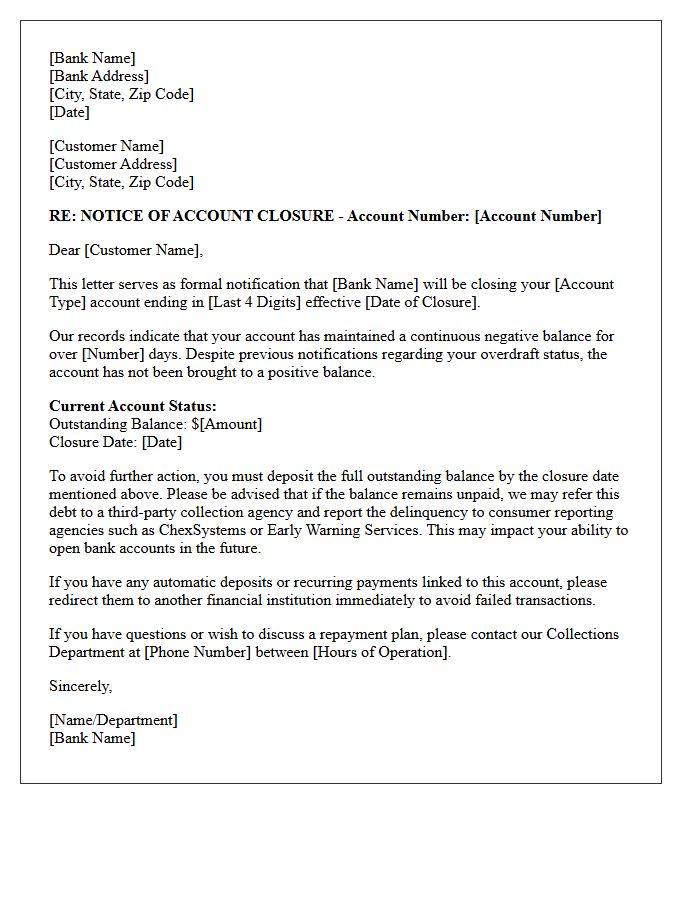
A Continuous Overdraft Account Closure Notice is a formal warning issued by banks when a balance remains negative for an extended period. This letter informs the holder that their account will be permanently terminated unless the debt is cleared immediately. It is crucial to act swiftly to avoid negative credit reporting and potential legal action. To prevent closure, you must deposit funds to cover the outstanding balance and any accrued interest before the specified deadline, ensuring your financial standing remains intact and future banking services are not restricted.
Final Account Closure Letter Due to Continuous Overdraft
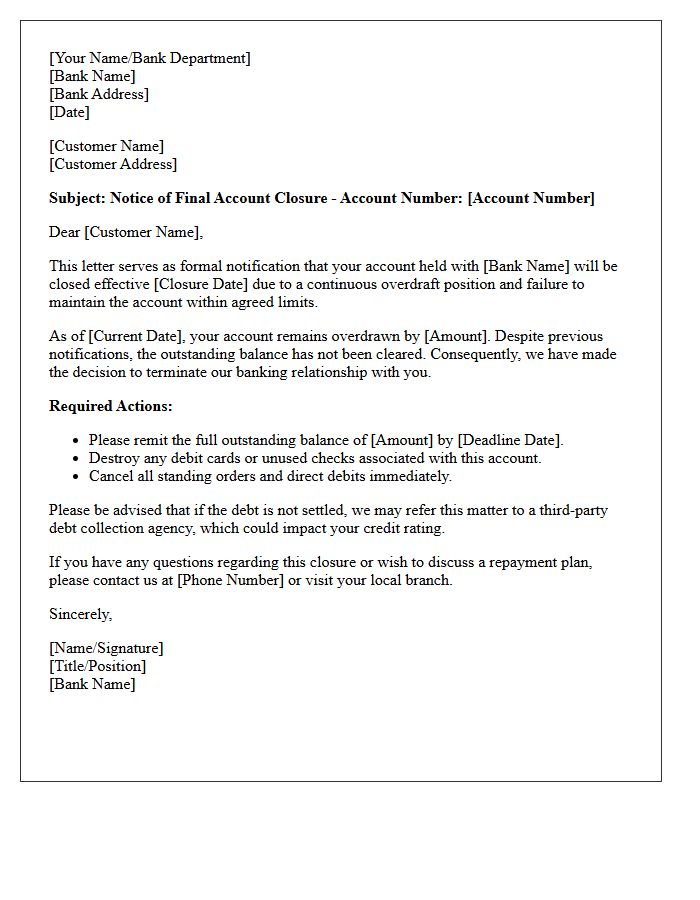
A Final Account Closure Letter serves as formal notification that a bank is terminating a banking relationship due to a persistent negative balance. This occurs when an account remains in a continuous overdraft state beyond the permitted timeframe. To protect your credit score, you must immediately settle the outstanding debt and any accrued fees. Failure to resolve this balance can lead to collection actions and negative reporting to credit bureaus, making it difficult to open future financial accounts. Always ensure all outstanding payments are cleared before the final closure date.
Notice of Account Termination for Prolonged Overdraft Letter
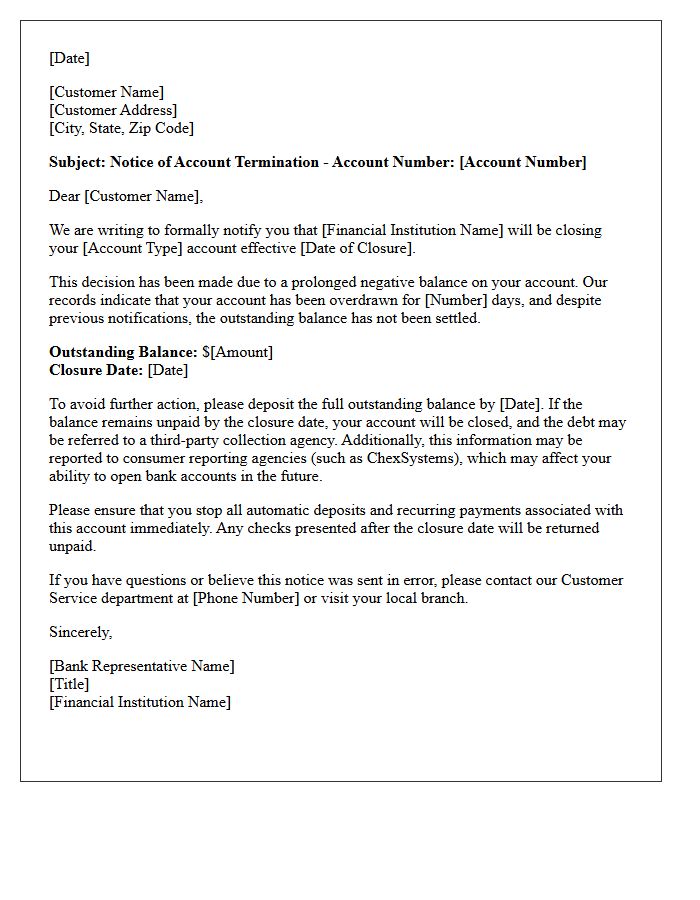
A Notice of Account Termination for Prolonged Overdraft is a critical legal warning issued by a financial institution. This letter informs the customer that their bank account will be closed due to a persistent negative balance. It typically provides a final deadline to deposit funds and settle the debt. Failure to resolve this issue can result in your details being reported to credit bureaus or specialized reporting agencies like ChexSystems, which severely impacts your ability to open future accounts. Promptly repaying the overdraft is essential to protect your financial reputation.
Banking Institution Continuous Overdraft Closure Letter
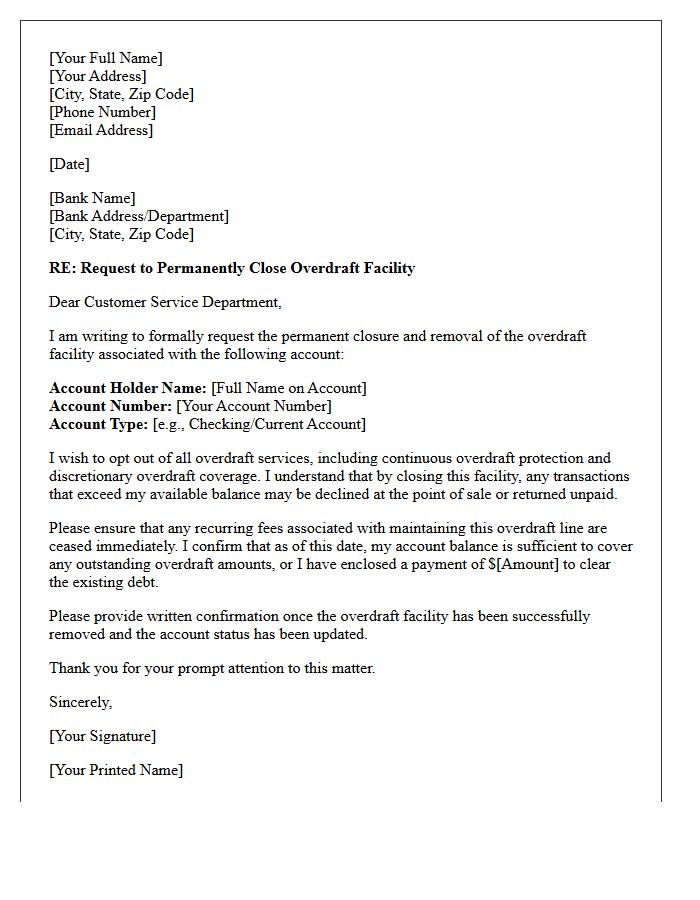
A Banking Institution Continuous Overdraft Closure Letter is a formal notice stating your account will be shuttered due to a prolonged negative balance. This final warning typically follows multiple requests to rectify the debt. Once issued, you must immediately repay the outstanding funds to avoid credit score damage and reports to specialized databases like ChexSystems. Such records can prevent you from opening future bank accounts. To resolve this, contact your bank's collections department instantly to negotiate a repayment plan and protect your financial standing.
Letter of Account Closure for Unresolved Negative Balance
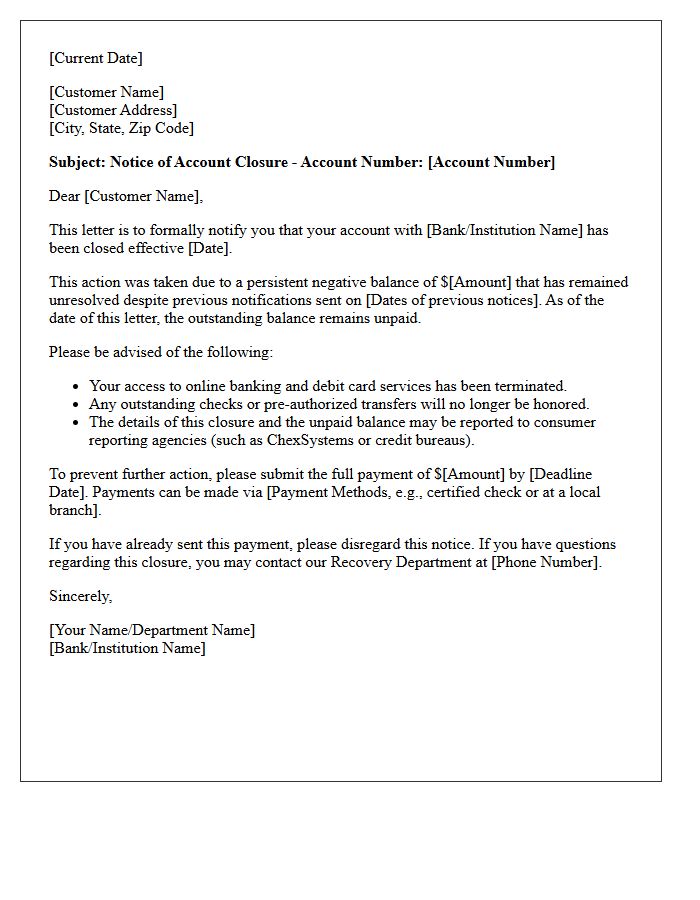
A Letter of Account Closure for Unresolved Negative Balance is a formal notice issued by a financial institution when an account remains overdrawn for an extended period. This document signifies that the bank is terminating the relationship due to financial delinquency. It is crucial to settle the outstanding debt immediately to prevent the balance from being sent to a collection agency. Failure to resolve the deficit can severely damage your credit score and result in a negative report to ChexSystems, hindering your ability to open future bank accounts.
Continuous Overdraft Policy Violation Closure Letter
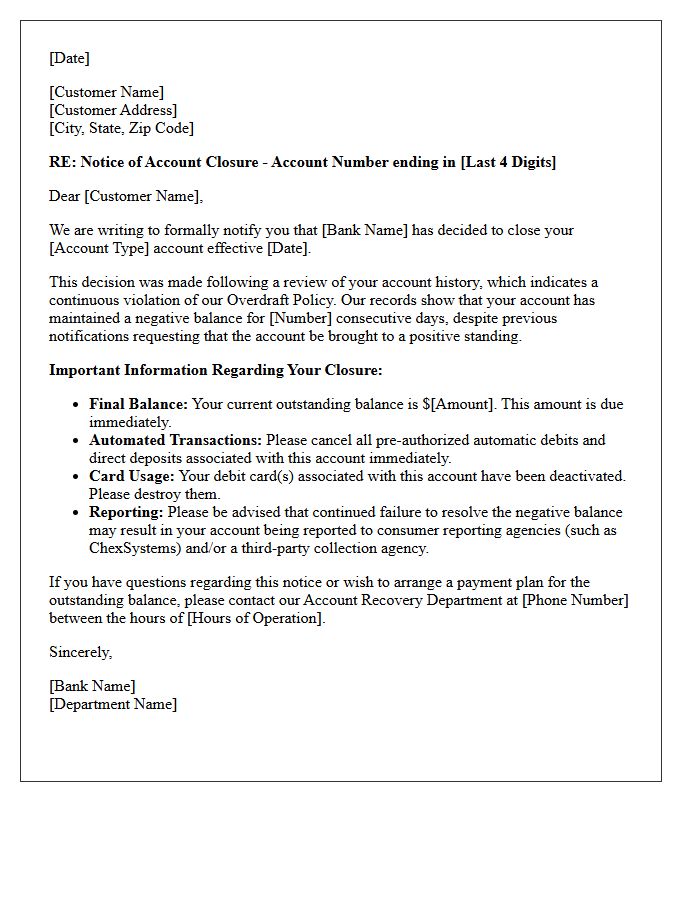
A Continuous Overdraft Policy Violation Closure Letter is a formal notification from a bank stating they are terminating your account. This occurs when an account remains in a negative balance beyond the permitted timeframe, typically 30 to 60 days. Receiving this notice means the bank has deemed the debt unrecoverable through standard means. This action severely impacts your ChexSystems report, making it difficult to open new bank accounts elsewhere. To minimize long-term financial damage, you must immediately contact the institution to settle the outstanding debt and request a neutral reporting status.
Excessive Overdraft Account Termination Notice Letter
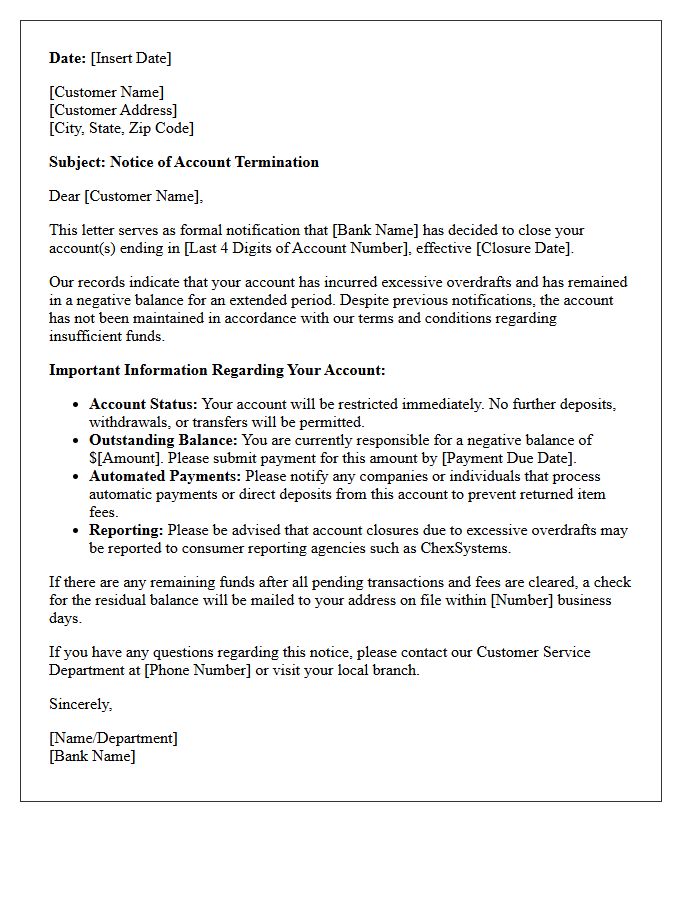
An Excessive Overdraft Account Termination Notice Letter is a formal notification that a financial institution is closing your bank account due to repeated negative balances. Banks issue this letter when a customer consistently fails to maintain sufficient funds, violating the account agreement. It is legally required to inform you of the closure date and how to reclaim remaining funds. Receiving this notice can severely damage your ChexSystems report, making it difficult to open new banking accounts in the future. Immediate action is necessary to settle outstanding debts and avoid further financial penalties.
Letter of Closure for Continuous Overdraft Default
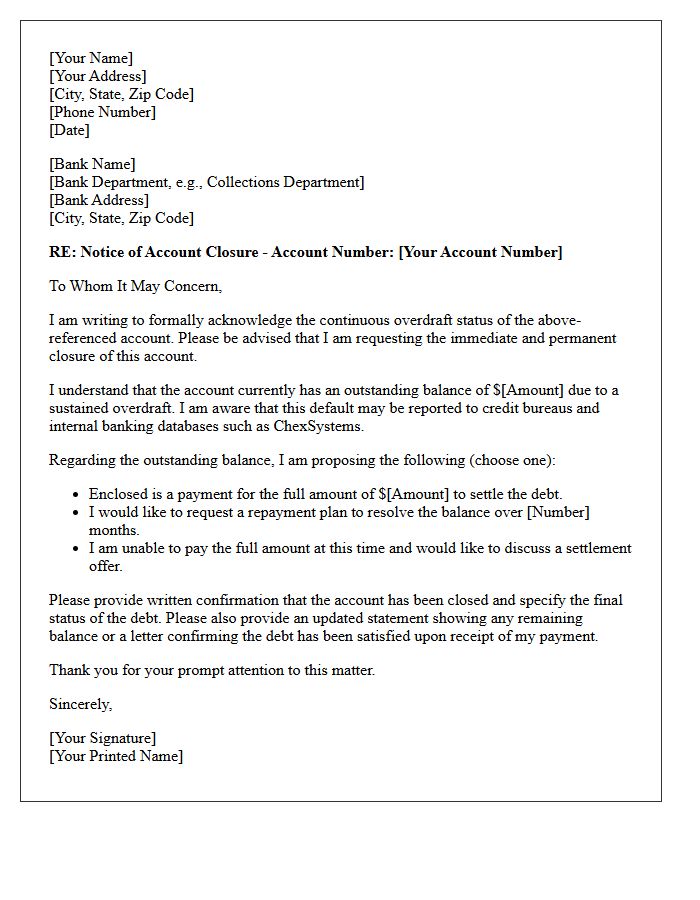
A Letter of Closure for Continuous Overdraft Default is a formal notice issued by a bank to terminate an account due to an unresolved negative balance. This critical document signifies that the financial institution has ceased providing credit facilities because the customer failed to repay borrowed funds within the specified timeframe. Receiving this letter often leads to a reported default on your credit profile, severely impacting your future borrowing capacity. It is essential to settle the outstanding debt immediately to prevent further legal action or permanent blacklisting by banking authorities.
Standard Bank Account Closure Letter for Overdraft
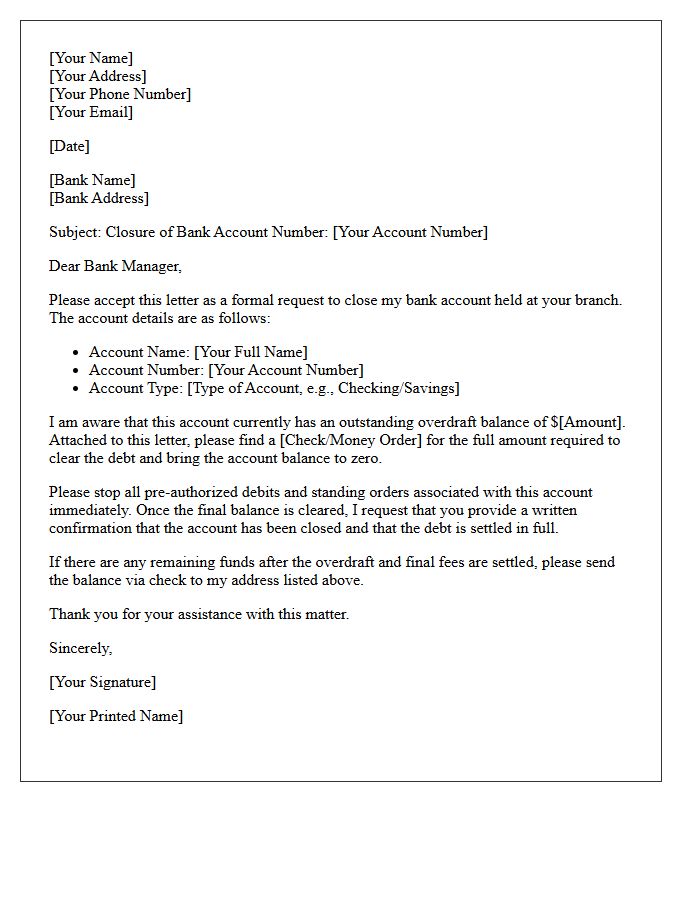
When drafting a Standard Bank Account Closure Letter for an account with an overdraft, you must explicitly state your intent to terminate the banking relationship. It is crucial to acknowledge the outstanding debt and provide a clear plan for repayment or confirm that the balance has been settled. Include your full name, account number, and contact details to ensure processing efficiency. Request written confirmation once the account is officially closed to prevent future accrued interest or negative impacts on your credit score during the final settlement process.
Letter of Final Notice and Overdraft Account Closure
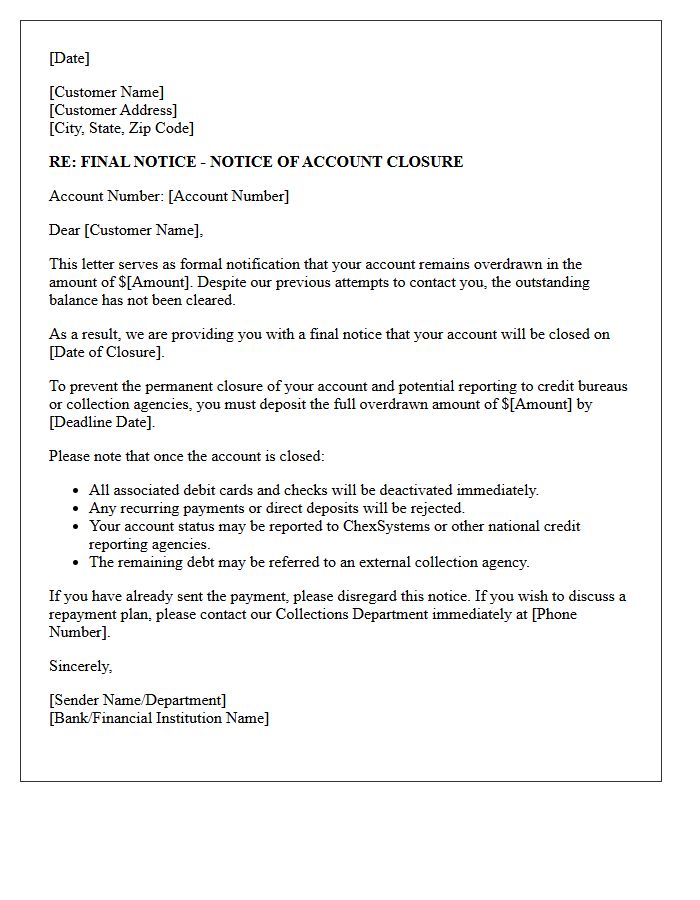
A Letter of Final Notice serves as a formal warning that your bank intends to initiate an overdraft account closure. This occurs after a prolonged period of a negative balance and unpaid fees. Receiving this means you have a final deadline to deposit funds before the bank reports the delinquency to agencies like ChexSystems. Such reporting severely damages your financial reputation, making it difficult to open new accounts. To prevent permanent closure, you must immediately settle the outstanding debt or negotiate a repayment plan with the institution.
Uncured Overdraft Balance Account Closure Letter
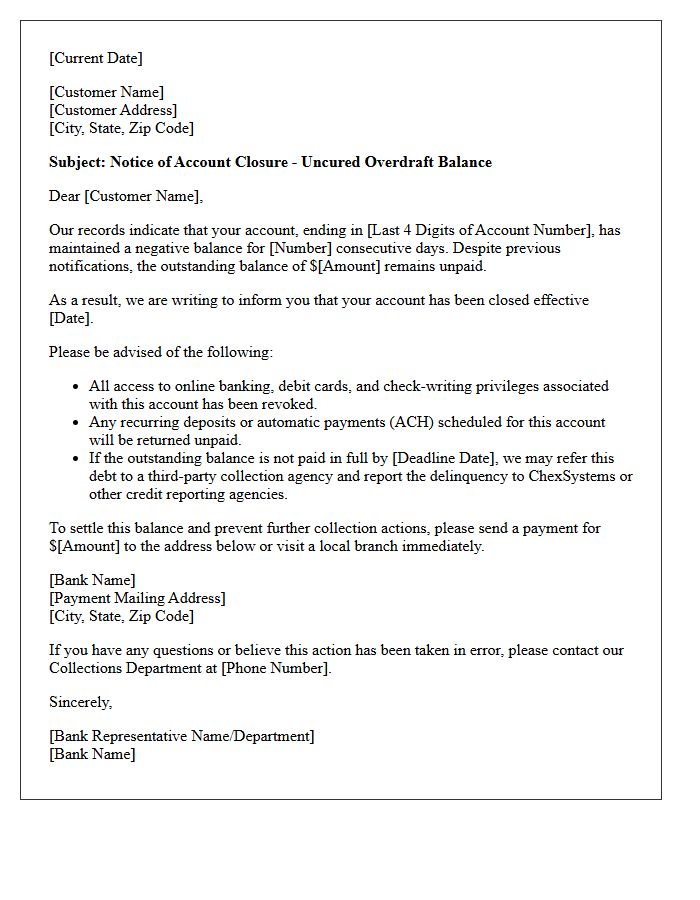
An Uncured Overdraft Balance Account Closure Letter is a formal notice from a bank stating they are terminating your banking relationship. This occurs after a negative balance remains unpaid for an extended period, typically 30 to 60 days. Receiving this letter is critical because the debt is often reported to ChexSystems, which can prevent you from opening new bank accounts for several years. To protect your financial reputation, you must immediately pay the outstanding debt or negotiate a settlement to avoid long-term collection actions and negative credit reporting.
Commercial Banking Continuous Overdraft Closure Letter
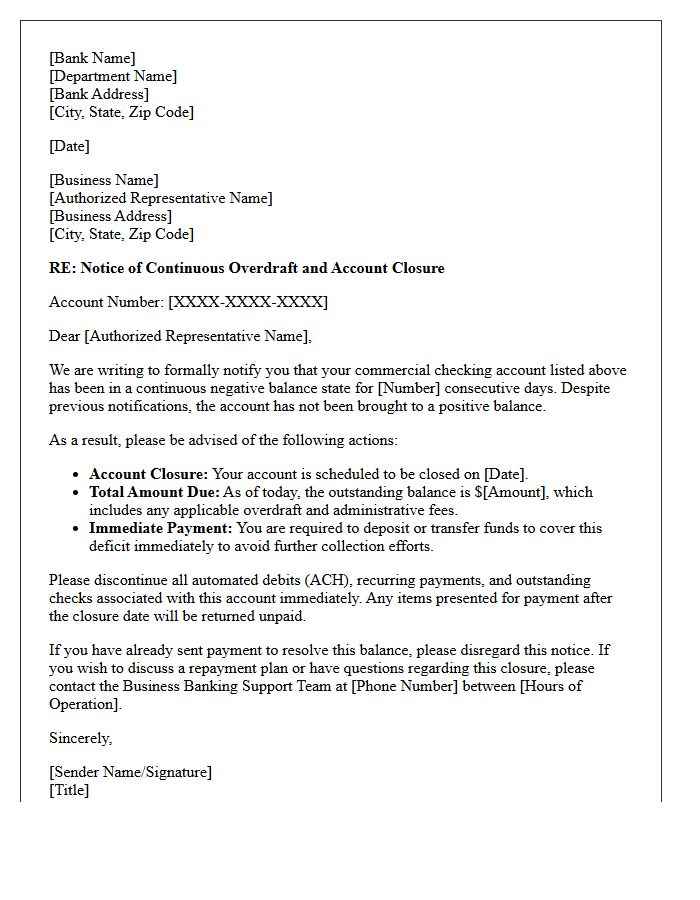
A Commercial Banking Continuous Overdraft Closure Letter is a formal notification sent when a business account remains overdrawn beyond the permitted timeframe. This document serves as a final demand for repayment to avoid account termination. It is crucial to immediately clear the balance or contact the bank to negotiate a repayment plan. Failure to resolve this status can lead to a registered default, legal action, and a severely damaged credit profile. Prompt communication is the most effective way to prevent permanent account closure and ensure future access to business financing.
What is a Continuous Overdraft Account Closure Notice?
A Continuous Overdraft Account Closure Notice is a formal notification sent by a bank informing a customer that their account will be closed because it has remained in a negative balance for an extended period, typically exceeding 30 to 60 days.
How long do I have to respond to a continuous overdraft notice before my account is closed?
Most financial institutions provide a 14 to 30-day grace period from the date of the notice to deposit sufficient funds to bring the account balance to zero or higher to prevent permanent closure.
Will a bank account closed due to continuous overdraft affect my credit score?
While the closure itself isn't reported to credit bureaus, any unpaid debt sent to a collection agency will damage your credit score. Additionally, the closure will be reported to ChexSystems, which may prevent you from opening new bank accounts for several years.
Can I reopen an account after it has been closed for a continuous negative balance?
Generally, once an account is closed due to a continuous overdraft, it cannot be reopened. You must pay the outstanding debt in full and may need to apply for a "second chance" checking account at a different institution.
What should I do if I receive a closure notice but cannot afford to pay the full balance?
You should contact your bank's loss prevention or recovery department immediately to negotiate a repayment plan. Proactively setting up a settlement can sometimes prevent the bank from reporting the account as a "charged-off" debt to consumer reporting agencies.

Comments