
Manage your finances effectively by understanding the impact of insufficient funds on your accounts. Our guide explains how banks process transactions that exceed your balance and what to expect in an official overdraft notice. Learn to avoid costly penalties and maintain good standing with your financial institution. To help you communicate with your bank, below are some ready to use templates.

Image cover: Mastering Insufficient Funds and Overdraft Communications: Proven Notice Templates and Best Practices
Letter Samples List
- Insufficient Funds Notification Letter
- Notice of Insufficient Funds Letter
- Account Overdrawn Alert Letter
- Checking Account Overdraft Letter
- Returned Item Insufficient Funds Letter
- Overdraft Fee Assessment Letter
- Negative Balance Resolution Letter
- Overdraft Protection Activation Letter
- Final Notice Overdraft Collection Letter
- Business Account Overdraft Letter
- Courtesy Pay Overdraft Notice Letter
- Insufficient Funds Penalty Warning Letter
Insufficient Funds Notification Letter
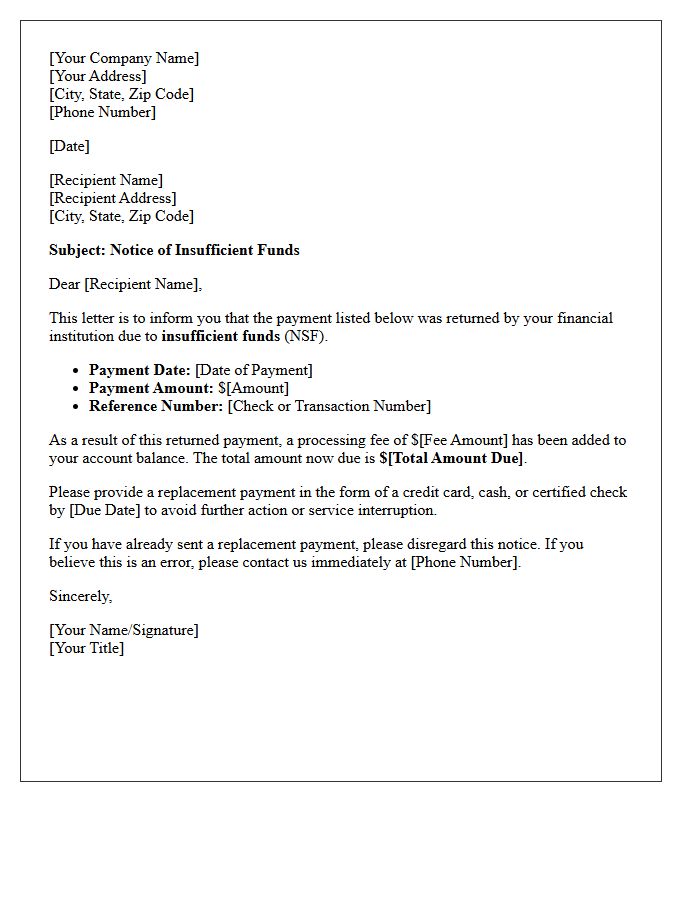
An Insufficient Funds Notification Letter is a formal notice issued when a transaction fails due to a lack of available balance. It serves as a legal record of a dishonored payment, often requiring the recipient to provide immediate restitution plus additional overdraft fees. Understanding this document is crucial for resolving financial discrepancies and avoiding legal penalties or negative impacts on your credit score. Promptly addressing the notice helps maintain your financial credibility and ensures that outstanding obligations are settled without further complications or service interruptions.
Notice of Insufficient Funds Letter
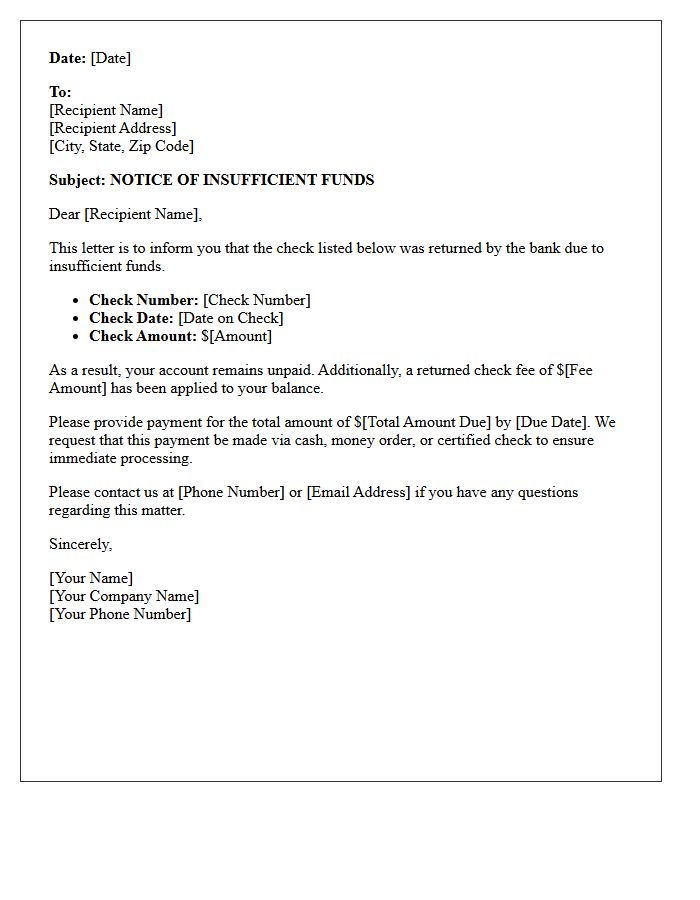
A Notice of Insufficient Funds Letter informs a recipient that their payment failed due to non-sufficient funds in their bank account. This formal notification requires the payer to settle the outstanding balance immediately to avoid penalties or legal consequences. It typically includes the original amount owed, any additional returned check fees, and a deadline for repayment. Responding promptly is essential to maintain a positive credit standing and prevent the suspension of services or further collection actions by the creditor.
Account Overdrawn Alert Letter
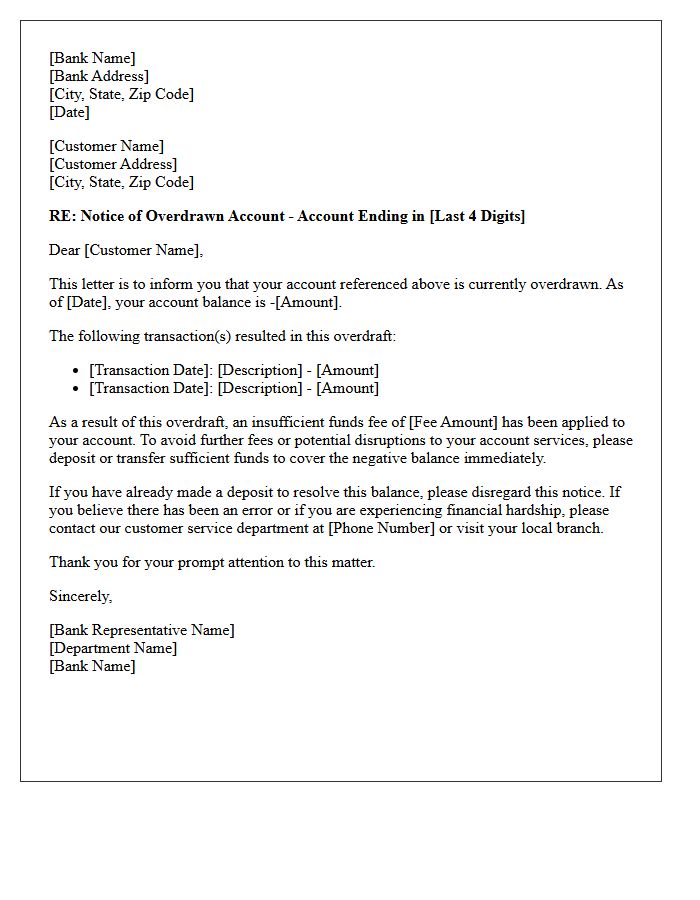
An Account Overdrawn Alert Letter is an official notification sent by a bank when your balance falls below zero. Receiving this notice means you must immediately deposit funds to resolve the negative balance and avoid further penalties. Timely action is critical because overdraft fees can accumulate daily, potentially impacting your credit score if left unaddressed. Always review the letter to verify transactions, as it serves as a formal warning to rectify account status and maintain financial standing with your banking institution.
Checking Account Overdraft Letter
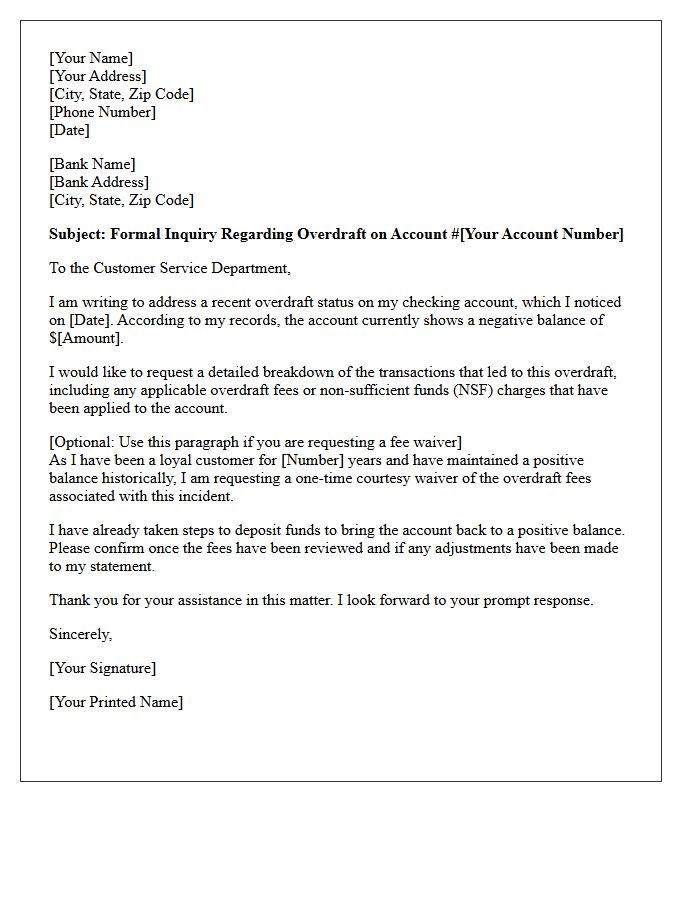
A Checking Account Overdraft Letter is a formal notice from your bank indicating that a transaction exceeded your available balance. This document details the overdraft fees incurred and the negative balance currently held in the account. To avoid additional NSF fees or account closure, you must promptly deposit funds to cover the deficit. Understanding this letter is crucial for maintaining a positive banking history and preventing long-term credit damage. Always review your overdraft protection settings to manage future spending risks effectively.
Returned Item Insufficient Funds Letter
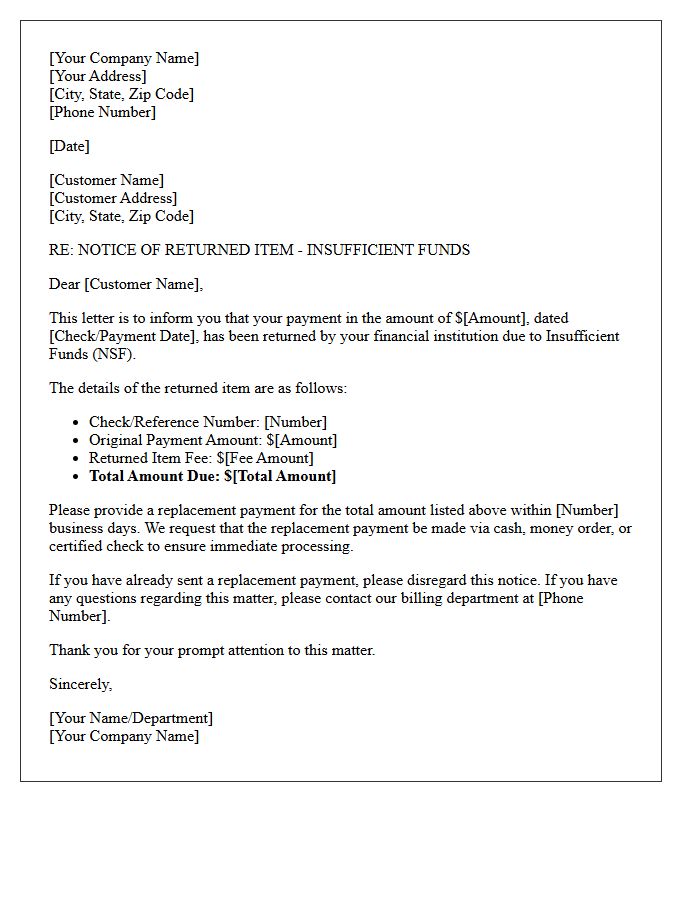
A Returned Item Insufficient Funds Letter is a formal notification sent by a financial institution when a payment fails due to a lack of available balance. This notice informs the account holder that a check or electronic transfer was rejected, often resulting in NSF fees. It is crucial to address these letters immediately to avoid overdraft penalties, negative impacts on credit history, or potential legal action from creditors. Always ensure funds are present before authorizing transactions to maintain a healthy financial standing and prevent service disruptions.
Overdraft Fee Assessment Letter
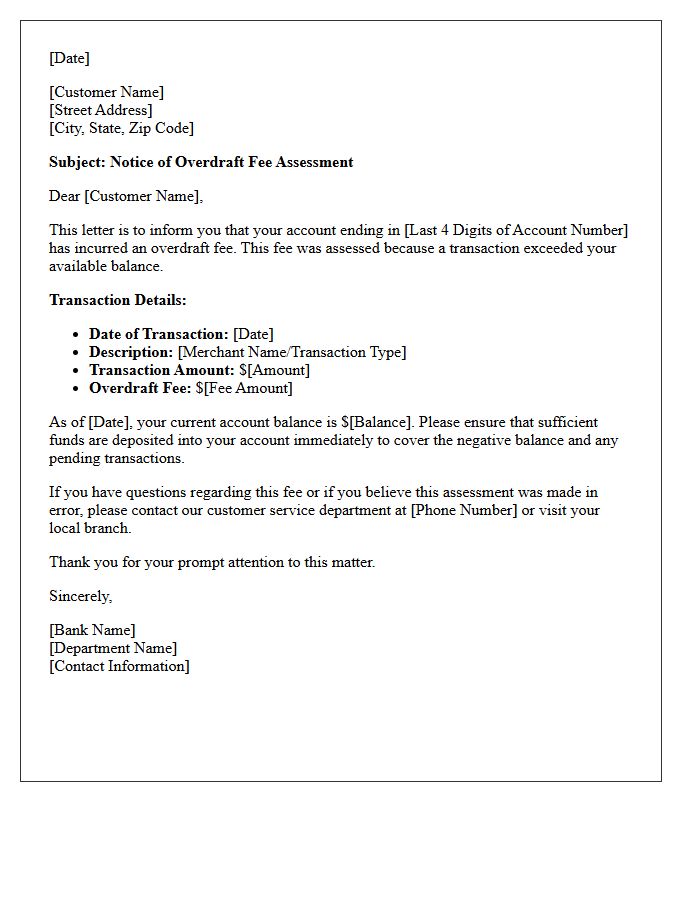
An Overdraft Fee Assessment Letter is a formal notification from your bank stating that a transaction exceeded your available balance, resulting in a penalty charge. This document details the specific transaction date, the amount overdrawn, and the resulting fee applied to your account. To avoid recurring costs, it is essential to monitor your daily balance and review your bank's overdraft protection policies. Timely action after receiving this letter can help you rectify a negative balance and potentially negotiate a fee waiver with your financial institution.
Negative Balance Resolution Letter
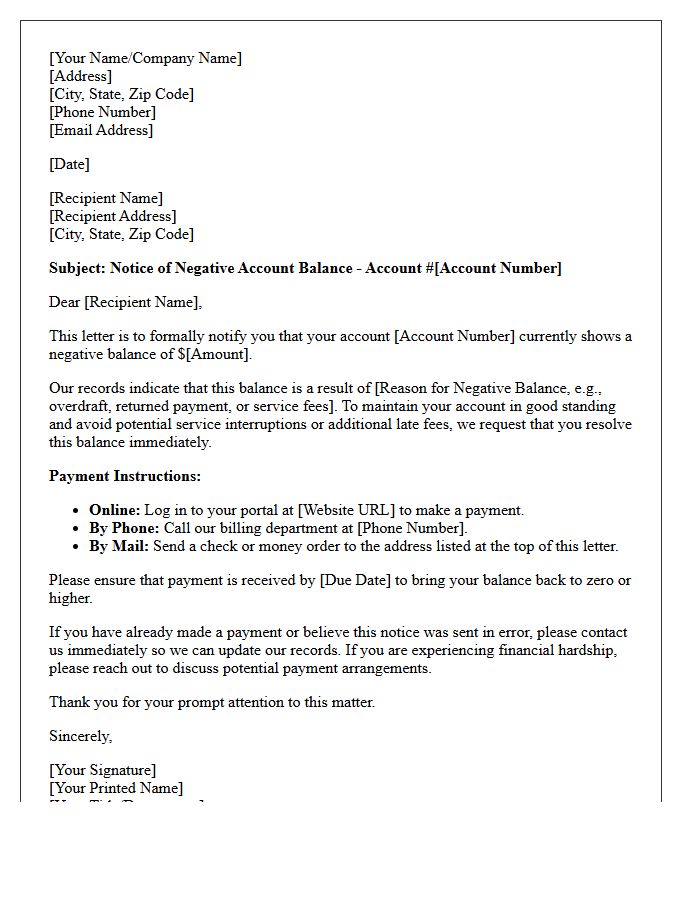
A Negative Balance Resolution Letter is a formal notice sent to account holders to address an outstanding overdraft or deficit. This document outlines the exact amount owed and provides a deadline for repayment to avoid account closure or credit reporting. It often includes repayment options or settlement offers to help restore the balance to zero. Promptly responding to this letter is crucial to maintaining a healthy banking relationship and preventing long-term damage to your financial standing or eligibility for future credit services.
Overdraft Protection Activation Letter
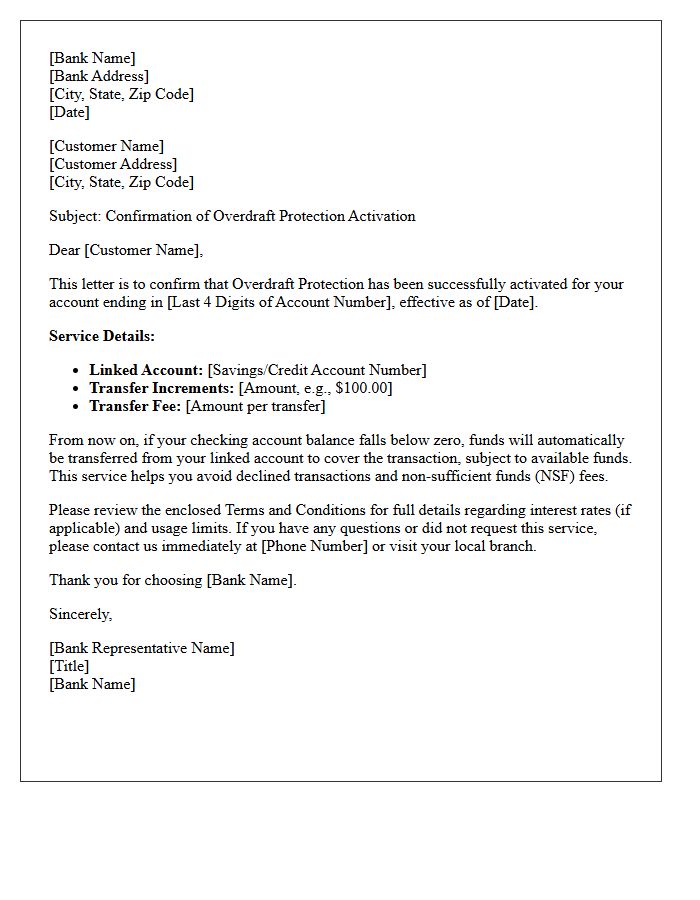
An Overdraft Protection Activation Letter confirms that your bank has linked a secondary funding source to your checking account. This formal notice outlines the specific terms and conditions of the service, including potential transfer fees and interest rates. It is essential to verify which accounts are connected to ensure seamless coverage during insufficient fund events. Activating this feature helps you avoid declined transactions and costly non-sufficient funds (NSF) penalties. Always review the letter to understand your financial liability and the steps required to manage or cancel the protection.
Final Notice Overdraft Collection Letter
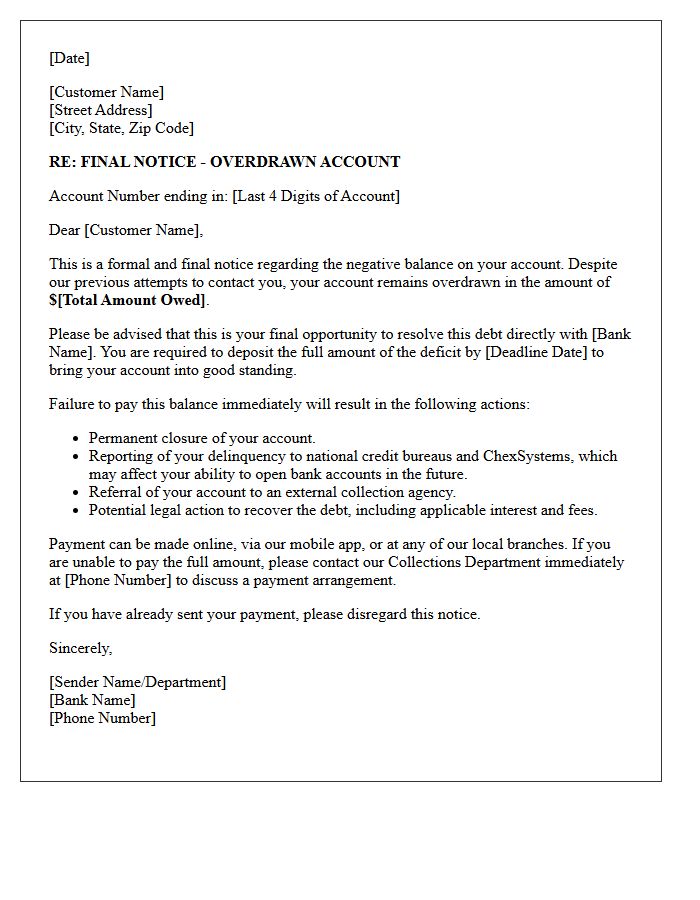
A Final Notice Overdraft Collection Letter is a critical legal warning from a financial institution indicating that your account remains negative despite previous requests. This document serves as the last opportunity to resolve a debt obligation before the bank pursues aggressive measures. Failure to pay immediately often results in the permanent closure of your account and the referral of your balance to a third-party collection agency. Furthermore, it significantly damages your credit history and can prevent you from opening future bank accounts through reporting systems like ChexSystems.
Business Account Overdraft Letter
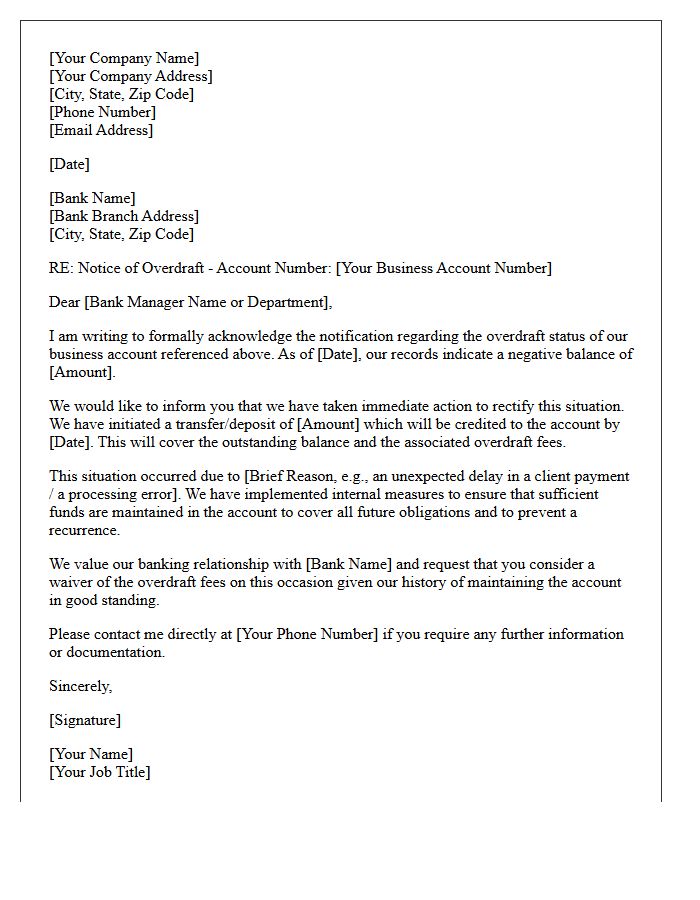
A Business Account Overdraft Letter is a formal notification from a bank stating that your balance has dropped below zero. It is crucial to address this immediately to avoid hefty penalty fees and potential damage to your commercial credit score. The letter typically outlines the overdrawn amount, applicable interest rates, and a deadline for repayment. To maintain financial stability, businesses should review their cash flow management or negotiate an overdraft protection limit to prevent transaction rejections and ensure operational continuity during liquidity gaps.
Courtesy Pay Overdraft Notice Letter
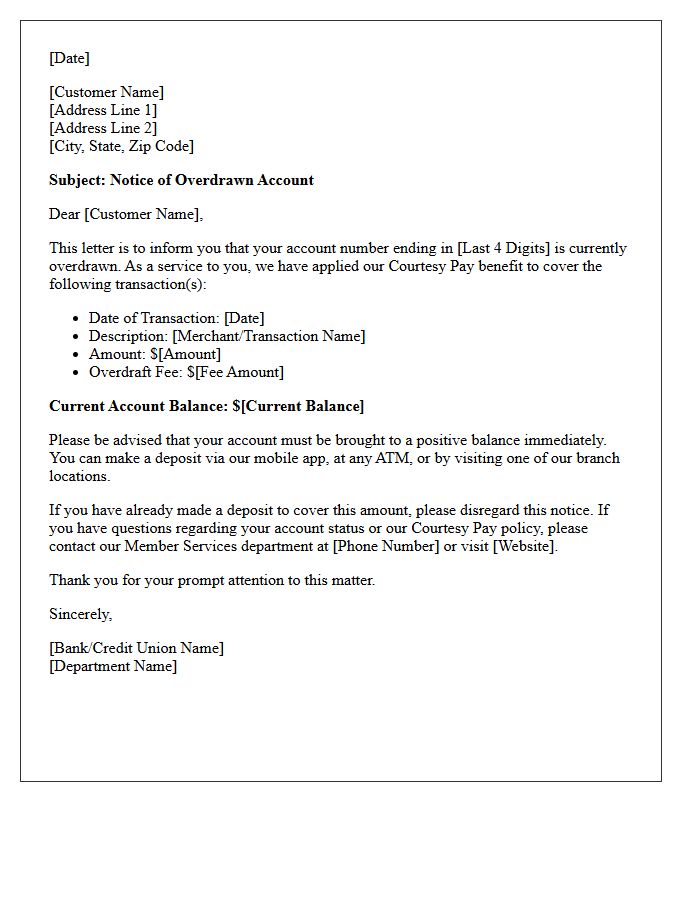
A Courtesy Pay Overdraft Notice Letter informs account holders that the financial institution covered a transaction despite insufficient funds. This formal notice details the specific overdraft fees applied and the resulting negative balance that must be repaid promptly. Understanding this letter is essential to avoid additional penalties and to manage your banking standing effectively. It serves as a critical alert to review your spending habits and ensures you are aware of the discretionary limit provided by your bank to prevent payment rejections at the point of sale.
Insufficient Funds Penalty Warning Letter
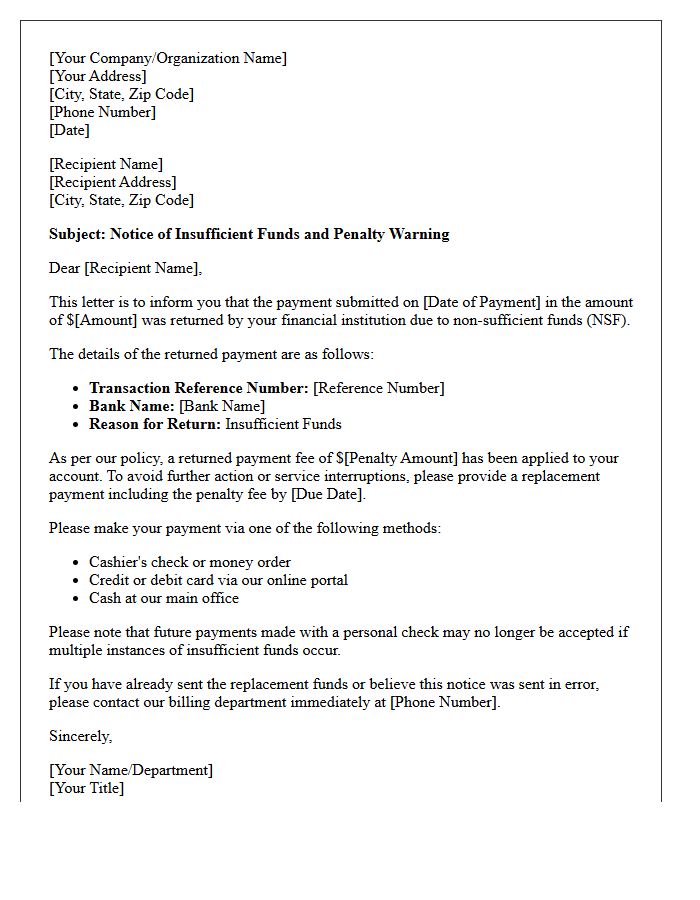
An Insufficient Funds Penalty Warning Letter is a formal notification from a financial institution regarding a failed transaction. It alerts account holders that a payment was rejected due to a lack of available balance. To avoid escalating overdraft fees or legal consequences, you must immediately deposit funds to cover the deficit. This document serves as a final opportunity to rectify the account status before the bank imposes penalties or restricts banking privileges. Timely action is essential to protect your credit score and maintain a positive standing with your bank.
What is an Insufficient Funds (NSF) notice?
An Insufficient Funds notice is a notification from your bank stating that a payment or withdrawal request was declined because your account balance was too low to cover the transaction amount.
How does an Overdraft notice differ from an NSF notice?
An Overdraft notice occurs when the bank covers a transaction that exceeds your balance, resulting in a negative account status, whereas an NSF notice means the bank rejected the payment entirely.
What fees are associated with Insufficient Funds and Overdrafts?
Most financial institutions charge an NSF fee for returned items or an Overdraft fee (often ranging from $25 to $35) for covering a transaction when your balance is inadequate.
Can an Insufficient Funds or Overdraft notice affect my credit score?
While banks do not report individual overdrafts to credit bureaus, failing to pay back a negative balance can lead to your account being sent to collections, which will severely damage your credit score.
How can I prevent getting an Overdraft or NSF notice?
You can prevent these notices by setting up low-balance mobile alerts, linking a savings account for automatic overdraft protection, or maintaining a financial buffer in your checking account.


Comments