
Receiving a First Overdraft Occurrence Notice can be stressful, but it is an important alert regarding a negative bank balance. This initial communication outlines associated fees and necessary steps to rectify your account. Understanding this notice helps you avoid future penalties and maintain financial health. To assist you in responding or notifying clients, below are some ready to use templates.
Image cover: Professional Overdraft Notice Templates and Communication Guide for First-Time Occurrences
Letter Samples List
- Initial Overdraft Notice Letter
- First Occurrence Overdraft Notification Letter
- Courtesy Overdraft Alert Letter
- Primary Account Overdraft Information Letter
- First Incident Overdraft Warning Letter
- Notice Of Initial Overdraft Letter
- Account Overdrawn First Occurrence Letter
- Friendly Reminder First Overdraft Letter
- Banking Overdraft First Notice Letter
- Initial Insufficient Funds Overdraft Letter
- First Time Overdraft Advisory Letter
- Customer Courtesy Initial Overdraft Letter
- First Instance Overdraft Communication Letter
Initial Overdraft Notice Letter
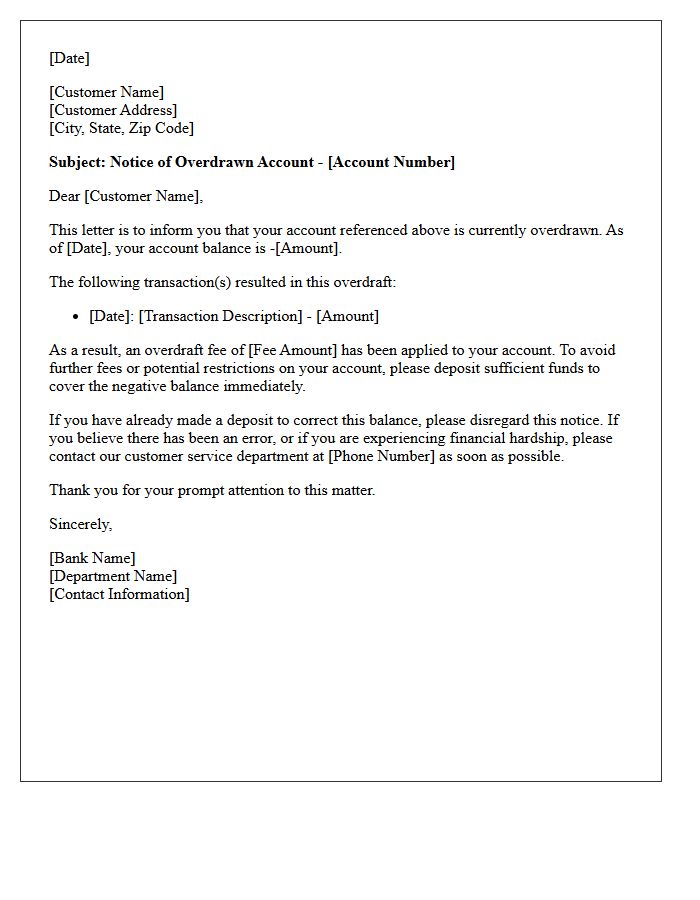
An Initial Overdraft Notice Letter is a formal notification from a financial institution informing a customer that their account balance has dropped below zero. This document is critical because it details the overdrawn amount and any associated NSF fees or daily penalties applied. Receiving this letter serves as a legal warning to deposit funds immediately to avoid account closure or negative reporting to credit agencies. Promptly addressing this notice helps restore your balance, maintain financial standing, and may provide an opportunity to request a one-time fee waiver.
First Occurrence Overdraft Notification Letter
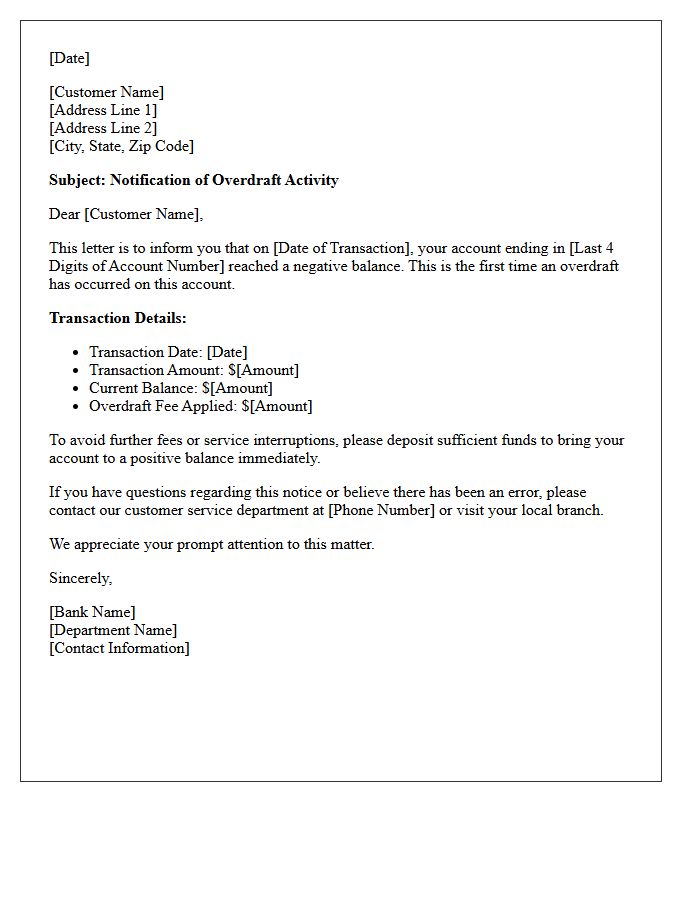
A First Occurrence Overdraft Notification Letter is a formal notice sent by financial institutions when an account balance first falls below zero. This document is crucial for financial awareness, as it informs the consumer about specific transaction failures or covered shortages. It typically outlines applicable overdraft fees and explains the bank's repayment policies. Receiving this letter serves as a critical warning to rectify the balance immediately, helping account holders avoid escalating penalties, potential account closure, or negative impacts on their banking history and credit standing.
Courtesy Overdraft Alert Letter
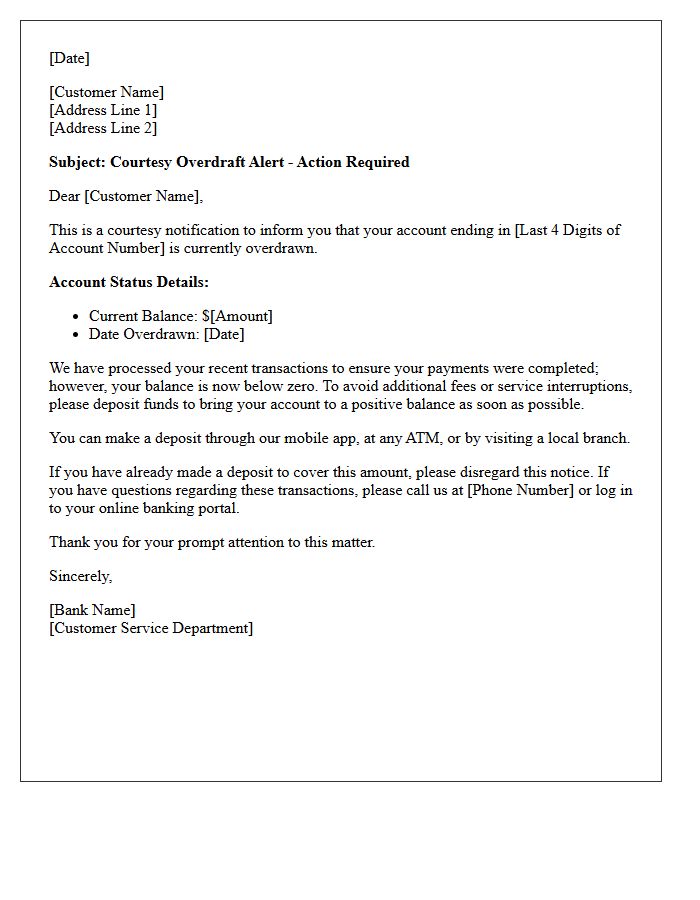
A Courtesy Overdraft Alert Letter is a formal notification from a financial institution informing you that your account balance is negative. This notice highlights that the bank has covered a transaction despite insufficient funds, preventing a payment decline. It is crucial to review this letter immediately to understand any overdraft fees applied and the deadline for depositing funds. Monitoring these alerts helps you manage your liquidity, avoid recurring penalties, and maintain a healthy credit standing by rectifying the deficit promptly.
Primary Account Overdraft Information Letter
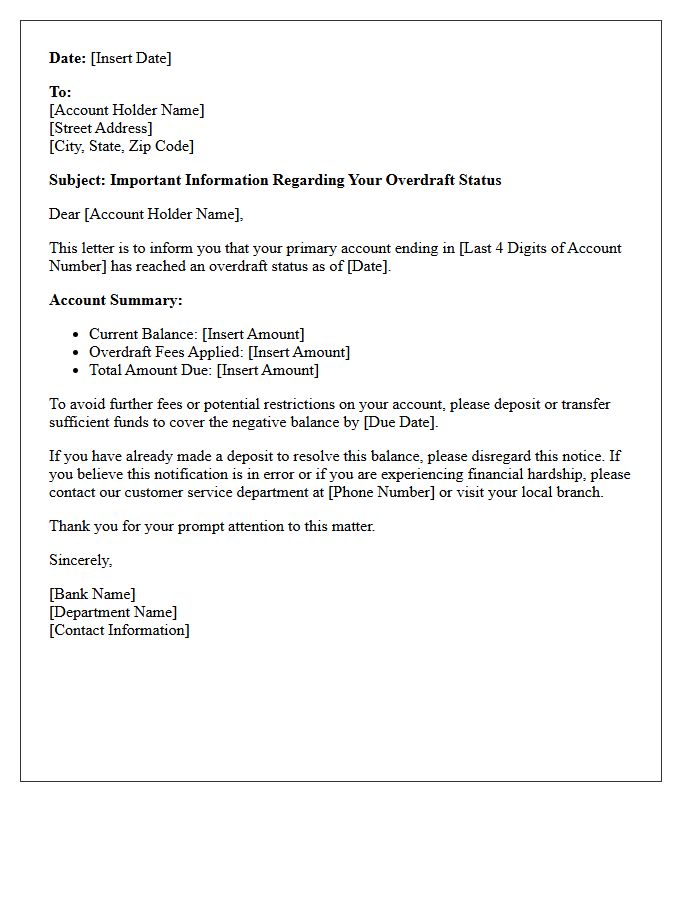
A Primary Account Overdraft Information Letter is a mandatory disclosure detailing how a bank handles transactions when funds are insufficient. It explains overdraft coverage options, associated fees, and your right to opt-in or out of services for ATM and debit card transactions. Understanding this document is essential to avoid unexpected service charges and to manage your balance effectively. Reviewing these terms helps you maintain financial transparency and prevents account disruptions while ensuring you understand the costs linked to potential negative balances.
First Incident Overdraft Warning Letter
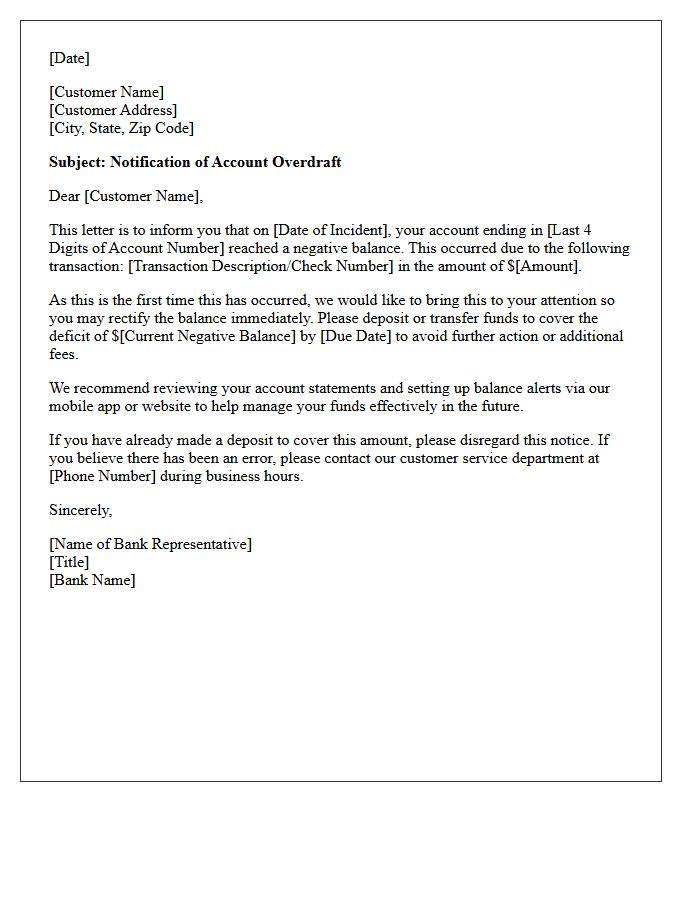
A First Incident Overdraft Warning Letter is a formal notification sent by a bank when an account balance falls below zero. This document serves as a regulatory requirement to inform customers of potential overdraft fees and negative impacts on credit standing. It is a critical opportunity to rectify the balance immediately to avoid further penalties. Understanding this letter helps consumers manage their financial health by encouraging better monitoring of automated transactions and maintaining a sufficient liquidity buffer to prevent recurring banking charges.
Notice Of Initial Overdraft Letter
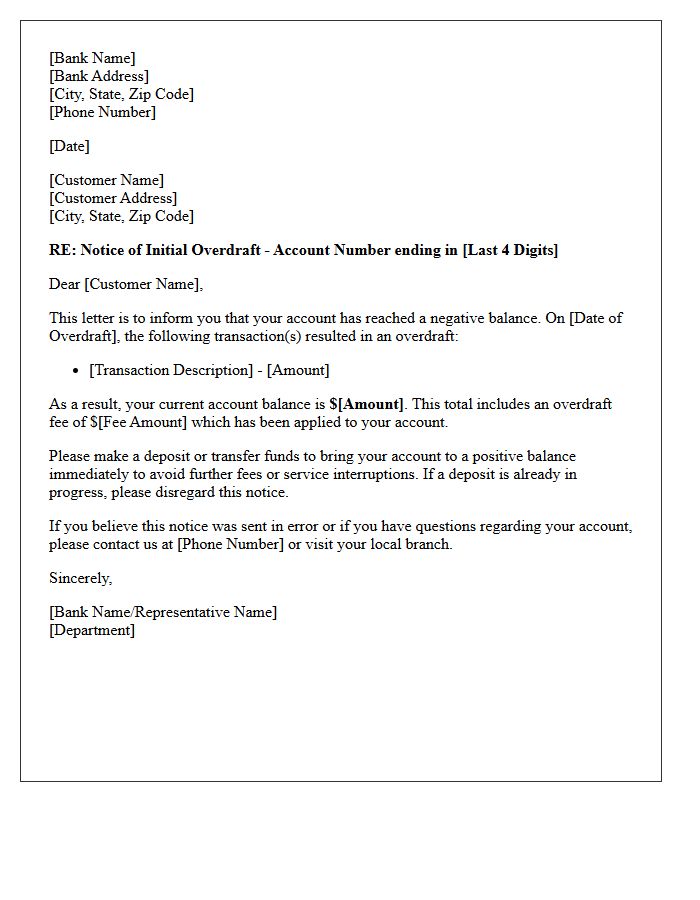
A Notice of Initial Overdraft is a formal alert sent by a bank when your account balance falls below zero. This letter serves as official documentation that your available funds were insufficient to cover a transaction. It is crucial to act quickly by depositing funds to avoid accumulating overdraft fees and potential account suspension. Reviewing this notice helps you identify whether the deficit was caused by an unexpected charge, a processing delay, or unauthorized activity, allowing you to maintain better financial control and avoid credit score impacts.
Account Overdrawn First Occurrence Letter
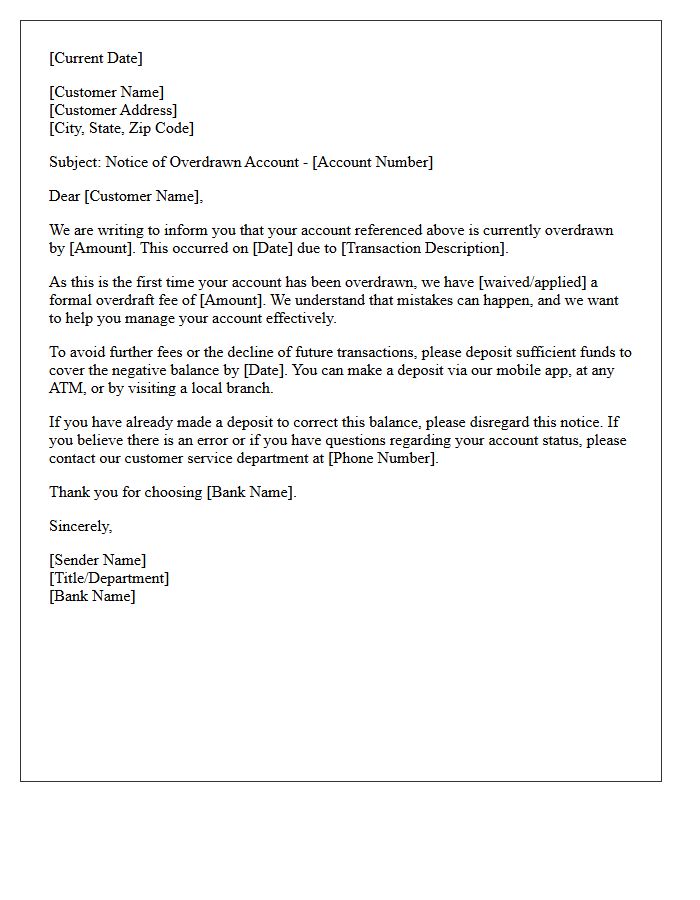
Receiving an Account Overdrawn First Occurrence Letter is a formal notification that your balance has fallen below zero. This document serves as a crucial warning to rectify the deficit immediately to avoid escalating overdraft fees. It typically outlines the specific transaction that caused the shortfall and provides a grace period for repayment. Addressing this notice promptly can help preserve your credit standing and may allow you to request a fee waiver as a first-time courtesy. Monitoring your daily balance is the best way to prevent future financial penalties.
Friendly Reminder First Overdraft Letter
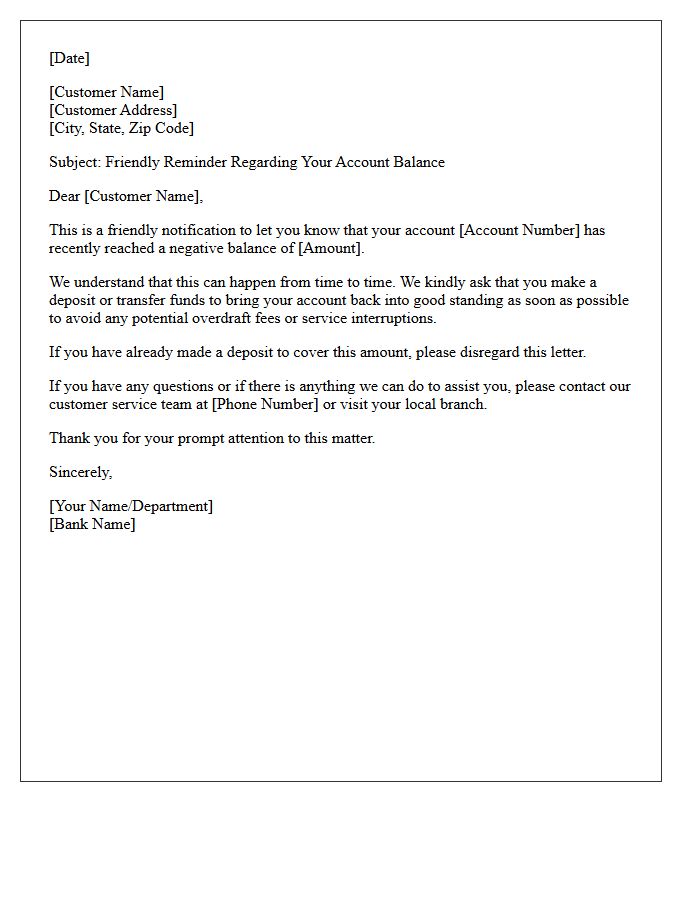
A Friendly Reminder First Overdraft Letter is a formal notification from your bank indicating that your account balance has fallen below zero. This initial notice serves as a courtesy alert to help you rectify the deficit quickly and avoid escalating penalties. It typically outlines the specific transaction that caused the shortfall and any associated overdraft fees applied. Addressing this promptly is essential to maintaining a positive banking relationship and preventing further financial impact or potential service restrictions on your personal checking account.
Banking Overdraft First Notice Letter
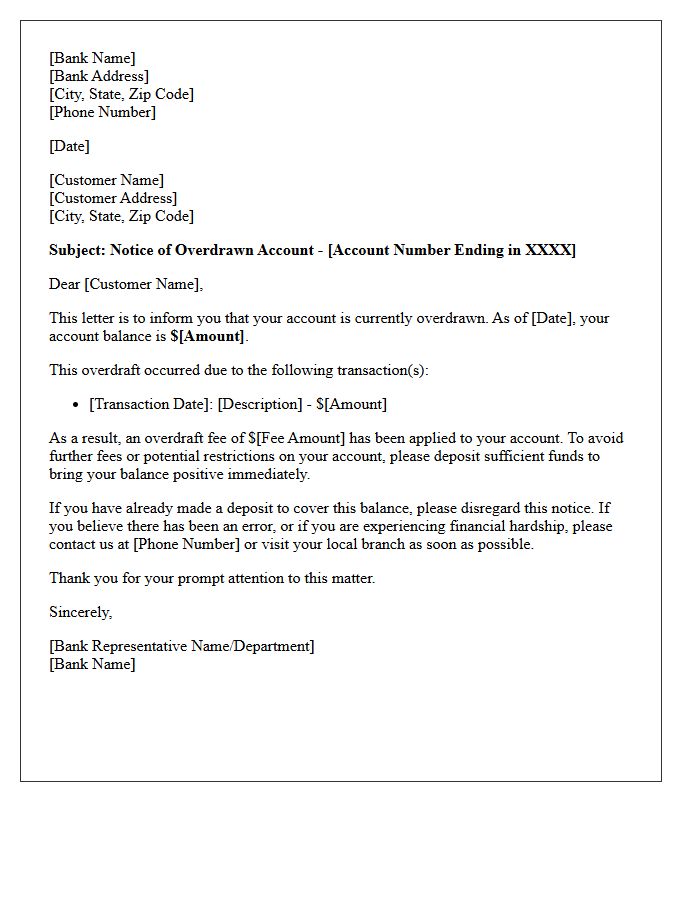
A Banking Overdraft First Notice Letter is a formal alert informing you that your account balance has dropped below zero. Receiving this overdraft notification is critical because it signals immediate action is required to avoid mounting penalty fees and interest charges. Banks issue this document to ensure transparency regarding insufficient funds and to provide a grace period for repayment. Promptly depositing funds after reading this notice helps protect your credit standing and maintains your eligibility for future banking services. Always review the letter for specific deadlines and fee breakdowns.
Initial Insufficient Funds Overdraft Letter
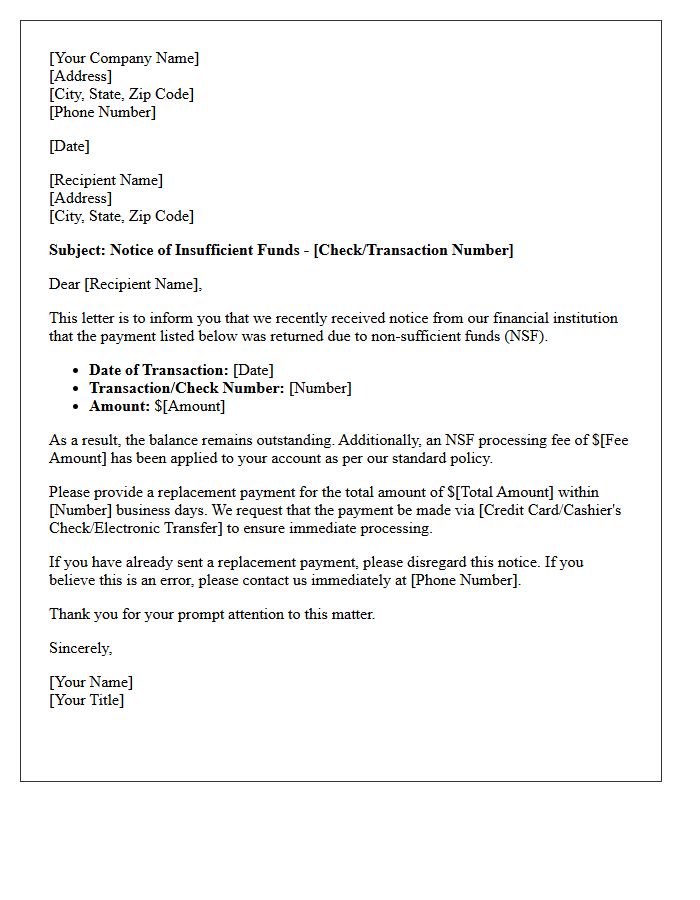
An Initial Insufficient Funds Overdraft Letter is a formal notice sent by a financial institution when an account balance falls below zero. This document informs the depositor that a transaction was processed or returned due to inadequate capital. It typically outlines the specific transaction details, identifies applicable overdraft fees, and requests immediate repayment to restore a positive balance. Promptly addressing this notice is essential to avoid secondary penalties, potential account closure, or negative impacts on your banking history and credit standing.
First Time Overdraft Advisory Letter
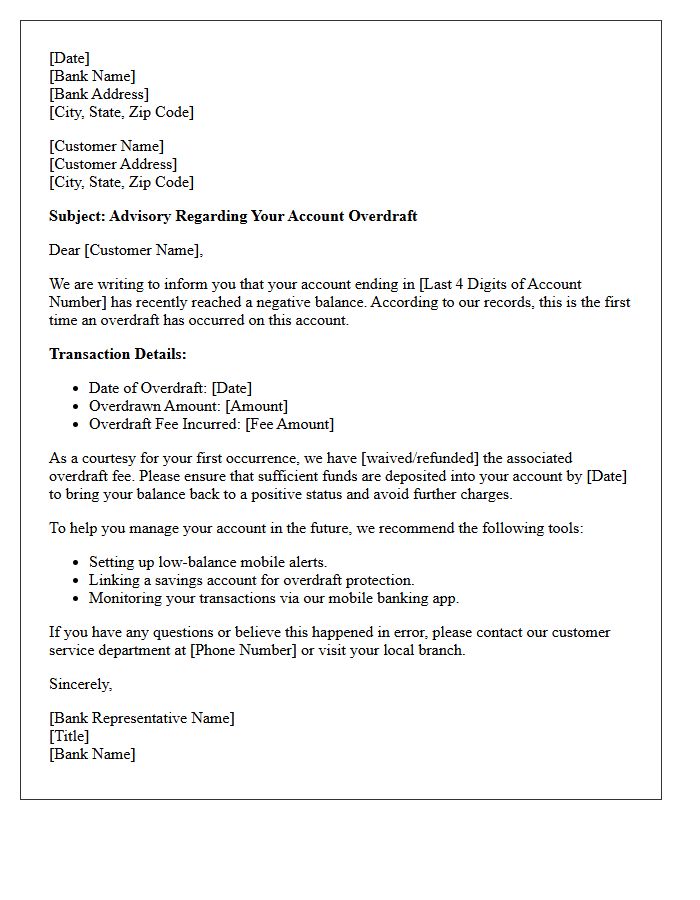
A First Time Overdraft Advisory Letter is a formal notification issued by banks when an account balance first falls below zero. This document serves as a regulatory requirement to inform customers about potential overdraft fees and available protection options. It highlights the importance of monitoring transaction history to avoid high costs. Understanding this letter helps you manage your financial health by identifying triggers for negative balances. Receiving one is an opportunity to opt-in or out of overdraft services, ensuring you maintain control over your banking expenses and credit standing.
Customer Courtesy Initial Overdraft Letter
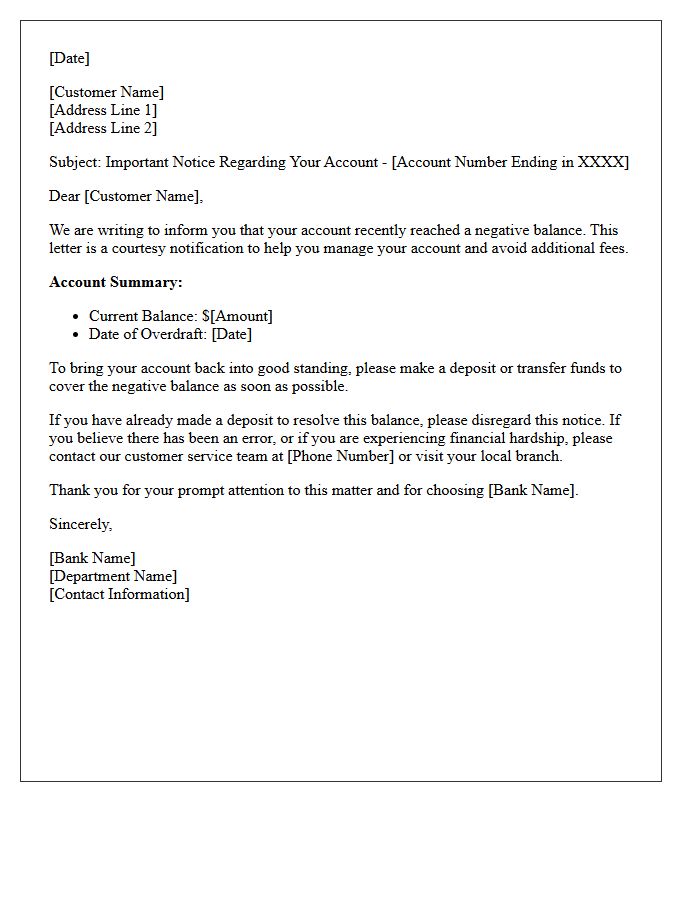
A Customer Courtesy Initial Overdraft Letter serves as a formal notification when an account balance falls below zero. This document is a proactive communication tool designed to inform the account holder of a deficit and any associated fees. It provides a brief grace period for the customer to deposit funds before further penalties occur. Understanding this letter is essential for maintaining a positive banking relationship and avoiding long-term credit damage. It ensures transparency regarding overdraft protection policies and helps consumers manage their personal finances effectively to prevent future transaction rejections.
First Instance Overdraft Communication Letter
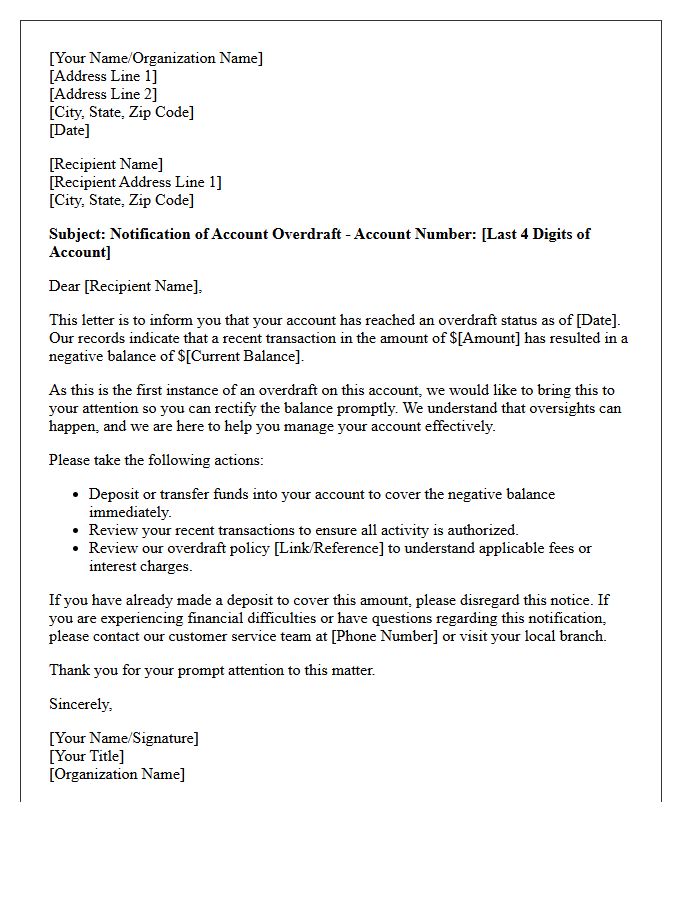
A First Instance Overdraft Communication Letter is a formal notification issued by a bank when an account balance first falls below zero. The primary purpose of this document is to inform customers about unauthorized borrowing and associated penalties. It serves as a regulatory requirement to ensure transparency regarding overdraft fees and interest rates. Receiving this letter is a critical warning to rectify the balance immediately to avoid further financial charges or negative impacts on your credit score. Clear communication helps consumers manage liquidity and maintain better banking health.
What is a First Overdraft Occurrence Notice?
A First Overdraft Occurrence Notice is an official notification sent by a financial institution to inform an account holder that their balance has dropped below zero for the first time. It details the transaction that caused the overdraft and any applicable fees or grace periods.
Why did I receive a notice for my first overdraft?
You received this notice because a transaction was processed that exceeded your available account balance. Banks are required to notify customers of such occurrences to ensure transparency regarding account status and to inform them of potential overdraft protection options.
Will I be charged a fee for my first overdraft occurrence?
Many banks offer a one-time fee waiver or a "grace zone" for a first overdraft occurrence; however, policies vary by institution. Check your specific notice or account agreement to see if a standard nonsufficient funds (NSF) fee has been applied or waived.
How can I resolve a First Overdraft Occurrence Notice?
To resolve the notice, you should immediately deposit or transfer sufficient funds to cover the negative balance and any associated fees. Bringing the account back to a positive balance promptly helps prevent further penalties or the suspension of banking privileges.
How can I prevent future overdraft occurrences?
You can prevent future overdrafts by setting up low-balance mobile alerts, linking a savings account for automatic backup transfers, or opting out of overdraft coverage to ensure transactions are declined if funds are unavailable.

Comments