
Failing to resolve a negative balance can lead to a Reporting Overdraft to Credit Bureau Warning Letter from your bank. Unpaid overdrafts can severely damage your credit score and limit future financial opportunities if reported to agencies like ChexSystems. Taking immediate action is essential to protect your financial reputation. Below are some ready to use template options to help you respond effectively.
Image cover: Formal Notice: Overdraft Debt Credit Bureau Reporting Warning Templates
Letter Samples List
- Initial Overdraft Credit Bureau Warning Letter
- Final Notice Overdraft Credit Reporting Letter
- Delinquent Account Overdraft Bureau Notification Letter
- Impending Credit Bureau Overdraft Warning Letter
- Checking Account Overdraft Credit Impact Letter
- Unresolved Overdraft Credit Bureau Reporting Letter
- Commercial Account Overdraft Credit Warning Letter
- Personal Checking Overdraft Bureau Notice Letter
- Extended Overdraft Credit Agency Warning Letter
- Overdraft Recovery And Credit Bureau Alert Letter
- Pre-Reporting Overdraft Default Warning Letter
- Negative Balance Credit Bureau Warning Letter
- Urgent Overdraft Credit Reporting Advisory Letter
Initial Overdraft Credit Bureau Warning Letter
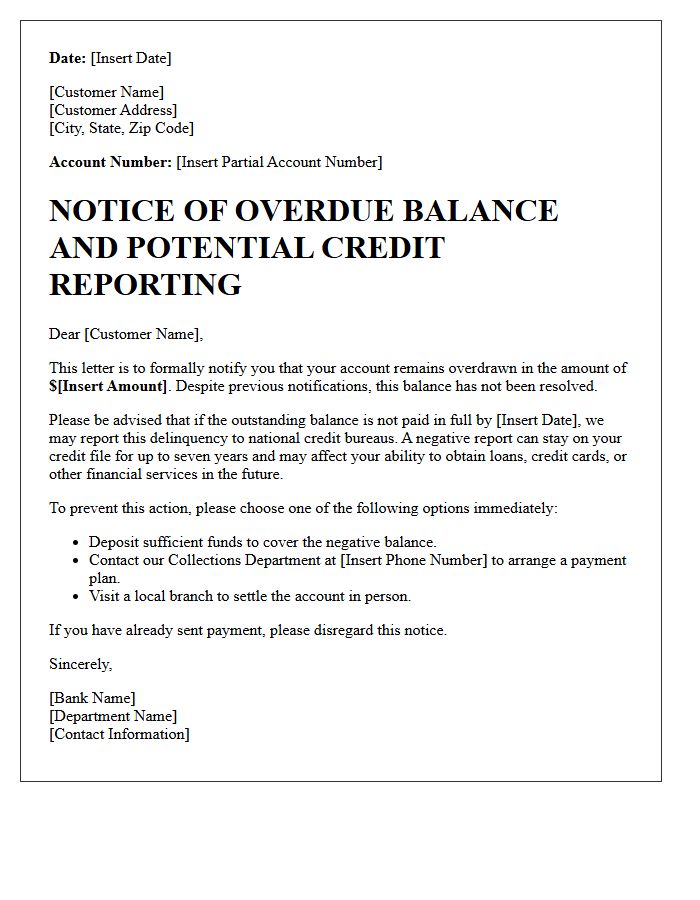
An Initial Overdraft Credit Bureau Warning Letter is a formal notice sent by financial institutions when an account remains negative. It serves as a final opportunity to settle the debt before the bank reports the delinquency to major credit bureaus or specialized agencies like ChexSystems. Receiving this letter is critical because an unpaid overdraft can severely damage your credit score and prevent you from opening new bank accounts. To protect your financial reputation, you must deposit funds immediately or contact the bank to arrange a repayment plan before the reporting deadline expires.
Final Notice Overdraft Credit Reporting Letter
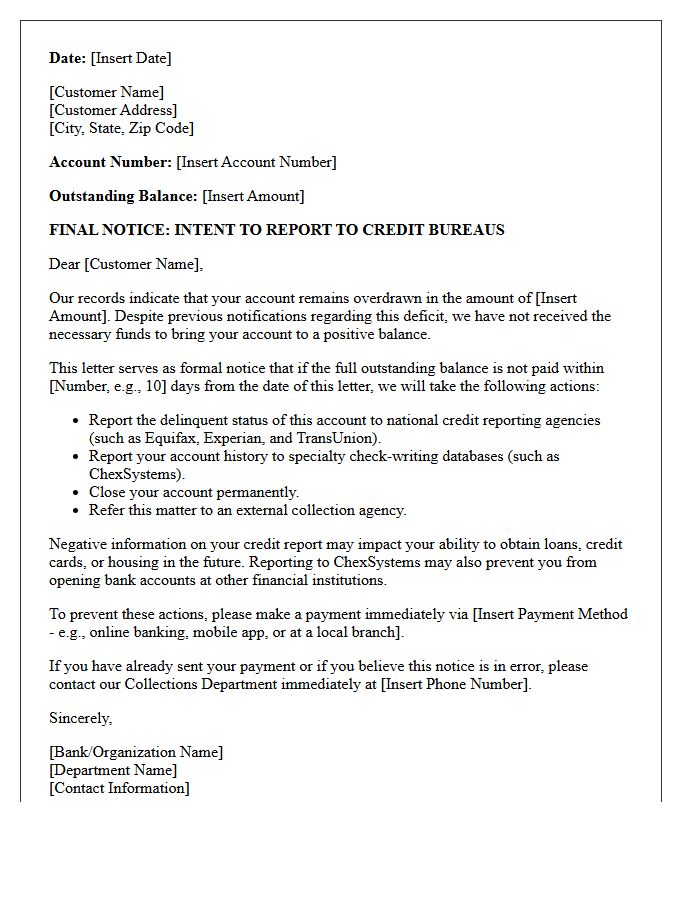
A Final Notice Overdraft Credit Reporting Letter is a critical warning that an unpaid bank balance is about to be sent to collections. Receiving this document means you have a limited window to settle the debt before it appears on your credit report. Unresolved overdrafts can severely damage your credit score and your ability to open future bank accounts via ChexSystems. To protect your financial standing, you must prioritize immediate payment or contact the financial institution to arrange a settlement plan before the reporting deadline expires.
Delinquent Account Overdraft Bureau Notification Letter
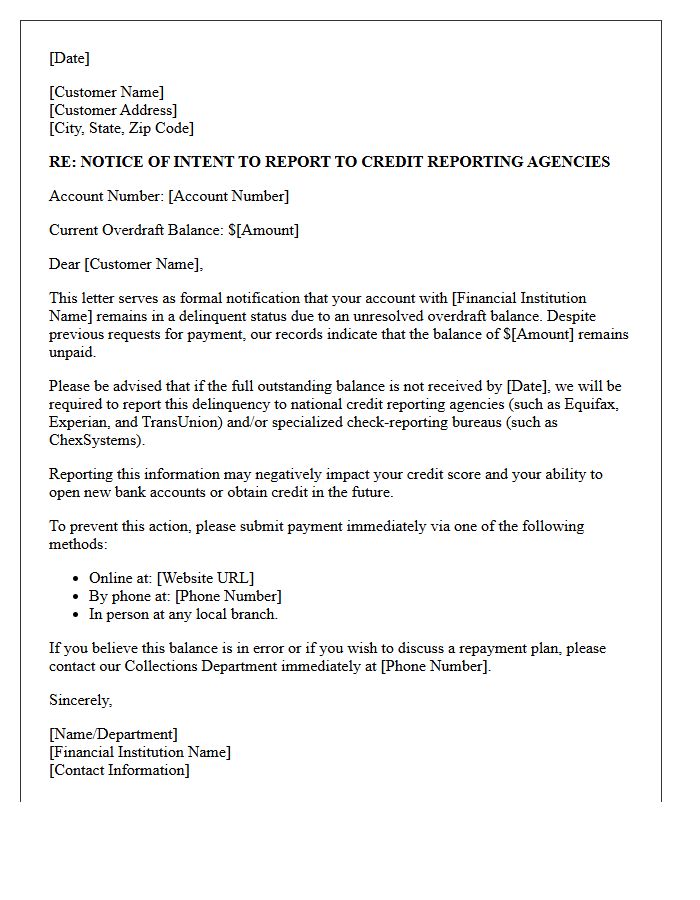
A Delinquent Account Overdraft Bureau Notification Letter is a formal warning that your negative balance remains unpaid. This notice signifies that the financial institution intends to report your delinquency to specialized credit agencies like ChexSystems or Early Warning Services. Such reporting can severely restrict your ability to open new bank accounts for several years. To protect your financial reputation, you must resolve the debt immediately or negotiate a repayment plan before the final deadline specified in the letter to prevent long-term banking blacklisting.
Impending Credit Bureau Overdraft Warning Letter
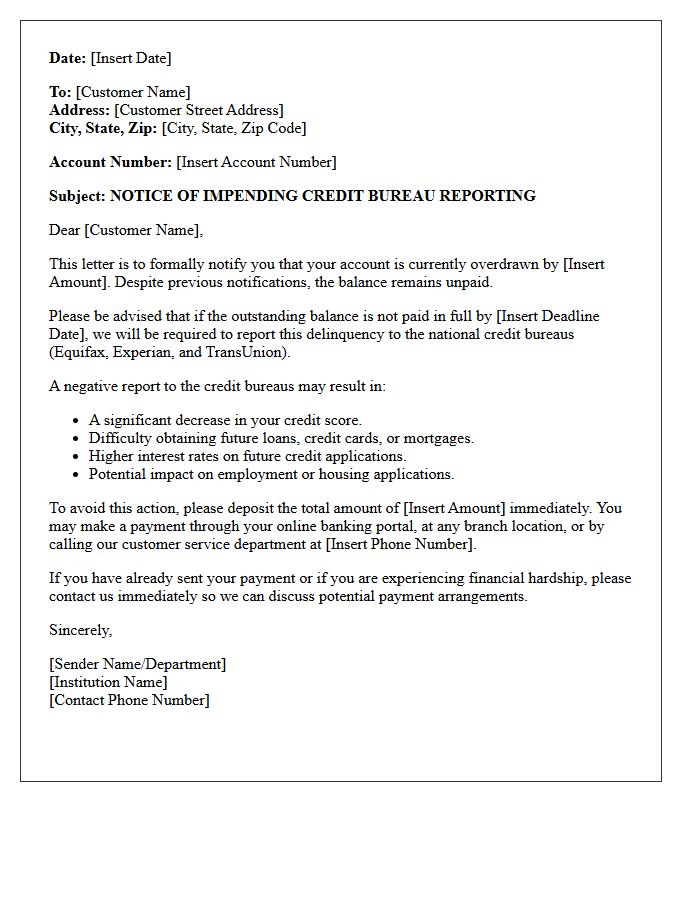
An impending credit bureau overdraft warning letter is a formal notice that your financial institution intends to report negative payment behavior to credit agencies. This document typically serves as a final opportunity to rectify a delinquent balance before it impacts your credit score. Receiving this letter means your financial standing is at risk, as a reported default can hinder future loan approvals and increase interest rates. To protect your creditworthiness, you must immediately address the outstanding debt or arrange a payment plan to prevent permanent damage to your official credit report.
Checking Account Overdraft Credit Impact Letter
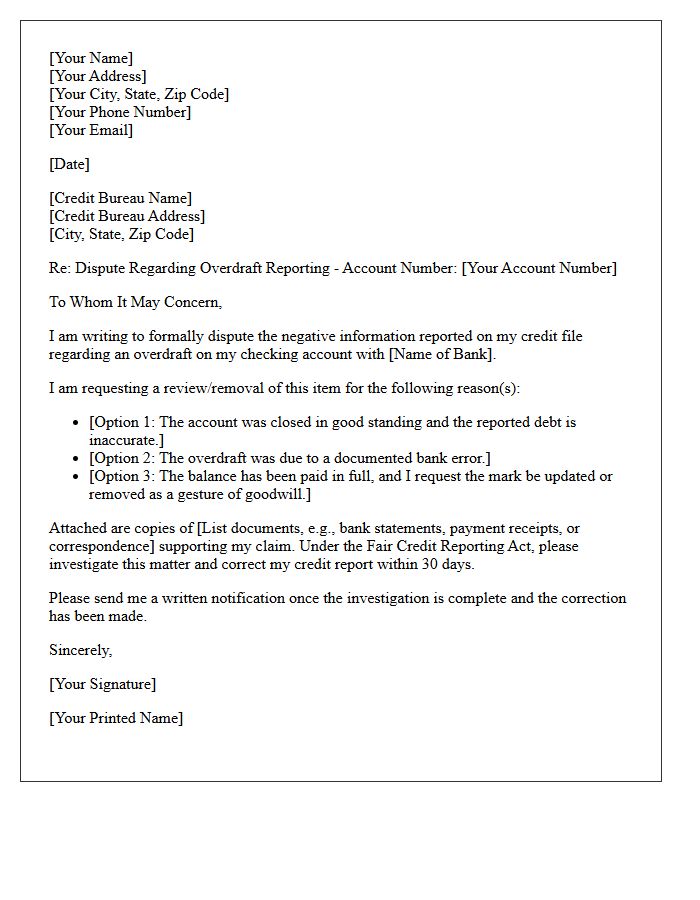
Receiving an Overdraft Credit Impact Letter indicates that your bank reported a negative balance or involuntary account closure to specialty credit bureaus. While standard checking accounts do not typically affect your FICO score, these reports to ChexSystems or Early Warning Services can prevent you from opening new bank accounts. To protect your financial reputation, you must resolve the outstanding debt immediately. Always request a formal validation of the amount owed and keep documentation of your payment to ensure your consumer record is updated accurately.
Unresolved Overdraft Credit Bureau Reporting Letter
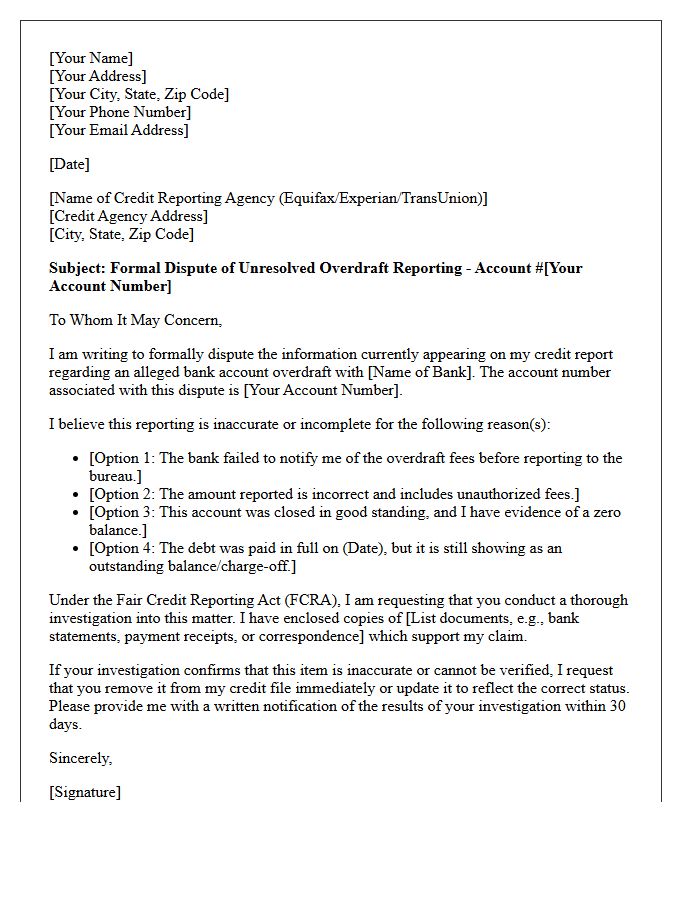
An Unresolved Overdraft Credit Bureau Reporting Letter is a formal notice from a bank stating that a negative account balance remains unpaid. If ignored, the financial institution will report this delinquent debt to agencies like ChexSystems or major credit bureaus. This action significantly lowers your credit score and may prevent you from opening new bank accounts. To protect your financial standing, you must settle the outstanding balance or dispute inaccuracies immediately before the reporting deadline specified in the letter to avoid long-term credit damage.
Commercial Account Overdraft Credit Warning Letter
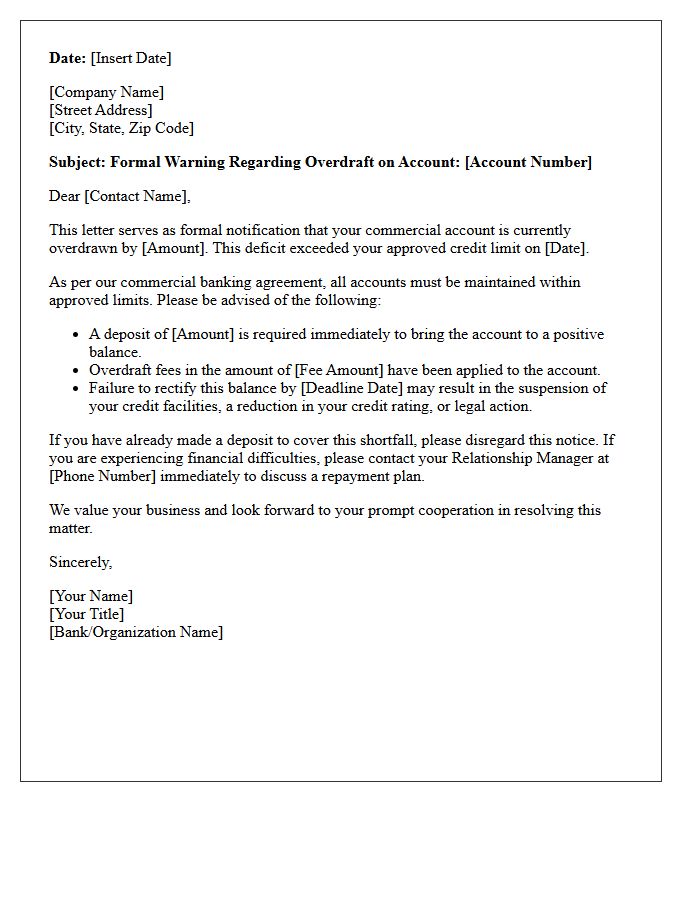
A Commercial Account Overdraft Credit Warning Letter is a formal notice issued by banks when a business account lacks sufficient funds. It serves as a critical legal notification that outstanding debts must be settled immediately to avoid penalty fees or account suspension. Ignoring this warning can severely damage your business credit score and lead to the termination of banking facilities. To maintain financial stability, companies should promptly rectify the balance and review their cash flow management strategies to prevent future occurrences of unauthorized borrowing or litigation.
Personal Checking Overdraft Bureau Notice Letter
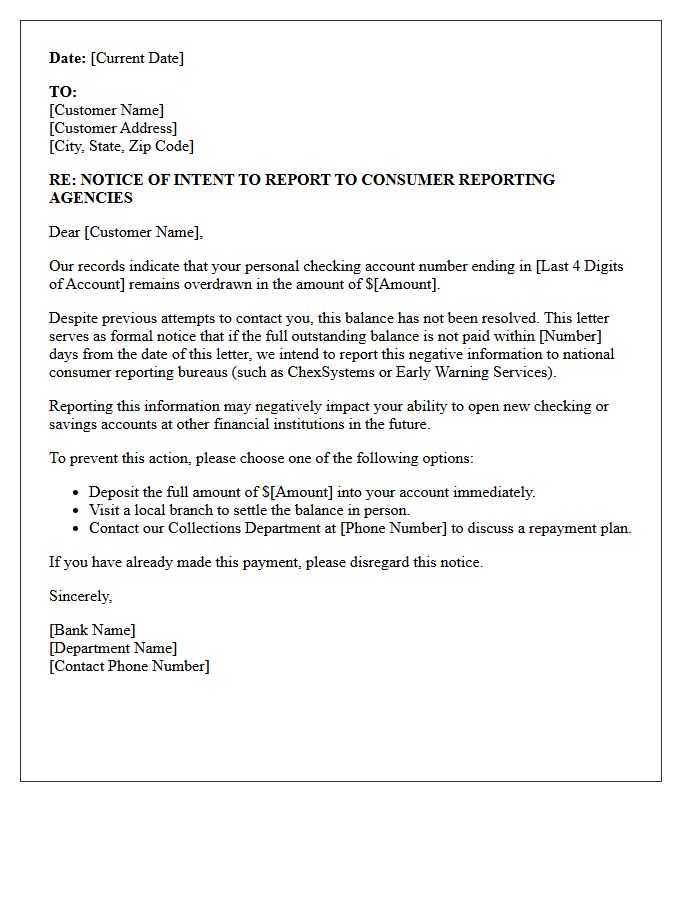
A Personal Checking Overdraft Bureau Notice Letter is a formal warning that your account remains overdrawn despite previous requests for payment. This notice is critical because it signifies that your bank may soon close your account and report the delinquency to ChexSystems or other credit bureaus. Such an action severely damages your financial reputation, making it difficult to open new bank accounts in the future. To protect your banking history, you should immediately deposit funds to cover the negative balance and any associated overdraft fees before the deadline.
Extended Overdraft Credit Agency Warning Letter
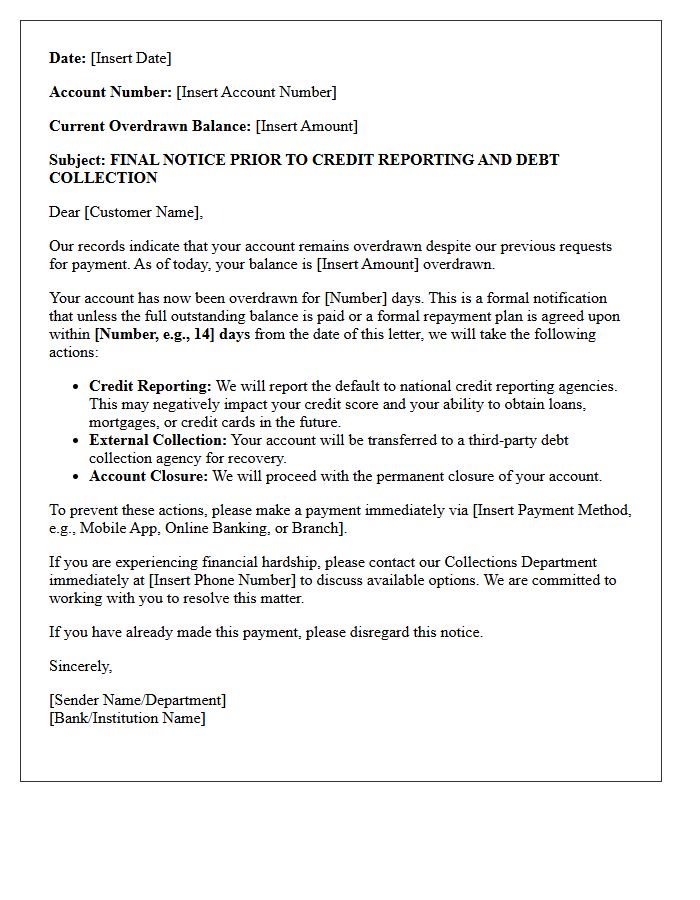
An Extended Overdraft Credit Agency Warning Letter is a formal notice indicating that your bank account has remained negative for too long. Receiving this letter means the financial institution may soon report your delinquency to specialized credit bureaus like ChexSystems or national agencies. This action can severely damage your credit score and prevent you from opening future bank accounts. To protect your financial standing, you must immediately repay the balance or negotiate a settlement to stop the reporting process and avoid further collection efforts.
Overdraft Recovery And Credit Bureau Alert Letter
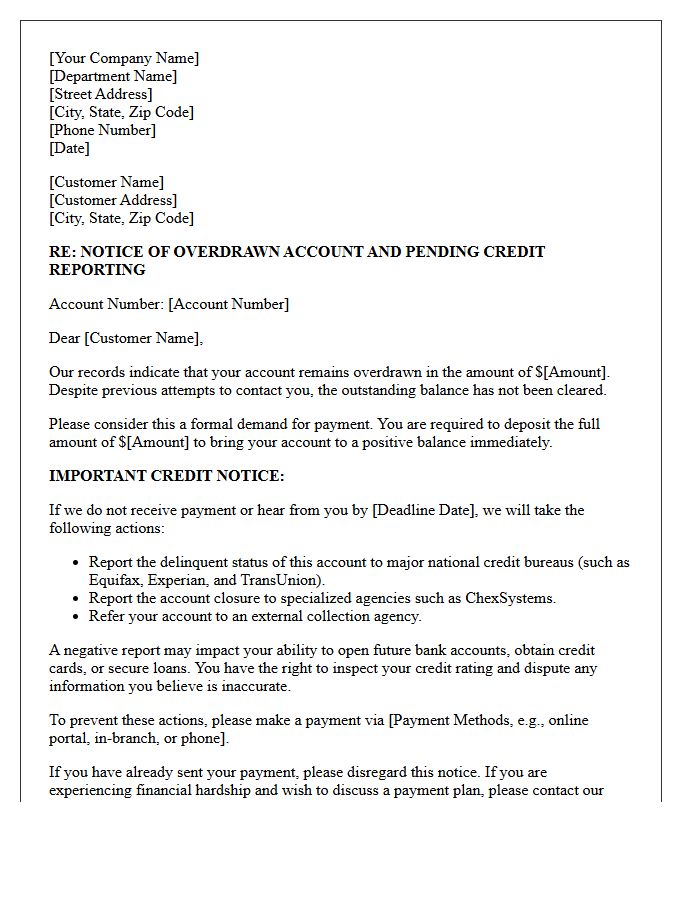
An Overdraft Recovery letter is a formal notice from a financial institution demanding the repayment of a negative account balance. Ignoring this notice often triggers a Credit Bureau Alert, as banks report delinquent debts to agencies like ChexSystems or specialized bureaus. This negative reporting significantly damages your credit score and can prevent you from opening new bank accounts. To protect your financial standing, prioritize immediate debt resolution or dispute inaccuracies in writing to ensure your consumer report remains accurate and your future borrowing capacity is secured.
Pre-Reporting Overdraft Default Warning Letter
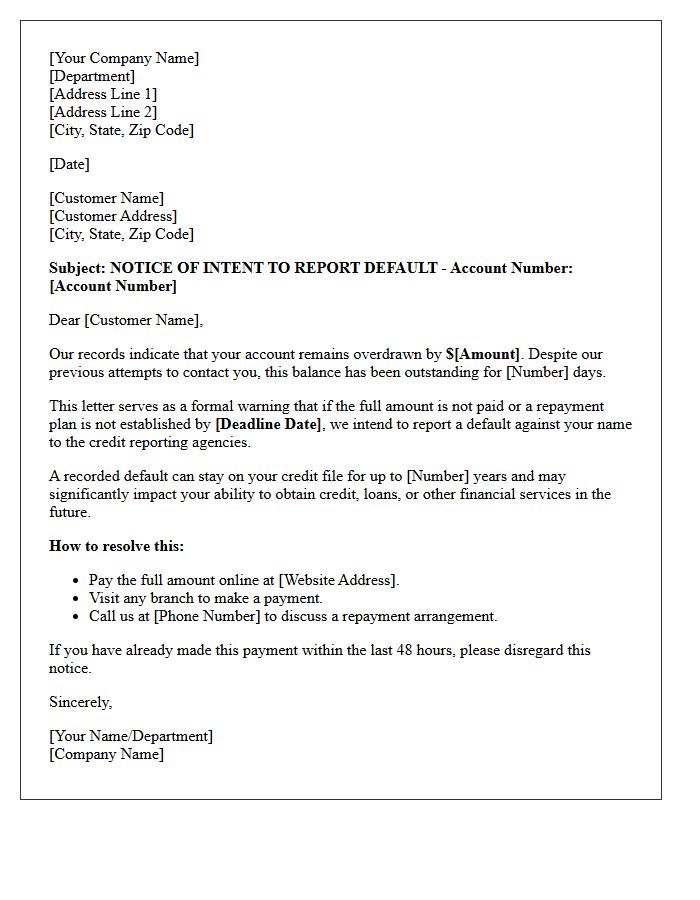
A Pre-Reporting Overdraft Default Warning Letter is a formal notice sent by banks before reporting negative account data to credit bureaus. This document serves as a final opportunity for customers to settle outstanding balances and avoid long-term credit score damage. It outlines the specific amount owed, the deadline for payment, and the potential consequences of inaction. Receiving this letter indicates that your account is at risk of being closed and marked as a default, which can hinder your ability to open future financial accounts or secure loans.
Negative Balance Credit Bureau Warning Letter
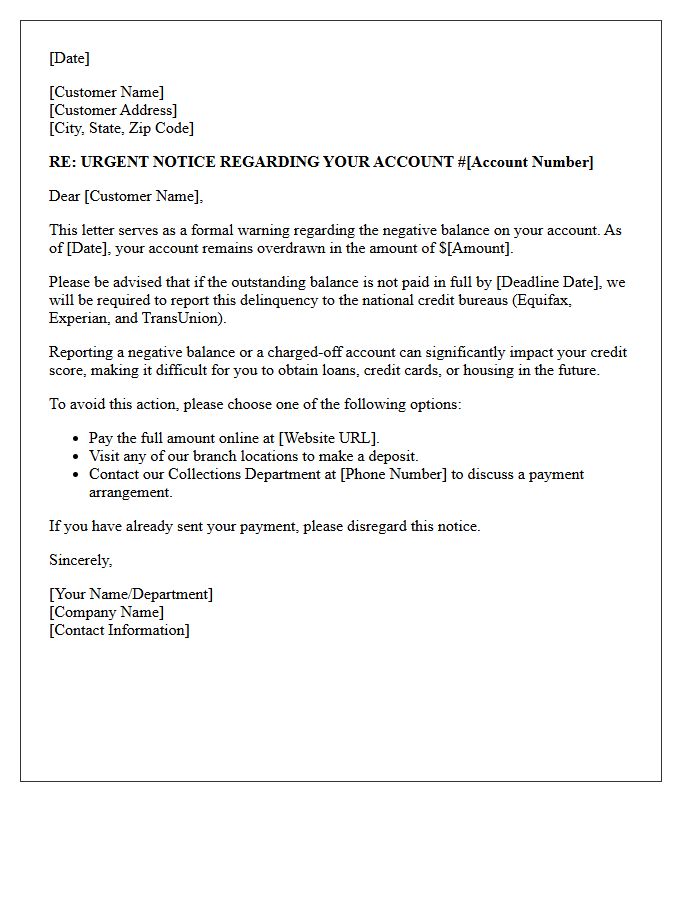
A Negative Balance Credit Bureau Warning Letter is a formal notice from a financial institution alerting you that your account remains overdrawn. This document serves as a final demand for payment before the debt is reported to agencies like ChexSystems or credit bureaus. Receiving this letter indicates that your account is at risk of being closed and sent to collections, which can severely damage your credit score and limit your ability to open future bank accounts. Promptly settling the balance is essential to prevent long-term financial consequences.
Urgent Overdraft Credit Reporting Advisory Letter
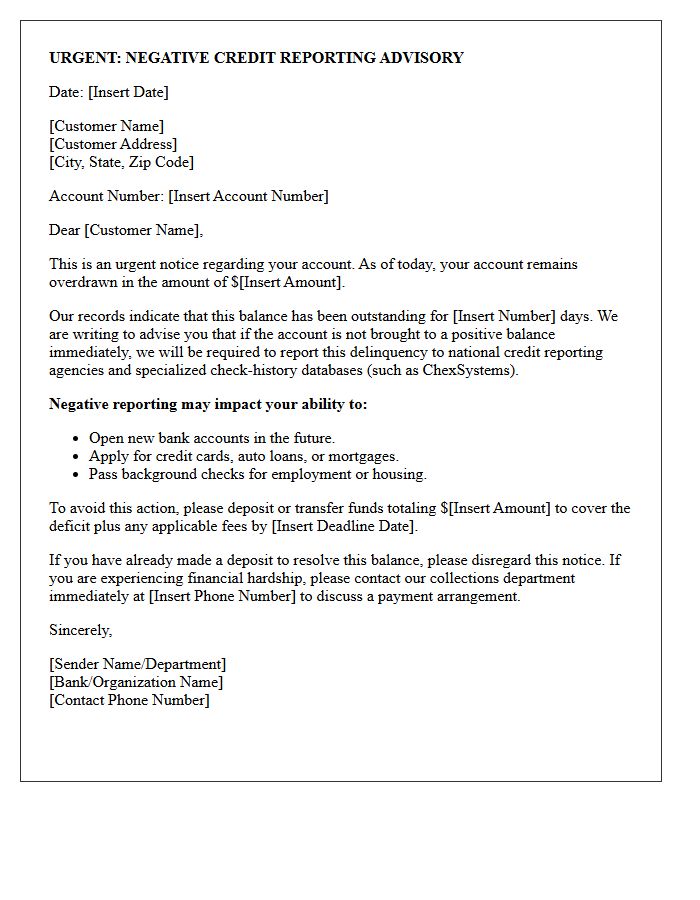
An Urgent Overdraft Credit Reporting Advisory Letter is a critical notification warning that your account has a negative balance. If not resolved immediately, the financial institution will report this delinquency to credit bureaus, severely damaging your credit score. This letter serves as a final opportunity to deposit funds and avoid involuntary account closure. Taking swift action is essential to maintain your financial reputation and prevent long-term reporting penalties that could hinder future loan approvals or banking access.
Does a bank report a negative balance to credit bureaus?
While standard overdrafts are not typically reported as credit lines, an account that remains overdrawn for an extended period may be turned over to a collections agency. At that stage, the debt is reported to major credit bureaus (Equifax, Experian, and TransUnion), which can significantly lower your credit score.
How long do I have to pay my overdraft before it affects my credit?
Most financial institutions provide a grace period of 30 to 60 days after the initial warning letter before charging off the account and reporting the delinquency. To avoid credit damage, you must bring your account to a positive balance within the timeframe specified in your overdraft notice.
Will an overdraft warning letter show up on my ChexSystems report?
Yes. If you do not resolve the overdrawn balance mentioned in the warning letter, the bank will likely close your account and report the "account abuse" or "unpaid balance" to ChexSystems. This can prevent you from opening new checking or savings accounts at other banks for up to five years.
Can I dispute an overdraft report on my credit history?
If you believe the overdraft reporting is inaccurate or occurred due to bank error, you have the right to dispute the entry with both the credit bureau and the reporting bank. Providing proof of payment or evidence of the error is essential for removing the negative mark from your credit report.
What are the consequences of ignoring a reporting overdraft warning letter?
Ignoring a formal warning letter regarding an overdrawn account leads to the account being sent to collections, a severe drop in your credit score, and potential legal action. Additionally, your name will be flagged in banking databases, making it difficult to access basic financial services in the future.

Comments