
Receiving an Overdraft Balance Charge-Off Notice means your bank has closed your account and written off the debt as a loss due to extended delinquency. This negative status can severely impact your credit score and future banking eligibility. Understanding your repayment options is essential to resolving the balance. To help you respond effectively, below are some ready to use template.
Image cover: Navigating Your Overdraft Charge-Off Notice: Expert Samples and Response Templates
Letter Samples List
- Initial Overdraft Balance Warning Letter
- Pending Overdraft Balance Charge-Off Notice Letter
- Final Warning Before Overdraft Charge-Off Letter
- Official Overdraft Balance Charge-Off Letter
- Account Closure And Overdraft Charge-Off Letter
- Unresolved Overdraft Balance Charge-Off Advisory Letter
- Commercial Account Overdraft Charge-Off Letter
- Retail Banking Overdraft Charge-Off Notice Letter
- Post-Charge-Off Debt Collection Transfer Letter
- Overdraft Charge-Off Credit Bureau Reporting Letter
- Post-Charge-Off Balance Settlement Offer Letter
- Overdraft Charge-Off Legal Action Warning Letter
Initial Overdraft Balance Warning Letter
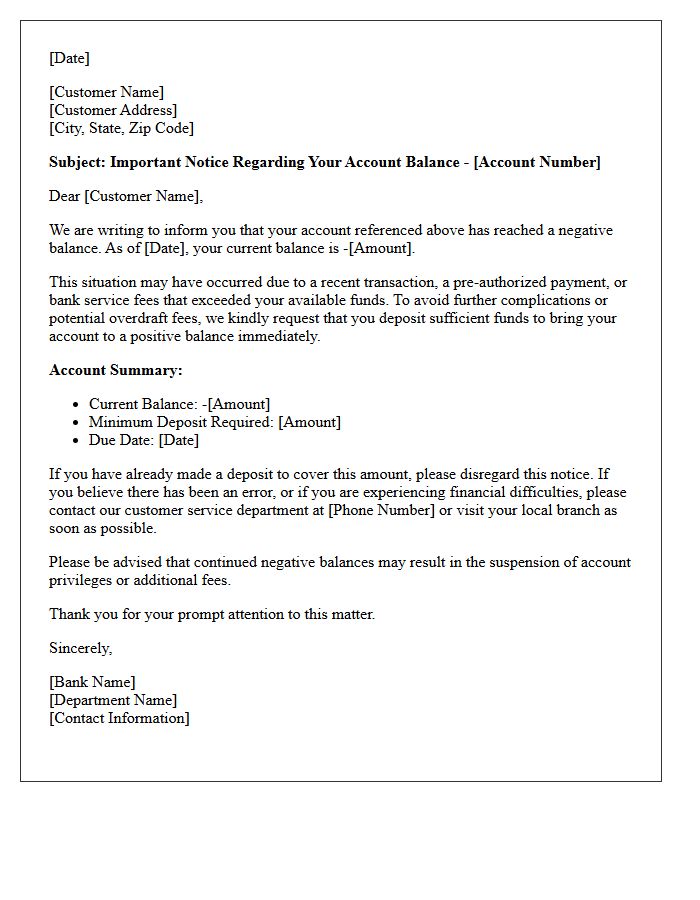
An Initial Overdraft Balance Warning Letter is a formal notification from your bank indicating your account has a negative balance. This document serves as a critical alert to help you avoid escalating fees or legal action. Receiving this notice means you must immediately deposit funds to cover the deficit. Promptly addressing this warning preserves your financial standing and prevents the bank from reporting delinquency to credit bureaus. Always review the specific deadline mentioned in the letter to ensure your account remains active and in good standing.
Pending Overdraft Balance Charge-Off Notice Letter
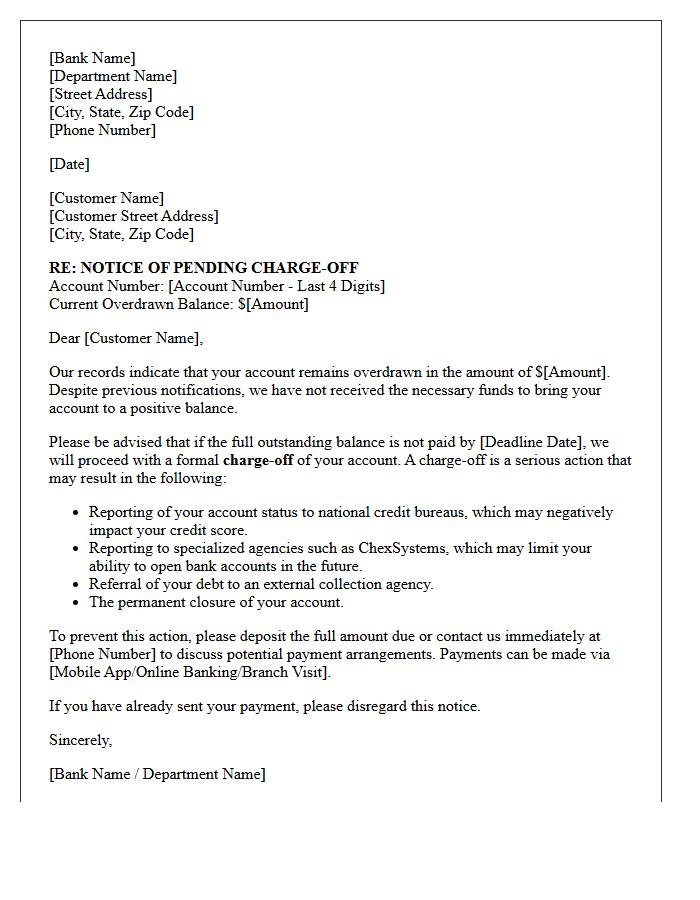
A Pending Overdraft Balance Charge-Off Notice Letter is a critical warning that your bank account is severely past due. It signifies that the financial institution intends to permanently close your account and write off the debt as a loss. This action results in a negative report to ChexSystems or credit bureaus, severely damaging your ability to open future accounts. To prevent this, you must pay the outstanding balance immediately. Once a charge-off occurs, the debt is often sold to a third-party collection agency, leading to persistent recovery efforts and long-term financial consequences.
Final Warning Before Overdraft Charge-Off Letter
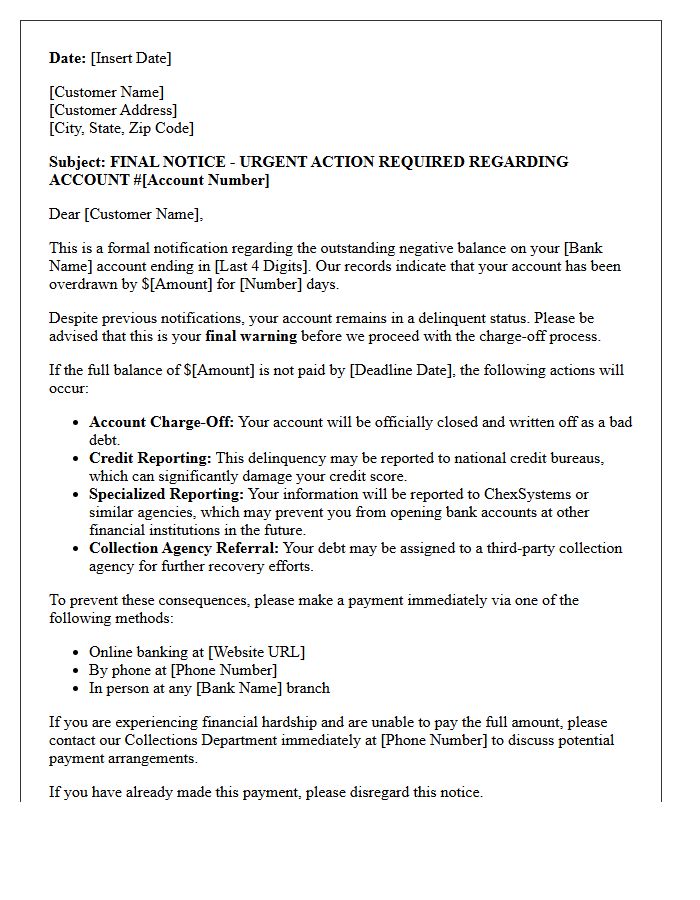
A final warning before an overdraft charge-off is the last official notice from your bank regarding a delinquent balance. This letter serves as a critical deadline to settle your debt before the account is permanently closed. Failure to respond typically results in the debt being reported to agencies like ChexSystems, which severely impacts your ability to open future bank accounts. To prevent long-term financial damage, you must contact your bank immediately to arrange a repayment plan or pay the outstanding fees before the specified cutoff date.
Official Overdraft Balance Charge-Off Letter
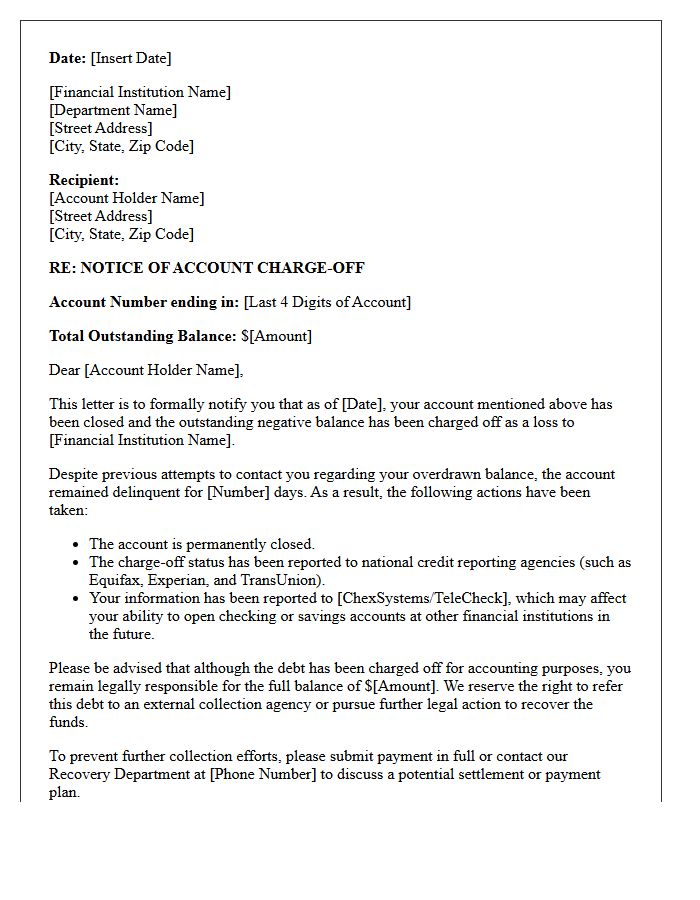
An Official Overdraft Balance Charge-Off Letter is a formal notice indicating that your bank has closed your account due to a prolonged negative balance. This document signifies that the debt is deemed uncollectible by the institution and has been moved to a delinquent status. Receiving this letter is critical because it often precedes reporting to agencies like ChexSystems or a collection agency. To protect your financial reputation and future banking access, you should immediately contact the bank to negotiate a repayment plan or settle the outstanding balance in full.
Account Closure And Overdraft Charge-Off Letter
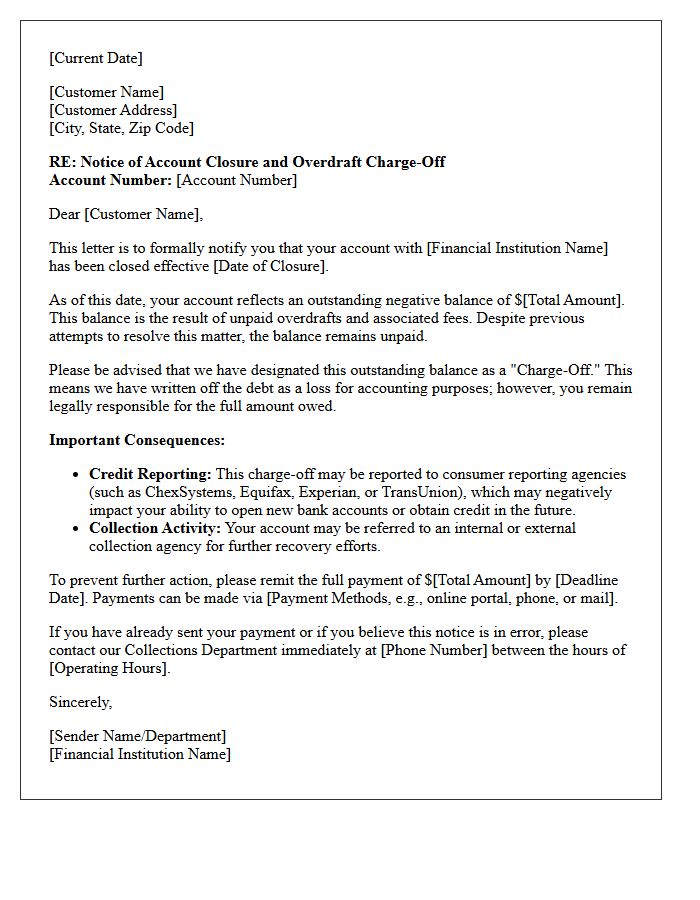
An Account Closure and Overdraft Charge-Off Letter signifies that your bank has permanently closed your account due to a prolonged negative balance. This notice confirms that the unpaid debt has been written off as a loss and transferred to a collections agency. Receiving this letter is critical because it often results in a negative report to ChexSystems or credit bureaus, severely limiting your ability to open new bank accounts. To mitigate long-term financial damage, you must contact the institution immediately to settle the outstanding balance and request a formal debt validation.
Unresolved Overdraft Balance Charge-Off Advisory Letter
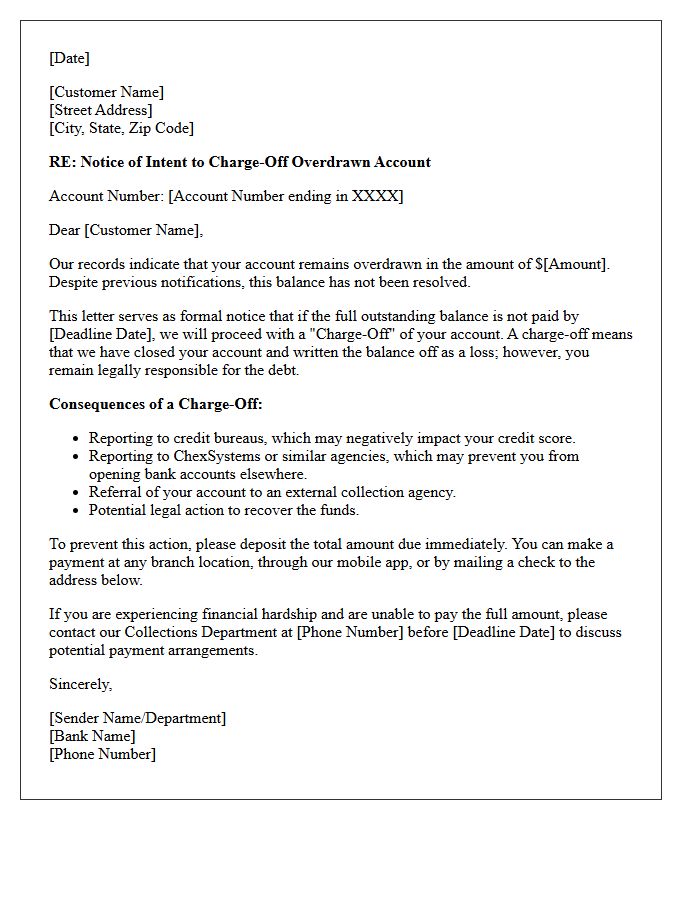
An Unresolved Overdraft Balance Charge-Off Advisory Letter is a formal notice stating that your bank has closed your account due to a prolonged negative balance. This charge-off signifies that the debt is considered uncollectible by the institution and may be sold to a third-party collection agency. Receiving this letter negatively impacts your ChexSystems report and credit score, making it difficult to open new bank accounts. To mitigate long-term financial damage, you should immediately contact the bank to negotiate a repayment plan or settlement before the debt escalates further.
Commercial Account Overdraft Charge-Off Letter
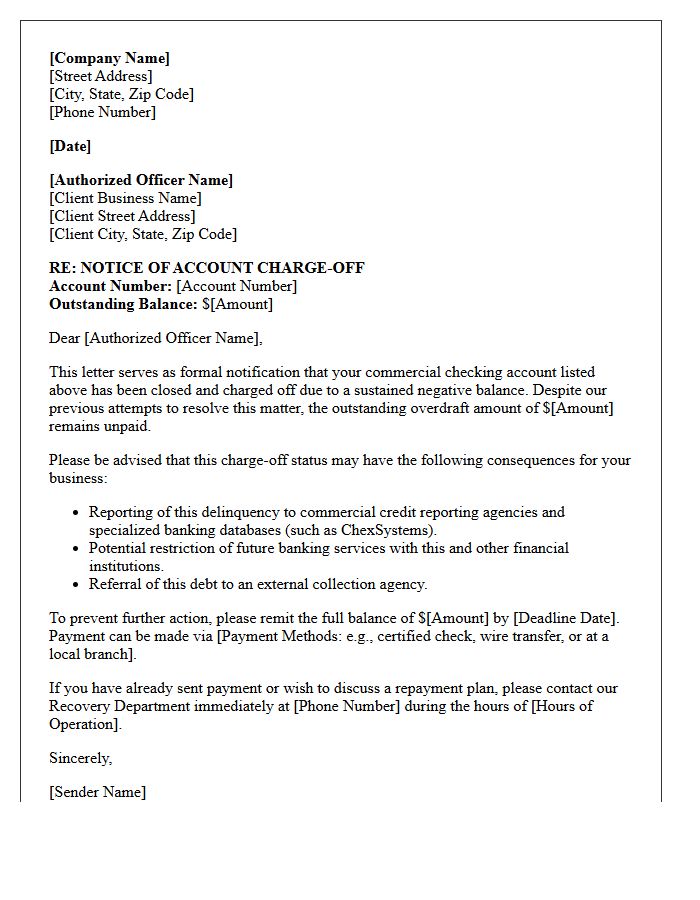
A Commercial Account Overdraft Charge-Off Letter is a formal notification stating that a business bank account has been closed due to a persistent negative balance. This document signifies that the bank has classified the debt as a loss, though the business remains legally obligated to repay the funds. Receiving this letter can severely impact a company's credit rating and its ability to secure future financing. It is crucial to contact the financial institution immediately to negotiate a settlement or repayment plan to prevent further legal action or collection efforts.
Retail Banking Overdraft Charge-Off Notice Letter
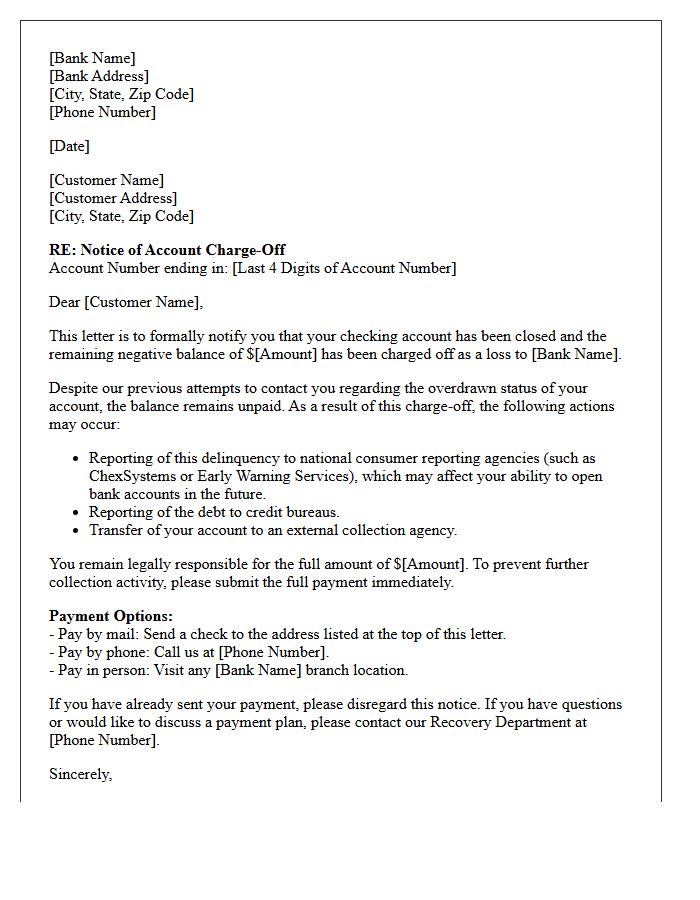
A Retail Banking Overdraft Charge-Off Notice Letter is a formal notification that your account has been closed due to a prolonged negative balance. This document signifies that the bank has deemed the debt uncollectible and categorized it as a loss. The charge-off status is critical because it severely damages your credit score and typically results in the debt being sold to a collection agency. To mitigate long-term financial consequences, you should immediately contact the bank to negotiate a settlement or payment plan before the information is reported to major credit bureaus.
Post-Charge-Off Debt Collection Transfer Letter
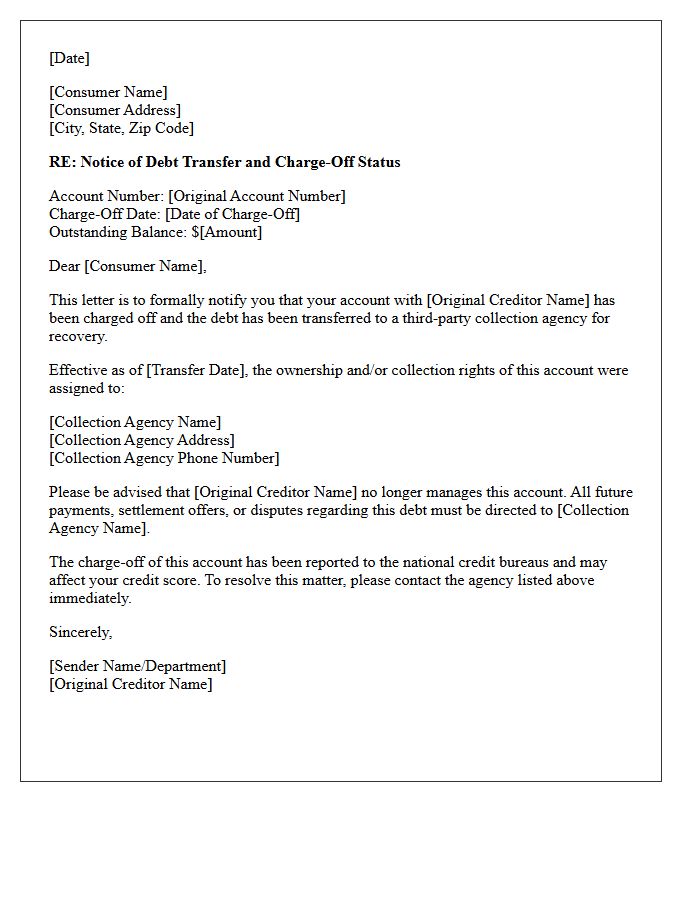
A Post-Charge-Off Debt Collection Transfer Letter is a formal notification that your delinquent account has been sold or assigned to a third-party agency. This document confirms that the original creditor has written off the debt as a loss and no longer owns it. It is crucial to verify the new owner's identity and the exact balance owed to prevent fraud. Receiving this letter marks the start of a new collection phase, making it the essential time to request debt validation and understand your updated consumer rights.
Overdraft Charge-Off Credit Bureau Reporting Letter
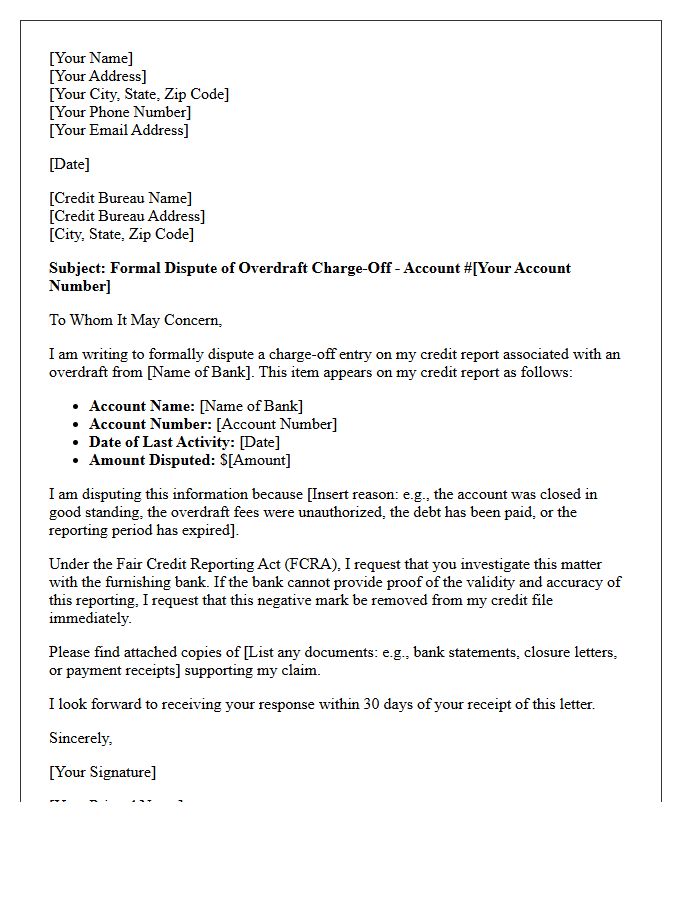
Receiving an Overdraft Charge-Off notification means your bank has closed your account due to a persistent negative balance. It is critical to understand that this status will be reported to credit bureaus and specialty agencies like ChexSystems. This negative entry severely damages your credit score and may prevent you from opening new bank accounts for up to seven years. To mitigate the impact, you should immediately contact the financial institution to negotiate a settlement or payment plan, ensuring you request a formal letter confirming the debt is satisfied.
Post-Charge-Off Balance Settlement Offer Letter
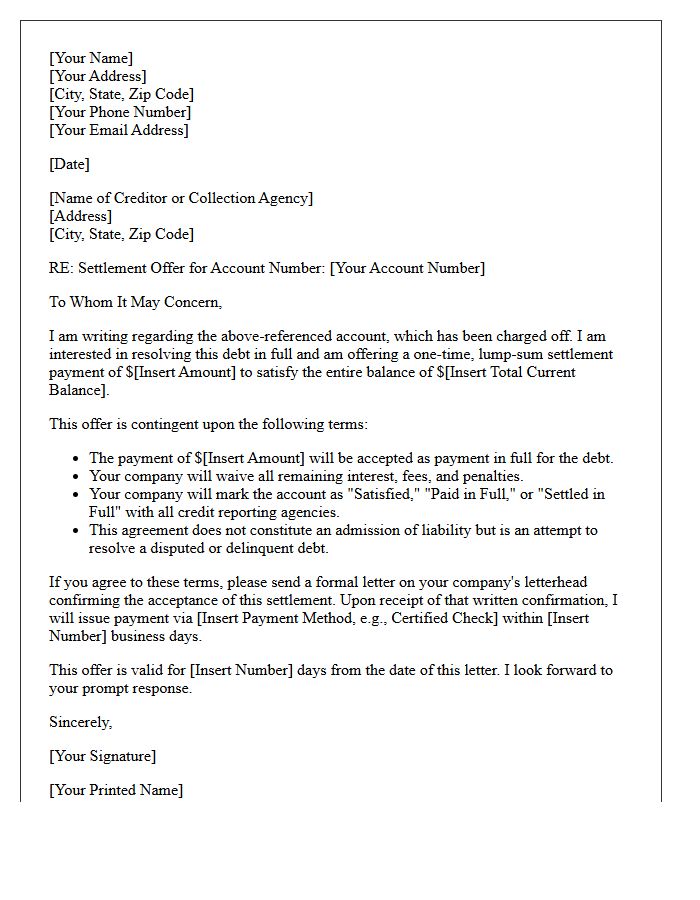
A Post-Charge-Off Balance Settlement Offer Letter is a formal proposal to resolve delinquent debt for less than the total amount owed. Once an account is charged off, the creditor deems it unlikely to be collected, providing leverage for negotiation. Receiving this letter often signifies an opportunity to clear your financial obligation and stop aggressive collection efforts. Before accepting, ensure the agreement is in writing, specifies the account will be reported as settled, and confirms you are released from any further liability regarding the remaining balance.
Overdraft Charge-Off Legal Action Warning Letter
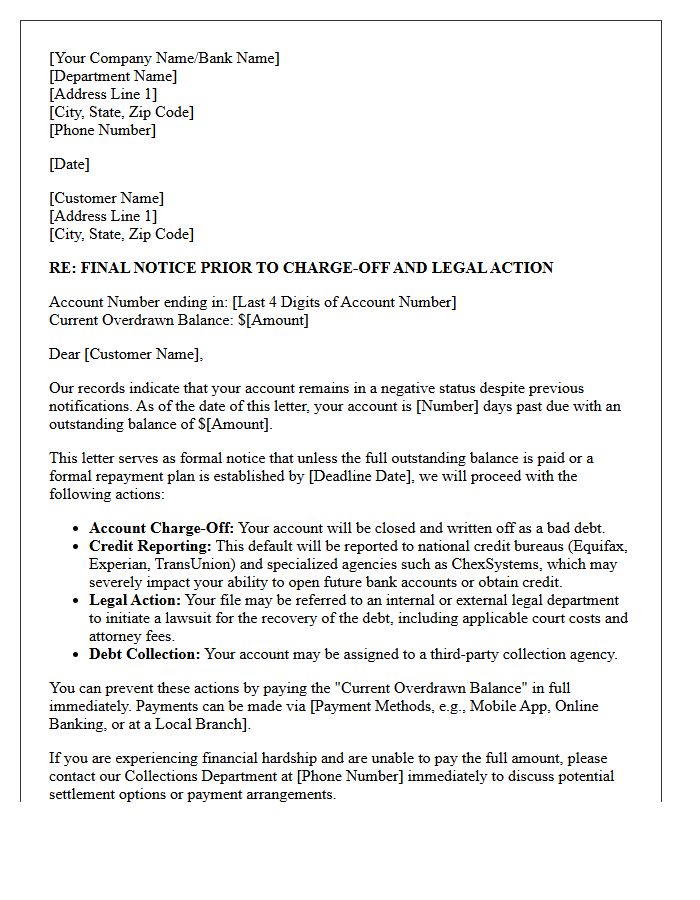
Receiving an Overdraft Charge-Off Legal Action Warning Letter indicates that your bank has deemed your negative balance uncollectible and closed the account. This notice is a final attempt to recover funds before your debt is sold to a third-party collection agency or submitted for potential litigation. Ignoring this letter can severely damage your credit score and hinder your ability to open future bank accounts via ChexSystems. It is crucial to negotiate a settlement or payment plan immediately to prevent further legal escalation or wage garnishment.
What does an Overdraft Balance Charge-Off Notice mean?
An Overdraft Balance Charge-Off Notice is a formal notification that a financial institution has written off your negative account balance as a loss after a period of delinquency. This indicates the bank has closed your account and may transfer the debt to a third-party collection agency.
How does a bank charge-off affect my credit score and ChexSystems report?
A charge-off can significantly lower your credit score and will typically be reported to ChexSystems or Early Warning Services (EWS). This reporting makes it difficult to open new checking or savings accounts at other financial institutions for up to five to seven years.
Do I still owe the money after receiving a charge-off notice?
Yes, a charge-off is an accounting status and does not legally absolve you of the debt. You are still responsible for the balance, and the bank or a collection agency can continue to pursue legal action or wage garnishment to recover the funds.
Can I settle an overdraft charge-off for less than the full balance?
Many banks and debt buyers are willing to negotiate a settlement for a reduced lump-sum payment. Once paid or settled, the account status will be updated to "Paid Charge-Off" or "Settled for Less Than Full Balance," which is viewed more favorably by future lenders than an unpaid debt.
How can I remove a charge-off notice from my record?
The most effective way to address a charge-off is to pay the balance in full and request a "Letter of Release" from the bank. You can then submit this documentation to ChexSystems or credit bureaus to update your record, though the history of the charge-off may remain visible for several years.

Comments