
A Returned Item Overdraft Notification Letter is an official notice sent by financial institutions when a transaction exceeds an account balance. This document details the specific item returned, associated nonsufficient funds fees, and necessary steps to rectify the deficit. Clear communication helps maintain banking relationships and financial transparency. To simplify your administrative process, below are some ready to use template.
Image cover: Professional Templates for Returned Item and Overdraft Notification Letters
Letter Samples List
- Returned Item Overdraft Notification Letter
- Insufficient Funds Returned Item Letter
- Unpaid Item Return Notification Letter
- Continuous Overdraft Warning Letter
- Overdraft Fee Assessment Notice Letter
- Account Overdrawn Final Demand Letter
- Automated Clearing House Returned Item Notification Letter
- Bounced Check Returned Item Letter
- Negative Balance Resolution Request Letter
- Courtesy Pay Overdraft Action Letter
- Overdraft Protection Transfer Notice Letter
- Account Closure Due To Overdraft Letter
Returned Item Overdraft Notification Letter
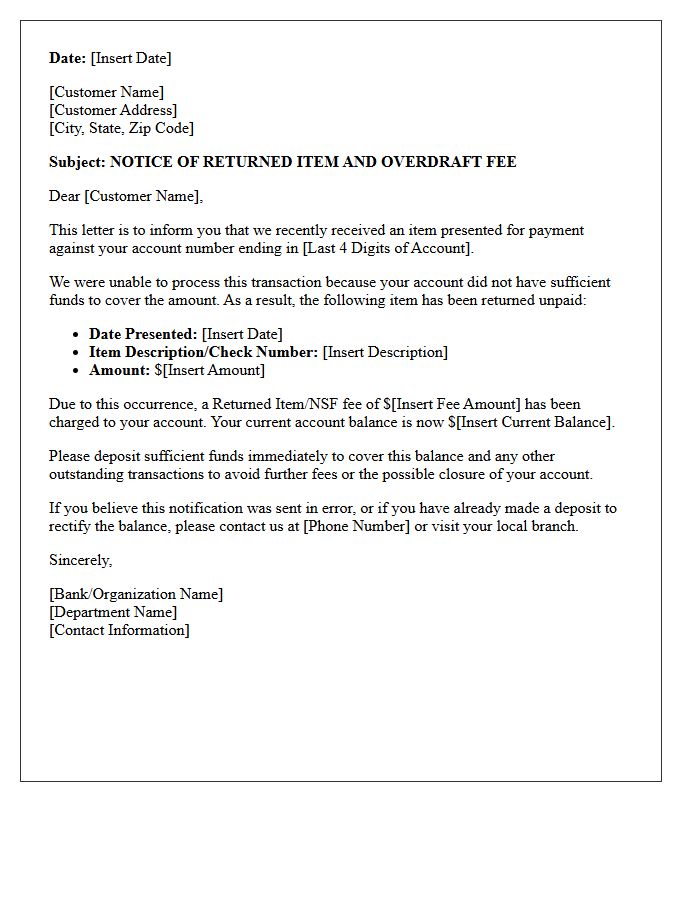
A Returned Item Overdraft Notification Letter is a formal notice from your bank regarding a failed payment. It informs you that a transaction was rejected due to insufficient funds in your account. This document outlines the specific transaction details and the NSF fees charged as a penalty. It is crucial to address the balance immediately to avoid additional financial penalties, potential account closure, or negative impacts on your credit history. Always review these letters to verify accuracy and ensure your account returns to a positive standing promptly.
Insufficient Funds Returned Item Letter
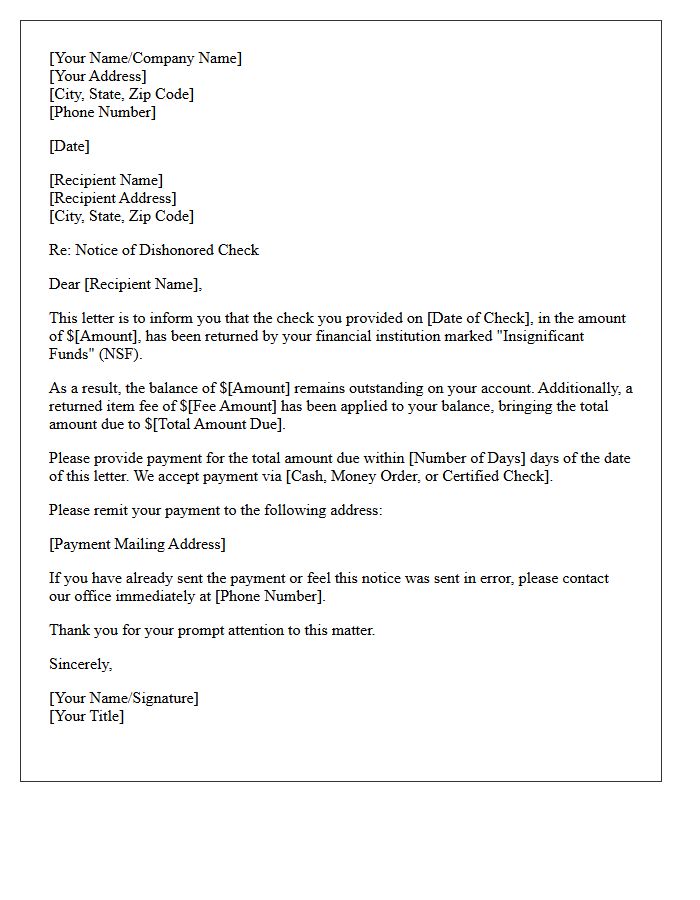
An Insufficient Funds Returned Item Letter serves as formal notification that a payment was declined due to a lack of available liquidity in a bank account. This document typically demands immediate repayment of the original balance plus any applicable NSF fees incurred. Recipients should prioritize settling the debt to avoid negative impacts on their credit score or legal action. For businesses, sending this letter is a critical step in the collections process to document the failed transaction and establish a timeline for recovery.
Unpaid Item Return Notification Letter
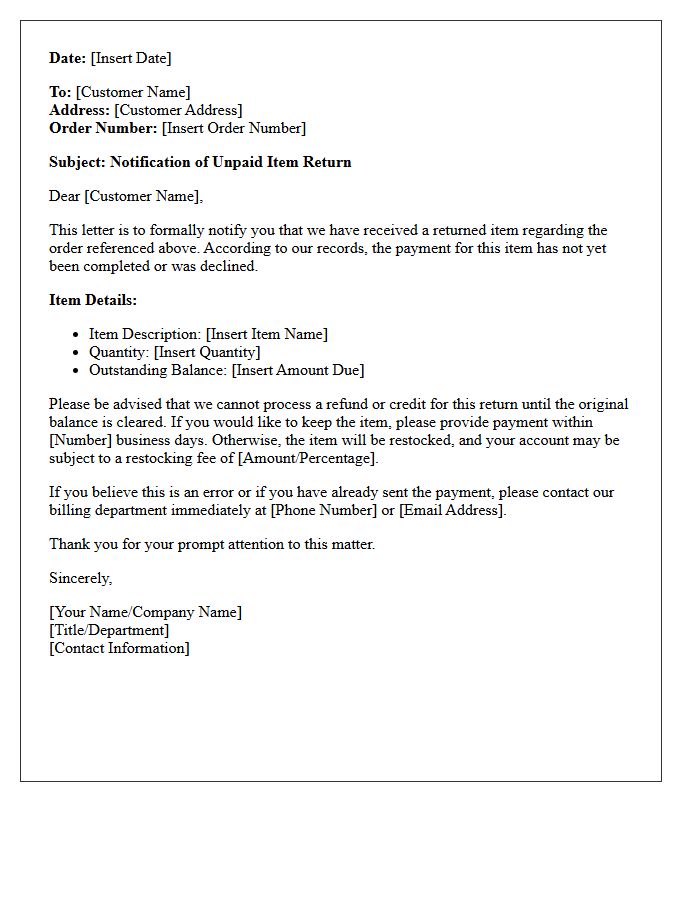
An Unpaid Item Return Notification Letter serves as a formal legal notice issued to a customer who has failed to settle an outstanding balance. This document informs the recipient that a specific product must be returned immediately if payment remains outstanding. It establishes a clear written record for potential legal action or debt recovery. Key details include the invoice number, description of the item, and a final deadline for compliance to avoid further penalties or repossession efforts. This professional communication is essential for protecting business assets and maintaining clear commercial accountability.
Continuous Overdraft Warning Letter
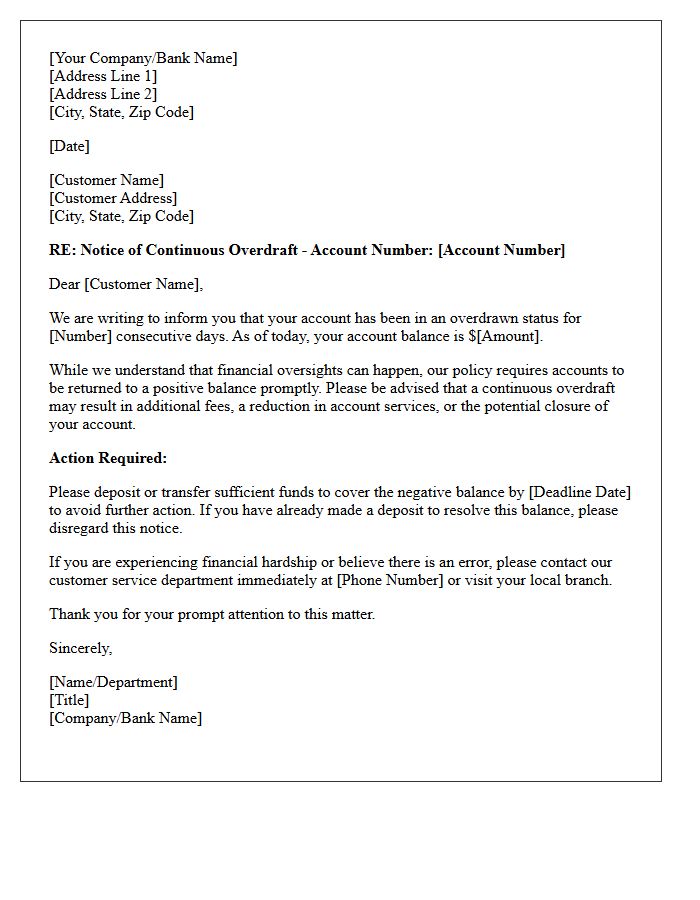
A Continuous Overdraft Warning Letter is a formal notification from a bank regarding a prolonged negative balance. It serves as a regulatory requirement to alert customers that their account has been overdrawn for an extended period, typically over 30 days. This document outlines the total debt, applicable fees, and potential credit score impact if the balance is not cleared. Receiving this notice is a critical signal to repay the debt immediately or contact the lender to arrange a repayment plan and avoid further financial penalties or account closure.
Overdraft Fee Assessment Notice Letter
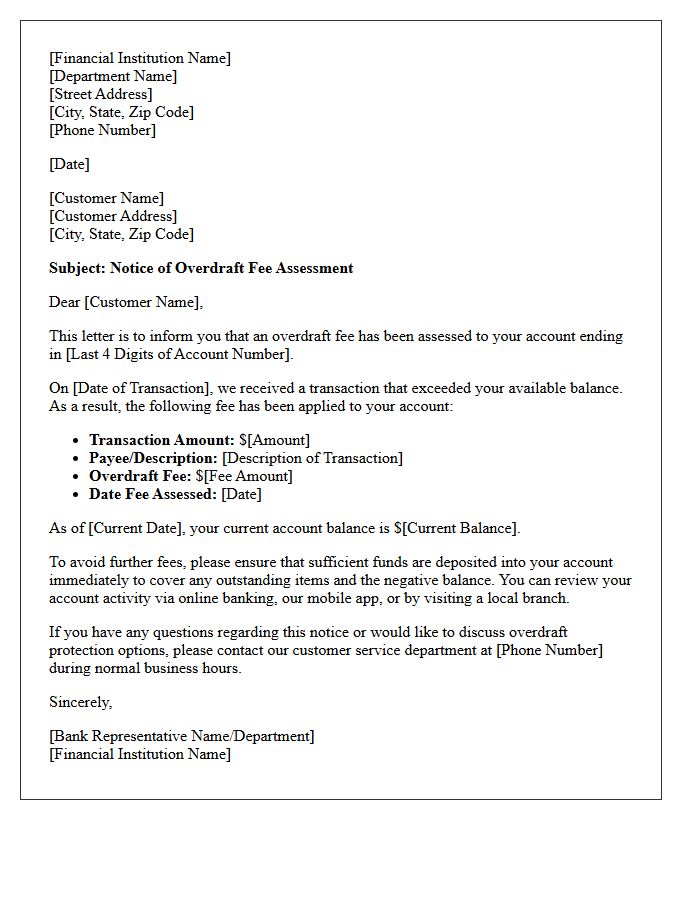
An Overdraft Fee Assessment Notice Letter is a formal notification from your bank confirming that a transaction exceeded your available balance. This document details the specific transaction amount, the date occurred, and the resulting penalty fee charged to your account. It serves as a critical record for financial transparency and alerts you to potential account deficits. Reviewing these notices promptly helps you track spending habits, avoid compounding penalties, and ensures you maintain a positive standing with your financial institution to prevent future service disruptions.
Account Overdrawn Final Demand Letter
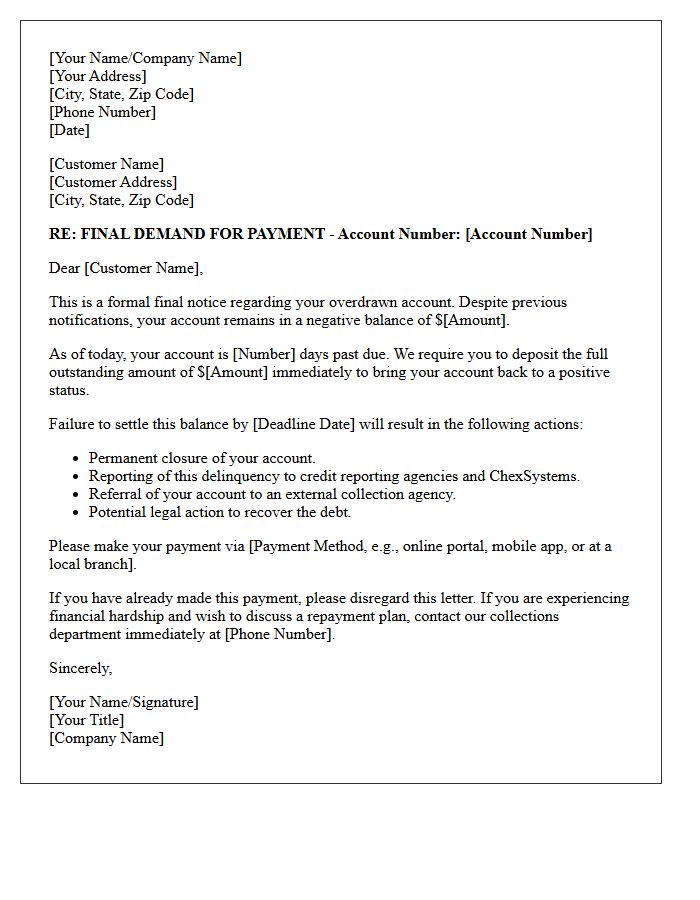
An Account Overdrawn Final Demand Letter is a formal legal notice issued by a bank when a customer fails to rectify a negative balance. This document serves as a last warning before the financial institution initiates debt collection or legal action. It typically outlines the total debt, including accumulated interest and penalties, and specifies a strict deadline for payment. Receiving this letter indicates that the bank may close your account and report the delinquency to credit bureaus, severely impacting your credit score and future borrowing ability.
Automated Clearing House Returned Item Notification Letter
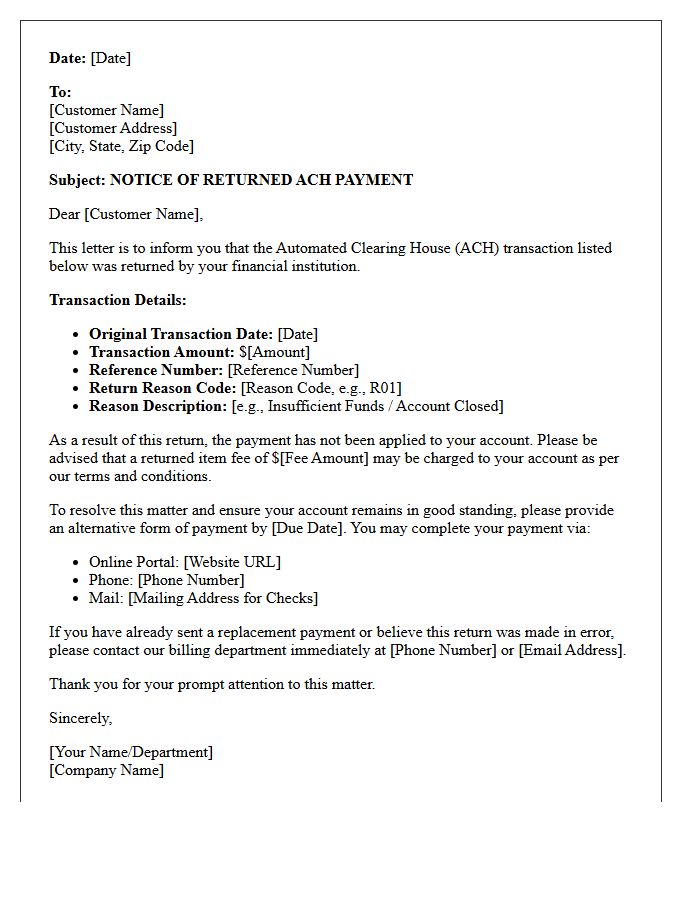
An ACH Returned Item Notification Letter is a formal document sent by a financial institution to inform an account holder that an electronic transaction failed. This notice identifies the Return Reason Code, such as insufficient funds, a closed account, or invalid details. Understanding these notifications is vital for maintaining financial compliance and avoiding service interruptions. Recipient action is typically required to rectify the error, update payment information, or deposit necessary funds to prevent additional penalties or legal complications associated with failed electronic fund transfers.
Bounced Check Returned Item Letter
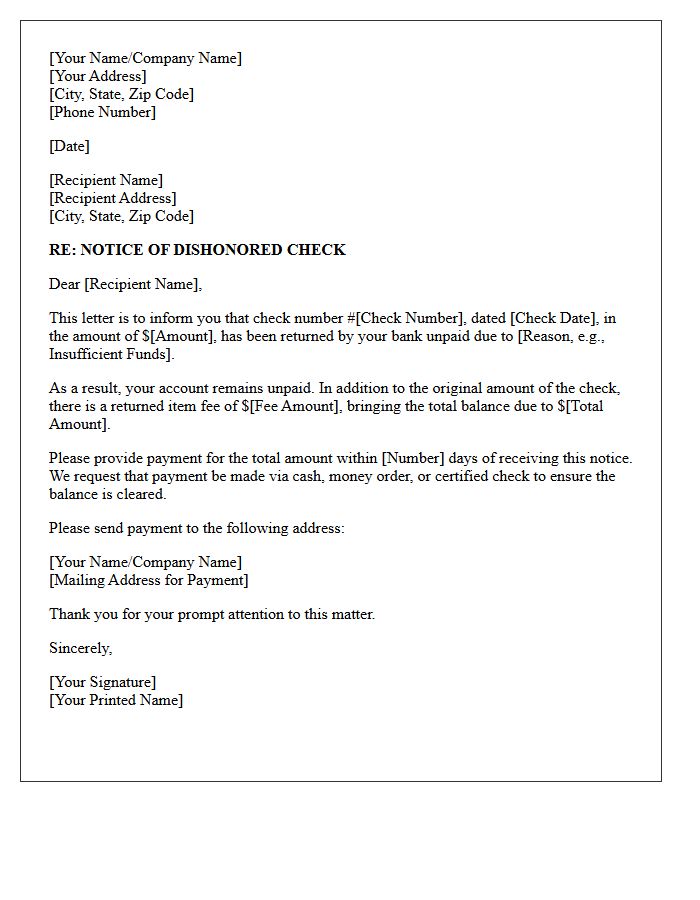
A Bounced Check Returned Item Letter is a formal notification sent to a writer whose payment failed due to insufficient funds. This document serves as legal proof of the failed transaction and requests immediate repayment plus applicable service fees. To maintain professional relationships, the letter should clearly state the original check details, the reason for return, and a specific deadline for settlement. Sending this notice is a critical first step in debt collection, often required by law before pursuing further legal action or reporting the incident to credit bureaus.
Negative Balance Resolution Request Letter
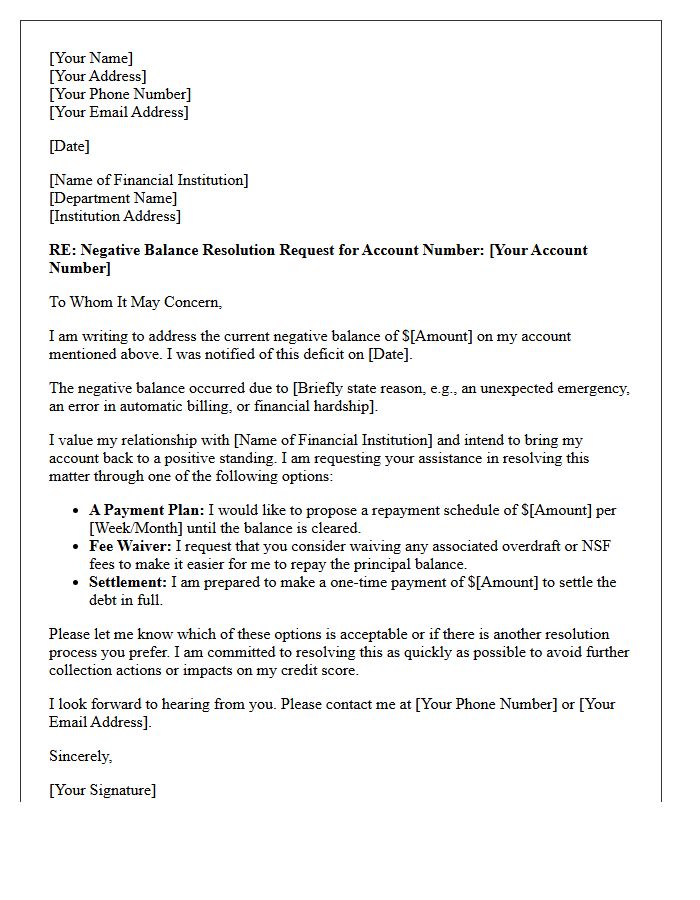
A Negative Balance Resolution Request Letter is a formal document sent to a financial institution to settle an overdrawn account. It is crucial to clearly state your intent to repay or dispute unauthorized charges to prevent credit score damage. Including your account details, the specific debt amount, and a proposed payment plan can help negotiate a settlement. Timely submission of this letter demonstrates financial responsibility and may assist in waiving overdraft fees, ultimately protecting your long-term banking reputation and financial health.
Courtesy Pay Overdraft Action Letter
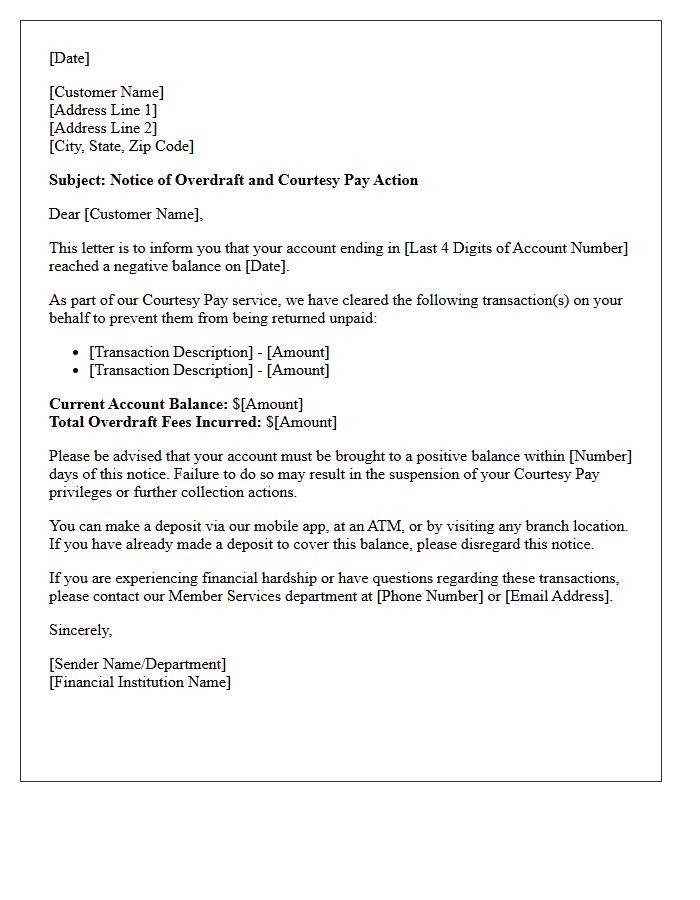
A Courtesy Pay Overdraft Action Letter is a formal notice from your financial institution regarding your account status. It details overdraft coverage options, explaining how the bank handles transactions when funds are insufficient. This document typically outlines applicable fees, consumer rights, and the process for opting in or out of the service. Understanding this letter is essential for managing your banking fees and maintaining a positive balance. Reviewing these terms ensures you understand the costs associated with automated payment protection and your choices for financial management.
Overdraft Protection Transfer Notice Letter
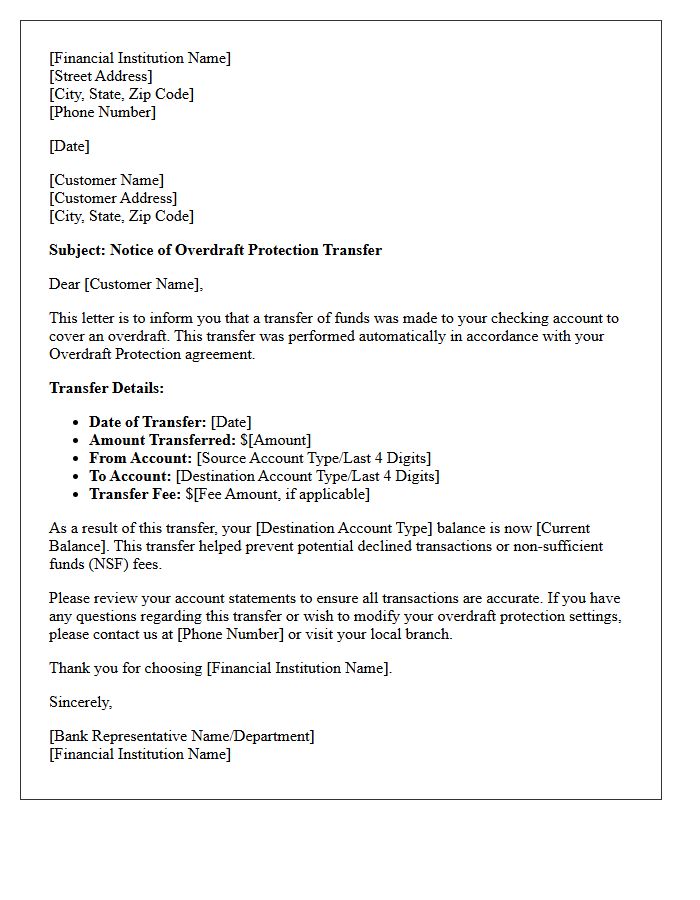
An Overdraft Protection Transfer Notice Letter informs customers that funds were automatically moved from a linked account to cover a deficit. This automated service prevents declined transactions and costly NSF fees. The letter details the specific transfer amount, the remaining balances of both accounts, and any applicable transfer fees incurred. Reviewing this notice is essential for maintaining accurate financial records and identifying potential spending patterns. It serves as a formal record of bank actions taken to ensure your account liquidity remains stable during unexpected shortfalls.
Account Closure Due To Overdraft Letter
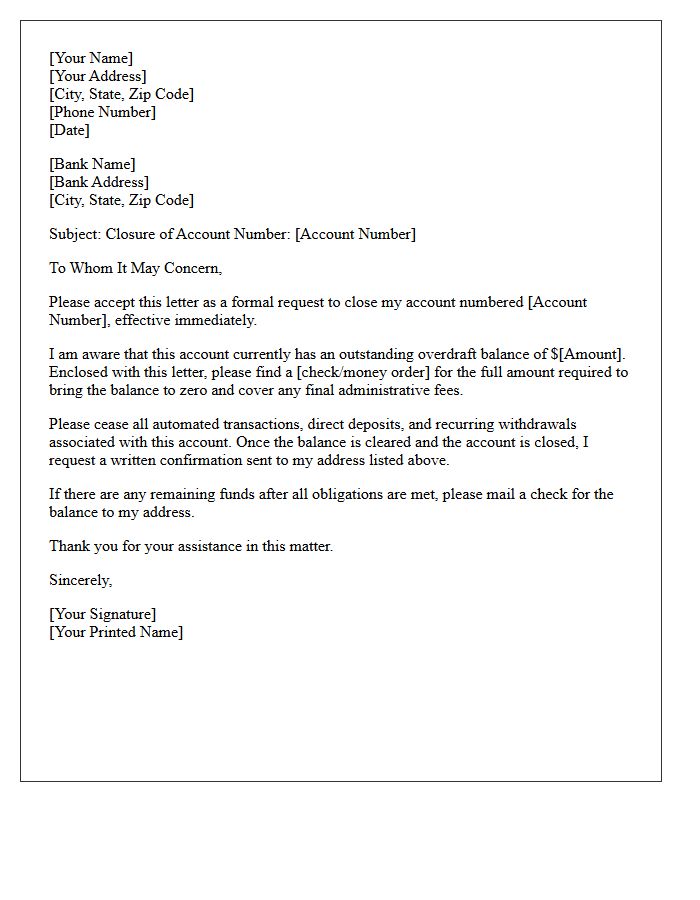
An Account Closure Due To Overdraft Letter is a formal notice from a financial institution stating your account has been terminated because of a persistent negative balance. This action typically occurs after multiple failed attempts to collect outstanding funds. Receiving this letter is critical because the bank will likely report the involuntary closure to ChexSystems or other credit bureaus. This can severely restrict your ability to open new bank accounts in the future. To mitigate long-term damage, you should immediately pay the debt and request a formal release letter.
What is a Returned Item Overdraft Notification Letter?
A Returned Item Overdraft Notification Letter is a formal notice sent by a financial institution to inform an account holder that a presented check, electronic transfer, or payment was declined and returned unpaid due to insufficient funds (NSF) in the account.
Why did I receive a notice about a returned item and an overdraft fee?
You received this letter because a transaction exceeded your available balance and the bank elected not to pay the item. Consequently, the transaction was reversed, and a returned item fee (also known as an NSF fee) was charged to your account for processing the decline.
How does a returned item letter differ from a standard overdraft notice?
A standard overdraft notice is sent when the bank pays a transaction on your behalf despite a negative balance, whereas a returned item letter is sent when the bank refuses to pay the transaction, resulting in the item being sent back to the payee's bank unpaid.
What steps should I take after receiving a Returned Item Overdraft Notification?
You should immediately deposit sufficient funds to cover your negative balance and any accrued fees. Additionally, you must contact the merchant or individual you attempted to pay to arrange an alternative payment method and resolve any private late fees they may impose.
Will a returned item notification affect my credit score or banking history?
While banks do not typically report individual returned items to credit bureaus, the activity is recorded in specialized databases like ChexSystems. Frequent returned items can lead to account closure and may prevent you from opening new bank accounts in the future.

Comments