
A Cease and Desist Warning Letter is a formal legal notice demanding that an entity stop an alleged illegal activity or infringement immediately. It serves as a final warning before pursuing formal litigation or court action. Understanding its legal weight is crucial for protecting your intellectual property or personal rights. To help you get started, below are some ready to use template.

Image cover: Formal Cease and Desist Templates and Professional Letter Samples
Letter Samples List
- Cease and Desist Letter for Unauthorized Use of Bank Trademarks
- Warning Letter for Fraudulent Representation of Banking Affiliation
- Cease and Desist Letter Regarding Breach of Financial Confidentiality
- Warning Letter for Defamation Against the Banking Institution
- Cease and Desist Letter for Unauthorized Financial Data Scraping
- Warning Letter Regarding Phishing and Spoofing of Bank Communications
- Cease and Desist Letter for Harassment of Bank Personnel
- Warning Letter for Misappropriation of Proprietary Banking Software
- Cease and Desist Letter Regarding Executive Non-Compete Agreement Violation
- Warning Letter for Unauthorized Debt Collection Practices
- Cease and Desist Letter for Illicit Use of Corporate Bank Accounts
- Warning Letter Regarding Unauthorized Solicitation of Bank Clients
Cease and Desist Letter for Unauthorized Use of Bank Trademarks
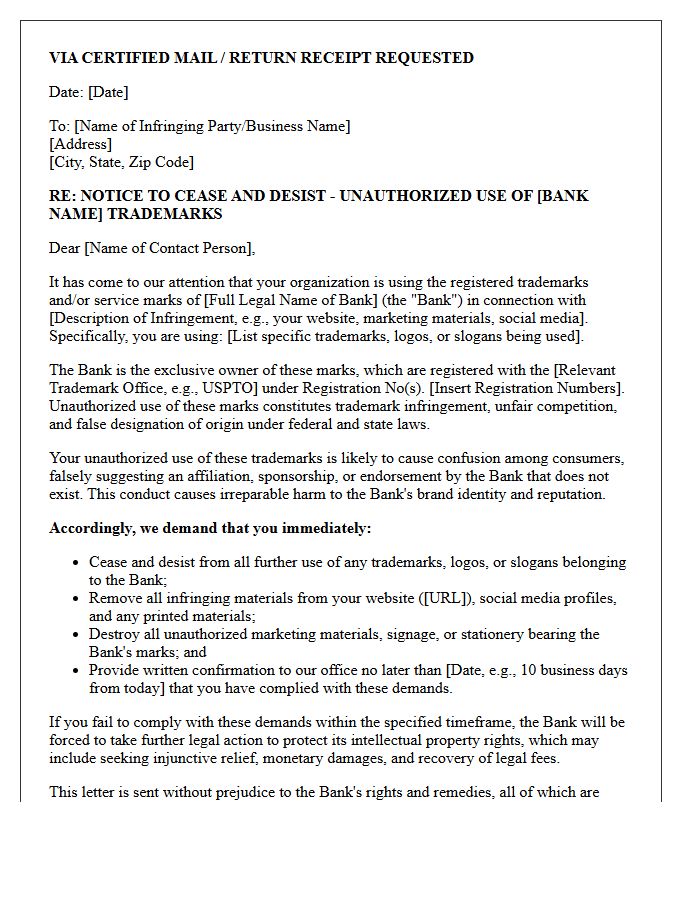
A cease and desist letter for unauthorized bank trademark use is a formal legal notice demanding the immediate stop of infringement to protect brand integrity. Banks utilize these documents to prevent consumer confusion and mitigate potential fraud or phishing risks associated with their identity. Receiving one indicates that your use of logos or names violates intellectual property laws, potentially leading to litigation if ignored. It is essential to verify the claim's validity and ensure compliance to avoid statutory damages and preserve your legal standing regarding trademark enforcement protocols.
Warning Letter for Fraudulent Representation of Banking Affiliation
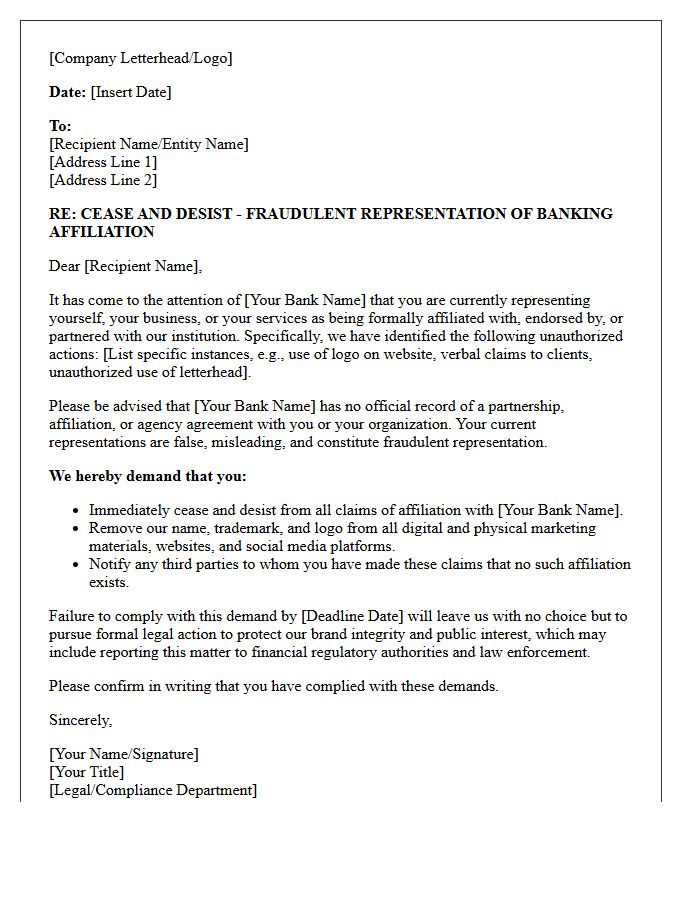
A Warning Letter for Fraudulent Representation of Banking Affiliation is a formal notice issued to entities falsely claiming a legal or operational partnership with a financial institution. This document demands an immediate cessation of deceptive marketing and unauthorized use of bank branding. It serves as a critical legal deterrent against identity theft and consumer phishing. Recipients must comply instantly to avoid severe regulatory penalties, criminal prosecution, and civil litigation. Protecting institutional integrity and ensuring customer transparency are the primary objectives of this enforcement action to prevent financial exploitation.
Cease and Desist Letter Regarding Breach of Financial Confidentiality
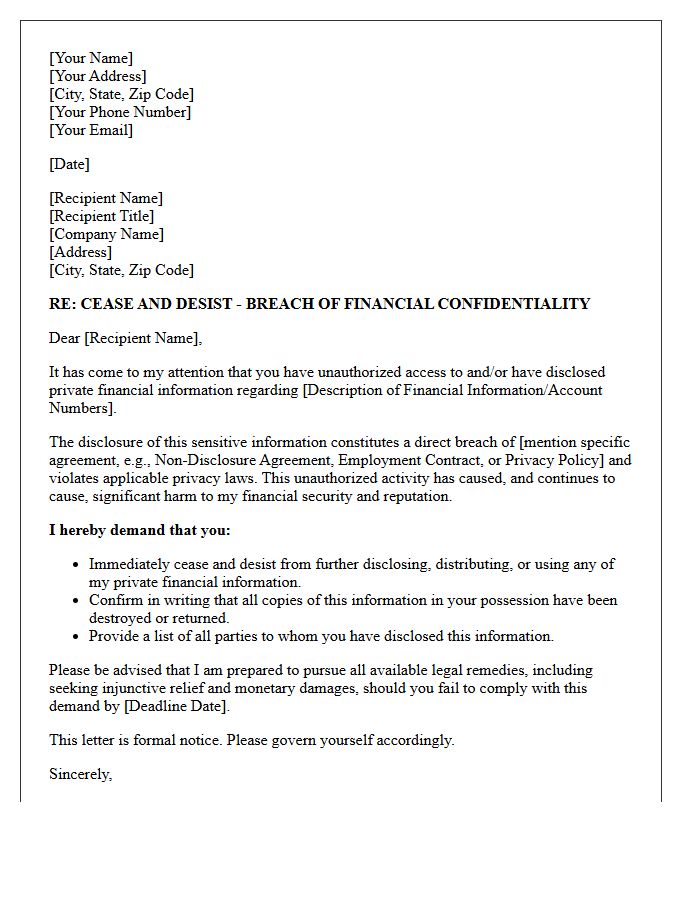
A Cease and Desist Letter for a breach of financial confidentiality is a formal legal demand to stop the unauthorized disclosure of sensitive fiscal data. This document serves as a critical legal warning, asserting that the recipient has violated a non-disclosure agreement or fiduciary duty. It outlines the specific financial breach, demands an immediate halt to the activity, and threatens litigation if compliance is not met. Sending this letter is an essential first step to mitigate monetary damages and protect proprietary interests before pursuing formal court action for confidentiality violations.
Warning Letter for Defamation Against the Banking Institution
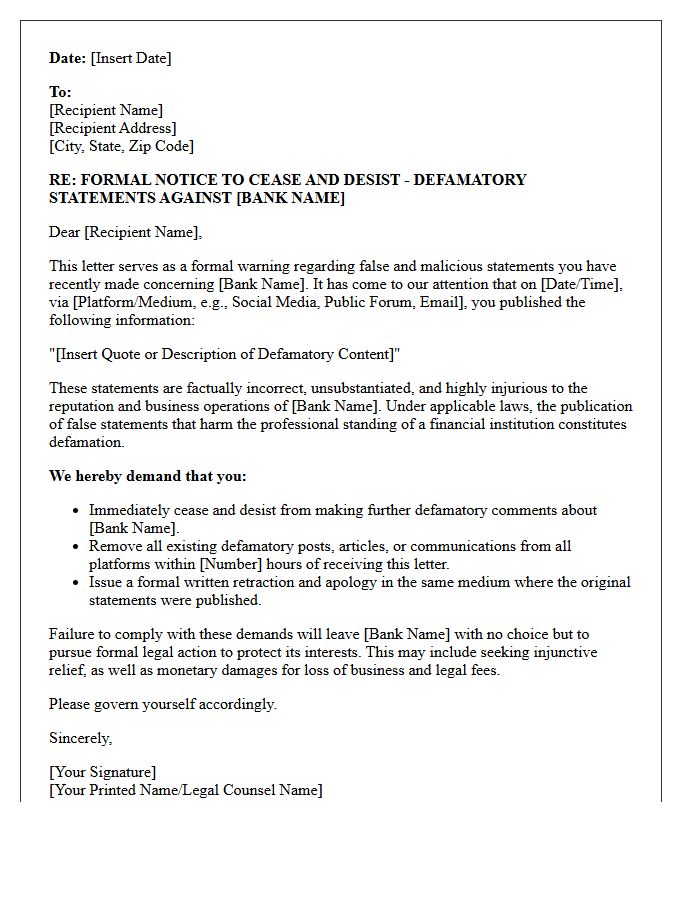
A warning letter for defamation against a banking institution is a formal legal notice demanding the cessation of false statements. It serves as a preliminary step before litigation to protect the bank's financial reputation and brand integrity. The document typically identifies specific defamatory claims, outlines the potential legal consequences under libel or slander laws, and requests an immediate retraction. Providing a clear warning allows the offending party to resolve the dispute out of court, preventing significant monetary damages associated with loss of consumer trust or regulatory scrutiny.
Cease and Desist Letter for Unauthorized Financial Data Scraping
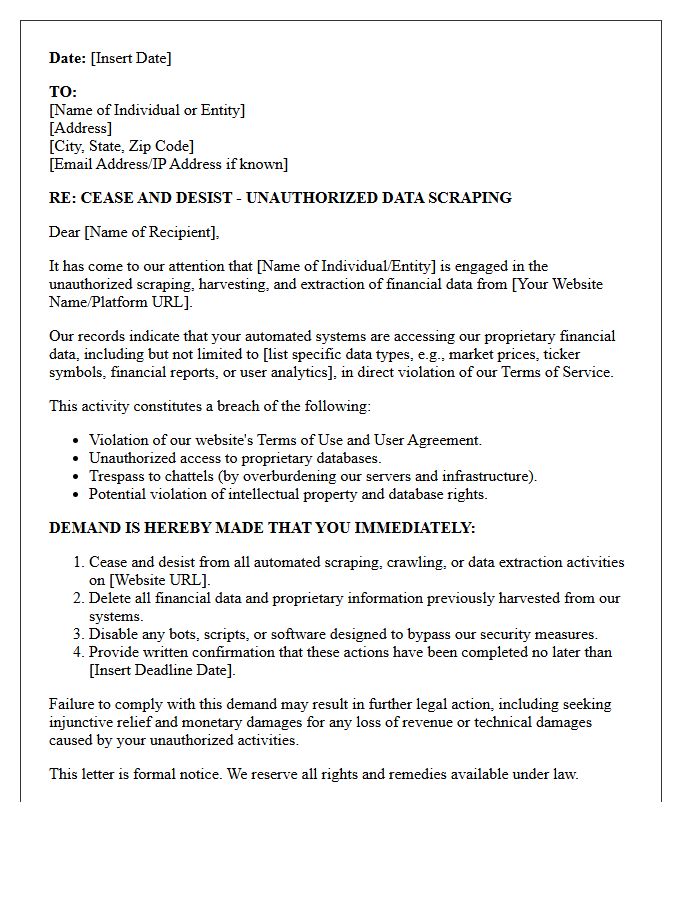
A Cease and Desist Letter for unauthorized financial data scraping is a formal legal notice demanding that an entity immediately stop extracting information from your platform. Unauthorized web scraping often violates Terms of Service and intellectual property rights. This document serves as a critical first step in protecting proprietary financial data, preventing server strain, and establishing a legal paper trail. Failure to comply can lead to litigation under the Computer Fraud and Abuse Act. Professional notices should clearly identify the offending activity, specify legal grounds, and set a strict deadline for compliance.
Warning Letter Regarding Phishing and Spoofing of Bank Communications
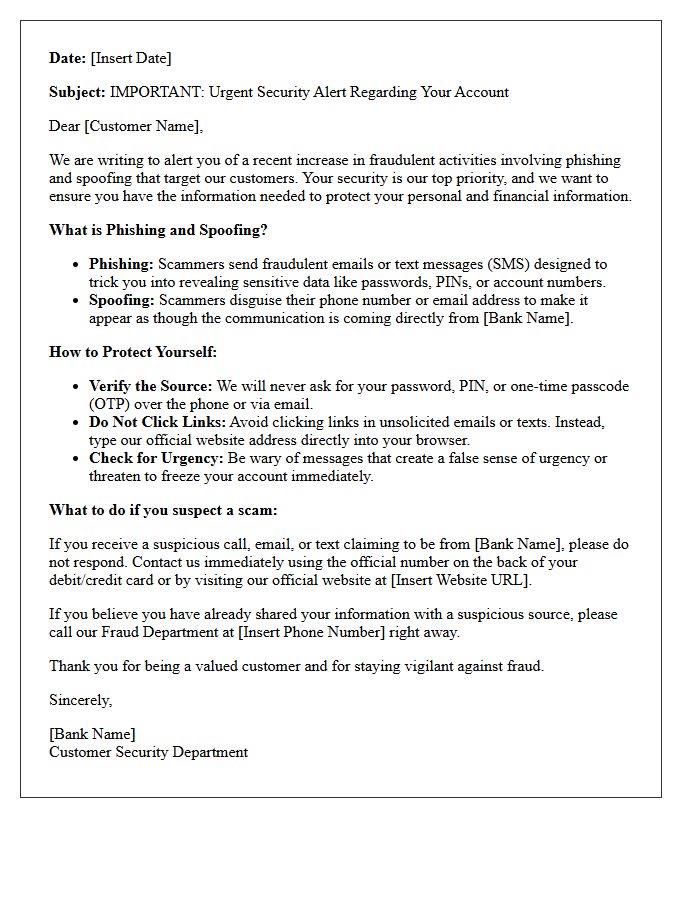
Beware of fraudulent emails or messages impersonating your financial institution. A phishing attack uses deceptive links to steal sensitive login credentials, while spoofing involves manipulating sender information to appear legitimate. To protect your account, never share your password or PIN via email. Verify all urgent requests by calling the bank directly through a verified phone number. Real banks will never ask for your private security details through unsecured digital channels. Maintaining cybersecurity awareness is the most effective defense against evolving financial fraud and unauthorized account access.
Cease and Desist Letter for Harassment of Bank Personnel
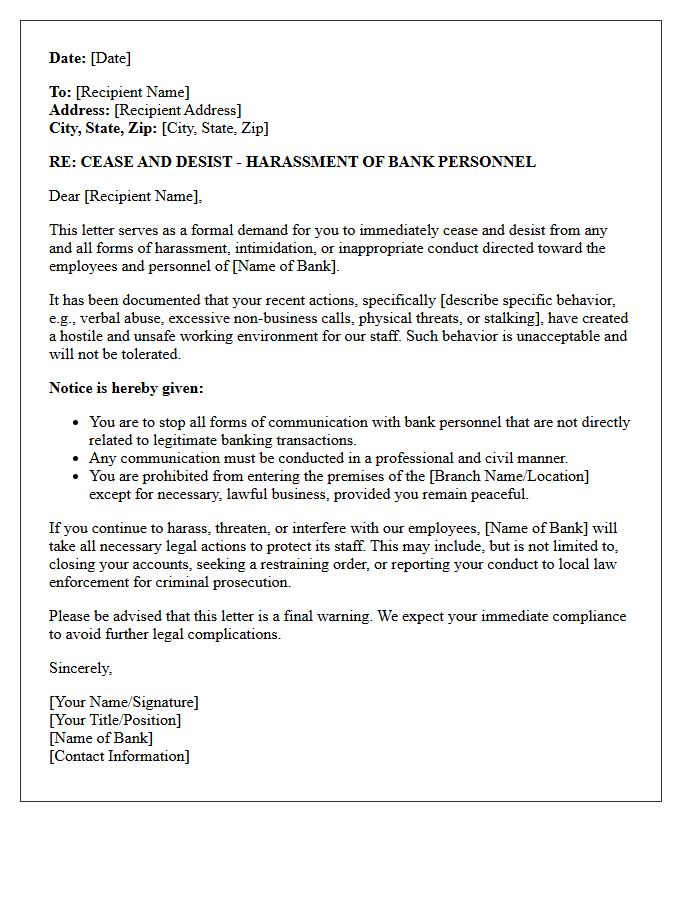
A cease and desist letter for harassment of bank personnel serves as a formal legal notice to stop abusive behavior toward financial staff. It identifies specific prohibited actions, such as threats or excessive contact, and warns of impending legal consequences. Utilizing this document protects employees' safety and ensures compliance with banking regulations. Sending the letter via certified mail creates a documented evidence trail necessary for securing restraining orders or terminating customer accounts. It is a critical tool for maintaining a professional environment and enforcing zero-tolerance policies against workplace intimidation or verbal abuse.
Warning Letter for Misappropriation of Proprietary Banking Software
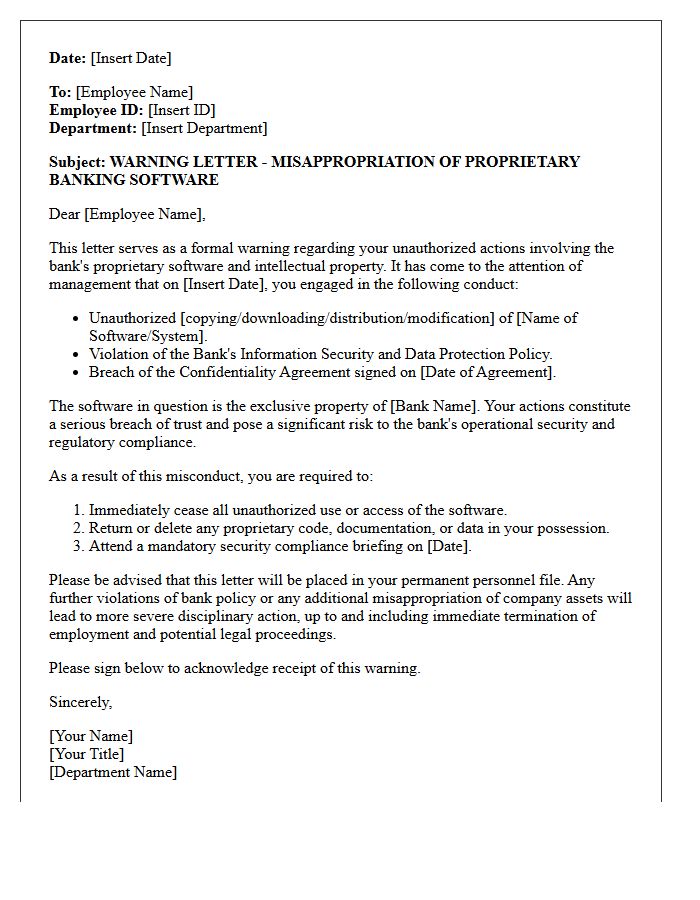
A warning letter for misappropriation of proprietary banking software is a formal disciplinary notice addressing the unauthorized access, duplication, or distribution of sensitive financial technology. Banks prioritize data integrity and intellectual property protection above all else. Engaging in software misuse violates employment contracts and federal security regulations. This document serves as a final legal caution, detailing specific policy breaches and potential consequences, including immediate termination or criminal litigation. Employees must strictly adhere to compliance protocols to safeguard confidential source code and maintain organizational trust within the highly regulated financial sector.
Cease and Desist Letter Regarding Executive Non-Compete Agreement Violation
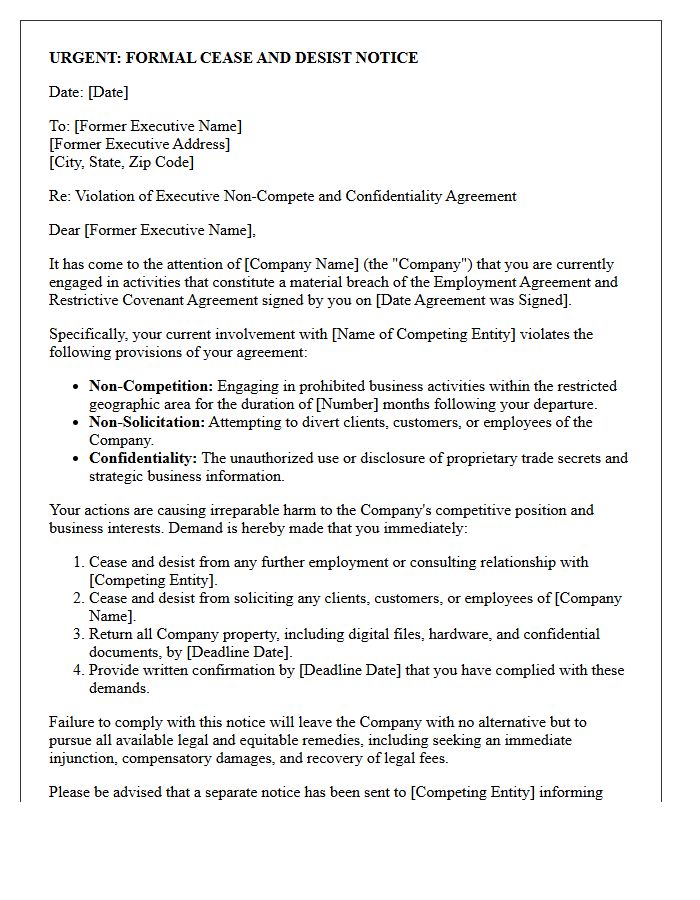
A Cease and Desist Letter is a formal legal notice demanding that an executive immediately stop activities violating a restrictive covenant. It serves as a critical pre-litigation warning, outlining specific breaches such as working for a direct competitor or soliciting protected clients. For executives, this document signals that an employer is prepared to seek an injunction or monetary damages. Receiving one requires an urgent legal review of the original employment contract's enforceability, geographic scope, and duration to mitigate potential courtroom escalations and protect professional reputation.
Warning Letter for Unauthorized Debt Collection Practices
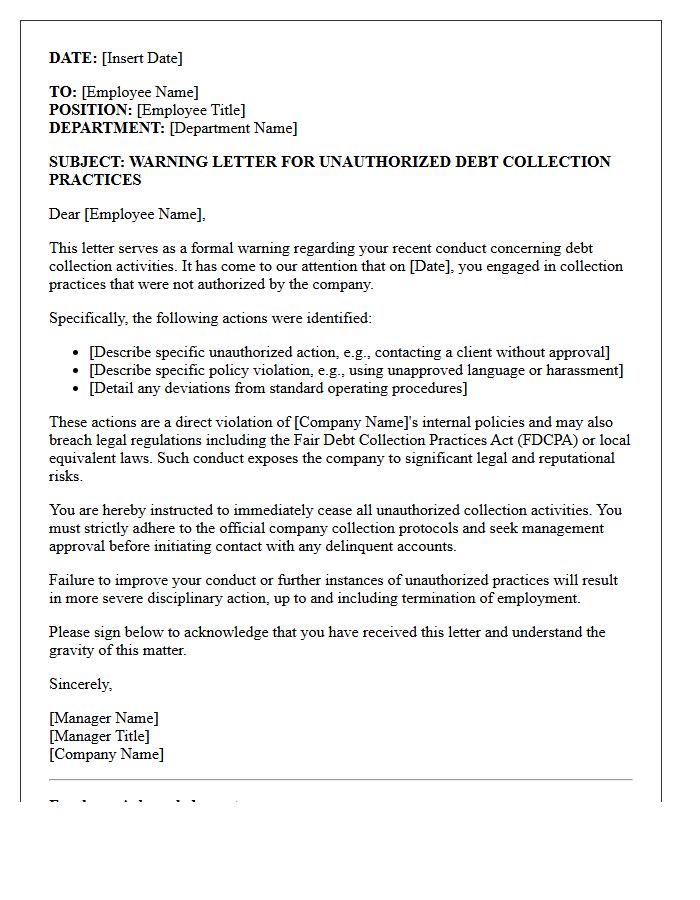
A Warning Letter for Unauthorized Debt Collection Practices serves as a formal legal notice to entities operating without proper licensing or violating consumer protection statutes. It identifies specific breaches, such as harassment, deceptive representations, or failure to provide debt validation. Receiving this document signifies that regulatory bodies or legal counsel have identified non-compliance with the Fair Debt Collection Practices Act (FDCPA). Immediate corrective action is required to avoid severe litigation, substantial fines, or a permanent injunction against business operations. Proper adherence to regulatory standards is essential for legal debt recovery.
Cease and Desist Letter for Illicit Use of Corporate Bank Accounts
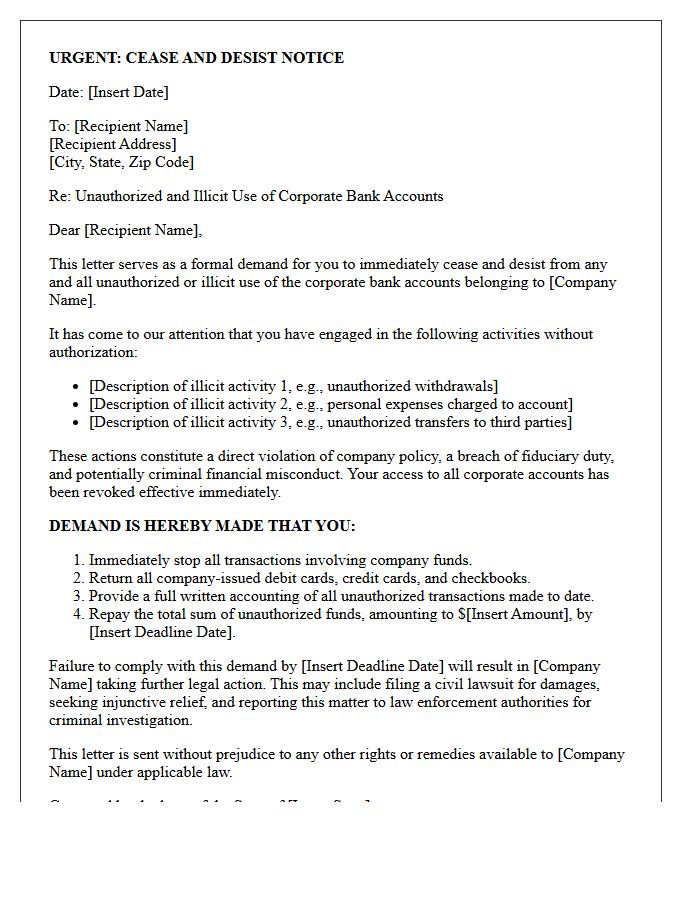
A Cease and Desist Letter for illicit use of corporate bank accounts is a formal legal demand to halt unauthorized financial transactions. It notifies the recipient that their actions, such as embezzlement or unauthorized withdrawals, violate corporate policy and law. This document serves as a critical legal notice before initiating litigation, demanding the immediate return of misappropriated funds. Establishing a clear record of the violation is essential for protecting the company's fiduciary integrity and preventing further financial loss or potential criminal liability resulting from internal fraud or account misuse.
Warning Letter Regarding Unauthorized Solicitation of Bank Clients
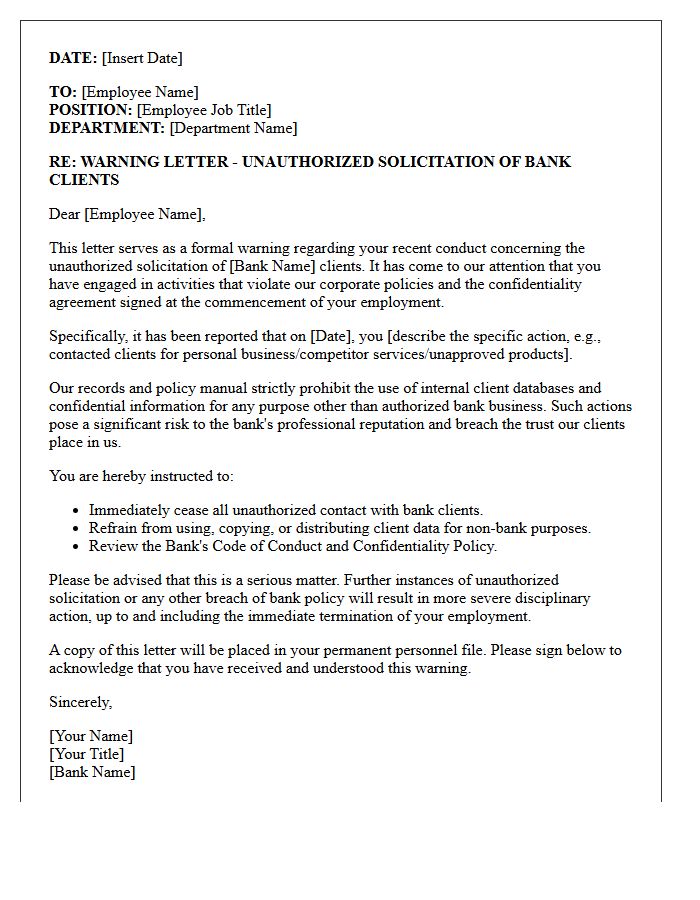
A Warning Letter Regarding Unauthorized Solicitation is a formal legal notice issued to individuals or entities attempting to poach a financial institution's customers. It serves as a cease and desist demand against the misuse of proprietary data or trade secrets. The document typically outlines specific non-solicitation agreements or restrictive covenants that have been breached. Ignoring this warning can lead to immediate litigation, claims for monetary damages, and permanent injunctions. Protecting client confidentiality and maintaining fair competition are the primary objectives when addressing these unauthorized outreach attempts.
What is a Cease and Desist Warning Letter?
A Cease and Desist Warning Letter is a formal legal document sent to an individual or business to demand that they stop a specific illegal or infringing activity immediately or face legal action.
When should I use a Cease and Desist Letter?
You should use a Cease and Desist Letter when your legal rights are being violated, commonly in cases involving trademark or copyright infringement, harassment, defamation, or breach of contract.
Is a Cease and Desist Letter legally binding?
A Cease and Desist Letter is not a court order and is not legally binding in itself; however, it serves as a critical pre-litigation notice that can be used as evidence in court to prove the recipient was aware of their wrongdoing.
What should be included in a Cease and Desist notice?
A comprehensive notice should include a clear description of the infringing activity, the legal basis for the claim, a specific deadline for compliance, and a statement of intent to pursue further legal remedies if the behavior continues.
What happens if a Cease and Desist Letter is ignored?
If the recipient ignores the letter and continues the prohibited activity, the sender typically proceeds with a formal lawsuit, seeking a court injunction, monetary damages, or other legal penalties.

Comments