
A Liquidity Shortfall Notification Letter is a formal communication used by businesses to inform creditors or stakeholders about temporary cash flow deficiencies. It outlines current financial challenges while proposing repayment adjustments to maintain professional transparency. Proactive reporting helps mitigate legal risks and preserves vital commercial relationships during periods of instability. To simplify your process, below are some ready to use template.

Image cover: Immediate Liquidity Shortfall Notification: Templates and Professional Samples
Letter Samples List
- Regulatory Liquidity Shortfall Notification Letter
- Liquidity Coverage Ratio Shortfall Notification Letter
- Net Stable Funding Ratio Shortfall Advisory Letter
- Intraday Liquidity Shortfall Alert Letter
- Board Of Directors Liquidity Shortfall Declaration Letter
- Correspondent Bank Settlement Shortfall Notification Letter
- Risk Management Committee Liquidity Shortfall Warning Letter
- Interbank Market Liquidity Shortfall Disclosure Letter
- Contingency Funding Plan Liquidity Shortfall Letter
- Central Bank Reserve Liquidity Shortfall Notification Letter
- Systemic Stress Liquidity Shortfall Escalation Letter
- Asset Liability Committee Liquidity Shortfall Letter
Regulatory Liquidity Shortfall Notification Letter
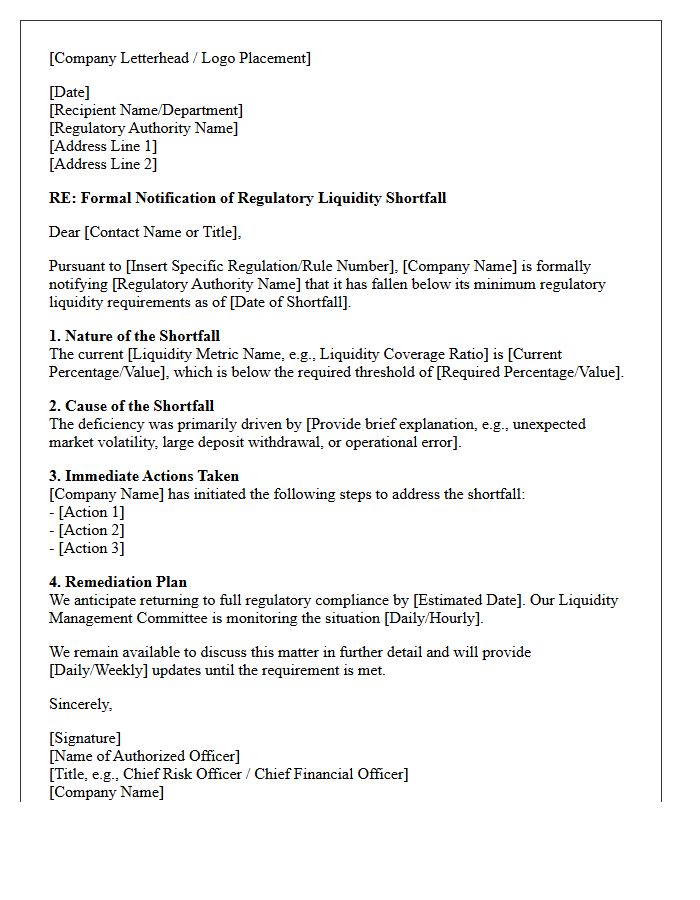
A Regulatory Liquidity Shortfall Notification Letter is a critical formal communication sent by financial institutions to regulators when liquid assets drop below mandatory thresholds. This document serves as an early warning signal, indicating that a firm lacks sufficient cash or high-quality liquid assets to meet short-term obligations. Under frameworks like Basel III, timely submission is legally required to ensure financial stability. Failure to issue this notification promptly can result in severe penalties, increased supervisory oversight, and immediate demands for comprehensive contingency funding plans to restore market confidence.
Liquidity Coverage Ratio Shortfall Notification Letter
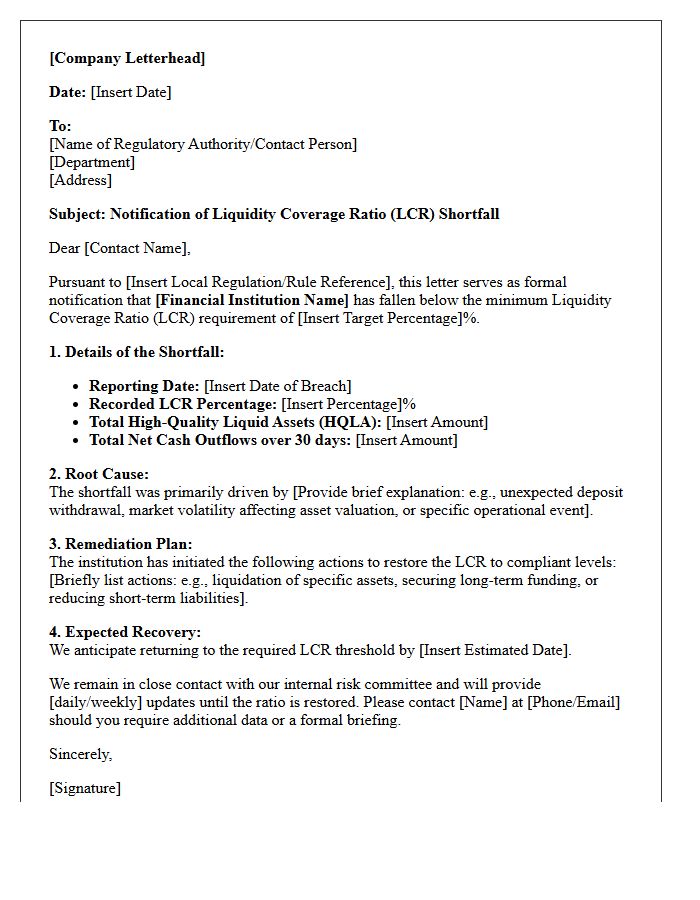
A Liquidity Coverage Ratio Shortfall Notification Letter is a critical regulatory document sent by a financial institution to its central bank or supervisor. It serves as an immediate formal alert when the firm's high-quality liquid assets fall below the mandated 100% threshold. The letter must detail the cause of the breach, current liquidity levels, and a comprehensive recovery plan to restore stability. Prompt communication is essential to maintain market integrity and demonstrate that the bank can meet its short-term obligations during a severe stress scenario.
Net Stable Funding Ratio Shortfall Advisory Letter
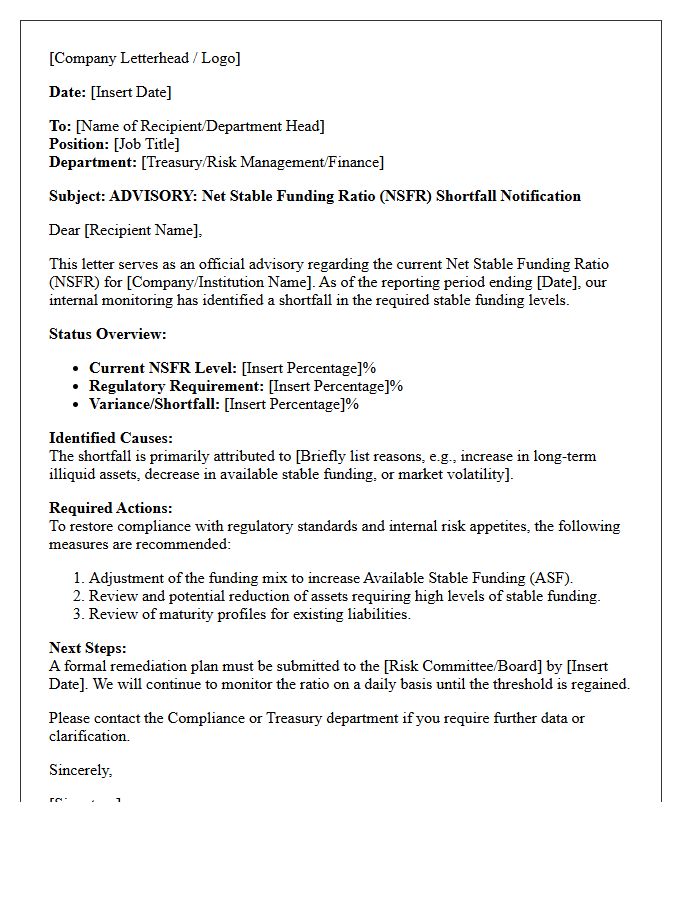
The Net Stable Funding Ratio Shortfall Advisory Letter is a critical regulatory notification issued when a financial institution fails to maintain sufficient long-term, reliable funding relative to its liquidity risk profile. This letter alerts senior management and regulators to structural funding imbalances that could jeopardize solvency during extended stress periods. It mandates immediate corrective action plans to restore compliance with Basel III standards, ensuring the bank holds enough stable capital to fund its long-term assets and off-balance sheet activities over a one-year horizon.
Intraday Liquidity Shortfall Alert Letter
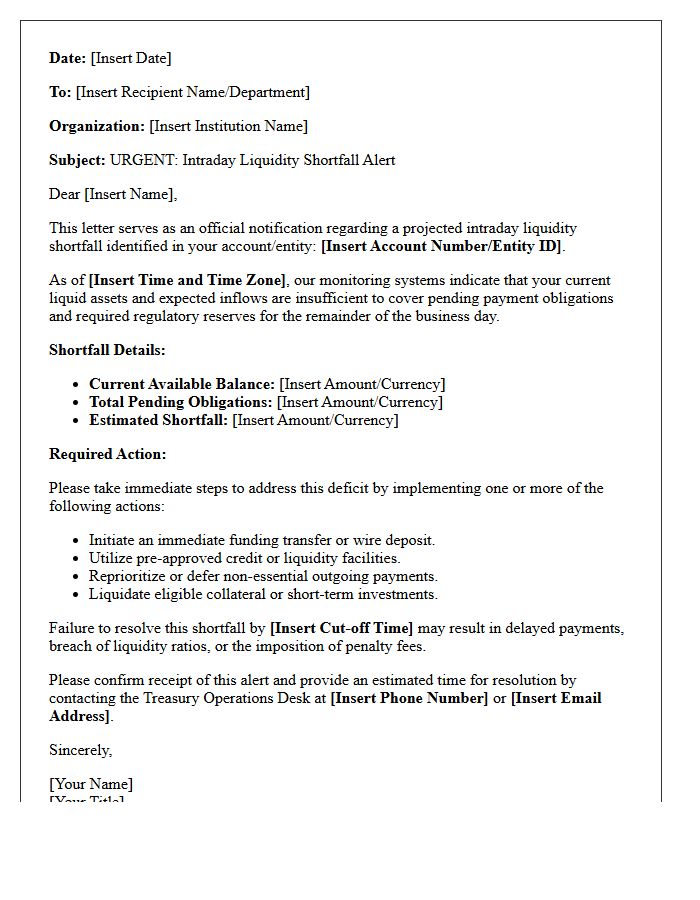
An Intraday Liquidity Shortfall Alert Letter is a critical regulatory notification issued when a financial institution's liquid assets fail to meet immediate payment obligations. This document signals a breach of liquidity risk thresholds, requiring urgent management action. It serves as a formal warning that the firm must stabilize its cash flow and restore required reserves to maintain operational stability. Failure to address the underlying funding gap can lead to severe regulatory scrutiny, penalties, or restricted access to payment systems, making real-time monitoring and robust contingency planning essential for compliance.
Board Of Directors Liquidity Shortfall Declaration Letter
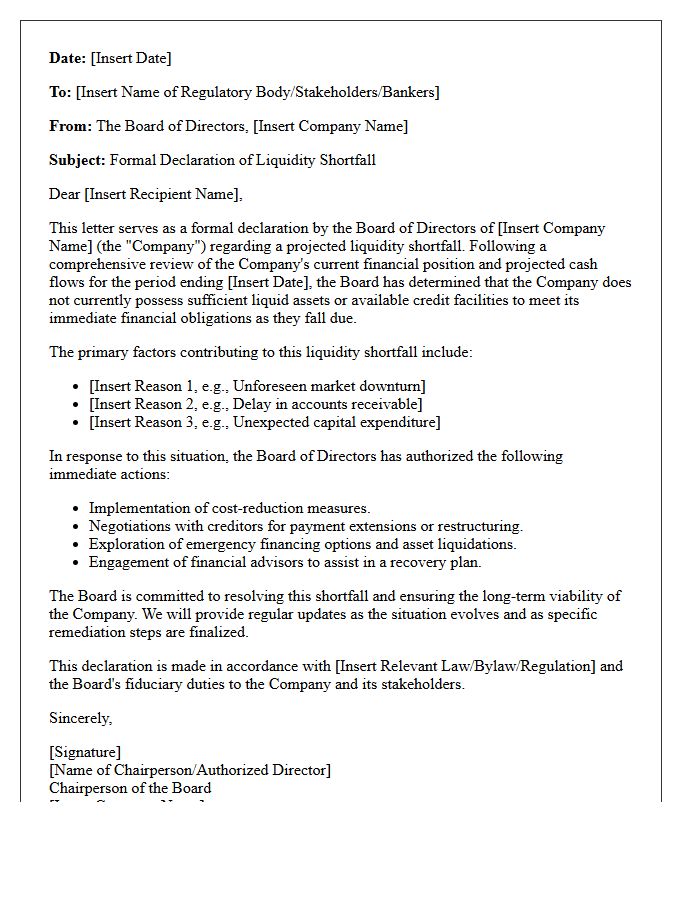
A Board of Directors Liquidity Shortfall Declaration Letter is a formal notification issued when a company lacks sufficient cash flow to meet its immediate financial obligations. This document serves as a critical legal disclosure to shareholders, creditors, and regulatory bodies. It outlines the causes of the deficit and proposed emergency measures, such as restructuring or asset sales. Issuing this letter is a fiduciary duty intended to protect directors from personal liability by transparently acknowledging insolvency risks before they escalate into complete financial collapse or bankruptcy proceedings.
Correspondent Bank Settlement Shortfall Notification Letter
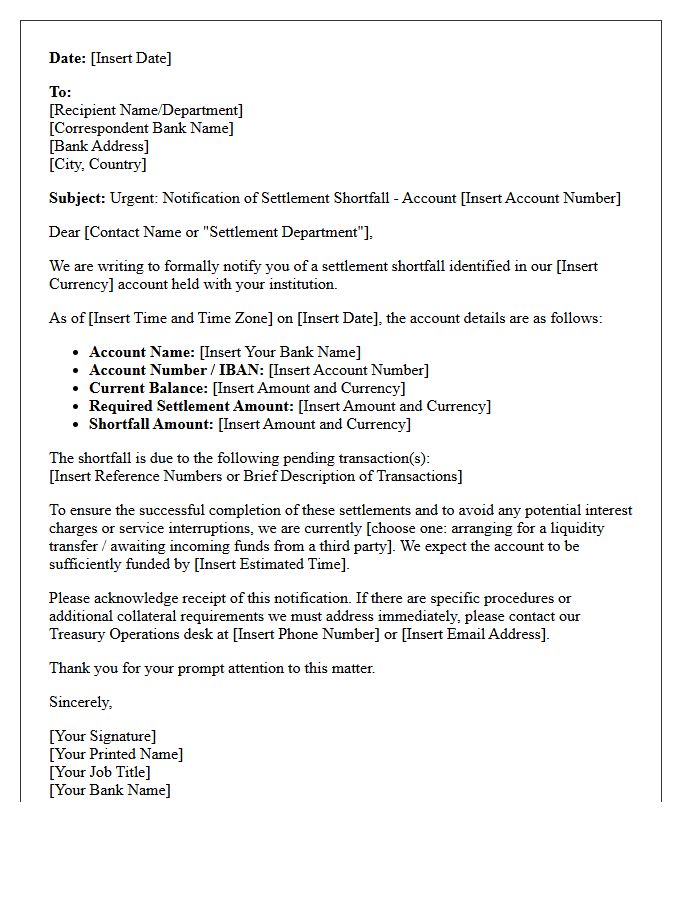
A Correspondent Bank Settlement Shortfall Notification Letter is a formal document issued when an account lacks sufficient funds to complete a cross-border transaction. It informs the counterparty of a liquidity deficiency, halting the clearing process. To resolve the issue, the initiating institution must immediately fund the account to cover the deficit and applicable fees. Timely response is critical to maintain banking relationships, ensure global payment stability, and avoid potential settlement risks or financial penalties within the international correspondent banking network.
Risk Management Committee Liquidity Shortfall Warning Letter
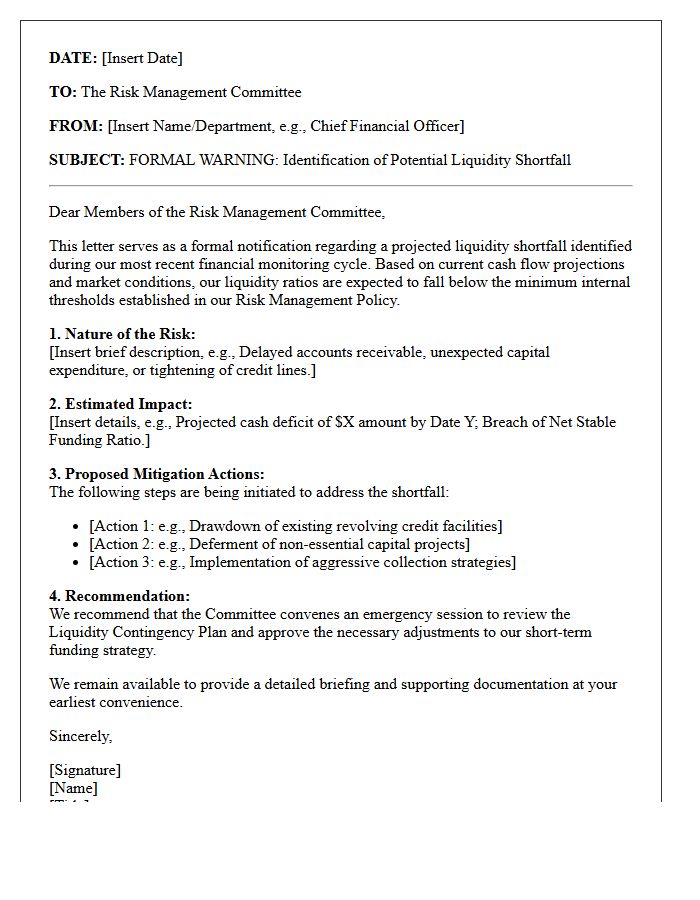
A Liquidity Shortfall Warning Letter is a formal notification issued by a Risk Management Committee when a firm's cash reserves fall below regulatory or internal thresholds. This critical document triggers immediate mitigation strategies to prevent insolvency. It alerts stakeholders to urgent funding gaps, requiring a coordinated response to stabilize the balance sheet. Understanding this warning is essential for maintaining financial stability and ensuring compliance with liquidity coverage ratios. Prompt action following this alert helps protect the organization from systemic failure and operational disruption during periods of severe financial stress.
Interbank Market Liquidity Shortfall Disclosure Letter
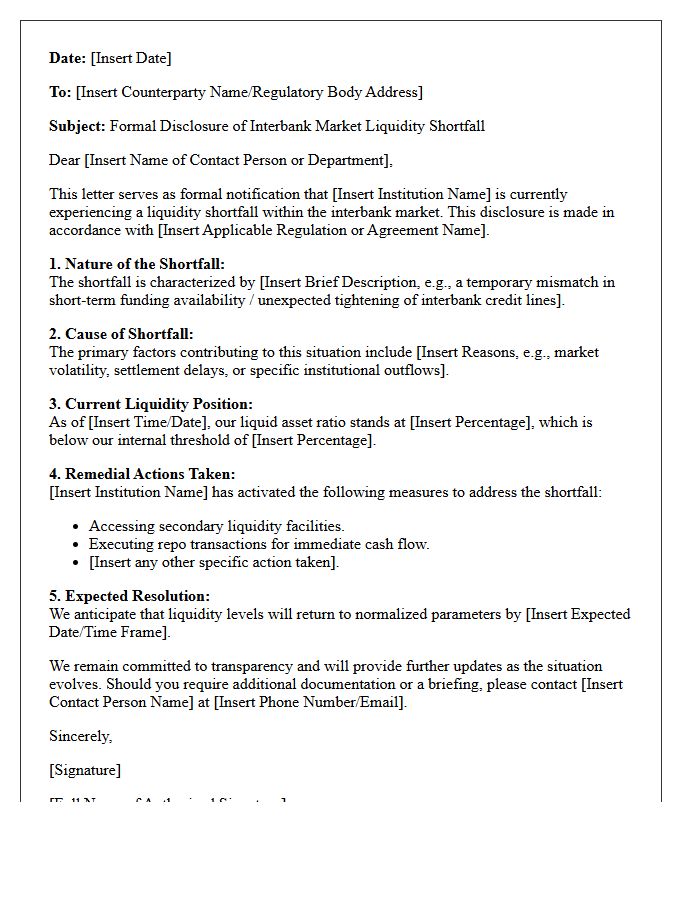
An Interbank Market Liquidity Shortfall Disclosure Letter is a formal notification issued when a financial institution faces a deficiency in liquid assets required to settle interbank obligations. This document serves as a critical transparency tool, informing regulators and counterparties about systemic funding risks. It outlines the magnitude of the shortfall and the bank's strategy to restore stability. Understanding this disclosure is essential for assessing counterparty risk and overall market health, as a lack of liquidity can trigger broader financial contagion across the global banking network.
Contingency Funding Plan Liquidity Shortfall Letter
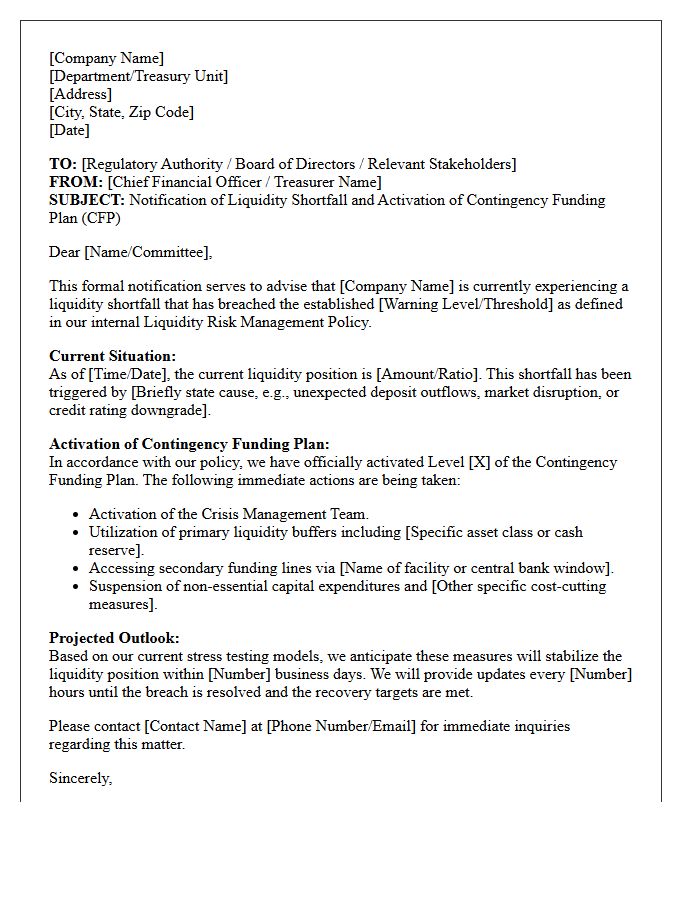
A Contingency Funding Plan (CFP) Liquidity Shortfall Letter is a formal notification issued when an institution faces a deficit in immediate cash reserves. It activates emergency protocols to address funding gaps caused by market stress or operational failures. This document outlines specific recovery actions, identifies secondary funding sources, and assigns responsibilities to management for restoring stability. Maintaining an updated plan is a regulatory requirement to ensure financial institutions can survive unexpected liquidity crises without collapsing.
Central Bank Reserve Liquidity Shortfall Notification Letter
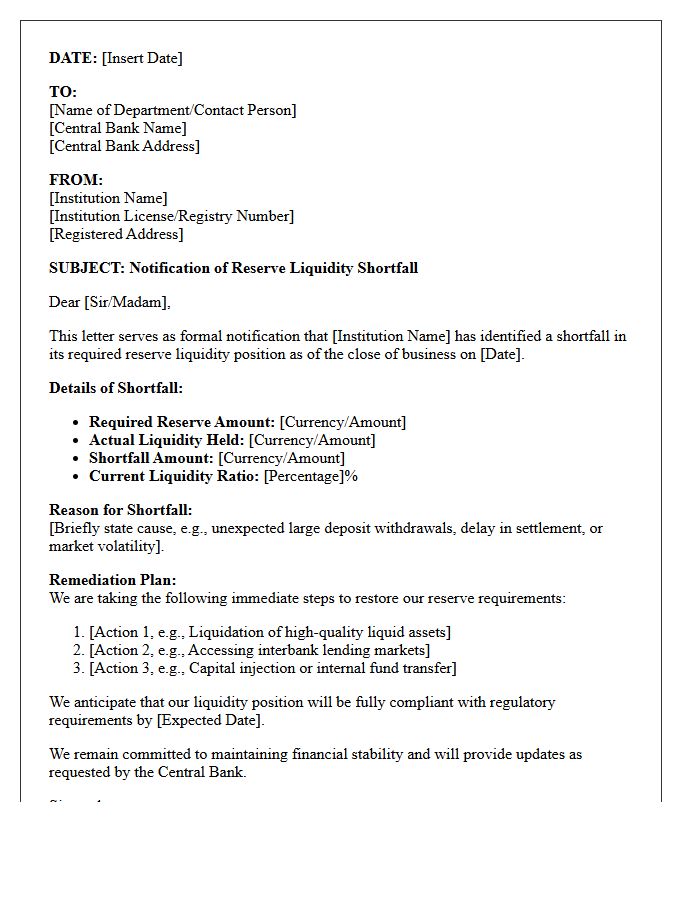
A Central Bank Reserve Liquidity Shortfall Notification Letter is a formal communication issued when a financial institution fails to maintain its mandatory reserve balance. This document signals a critical liquidity deficiency, requiring immediate corrective action to meet regulatory requirements. It serves as an official warning that the bank must cover its deficit through the interbank market or the central bank's standing facilities. Failure to resolve this shortfall can lead to penalties, increased oversight, and a potential loss of market confidence in the institution's financial stability.
Systemic Stress Liquidity Shortfall Escalation Letter
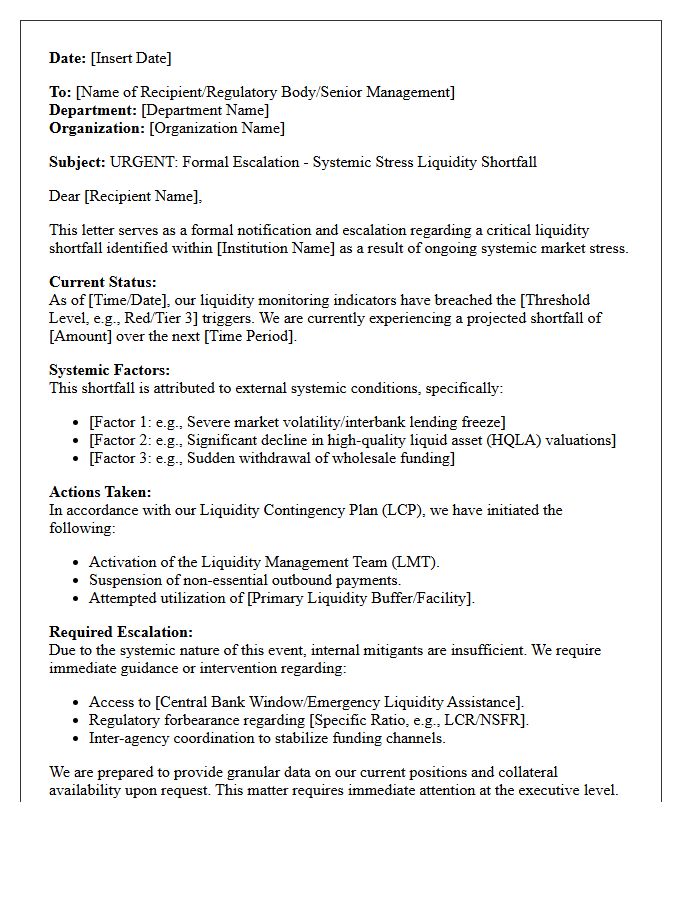
A Systemic Stress Liquidity Shortfall Escalation Letter is a formal regulatory notification issued when a financial institution faces severe liquidity depletion. It signals that internal cash buffers have breached critical thresholds, potentially threatening broader market stability. This document triggers immediate contingency funding plans and alerts governing bodies to intervene. Understanding this escalation is vital for risk management, as it marks the transition from routine volatility to a systemic crisis requiring urgent capital injection or emergency credit facilities to prevent institutional collapse and contagion across the financial sector.
Asset Liability Committee Liquidity Shortfall Letter
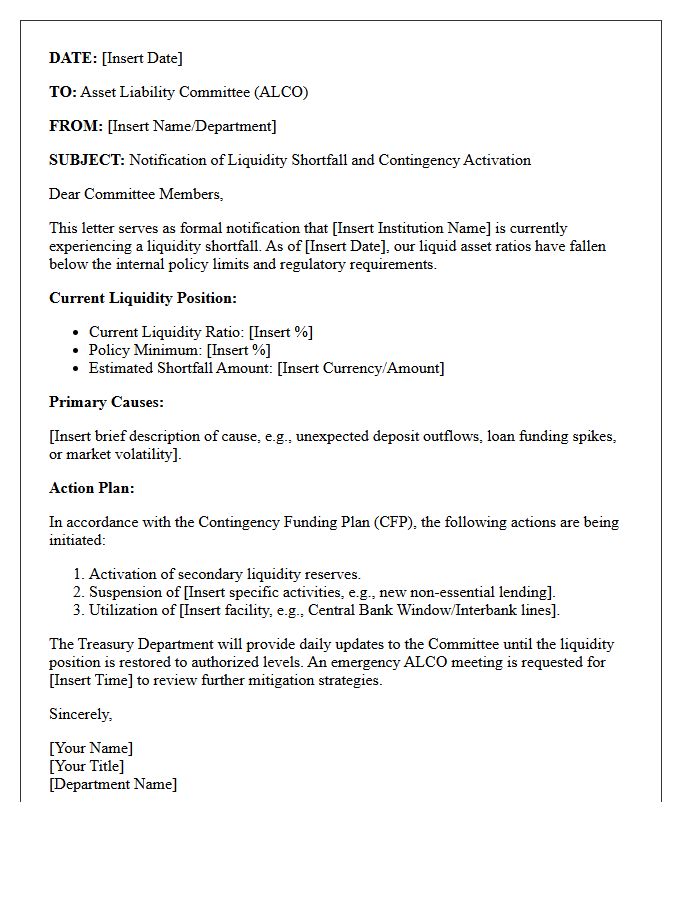
An ALCO Liquidity Shortfall Letter is a critical formal notification issued when a financial institution's net outflows exceed its available cash reserves. This document alerts management to funding gaps that breach internal risk limits or regulatory requirements. It serves as a trigger for the Contingency Funding Plan, requiring immediate corrective actions such as liquidating marketable securities or securing external credit lines. Timely issuance ensures the committee can address liquidity risk promptly to maintain institutional stability and meet ongoing financial obligations during periods of market stress.
What is a Liquidity Shortfall Notification Letter?
A Liquidity Shortfall Notification Letter is a formal document issued by a borrower or financial institution to inform stakeholders, lenders, or regulators that there are insufficient liquid assets available to meet immediate financial obligations or regulatory requirements.
When must a Liquidity Shortfall Notification Letter be issued?
This letter should be issued immediately upon the identification of a projected or actual breach of liquidity coverage ratios (LCR), or when cash reserves fall below the predefined threshold necessary to cover upcoming operational expenses or debt repayments.
What key information should be included in a Liquidity Shortfall Notification?
The letter must include the specific cause of the shortfall, the exact amount of the deficit, the anticipated duration of the liquidity gap, and a detailed remediation plan or "Liquidity Contingency Plan" to restore required levels.
What are the consequences of failing to send a Liquidity Shortfall Notification?
Failure to provide timely notification can result in technical default on loan agreements, regulatory penalties, loss of investor confidence, and the potential suspension of credit facilities by lending institutions.
How can a company remediate a liquidity shortfall after notification?
Common remediation strategies mentioned in these letters include drawing down existing credit lines, liquidating non-core assets, seeking emergency equity injections, or negotiating temporary payment deferrals with creditors.

Comments