
An Automated Clearing House Transfer Request Letter is a formal document used to authorize electronic fund transfers between bank accounts. This written instruction ensures secure, accurate, and efficient processing of recurring or one-time payments through the ACH network. Proper documentation helps streamline business transactions and minimize manual errors. To assist your process, below are some ready to use template.
Image cover: Professional ACH Transfer Request Letter Templates and Examples
Letter Samples List
- Automated Clearing House Transfer Request Letter
- Domestic Wire Transfer Authorization Letter
- Stop Payment Request And Indemnity Letter
- Corporate Account Closure Instruction Letter
- Direct Deposit Setup Authorization Letter
- Fraudulent Transaction Dispute Claim Letter
- Overdraft Protection Program Enrollment Letter
- Commercial Loan Payoff Quote Request Letter
- Certificate Of Deposit Early Withdrawal Letter
- Authorized Signatory Update Notification Letter
- Letter Of Credit Issuance Application Letter
- Irrevocable Bank Guarantee Request Letter
Automated Clearing House Transfer Request Letter
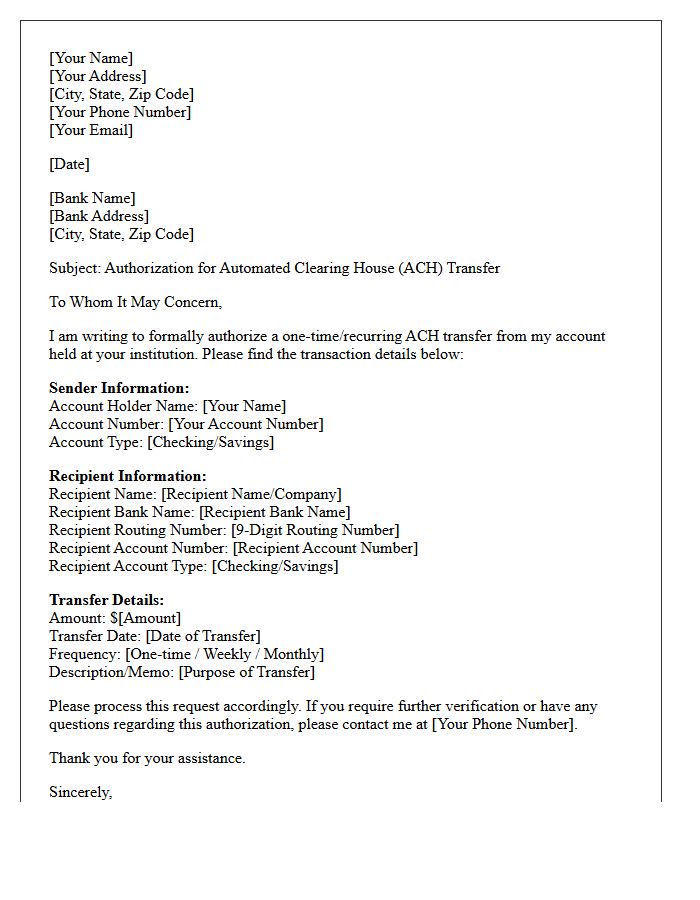
An ACH transfer request letter is a formal document used to authorize the electronic movement of funds between bank accounts. It must include precise banking details, such as the routing number and account number, to ensure accuracy. Providing a clear authorization statement protects both parties by establishing a legal record of the transaction. To prevent delays, always verify the recipient's information and include a specific effective date for the transfer. This professional correspondence serves as a critical security measure for managing automated payments and corporate payroll processing efficiently.
Domestic Wire Transfer Authorization Letter
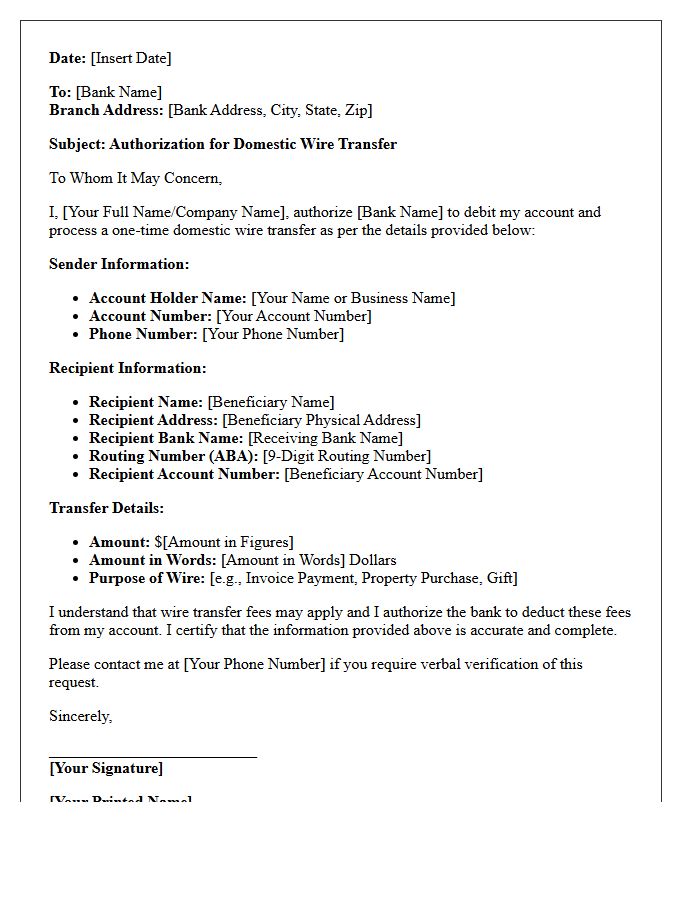
A Domestic Wire Transfer Authorization Letter is a formal legal document that grants a financial institution permission to move funds between accounts within the same country. This letter must include the sender's account details, the exact transfer amount, and the recipient's routing and account numbers. To ensure security and prevent fraud, most banks require a notarized signature or a verified Letter of Instruction. Accuracy is critical, as domestic wires are typically irreversible once processed, making clear communication of the beneficiary information essential for successful fund delivery.
Stop Payment Request And Indemnity Letter
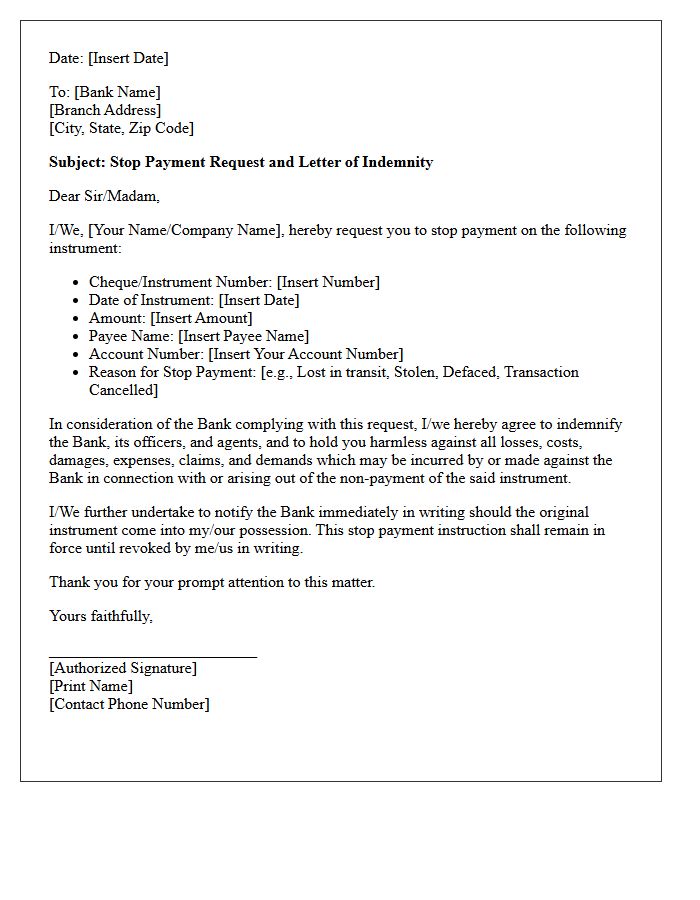
A Stop Payment Request and Indemnity Letter is a formal legal document used to cancel a specific check or payment transaction before it is processed. By signing this, the account holder provides an indemnity, which protects the financial institution against potential losses, claims, or legal disputes resulting from honoring the stop request. This agreement is essential when a check is lost, stolen, or incorrectly issued, ensuring the bank is held harmless while preventing unauthorized funds from leaving the account. It serves as a critical risk management tool for both parties.
Corporate Account Closure Instruction Letter
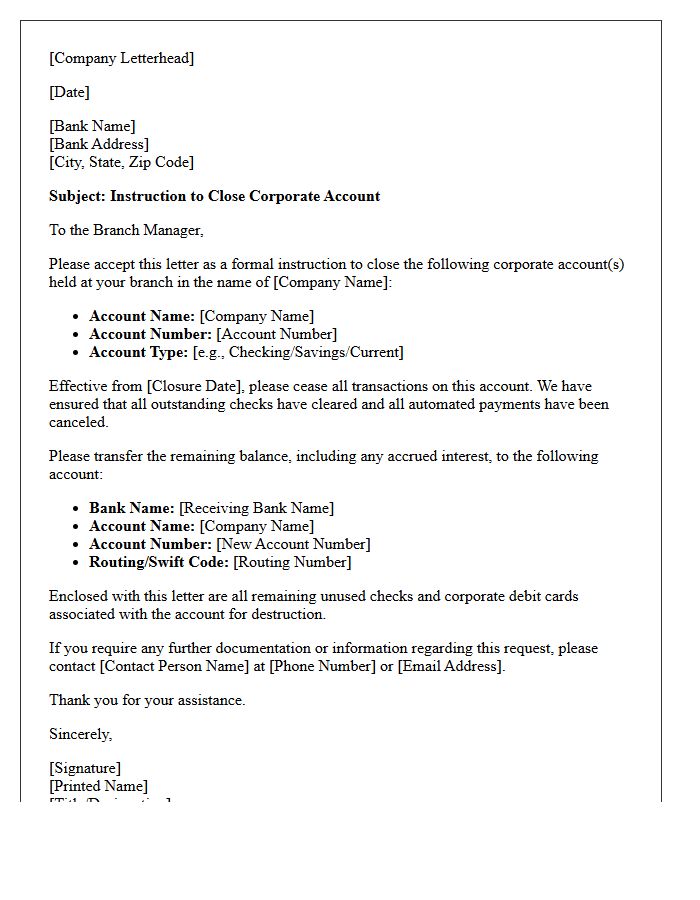
A Corporate Account Closure Instruction Letter is a formal mandate issued by authorized signatories to terminate a business bank relationship. It must include the account number, specific closing date, and clear directions for transferring residual funds to a new institution. Providing board resolutions or updated signing mandates ensures legal compliance and prevents processing delays. This document serves as a legal record, confirming that all outstanding obligations are settled and the corporate entity's financial liabilities with the specific bank have officially ceased.
Direct Deposit Setup Authorization Letter
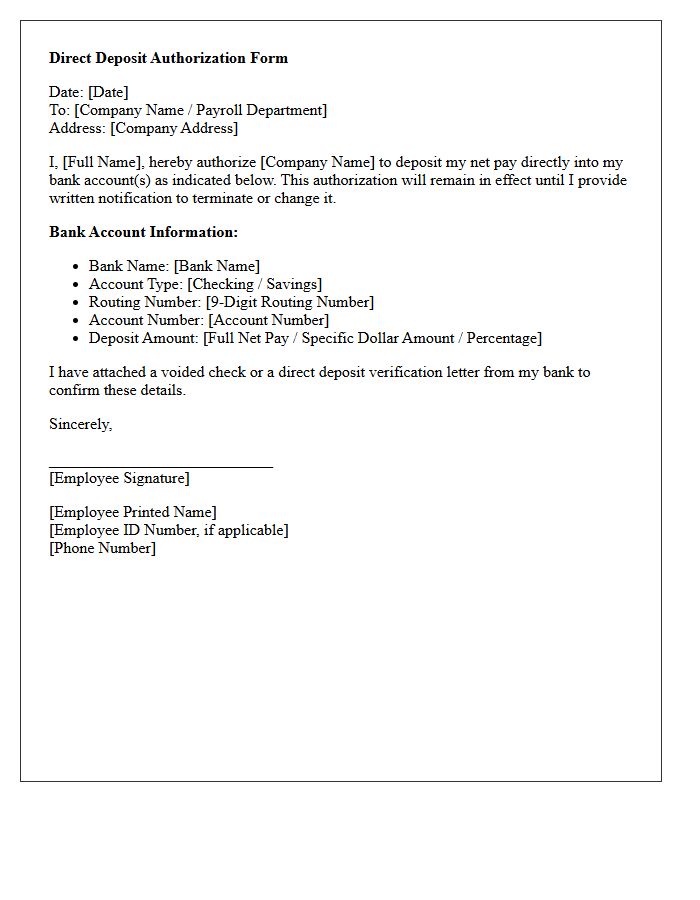
A Direct Deposit Setup Authorization Letter is a formal document that instructs an employer to transfer wages electronically into a specific account. This legal mandate provides the financial institution's routing number and the employee's account number to ensure accurate fund routing. It eliminates the need for physical checks, offering a faster and more secure payment method. Employees must verify their bank details carefully to prevent transaction delays. Often, a voided check is attached to confirm the banking information before the payroll cycle begins.
Fraudulent Transaction Dispute Claim Letter
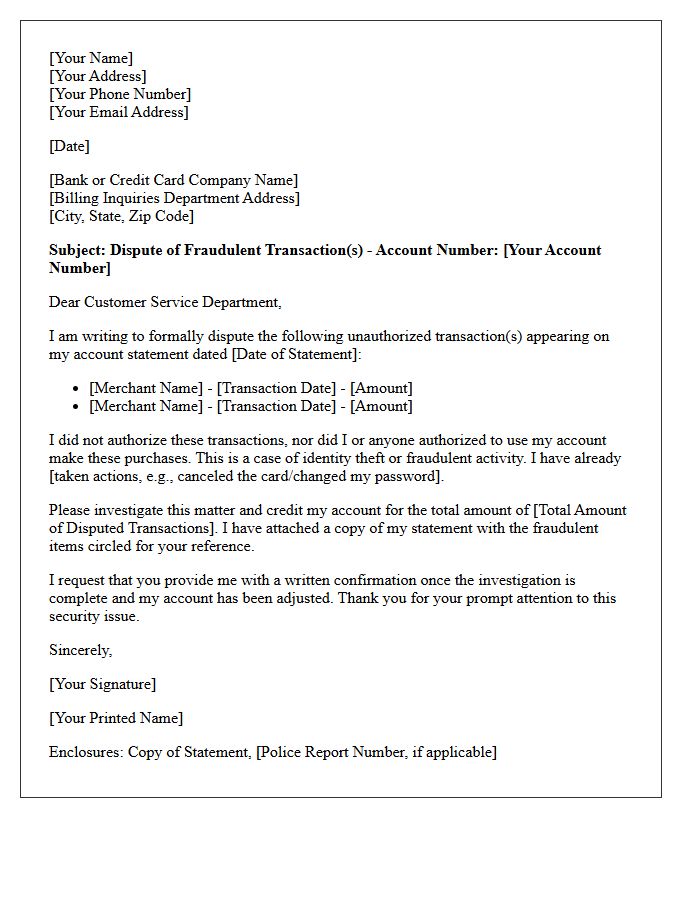
A fraudulent transaction dispute claim letter is a formal document used to notify financial institutions of unauthorized charges. To protect your rights under the Fair Credit Billing Act, you must send this written notice within 60 days of the statement date. Clearly state your account details, specify the disputed amount, and explain why the transaction is fraudulent. Including supporting evidence like police reports or receipts strengthens your case. Always use certified mail to ensure proof of delivery, as this establishes a legal paper trail for your financial recovery and identity protection.
Overdraft Protection Program Enrollment Letter
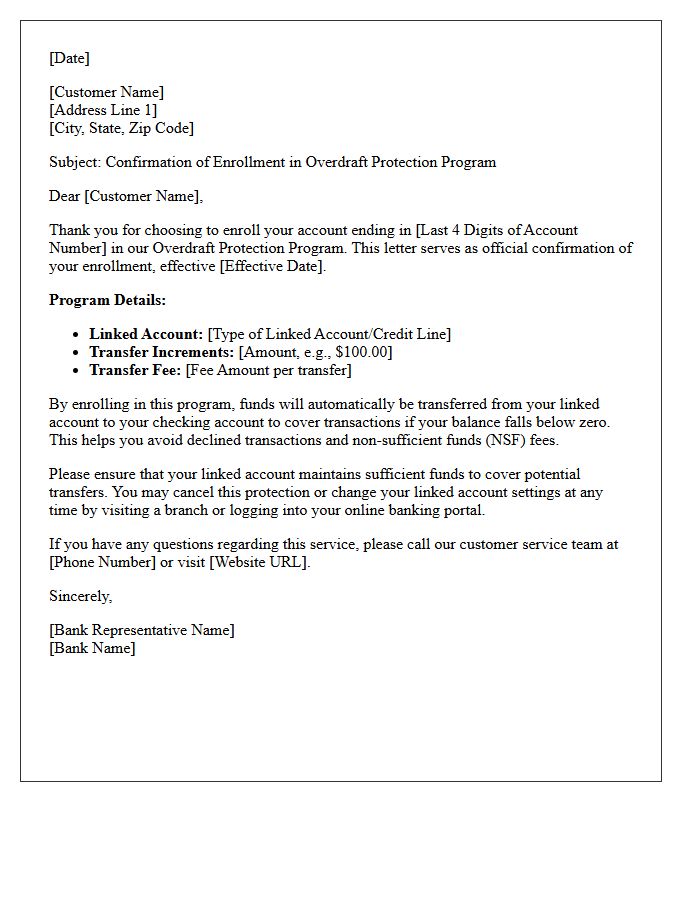
An Overdraft Protection Program Enrollment Letter is a formal notice confirming your decision to link accounts or utilize a line of credit to prevent transaction rejections. This document outlines the terms and conditions, including potential transfer fees and interest rates. It serves as legal verification that you have opted into a service designed to avoid NSF fees and embarrassing payment declines. Carefully review the letter to understand your financial obligations and ensure your account settings align with your current spending needs and budget goals.
Commercial Loan Payoff Quote Request Letter
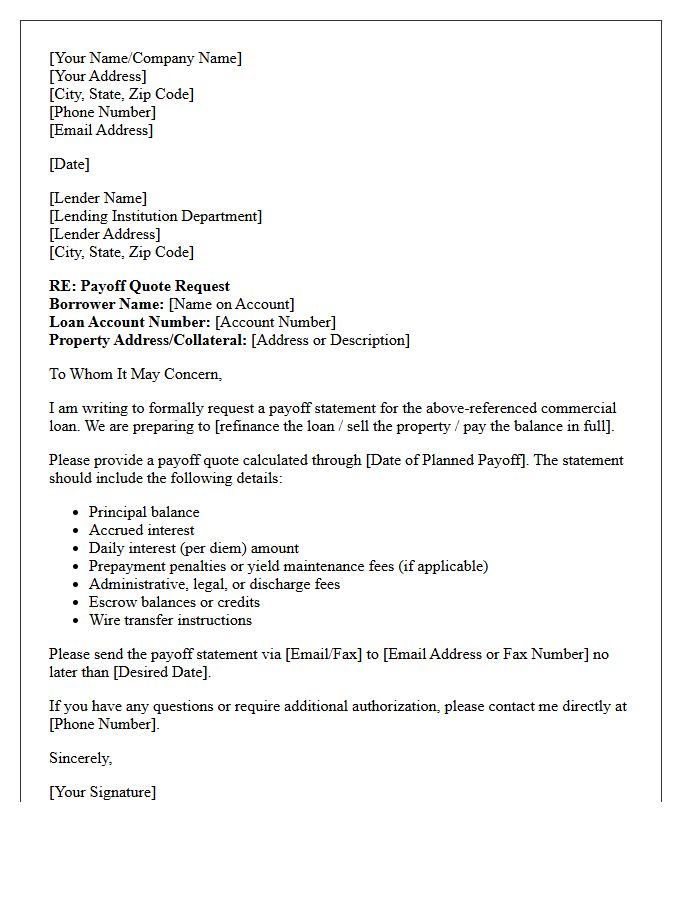
A commercial loan payoff quote request letter is a formal document sent to a lender to determine the exact total balance required to close a debt. It must include the account number, property address, and a specific calculated date for the final payment. This request ensures all principal, interest, and potential prepayment penalties are accounted for. Obtaining this written statement is crucial for refinancing or property sales, as it provides a legal guarantee of the amount needed to release the lien and clear the title.
Certificate Of Deposit Early Withdrawal Letter
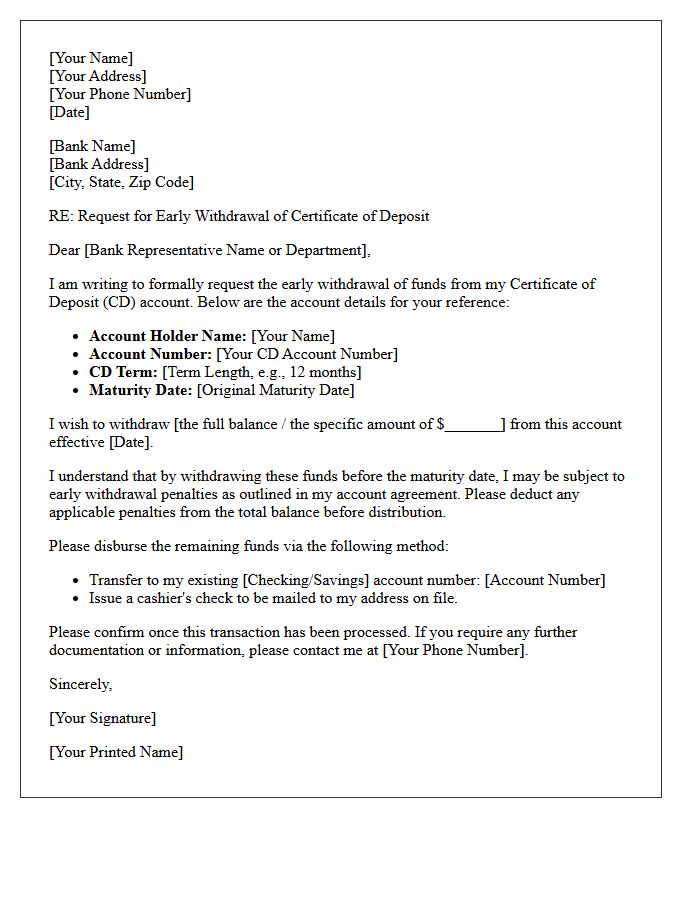
A Certificate of Deposit Early Withdrawal Letter is a formal written request sent to a financial institution to close a CD before its maturity date. This document must include your account number, contact information, and specific instructions for fund distribution. It is essential to acknowledge the early withdrawal penalty, which typically involves forfeiting a portion of the earned interest. Providing a clear reason for the request can sometimes assist in processing. Always verify your bank's specific requirements to ensure a smooth liquidation process while minimizing unexpected financial losses.
Authorized Signatory Update Notification Letter
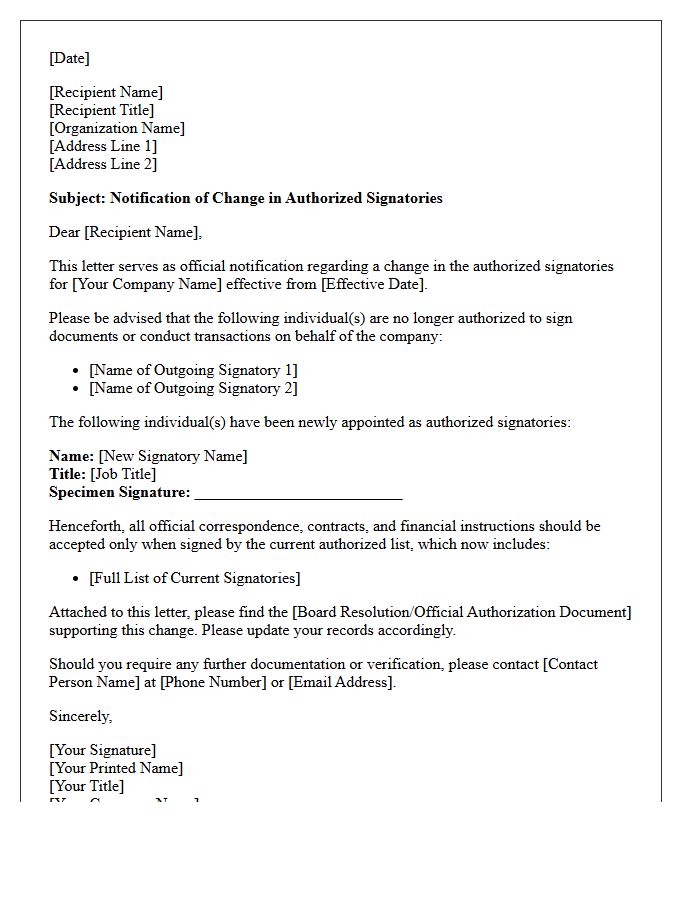
An Authorized Signatory Update Notification Letter is a formal document used to inform banks, government agencies, or partners about changes in legal signing authority. It specifies the removal of outgoing signatories and the addition of new representatives. To ensure legal validity, the letter must be printed on official company letterhead and include notarized identification or board resolutions. Providing updated specimen signatures promptly is essential to maintain business continuity, prevent unauthorized transactions, and ensure that all contractual obligations remain legally binding under the new corporate governance structure.
Letter Of Credit Issuance Application Letter
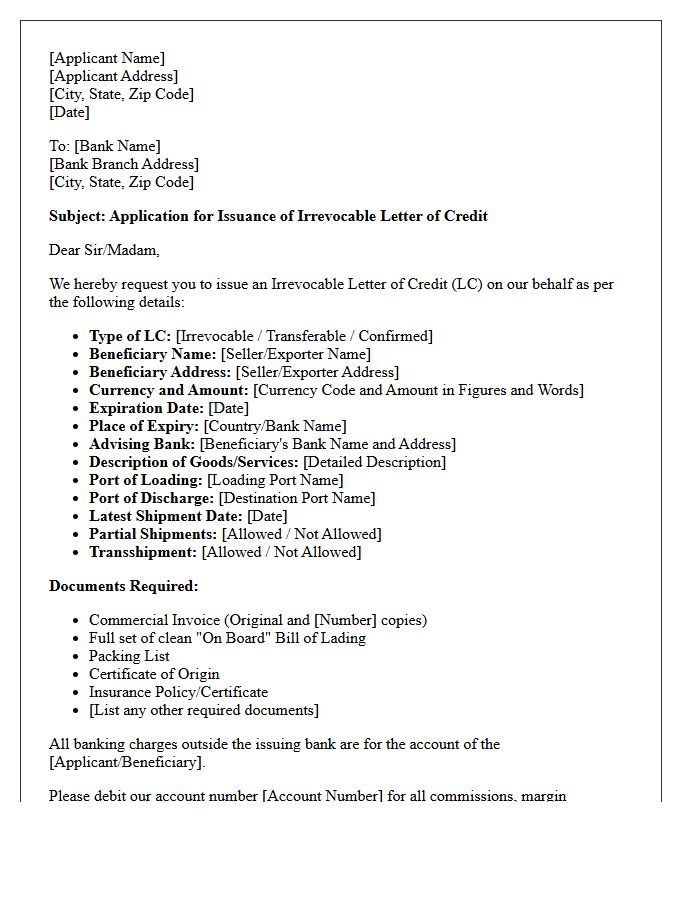
A Letter of Credit Issuance Application is a formal request from a buyer to their bank to provide a payment guarantee to a seller. This document must contain precise details regarding the beneficiary, credit amount, and shipping deadlines. To ensure successful processing, the applicant must strictly adhere to the Uniform Customs and Practice for Documentary Credits (UCP 600) guidelines. Accuracy is vital, as any discrepancies between the application and the underlying sales contract can lead to costly delays, payment rejections, or legal disputes in international trade transactions.
Irrevocable Bank Guarantee Request Letter
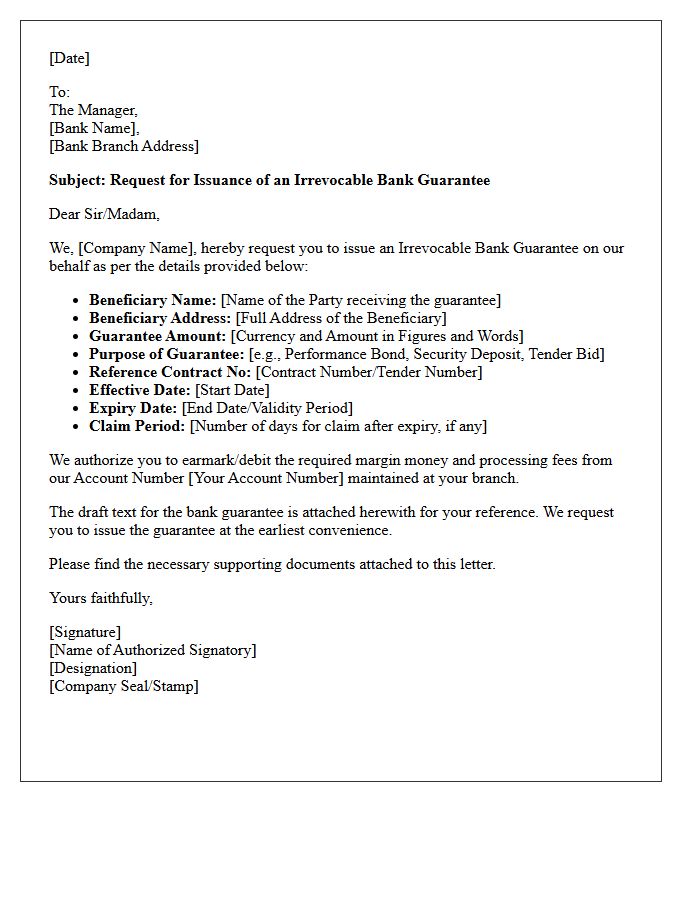
An Irrevocable Bank Guarantee Request Letter is a formal document sent by an applicant to their financial institution to secure payment obligations. This binding commitment ensures that the bank cannot cancel or modify the guarantee without the beneficiary's explicit consent. It acts as a robust payment security tool in international trade and construction contracts. The letter must clearly specify the guarantee amount, expiration date, and the underlying contractual conditions to mitigate financial risks and provide absolute certainty for all parties involved in the transaction.
What is an ACH transfer request letter?
An ACH transfer request letter is a formal written document sent by an account holder to a financial institution or business to authorize the electronic movement of funds through the Automated Clearing House network. It serves as a legal instruction to initiate either a one-time or recurring direct deposit or payment from a bank account.
What information should be included in an ACH authorization letter?
To ensure successful processing, the letter must include the account holder's name, the bank's name, the routing transit number (RTN), the bank account number, and the specific amount to be transferred. Additionally, it should specify the transfer date and include a formal signature to verify the authorization.
How long does it take to process an ACH transfer after a request is submitted?
Once the request letter is received and verified, standard ACH transfers typically take 1 to 3 business days to clear. While some financial institutions offer same-day ACH processing for a fee, the actual timing depends on the bank's internal processing cut-off times and the type of transaction (debit or credit).
Is an ACH transfer request letter more secure than a wire transfer?
ACH transfer requests are generally considered more secure for recurring payments because they are governed by NACHA regulations, which provide consumer protections and the ability to dispute unauthorized transactions. Unlike wire transfers, which are immediate and irreversible, ACH transfers allow for a reversal window if errors are detected.
Can I cancel an ACH transfer request after sending the letter?
Yes, an ACH transfer can be canceled if the request is submitted to the bank before the transaction has been processed or "settled." Most banks require a written stop-payment order at least three business days before the scheduled transfer date to ensure the automated pull is successfully blocked.

Comments