
Submitting false financial data can lead to severe legal and financial consequences. A Warning Letter for Misrepresentation of Income serves as a formal notice to address discrepancies in credit applications and mitigate potential fraud charges. Understanding how to communicate these errors is essential for compliance and risk management. To assist you, below are some ready to use templates.
Image cover: Official Warning Letter Templates for Income Misrepresentation on Credit Applications
Letter Samples List
- Initial Warning Letter for Misrepresentation of Income on Credit Application
- Formal Warning Letter Regarding Falsified Income on Personal Loan Application
- Final Warning Letter for Fraudulent Income Disclosure on Credit Account
- Notice and Warning Letter of Income Discrepancy on Credit Card Application
- Legal Warning Letter for Misrepresented Income Details on Financial Application
- Warning Letter and Demand for Verified Proof of Income Documentation
- Warning Letter of Intent to Revoke Credit Due to Income Misrepresentation
- Compliance Warning Letter for Inaccurate Income Reporting on Credit Request
- Warning Letter for Breach of Credit Agreement via Income Misrepresentation
- Administrative Warning Letter for Discrepant Income on Mortgage Application
- Warning Letter Regarding Submission of Suspicious Income Documentation
- Notice of Credit Cancellation and Warning Letter for Income Fraud
Initial Warning Letter for Misrepresentation of Income on Credit Application
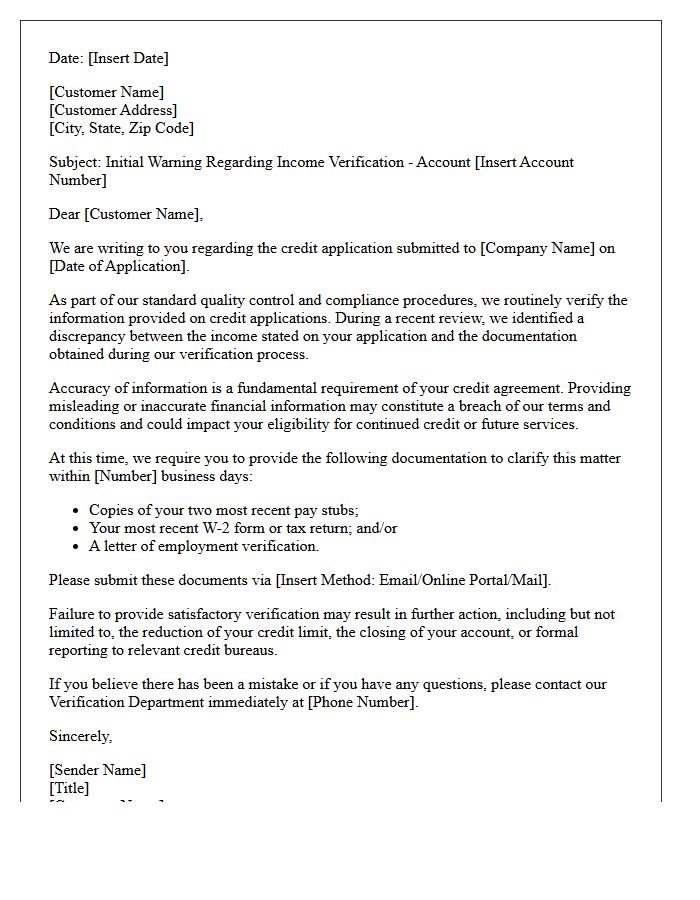
An initial warning letter for misrepresentation of income on a credit application is a formal notice regarding discrepancies in your stated earnings. Financial institutions issue these to address potential fraudulent activity or honest reporting errors. It is critical to respond promptly with accurate documentation, as failing to rectify the information can lead to immediate account closure, legal action, or a permanent negative impact on your creditworthiness. Always ensure your declared gross income matches official tax records to maintain transparency and avoid severe regulatory consequences or criminal charges.
Formal Warning Letter Regarding Falsified Income on Personal Loan Application
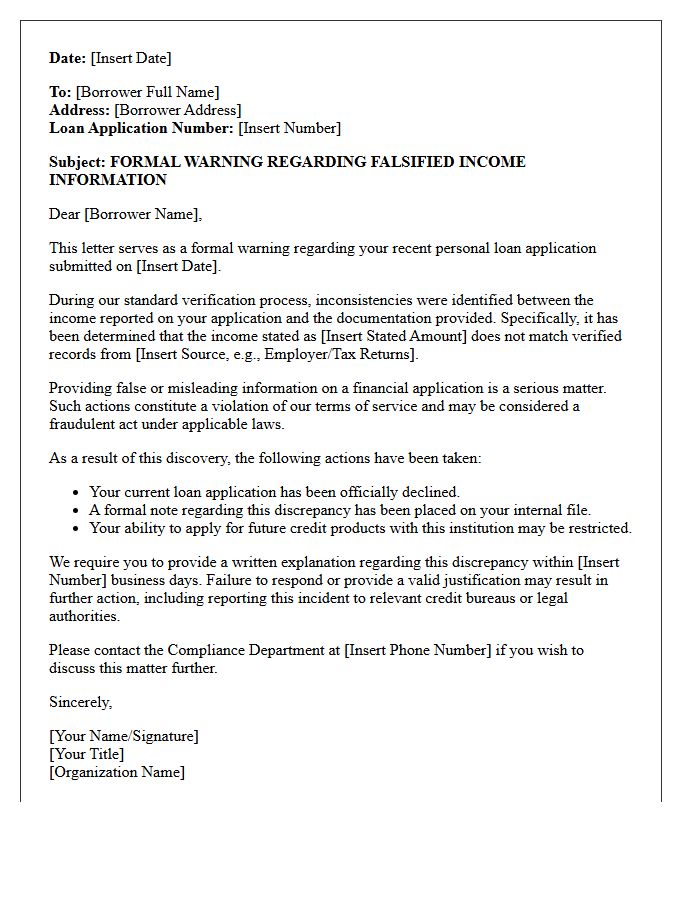
Issuing a Formal Warning Letter is a critical step when an institution detects falsified income on a personal loan application. Providing inaccurate financial data constitutes loan fraud, which carries severe legal and financial consequences. This document serves as an official notice that the discrepancy was identified during verification. It informs the applicant that such dishonesty leads to immediate application rejection, potential blacklisting from future credit, and possible referral to law enforcement. Correcting your financial transparency is essential to maintain creditworthiness and avoid criminal prosecution under banking regulations.
Final Warning Letter for Fraudulent Income Disclosure on Credit Account
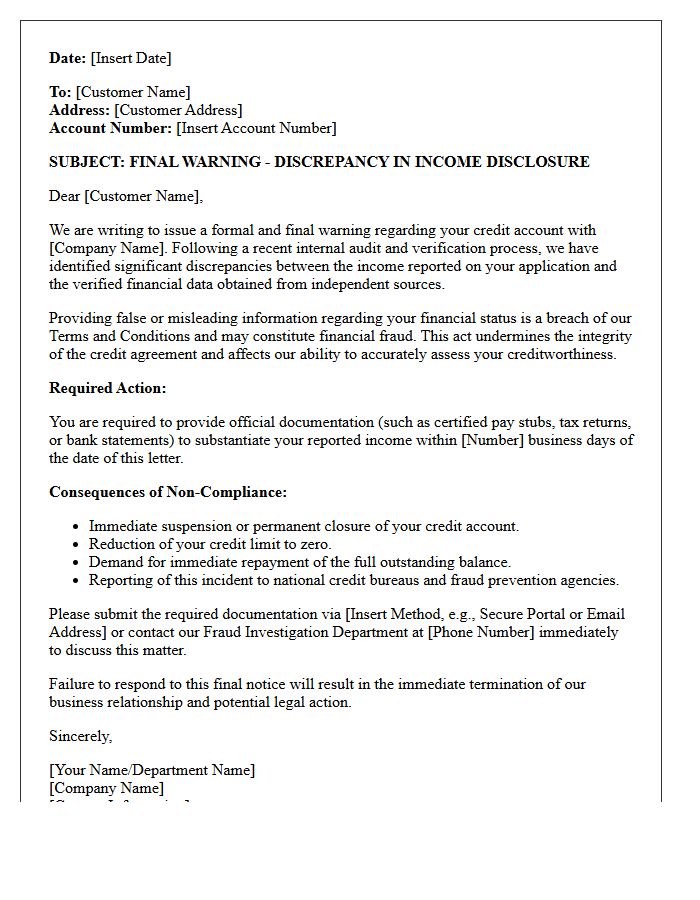
A final warning letter for fraudulent income disclosure is a critical notice regarding application fraud. Knowingly providing false financial data to obtain credit is a serious compliance violation that leads to immediate account closure. This document serves as a formal ultimatum before the lender pursues legal action or reports the incident to credit bureaus. To protect your financial future, you must rectify the information immediately. Failure to comply typically results in a permanent blacklist from banking institutions and potential prosecution for fraud under consumer lending laws.
Notice and Warning Letter of Income Discrepancy on Credit Card Application
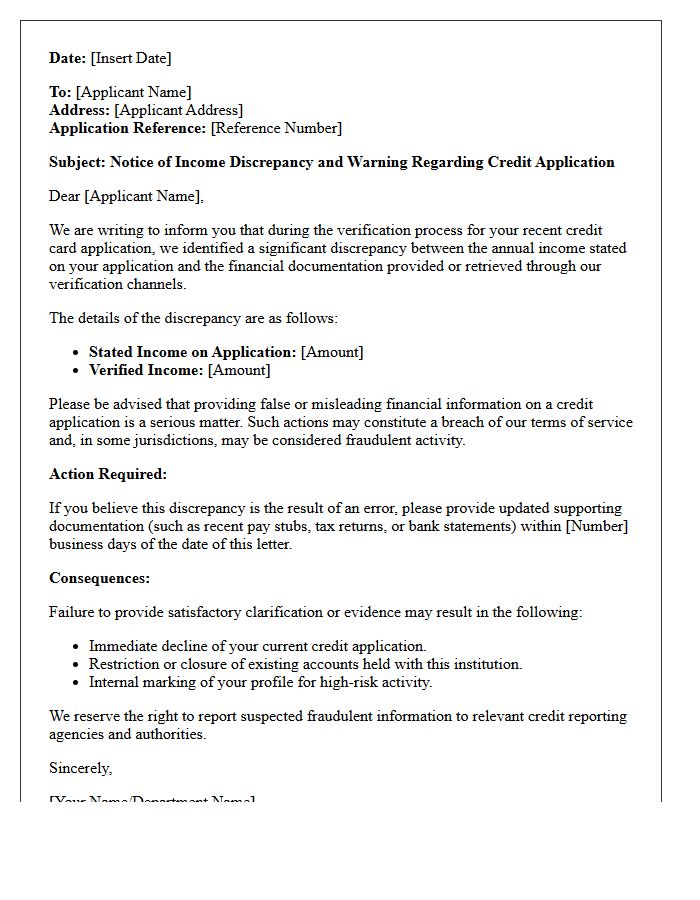
Receiving a notice regarding an income discrepancy on your credit card application means the bank found a mismatch between your stated earnings and verified financial data. Lenders use systems like the IRS or payroll databases to ensure repayment capacity. This warning often triggers an adverse action, potentially leading to application denial or account closure. To resolve this, you must provide proof of income, such as tax returns or pay stubs. Failure to provide accurate information can be flagged as financial fraud, impacting your future creditworthiness and lending opportunities.
Legal Warning Letter for Misrepresented Income Details on Financial Application
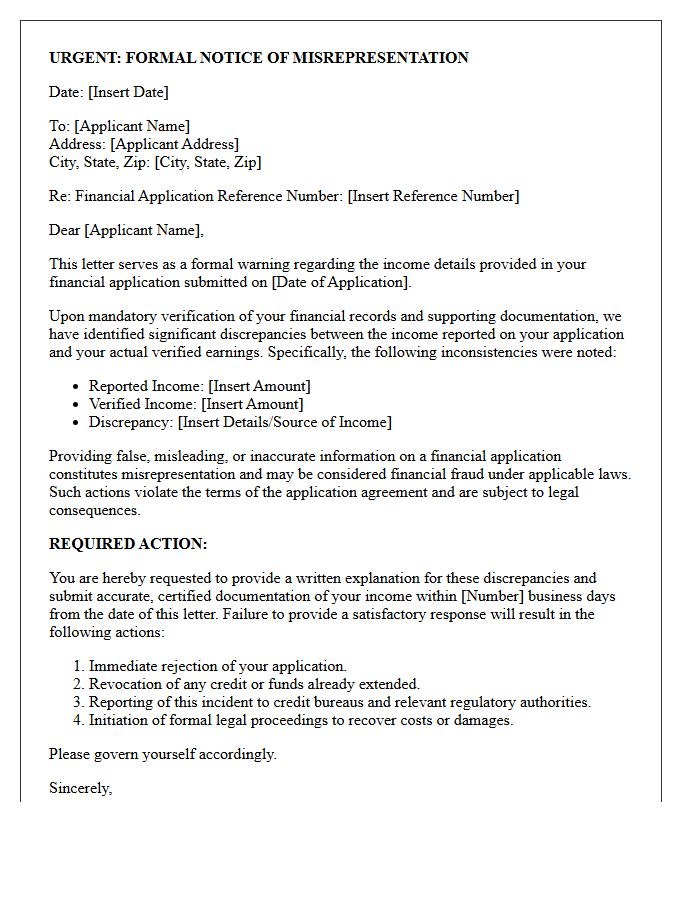
A legal warning letter for misrepresented income on a financial application is a formal notice of potential fraud. Providing false data to secure loans or credit is a serious offense that can lead to immediate contract termination, legal prosecution, and severe damage to your credit score. If you receive this notice, it is crucial to respond truthfully and seek legal counsel. Rectifying the discrepancy early may prevent civil litigation or criminal charges. Always ensure accuracy in financial disclosures to maintain legal compliance and protect your long-term financial standing.
Warning Letter and Demand for Verified Proof of Income Documentation
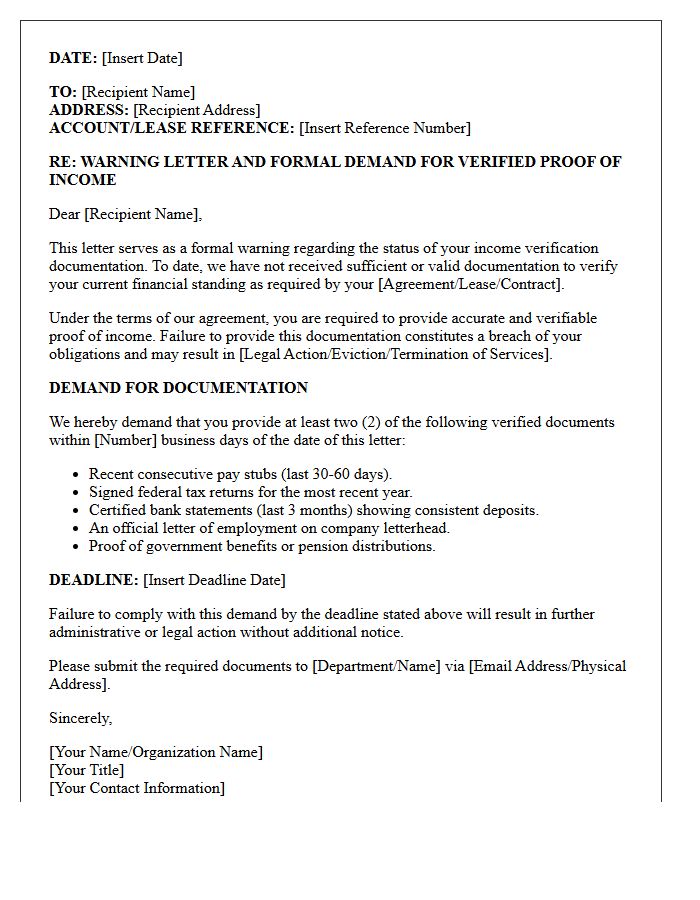
Receiving a Warning Letter and Demand for Verified Proof of Income Documentation is a formal legal notification requiring immediate action. This document signifies that an authority or creditor contests your reported earnings and demands verified financial records, such as tax returns or pay stubs, to substantiate your claims. Failure to comply can lead to benefit disqualification, legal penalties, or contract termination. It is crucial to submit accurate, certified evidence within the specified deadline to maintain eligibility and avoid accusations of financial misrepresentation or fraud.
Warning Letter of Intent to Revoke Credit Due to Income Misrepresentation
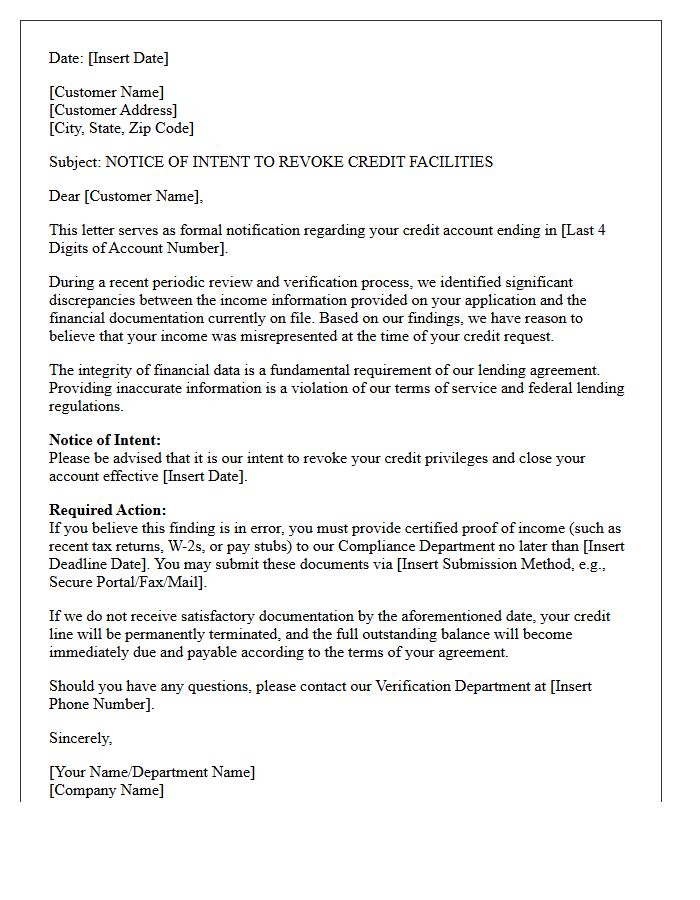
Receiving a Notice of Intent to Revoke Credit is a serious legal warning indicating your lender suspects income misrepresentation on your application. Financial institutions perform audits to verify employment and earnings; if discrepancies are found, they may terminate your credit line immediately. To protect your financial standing, you must provide verifiable documentation, such as tax returns or pay stubs, to prove accuracy. Failing to resolve this fraud allegation can lead to permanent account closure, severe credit score damage, and potential legal consequences for providing false information to a creditor.
Compliance Warning Letter for Inaccurate Income Reporting on Credit Request
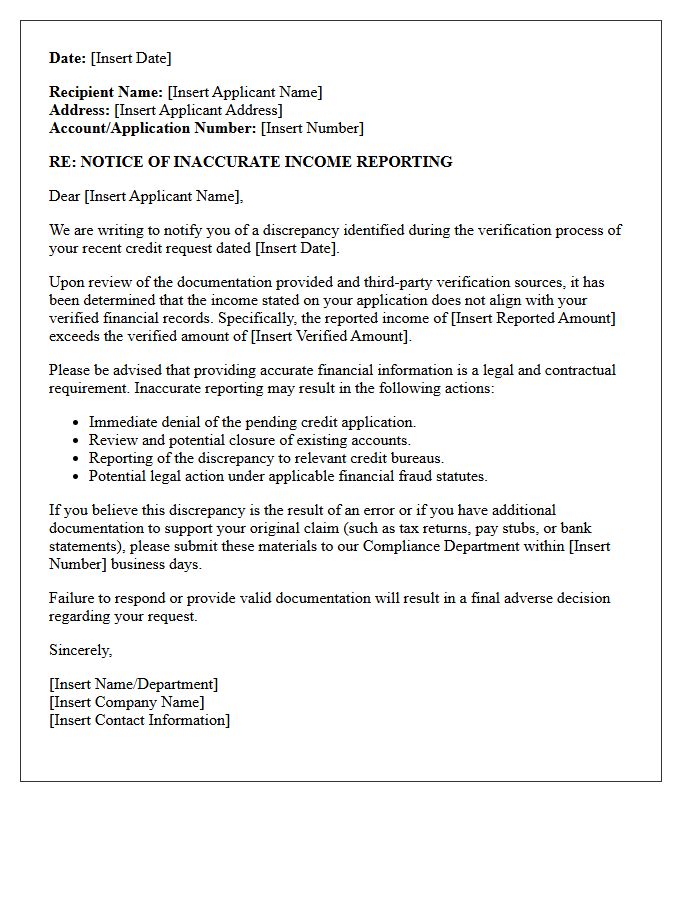
Receiving a compliance warning letter regarding inaccurate income reporting is a serious matter. Financial institutions issue these notices when self-reported earnings do not align with verified data. The most important action is ensuring data integrity to avoid allegations of application fraud. You must immediately review your financial records, provide corrected documentation, and respond within the specified timeframe. Failing to address these discrepancies can lead to immediate credit revocation, permanent account closure, and long-term damage to your creditworthiness or legal standing with the lender.
Warning Letter for Breach of Credit Agreement via Income Misrepresentation
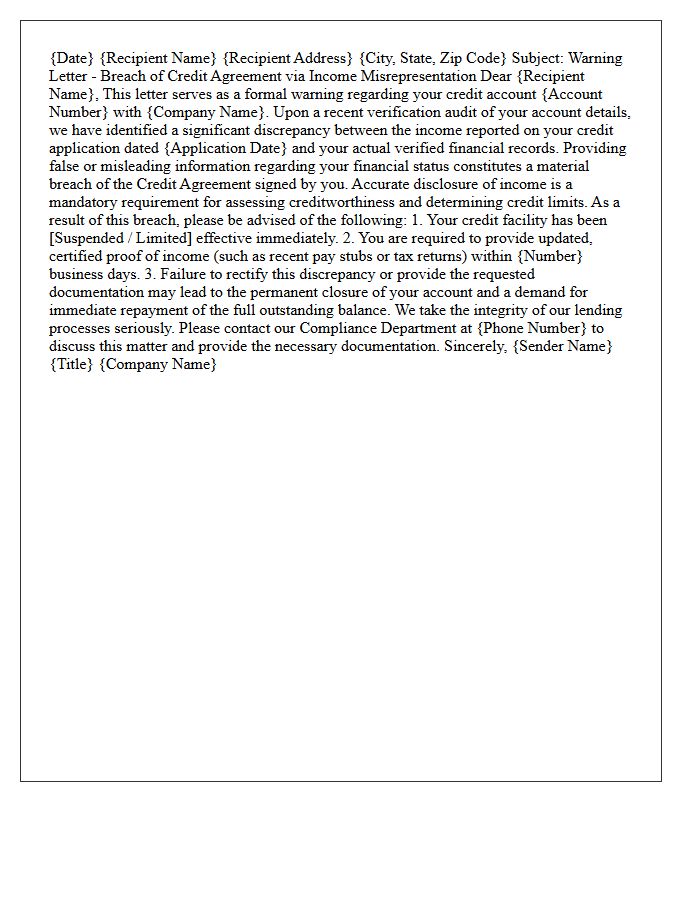
Receiving a warning letter for a breach of credit agreement via income misrepresentation is a serious legal matter. This document notifies you that the lender has identified discrepancies between your stated earnings and actual financial records. Providing false data constitutes loan fraud, which can lead to immediate contract termination, debt acceleration, and severe damage to your credit score. To mitigate consequences, you must respond promptly with accurate documentation. Rectifying these inaccuracies is essential to avoid potential legal prosecution or being blacklisted by financial institutions under anti-fraud regulations.
Administrative Warning Letter for Discrepant Income on Mortgage Application
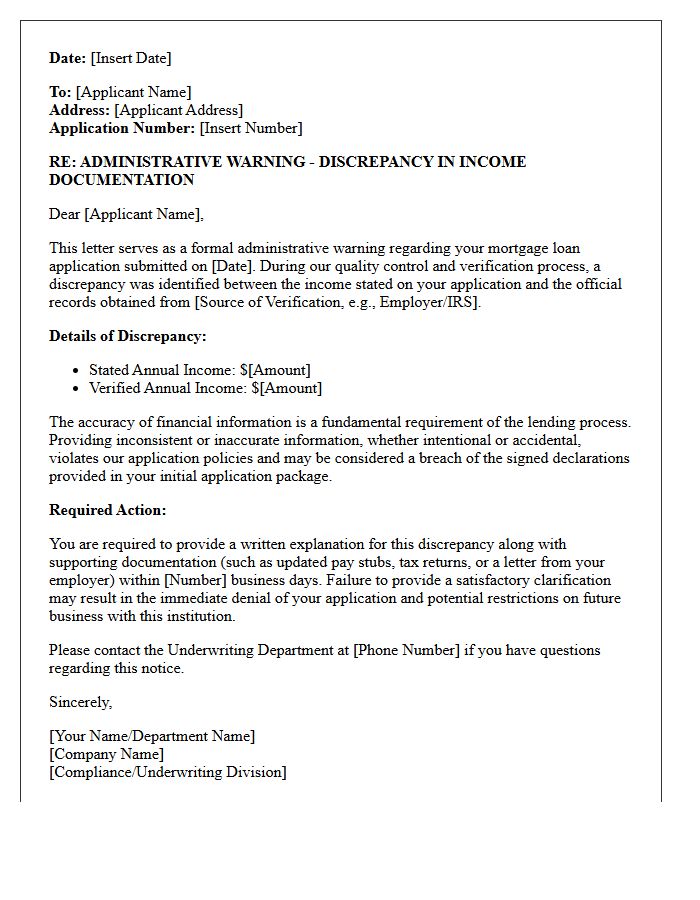
Receiving an administrative warning letter regarding discrepant income on a mortgage application is a serious matter. It indicates that the lender or regulator identified inconsistencies between your reported earnings and verified tax or payroll records. This notice serves as a formal caution that providing inaccurate financial data can be flagged as mortgage fraud. To protect your legal standing, you must promptly provide supporting documentation to clarify any errors. Addressing these discrepancies immediately is essential to avoid loan denial, financial penalties, or potential legal action by authorities.
Warning Letter Regarding Submission of Suspicious Income Documentation
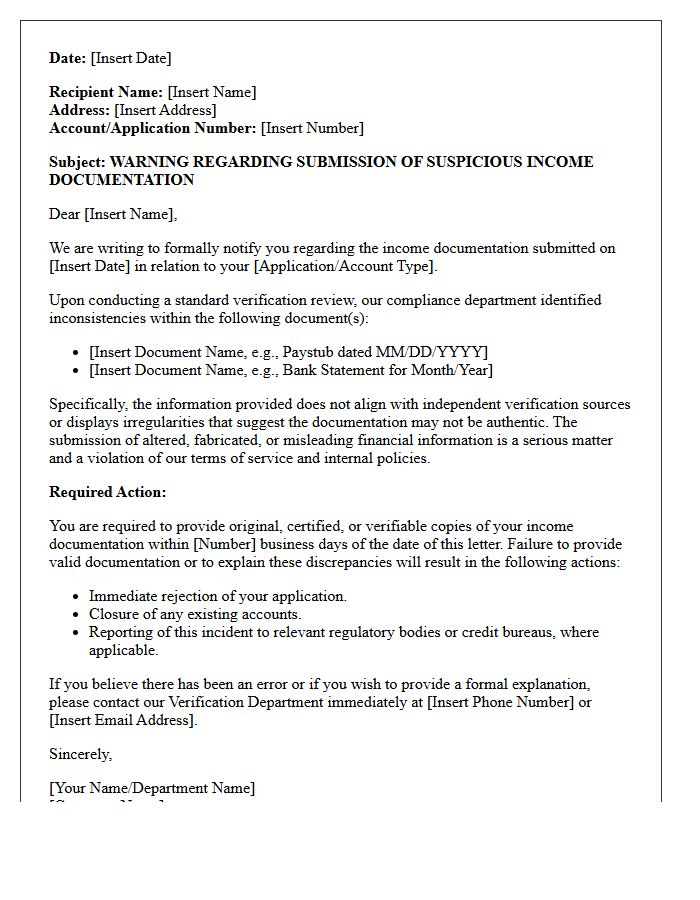
Receiving a warning letter regarding suspicious income documentation is a critical matter that requires immediate attention. This notice indicates that submitted financial records, such as pay stubs or tax forms, appear inconsistent or unverifiable during a verification process. Providing inaccurate information can lead to severe consequences, including application denial, account termination, or legal action for fraud. It is essential to respond promptly with authentic, original evidence to clarify discrepancies. Maintaining transparency and ensuring all financial disclosures are accurate is the only way to resolve these serious compliance concerns effectively.
Notice of Credit Cancellation and Warning Letter for Income Fraud
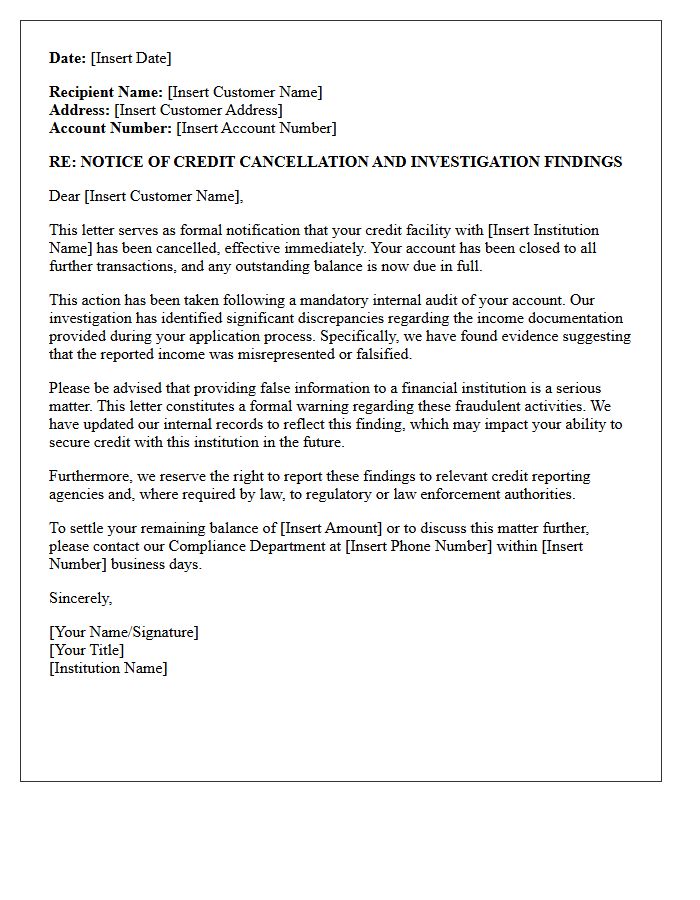
Receiving a Notice of Credit Cancellation is a critical legal alert indicating your financial accounts are being closed due to suspected Income Fraud. This warning letter signifies that discrepancies were found in your reported earnings or documentation. To protect your credit standing, you must immediately provide authentic proof of income to dispute the allegations. Ignoring this notice can lead to permanent account termination, severe credit score damage, and potential legal action. Always ensure your financial disclosures are accurate to avoid being flagged for fraudulent activity and losing access to essential banking services.
What is a warning letter for misrepresentation of income on a credit application?
A warning letter for misrepresentation of income is a formal notice issued by a financial institution notifying an applicant that the income details provided on their credit application do not match verified records. It serves as an official caution that providing false financial information is a serious breach of policy and may carry legal consequences.
What are the consequences of lying about income on a credit application?
Consequences can include the immediate denial of the credit application, the closing of existing accounts, and a permanent internal "blacklist" status with the lender. Legally, misrepresenting income can be classified as bank fraud, which may lead to criminal charges, fines, and significant damage to your credit score.
Can a bank cancel my credit card if they discover income misrepresentation?
Yes, banks have the right to revoke credit privileges and close accounts immediately if they discover that the contract was entered into based on fraudulent information. This is typically outlined in the "Terms and Conditions" section of the credit agreement regarding the accuracy of information provided.
How should I respond to a warning letter regarding income discrepancies?
You should respond promptly and honestly. If the discrepancy was a clerical error, provide documentation such as tax returns, pay stubs, or W-2 forms to clarify the mistake. If the information was intentionally inflated, it is advisable to seek legal counsel, as the letter may be a precursor to a fraud investigation.
Will misrepresenting income on a loan application affect my credit report?
While the act of misrepresentation itself may not appear as a specific line item on a credit report, the resulting actions-such as account closures for cause or a "fraud" flag placed on your file-can severely impact your ability to obtain credit from other lenders in the future.

Comments