
An Administrative Account Closure Letter is a formal notification sent by a financial institution to inform a client that their account is being deactivated due to policy violations, inactivity, or internal decisions. This document outlines the effective date and necessary next steps for fund recovery. To simplify your process, below are some ready to use template options.
Image cover: Professional Administrative Account Closure Templates and Letter Samples
Letter Samples List
- Statute of Limitations Expiration Account Closure Letter
- Debtor Bankruptcy Discharge Administrative Closure Letter
- Verified Identity Theft Account Closure Letter
- Cease and Desist Compliance Account Closure Letter
- Deceased Debtor Insolvent Estate Closure Letter
- Uncollectible Minimum Balance Administrative Closure Letter
- Original Creditor Account Recall Closure Letter
- Exhausted Skip Tracing Administrative Closure Letter
- Unverifiable Debt Dispute Account Closure Letter
- Mutual Settlement Satisfaction Closure Letter
- Fraudulent Account Investigation Closure Letter
- Undeliverable Address Account Closure Letter
Statute of Limitations Expiration Account Closure Letter
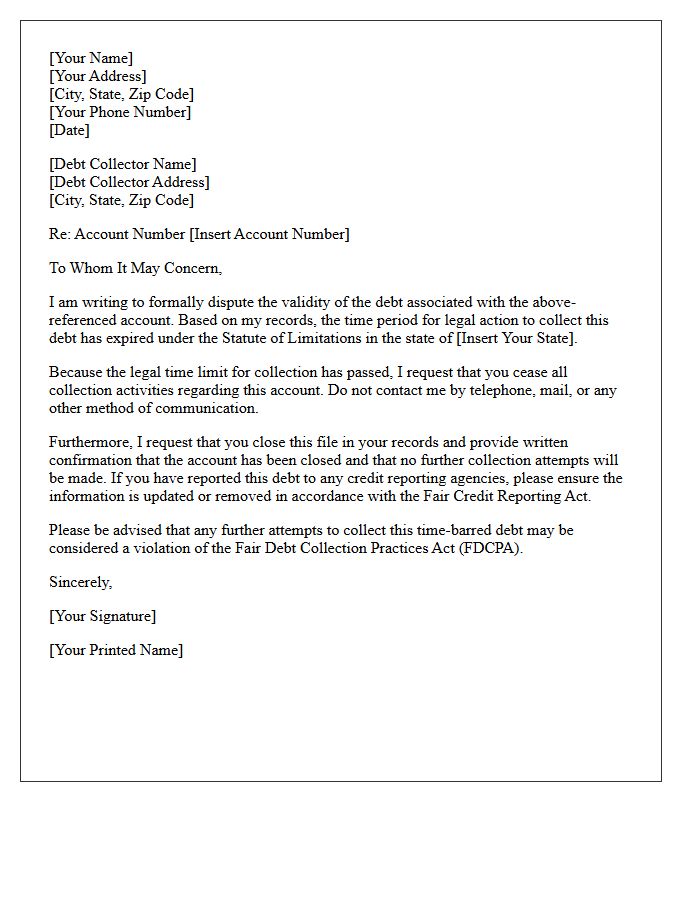
A Statute of Limitations Expiration Account Closure Letter is a formal notification sent to creditors or collection agencies. It asserts that a debt is time-barred, meaning the legal window for filing a lawsuit has lapsed. Sending this document helps prevent further harassment and protects your credit rights. However, be cautious: making a partial payment or acknowledging the debt in writing can accidentally restart the statutory clock. Always verify your state's specific timeframe before sending this verification request to ensure your legal protection remains intact during the account closure process.
Debtor Bankruptcy Discharge Administrative Closure Letter
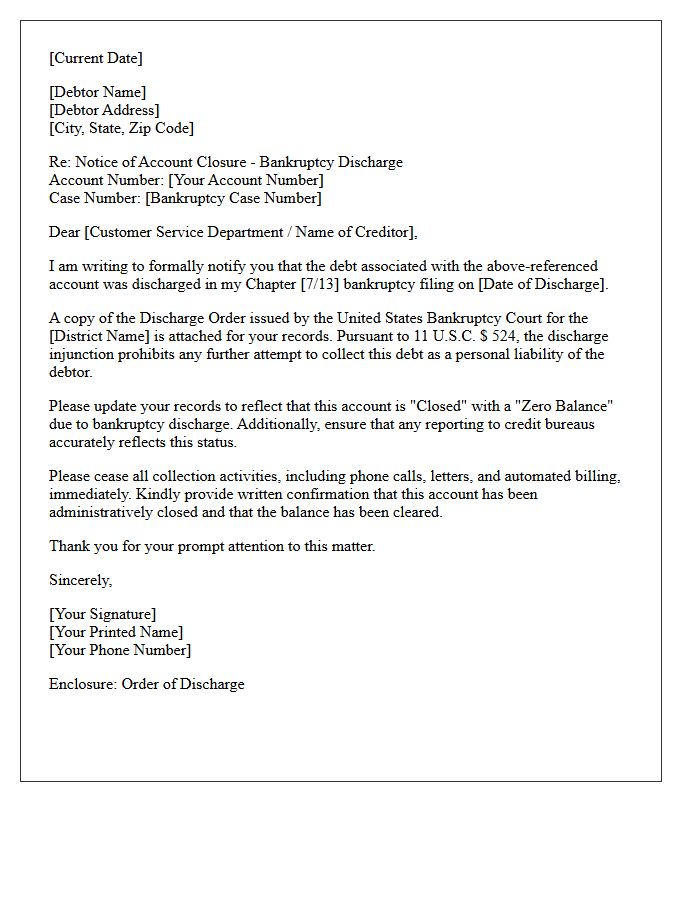
A Debtor Bankruptcy Discharge Administrative Closure Letter is a formal notification confirming your case is finalized. It signifies that the court has granted a discharge, legally releasing you from personal liability for qualifying debts. While the discharge wipes out your legal obligation to pay, the administrative closure simply means the court's involvement has ended because all procedural requirements are met. It is crucial to retain this document as legal proof to prevent creditors from attempting future collections or to correct inaccuracies on your credit report following the bankruptcy proceedings.
Verified Identity Theft Account Closure Letter
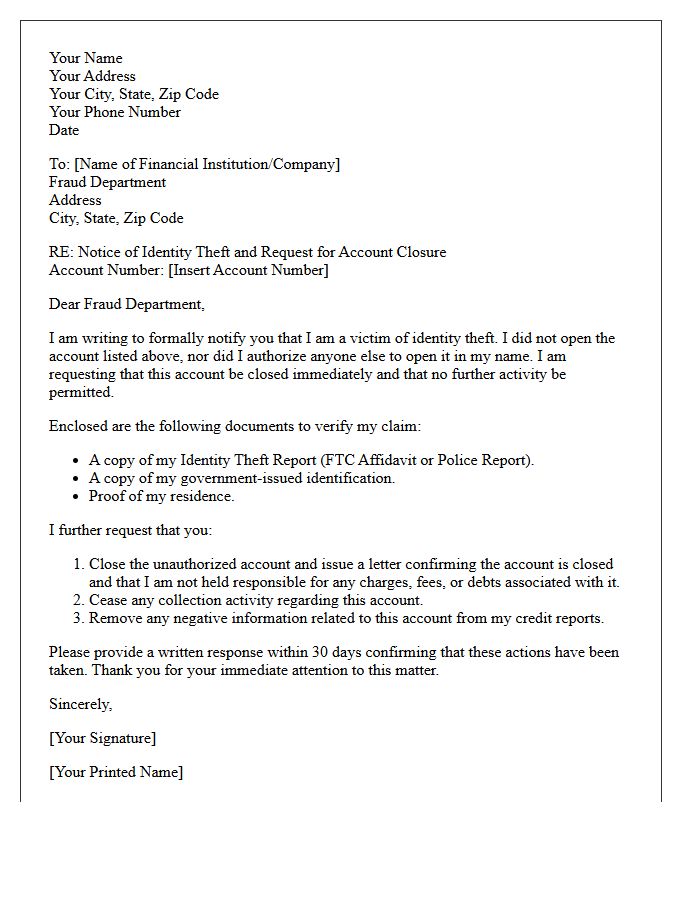
A Verified Identity Theft Account Closure Letter is a formal legal document used to dispute and shut down fraudulent accounts opened in your name. To be effective, it must include a copy of your Identity Theft Report and proof of your legal identity. Providing these documents forces creditors to stop collection activities and prevents further damage to your credit score. Always send this notice via certified mail to ensure you have a paper trail, which is essential for protecting your consumer rights under federal law during the recovery process.
Cease and Desist Compliance Account Closure Letter
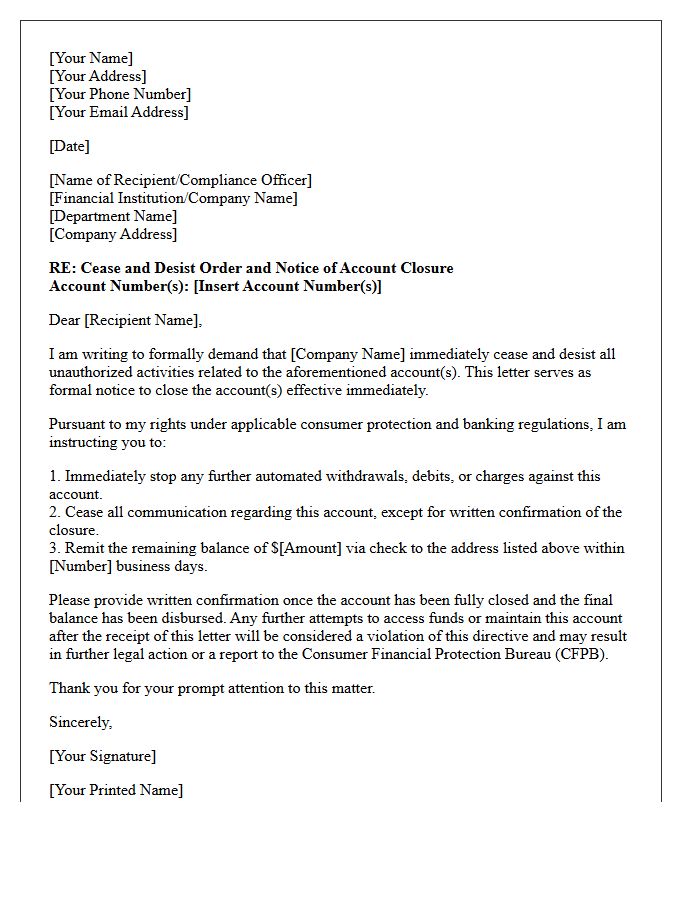
A Cease and Desist Compliance Account Closure Letter is a formal legal document used to terminate business relationships following persistent regulatory violations. This notice serves as final evidence that a non-compliant entity must immediately halt specified activities and close all associated accounts. It is a critical tool for risk management, ensuring that organizations mitigate legal liability and maintain strict adherence to industry standards. Receiving such a letter signifies a mandatory cessation of services, providing a clear paper trail for enforcement agencies and protecting the sender from future litigation or financial penalties.
Deceased Debtor Insolvent Estate Closure Letter
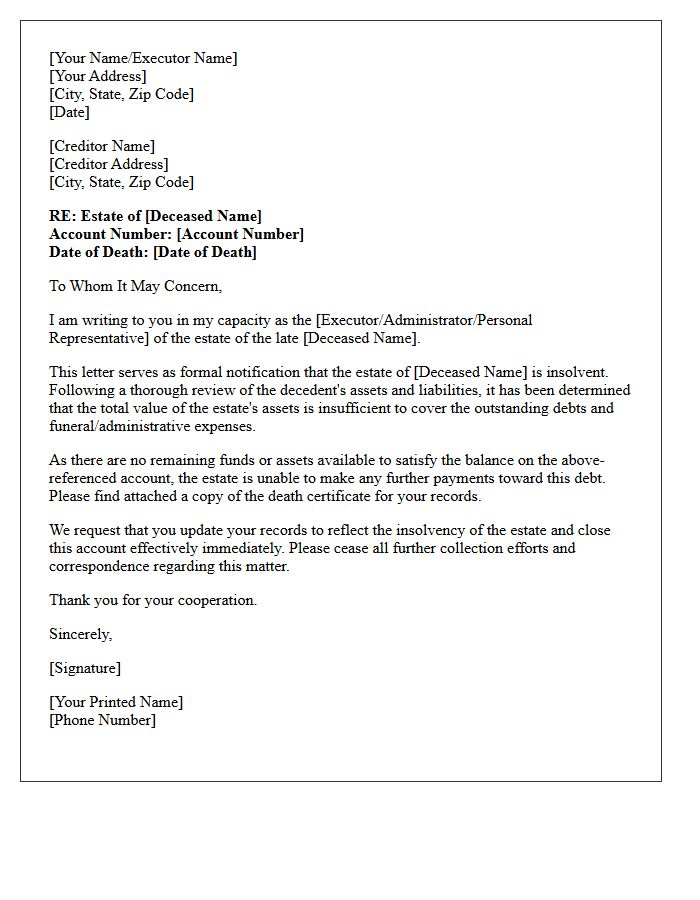
A Deceased Debtor Insolvent Estate Closure Letter is a formal notification sent by an executor to creditors when an estate lacks sufficient assets to cover its debts. This document officially confirms that the insolvent estate has been fully administered and that no further funds are available for distribution. It serves as a legal shield, requesting that creditors cease collection activities and permanently close the deceased person's accounts. Providing clear evidence of insolvency ensures that representatives are protected from personal liability regarding outstanding financial obligations during the final probate stages.
Uncollectible Minimum Balance Administrative Closure Letter
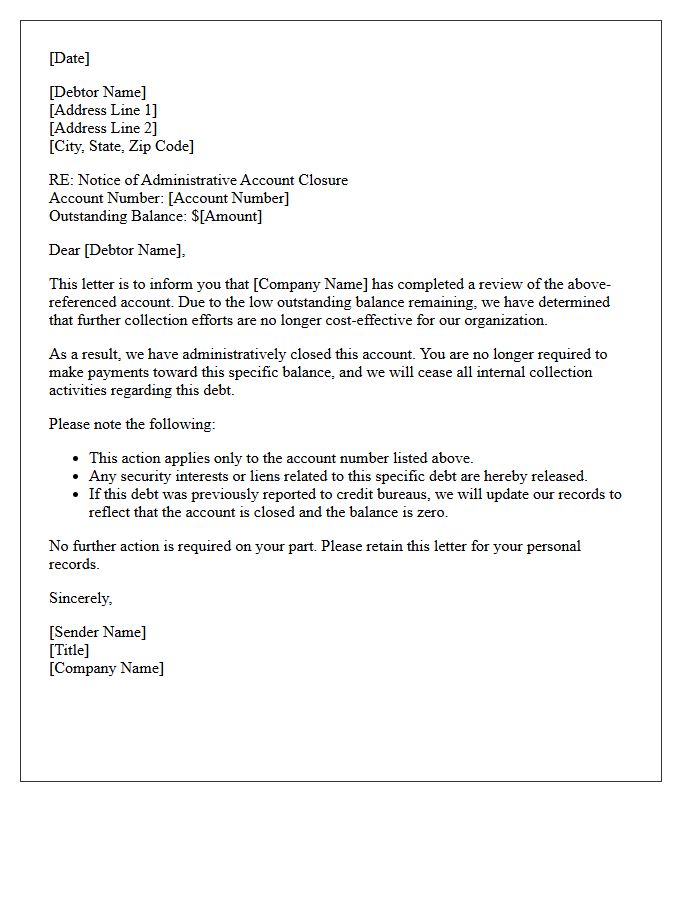
An Uncollectible Minimum Balance Administrative Closure Letter notifies a debtor that their account is officially closed because the remaining debt amount is too small to justify further collection costs. This administrative action prevents additional legal or recovery expenses while updating financial records. Receiving this letter typically means the creditor has stopped active pursuit of the outstanding balance, though the underlying debt remains technically unpaid. Understanding this status update is essential for managing personal credit history and verifying that no further payments are required for that specific account.
Original Creditor Account Recall Closure Letter
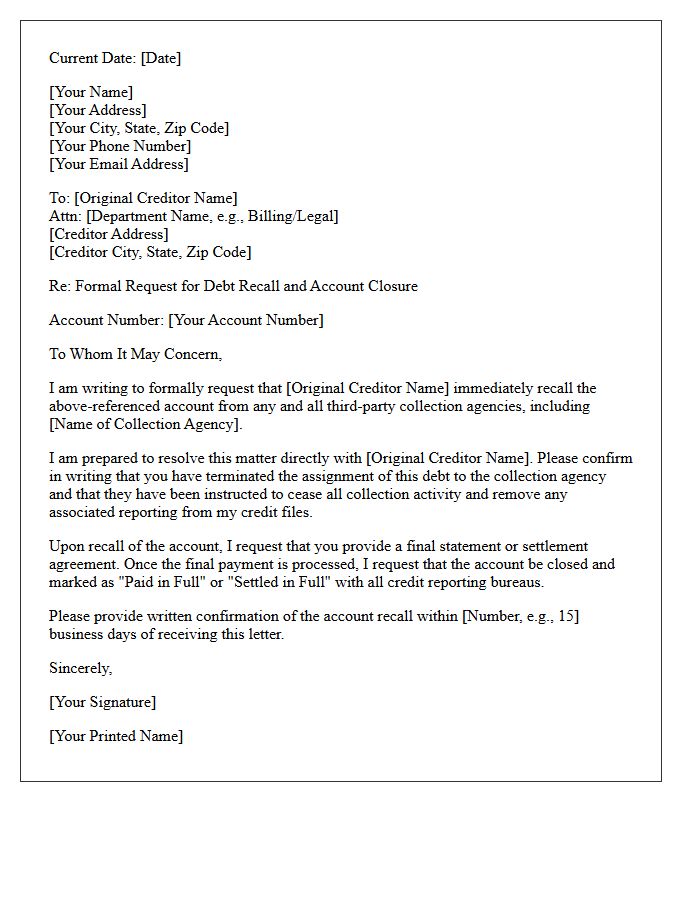
An Original Creditor Account Recall Closure Letter is a formal notice sent by a lender to a collection agency to terminate their authority. This document confirms the debt recall, meaning the creditor has taken back control of the account. It is crucial for consumers because it ensures the collection agency stops all recovery efforts and updates credit bureaus. Receiving this letter provides legal protection against double-billing and confirms that any further payment arrangements must be handled directly with the original creditor to ensure accurate account resolution.
Exhausted Skip Tracing Administrative Closure Letter
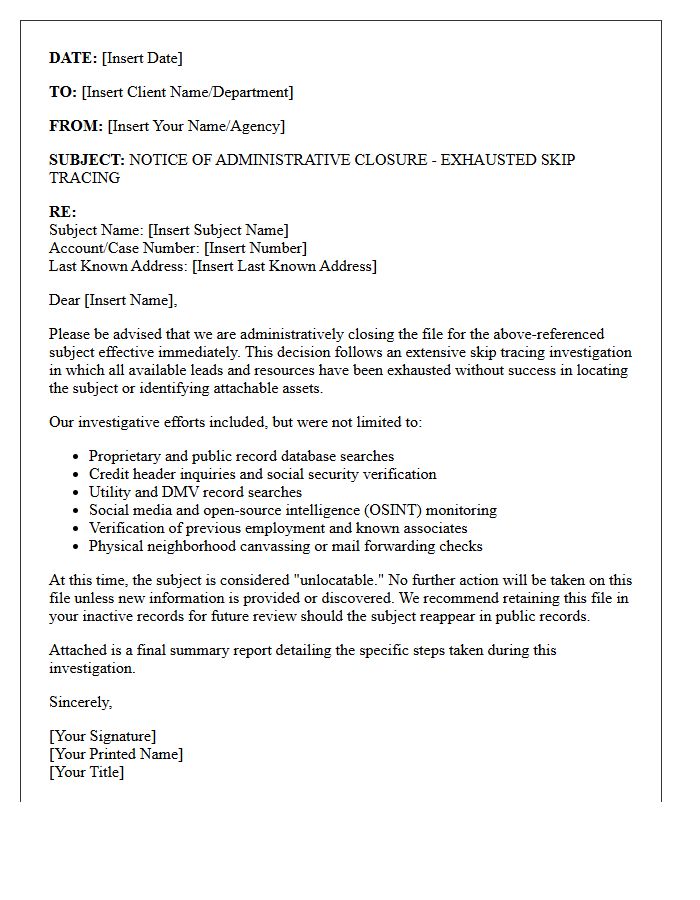
An Exhausted Skip Tracing Administrative Closure Letter notifies stakeholders that a debt collection or legal effort has ended. This document confirms that after extensive investigation, the subject's location remains untraceable through all available databases and manual searches. It serves as formal documentation to justify ceasing collection activities and moving the account to a non-collectible status. This letter is essential for maintaining accurate compliance records, updating financial ledgers, and providing legal proof that due diligence was performed before permanently closing the file due to lack of contact information.
Unverifiable Debt Dispute Account Closure Letter
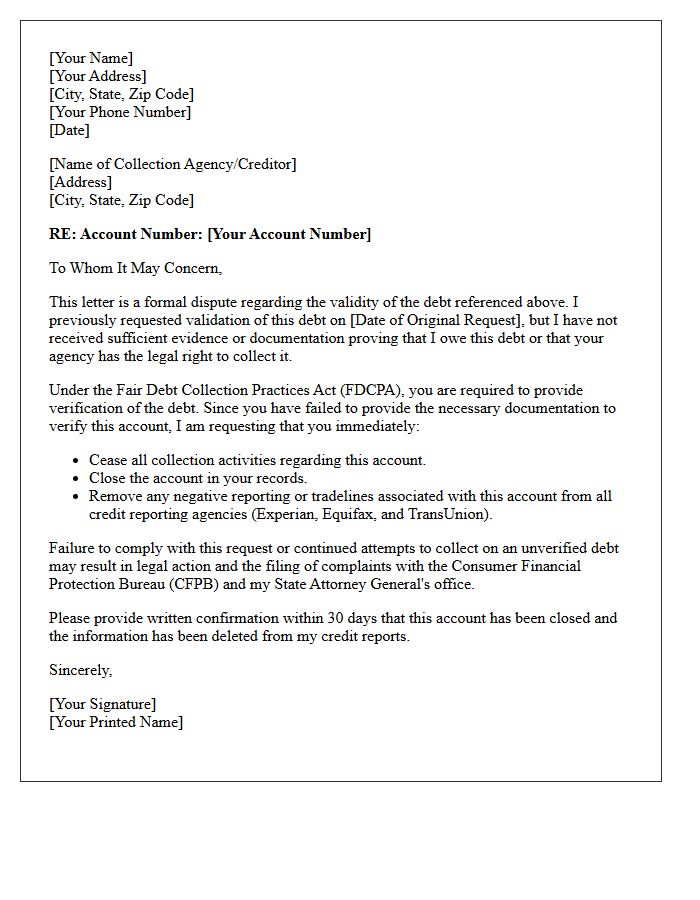
An Unverifiable Debt Dispute Account Closure Letter is a formal legal request sent to creditors or collection agencies. It demands the removal of accounts from your credit report if the firm cannot provide original documentation proving the debt's validity. Under the Fair Credit Reporting Act, if a collector fails to verify the debt within 30 days, they must cease collection efforts and delete the negative entry. This tool is essential for correcting inaccuracies, protecting your credit score, and ensuring consumer rights against unsubstantiated financial claims.
Mutual Settlement Satisfaction Closure Letter
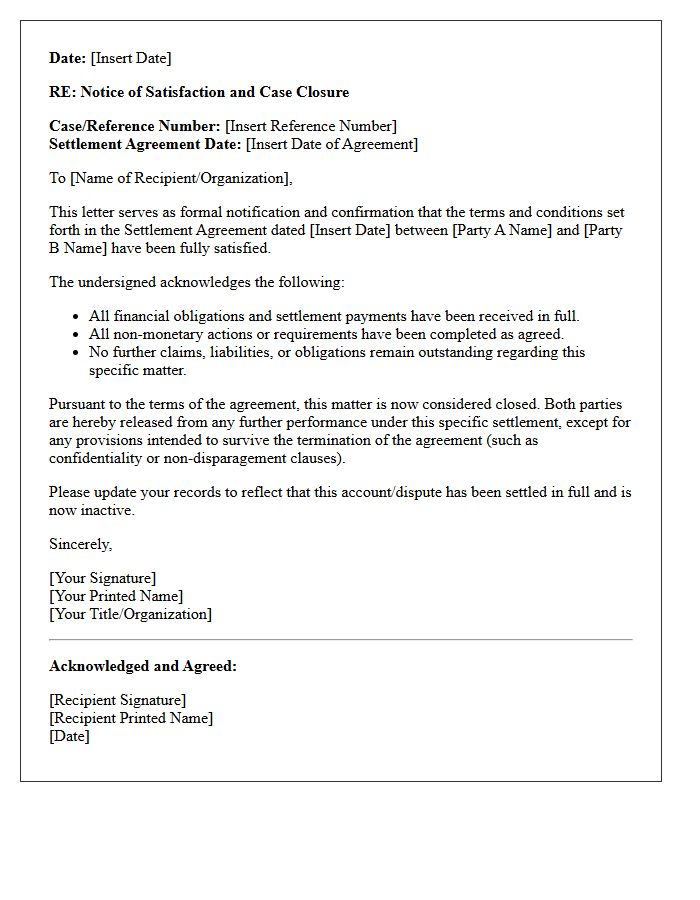
A Mutual Settlement Satisfaction Closure Letter is a formal legal document confirming that all obligations under a settlement agreement have been fulfilled. It serves as written evidence that no further claims or debts exist between the parties. This letter is crucial for risk management, as it prevents future litigation and ensures a final release of liability. Always verify that the document explicitly states the case is closed and satisfactorily resolved to protect your financial and legal interests long-term.
Fraudulent Account Investigation Closure Letter
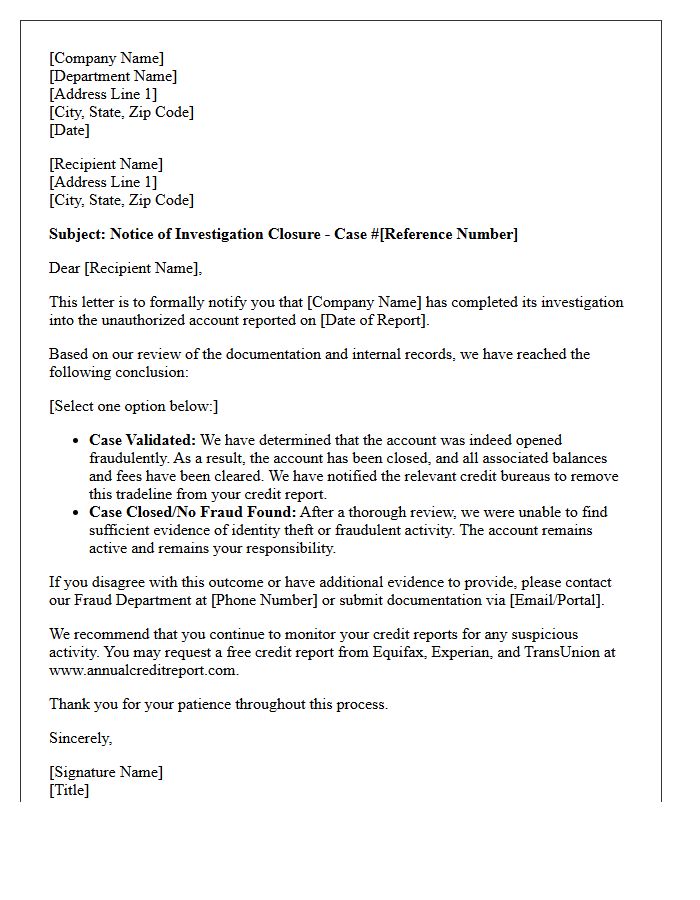
A Fraudulent Account Investigation Closure Letter is a formal document issued by a financial institution confirming the conclusion of an identity theft inquiry. It provides a final determination regarding the disputed activity and outlines whether the account has been permanently closed or restored. This letter serves as official evidence that you are not liable for unauthorized charges. It is crucial to retain this document for your records to protect your credit score and resolve any future identity recovery complications with credit bureaus or legal authorities.
Undeliverable Address Account Closure Letter
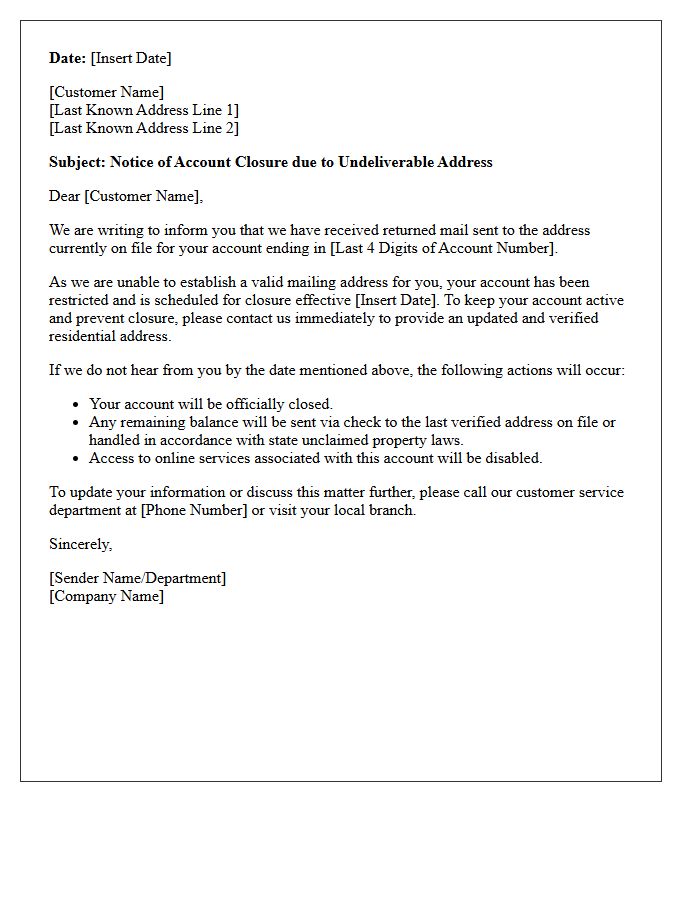
An Undeliverable Address Account Closure Letter is a formal notice sent by financial institutions when mail is returned and no valid contact information exists. This compliance-driven action protects against identity theft and fulfills regulatory Know Your Customer (KYC) requirements. Upon receipt, your account is typically restricted or shuttered to prevent unauthorized access. To resolve this, you must promptly provide verified proof of residency to reactivate services and ensure the security of your assets. Ignoring this notice often leads to funds being transferred to state unclaimed property divisions.
What should be included in an administrative account closure letter?
An administrative account closure letter should include the account holder's name, the specific account number, the effective date of closure, the reason for the action, and instructions on how to claim any remaining balance or outstanding funds.
Is a bank required to provide a reason for an administrative closure?
In most jurisdictions, financial institutions reserve the right to close accounts administratively without providing a specific reason, provided they follow the terms and conditions outlined in the original account agreement and provide proper notice.
How much notice is typically given before an administrative account closure?
While notice periods vary by institution and state law, most banks provide between 30 to 60 days of advance notice. However, if the closure is due to suspected illegal activity or a security breach, the account may be closed immediately without prior warning.
What happens to the remaining balance after an administrative closure?
Once an account is administratively closed, the institution will typically issue a cashier's check for the remaining balance sent to the address on file, provided there are no legal holds, liens, or unresolved disputes associated with the funds.
Can I appeal an administrative account closure decision?
While you can contact the institution's compliance or legal department to request a review, administrative closures are often final. If the closure was due to a documented error, providing supporting evidence may help in reopening the account or clearing your internal record.

Comments