
Effectively challenge unconfirmed debts by using a formal Unverified Debt Account Closure Letter. If a collection agency fails to provide legal proof of your liability within the required timeframe, you have the right to demand an immediate account closure and the removal of negative credit entries. Protect your consumer rights and improve your credit score. Below are some ready to use templates.
Image cover: The Debt Validation Toolkit: Professional Account Closure Letter Templates
Letter Samples List
- Unverified Debt Account Closure Letter
- Insufficient Evidence Debt Closure Letter
- Failure To Validate Debt Closure Letter
- Disputed Debt Final Account Closure Letter
- Unsubstantiated Debt Resolution Letter
- Statute Of Limitations Debt Closure Letter
- Identity Theft Unverified Debt Closure Letter
- Lack Of Documentation Account Closure Letter
- Fraudulent Account Debt Closure Letter
- Cease And Desist Unverified Debt Letter
- Incomplete Records Debt Closure Letter
- Final Notice Of Unverified Debt Closure Letter
Unverified Debt Account Closure Letter
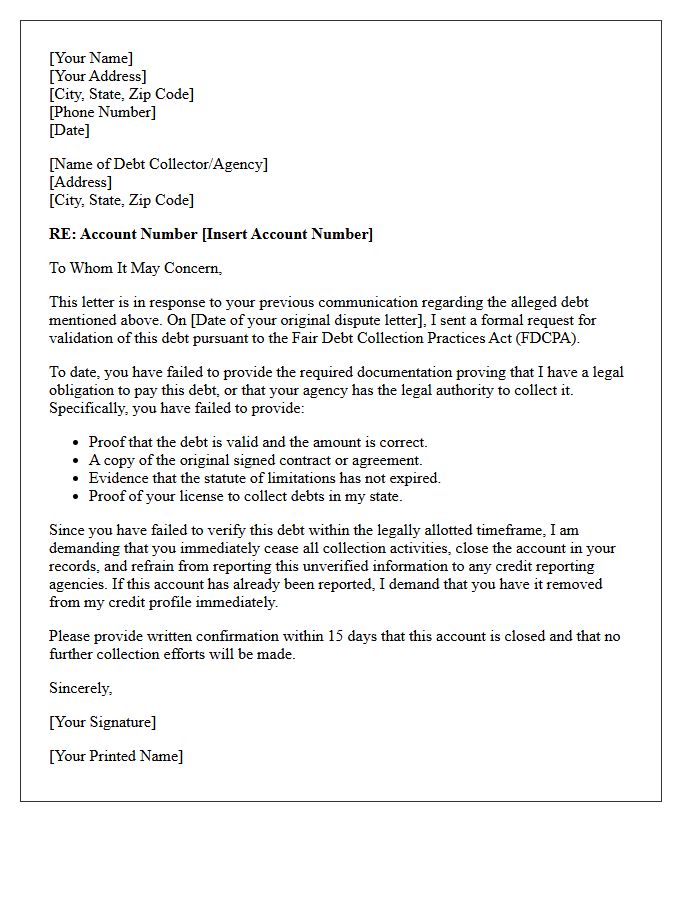
An Unverified Debt Account Closure Letter is a formal legal notice sent to credit bureaus or collectors when they fail to provide proof of a debt's validity. Under the Fair Credit Reporting Act, agencies must investigate disputed items within thirty days. If the creditor cannot produce original documentation, the account is deemed legally unverifiable. Utilizing this letter is essential for protecting your consumer rights, as it demands the permanent removal of inaccurate information from your credit report, effectively improving your credit score by eliminating unsubstantiated negative claims.
Insufficient Evidence Debt Closure Letter
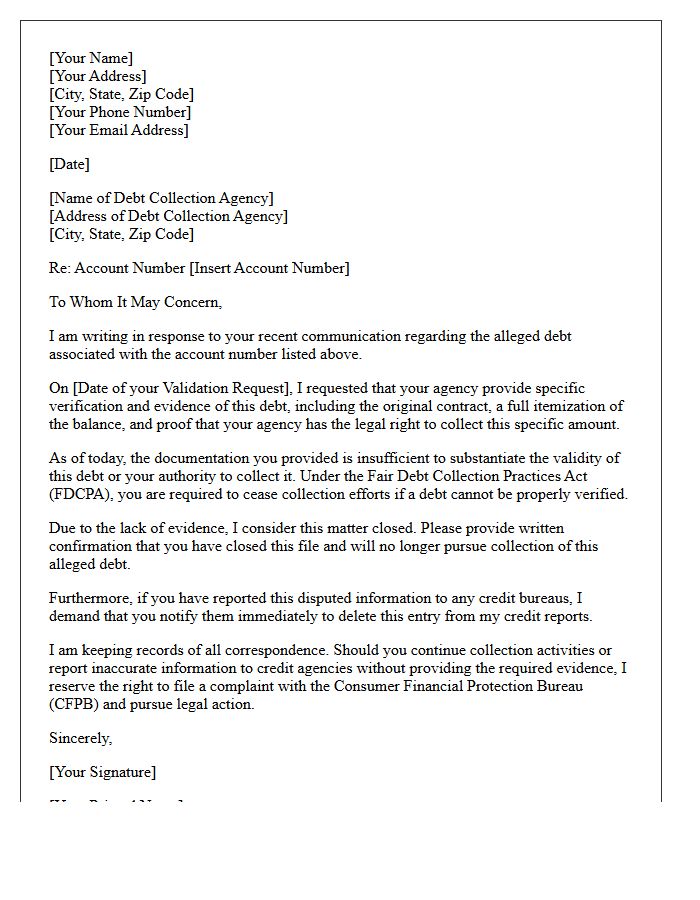
An Insufficient Evidence Debt Closure Letter is a formal notice confirming that a collection agency has ceased recovery efforts due to a lack of legal documentation. Receiving this letter is crucial because it provides written proof that the debt is no longer collectible by that entity. It signifies that the collector failed to verify the debt's validity under the Fair Debt Collection Practices Act. Always retain this document to protect your credit report and prevent future collection attempts for the same disputed balance by different agencies.
Failure To Validate Debt Closure Letter
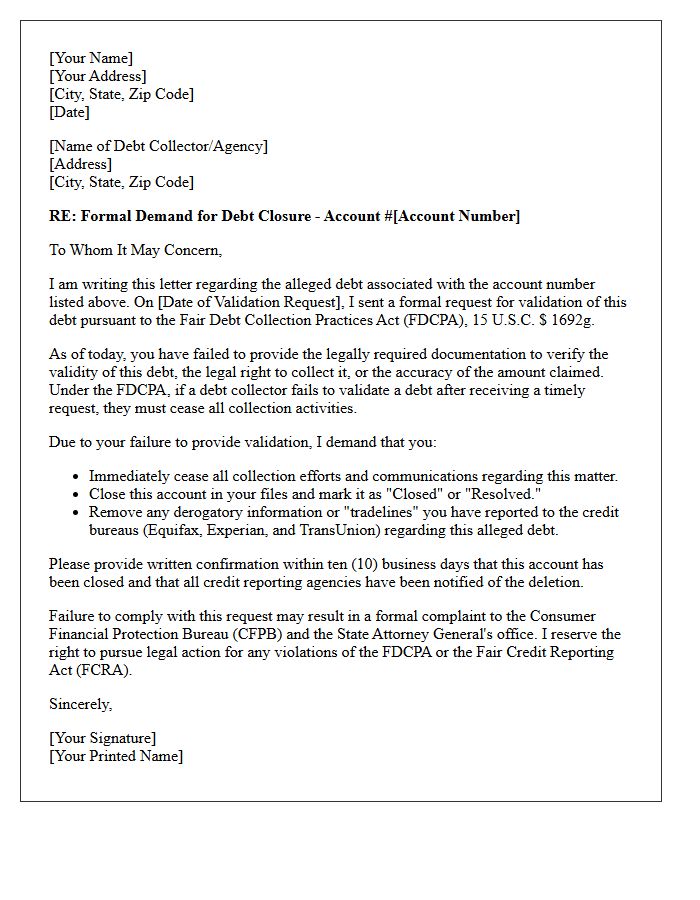
A Failure to Validate Debt Closure Letter is a critical legal document used when a collection agency fails to provide verification of a debt within the required thirty-day window. Under the Fair Debt Collection Practices Act (FDCPA), if a creditor cannot produce evidence of the balance or their right to collect, they must cease all communication. Sending this formal notice protects your consumer rights, prevents further harassment, and serves as essential evidence to dispute inaccurate information on your credit report, potentially forcing the removal of the invalid derogatory mark.
Disputed Debt Final Account Closure Letter
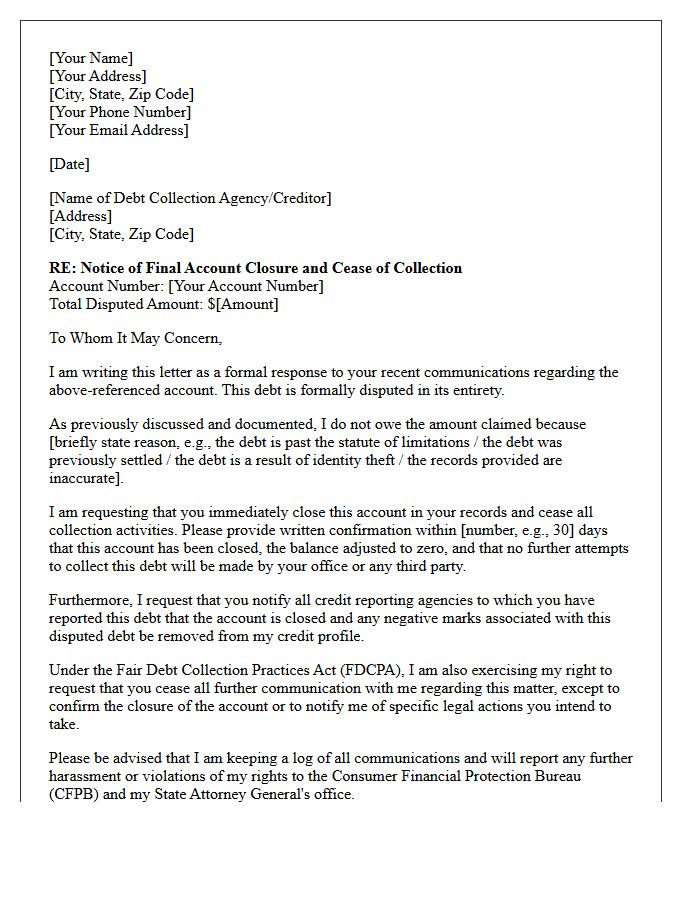
A Disputed Debt Final Account Closure Letter is a formal document sent to creditors or collection agencies to resolve outstanding claims. This letter asserts that a debt is either invalid or has been settled, demanding a permanent closure of the account. It serves as vital legal evidence to stop further collection attempts and prevents negative reports from affecting your credit score. Once the creditor acknowledges the final settlement in writing, it protects you from future litigation and ensures your financial records accurately reflect that no further balance is owed.
Unsubstantiated Debt Resolution Letter
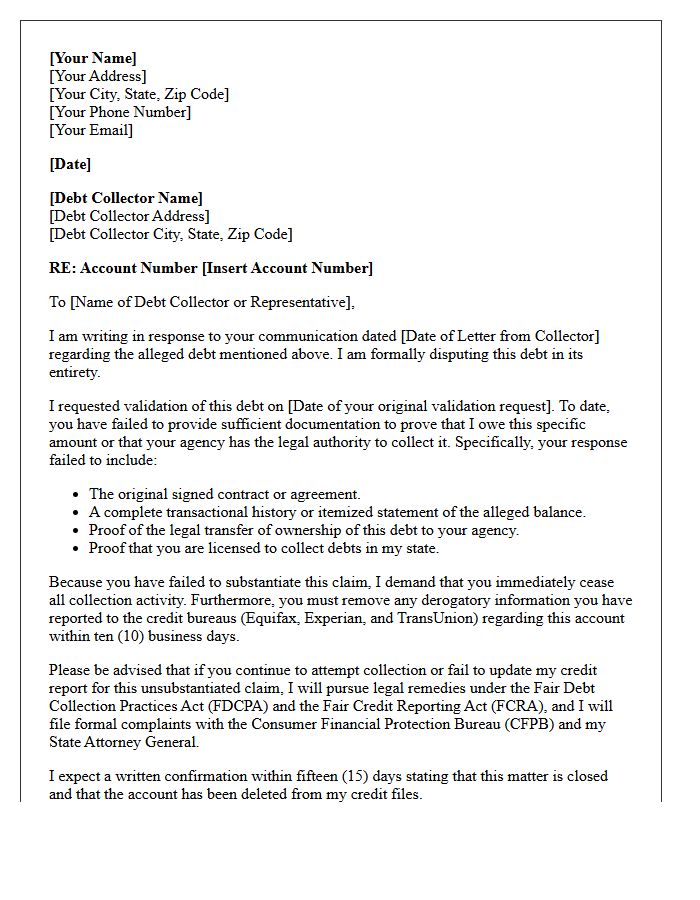
An Unsubstantiated Debt Resolution Letter is a formal request sent to creditors or collection agencies when they fail to provide legal proof of a debt's validity. This dispute mechanism is essential for protecting consumers against predatory practices and clerical errors. By demanding verified documentation, such as the original contract or payment history, you can legally halt collection efforts. If the collector cannot substantiate the claim, they must cease contact and remove the entry from your credit report, ensuring your financial profile remains accurate and protected from unverified liabilities.
Statute Of Limitations Debt Closure Letter
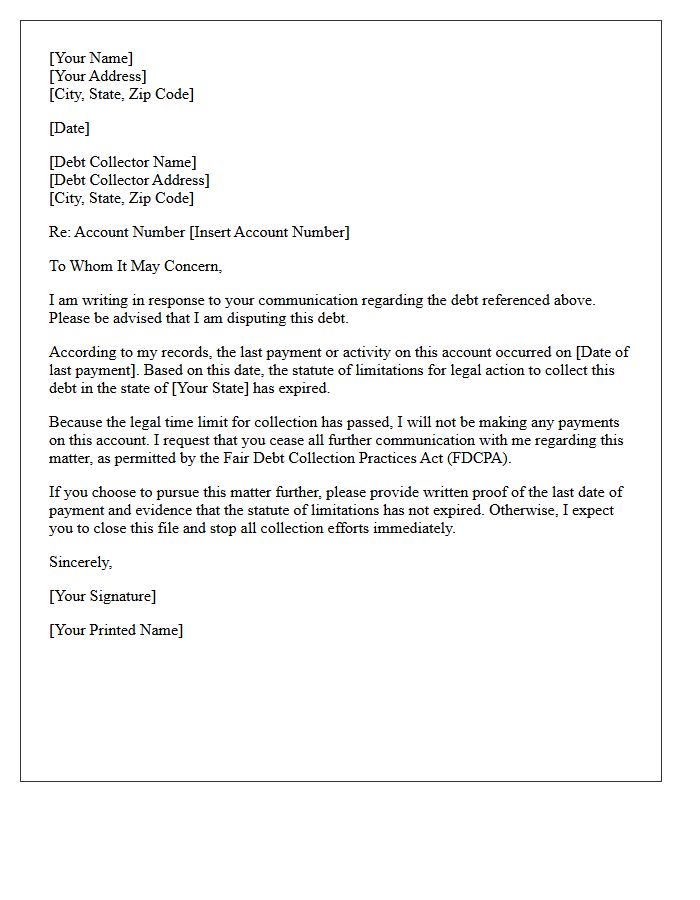
A Statute of Limitations Debt Closure Letter is a formal notice sent to collectors when a debt is legally time-barred. This means the legal period for creditors to sue for payment has expired. By sending this written notice, you exercise your right to stop collection harassment and formally dispute the debt's enforceability. Always verify your state's specific limitations period before sending, as making a partial payment or acknowledging the debt can accidentally restart the clock, making you legally liable for the balance once again.
Identity Theft Unverified Debt Closure Letter
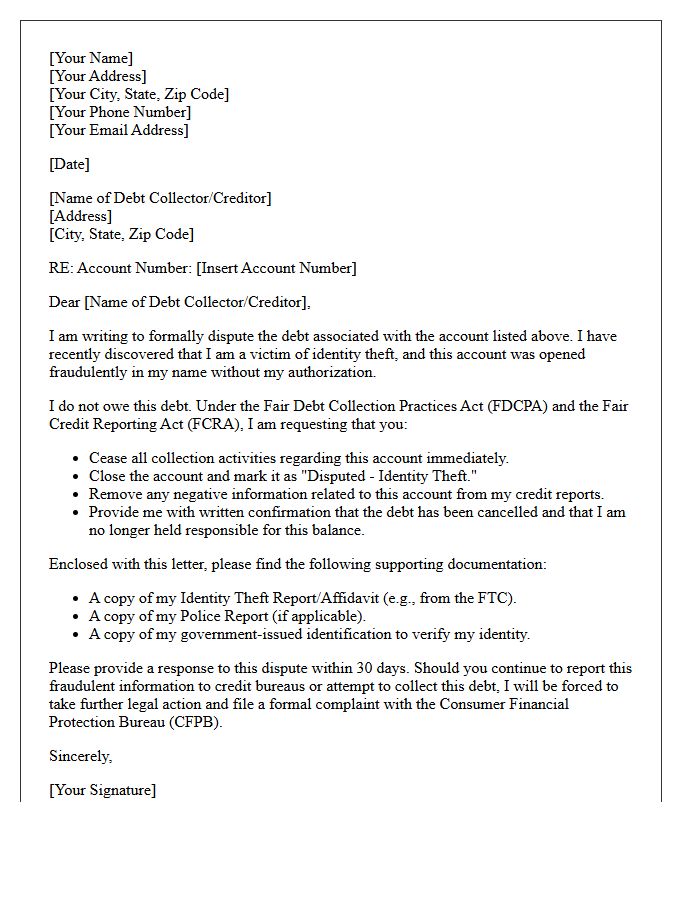
An Identity Theft Unverified Debt Closure Letter is a formal legal notice used to dispute fraudulent accounts. It informs creditors that a debt was incurred through identity theft and demands permanent closure of the account. Under the Fair Credit Reporting Act, creditors must investigate and stop reporting unverified information. Including an official FTC Identity Theft Report or police report is essential to prove the claim. Once received, the collector must cease contact and remove the negative entry from your credit report, protecting your financial reputation from further unauthorized damage.
Lack Of Documentation Account Closure Letter
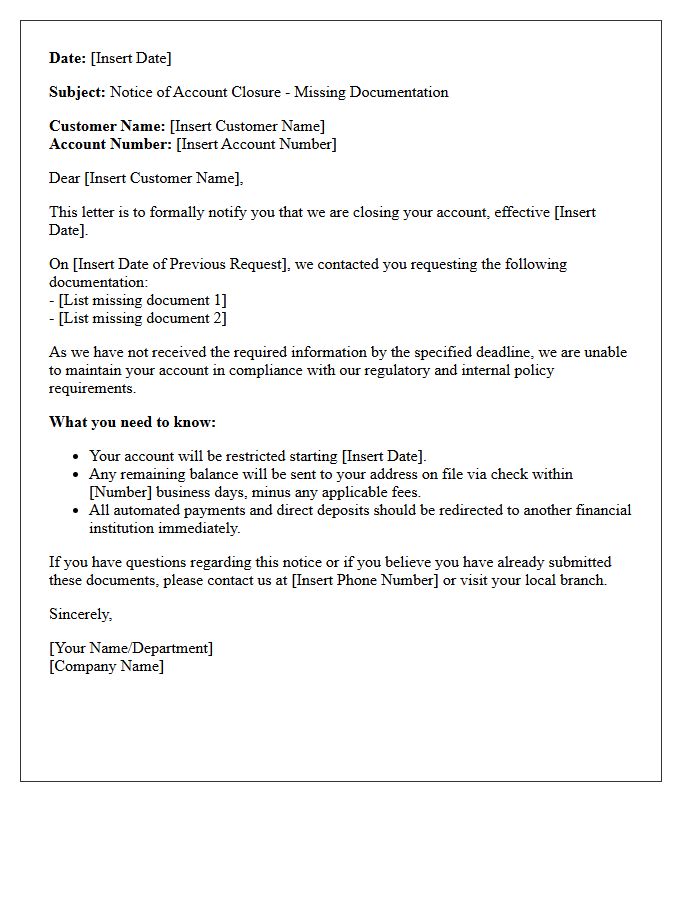
Receiving a Lack of Documentation Account Closure Letter indicates that a financial institution is terminating your relationship due to missing know-your-customer (KYC) details. Banks are legally required to verify your identity, source of funds, or updated address to comply with anti-money laundering regulations. Failing to provide requested paperwork within specified deadlines triggers an automatic account closure. To prevent permanent loss of access to your funds, immediately contact the compliance department to submit the necessary records or arrange a balance transfer before the final shutdown date.
Fraudulent Account Debt Closure Letter
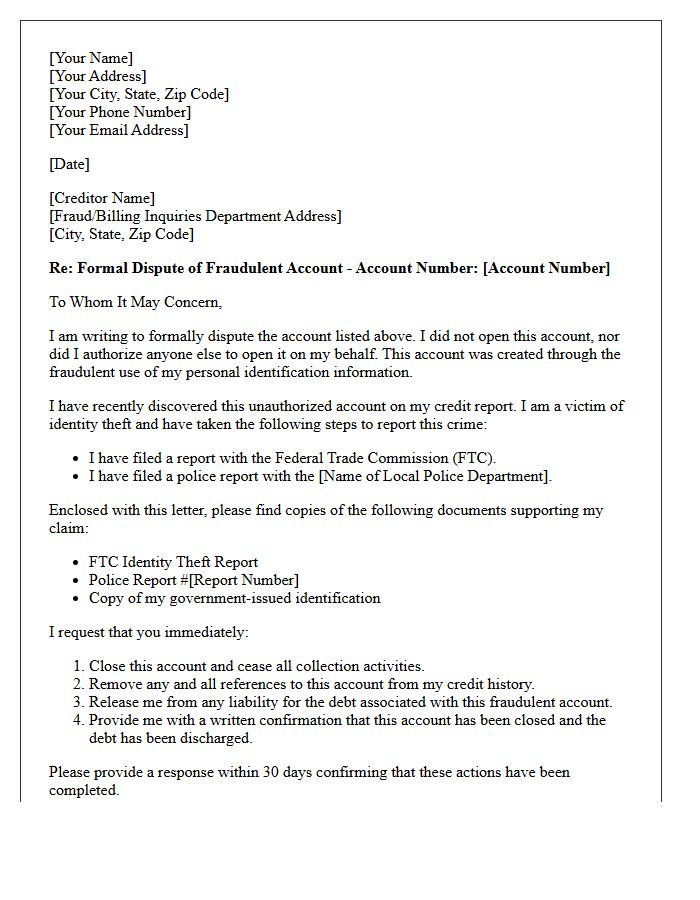
A Fraudulent Account Debt Closure Letter is a formal document sent to creditors or collection agencies to dispute unauthorized charges. It serves as legal evidence that you are not responsible for liabilities resulting from identity theft. To be effective, the letter must include your police report number, a copy of the FTC Identity Theft Report, and a clear demand for written confirmation that the account is closed. This step is vital to protect your credit score and halt aggressive collection activities permanently.
Cease And Desist Unverified Debt Letter
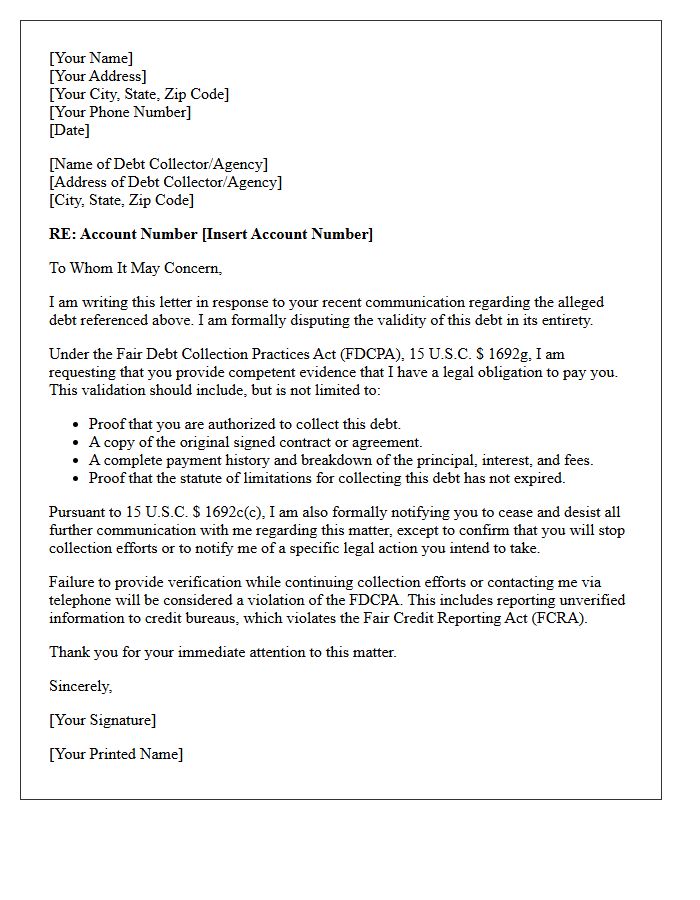
A Cease and Desist Unverified Debt Letter is a formal legal notice sent to debt collectors under the Fair Debt Collection Practices Act. This document demands that the agency stop communication and provide verification of the alleged debt. If a collector fails to validate the original creditor or the exact balance within thirty days, they must legally halt collection activities. Utilizing this letter protects consumers from harassment and ensures that no payments are made on inaccurate, expired, or fraudulent claims until proof of the obligation is legally established.
Incomplete Records Debt Closure Letter
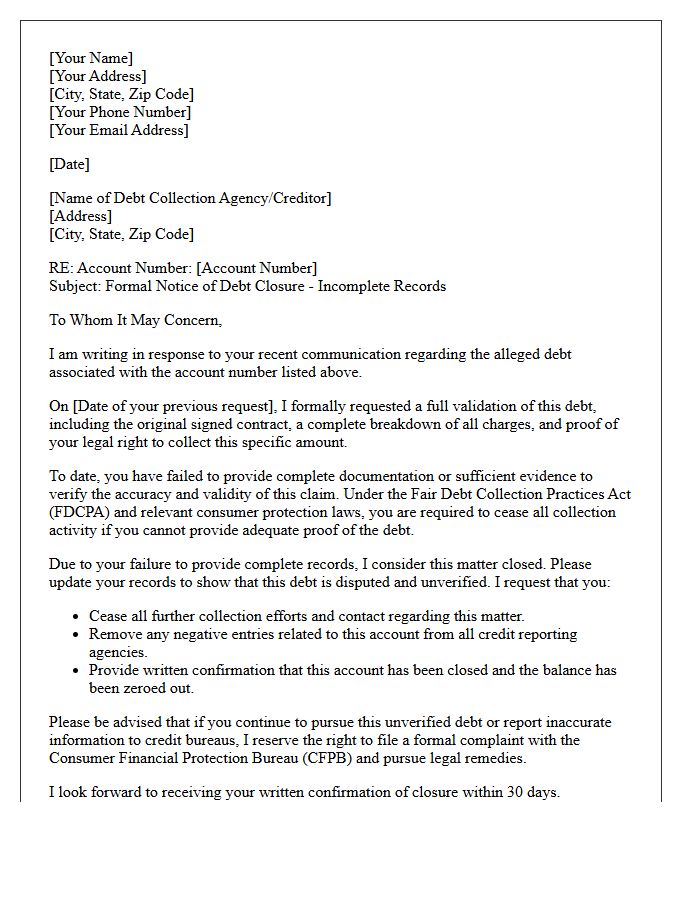
An Incomplete Records Debt Closure Letter is a formal notice sent by creditors or agencies when they cannot provide enforceable documentation of a debt. If a company fails to produce the original agreement or accurate payment logs following a formal request, they must cease collection activities. Receiving this letter confirms the account is legally closed, protecting you from further liability or harassment. Always retain a copy of this correspondence as permanent legal proof that the debt is no longer collectible or valid due to insufficient evidentiary records.
Final Notice Of Unverified Debt Closure Letter
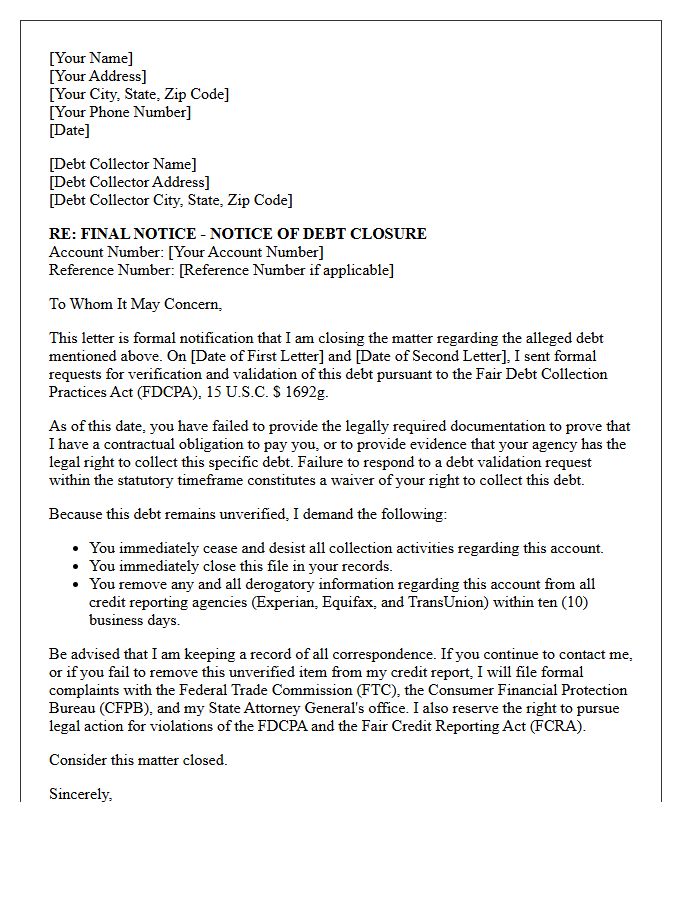
A Final Notice of Unverified Debt Closure is a critical document confirming that a collection agency has ceased collection efforts due to their failure to provide legal debt validation. Receiving this letter means the account is closed and the collector can no longer legally demand payment. It is vital to save this notice as permanent proof to protect your consumer rights. If the unverified debt appears on your credit report, you must use this letter to dispute the entry with credit bureaus to ensure its immediate and permanent removal.
What is an unverified debt account closure letter?
An unverified debt account closure letter is a formal written request sent to a debt collector or creditor demanding they cease collection activities and close an account because they failed to provide legal validation of the debt within the required legal timeframe.
When should I send a letter to close an unverified debt account?
You should send this letter if a collection agency fails to respond to a Debt Validation Letter within 30 days, or if the documentation they provided does not legally prove you owe the debt or that they have the right to collect it.
Does closing an unverified debt account remove it from my credit report?
Yes, if a debt remains unverified, the Fair Credit Reporting Act (FCRA) requires that the disputed information be deleted from your credit report, as credit bureaus cannot report inaccurate or unverifiable information.
What happens if a debt collector ignores my account closure request?
If a collector continues to report or pursue an unverified debt after receiving a closure letter, they may be in violation of the Fair Debt Collection Practices Act (FDCPA), giving you the right to file a complaint with the CFPB or pursue legal action.
What information must be included in an unverified debt closure letter?
The letter should include your account number, the date of your original validation request, a statement that the collector failed to provide proof of debt, and a clear demand that they close the file and notify all credit bureaus to delete the entry.

Comments