
When a customer fails to honor a commitment, immediate Action Required for Broken Promise to Pay is essential to recover outstanding debt. This guide explores professional communication strategies and firm follow-up procedures to protect your business cash flow. Effective documentation helps resolve delinquency while maintaining professional relationships. Explore our proven strategies and find below are some ready to use template.
Image cover: Restoring Accountability: Broken Promise to Pay Notices and Templates
Letter Samples List
- Action Required Letter for Broken Promise to Pay
- First Notice Letter for Broken Payment Arrangement
- Urgent Action Required Letter Regarding Broken Promise
- Defaulted Payment Plan Letter of Required Action
- Final Demand Letter for Broken Promise to Pay
- Broken Payment Commitment Letter of Required Action
- Delinquent Account Letter for Failed Promise to Pay
- Immediate Action Required Letter for Broken Payment Promise
- Notice of Default Letter for Broken Promise to Pay
- Pre-Legal Action Letter for Broken Payment Arrangement
- Escalation Letter for Ignored Promise to Pay
- Account Suspension Letter for Broken Payment Promise
- Debt Recovery Letter for Violated Promise to Pay
- Final Resolution Letter for Broken Payment Commitment
- Breach of Payment Agreement Letter Requiring Action
Action Required Letter for Broken Promise to Pay
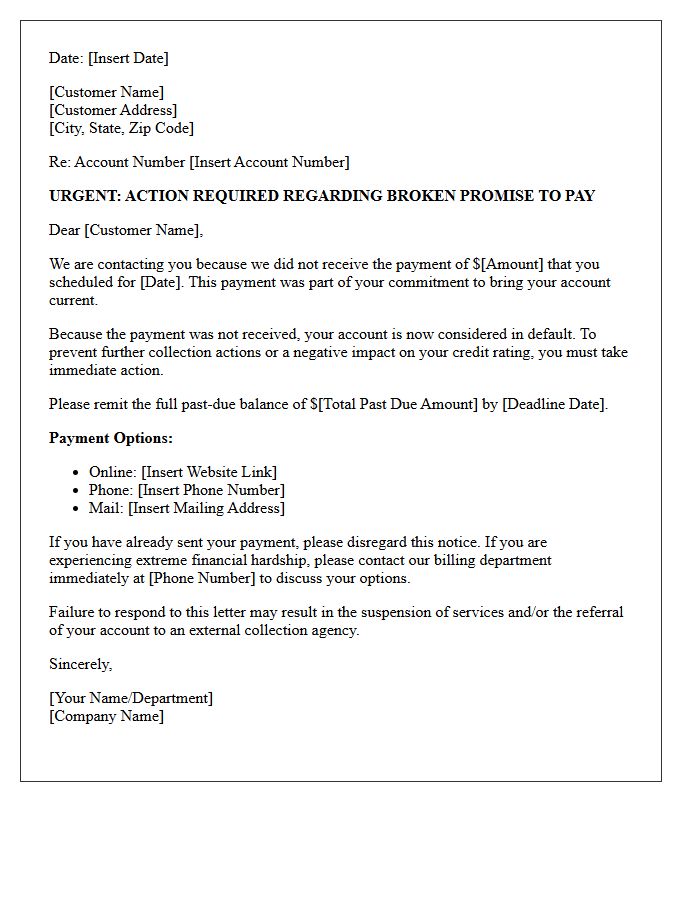
An Action Required Letter is a formal notice sent when a debtor fails to honor a Broken Promise to Pay agreement. It serves as a final warning before a creditor initiates debt collection or legal proceedings. This document demands immediate fulfillment of the outstanding balance to prevent further consequences, such as credit score damage or litigation. Reviewing the letter promptly is essential to negotiate a new settlement or provide proof of payment, ensuring you avoid legal action or the involvement of third-party recovery agencies.
First Notice Letter for Broken Payment Arrangement
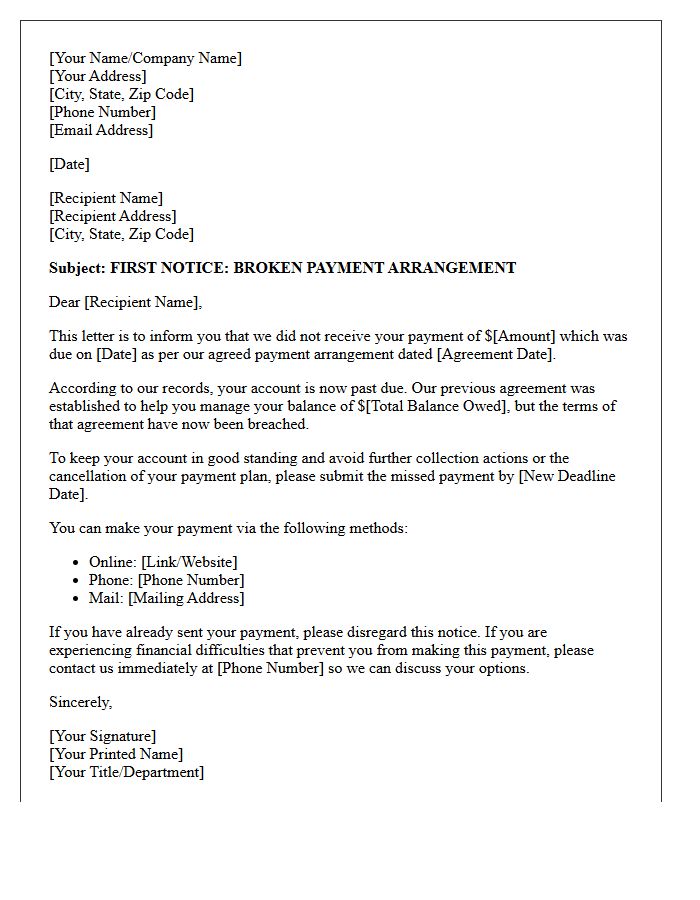
A First Notice Letter for a broken payment arrangement is a formal communication issued when a debtor fails to meet agreed installments. This document serves as a default notification, warning the recipient that their repayment plan is now void. It typically outlines the outstanding balance, specifies a deadline for immediate payment, and details potential consequences such as late fees or legal escalation. Receiving this notice is a critical opportunity to contact the creditor to renegotiate terms or settle the debt before the account is transferred to a collection agency.
Urgent Action Required Letter Regarding Broken Promise
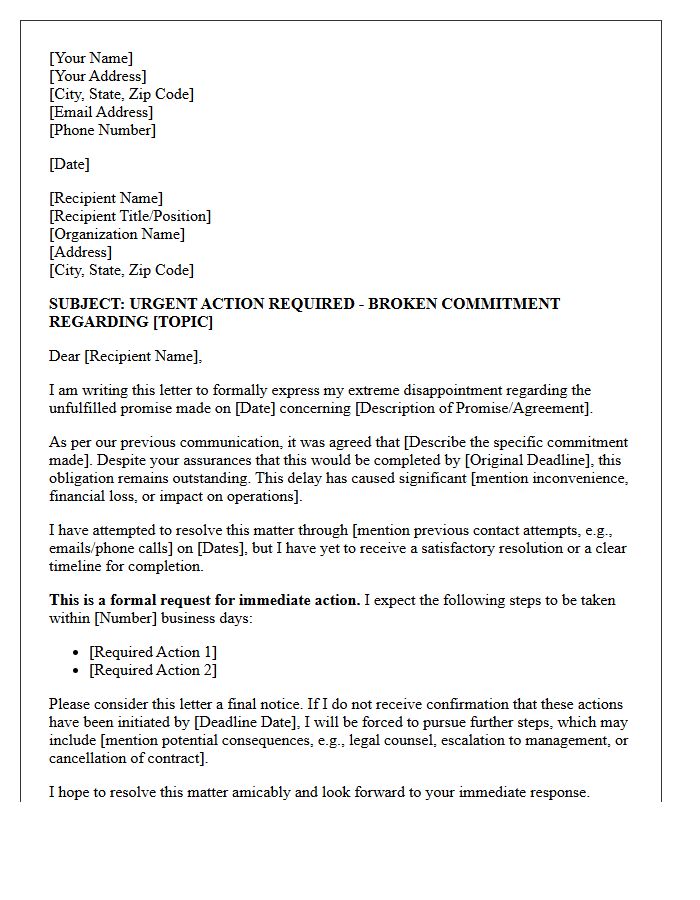
Receiving an Urgent Action Required letter indicates a formal demand following a broken promise or breach of contract. This document serves as a final notice to rectify non-compliance before legal escalation occurs. It typically outlines the specific agreement violated, the required corrective steps, and a strict deadline for resolution. Addressing these letters immediately is essential to protect your legal rights and avoid potential litigation. Clear communication and documented evidence are vital when responding to ensure all contractual obligations are eventually met and disputes are settled professionally.
Defaulted Payment Plan Letter of Required Action
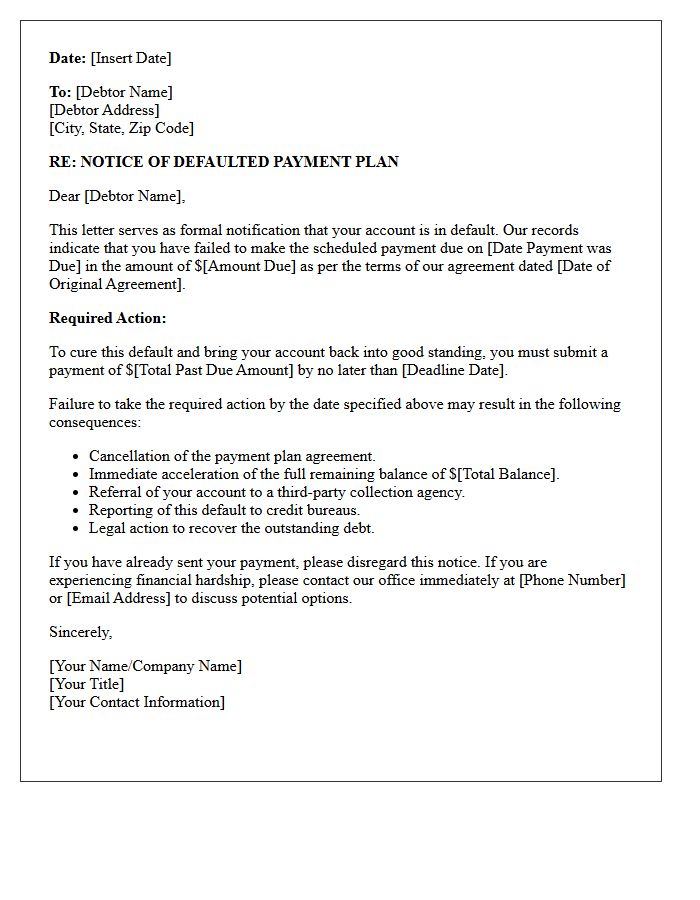
A Defaulted Payment Plan Letter of Required Action is a critical formal notice issued when a borrower fails to meet agreed repayment terms. This document serves as a final warning before the lender initiates aggressive collection efforts or legal proceedings. To prevent acceleration of the debt, recipients must immediately address the specified arrears or provide proof of payment. Promptly contacting the creditor to negotiate a reinstatement or a revised settlement is essential to avoid permanent credit score damage and potential litigation or asset seizure.
Final Demand Letter for Broken Promise to Pay
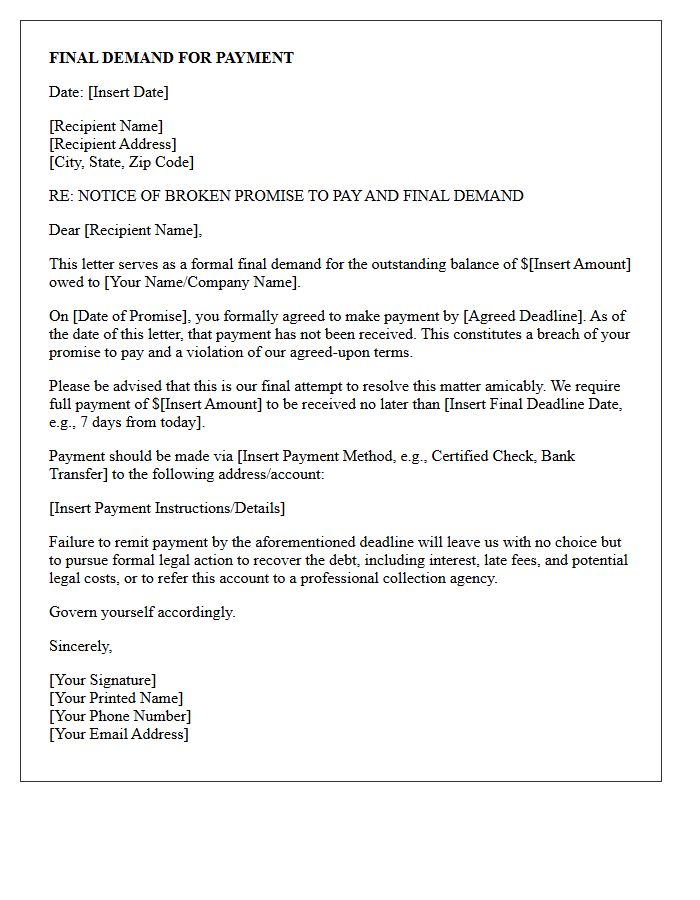
A Final Demand Letter serves as a formal legal notice before initiating litigation or debt collection. It documents a broken promise to pay, establishing a clear timeline and evidence of the debtor's failure to fulfill their commitment. This document must clearly state the outstanding balance, the original agreement terms, and a firm deadline for payment. Including a warning of impending legal action often encourages settlement, as it demonstrates the creditor's intent to enforce their rights through the court system if the debt remains unpaid.
Broken Payment Commitment Letter of Required Action
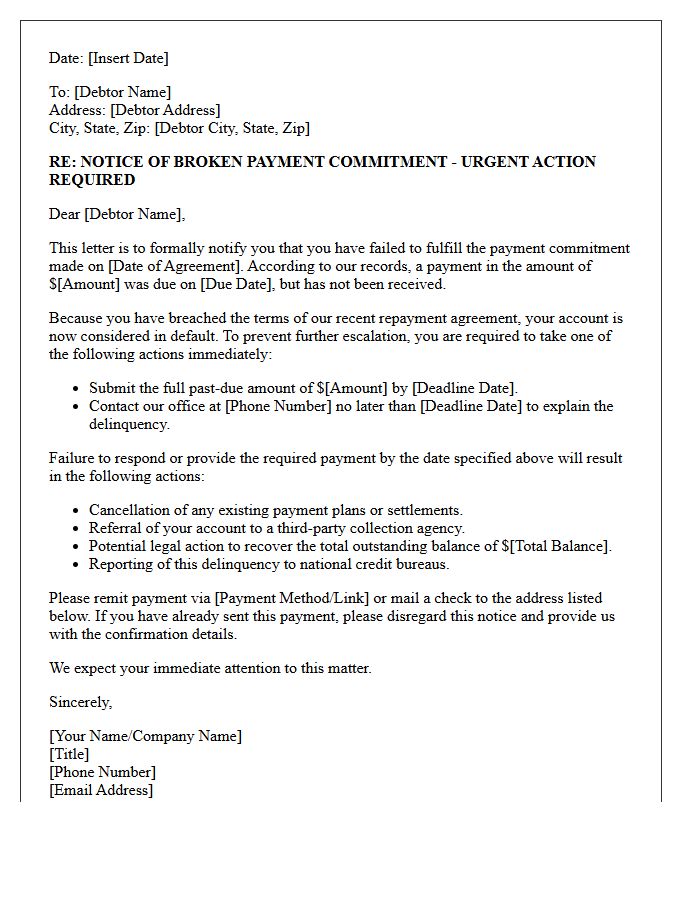
A Broken Payment Commitment Letter is a formal notice issued when a debtor fails to fulfill an agreed-upon repayment plan. The Required Action typically involves immediate payment of the overdue balance or contacting the creditor to renegotiate terms within a strict timeframe. Ignoring this letter can lead to severe consequences, including legal action, account acceleration, or the involvement of third-party collection agencies. To protect your credit standing, you must prioritize immediate communication and provide proof of payment to prevent further escalation or formal default proceedings.
Delinquent Account Letter for Failed Promise to Pay
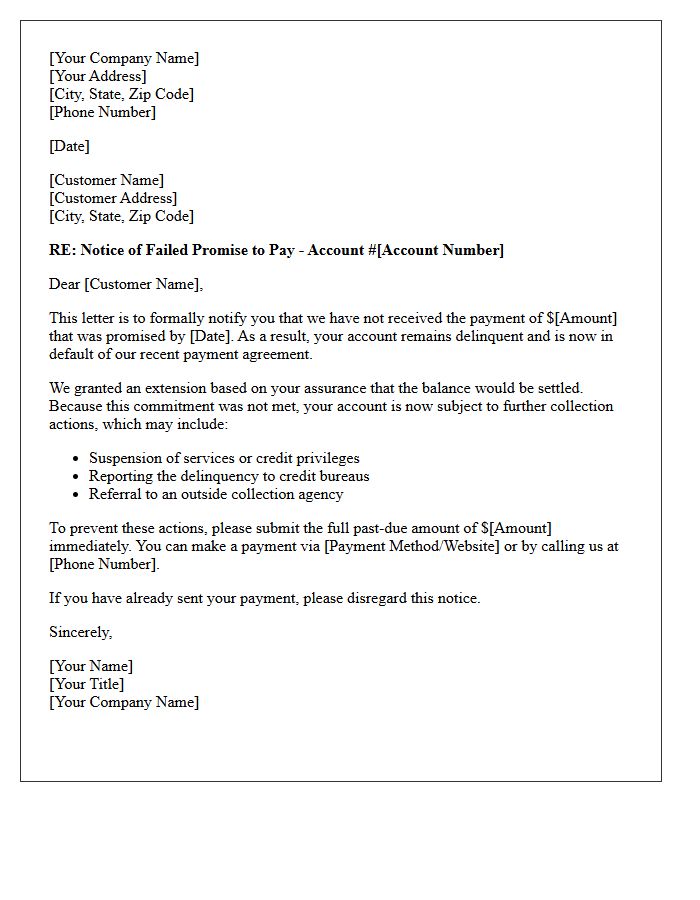
A delinquent account letter serves as a formal notice when a debtor fails to honor a payment agreement. This document highlights the broken promise and demands immediate rectification to avoid further escalation. It acts as essential evidence of collection attempts if legal action or credit reporting becomes necessary. To maintain professional relationships, the letter should clearly state the overdue balance, the original deadline, and a final grace period. Sending this notice promptly is crucial for protecting your accounts receivable and ensuring consistent cash flow for your business operations.
Immediate Action Required Letter for Broken Payment Promise
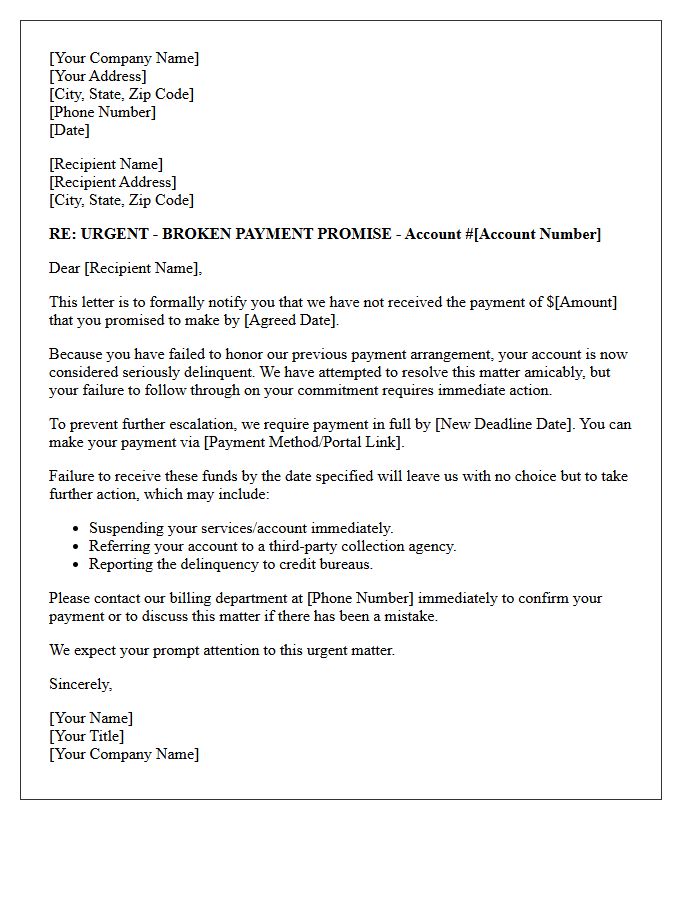
Receiving an Immediate Action Required Letter signifies a critical breach of a formal debt agreement. This notice confirms you failed to honor a broken payment promise, escalating the collection process toward potential litigation or credit damage. To prevent legal action or account termination, you must contact the creditor instantly to settle the arrears or negotiate a new arrangement. Ignoring this final warning typically results in the debt being transferred to a collection agency, making immediate communication the most effective way to protect your financial standing and resolve the delinquency.
Notice of Default Letter for Broken Promise to Pay
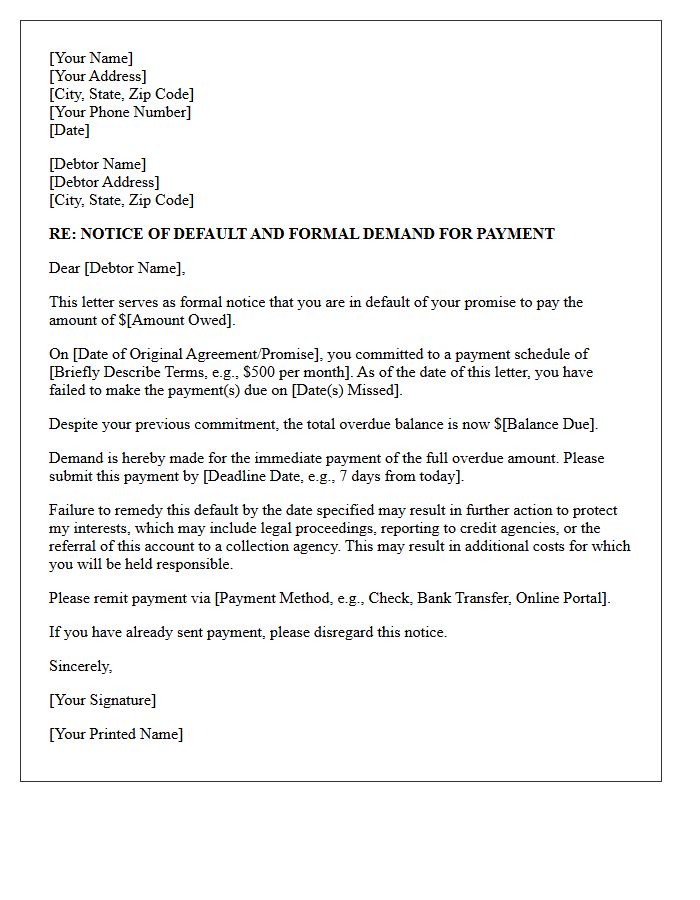
A Notice of Default is a formal legal warning issued when a borrower fails to fulfill a written promise to pay. This document officially records the breach of contract, specifies the total amount overdue, and outlines the necessary remedial actions to avoid further penalties. Receiving this notice is a critical stage before a creditor initiates foreclosure or legal litigation. It serves as a final opportunity for the debtor to cure the delinquency and restore the agreement terms before permanent loss of property or severe credit damage occurs.
Pre-Legal Action Letter for Broken Payment Arrangement
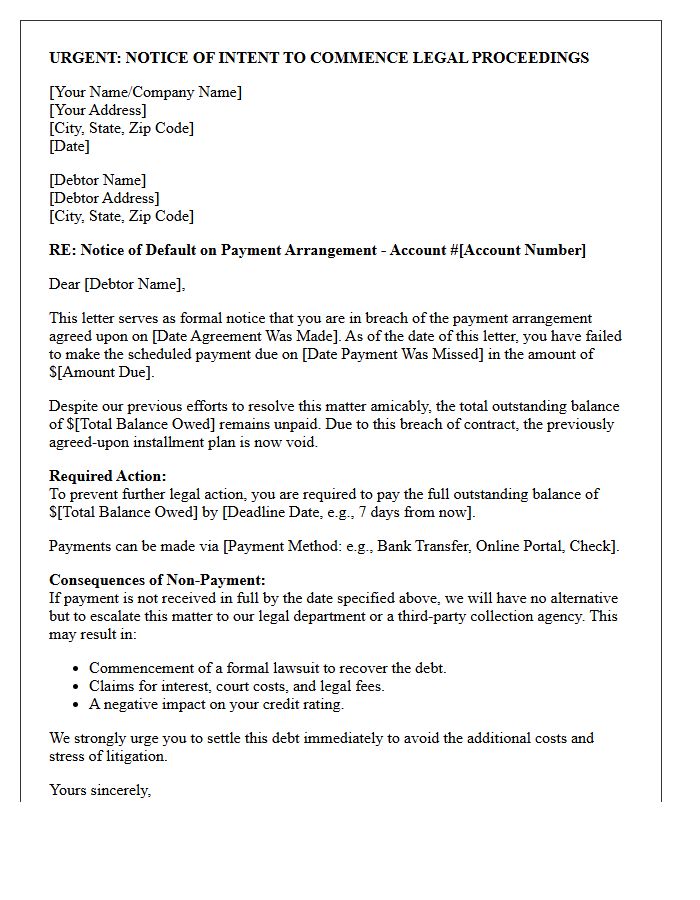
A Pre-Legal Action Letter serves as a formal final notice when a debtor violates a payment arrangement. This essential document outlines the specific breach of contract, calculates the total outstanding balance, and establishes a strict deadline for resolution. It acts as a critical piece of evidence in court, demonstrating that the creditor attempted a good-faith settlement before initiating litigation. Sending this letter is a mandatory procedural step in many jurisdictions, protecting your legal rights while providing the debtor one last opportunity to satisfy the debt and avoid legal proceedings.
Escalation Letter for Ignored Promise to Pay
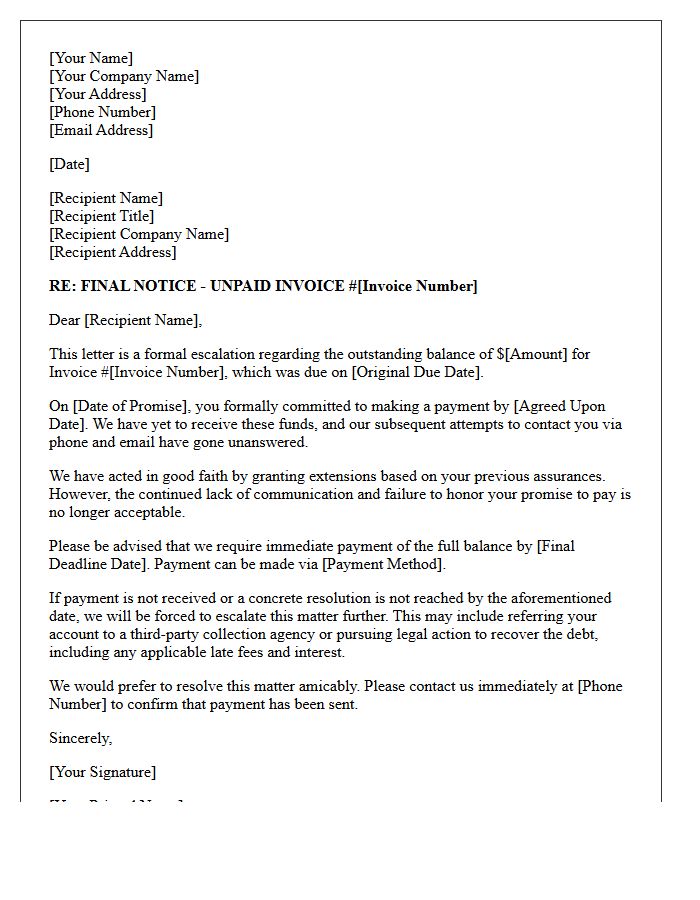
An Escalation Letter is a formal notice sent when a debtor fails to honor a written promise to pay. Its primary purpose is to demand immediate settlement before initiating legal action or involving a collection agency. This document should clearly reference the previous agreement, the missed deadline, and the outstanding balance. By maintaining a professional yet firm tone, you create a legal paper trail that proves your attempt to resolve the debt amicably. Sending this via certified mail ensures the recipient acknowledges their breach of contract and the impending consequences.
Account Suspension Letter for Broken Payment Promise
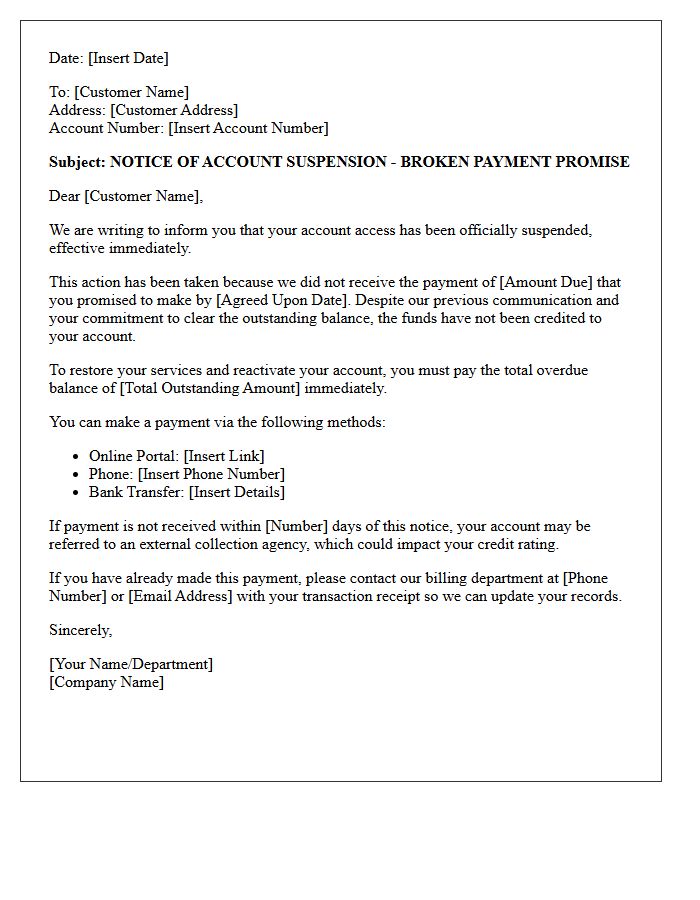
An Account Suspension Letter is a formal notification issued when a client fails to fulfill a broken payment promise. This document serves as a final warning, detailing the specific outstanding balance and the immediate consequences of non-payment. It informs the debtor that their services or credit privileges are now restricted. To resolve the situation, the recipient must provide immediate settlement to prevent permanent closure or legal escalation. Clear communication and swift repayment are essential to restoring account standing and maintaining a positive business relationship after a missed commitment.
Debt Recovery Letter for Violated Promise to Pay
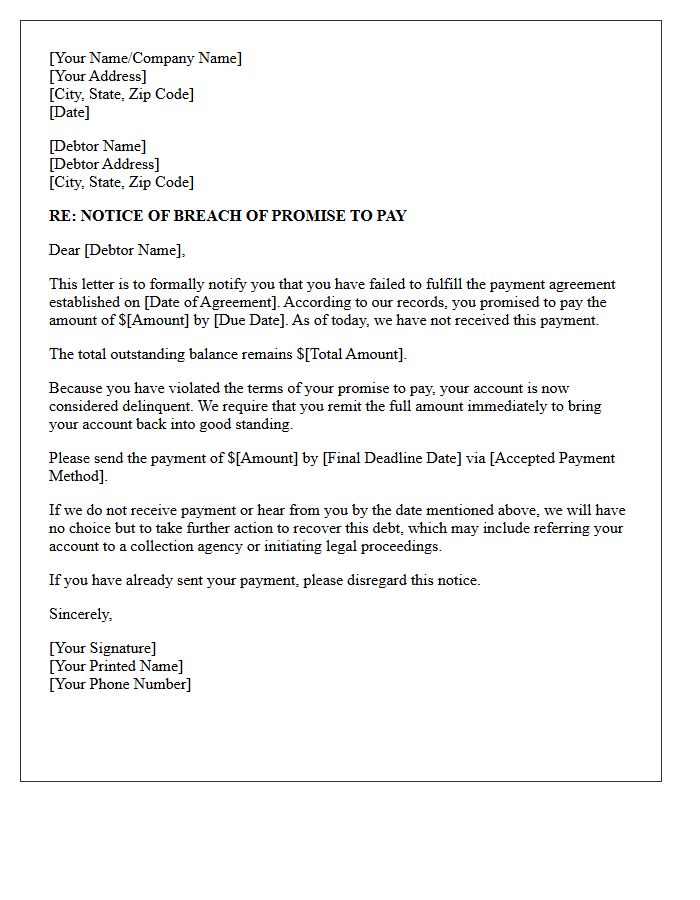
A debt recovery letter serves as a formal notice when a debtor fails to honor a violated promise to pay. This legal document demands immediate settlement of the outstanding balance to avoid further litigation. It should clearly outline the original agreement, the missed deadline, and potential consequences like credit score damage or court action. Sending this letter via certified mail provides essential evidence of your collection efforts. Timely communication is vital to reclaiming lost funds and maintaining professional accountability while protecting your financial rights under relevant debt collection laws.
Final Resolution Letter for Broken Payment Commitment
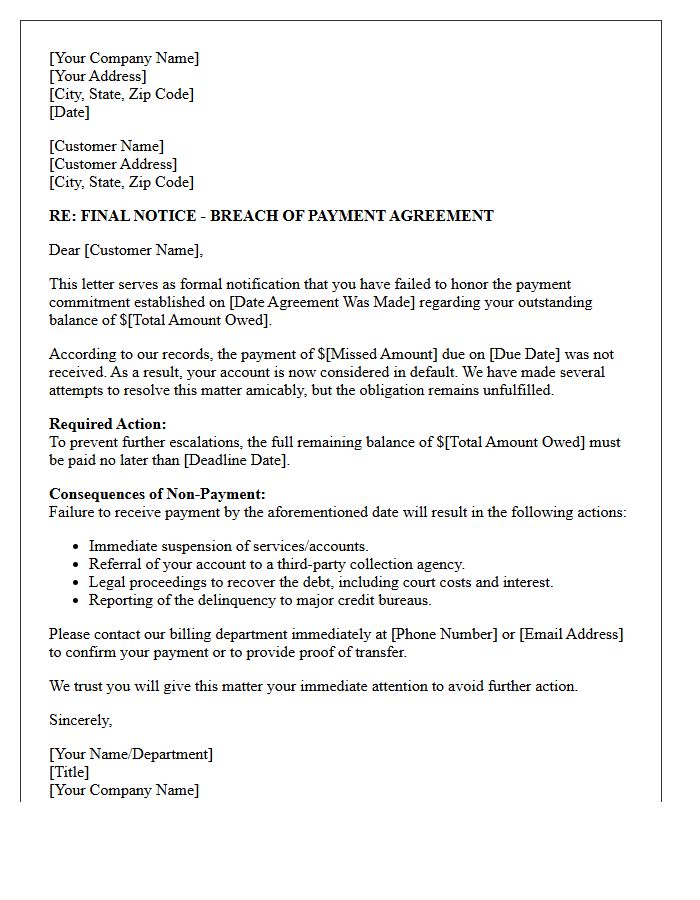
A Final Resolution Letter is a formal notice sent when a debtor fails to honor a broken payment commitment. This critical document serves as the last attempt to settle outstanding debts before escalating to legal action or debt collection agencies. It clearly outlines the total balance due, the history of missed deadlines, and a strict final date for repayment. Providing this written warning is essential for maintaining a legal paper trail, ensuring the creditor has demonstrated a good-faith effort to resolve the financial breach before pursuing litigation or reporting the default.
Breach of Payment Agreement Letter Requiring Action
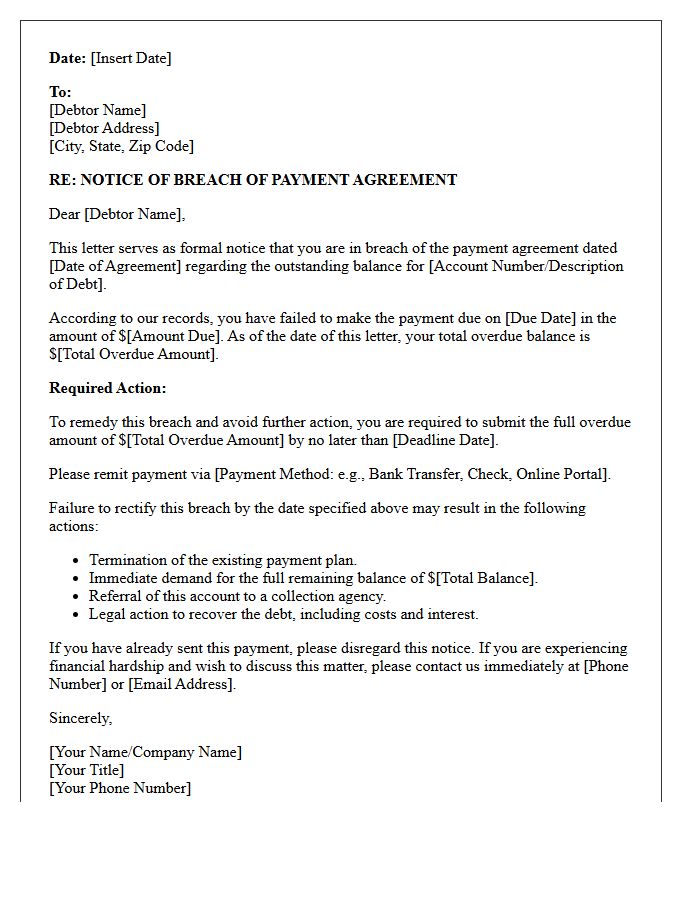
A breach of payment agreement letter is a formal notice sent when a debtor fails to meet contractual financial obligations. This document serves as an official demand for immediate corrective action to resolve the delinquency. It must clearly outline the specific terms violated, the outstanding balance, and a strict deadline for payment. Issuing this letter is a critical step in preserving legal rights and establishing a paper trail before escalating to debt collection or litigation. Professionalism is essential to encourage compliance and settle the defaulted debt efficiently.
What should I do if I cannot honor my promise to pay?
If you realize you cannot make the scheduled payment, contact the billing department immediately to explain your situation. Proactive communication is essential to prevent your account from being marked as a "broken promise," which can trigger automated collection actions or service interruptions.
What are the consequences of a broken promise to pay?
Failure to meet a payment agreement typically results in the immediate cancellation of any temporary extensions, the assessment of late fees, and potential suspension of services. It may also negatively impact your internal credit score with the provider, making you ineligible for future payment arrangements.
How can I rectify a missed payment arrangement?
To rectify a broken promise to pay, you should immediately pay the outstanding balance in full or call the collections department to negotiate a "reinstatement" of the agreement. Note that many creditors require a good-faith partial payment before they will consider a new schedule after a breach of promise.
Will a broken promise to pay affect my credit score?
While a single broken promise to pay is an internal record, it can lead to credit score damage if the account is subsequently charged off or sent to a third-party collection agency. Consistently failing to meet payment deadlines is a primary factor in the "payment history" category of your credit report.
Can I set up a new promise to pay after missing a deadline?
Most organizations allow for a secondary arrangement, but the terms are often stricter, requiring an immediate down payment or a shorter repayment window. You may be required to set up automated payments (AutoPay) to ensure the new commitment is honored without further manual intervention.

Comments