
A Notice of Unfulfilled Good Faith Payment Promise is a formal document issued when a debtor fails to honor a previous agreement to settle an outstanding balance. This notice serves as a final reminder to rectify the breach of trust before further collection actions or legal proceedings commence. To help you draft a professional notification, below are some ready to use templates.
Image cover: Notice of Missed Payment Commitment: Templates and Professional Samples
Letter Samples List
- First Notice Of Unfulfilled Good Faith Payment Promise Letter
- Friendly Reminder Letter For Unfulfilled Good Faith Payment Promise
- Follow-Up Letter On Unfulfilled Good Faith Payment Promise
- Urgent Letter Regarding Unfulfilled Good Faith Payment Promise
- Past Due Good Faith Payment Promise Inquiry Letter
- Broken Good Faith Payment Promise Warning Letter
- Breach Of Good Faith Payment Promise Notification Letter
- Escalation Letter For Unfulfilled Good Faith Payment Promise
- Default Letter On Good Faith Payment Promise Agreement
- Settlement Cancellation Letter Due To Unfulfilled Good Faith Payment Promise
- Pre-Legal Action Letter For Unfulfilled Good Faith Payment Promise
- Final Notice Letter For Unfulfilled Good Faith Payment Promise
First Notice Of Unfulfilled Good Faith Payment Promise Letter
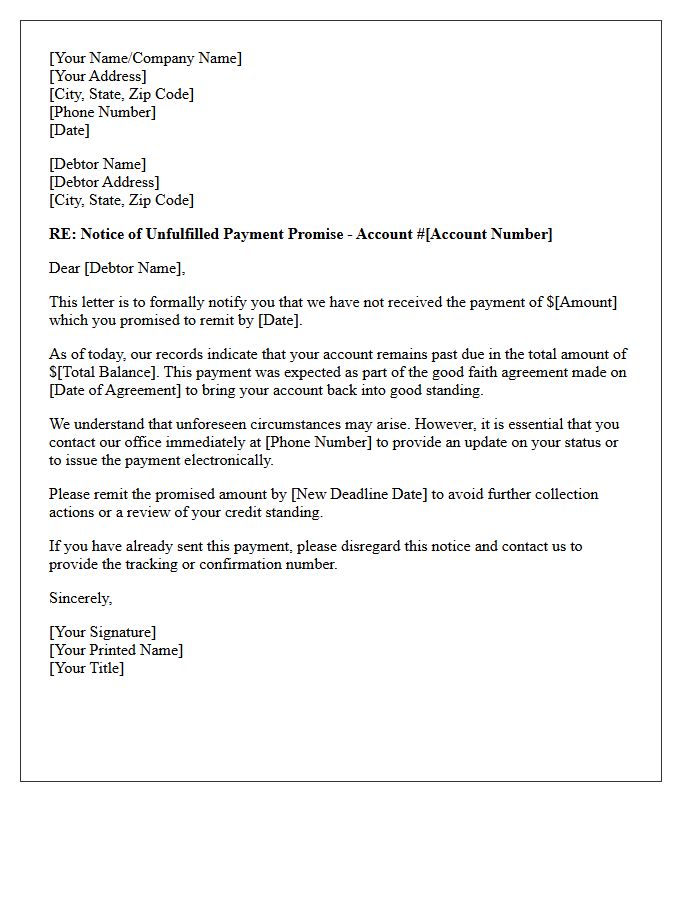
A First Notice of Unfulfilled Good Faith Payment Promise is a formal communication sent when a debtor fails to meet a previously agreed-upon payment schedule. This document serves as a critical legal record, documenting the breach of an informal or formal settlement. It typically outlines the outstanding balance, the missed deadline, and the consequences of continued non-compliance, such as credit reporting or legal action. Receiving this notice is a final opportunity to rectify the default before the creditor initiates aggressive collection efforts or terminates the repayment agreement entirely.
Friendly Reminder Letter For Unfulfilled Good Faith Payment Promise
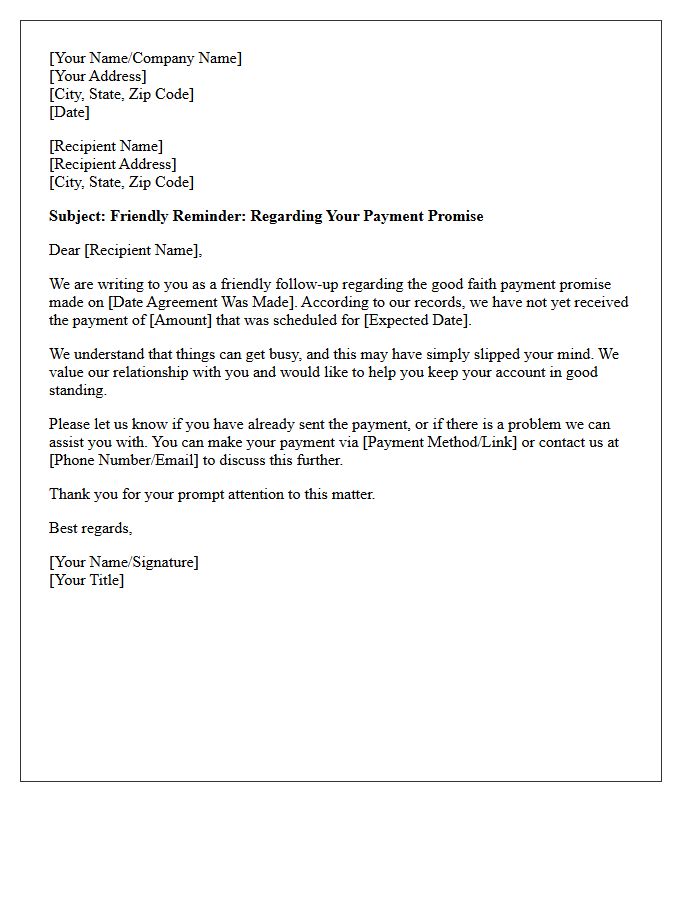
A friendly reminder letter serves as a professional nudge regarding an unfulfilled good faith payment promise. It is essential to maintain a supportive tone while clearly referencing the previously agreed-upon commitment. State the outstanding balance, the original due date, and provide immediate steps for resolution. Reaffirming your willingness to discuss alternative payment arrangements can preserve the customer relationship while encouraging prompt action. Use this communication to address potential oversights before escalating to formal collection procedures, ensuring both clarity and mutual respect in the recovery process.
Follow-Up Letter On Unfulfilled Good Faith Payment Promise
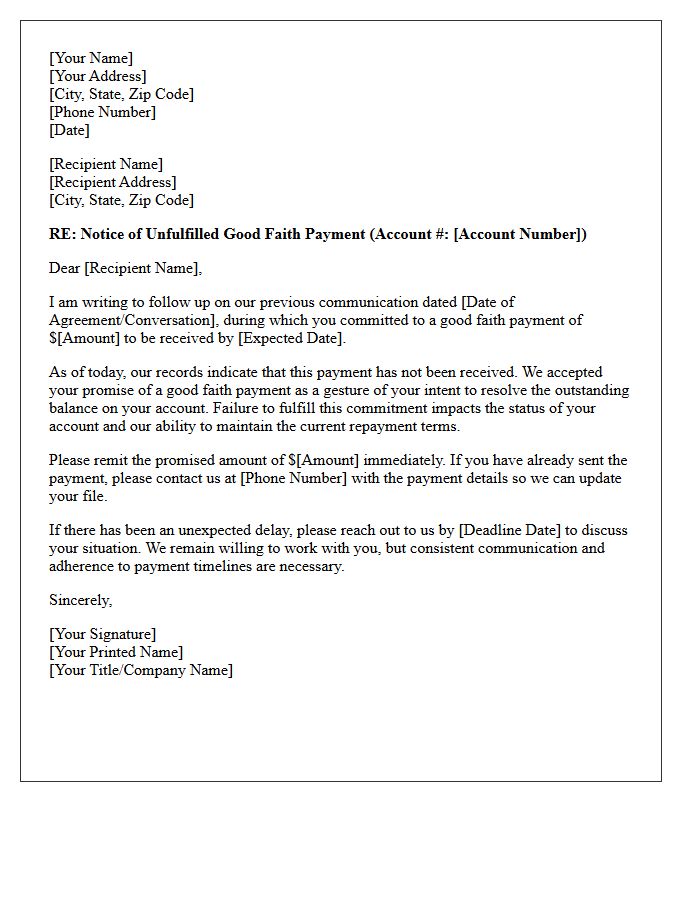
A follow-up letter regarding an unfulfilled good faith payment promise is a formal notice used to address missed financial commitments. This document serves as written evidence of the broken agreement, clearly restating the original terms and the outstanding balance. It is essential to maintain a professional tone while setting a firm new deadline for the repayment to avoid legal escalation. Including specific dates and payment methods ensures clarity, protecting your rights while offering the debtor a final opportunity to rectify their delinquent status before further collection actions are initiated.
Urgent Letter Regarding Unfulfilled Good Faith Payment Promise
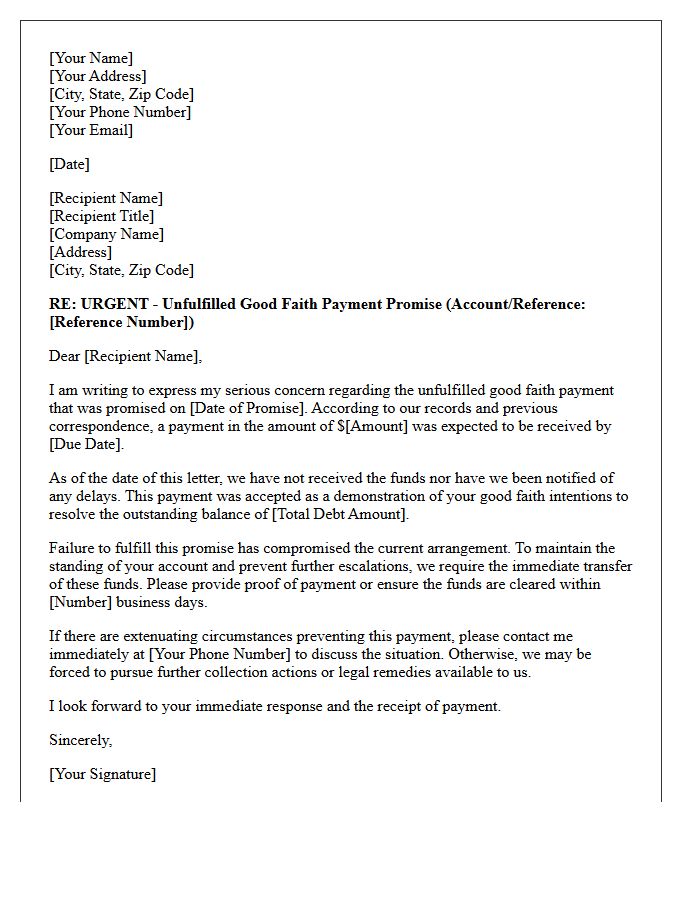
An urgent letter regarding an unfulfilled good faith payment serves as a formal notice to resolve outstanding debts before legal escalation. This document highlights a breach of promise, demanding immediate financial settlement as previously agreed. It is a critical step in debt recovery, signaling that the creditor is prepared to pursue litigation or credit reporting if the obligation remains ignored. To protect your interests, ensure the letter includes clear deadlines, original payment terms, and a final warning to prevent further account delinquency or costly court proceedings.
Past Due Good Faith Payment Promise Inquiry Letter
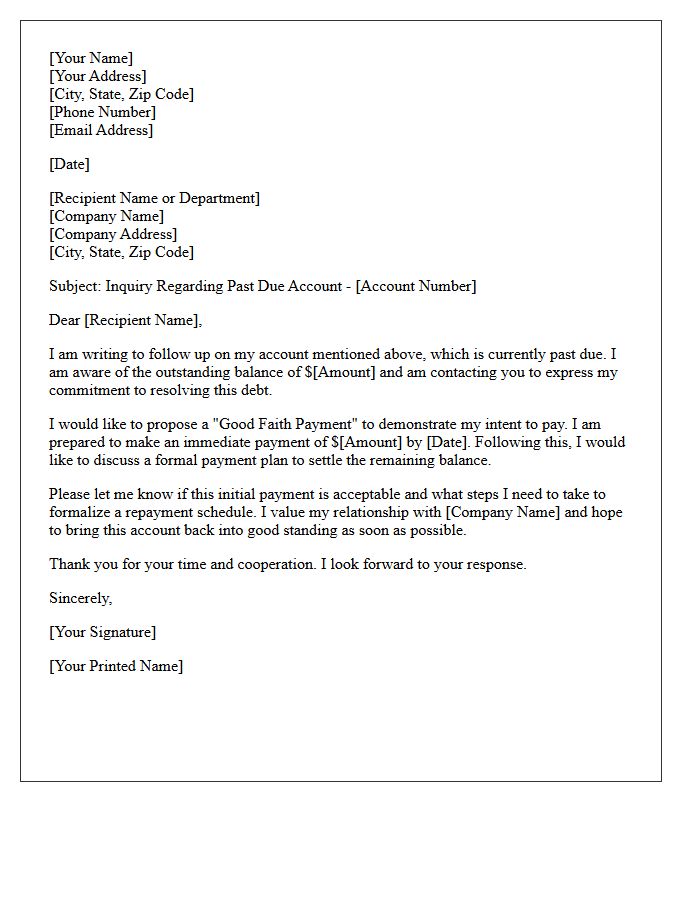
A Past Due Good Faith Payment Promise Inquiry Letter is a formal document sent by creditors to verify a debtor's intent to clear outstanding balances. It confirms the terms of a voluntary repayment agreement, establishing clear expectations for future installments. This letter serves as critical evidence of a consumer's commitment to resolve debt without legal escalation. For debtors, responding accurately is vital to protect credit ratings and demonstrate financial responsibility. Understanding these terms ensures both parties maintain transparency while working toward a full settlement of the overdue account.
Broken Good Faith Payment Promise Warning Letter
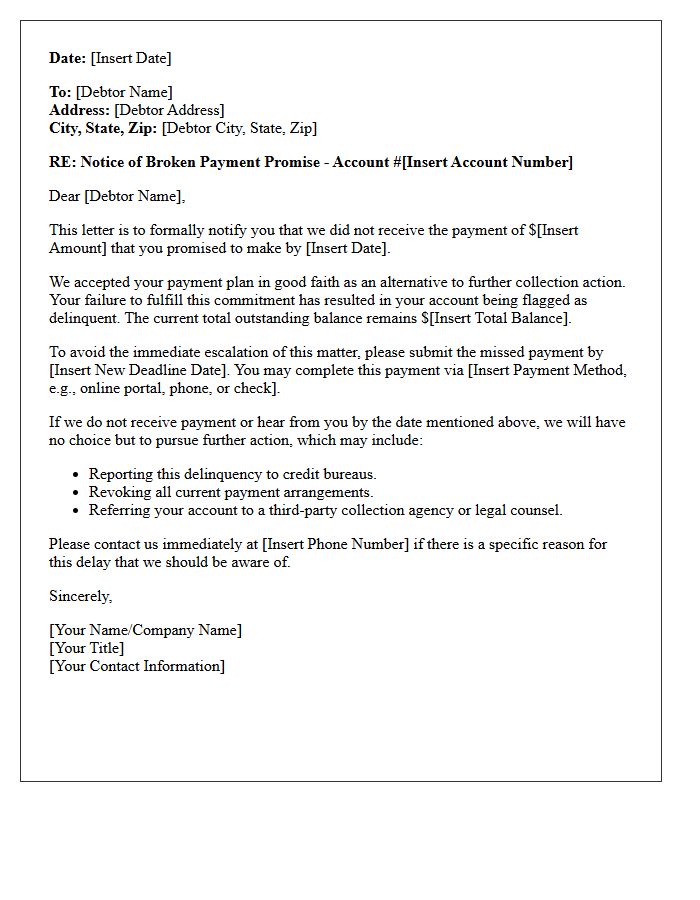
A Broken Good Faith Payment Promise Warning Letter serves as a formal notification that a debtor has failed to honor a previous repayment agreement. This document is a critical step in debt collection, signaling that legal action or account escalation may follow if the default is not rectified immediately. It documents the breach of trust and provides a final opportunity to settle the balance. Receiving this letter indicates that the creditor's patience has expired, making it essential to prioritize communication to avoid further financial penalties or damage to credit scores.
Breach Of Good Faith Payment Promise Notification Letter
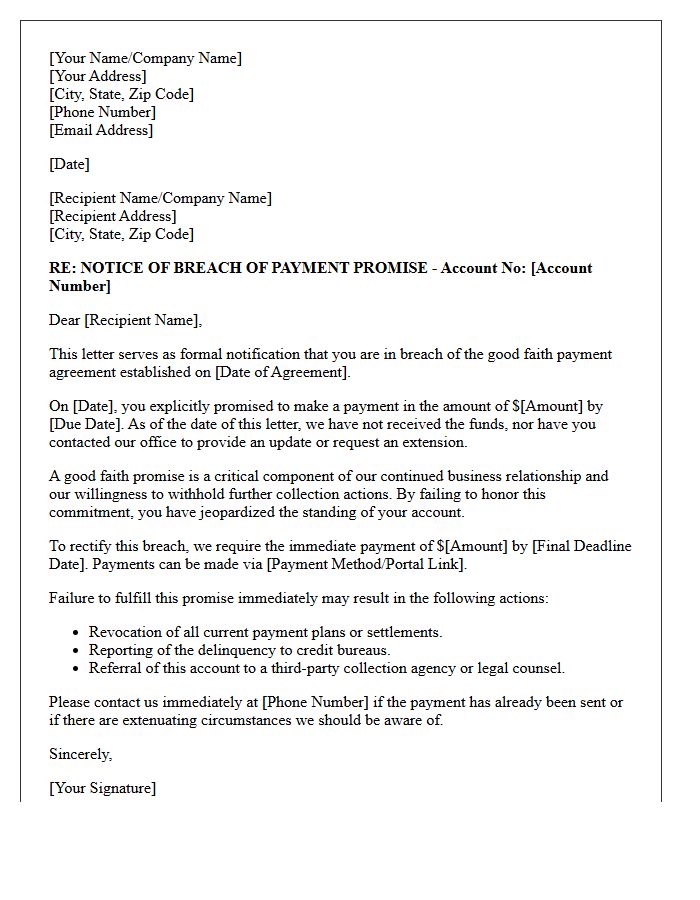
A Breach of Good Faith Payment Promise Notification Letter serves as a formal warning when a debtor fails to honor a negotiated repayment agreement. This legal document identifies the specific missed installment and the original terms violated. It acts as essential evidence of your attempt to resolve the debt amicably before escalating to litigation or professional collection agencies. Sending this notice protects your rights and provides the defaulting party a final opportunity to rectify the non-payment, potentially avoiding costly court proceedings and further damaging their credit profile.
Escalation Letter For Unfulfilled Good Faith Payment Promise
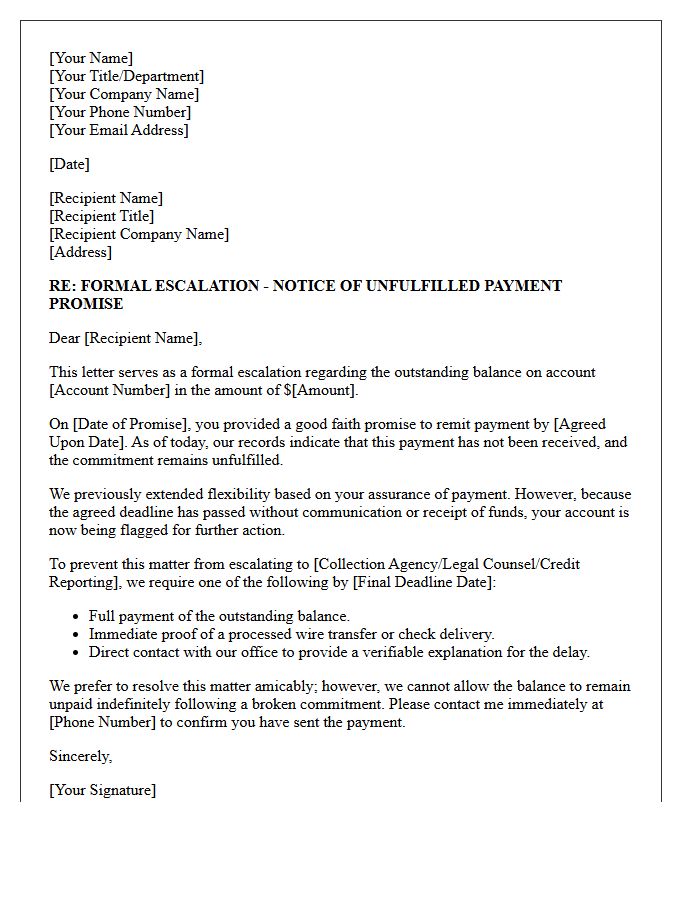
An escalation letter is a formal notice sent when a debtor fails to honor a good faith payment agreement. Its purpose is to document the breach of promise and notify the recipient of impending legal action or credit reporting. This document should clearly state the original commitment, the specific amount overdue, and a final deadline for resolution. By formalizing the grievance, you create a paper trail that demonstrates your attempt to resolve the matter amicably before pursuing stricter enforcement measures or third-party collection services.
Default Letter On Good Faith Payment Promise Agreement
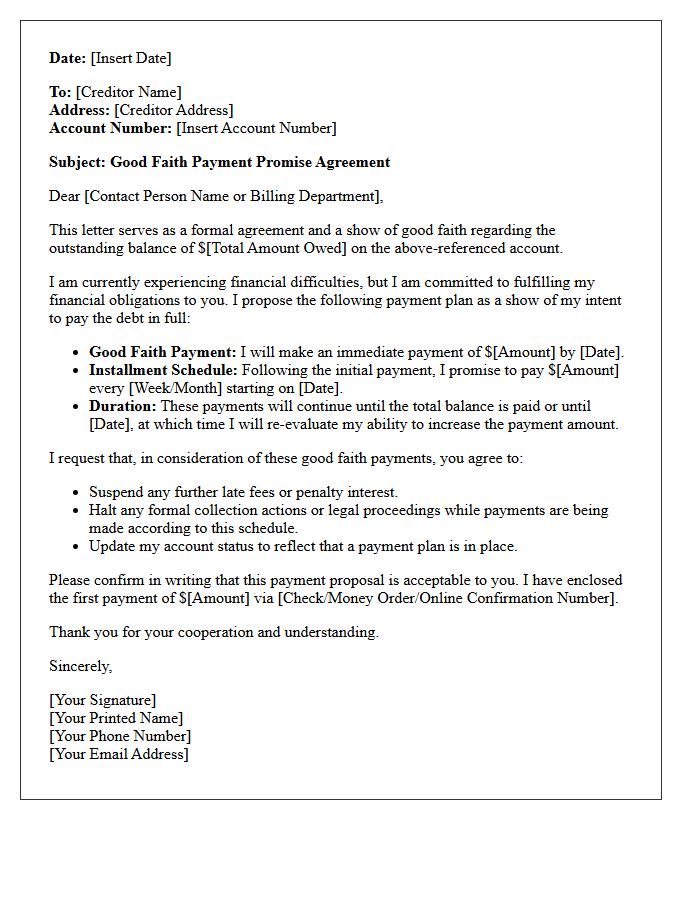
A Letter of Good Faith Payment Promise Agreement serves as a formal commitment to resolve outstanding debts. This document outlines a repayment schedule, demonstrating the debtor's sincere intention to fulfill financial obligations despite current hardships. By providing a clear payment plan, you can often prevent aggressive debt collection actions and avoid legal escalation. It is crucial to specify exact amounts, dates, and terms to ensure mutual understanding. Using this professional communication helps maintain credibility with creditors while working towards total debt settlement and protecting your overall financial reputation.
Settlement Cancellation Letter Due To Unfulfilled Good Faith Payment Promise
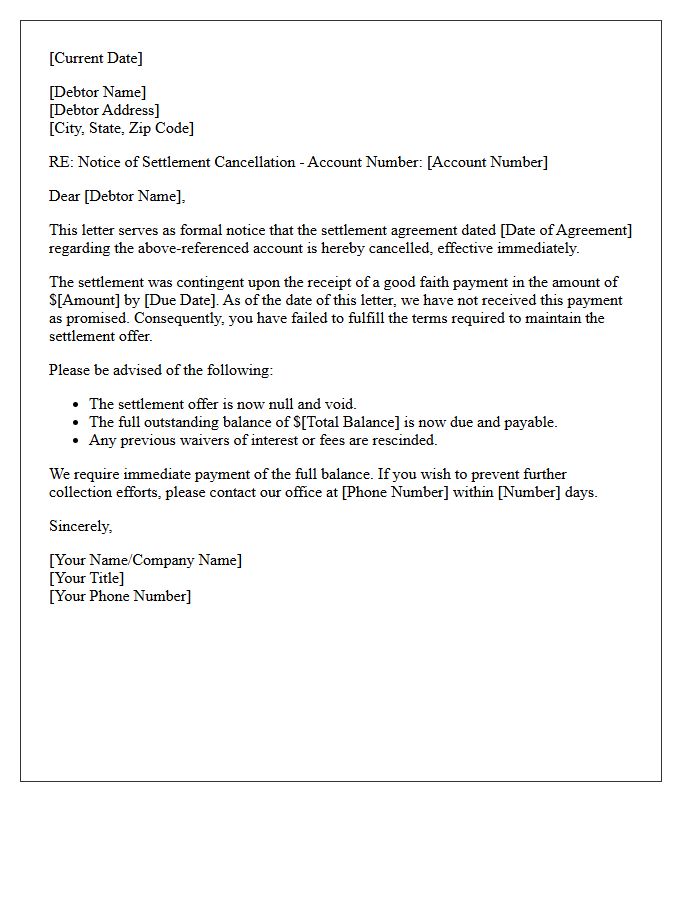
A Settlement Cancellation Letter is a formal notice issued when a debtor fails to deliver a Good Faith Payment as previously agreed. This document legally voids the prior compromise, effectively reinstating the full original debt amount. It serves as crucial evidence that the creditor attempted a resolution before pursuing further legal action or collection efforts. To ensure validity, the letter must clearly reference the breached agreement date and the specific payment deadline that was missed, protecting the creditor's right to seek full restitution due to the broken promise.
Pre-Legal Action Letter For Unfulfilled Good Faith Payment Promise
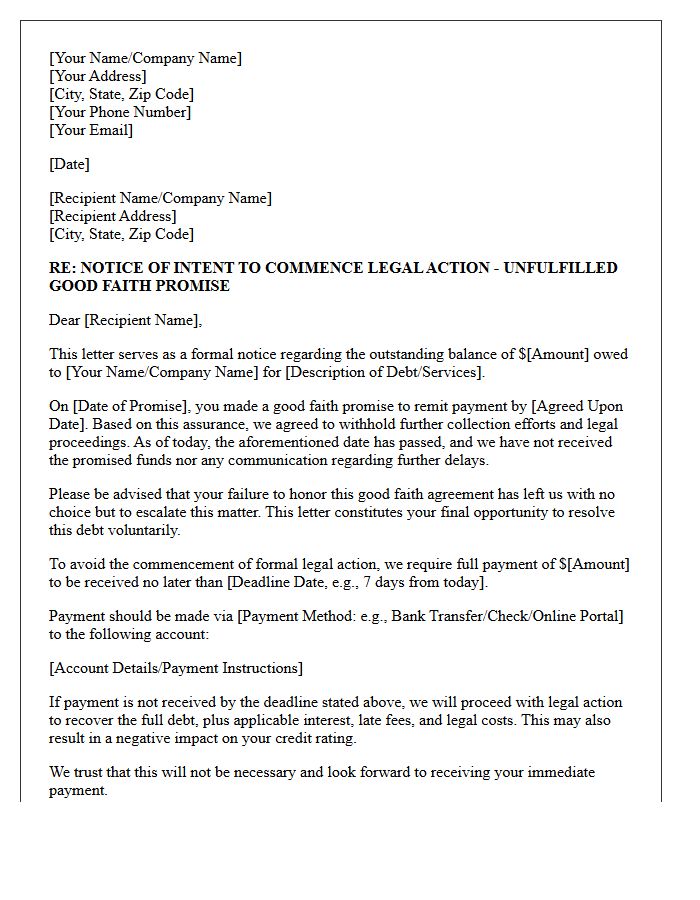
A Pre-Legal Action Letter serves as a formal notice before initiating litigation regarding an unfulfilled good faith payment promise. This document clearly outlines the breach of agreement, specifying the exact amount owed and the original deadline. It functions as a final opportunity for the debtor to settle the debt voluntarily to avoid legal proceedings. By documenting the history of broken commitments, the letter establishes a written evidence trail essential for court. This professional warning often incentivizes immediate payment while demonstrating the creditor's intent to enforce their legal rights strictly.
Final Notice Letter For Unfulfilled Good Faith Payment Promise
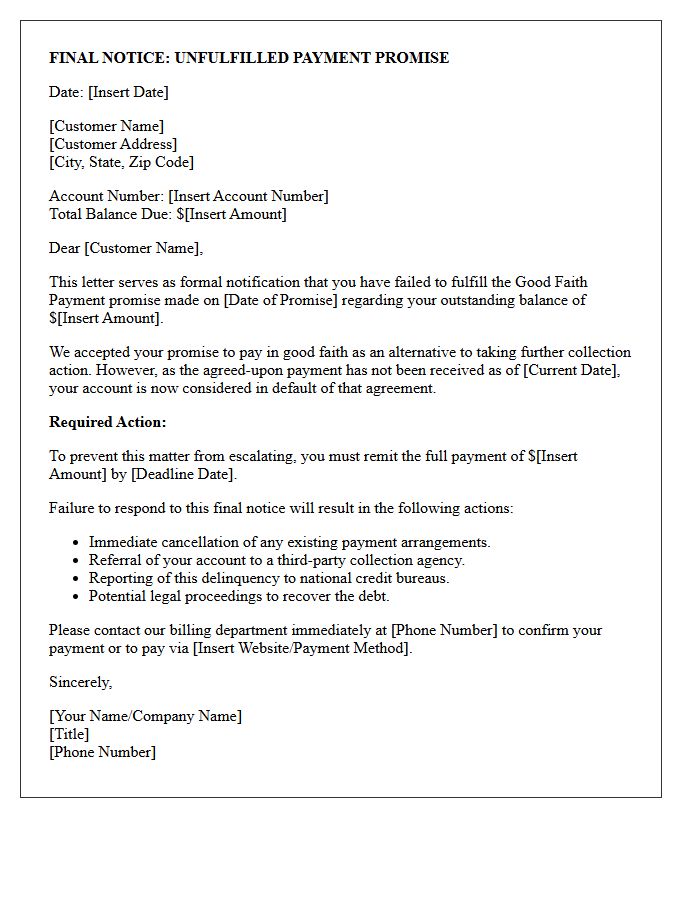
A Final Notice Letter serves as the ultimate demand for an outstanding balance after a Good Faith Payment Promise was breached. This formal notification warns the debtor that immediate action is required to avoid legal escalation or credit reporting. It highlights the failure to uphold prior verbal or written commitments, effectively terminating any grace period. To resolve the delinquency, the recipient must provide the total amount due instantly. Ignoring this document typically results in the debt being transferred to a collection agency or a formal lawsuit to recover the funds.
What is a Notice of Unfulfilled Good Faith Payment Promise?
A Notice of Unfulfilled Good Faith Payment Promise is a formal communication sent to a debtor when they fail to honor a previously agreed-upon payment arrangement or settlement plan intended to resolve an outstanding debt.
What are the consequences of ignoring a Notice of Unfulfilled Good Faith Payment Promise?
Ignoring this notice typically results in the revocation of any special payment terms, the immediate acceleration of the full balance due, and the potential escalation of the account to a third-party collection agency or legal counsel for litigation.
Can a payment plan be reinstated after receiving an unfulfilled promise notice?
Reinstatement depends on the creditor's policies; however, most creditors require the immediate payment of the missed installment plus a "good faith" deposit to demonstrate renewed commitment before they will stop further collection actions.
How does an unfulfilled payment promise affect my credit score?
Failing to fulfill a payment promise can negatively impact your credit score if the delinquency is reported to credit bureaus, as it signals a breach of contract and an inability to manage debt obligations effectively.
What should I do if I receive a Notice of Unfulfilled Good Faith Payment Promise?
You should immediately contact the creditor to explain the reason for the missed payment, provide documentation of financial hardship if applicable, and attempt to negotiate a revised payment schedule to avoid legal action or account default.

Comments