
Confirming receipt of a Third-Party Communication Cease and Desist notice is a critical step in legal compliance and debt resolution. This acknowledgment ensures that unauthorized contact with outside parties stops immediately, protecting consumer privacy rights under fair practice regulations. Properly documenting this response helps mitigate further disputes and clarifies future contact boundaries. Below are some ready to use templates.
Image cover: Professional Responses to Third-Party Communication Cease and Desist Notices
Letter Samples List
- Acknowledgment Letter for Third-Party Communication Cease and Desist
- Debt Collection Third-Party Cease and Desist Acknowledgment Letter
- Letter of Acknowledgment for Third-Party Communication Restrictions
- Third-Party Contact Cease and Desist Confirmation Letter
- Consumer Cease and Desist Third-Party Communication Acknowledgment Letter
- Letter Confirming Cessation of Third-Party Debt Collection Communications
- Fair Debt Collection Third-Party Cease and Desist Acknowledgment Letter
- Acknowledgment Letter Regarding Unauthorized Third-Party Contact Cessation
- Debt Collector Acknowledgment Letter for Third-Party Communication Prohibition
- Letter of Compliance for Third-Party Communication Cease and Desist
- Third-Party Outreach Cease and Desist Acknowledgment Letter
- Official Acknowledgment Letter for Third-Party Contact Termination
Acknowledgment Letter for Third-Party Communication Cease and Desist
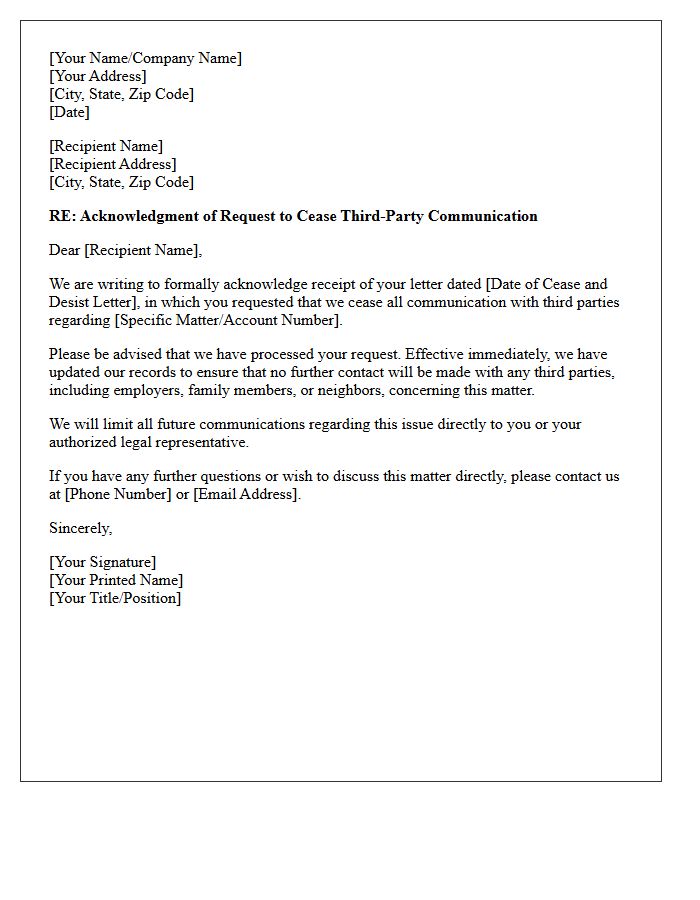
An Acknowledgment Letter for Third-Party Communication Cease and Desist confirms that a debt collector has received your formal request to stop contacting you via outside parties. Under the Fair Debt Collection Practices Act (FDCPA), this document serves as legal proof that the agency must terminate discussions regarding your debt with employers, neighbors, or family members. Retaining this written confirmation is vital for your records, as any further unauthorized outreach constitutes a regulatory violation, providing you with essential legal protection against invasive collection tactics and harassment.
Debt Collection Third-Party Cease and Desist Acknowledgment Letter
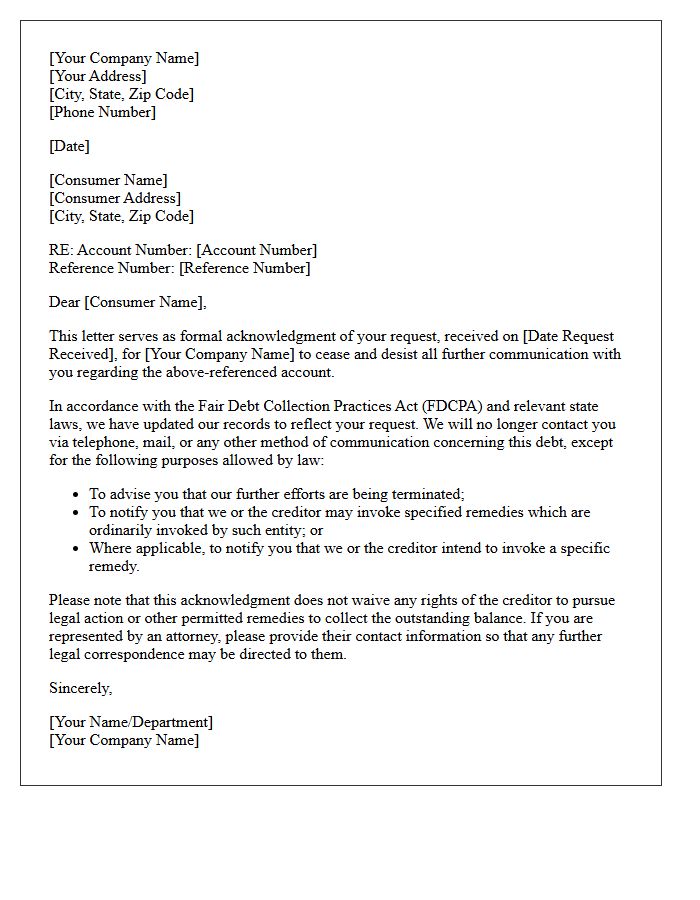
A Debt Collection Third-Party Cease and Desist Acknowledgment Letter serves as formal verification that a collection agency has received your request to stop communication. Legally mandated under the Fair Debt Collection Practices Act (FDCPA), this document confirms the agency will no longer contact you directly, except to confirm the cease and desist order or notify you of specific legal actions. Receiving this acknowledgment is a critical step in consumer protection, ensuring your privacy is respected and providing a paper trail should the collector violate federal laws by continuing unauthorized contact.
Letter of Acknowledgment for Third-Party Communication Restrictions
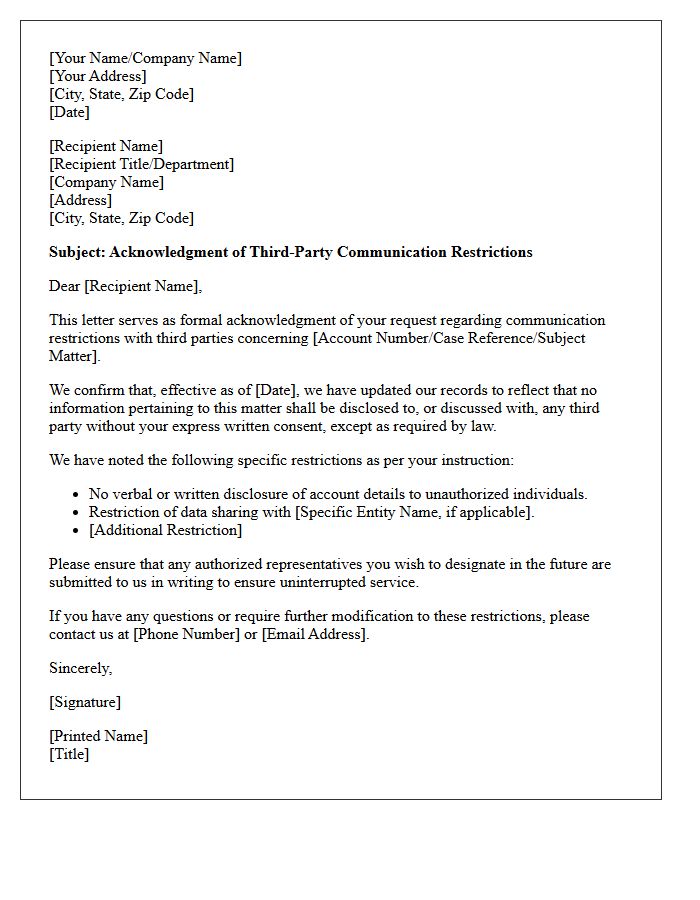
A Letter of Acknowledgment for Third-Party Communication Restrictions is a formal document used to enforce privacy rights. It legally notifies creditors or agencies to stop contacting unauthorized individuals regarding your personal affairs. By signing this, the recipient confirms they will restrict disclosures to third parties, ensuring your sensitive information remains confidential. This protection is vital under consumer rights laws to prevent harassment and maintain data security. Always keep a copy for your records to prove that a formal request for communication boundaries was established and accepted.
Third-Party Contact Cease and Desist Confirmation Letter
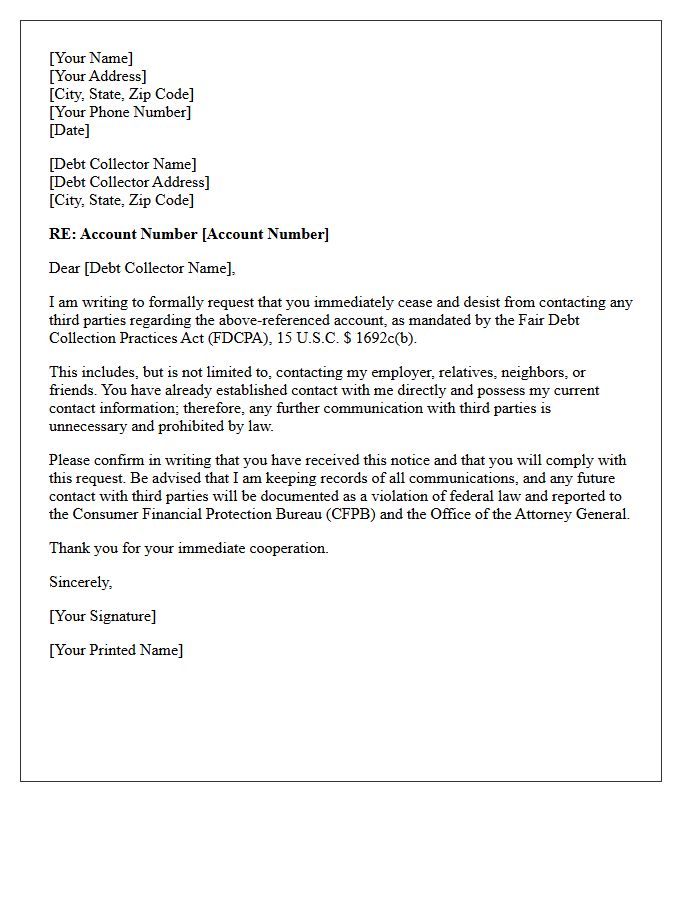
A Third-Party Contact Cease and Desist Confirmation Letter is a formal document sent to a debt collector to stop them from contacting individuals other than the debtor. Under federal law, creditors must respect your privacy and cease reaching out to employers, family, or friends once notified. This letter serves as legal proof of your request, ensuring your consumer rights are protected. Sending this via certified mail creates a paper trail, which is essential if you need to report harassment or pursue legal action for communication violations.
Consumer Cease and Desist Third-Party Communication Acknowledgment Letter
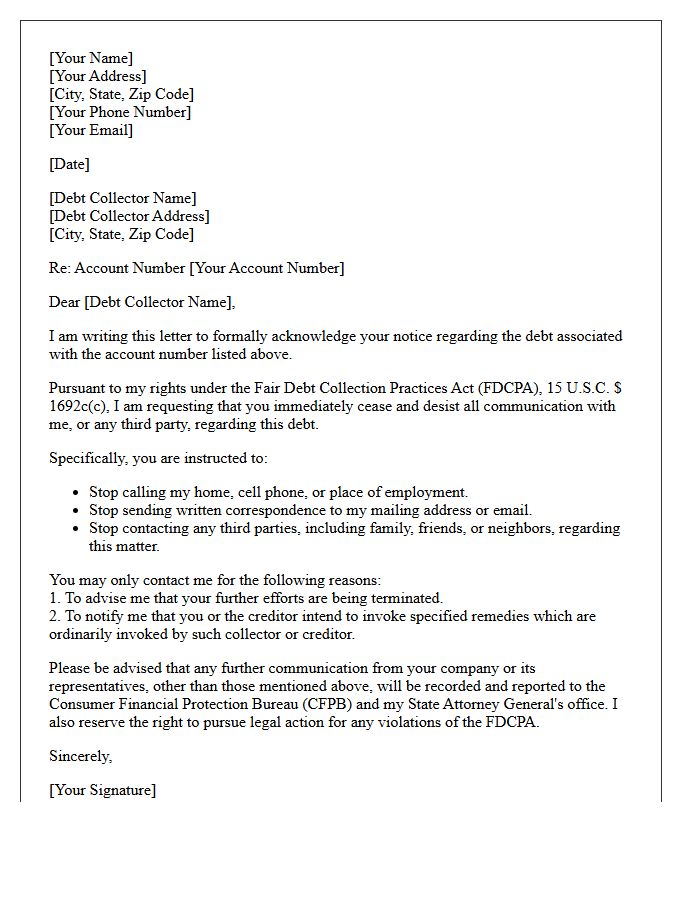
A Consumer Cease and Desist Third-Party Communication Acknowledgment Letter is a formal document sent by a debt collector to confirm they have received your request to stop contact. Under the Fair Debt Collection Practices Act (FDCPA), this letter serves as written verification that the agency will no longer contact you regarding the debt, except to advise on specific legal actions. Receiving this acknowledgment is crucial because it creates a legal paper trail, ensuring your privacy is protected and providing evidence if the collector continues to engage in prohibited or harassing communication.
Letter Confirming Cessation of Third-Party Debt Collection Communications
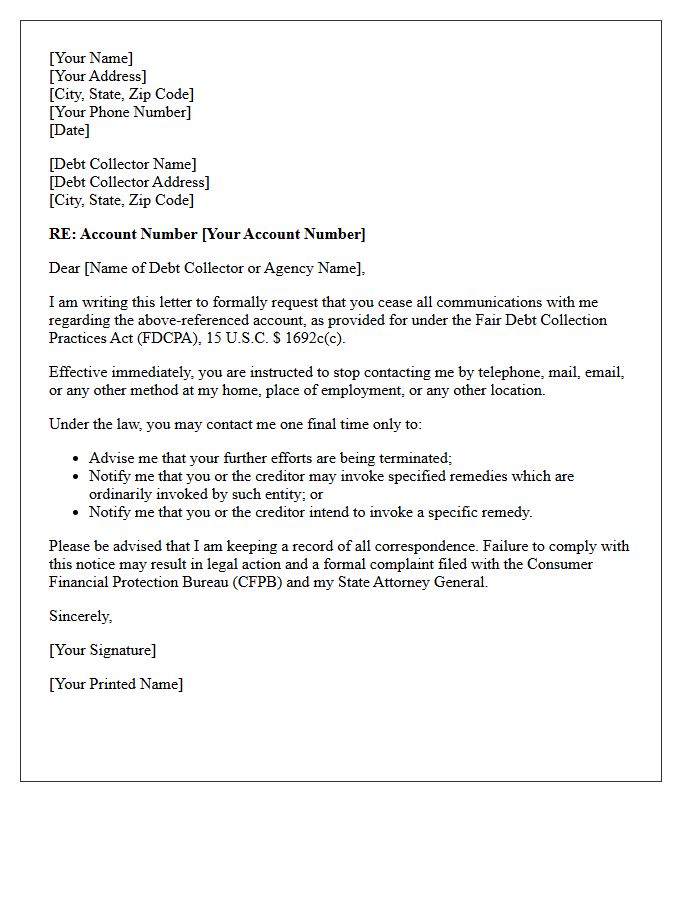
A Cease and Desist letter is a legal tool used to stop third-party agencies from contacting you about a debt. Under the Fair Debt Collection Practices Act (FDCPA), once a collector receives this written notice, they must stop all communication, except to confirm receipt or notify you of specific legal actions. Sending this letter via certified mail ensures proof of delivery. While it halts harassment, it does not erase the underlying debt, meaning creditors can still pursue litigation or credit reporting to recover the balance owed.
Fair Debt Collection Third-Party Cease and Desist Acknowledgment Letter
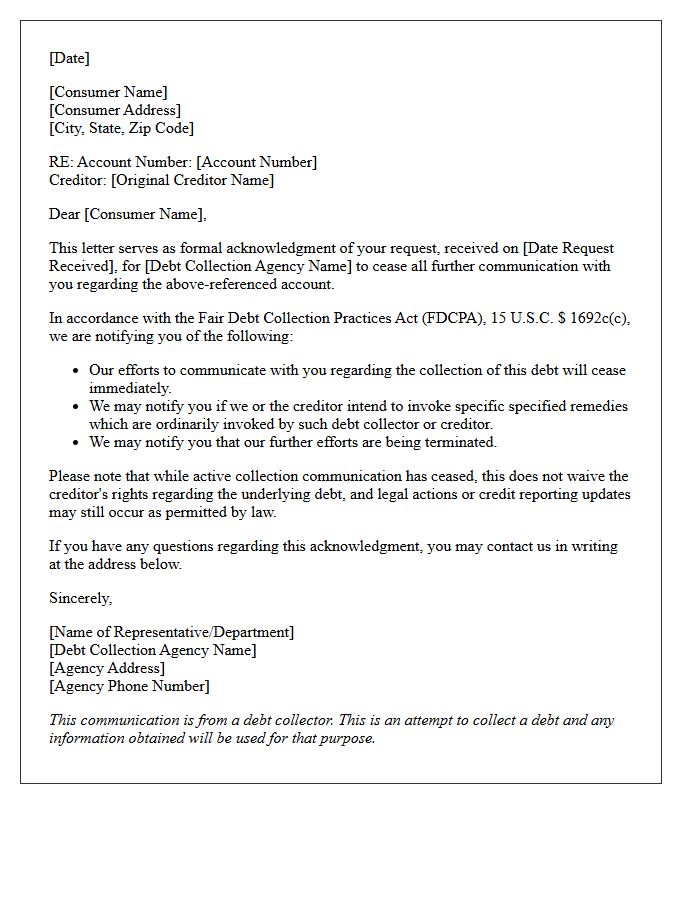
A Third-Party Cease and Desist Acknowledgment Letter is a formal document sent by a debt collector to confirm they will stop communicating with a debtor through third parties. Under the Fair Debt Collection Practices Act (FDCPA), once you formally request a cessation of contact, collectors must provide this written verification of compliance. This letter is crucial because it creates a legal paper trail, ensuring that collectors no longer contact your employer, friends, or family regarding your debt, thereby protecting your privacy rights and preventing further harassment or illegal disclosure of financial information.
Acknowledgment Letter Regarding Unauthorized Third-Party Contact Cessation
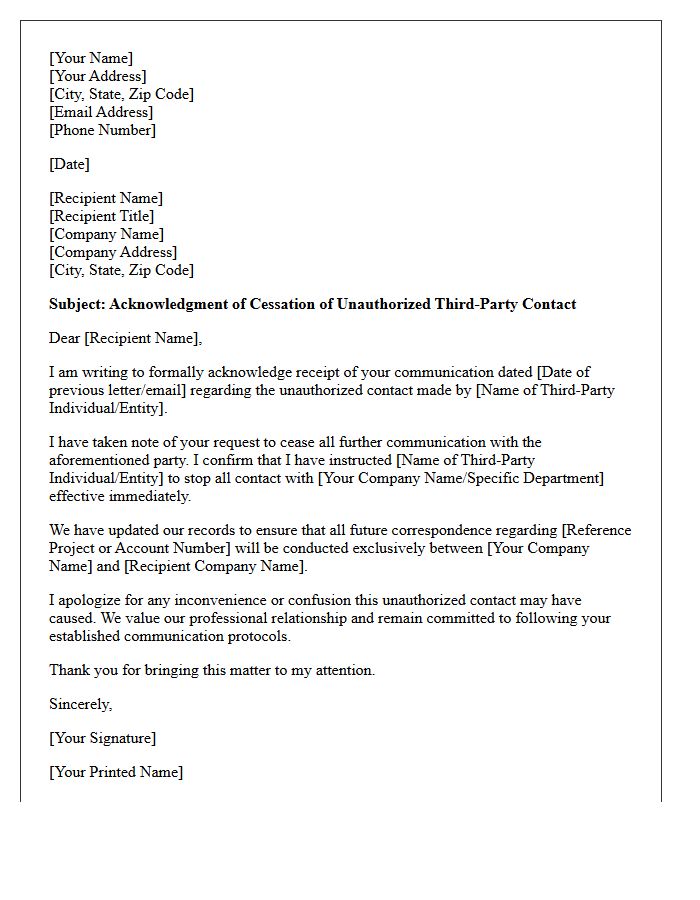
An Acknowledgment Letter Regarding Unauthorized Third-Party Contact Cessation is a formal document used to confirm that a business or agency will stop communicating with unauthorized individuals. This letter ensures data privacy and legal compliance by verifying that sensitive account information remains strictly between the entity and the verified owner. It serves as a written guarantee that all future interactions will bypass third parties, protecting confidentiality and preventing potential identity theft or misinformation. Receiving this confirmation provides peace of mind that your personal security protocols are being strictly enforced.
Debt Collector Acknowledgment Letter for Third-Party Communication Prohibition
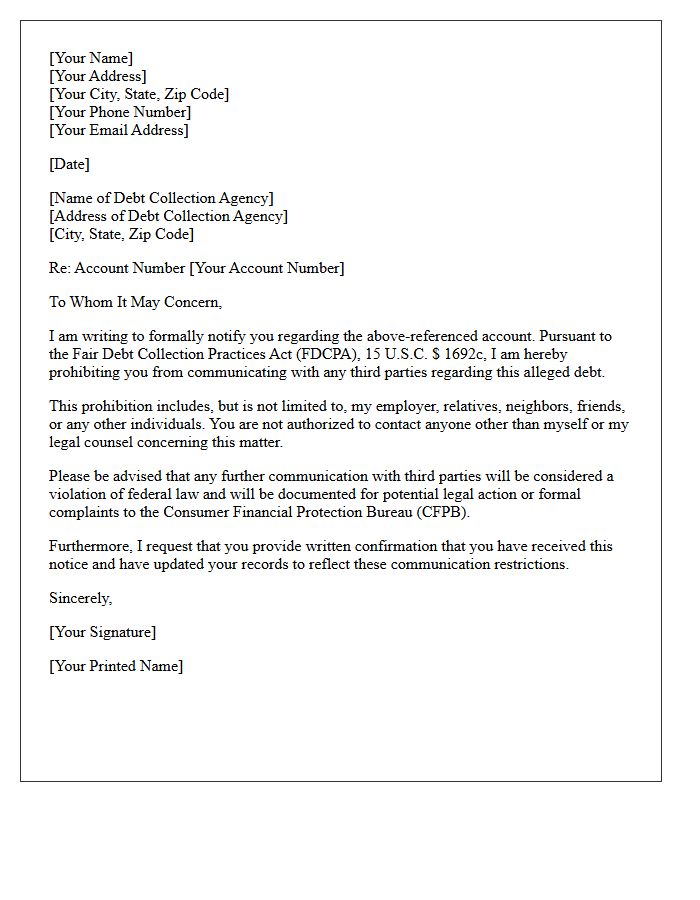
A Debt Collector Acknowledgment Letter is a vital legal tool used to enforce your privacy rights under the FDCPA. By sending this formal notice, you explicitly prohibit third-party communication regarding your private financial matters. This prevents collectors from contacting employers, neighbors, or family members, effectively stopping potential harassment and reputational damage. Once the agency receives this written directive, they are legally obligated to cease all outside inquiries. Keeping a certified mail receipt serves as essential evidence if the collector violates these terms, ensuring your consumer protections remain fully enforceable by law.
Letter of Compliance for Third-Party Communication Cease and Desist
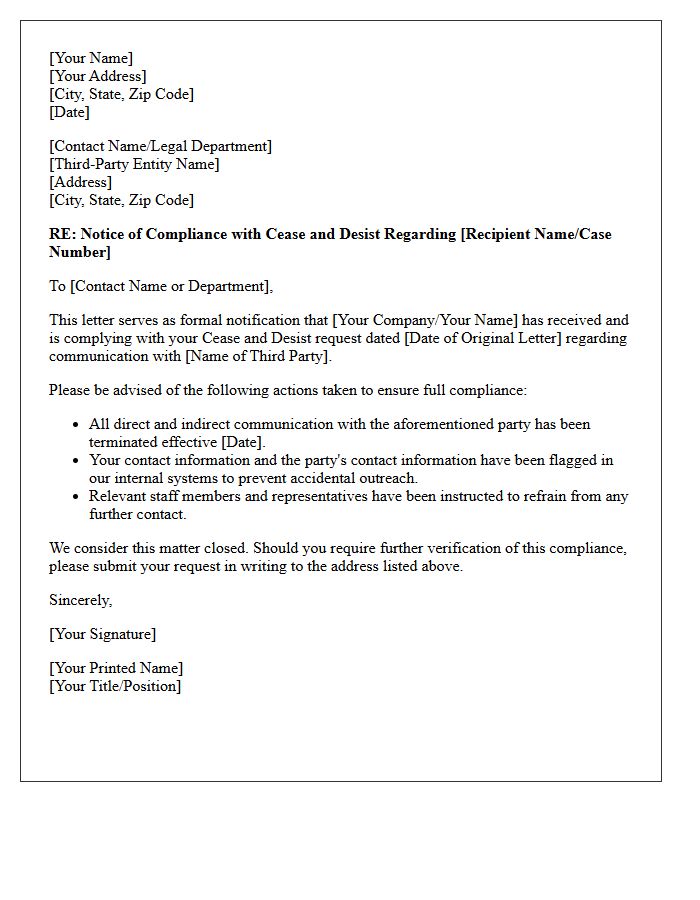
A Letter of Compliance confirms that a debt collector will honor a Cease and Desist request regarding third-party communication. Under the Fair Debt Collection Practices Act (FDCPA), once notified in writing, agencies must stop contacting friends, family, or employers about your debt. This letter serves as formal acknowledgement of your legal rights, ensuring your privacy is protected and preventing further harassment. It is a vital document for verifying that the agency has updated its records to restrict outreach solely to the debtor or their legal counsel, as mandated by federal law.
Third-Party Outreach Cease and Desist Acknowledgment Letter
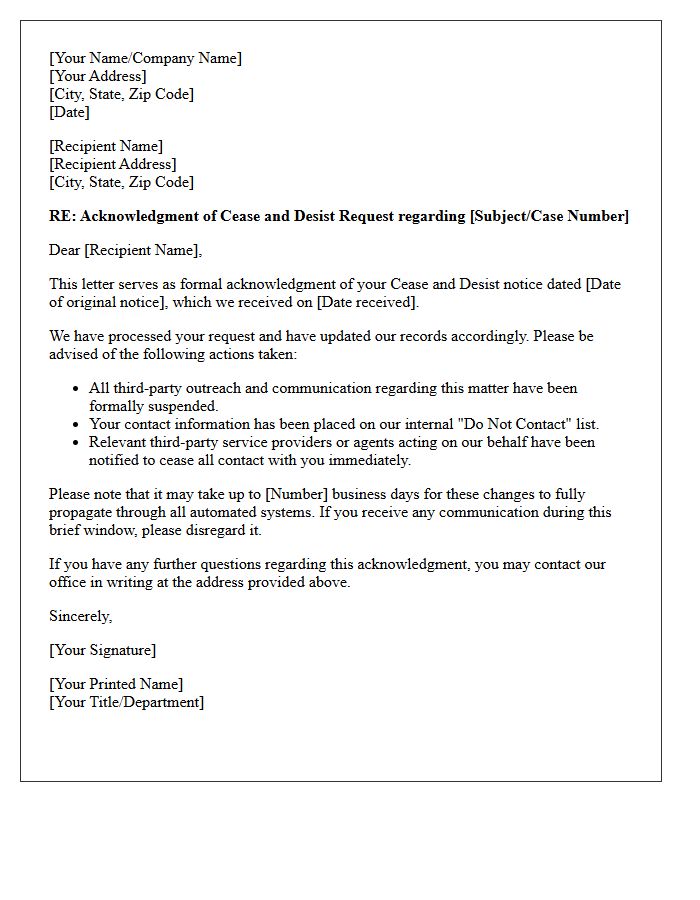
A Third-Party Outreach Cease and Desist Acknowledgment Letter is a formal response confirming that a business will stop contacting a specific individual or entity. This document serves as legal proof that the recipient has received and intends to comply with a formal demand to halt communication. It is a critical component of debt collection regulation and privacy protection, ensuring that harassment ceases immediately. By providing this written confirmation, companies mitigate legal risks and demonstrate adherence to consumer protection laws regarding unsolicited or prohibited outreach efforts.
Official Acknowledgment Letter for Third-Party Contact Termination
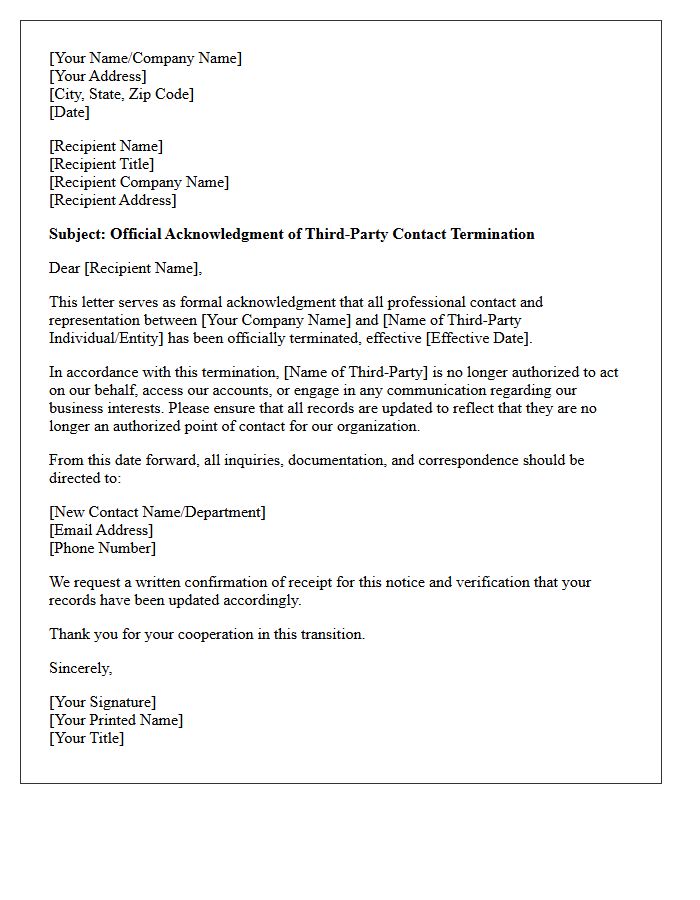
An Official Acknowledgment Letter for Third-Party Contact Termination is a formal document confirming that a specific individual or entity no longer has legal authority to act on your behalf. This written notice is essential for updating records with banks, government agencies, or service providers to prevent unauthorized access to sensitive information. It serves as a vital security measure to ensure your privacy and legal protection. Always include effective dates and clear identification details to guarantee the revocation is processed accurately across all professional and personal administrative channels.
What is a Third-Party Communication Cease and Desist Acknowledgment?
It is a formal written confirmation from a debt collector or third-party entity stating they have received and will comply with a request to stop all further communication regarding a specific debt or legal matter.
Is a debt collector legally required to send an acknowledgment?
While the Fair Debt Collection Practices Act (FDCPA) requires collectors to stop contacting you after receiving a cease and desist notice, they are not strictly mandated to send a confirmation letter, though many do to document compliance.
Does an acknowledgment mean my debt has been canceled?
No, an acknowledgment only confirms that communication will cease; it does not discharge the underlying debt. The creditor may still pursue legal action or report the delinquency to credit bureaus without contacting you directly.
What should be included in a Cease and Desist Acknowledgment letter?
A standard acknowledgment should include the account number, the date the request was received, a statement confirming that future contact will stop, and any specific exceptions, such as notification of a lawsuit.
What should I do if a third party continues contact after acknowledging my request?
If communication persists after you have received an acknowledgment, you should document the dates and times of the contact and consider filing a complaint with the Consumer Financial Protection Bureau (CFPB) or seeking legal counsel for FDCPA violations.

Comments