
A First Notice of Dishonored Check is a formal legal demand sent to a payer after their payment fails due to insufficient funds or closed accounts. This document serves as an official request for immediate restitution and protects your legal rights to pursue further collection actions. To help you recover owed funds quickly, below are some ready to use template.
Image cover: Proven Templates and Samples for Your First Notice of Dishonored Check
Letter Samples List
- Official Debt Collection Agency Letterhead
- Date of the Official Notice Letter
- Debtor Name and Mailing Address
- Subject First Notice of Dishonored Check Letter
- Dear Valued Account Holder
- This Letter Is Official Notice of a Returned Payment
- Your Recent Check Was Dishonored for Insufficient Funds
- The Original Amount Plus Our Agency Fee Is Now Due
- Please Remit the Total Balance Upon Receipt of This Letter
- Failure to Pay Will Result in Further Debt Collection Action
- This Letter Is an Attempt to Collect a Debt
- Any Information Obtained Will Be Used for That Purpose
- Sincerely the Debt Recovery Department
Official Debt Collection Agency Letterhead
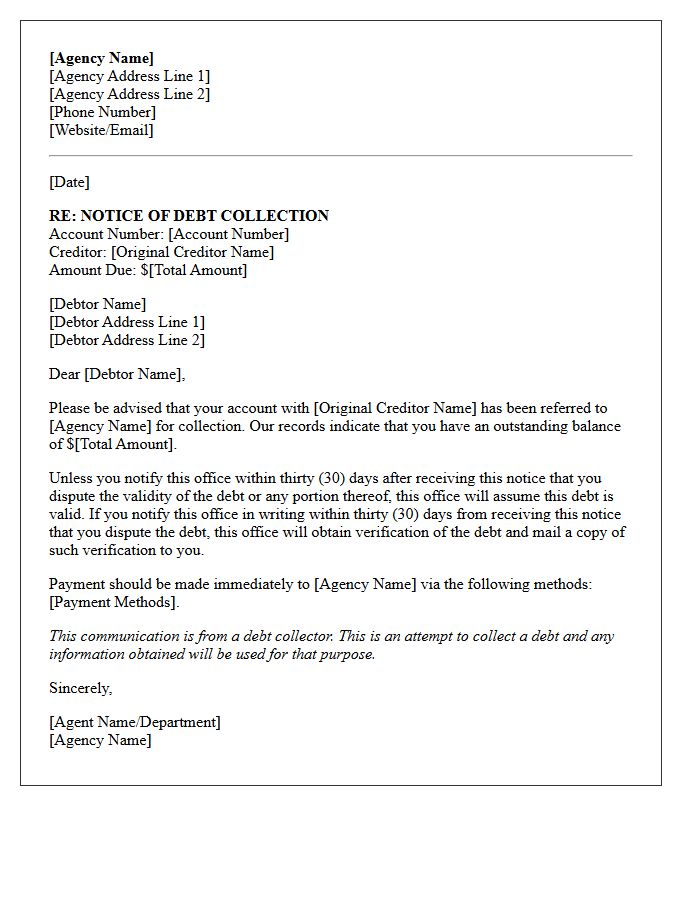
An official debt collection agency letterhead must contain specific legal disclosures to ensure authenticity. The most critical element is the Validation Notice, which confirms the consumer's right to dispute the debt within thirty days. To verify legitimacy, look for the agency's registered business address and contact information. These letters are strictly regulated by the FDCPA to prevent harassment or deception. Always cross-reference the account number provided with your personal financial records before making any payments to ensure the communication is genuine and accurate.
Date of the Official Notice Letter
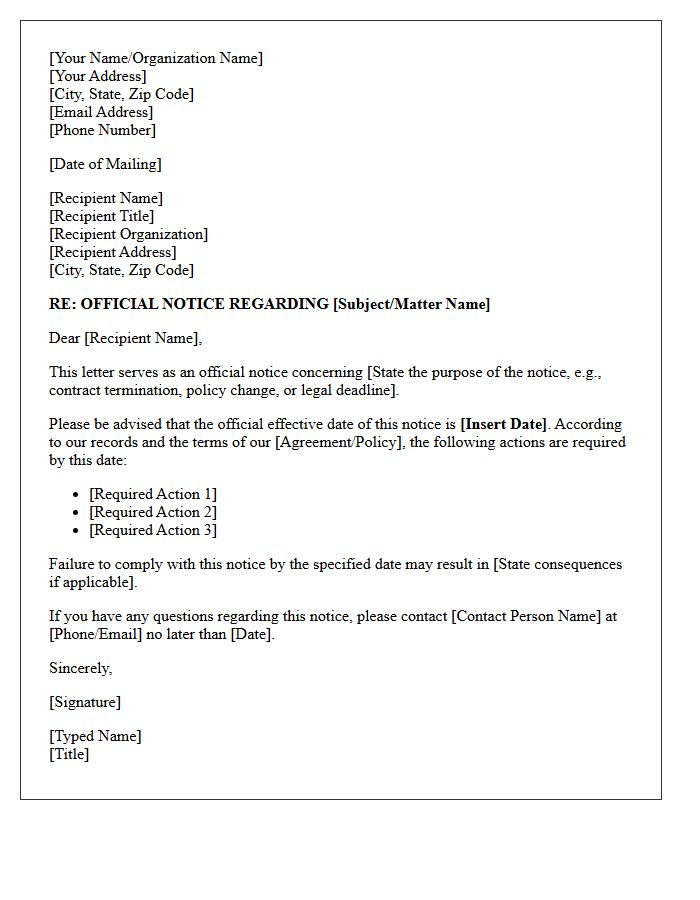
The Official Notice Letter date serves as the critical starting point for all legal deadlines and response periods. This specific date marks when a formal communication is issued, determining your eligibility to file appeals or submit required documentation. Missing a timeline calculated from this date can result in the loss of procedural rights or benefits. Always verify the date printed on the letter rather than the delivery date to ensure full compliance with statutory time limits and regulatory requirements.
Debtor Name and Mailing Address
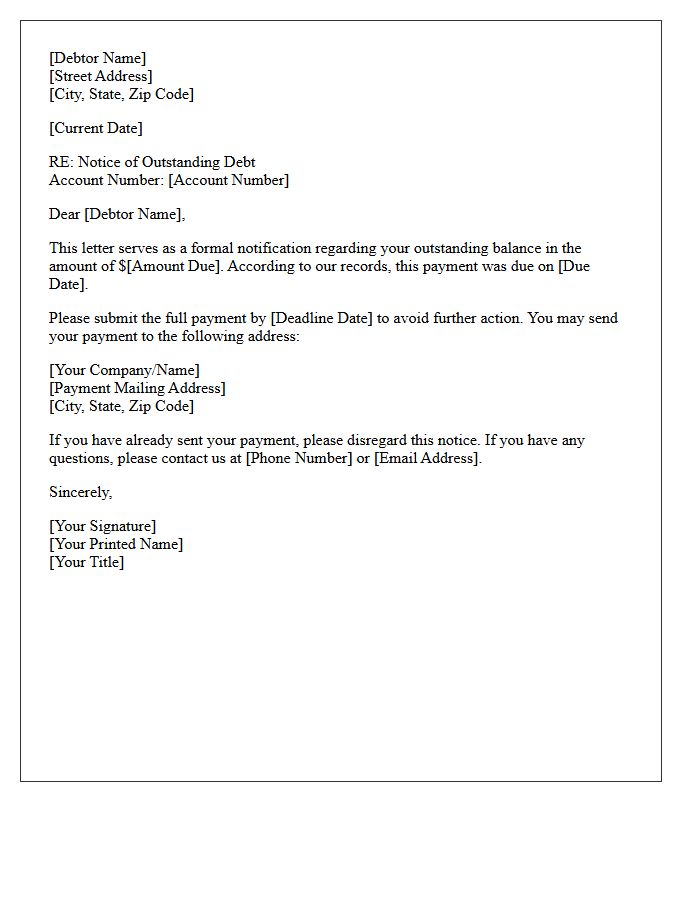
Ensuring an accurate Debtor Name is the most critical element of a UCC filing to prevent it from being deemed seriously misleading. Even a minor typographical error can invalidate a lien, causing a secured party to lose their priority status in bankruptcy. The mailing address must be a functional location for legal notifications. Always verify names against official public records, such as a driver's license for individuals or articles of incorporation for registered organizations, to maintain a legally perfected security interest.
Subject First Notice of Dishonored Check Letter
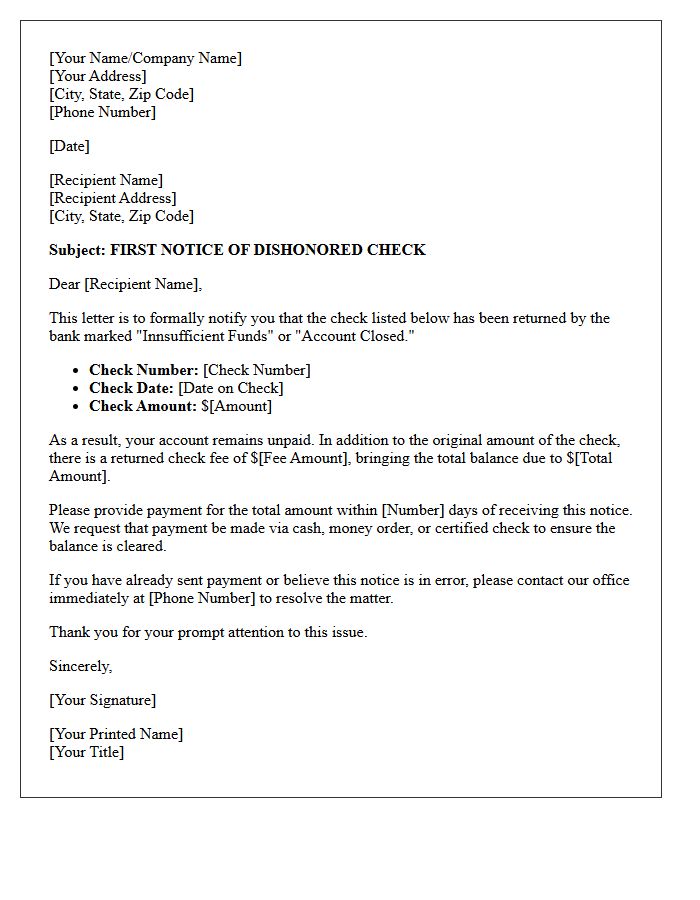
A First Notice of Dishonored Check Letter is a formal legal demand sent to a drawer whose payment was returned by the bank for insufficient funds or closed accounts. This document serves as official evidence of notification, typically granting the recipient a specific grace period to settle the debt. Providing this written notice is a critical prerequisite for pursuing further legal action, recovering statutory damages, or filing criminal charges. It must clearly state the check details, the total amount owed, and any applicable returned check fees allowed by law.
Dear Valued Account Holder
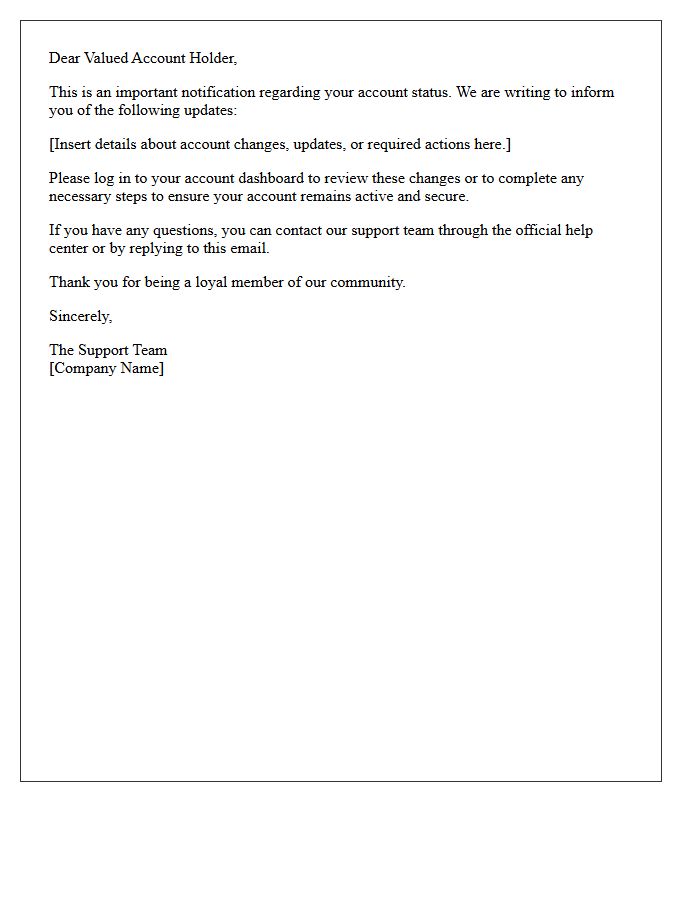
The phrase "Dear Valued Account Holder" is a generic greeting frequently used in phishing emails to compromise your personal data. Legitimate financial institutions typically address you by your full name rather than using vague, impersonal terms. If you receive an urgent message requesting sensitive information or login credentials via an unverified link, it is likely a scam. Always verify the sender's email address and avoid clicking attachments. Protecting your cybersecurity requires skepticism toward unsolicited requests that use standardized language to create a false sense of urgency.
This Letter Is Official Notice of a Returned Payment
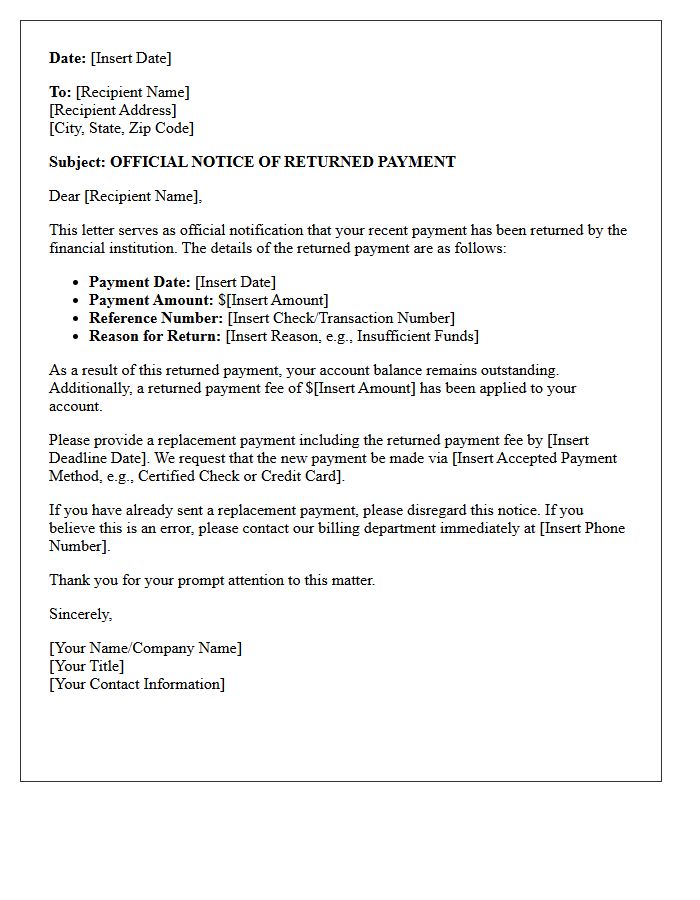
A Returned Payment Notice is an official alert that your recent transaction was unsuccessful due to insufficient funds, incorrect banking details, or a closed account. It is critical to address this immediately to avoid late fees, potential service interruptions, or negative impacts on your credit score. You should contact your financial institution to verify the error and arrange an alternative payment method quickly. Prompt action ensures your account remains in good standing and prevents additional penalties from being applied to your balance.
Your Recent Check Was Dishonored for Insufficient Funds
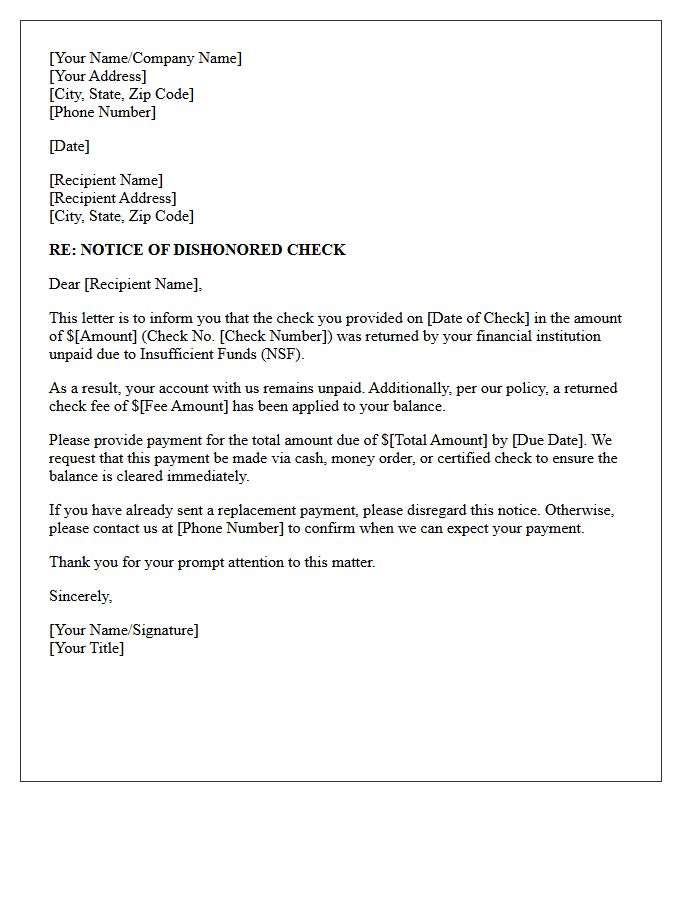
If your recent check was dishonored for insufficient funds, it means your bank account lacked the balance to cover the payment. This event, often called a bounced check, typically triggers expensive overdraft fees from your bank and potential penalties from the payee. To resolve this, you must immediately deposit sufficient funds and contact the recipient to arrange a replacement payment. Ignoring a dishonored check can negatively impact your credit score and may lead to legal consequences or the loss of checking account privileges under banking regulations.
The Original Amount Plus Our Agency Fee Is Now Due
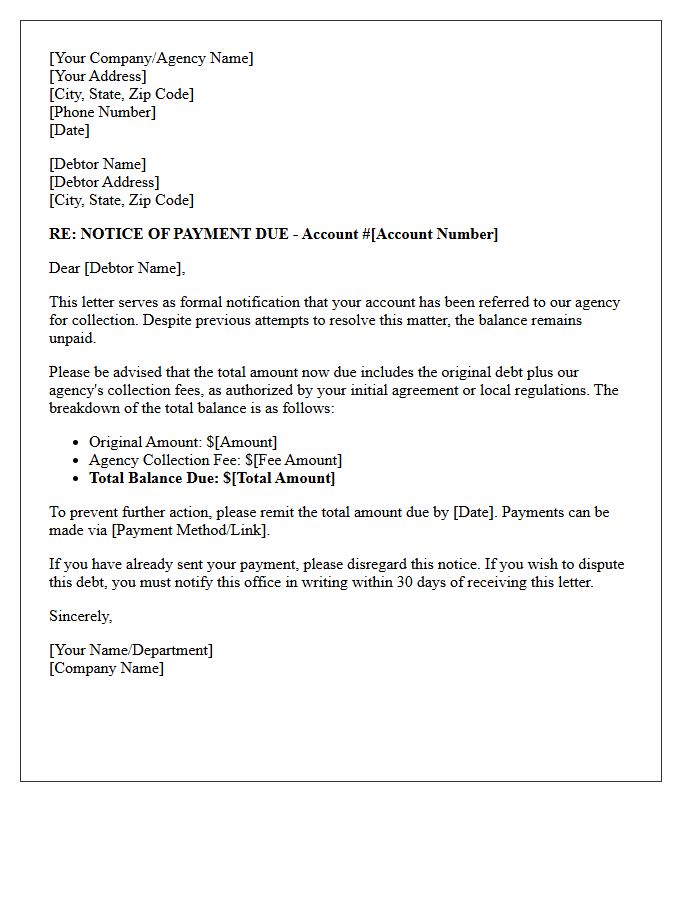
Your account is now outstanding, requiring immediate settlement. The original amount plus our agency fee is now due to resolve this debt. Please note that late payment charges and administrative costs have been added to the principal balance according to the terms of service. To avoid further collection actions or potential impacts on your credit standing, you must remit the full total balance immediately. Failure to comply may result in additional legal escalations. Secure payment options are available to finalize your account today.
Please Remit the Total Balance Upon Receipt of This Letter
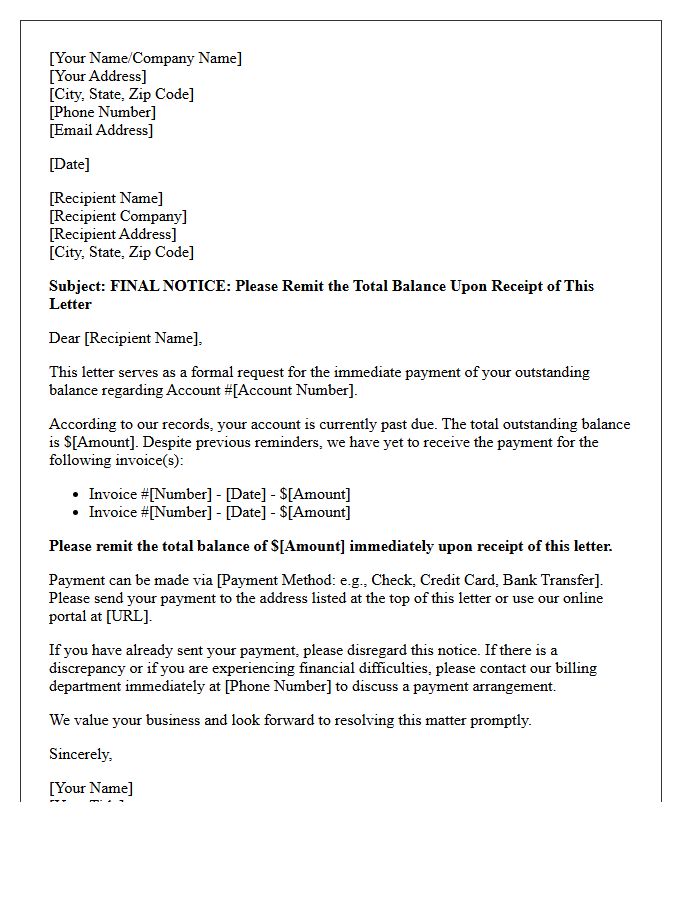
The phrase "Please Remit the Total Balance Upon Receipt of This Letter" is a formal demand for immediate payment. It signifies that the full amount owed is due immediately without further delay or installment options. Receiving this notice typically indicates a final request before a debt escalates to collections or legal action. To protect your credit score and avoid late fees, it is essential to process the transaction or contact the creditor to discuss a payment arrangement as soon as the correspondence is received.
Failure to Pay Will Result in Further Debt Collection Action
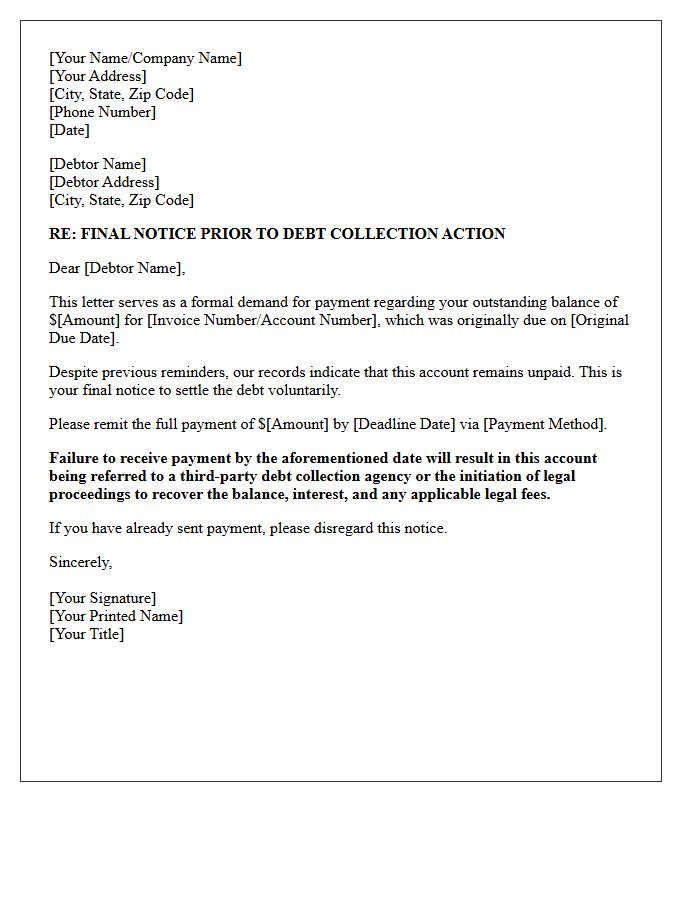
Ignoring a formal notice regarding unpaid balances is critical because failure to pay will result in further debt collection action. This process often begins with persistent legal demands and may escalate to credit reporting penalties, lawsuits, or wage garnishment. Such measures significantly damage your financial reputation and increase the total amount owed due to added interest and late fees. To prevent litigation or aggressive recovery tactics, it is essential to communicate with creditors immediately to arrange a settlement or payment plan before the account is transferred to a third-party agency.
This Letter Is an Attempt to Collect a Debt
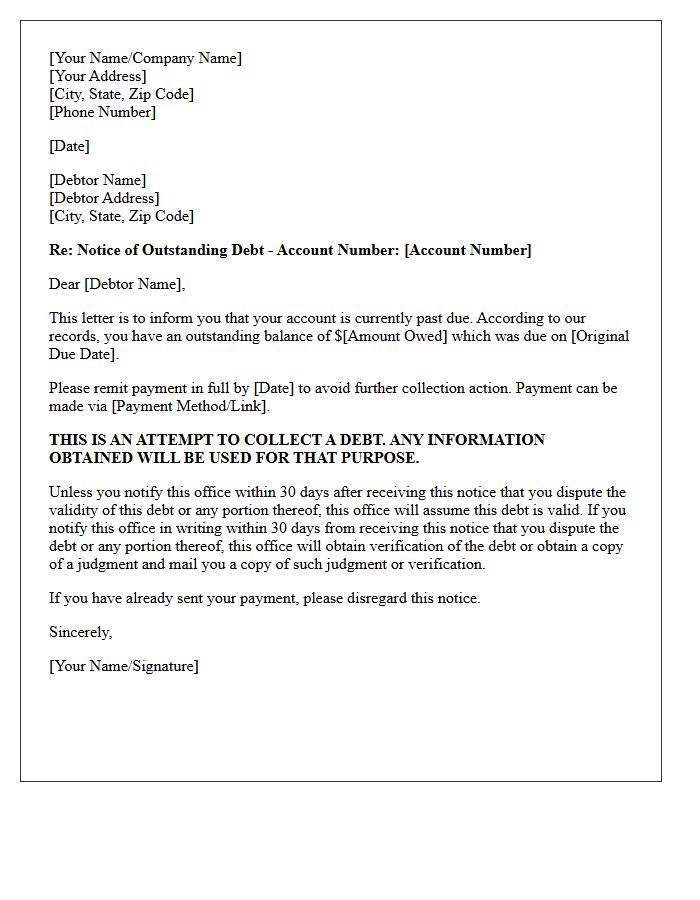
Receiving a notice stating "This Letter Is an Attempt to Collect a Debt" is a formal legal requirement under the Fair Debt Collection Practices Act. It signifies that a debt collector is seeking payment for an outstanding balance. Upon receipt, you have the legal right to request debt validation within thirty days to verify the amount and creditor. Always communicate in writing to maintain a paper trail and protect your consumer rights. Understanding this disclosure helps you avoid scams and manage your financial obligations effectively while preventing unauthorized harassment from agencies.
Any Information Obtained Will Be Used for That Purpose
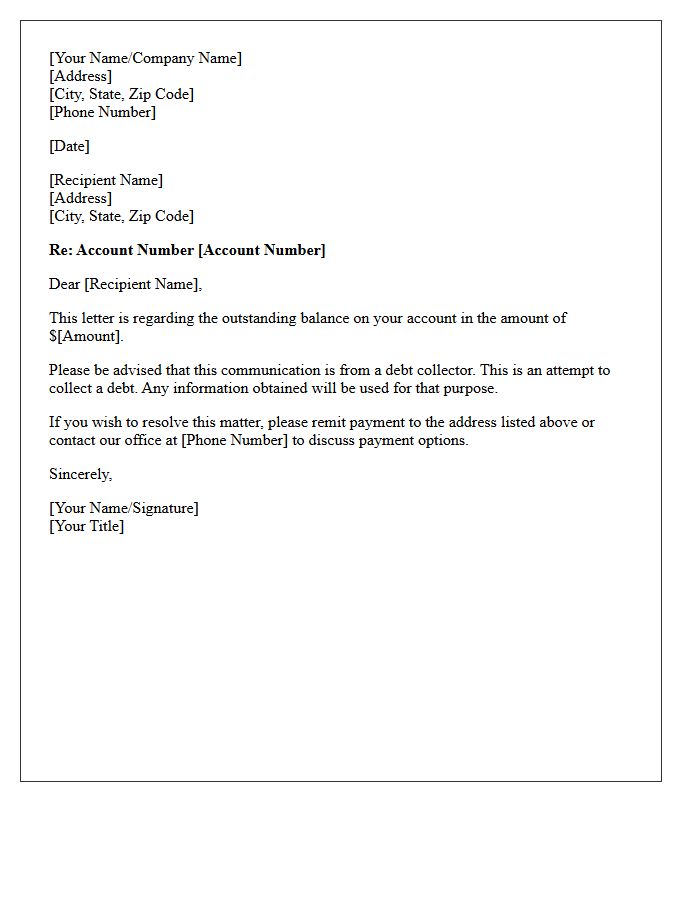
When you encounter the phrase "any information obtained will be used for that purpose," it typically serves as a legal disclosure under the Fair Debt Collection Practices Act. It signifies that a debt collector is attempting to collect a debt and any data you provide will be utilized specifically for debt recovery. Understanding this mini-Miranda warning is essential for protecting your privacy and managing your financial communications. Always verify the creditor before sharing sensitive details to ensure your information is handled according to consumer protection laws.
Sincerely the Debt Recovery Department
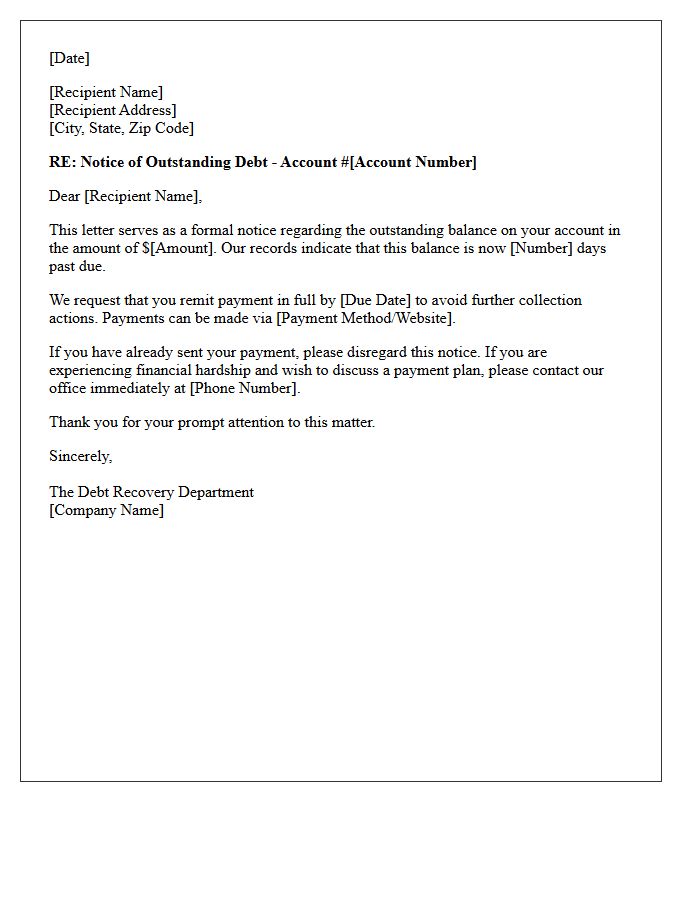
Receiving a notice from the Debt Recovery Department indicates an outstanding financial obligation that requires immediate attention to avoid further escalation. It is crucial to verify the debt details and communicate promptly to discuss repayment options or dispute inaccuracies. Ignoring these formal communications can lead to legal action, credit score damage, or additional collection fees. Always request written validation of the balance owed and maintain detailed records of all interactions to ensure your consumer rights are protected throughout the recovery process.
What is a First Notice of Dishonored Check?
A First Notice of Dishonored Check is a formal written notification sent by a payee to the writer of a check that has been returned by the bank, typically due to non-sufficient funds (NSF) or a closed account.
What information must be included in a notice of dishonored check?
The notice should include the date the check was written, the check number, the total amount, the specific reason for dishonor, and a demand for payment including any applicable state-mandated service fees.
How long does the sender have to wait for payment after sending the notice?
While laws vary by state, most jurisdictions require the recipient to make restitution within 15 to 30 days of receiving the notice before the sender can pursue further legal action or treble damages.
Should a First Notice of Dishonored Check be sent via certified mail?
Yes, it is highly recommended to send the notice via certified mail with a return receipt requested. This provides legal proof that the check writer received the demand for payment, which is often a prerequisite for filing a criminal or civil claim.
What are the consequences of ignoring a notice of a dishonored check?
Ignoring the notice can lead to civil lawsuits for up to triple the amount of the check, the addition of legal and court fees, and in some jurisdictions, criminal prosecution for issuing a bad check.

Comments