
Recover unpaid funds efficiently by sending a formal Notice of Dishonored Check to the issuer. This legal demand notifies the payer of the returned instrument and outlines required statutory penalties under local laws if the debt remains unpaid. Understanding your rights ensures proper restitution for bounced checks. To help you start the collection process, below are some ready to use template.
Image cover: Formal Notice of Dishonored Check and Demand for Statutory Damages Templates
Letter Samples List
- Notice of Dishonored Check and Statutory Penalties Letter
- First Demand Letter for Returned Check and Statutory Fees
- Final Notice Letter for Bounced Check Statutory Damages
- Pre-Litigation Letter for Dishonored Check Penalties
- Statutory Treble Damages Dishonored Check Demand Letter
- Commercial Bad Check Statutory Penalty Notice Letter
- Consumer NSF Check Legal Penalty Collection Letter
- Notice of Intent Letter for Dishonored Check Statutory Fees
- Returned Instrument and Statutory Surcharge Demand Letter
- Debt Collection Letter for Dishonored Check and Legal Penalties
- State Specific Statutory Damages Bounced Check Letter
- Formal Warning Letter for Dishonored Check Statutory Fines
Notice of Dishonored Check and Statutory Penalties Letter
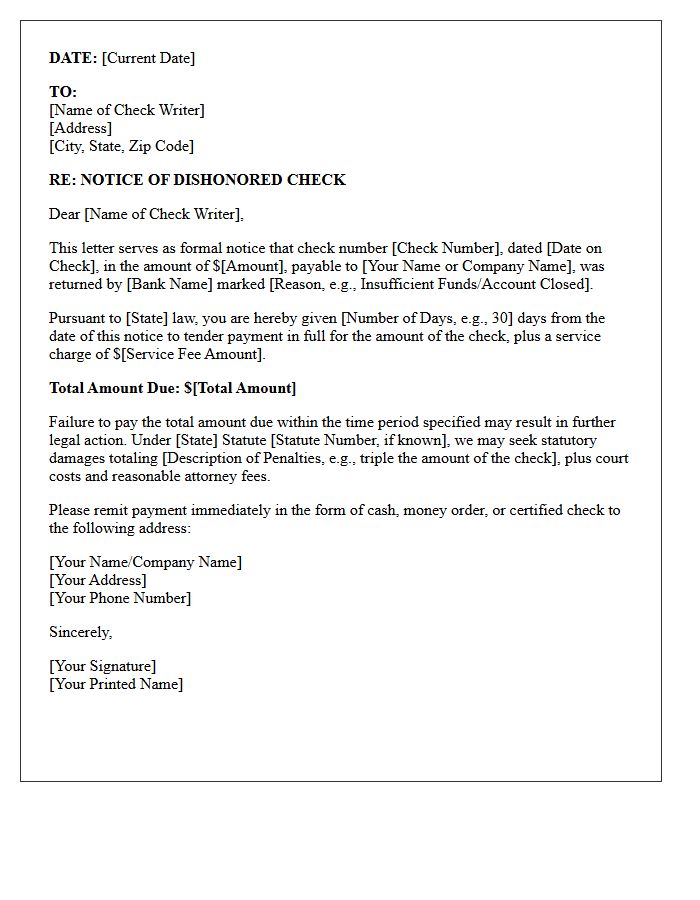
A Notice of Dishonored Check is a formal legal demand sent to a person who issued a payment that failed due to insufficient funds. This document is the required first step before pursuing statutory penalties, which can include triple the original amount or specific collection fees. To comply with the law, the sender must allow a 30-day grace period for the debtor to pay the full balance plus bank charges. Sending this letter is essential for securing your right to recover additional damages through civil litigation or criminal prosecution.
First Demand Letter for Returned Check and Statutory Fees
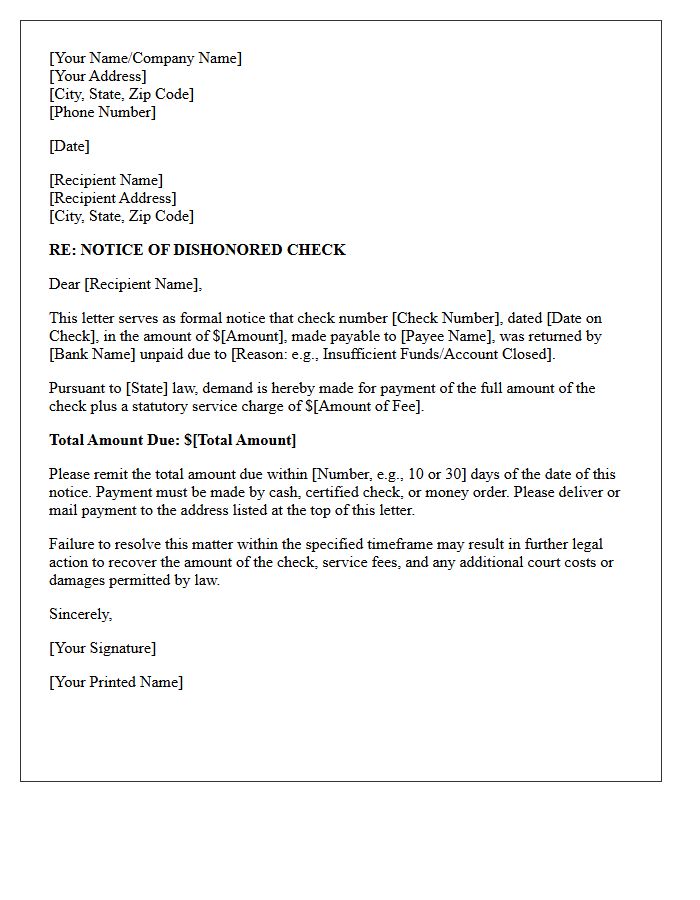
A First Demand Letter is a formal legal notice sent to a drawer after a check is dishonored by a bank. This document serves as a critical prerequisite for recovering the original amount plus statutory fees allowed by state law. It must clearly state the check details, the reason for return, and provide a specific deadline for payment. Sending this letter is essential for establishing legal intent, as it often permits the creditor to seek treble damages or criminal penalties if the debt remains unpaid after the notice period expires.
Final Notice Letter for Bounced Check Statutory Damages
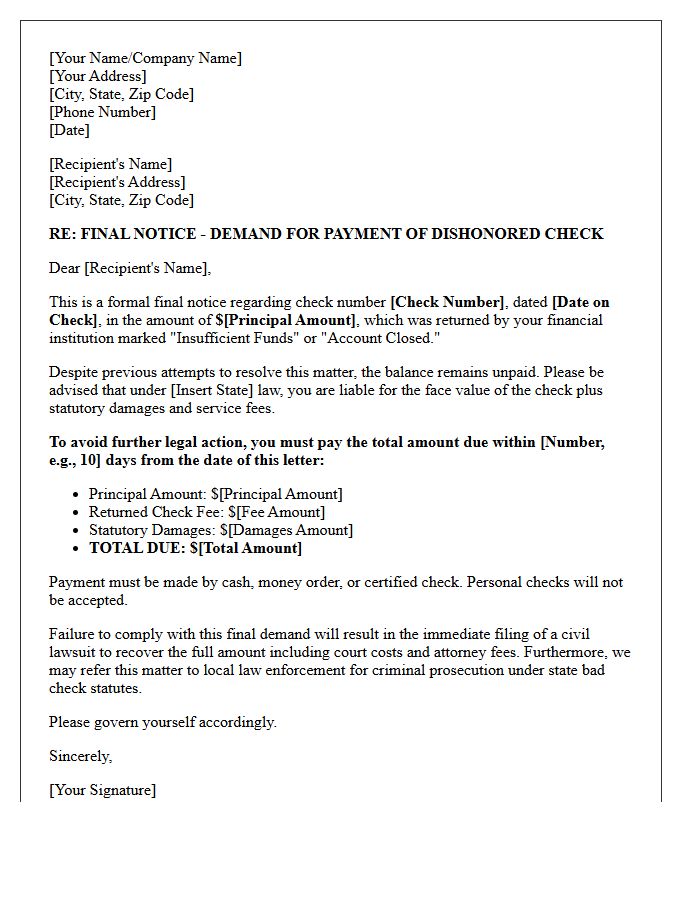
A final notice letter for a bounced check serves as a formal legal demand before pursuing statutory damages. Under most state laws, the recipient has a specific grace period, typically 30 days, to pay the original amount plus service fees. Failure to comply allows the sender to sue for additional penalties, often triple the check's value. Sending this notice via certified mail is essential to establish proof of delivery, which is required by courts to recover legal costs and punitive awards during litigation.
Pre-Litigation Letter for Dishonored Check Penalties
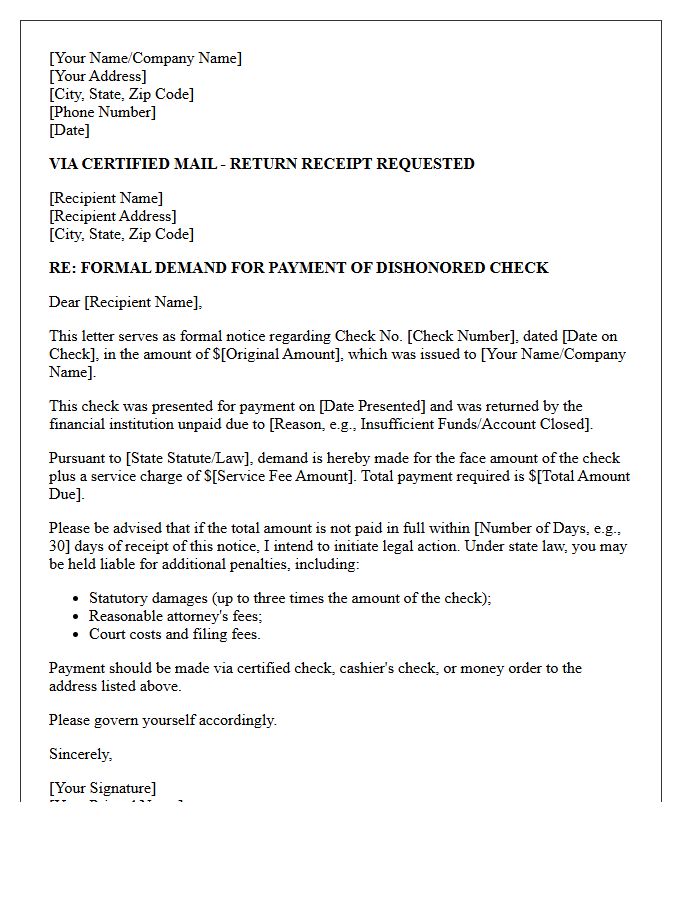
A pre-litigation letter is a formal legal notice sent before filing a lawsuit for a dishonored check. This demand letter informs the issuer that their payment failed due to insufficient funds or a closed account. It provides a final opportunity to settle the debt voluntarily. Under many state laws, providing this written notice is a mandatory step to qualify for statutory damages, which can include the original amount, service fees, and significant financial penalties often totaling triple the check's value plus legal costs.
Statutory Treble Damages Dishonored Check Demand Letter
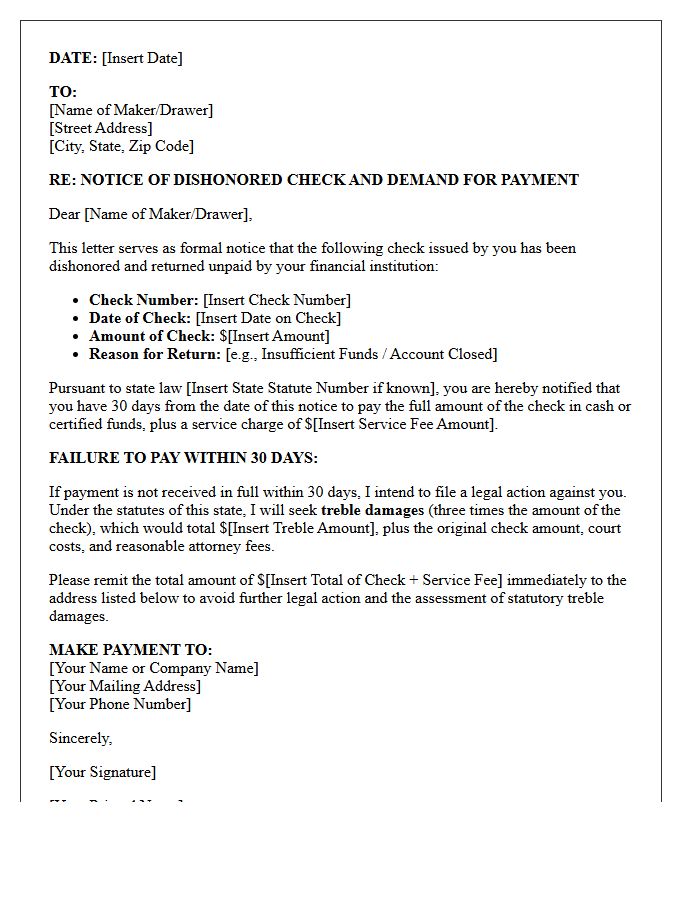
A statutory treble damages dishonored check demand letter is a formal notice sent to a drawer whose check was returned for insufficient funds. This letter serves as a legal prerequisite to recover treble damages, which allow a payee to sue for three times the original check amount, typically within a specific state-mandated timeframe. To exercise this right, the sender must strictly follow statutory notice requirements, providing the debtor a final opportunity to pay the face value plus service fees before escalating to litigation for maximum financial recovery.
Commercial Bad Check Statutory Penalty Notice Letter
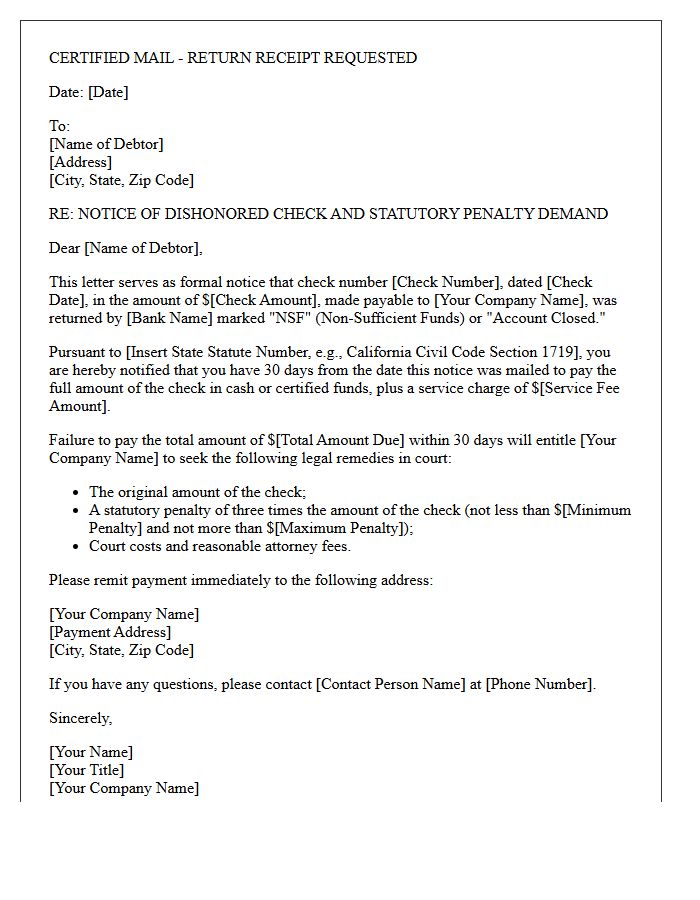
A Commercial Bad Check Statutory Penalty Notice Letter is a formal legal demand sent to a drawer who issued a dishonored payment. To recover statutory damages beyond the original amount, the payee must strictly follow state-specific notice requirements. This letter provides a final opportunity for the debtor to pay the full balance plus service fees within a set timeframe, typically 30 days. Failure to comply allows the creditor to pursue civil penalties, which may include triple damages, legal costs, and attorney fees under governing commercial codes.
Consumer NSF Check Legal Penalty Collection Letter
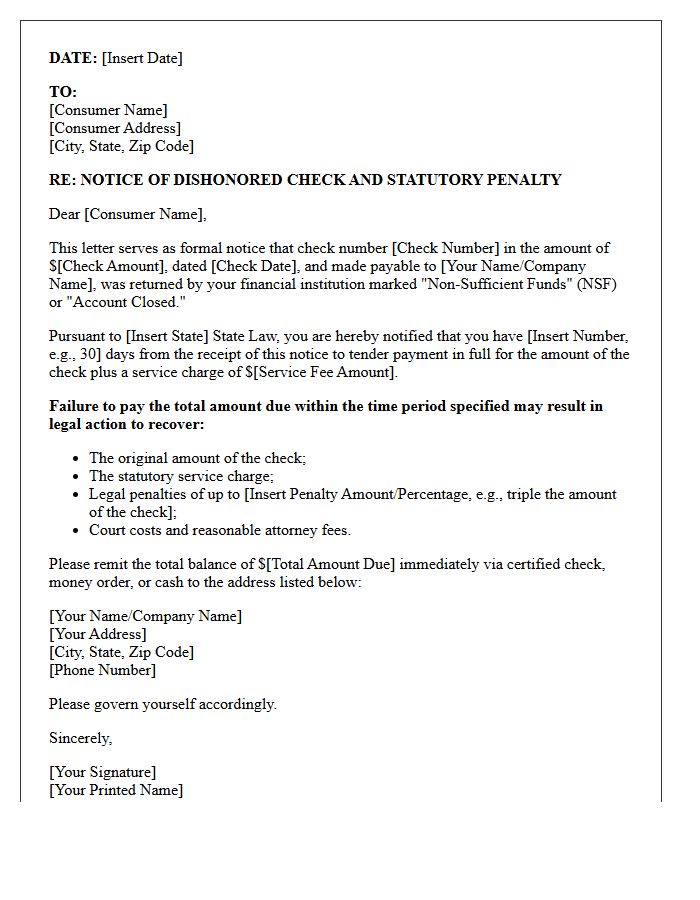
A Consumer NSF Check Legal Penalty Collection Letter is a formal demand sent when a payment is returned for insufficient funds. Under state laws, creditors can often demand the original check amount plus statutory damages and processing fees. This notice serves as a final warning before pursuing civil litigation or criminal charges. To protect your rights, verify the debt's accuracy and respond within the legal grace period-typically 30 days-to avoid escalating penalties, court costs, and negative impacts on your credit report or legal standing.
Notice of Intent Letter for Dishonored Check Statutory Fees
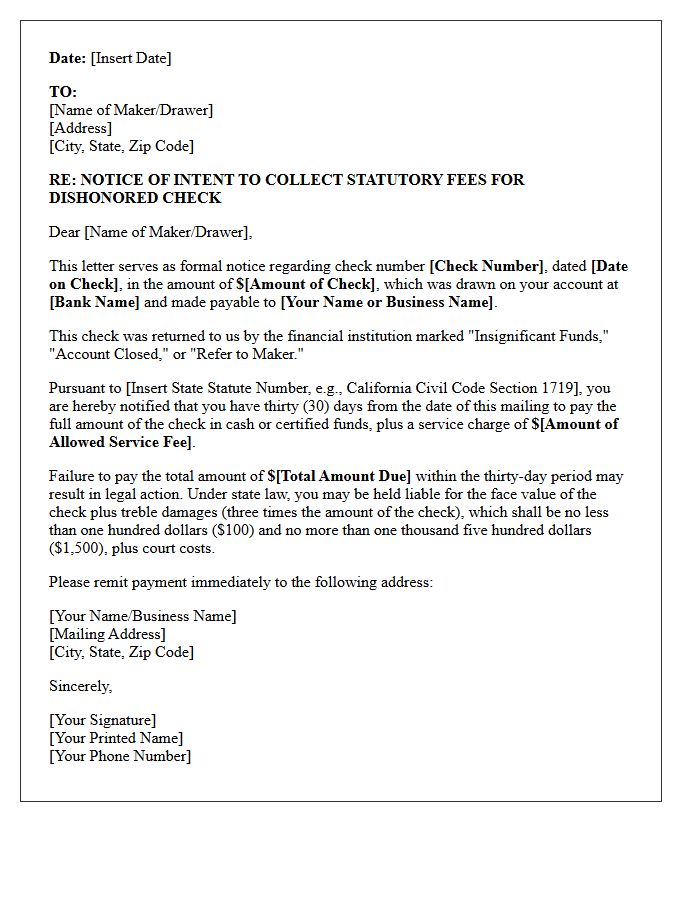
A Notice of Intent Letter for Dishonored Check Statutory Fees serves as a formal demand for payment before initiating legal action. It notifies the issuer that their check was returned for non-sufficient funds and specifies a strict deadline-typically thirty days-to settle the debt. Under state laws, this notice is a mandatory legal prerequisite to recover additional statutory damages, which can significantly exceed the original check amount. Sending this letter via certified mail provides essential proof of notification, protecting your rights and establishing a clear record for potential court proceedings.
Returned Instrument and Statutory Surcharge Demand Letter
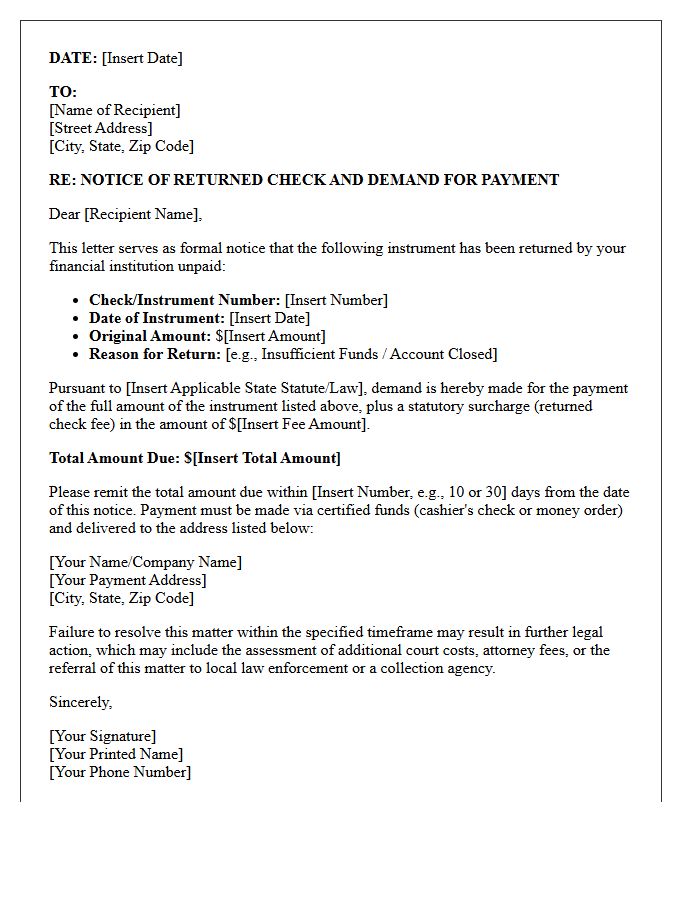
A Returned Instrument and Statutory Surcharge Demand Letter is a formal legal notice sent when a payment, such as a check or electronic transfer, is dishonored by a bank. Under state laws, the sender is entitled to recover the original amount plus a statutory surcharge to cover administrative costs. Recipients must settle the debt within a specific timeframe to avoid further legal action, increased penalties, or potential criminal charges. Timely resolution is essential to prevent significant financial liability and damage to one's credit standing.
Debt Collection Letter for Dishonored Check and Legal Penalties
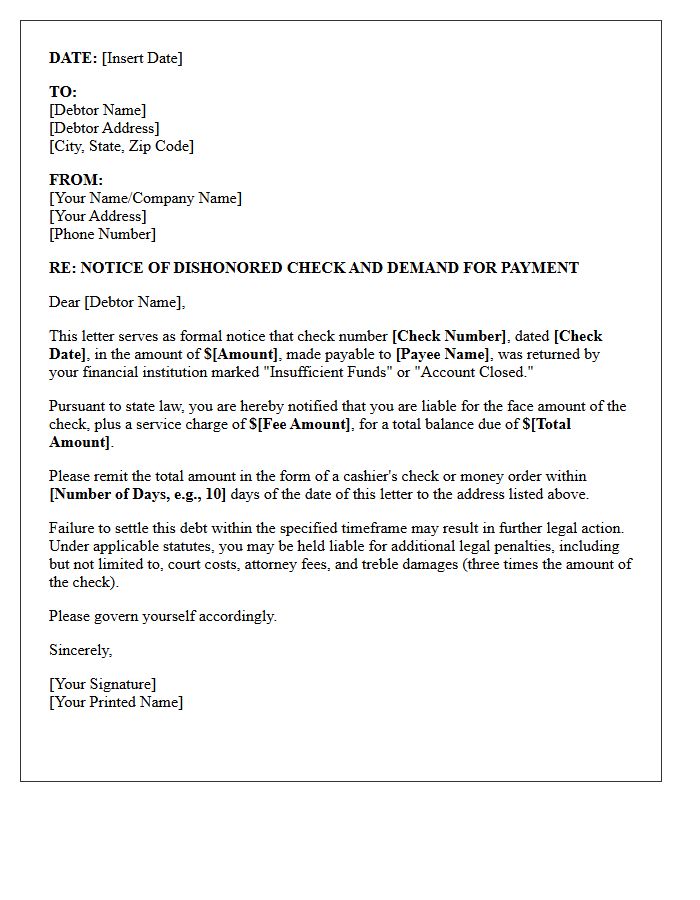
A Debt Collection Letter for a dishonored check serves as a formal demand for payment following a returned payment due to insufficient funds. It is essential to include the check number, date, and original amount. To ensure legal compliance, creditors must specify a deadline-typically 30 days-for the debtor to settle the balance plus applicable statutory fees. Failure to respond may trigger severe legal penalties, including civil lawsuits for treble damages and potential criminal prosecution for fraud under state laws. Always send this notice via certified mail for evidentiary purposes.
State Specific Statutory Damages Bounced Check Letter
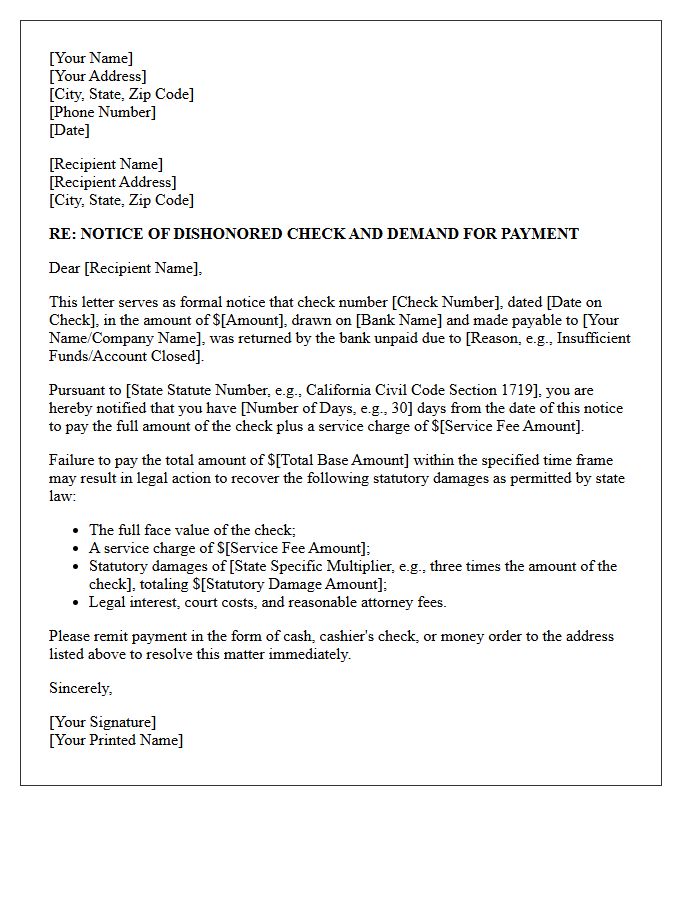
A state-specific statutory damages bounced check letter is a formal legal demand required to recover triple damages plus the original amount. To qualify, you must strictly follow local state statutes regarding notice periods and delivery methods, typically via certified mail. This document serves as formal notice, giving the issuer a final opportunity to pay before you pursue civil penalties or criminal charges. Each state mandates specific language; using an incorrect template can void your legal claim to statutory fees and additional recovery costs during litigation.
Formal Warning Letter for Dishonored Check Statutory Fines
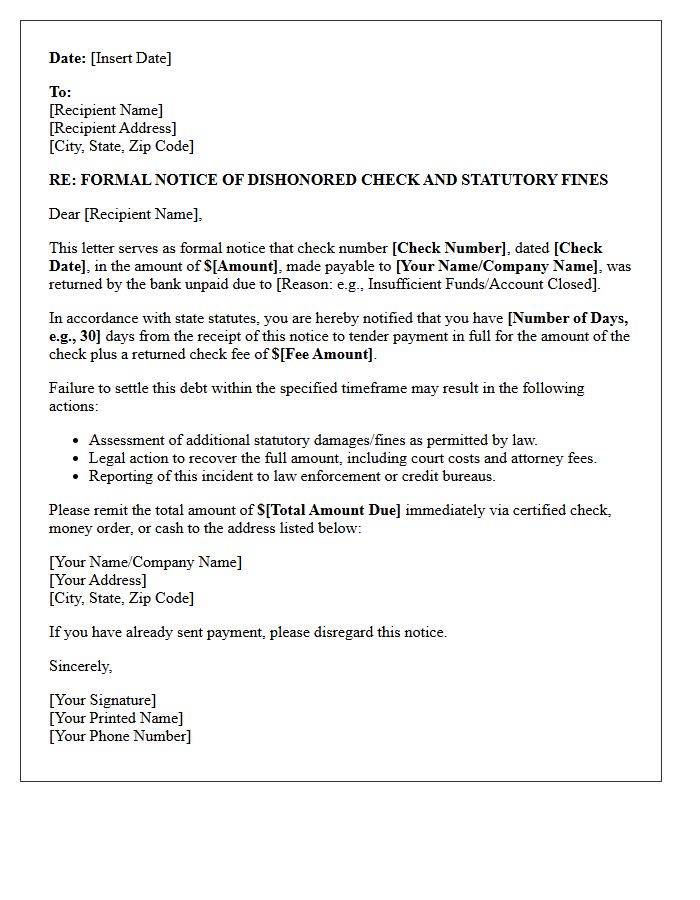
A formal warning letter serves as a Notice of Dishonored Check, providing legal evidence that the recipient was notified of a failed payment. Under statutory law, if the drawer fails to pay the full amount plus a service fee within a specific timeframe (often 30 days), they may be liable for statutory fines. These penalties frequently include treble damages, which can triple the original check amount. Sending this formal demand is a mandatory legal prerequisite before pursuing a civil lawsuit to recover funds and court costs.
What is a Notice of Dishonored Check?
A Notice of Dishonored Check is a formal legal letter sent to a drawer (the person who wrote the check) notifying them that their payment was returned by the bank, typically due to non-sufficient funds (NSF) or a closed account. This notice serves as a mandatory prerequisite for the payee to seek statutory damages and criminal penalties under state law.
What statutory penalties apply to a dishonored check?
Statutory penalties vary by jurisdiction but generally allow the payee to recover the full original amount of the check, bank service fees, and additional liquidated damages. Depending on the state, these penalties can range from $100 to triple the check's value, plus reasonable attorney fees and court costs if the debt is not settled within a specific timeframe.
How long do I have to pay after receiving a Notice of Dishonored Check?
Most state statutes provide a "grace period"-frequently 15 or 30 days-from the date the notice was mailed or delivered. If the full amount of the check plus the allowed service fee is paid within this window, the drawer is typically shielded from further statutory penalties and potential criminal prosecution for writing a bad check.
Must the Notice of Dishonored Check be sent via certified mail?
Yes, to satisfy legal requirements for proving "demand for payment," most states require the notice to be sent via Certified Mail with Return Receipt Requested. This creates a verifiable paper trail that the drawer was properly notified, which is necessary evidence if the case proceeds to a civil or criminal court.
Can I be prosecuted for a dishonored check if it was an honest mistake?
While laws focus on the "intent to defraud," the failure to rectify a dishonored check after receiving a formal notice often creates a legal presumption of intent. Paying the check and fees during the statutory period usually prevents criminal charges; however, ignoring the notice can lead to misdemeanor or felony charges depending on the check amount and local regulations.


Comments