
When a payment fails, businesses must issue a formal Notice of Dishonored Check and Cancellation of Layaway Agreement to protect their rights. This document notifies the buyer of the returned payment, details applicable NSF fees, and confirms the termination of the purchase plan. Understanding the legal requirements ensures a professional resolution to payment defaults. Below are some ready to use templates.
Image cover: Formal Notice: Dishonored Check and Layaway Agreement Cancellation Templates
Letter Samples List
- First Notice of Dishonored Check Letter
- Final Demand for Dishonored Check Payment Letter
- Notice of Returned Check and Penalty Assessment Letter
- Pre-Legal Action Dishonored Check Demand Letter
- Notice of Insufficient Funds and Account Suspension Letter
- Notice of Layaway Agreement Cancellation Letter
- Final Notice of Layaway Default and Cancellation Letter
- Layaway Contract Termination and Balance Due Letter
- Notice of Forfeited Layaway Deposit Letter
- Layaway Cancellation and Debt Collection Demand Letter
- Dishonored Payment and Layaway Cancellation Notice Letter
- Debt Collection Final Warning and Layaway Cancellation Letter
First Notice of Dishonored Check Letter
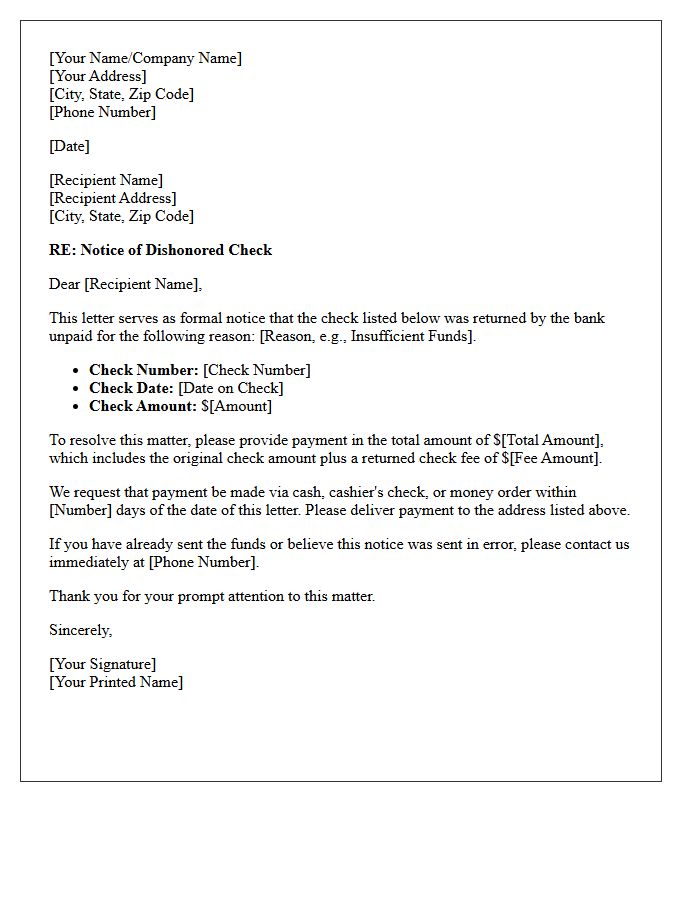
A First Notice of Dishonored Check Letter is a formal legal demand sent to a payer after their check fails to clear due to insufficient funds or a closed account. This document serves as official notification, granting the issuer a specific statutory period-usually 15 to 30 days-to provide full payment plus applicable bank fees. Sending this notice is a critical prerequisite for pursuing further legal action or criminal charges. It provides documented evidence of the debt and the sender's attempt to resolve the matter before escalating to civil litigation.
Final Demand for Dishonored Check Payment Letter
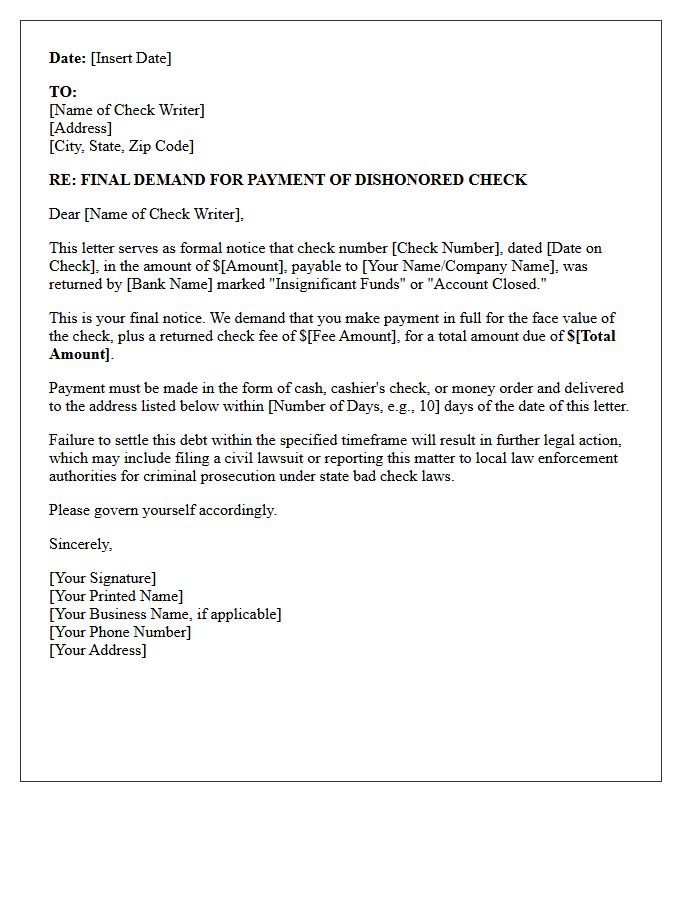
A Final Demand for Dishonored Check Payment Letter serves as a formal legal notice to a debtor after a check bounces. It notifies the issuer of the non-sufficient funds (NSF) and provides a strict deadline for repayment, usually 10 to 30 days. Sending this letter is a critical statutory requirement before pursuing criminal charges or civil litigation. It must clearly state the original amount, applicable service fees, and potential legal penalties to ensure maximum enforceability in court while encouraging immediate settlement of the outstanding debt.
Notice of Returned Check and Penalty Assessment Letter
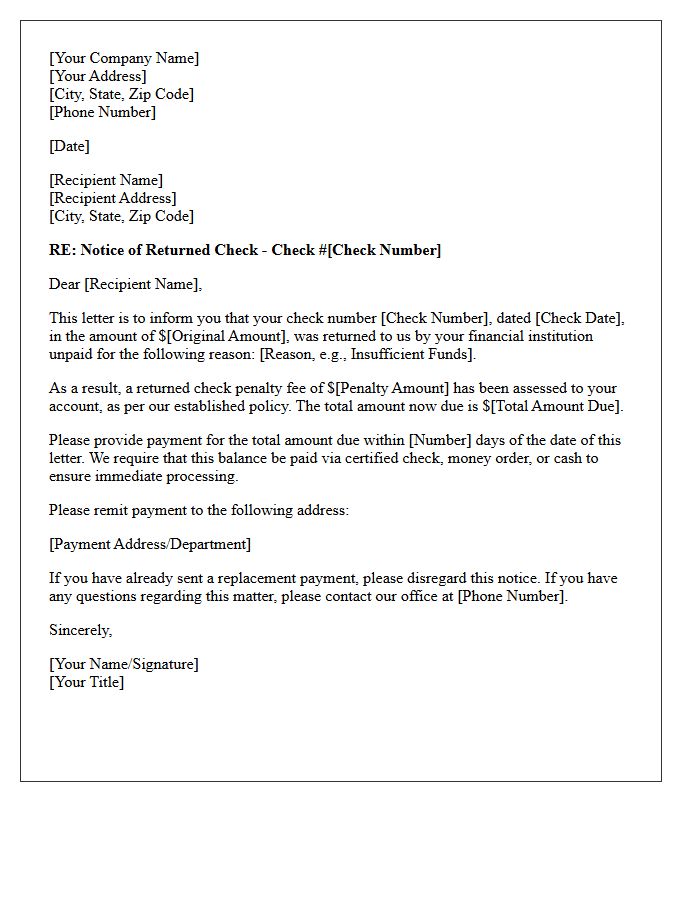
A Notice of Returned Check and Penalty Assessment Letter is a formal legal notification issued when a payment fails due to insufficient funds. This document informs the recipient that their check was dishonored by the bank, necessitating an immediate replacement payment. It typically includes a mandatory service fee or statutory penalty added to the original balance. To avoid further legal action or collection proceedings, the recipient must provide guaranteed funds, such as a cashier's check or money order, within the specific timeframe outlined in the notice.
Pre-Legal Action Dishonored Check Demand Letter
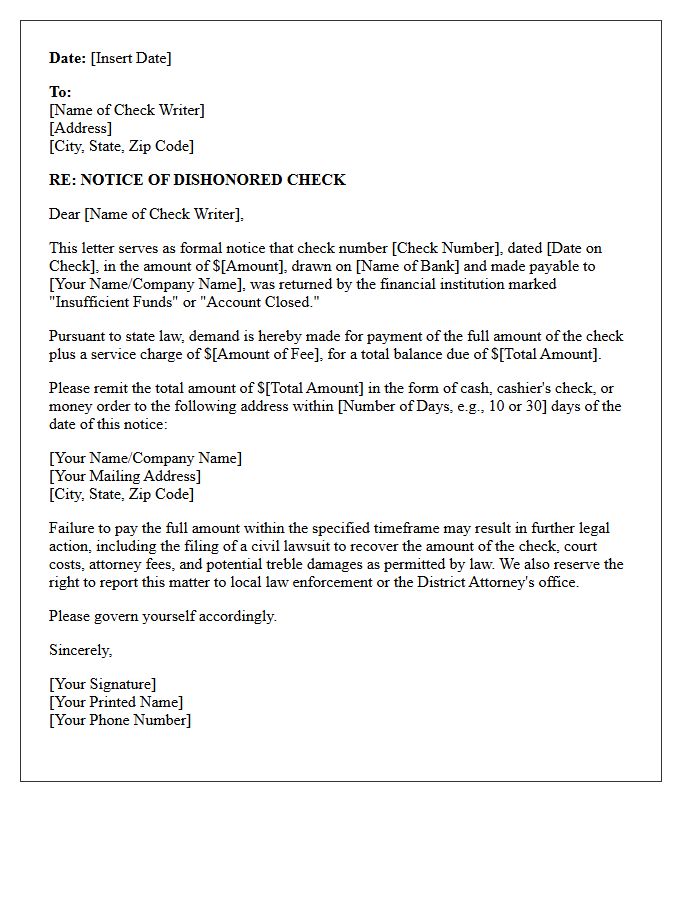
A Pre-Legal Action Dishonored Check Demand Letter is a critical formal notice sent to a payer after a check bounces due to insufficient funds. It serves as a final opportunity for the debtor to settle the outstanding balance plus applicable bank fees before litigation begins. Under many state laws, sending this document is a mandatory legal prerequisite to recovering statutory damages or criminal penalties. The letter must clearly state the check details, the total amount owed, and a specific deadline for payment to establish evidence of non-payment intent for future court proceedings.
Notice of Insufficient Funds and Account Suspension Letter
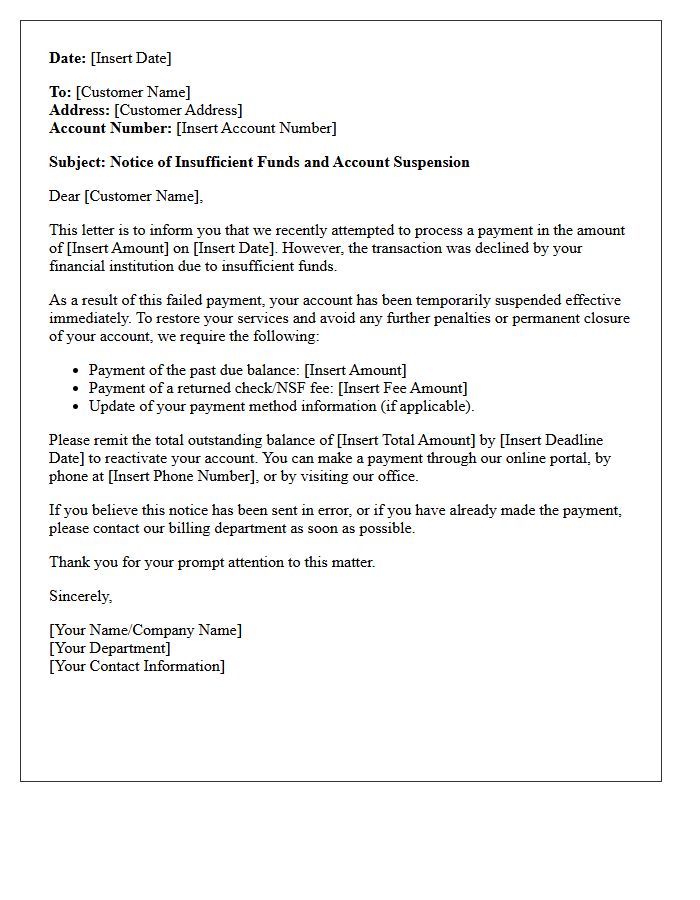
A Notice of Insufficient Funds and Account Suspension is a formal notification sent when a payment fails due to a lack of available capital. Receiving this letter indicates that your services are temporarily disabled to prevent further debt accumulation. To resolve this, you must immediately settle the outstanding balance and update your payment method. Failure to act promptly can lead to permanent account closure or credit reporting. Always verify the sender's details to avoid potential phishing scams and ensure your financial records are accurate to maintain service continuity.
Notice of Layaway Agreement Cancellation Letter
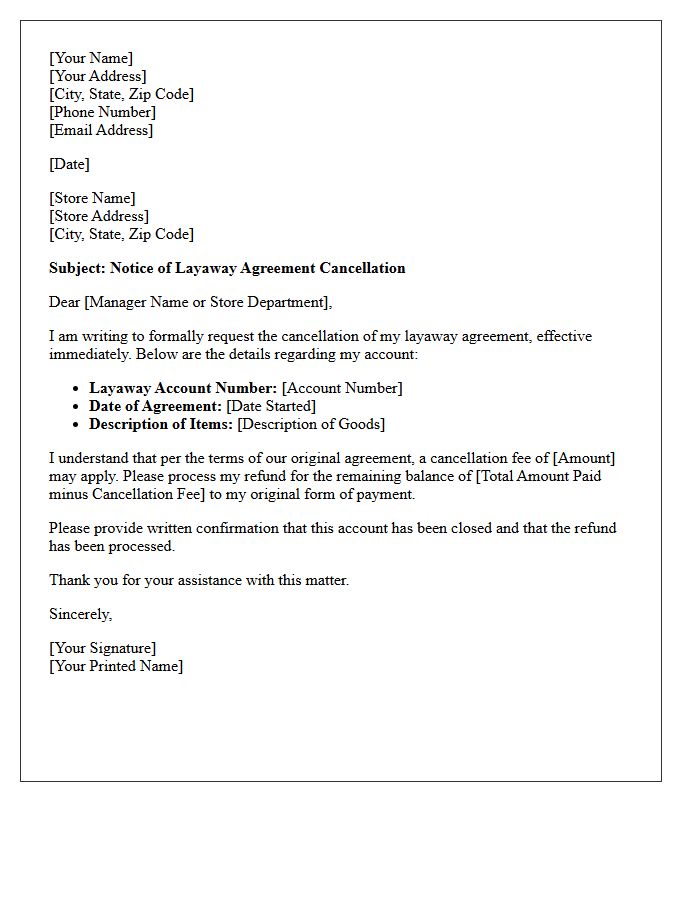
A Notice of Layaway Agreement Cancellation Letter is a formal document used to terminate a payment plan before the item is fully owned. It is essential to understand that refund policies vary by retailer; while payments are often returned, stores may deduct a restocking fee. When drafting the letter, include your account details, the specific item, and a clear request for a refund. Sending this notice via certified mail provides proof of delivery, ensuring you comply with the cancellation period specified in your original binding contract.
Final Notice of Layaway Default and Cancellation Letter
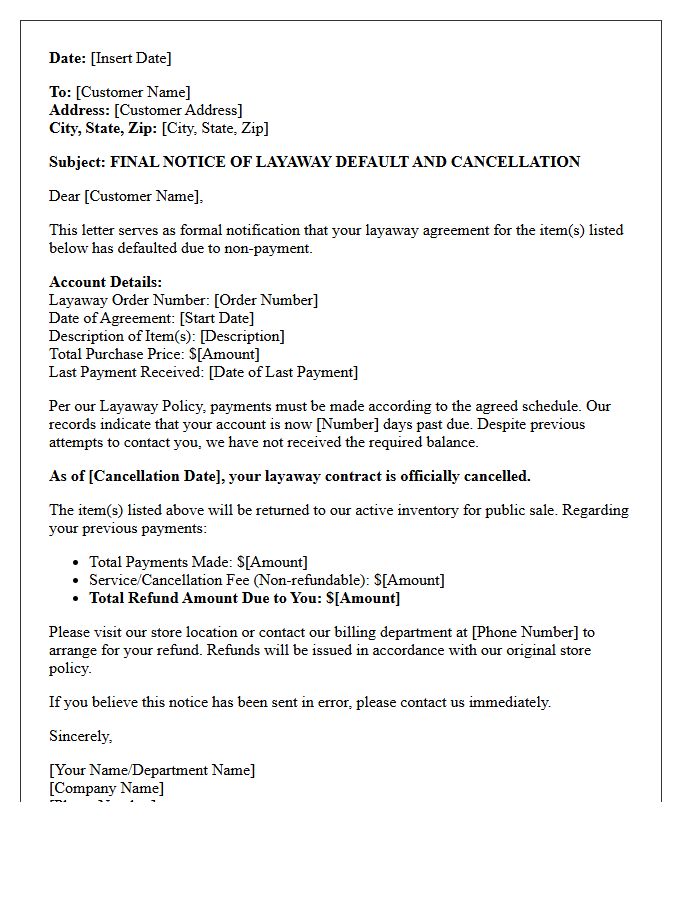
A Final Notice of Layaway Default and Cancellation Letter is a formal notification sent to a customer who has failed to meet their payment obligations. This document serves as the last warning before the merchant terminates the agreement. It specifies the remaining balance, the final deadline for payment, and the consequences of non-compliance, such as forfeited deposits or service fees. Receiving this letter means the item will be returned to inventory unless immediate action is taken to resolve the delinquency and complete the purchase.
Layaway Contract Termination and Balance Due Letter
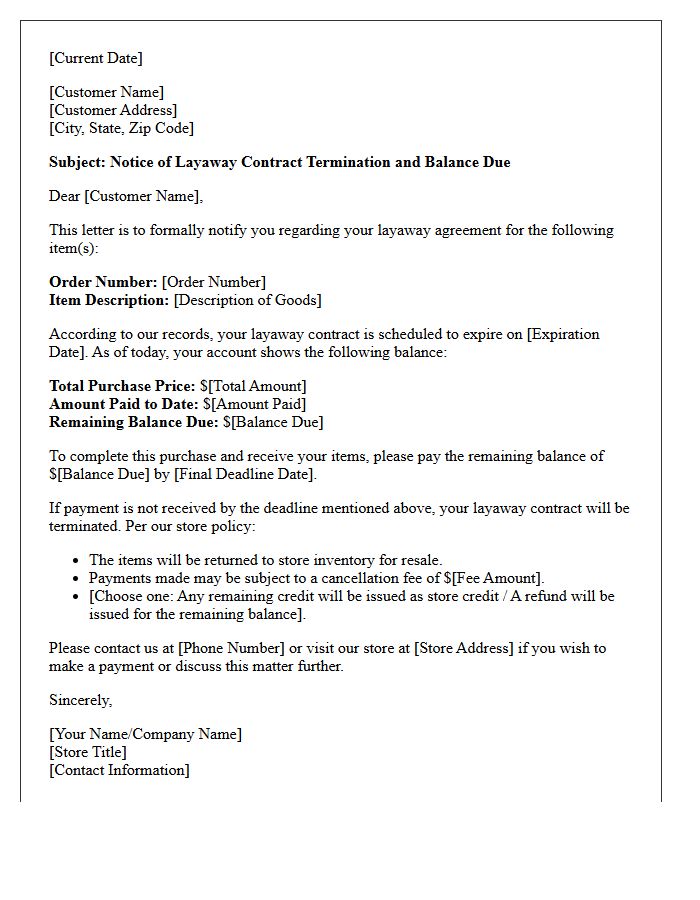
A layaway termination letter serves as formal notification that a purchasing agreement has ended, usually due to non-payment or expiration of the holding period. It is essential to clearly state the remaining balance due and any applicable restocking fees or cancellation penalties. This document outlines the deadline for final payment to prevent forfeiture of previous installments. Both parties should retain a copy to resolve potential disputes regarding refunds or merchandise availability. Timely communication ensures transparency and protects the consumer's rights under the original terms of the contract.
Notice of Forfeited Layaway Deposit Letter
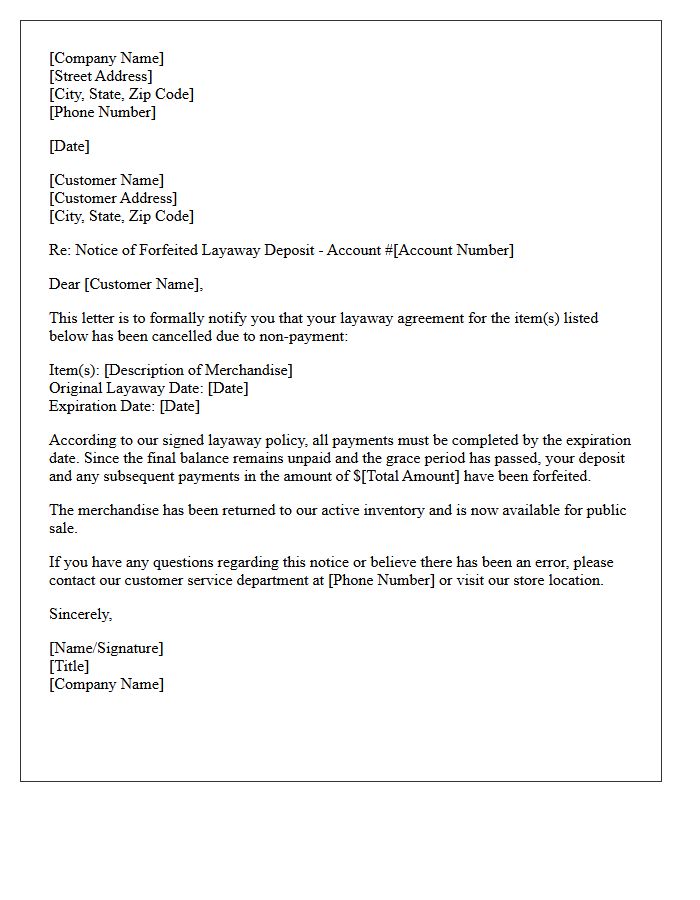
A Notice of Forfeited Layaway Deposit Letter is a formal communication sent to a customer when they fail to complete payments within the agreed timeframe. This document confirms the cancellation of the layaway agreement and specifies that the initial deposit or installments will be retained by the seller as a penalty. It is essential for businesses to ensure their refund policy and terms were clearly disclosed during the initial purchase to maintain legal compliance and transparency regarding the loss of funds.
Layaway Cancellation and Debt Collection Demand Letter
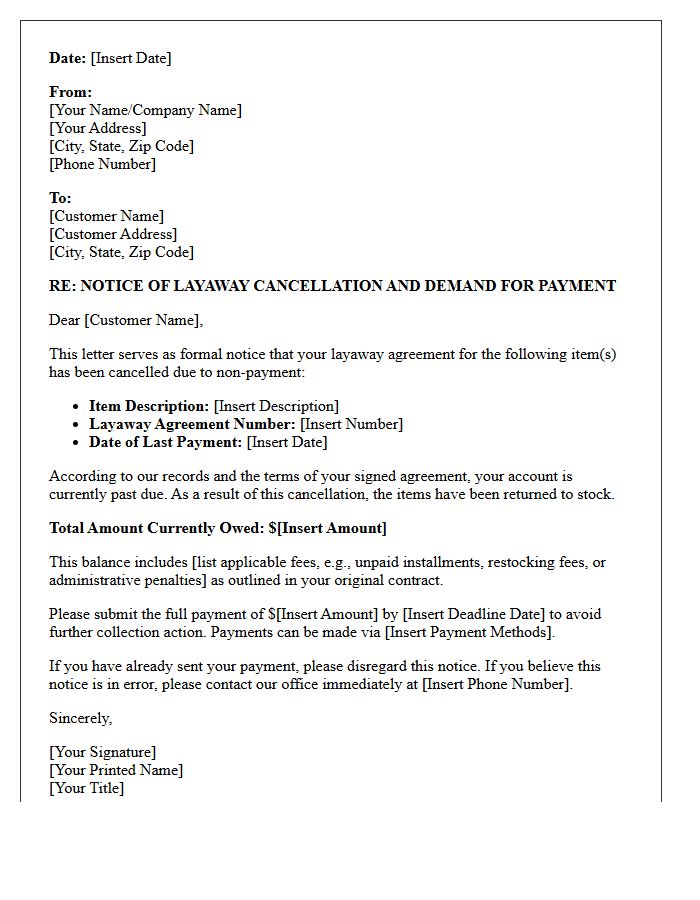
If you fail to complete payments, a layaway cancellation usually results in the merchant returning items to stock and issuing a refund minus service or restocking fees. However, if an agreement transitions into a credit obligation, you may receive a debt collection demand letter. This formal notice requires immediate attention to prevent credit score damage. Always verify the debt's validity in writing and review your original contract terms to ensure any penalty fees align with consumer protection laws and local retail regulations.
Dishonored Payment and Layaway Cancellation Notice Letter
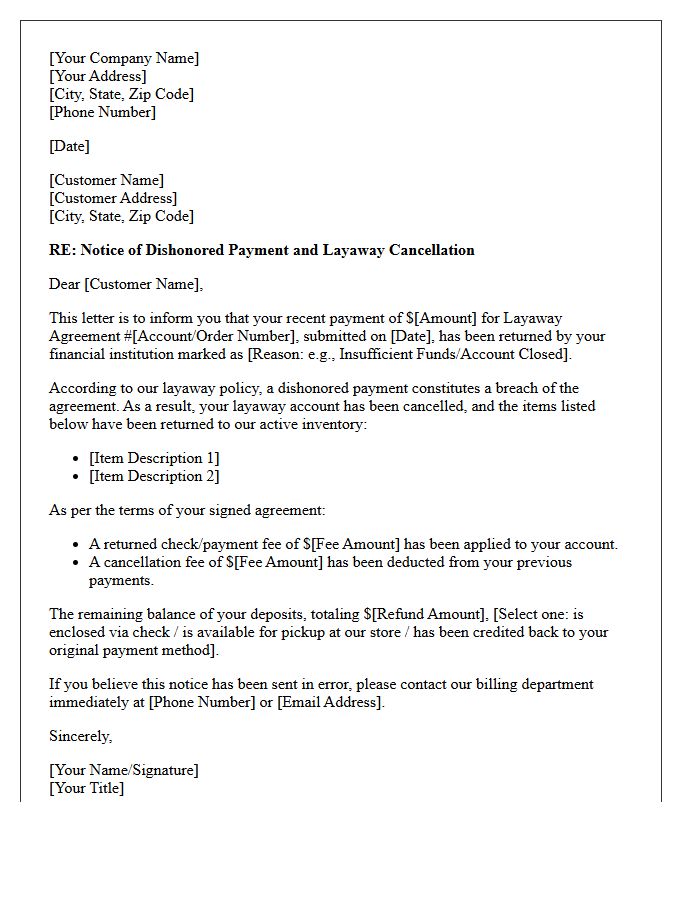
A Dishonored Payment and Layaway Cancellation Notice informs customers that a failed payment has led to the termination of their agreement. This formal letter details the defaulted balance, specific item details, and any applicable restocking fees. It serves as a final record confirming the forfeiture of the reservation due to non-compliance with payment terms. Timely communication is vital to ensure transparency regarding refund eligibility or the loss of a deposit. Understanding this notice helps clarify why the merchant has returned the merchandise to active inventory for resale.
Debt Collection Final Warning and Layaway Cancellation Letter
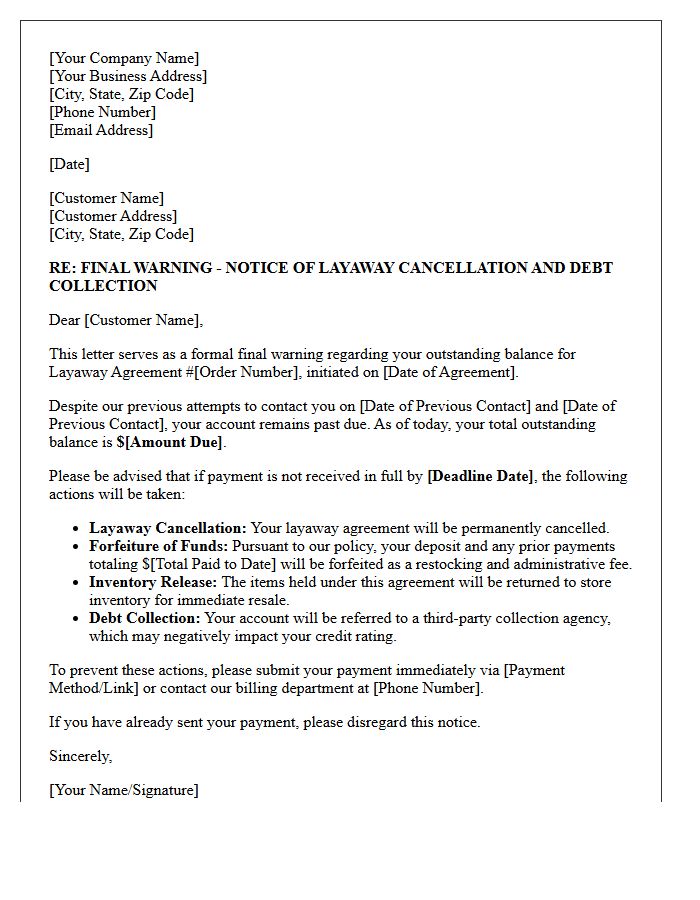
A Debt Collection Final Warning serves as a formal notice that your account will be referred to a third-party agency or legal team if the balance remains unpaid. It is the last opportunity to settle the debt before facing potential credit score damage or litigation. Similarly, a Layaway Cancellation Letter notifies the customer that their plan is being terminated due to missed payments. Understanding your contractual rights is essential, as cancellation often involves restocking fees or the loss of initial deposits according to the store's specific policy terms.
What is a Notice of Dishonored Check and Cancellation of Layaway Agreement?
It is a formal written notification sent to a customer stating that their payment check was returned by the bank unpaid (bounced), and as a result, their layaway contract is being terminated according to the agreed terms.
What are the common reasons for receiving a dishonored check notice?
The most frequent reasons include insufficient funds (NSF) in the account, a closed bank account, or a stop-payment order issued by the account holder, all of which prevent the merchant from collecting the layaway payment.
What happens to the items in my layaway plan after the agreement is cancelled?
Once the agreement is cancelled due to a dishonored check, the merchant typically returns the items to the sales floor for public purchase, as the reservation contract is no longer valid.
Are there any fees associated with a dishonored check and layaway cancellation?
Yes, customers are usually responsible for a returned check fee (NSF fee) and may also be charged a restocking or cancellation fee as outlined in the original layaway agreement.
Can I reinstate my layaway agreement after receiving this notice?
Reinstatement depends on the merchant's specific policy; however, you are typically required to immediately pay the outstanding balance plus any penalties using a guaranteed payment method like cash or a credit card to secure the items.

Comments