
Receiving a bounced check requires immediate legal action to recover your funds. A Notice of Dishonored Check formally notifies the issuer of the failed payment and demands a secure settlement via cashier's check or cash. Following specific state notice requirements is essential for potential civil litigation or criminal claims. To simplify this process, below are some ready to use template options.

Image cover: Professional Demand Templates for Dishonored Checks and Formal Payment Requests
Letter Samples List
- Notice of Dishonored Check and Demand for Cashier Payment Letter
- Dishonored Check Notification and Cashier Payment Demand Letter
- Debt Collection Letter for Dishonored Check and Cashier Funds Demand
- Returned Check Notice and Demand for Cashier Payment Letter
- Non-Sufficient Funds Check and Cashier Payment Demand Letter
- Final Demand Letter for Dishonored Check and Cashier Payment
- Official Letter of Dishonored Check and Demand for Certified Cashier Payment
- Bounced Check Collection and Cashier Payment Demand Letter
- Notice of Returned Item and Demand for Cashier Check Letter
- Pre-Legal Demand Letter for Dishonored Check and Cashier Remittance
- Debt Recovery Letter for Dishonored Check and Cashier Payment Demand
- Urgent Collection Letter for Dishonored Check and Cashier Funds
Notice of Dishonored Check and Demand for Cashier Payment Letter
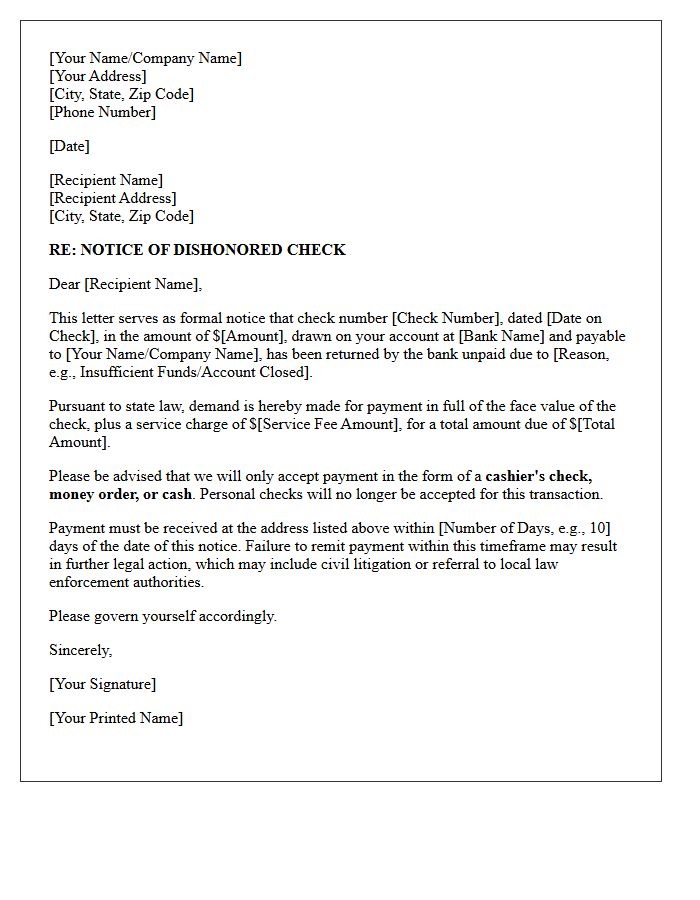
A Notice of Dishonored Check and Demand for Cashier Payment is a formal legal document sent when a payment is returned for insufficient funds. This letter serves as official notification, demanding the recipient provide a guaranteed payment method, such as a cashier's check or money order, within a specific timeframe. Issuing this notice is often a mandatory legal step before pursuing civil penalties or criminal charges for bounced checks. It ensures the debtor is aware of the failure and provides a final opportunity to settle the debt plus applicable bank fees.
Dishonored Check Notification and Cashier Payment Demand Letter
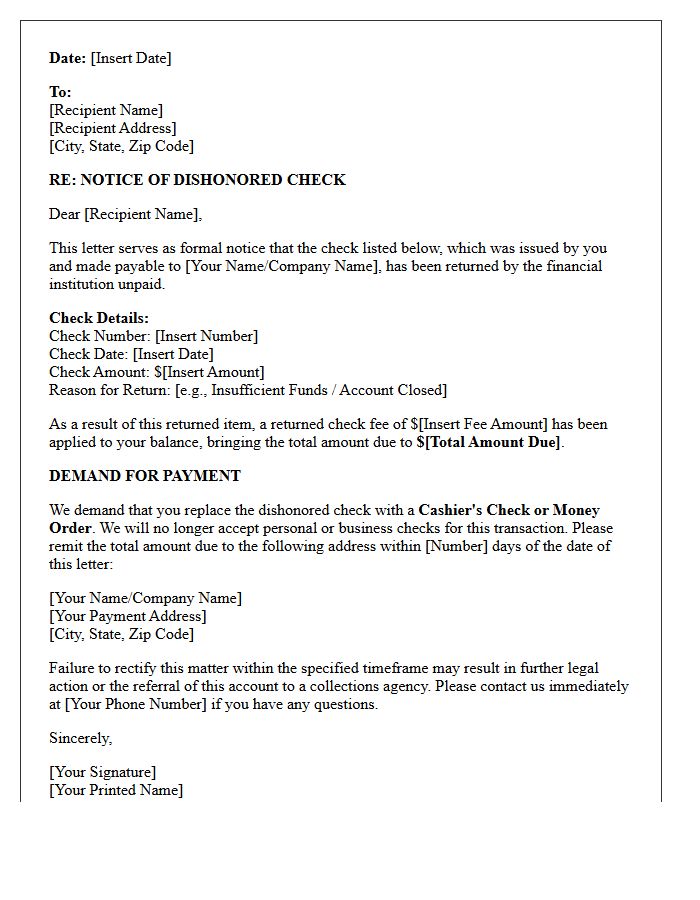
A Dishonored Check Notification serves as a formal legal demand after a payment is returned for non-sufficient funds. Under most jurisdictions, this letter provides the debtor a specific grace period to settle the balance before criminal or civil penalties apply. The notice must explicitly state the cashier payment demand, requiring the recipient to replace the failed check with guaranteed funds like a money order or certified check. Timely delivery via certified mail is essential to establish legal evidence of the demand and preserve the sender's right to collect statutory damages.
Debt Collection Letter for Dishonored Check and Cashier Funds Demand
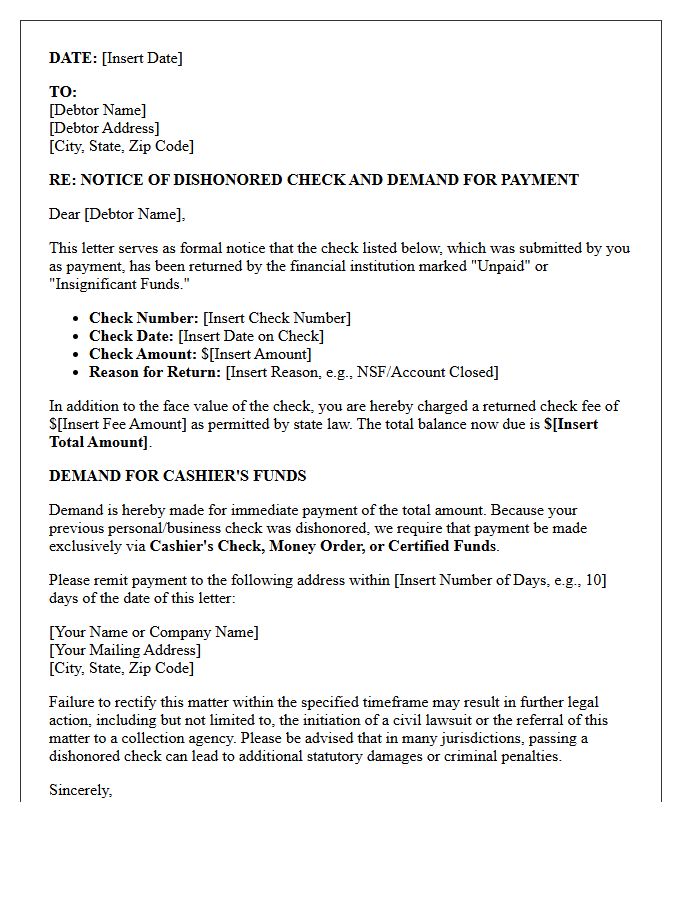
A debt collection letter for a dishonored check is a formal legal demand sent to a drawer whose payment was returned for insufficient funds. To comply with state laws, the notice must specify the check amount, any applicable service fees, and a strict deadline for payment. It serves as mandatory evidence before pursuing civil litigation or criminal charges. Recipients should respond immediately with cashier funds or a money order to satisfy the debt and avoid additional statutory damages, court costs, and potential negative impacts on their credit history.
Returned Check Notice and Demand for Cashier Payment Letter
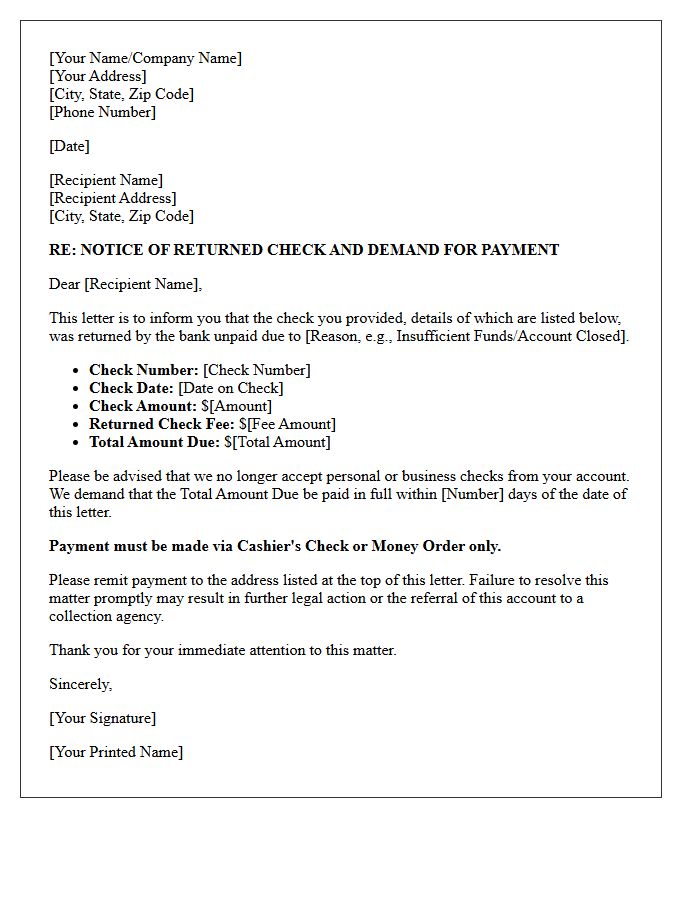
A Returned Check Notice informs a payer that their check was dishonored due to insufficient funds or a closed account. This formal demand requires the recipient to replace the failed payment with a cashier's check or money order to ensure guaranteed funds. Legally, it often serves as a final warning before pursuing civil penalties or legal action. It typically includes the original amount plus a mandated NSF fee. Promptly addressing this notice is essential to avoid negative credit reporting and potential criminal charges for issuing bad checks.
Non-Sufficient Funds Check and Cashier Payment Demand Letter
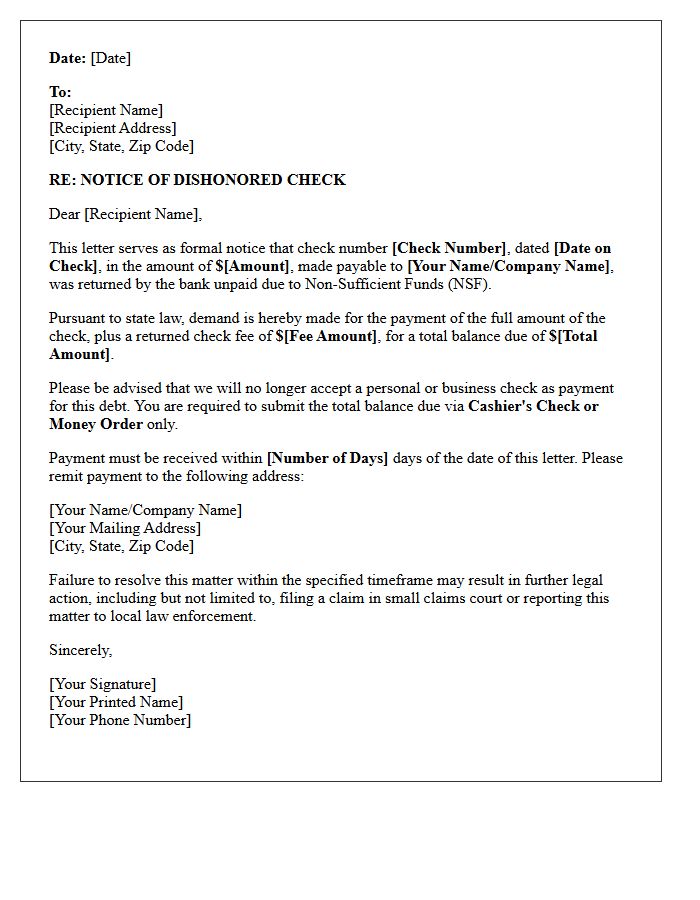
A Non-Sufficient Funds (NSF) Check occurs when a bank account lacks the balance to cover a payment. Receiving an NSF check allows you to issue a Cashier Payment Demand Letter, which is a formal legal notice requesting the original amount plus state-mandated penalty fees. Sending this letter is a critical step for debt recovery, as it serves as primary evidence in small claims court. Once the recipient receives the demand, they typically have a specific window, often 30 days, to provide guaranteed funds before facing further legal action or treble damages.
Final Demand Letter for Dishonored Check and Cashier Payment
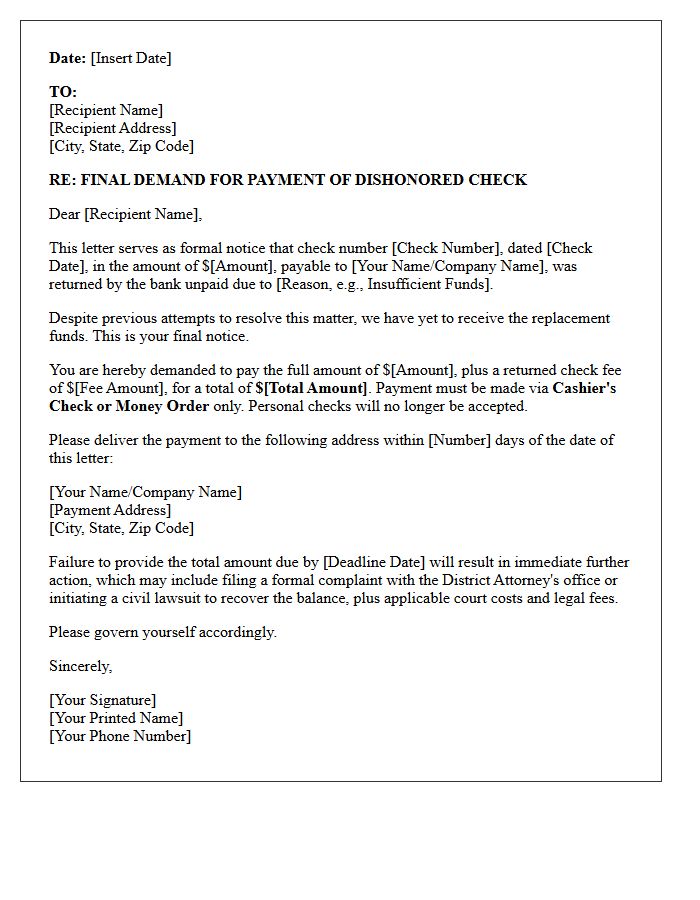
A final demand letter for a dishonored check is a formal legal notice issued to a debtor after a payment fails due to insufficient funds. It serves as a mandatory prerequisite for legal action, requiring the recipient to provide full restitution within a specific timeframe, typically ten days. To resolve the debt and avoid criminal or civil penalties, the sender usually mandates cashier payment or a certified check. This document provides critical evidence of your attempt to collect the debt before pursuing statutory damages or litigation in small claims court.
Official Letter of Dishonored Check and Demand for Certified Cashier Payment
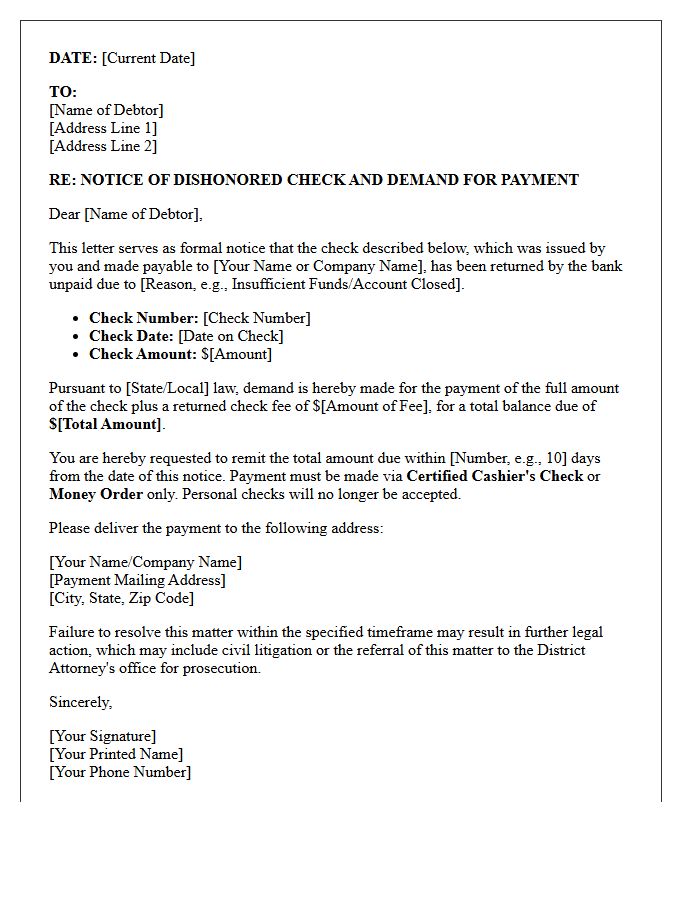
An Official Letter of Dishonored Check serves as a formal legal notice informing a recipient that their payment failed due to insufficient funds. To resolve the debt and avoid potential litigation or criminal penalties, the sender issues a Demand for Certified Cashier Payment. This requirement ensures the replacement funds are guaranteed by a bank, eliminating the risk of a second reversal. Recipients must typically respond within a specific statutory timeframe to demonstrate good faith and prevent further legal escalation or additional processing fees.
Bounced Check Collection and Cashier Payment Demand Letter
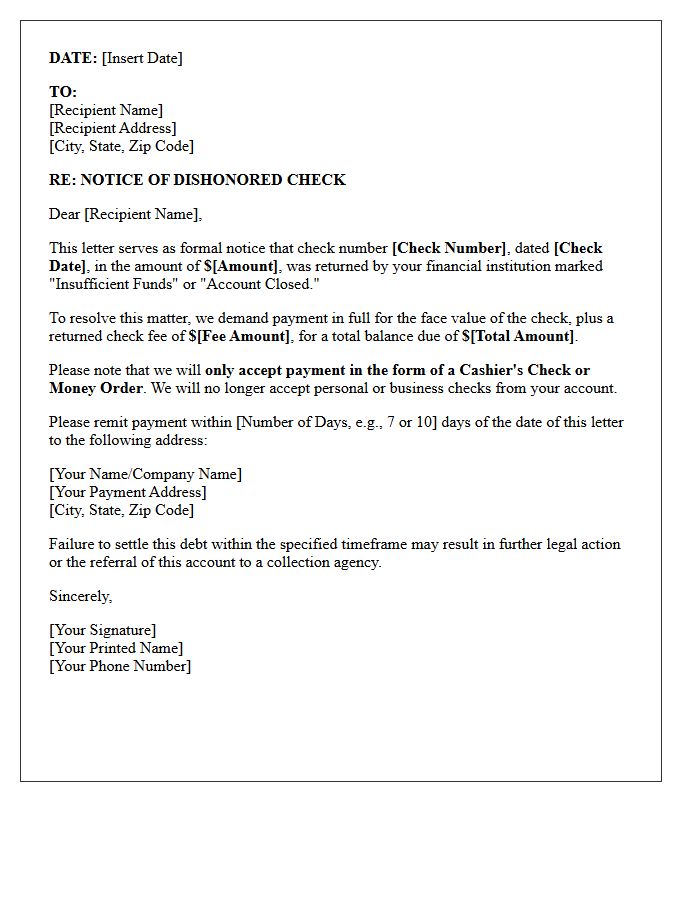
A Bounced Check Collection notice is a formal legal demand sent to a debtor after a payment is returned for insufficient funds. To protect your rights, the letter must specify the check details, the failed transaction date, and any applicable state-mandated NSF fees. Most jurisdictions require a written demand for a Cashier Payment-such as a certified check or money order-within a set timeframe, usually 15 to 30 days. Sending this via certified mail provides essential proof of delivery required to pursue further civil penalties or criminal action.
Notice of Returned Item and Demand for Cashier Check Letter
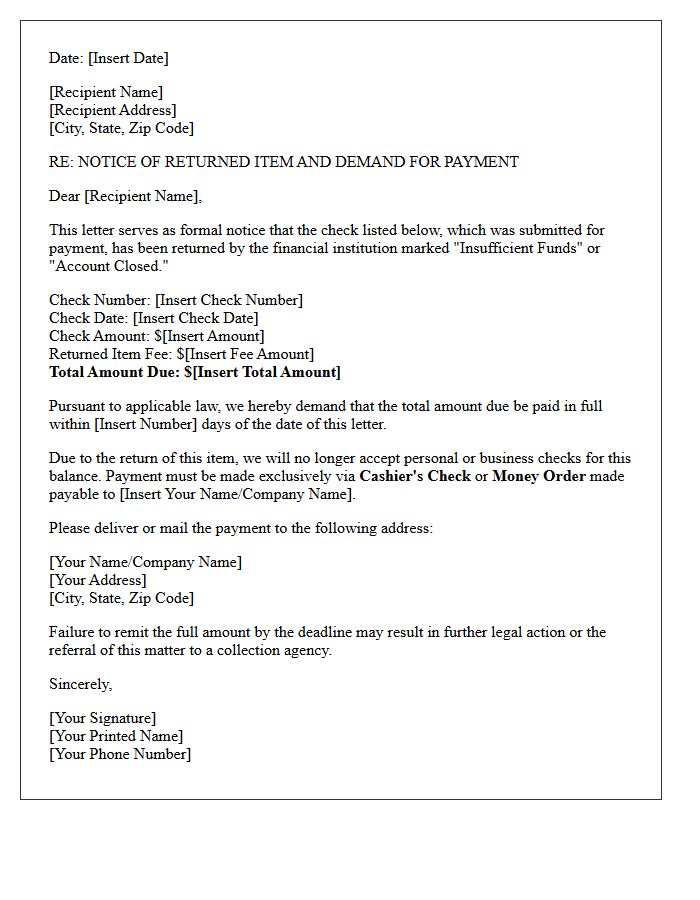
A Notice of Returned Item and Demand for Cashier's Check is a formal legal document issued when a payment fails due to insufficient funds. It notifies the payer that their check was dishonored and demands immediate settlement. To ensure guaranteed payment, the sender requires a cashier's check or certified funds to replace the original amount plus applicable fees. This notice serves as critical legal evidence of the debt, establishing a formal timeline for repayment before the creditor pursues further action, such as collections or litigation, under state-specific commercial codes.
Pre-Legal Demand Letter for Dishonored Check and Cashier Remittance
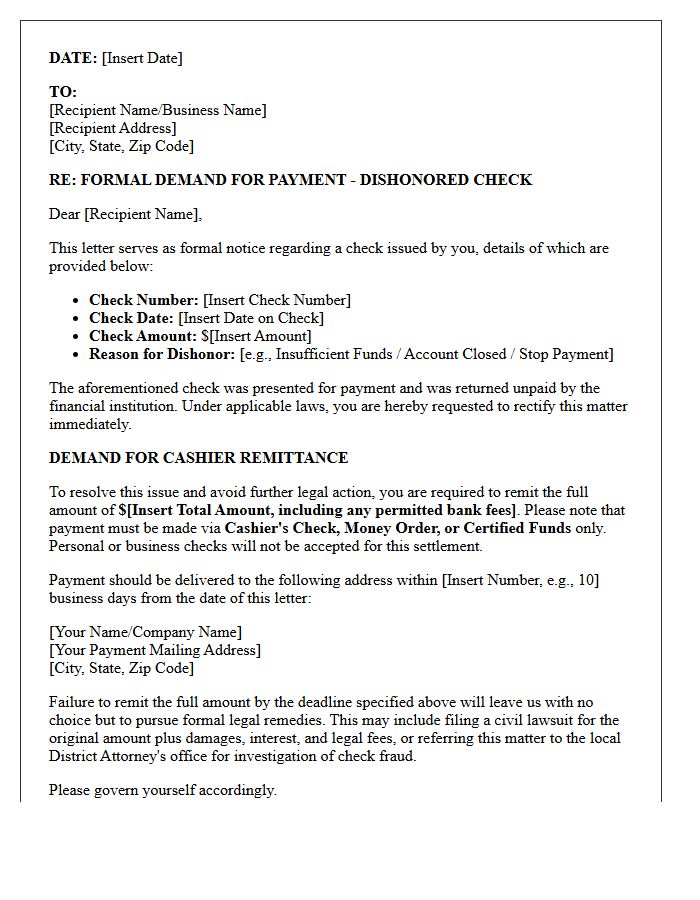
A Pre-Legal Demand Letter serves as a formal notice to a debtor after a check is dishonored due to insufficient funds. It provides a final opportunity for voluntary restitution before initiating litigation or criminal complaints. The document must clearly state the check details, the reason for dishonor, and a specific deadline for payment via cashier remittance or certified funds. Sending this notice via registered mail is a critical procedural requirement to establish legal intent and prove that the drawer was given due process to settle the outstanding debt.
Debt Recovery Letter for Dishonored Check and Cashier Payment Demand
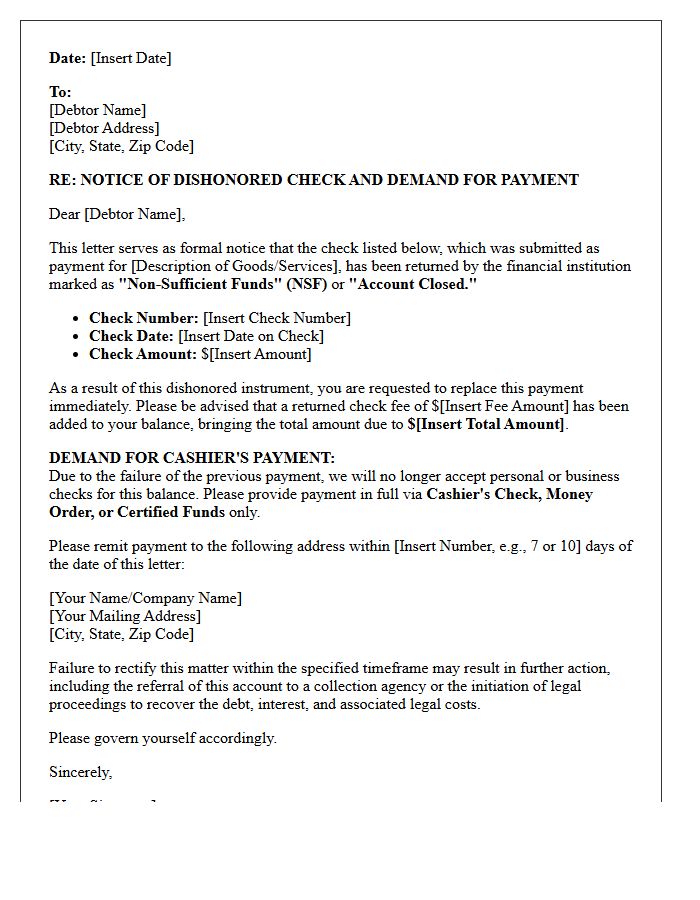
A Debt Recovery Letter for a dishonored check serves as a formal legal notice demanding immediate payment. When a check bounces due to insufficient funds, the recipient typically issues a demand for the original balance plus applicable bank fees. To ensure guaranteed funds, the letter often specifies a Cashier's Check or money order as the only acceptable payment method. Providing a strict deadline is essential, as this document establishes a paper trail required for potential civil litigation or criminal prosecution under state bad check laws.
Urgent Collection Letter for Dishonored Check and Cashier Funds
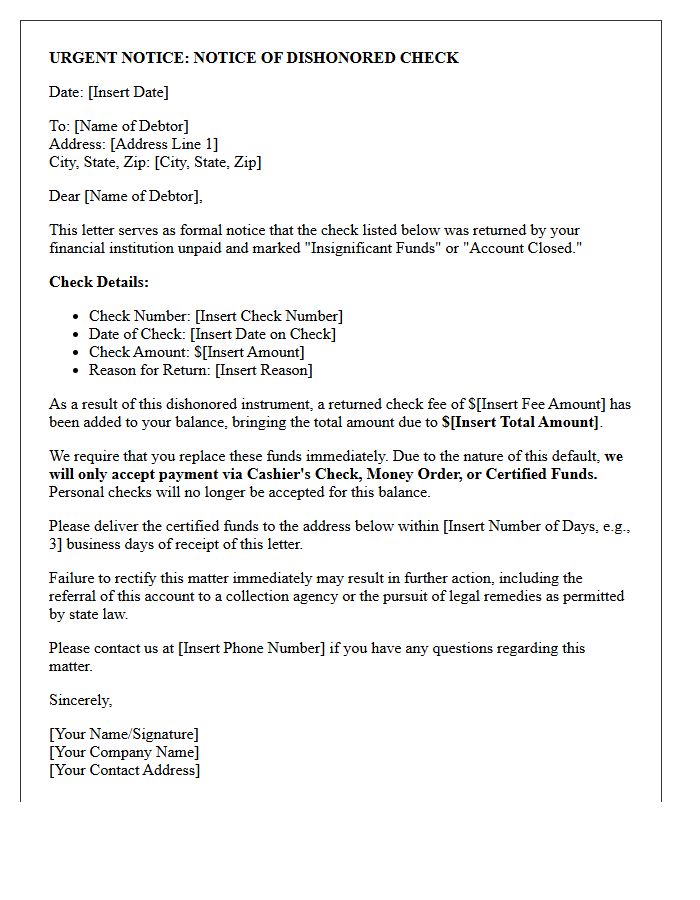
An Urgent Collection Letter serves as a formal demand for payment following a dishonored check. It notifies the issuer that their payment failed due to insufficient funds or a stop-payment order. To resolve the debt and avoid legal action or credit damage, the recipient must provide cashier funds or a certified money order immediately. This document typically includes a strict deadline and specifies additional returned check fees mandated by state law. Promptly replacing the bounced check with guaranteed funds is essential to maintain business relationships and prevent further penalties.
What is a Notice of Dishonored Check?
A Notice of Dishonored Check is a formal legal notification sent to a payor informing them that their check was returned by the bank unpaid, typically due to non-sufficient funds (NSF) or a closed account.
How do I respond to a Demand for Cashier Payment?
To resolve a dishonored check, you must provide the full amount of the original check plus any applicable bank fees using a certified payment method, such as a cashier's check or money order, within the timeframe specified in the notice.
What are the legal consequences of failing to pay a dishonored check?
Failure to satisfy a demand for payment after a dishonored check can result in civil penalties, including three times the amount of the check (treble damages), court costs, and potential criminal charges for writing a bad check.
How long do I have to pay after receiving a formal demand notice?
Most state laws require the payor to remit payment via cashier's check or cash within 15 to 30 days of receiving the formal notice to avoid further legal action or statutory penalties.
Why is a cashier's check required instead of a personal check for reimbursement?
A cashier's check is demanded because it is guaranteed by the issuing bank, ensuring that the funds are available and preventing the risk of a second dishonored personal check transaction.

Comments