
A Final Demand Notice is the last formal warning sent to a property owner before recording a mechanic's lien. This crucial legal document protects your payment rights and provides a final opportunity to settle outstanding construction debts without litigation. To help you streamline your collection process, below are some ready to use templates.
Image cover: Final Notice of Intent to File a Mechanic's Lien: Templates and Formal Demands
Letter Samples List
- Certified Mail Tracking Number for the Letter
- Sender and Debt Collector Contact Information in the Letter
- Date of the Final Demand Letter
- Property Owner and Debtor Details in the Letter
- Reference Number and Account Information in the Letter
- Subject Line Regarding the Mechanic's Lien Letter
- Description of Unpaid Construction Services in the Letter
- Legal Address of the Subject Property in the Letter
- Total Outstanding Debt Amount Demanded in the Letter
- Strict Payment Deadline Stated in the Letter
- Explicit Warning of Mechanic's Lien Filing in the Letter
- Mandatory Debt Collection Rights Disclosure in the Letter
- Payment Remittance Instructions Provided in the Letter
- Authorized Debt Collector Signature on the Letter
Certified Mail Tracking Number for the Letter
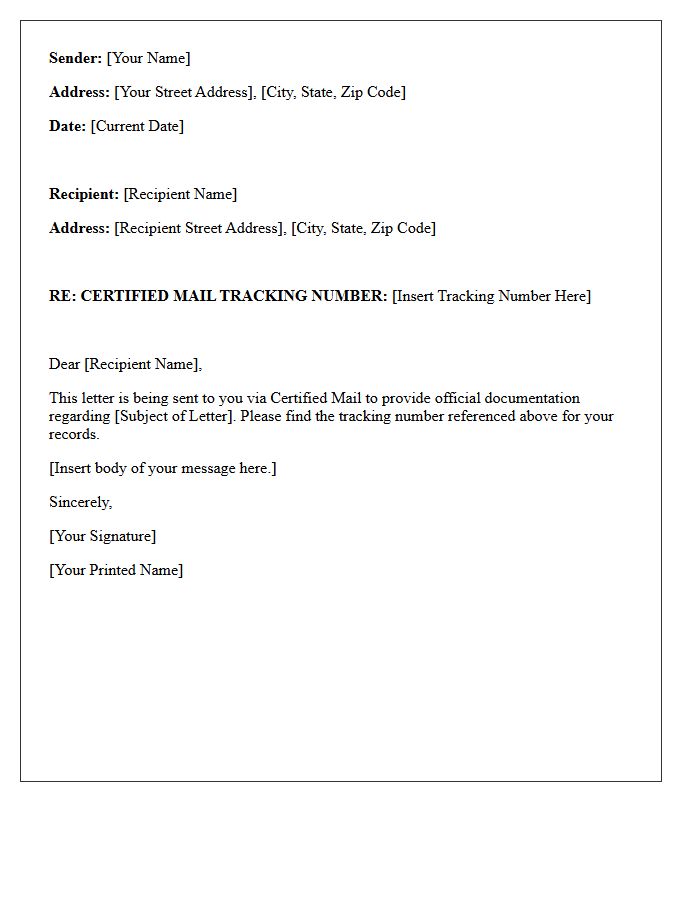
A Certified Mail Tracking Number is a unique 20-digit code providing legal proof of mailing and delivery status. This identifier allows senders to monitor their letter's journey in real-time via the USPS website. It ensures accountability by requiring a recipient's signature upon arrival, creating an official record for sensitive documents. Always retain your mailing receipt, as it contains the specific tracking digits necessary to verify successful transit and confirm that your important correspondence reached its intended destination securely.
Sender and Debt Collector Contact Information in the Letter
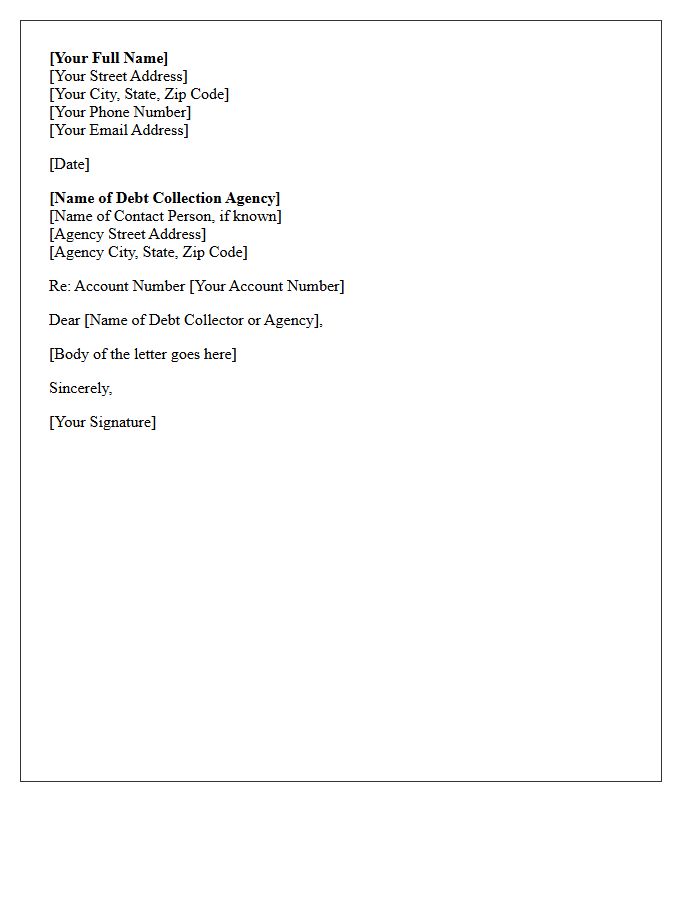
When reviewing a collection notice, verifying the Sender and Debt Collector Contact Information is the most critical step to prevent fraud. The letter must clearly display the agency's legal name, physical mailing address, and a valid phone number. This information allows you to confirm the collector's legitimacy and exercise your legal right to dispute the debt in writing. Cross-referencing these details with official records ensures you are communicating with an authorized entity rather than a scammer, protecting your financial security and consumer rights under federal law.
Date of the Final Demand Letter
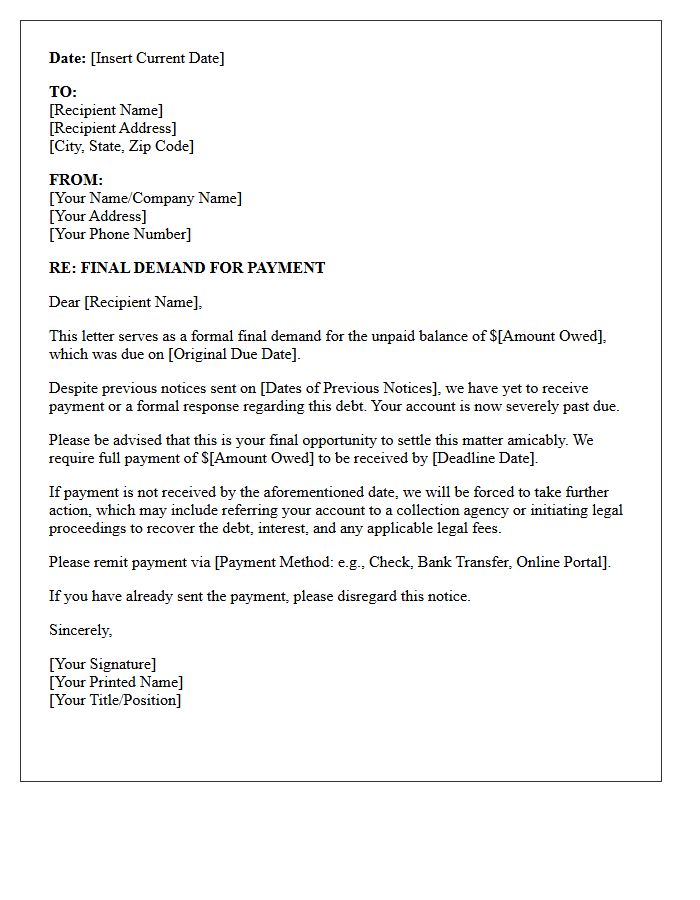
The Date of the Final Demand Letter marks the formal commencement of legal recovery efforts. This specific date is critical because it establishes a definitive deadline for settlement before a lawsuit is filed. It serves as a timeline marker for calculating interest and fulfills procedural requirements for legal compliance. Ensuring the date is accurate protects your rights during litigation, as it proves the debtor was given a final opportunity to resolve the outstanding debt. Missing or miscalculating this date can delay judicial proceedings or weaken your standing in a court of law.
Property Owner and Debtor Details in the Letter
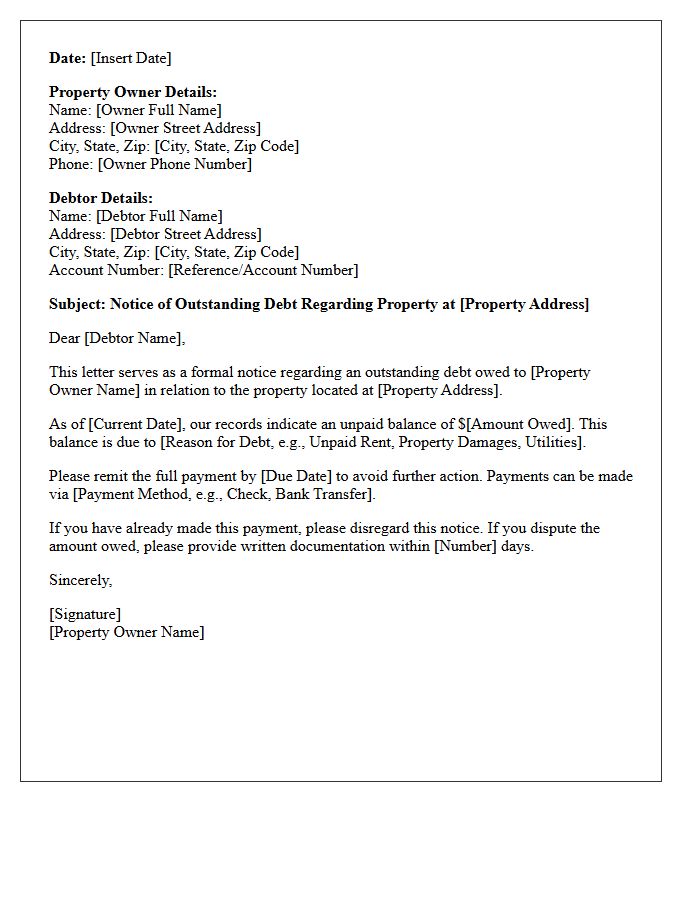
When drafting a formal notice, accurately documenting Property Owner and Debtor Details is essential for legal validity. The letter must clearly identify the legal owner of the asset alongside the individual responsible for the outstanding debt. Precision in names, physical addresses, and account references ensures enforceable communication. These details facilitate transparent dispute resolution and serve as vital evidence during potential litigation. Always verify identifying information against official records to prevent delays in the recovery process or legal complications arising from misidentification in the formal documentation.
Reference Number and Account Information in the Letter
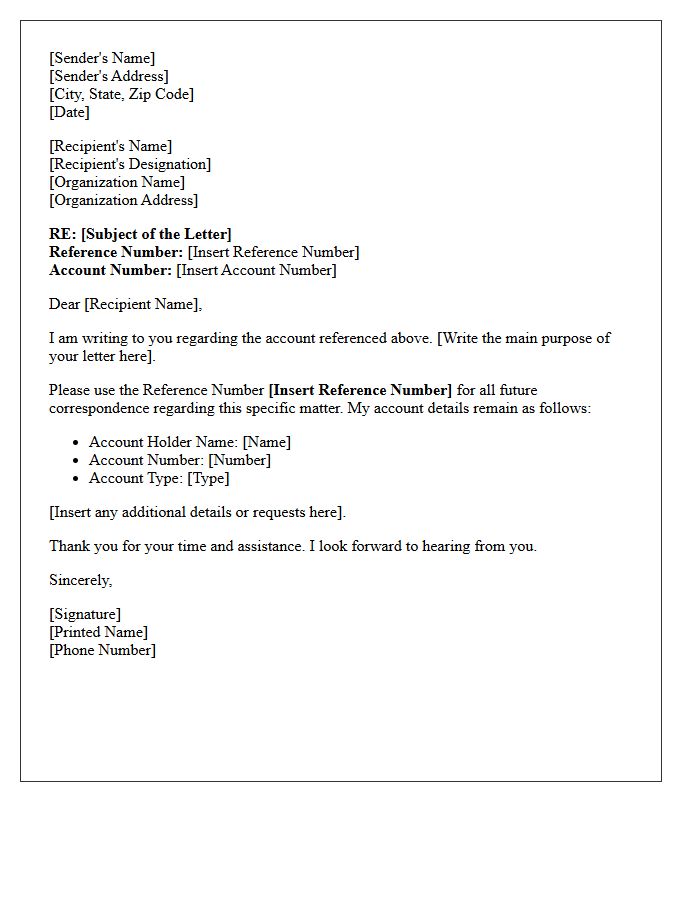
Locating your Reference Number and Account Information within the letter is essential for secure communication. This unique identifier links your inquiry to your specific profile, ensuring accuracy during customer support or payment processing. Always verify these details to prevent errors and protect your personal security. Providing the correct reference allows for faster service and efficient tracking of your transaction history. Keep this information confidential and reference it in all future correspondence with the organization to ensure a seamless account management experience.
Subject Line Regarding the Mechanic's Lien Letter
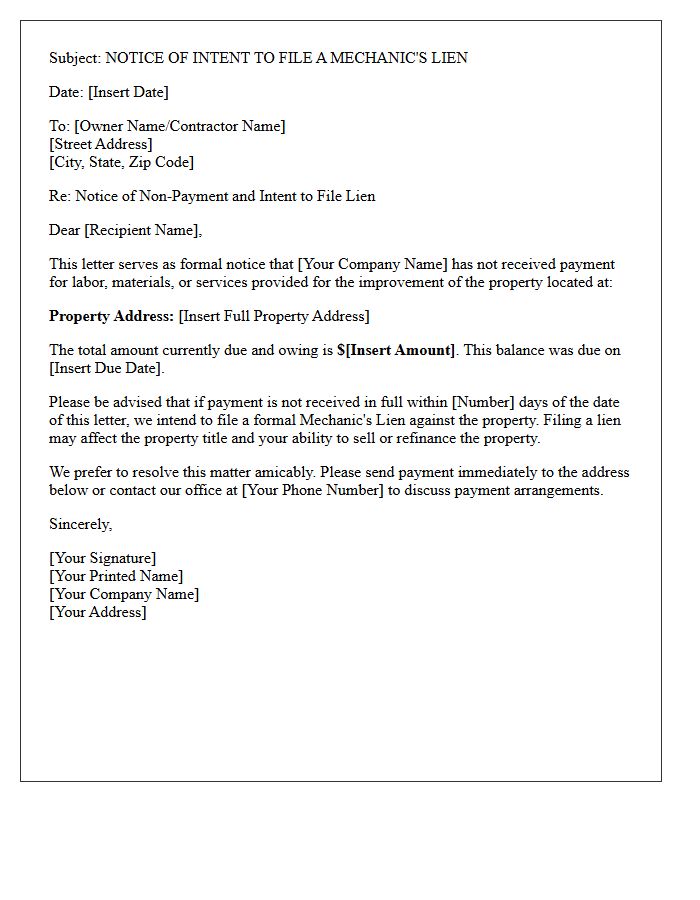
A Mechanic's Lien Subject Line must be clear and urgent to ensure immediate attention. It should explicitly state the property address and the intent to file a legal claim for unpaid construction work. Including the Notice of Intent or "Lien Warning" helps expedite payment by alerting owners and lenders to potential title issues. A precise subject line acts as a formal legal notification, documenting that the recipient was informed of the debt before further litigation occurs. Professionalism in this correspondence is essential for protecting your security interest in the improved property.
Description of Unpaid Construction Services in the Letter
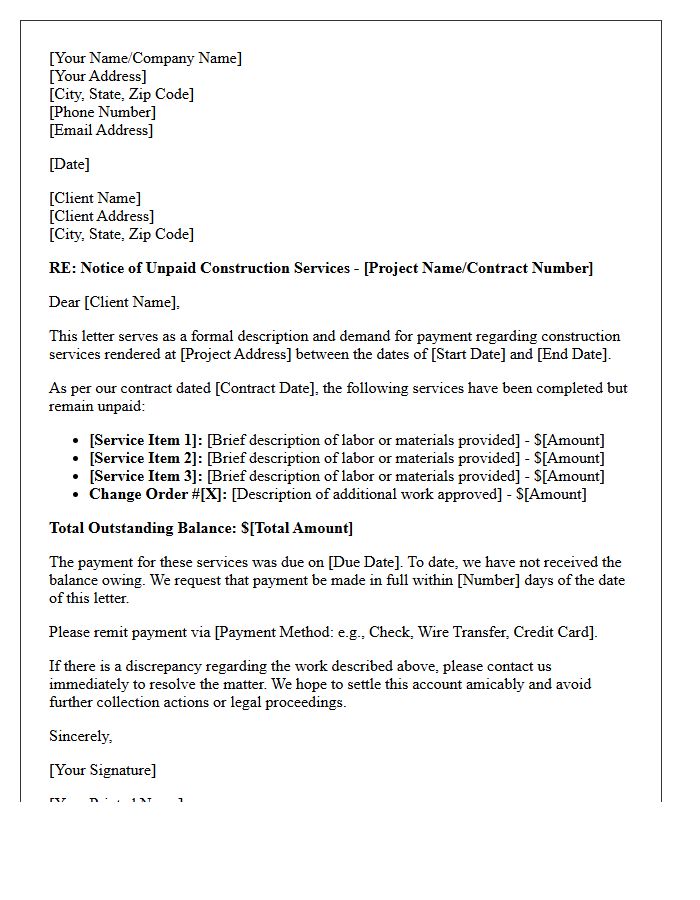
When drafting a formal notice regarding unpaid construction services, clearly itemizing the outstanding balance and specific labor performed is essential. The letter serves as a critical legal precursor to filing a mechanic's lien, protecting your right to payment. Ensure you include precise dates, the project location, and a firm deadline for restitution to demonstrate professional intent. Accurately documenting these details in your correspondence strengthens your claim during potential litigation or arbitration, ensuring that your business recovers the compensation deserved for completed contractual work and materials supplied.
Legal Address of the Subject Property in the Letter
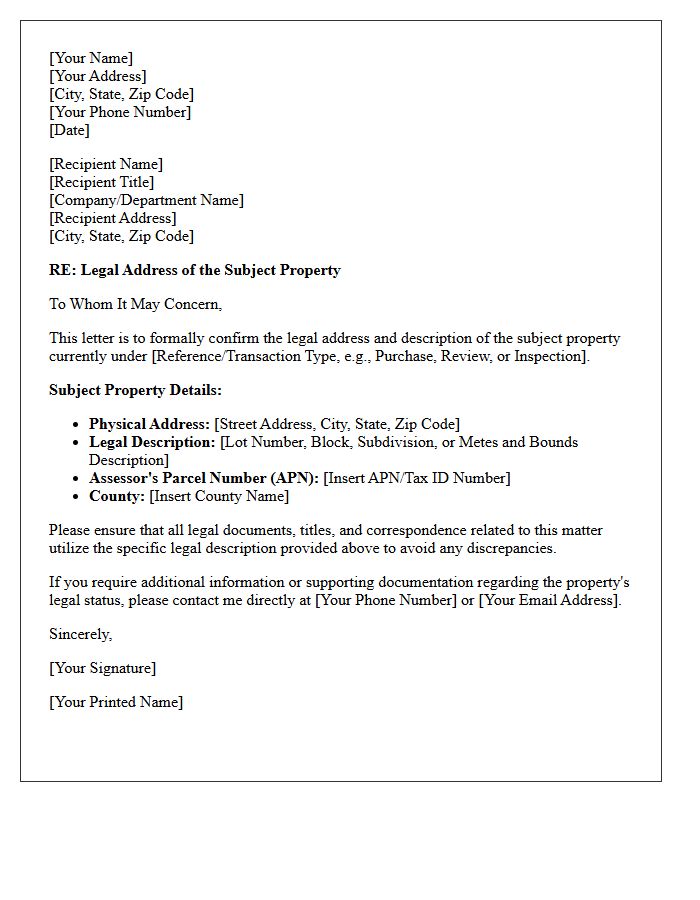
The legal address of the subject property is a critical identifier in official documentation, distinct from a simple mailing address. It provides a precise legal description, such as lot and block numbers, ensuring the property is uniquely identifiable within government land records. Accuracy is vital to prevent title disputes, financing delays, or contract nullification. Always verify this information against the official deed or tax records to maintain legal validity and clear ownership definitions in any formal correspondence or real estate agreement.
Total Outstanding Debt Amount Demanded in the Letter
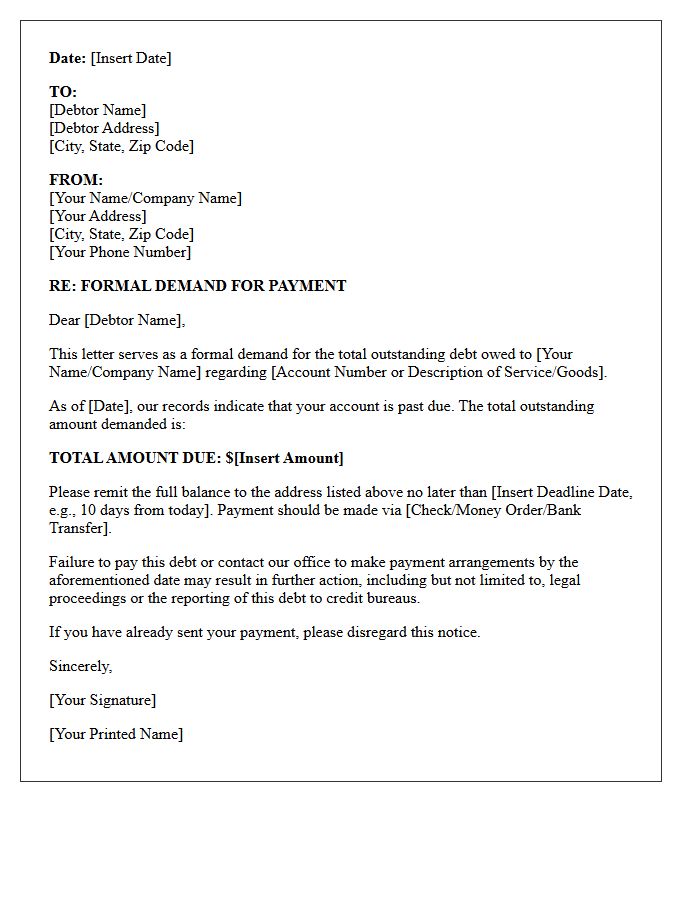
The Total Outstanding Debt Amount Demanded represents the exact sum you are legally required to settle. This figure typically combines the original principal balance with accumulated interest, late fees, and potential collection costs. It is vital to verify this amount against your personal records to ensure accuracy before making a payment. If the balance seems incorrect, you have the right to request a formal debt validation. Understanding this total helps you negotiate settlements or establish manageable repayment plans to satisfy the obligation fully.
Strict Payment Deadline Stated in the Letter
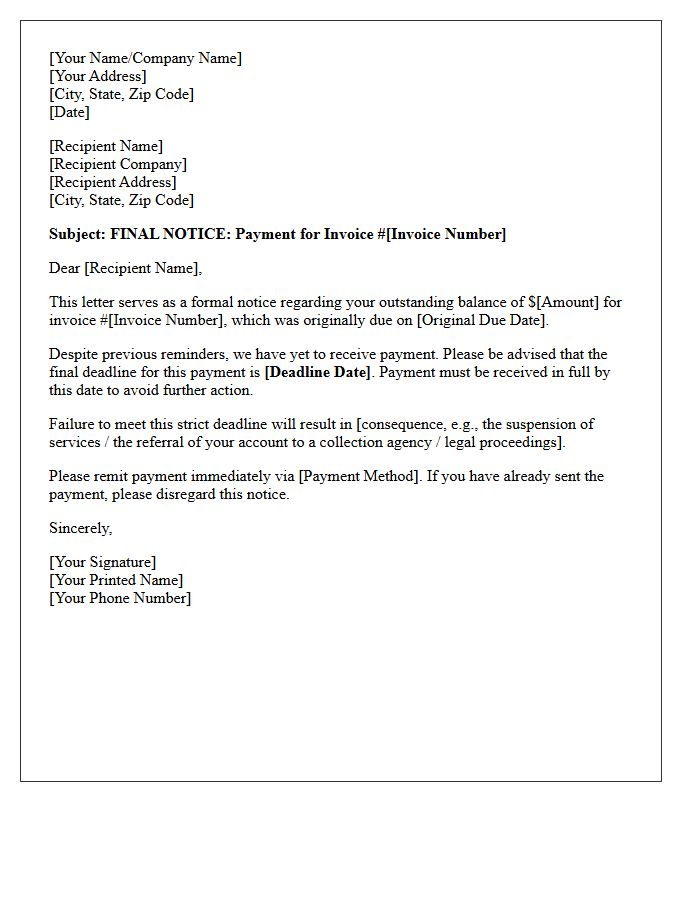
A strict payment deadline stated in a formal letter creates a legally binding timeframe for debt settlement. Failure to provide cleared funds by the specified date may trigger immediate late fees, interest accrual, or the escalation of legal action. It is essential to verify the exact due date and payment methods to avoid breach of contract. Prompt communication is necessary if you cannot meet the settlement terms, as missing a final notice deadline often results in a permanent credit score impact or professional debt recovery intervention.
Explicit Warning of Mechanic's Lien Filing in the Letter
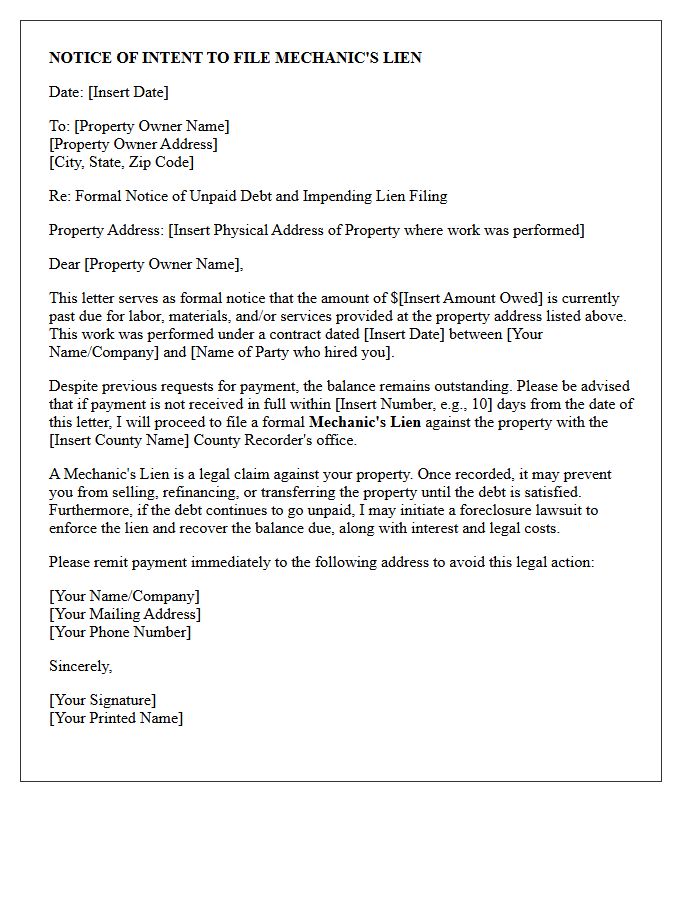
Including an Explicit Warning of Mechanic's Lien Filing in your pre-lien notice is a critical step for securing payment. This formal notification alerts property owners that a legal claim will be recorded against their title if debts remain unpaid. Providing this clear ultimatum often accelerates the collection process by involving stakeholders and lenders. To ensure enforceability, the language must be direct and strictly follow state-specific statutory requirements. Properly documenting this warning serves as a vital prerequisite for future litigation and preserves your right to recover outstanding construction costs effectively.
Mandatory Debt Collection Rights Disclosure in the Letter
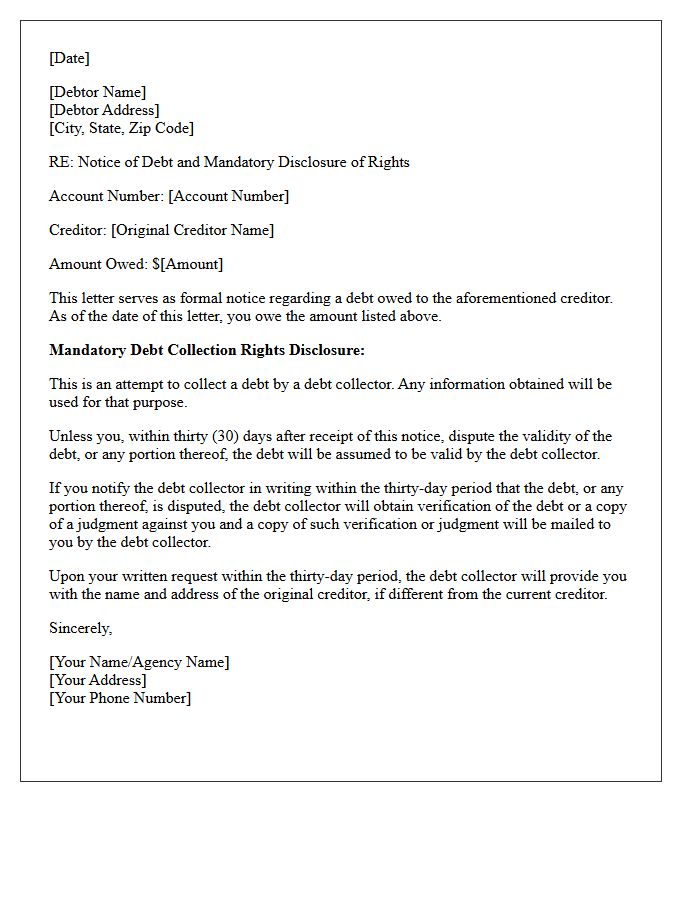
Under the Fair Debt Collection Practices Act, agencies must provide a Validation Notice within five days of initial contact. This mandatory disclosure must clearly state the amount of debt, the creditor's name, and your right to dispute the claim within thirty days. If you request written verification, the collector must cease all activities until proof is provided. Ensuring these legal rights are included in the letter protects consumers from unfair practices and ensures transparency during the debt recovery process. Failure to disclose these rights can render the collection attempt unlawful.
Payment Remittance Instructions Provided in the Letter
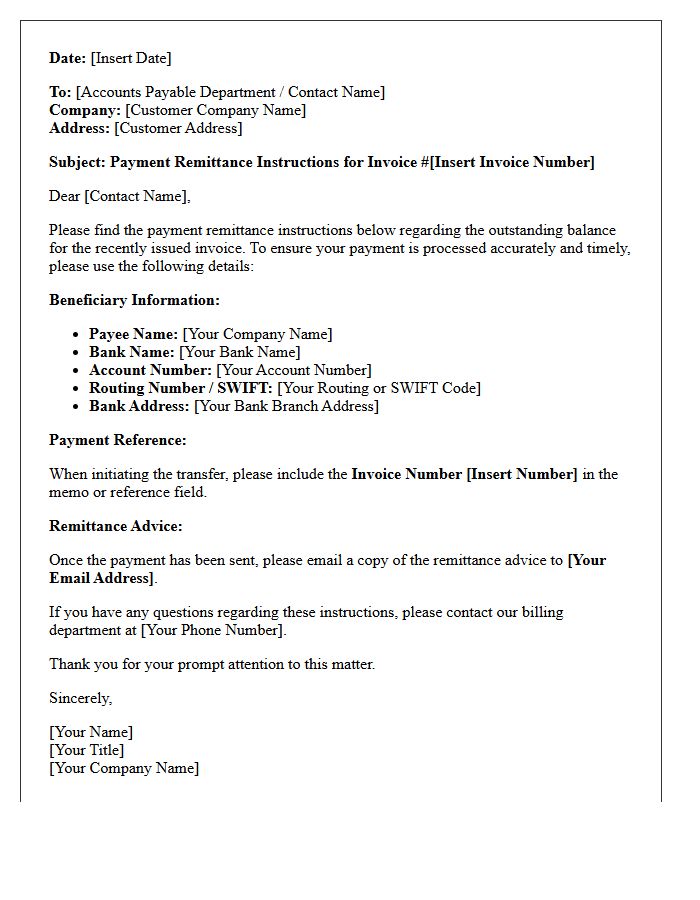
The payment remittance instructions outlined in your letter provide essential details to ensure your funds are credited accurately. You must follow the account number and routing information precisely to avoid processing delays. Always include the specified invoice reference and use the designated payment method, such as ACH or wire transfer, as directed. Verifying these details prevents misapplied payments and helps maintain a clear financial record. Always confirm any changes to banking information through a secure, secondary channel to protect against potential fraud.
Authorized Debt Collector Signature on the Letter
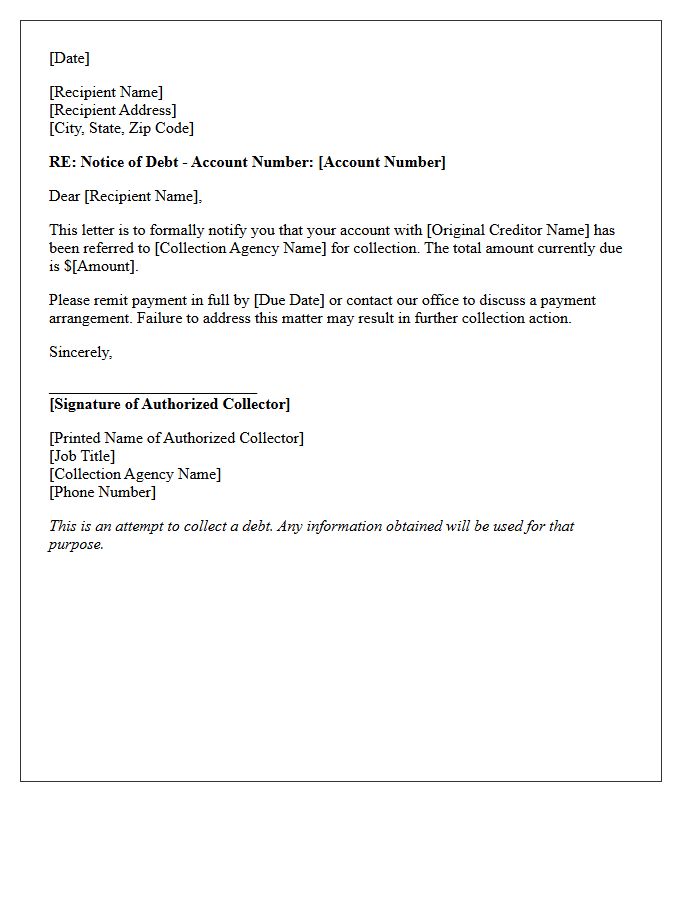
An authorized debt collector signature validates the legitimacy of a collection notice. While many modern letters use printed names, a signature confirms a designated agent has reviewed the account details. Under the Fair Debt Collection Practices Act (FDCPA), the sender must be clearly identified to prevent consumer confusion. If a signature appears fraudulent or inconsistent with the agency's credentials, it may indicate a scam or a violation of federal law. Always verify the collector's identity and the debt amount before making payments or sharing sensitive personal information.
What is a Final Demand Notice Prior to a Mechanic's Lien?
A Final Demand Notice is a formal legal document sent by a contractor, subcontractor, or supplier to a property owner. It serves as a final warning that a mechanic's lien will be officially recorded against the property title if the outstanding debt is not paid within a specific timeframe.
Is a Final Demand Notice required before filing a mechanic's lien?
Requirements vary by state, but many jurisdictions mandate a "Notice of Intent to Lien" or a formal demand letter before a lien can be validly recorded. Even where not legally required, sending this notice is a best practice that often prompts payment without the need for litigation.
What information must be included in a Final Demand Notice?
The notice should include the total amount owed, a description of the work or materials provided, the property address, the names of the hiring party and property owner, and a clear deadline for payment to avoid the filing of a mechanic's lien.
How long after sending a demand notice should I wait to file the lien?
Typically, demand notices provide a 10-day or 15-day grace period for the owner to remit payment. It is critical to monitor your state's specific statute of limitations to ensure the lien is filed before your legal right to claim a mechanic's lien expires.
What happens if the property owner ignores the Final Demand Notice?
If the payment deadline passes without resolution, the claimant proceeds to record the mechanic's lien with the county recorder's office. This places a legal cloud on the property title, making it difficult for the owner to sell or refinance until the debt is satisfied.

Comments