
Managing unpaid invoices requires a formal approach to protect your cash flow. Issuing an Intent to Sue for commercial business-to-business debt is a critical legal step to demand payment before initiating litigation. This professional notice signals your commitment to recovering outstanding balances and encourages immediate settlement to avoid court costs. To simplify your recovery process, below are some ready to use templates.
Image cover: Final Notice: Formal Intent to Sue for B2B Debt Recovery (Templates Included)
Letter Samples List
- Commercial Debt Intent to Sue Letter
- Business-to-Business Final Demand and Intent to Sue Letter
- Pre-Litigation Warning Letter for Commercial Debt
- Notice of Intent to Sue for Unpaid Corporate Debt Letter
- Final Notice and Intent to Sue Letter for Business Accounts
- Commercial Collection Agency Intent to Litigate Letter
- B2B Delinquent Account Intent to Sue Letter
- Formal Intent to Sue Letter for Outstanding Commercial Debt
- Vendor Payment Default Intent to Sue Letter
- Corporate Debt Collection Intent to Sue Warning Letter
- Commercial Breach of Contract and Intent to Sue Letter
- Final Settlement Offer and Intent to Sue Letter
Commercial Debt Intent to Sue Letter
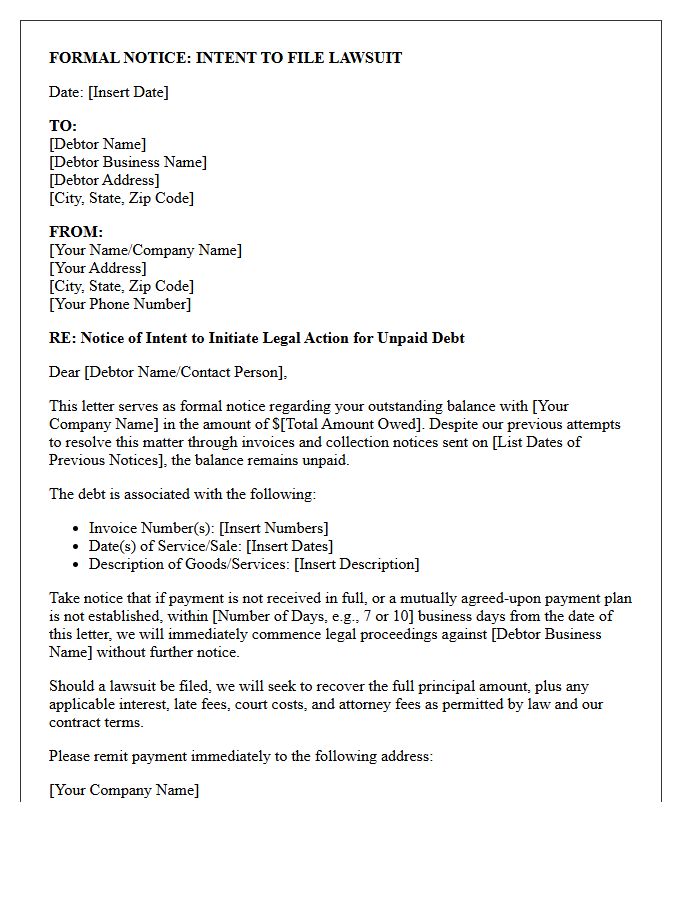
A Commercial Debt Intent to Sue Letter is a formal legal notification sent to a business debtor before initiating litigation. This document serves as a final warning, demanding payment for outstanding balances within a specific timeframe to avoid legal action. It highlights the creditor's readiness to file a lawsuit, which may lead to court judgments, asset seizure, or damage to the company's credit profile. Receiving this notice is a critical opportunity for the parties to negotiate a settlement or repayment plan to prevent costly attorney fees and courtroom proceedings.
Business-to-Business Final Demand and Intent to Sue Letter
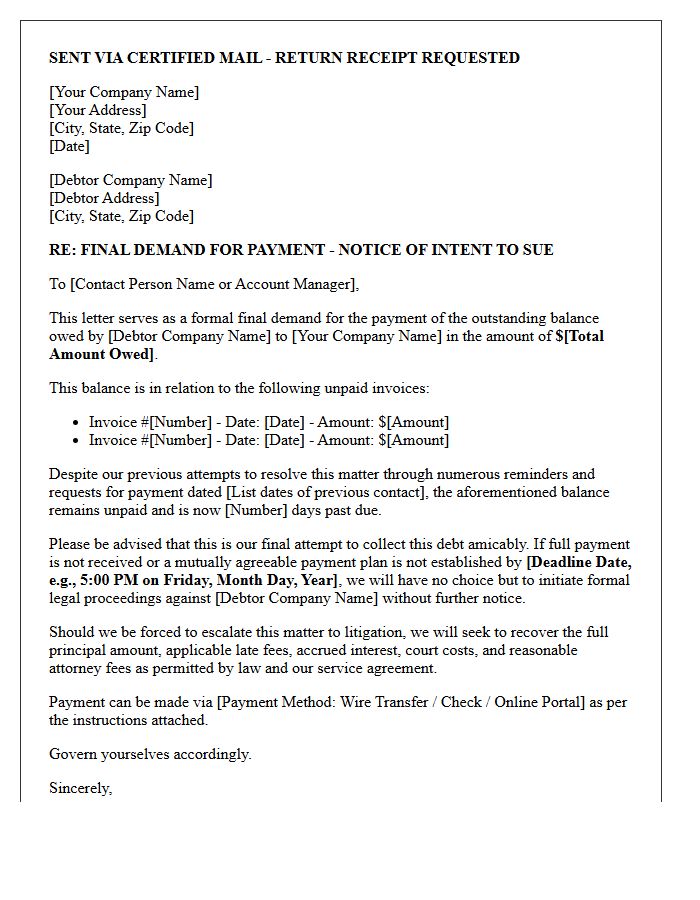
In a Business-to-Business Final Demand, clear communication is essential before escalating to litigation. This formal document serves as a pre-suit notice, outlining outstanding obligations and providing a specific deadline for payment. By issuing an Intent to Sue Letter, a company demonstrates its readiness to pursue legal remedies through the court system. This strategic step often encourages a settlement, as it signals that the creditor has documented the breach of contract and is prepared for legal action to recover owed debts or damages effectively.
Pre-Litigation Warning Letter for Commercial Debt
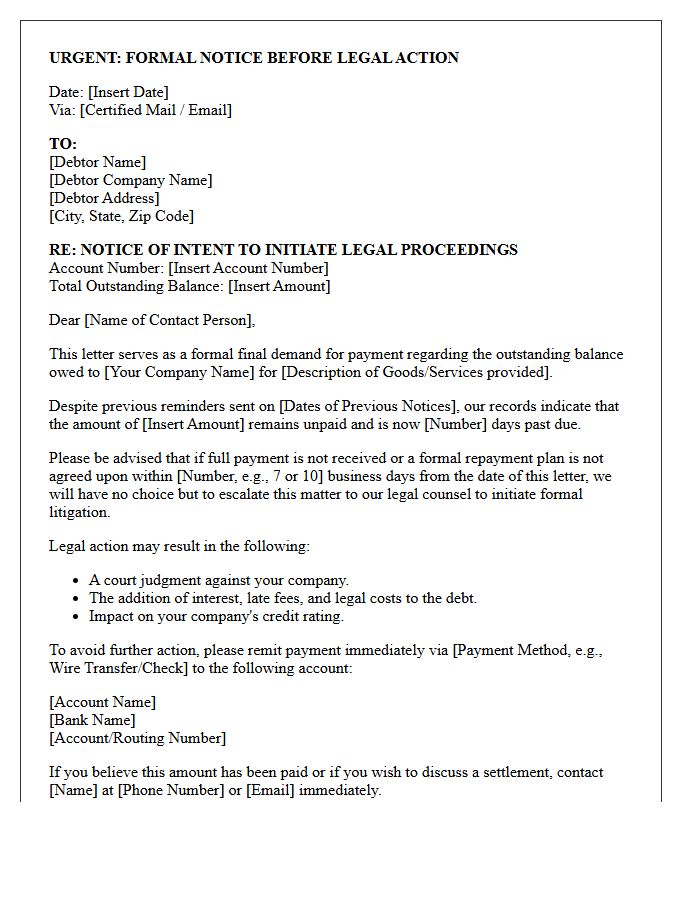
A pre-litigation warning letter is a formal notice sent to a debtor before initiating a lawsuit for unpaid commercial debt. This document acts as a letter before action, clearly stating the amount owed, the deadline for payment, and the intent to pursue legal remedies. It is an essential step in debt recovery, often satisfying court requirements for pre-action protocols. By providing a final opportunity for settlement, it can resolve disputes efficiently without the high costs of litigation while serving as critical evidence of your attempts to recover the balance.
Notice of Intent to Sue for Unpaid Corporate Debt Letter
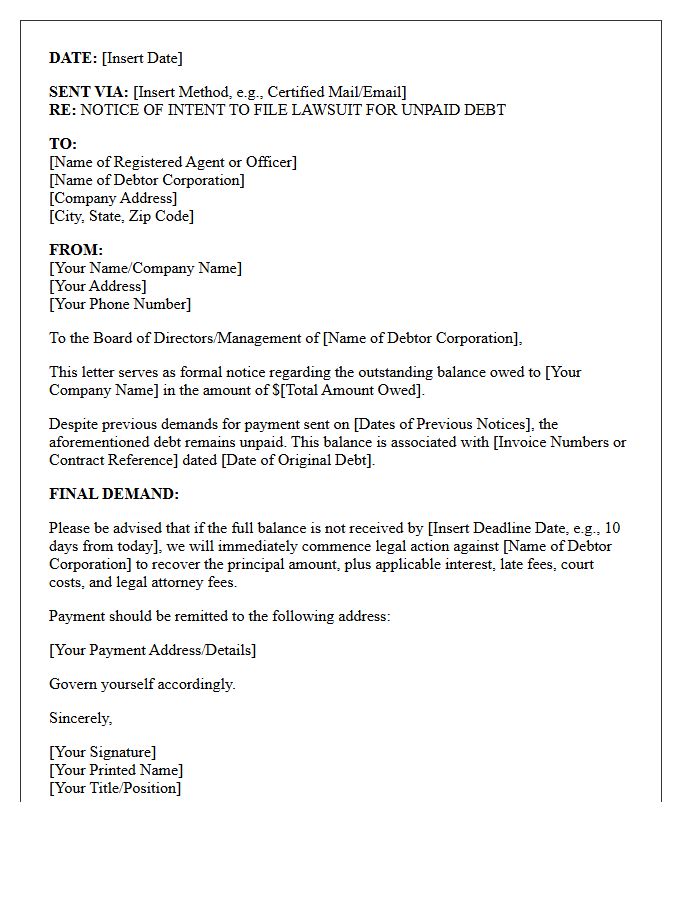
A Notice of Intent to Sue serves as a formal final demand before initiating legal action for recovery of unpaid corporate debt. This document signals that the creditor is prepared to file a lawsuit unless the balance is settled immediately. It outlines the specific amount owed, the nature of the breach, and a strict deadline for compliance. Sending this notice is a crucial step in debt collection, often encouraging settlement to avoid costly litigation, while establishing a clear paper trail for the court regarding the debtor's failure to pay.
Final Notice and Intent to Sue Letter for Business Accounts
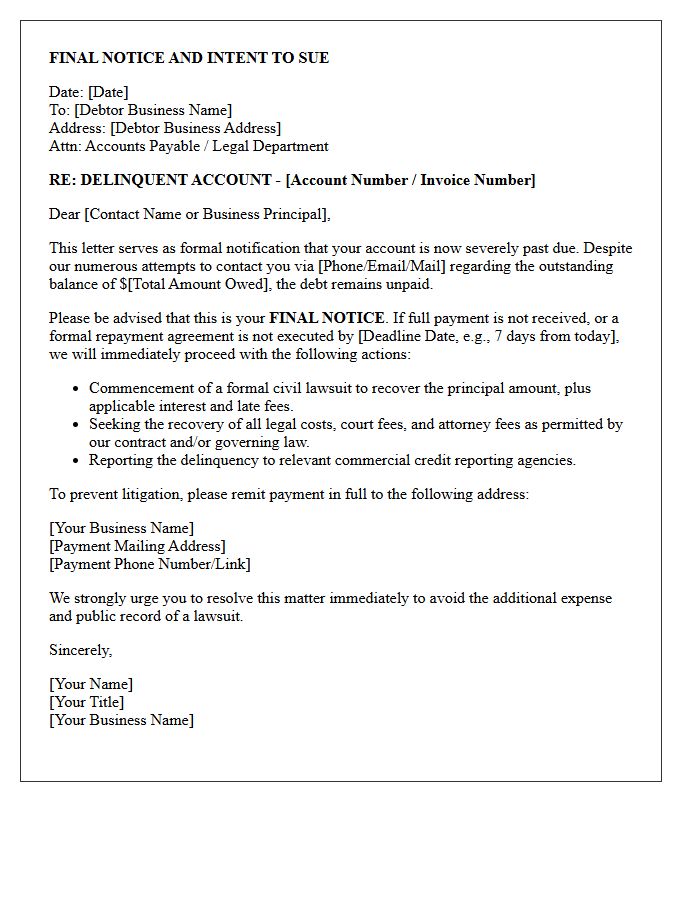
A Final Notice and Intent to Sue is a formal demand letter sent to a business for an unpaid debt. It serves as the last warning before legal action is initiated in court. This document outlines the total balance due, specifies a strict deadline for payment, and details the consequences of non-compliance. For businesses, receiving this notice signifies that the creditor is prepared to file a lawsuit to recover funds. Promptly addressing this letter through payment or a settlement offer is critical to avoid costly litigation and potential damage to your business credit rating.
Commercial Collection Agency Intent to Litigate Letter
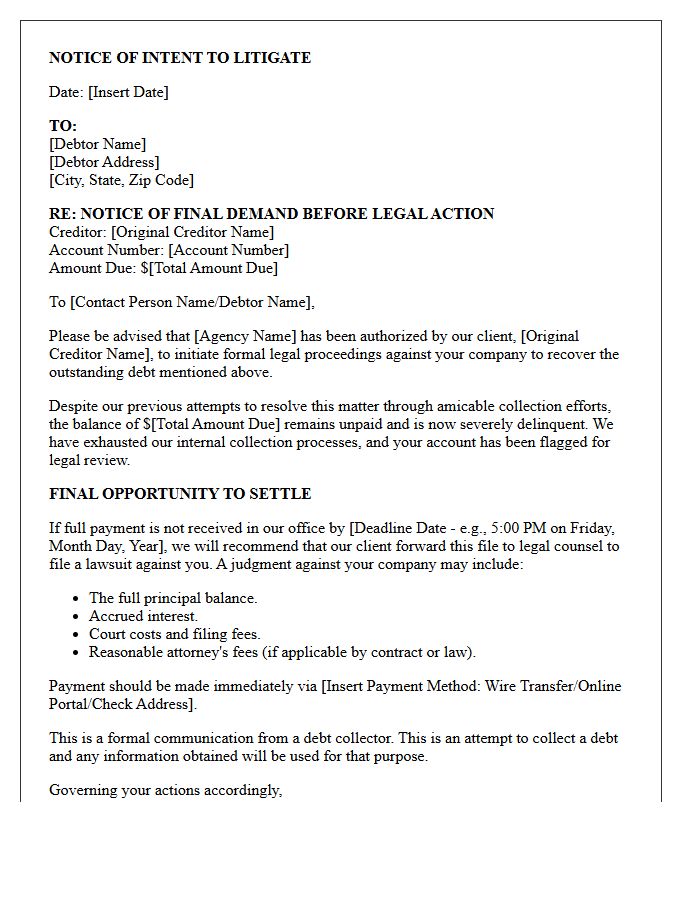
A commercial collection agency intent to litigate letter is a final formal demand for payment before legal action begins. This document notifies a delinquent business that failure to settle the debt will result in a lawsuit. It serves as a critical pre-legal notice, often providing a specific deadline to respond. Understanding this letter is essential because it represents the transition from standard collection efforts to potential court proceedings, which may include judgments, asset seizures, or wage garnishment to satisfy the outstanding commercial balance.
B2B Delinquent Account Intent to Sue Letter
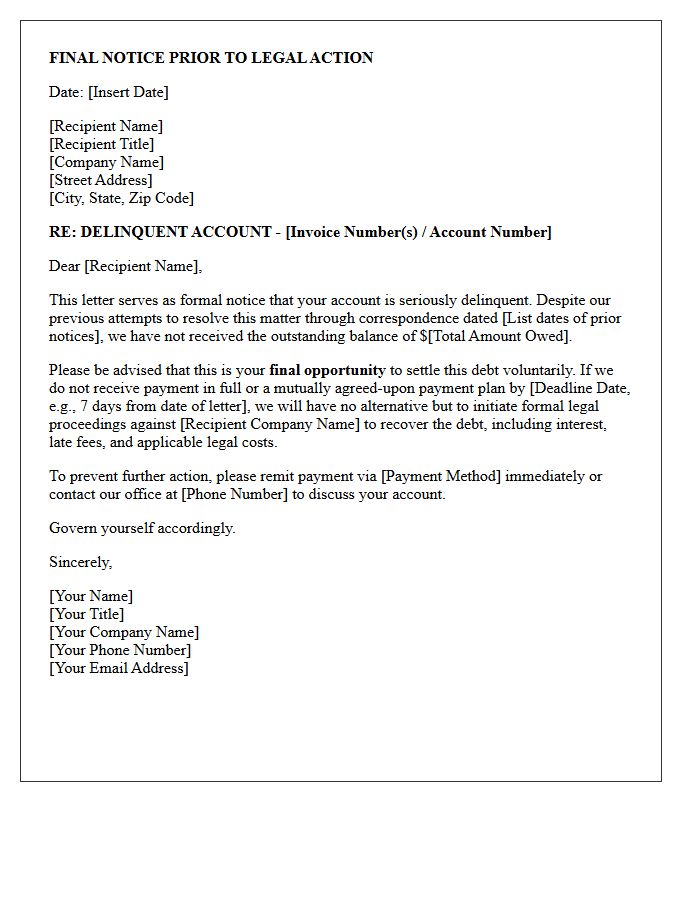
A B2B Delinquent Account Intent to Sue Letter is a formal demand sent to a business debtor before initiating litigation. This final notice warns that failure to settle the outstanding balance within a specific timeframe will result in legal action. It serves as a critical step in debt collection, demonstrating seriousness and providing a paper trail for the court. By clearly stating the consequences of non-payment, this document encourages a settlement to avoid costly legal fees and potential damage to the debtor's corporate credit profile.
Formal Intent to Sue Letter for Outstanding Commercial Debt
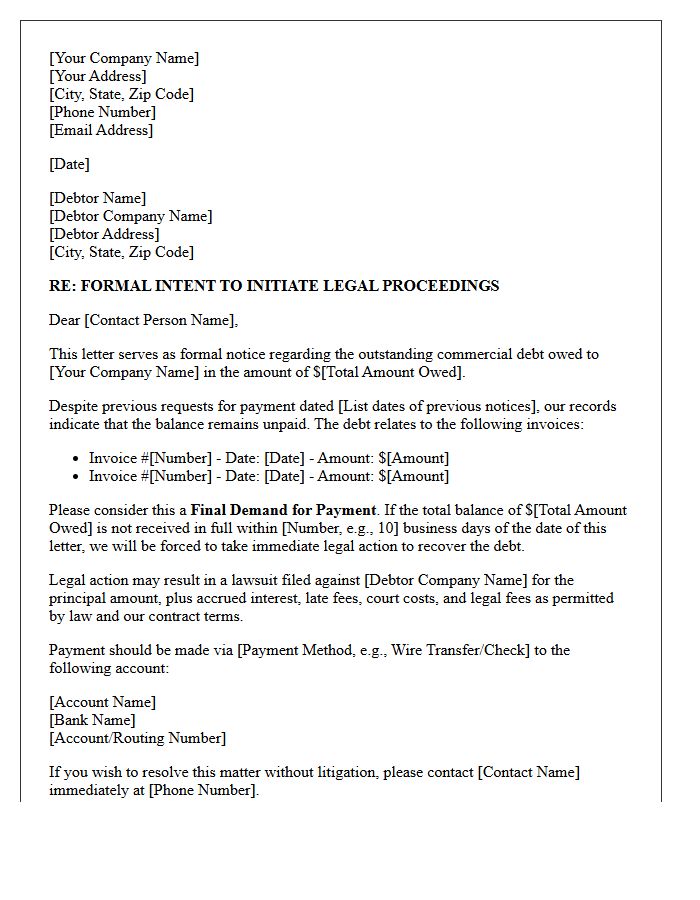
A formal intent to sue letter serves as a final demand for payment regarding an outstanding commercial debt. This legal notice informs the debtor that failure to settle the balance within a specific timeframe will result in litigation. It must clearly state the exact amount owed, previous collection attempts, and a firm deadline. Providing this document demonstrates professional diligence and is often a mandatory procedural step before filing a lawsuit. Properly drafted letters can resolve disputes without court intervention by emphasizing the seriousness of impending legal action and potential recovery costs.
Vendor Payment Default Intent to Sue Letter
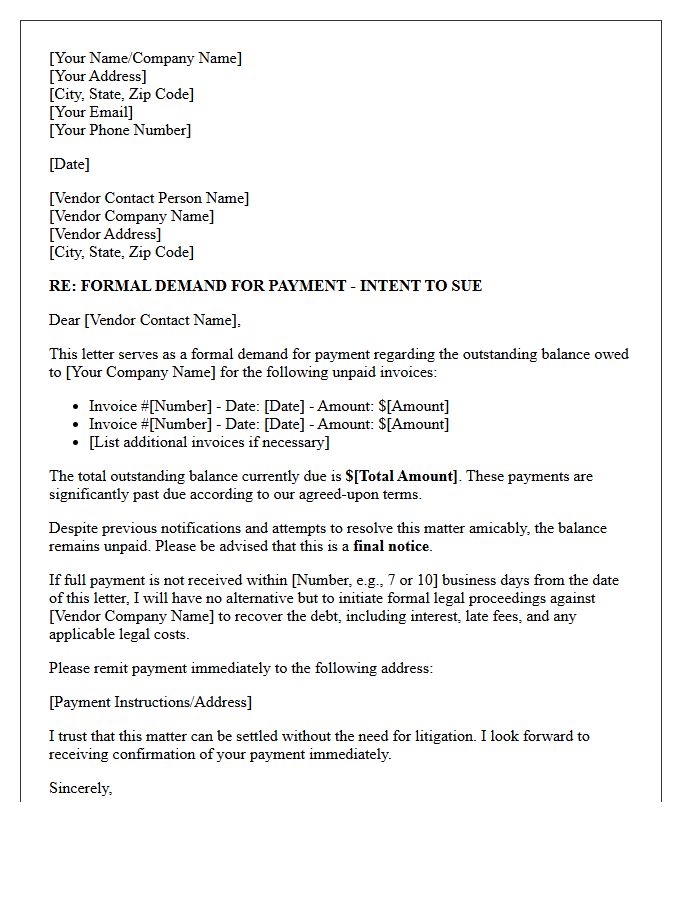
A Vendor Payment Default Intent to Sue Letter serves as a formal legal notice demanding immediate settlement of outstanding invoices. This demand for payment acts as a final warning before initiating litigation to recover debts. It must clearly state the total balance due, original deadlines, and a specific timeframe for compliance. Sending this letter is a critical step in professional debt collection, often sufficing to trigger a response and avoid costly court fees. It documents your good faith effort to resolve the dispute, providing essential evidence if a lawsuit becomes necessary.
Corporate Debt Collection Intent to Sue Warning Letter
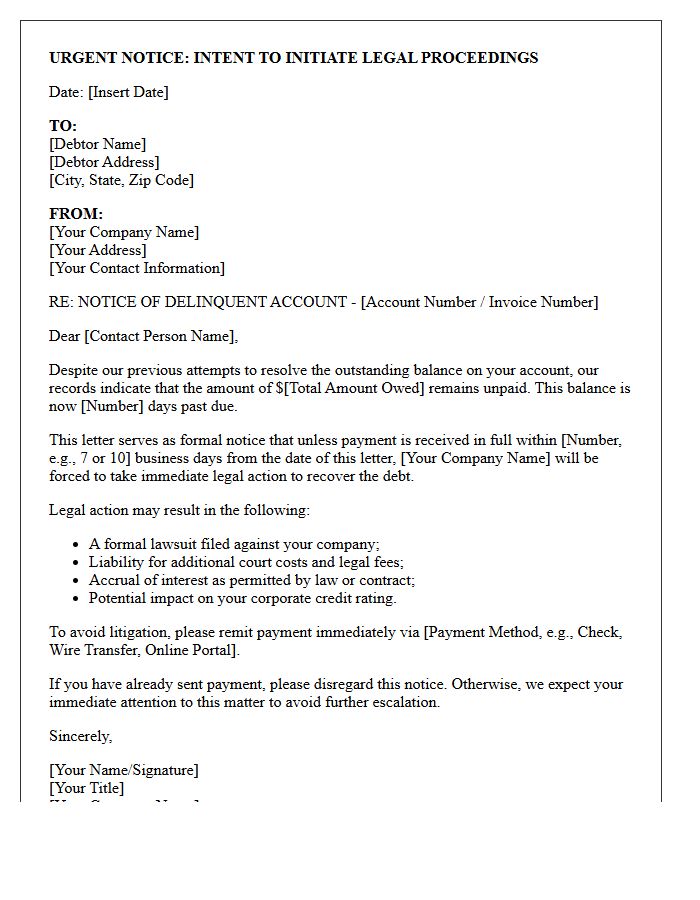
A Corporate Debt Collection Intent to Sue Warning Letter is a formal legal notice sent before initiating litigation. It serves as a final demand for payment, informing the debtor that a lawsuit will be filed if the balance remains unpaid by a specific deadline. This document is crucial for documenting pre-legal efforts and may be required by courts to show a good-faith attempt at resolution. Receiving this letter indicates that the creditor is prepared to seek a judicial judgment to enforce collection through wage garnishment or asset seizure.
Commercial Breach of Contract and Intent to Sue Letter
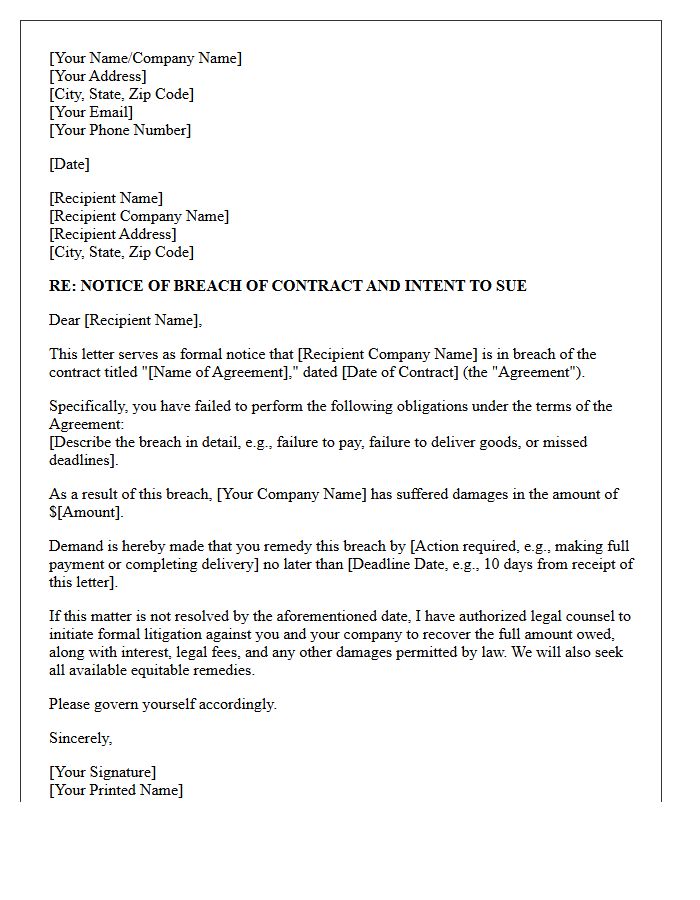
A Commercial Breach of Contract occurs when a party fails to fulfill legal obligations defined in a business agreement. Before initiating litigation, sending an Intent to Sue Letter is a critical formal step. This document serves as a final demand, outlining the specific violations, required remedies, and a deadline for compliance. It aims to resolve disputes through negotiation or mediation while establishing a paper trail for court. Clearly stating your grievances and legal basis can often prevent costly lawsuits by encouraging the defaulting party to settle the matter out of court.
Final Settlement Offer and Intent to Sue Letter
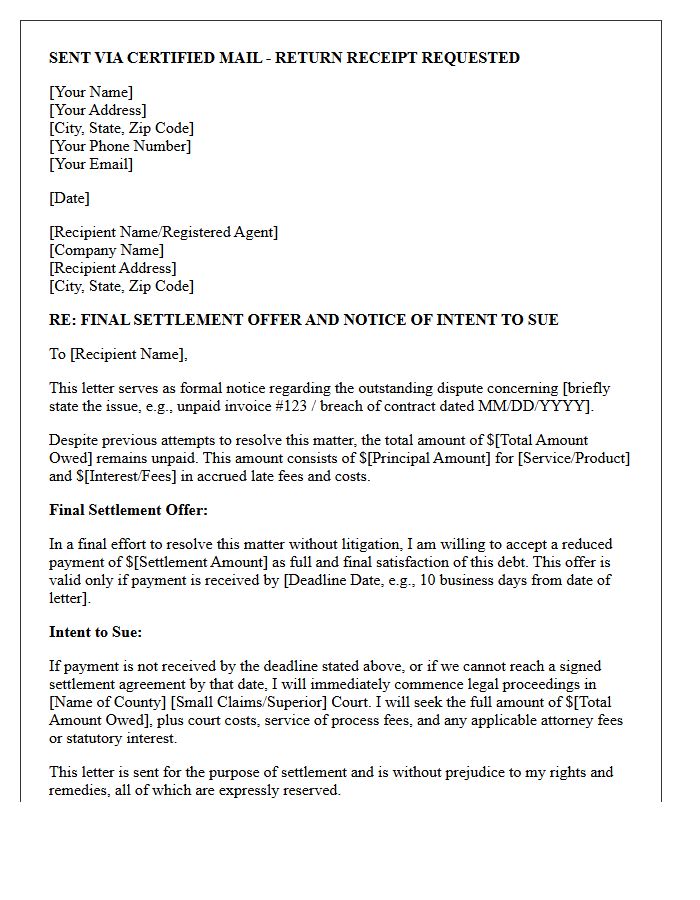
A Final Settlement Offer is a formal attempt to resolve a legal dispute before trial, typically outlining specific compensation terms. It is often accompanied by an Intent to Sue Letter, which serves as a pre-litigation notice. This document warns the recipient that failure to accept the offer will result in immediate legal action. Understanding these terms is crucial for managing liability, as they establish a final deadline for negotiation and document a good-faith effort to settle, which can influence future court proceedings and potential cost recovery.
What are the legal requirements for sending an intent to sue for a B2B debt?
To maintain legal validity in a commercial debt dispute, the creditor must issue a formal Demand Letter or "Notice of Intent to Sue." This document must clearly state the exact amount owed, the nature of the business transaction, a specific deadline for payment, and a declaration that legal action will be initiated if the debt remains unpaid by the stated date.
How long does a business have to respond to a notice of intent to sue?
In most commercial jurisdictions, a standard grace period of 10 to 30 days is provided within the letter of intent. If the debtor business fails to settle the balance or negotiate a payment plan within this timeframe, the creditor may proceed with filing a summons and complaint in the appropriate civil court.
Can a creditor sue for interest and legal fees in a commercial debt lawsuit?
Yes, businesses can typically sue for the principal balance plus accrued interest, late fees, and reasonable attorney costs. The ability to recover these additional expenses often depends on the specific "Terms and Conditions" outlined in the original signed contract or purchase order between the two entities.
What happens if a business ignores a formal summons for unpaid debt?
If a business entity is served with a lawsuit and fails to respond within the court's designated period (usually 20-30 days), the creditor can move for a default judgment. A default judgment grants the creditor the legal right to pursue aggressive collection methods, including bank account levies, asset seizures, or property liens.
Is mediation required before suing a business for breach of contract?
Whether mediation is required depends on the dispute resolution clause found in the commercial contract. Many B2B agreements contain "Alternative Dispute Resolution" (ADR) mandates that require parties to attempt mediation or binding arbitration before filing a formal lawsuit in a court of law.

Comments