
Receive a formal Intent to Sue notice signifies that a lender prepares legal action to recover a defaulted personal loan. This critical document outlines the debt amount, breach of contract details, and a final deadline for payment before litigation begins. Understanding your rights and responding promptly can prevent wage garnishment or asset seizure. To help you draft a professional response, below are some ready to use templates.
Image cover: Notice of Intent to Sue: Demand Letter Templates for Defaulted Personal Loans
Letter Samples List
- Final Demand and Intent to Sue Letter for Defaulted Personal Loan
- Pre-Litigation Warning Letter for Personal Loan Agreement Default
- Debt Collection Intent to Sue Letter for Unpaid Personal Loan
- Notice of Legal Action Letter Regarding Defaulted Personal Loan
- Final Notice and Intent to Sue Letter for Defaulted Promissory Note
- Legal Proceedings Initiation Letter for Defaulted Personal Loan Agreement
- Attorney Demand and Intent to Sue Letter for Personal Loan Default
- Breach of Personal Loan Agreement Intent to Sue Letter
- Debt Recovery Intent to Litigate Letter for Personal Loan Default
- Final Resolution or Intent to Sue Letter for Defaulted Loan Agreement
- Notice of Pending Lawsuit Letter for Defaulted Personal Loan
- Collection Agency Intent to Sue Letter for Defaulted Personal Loan Agreement
Final Demand and Intent to Sue Letter for Defaulted Personal Loan
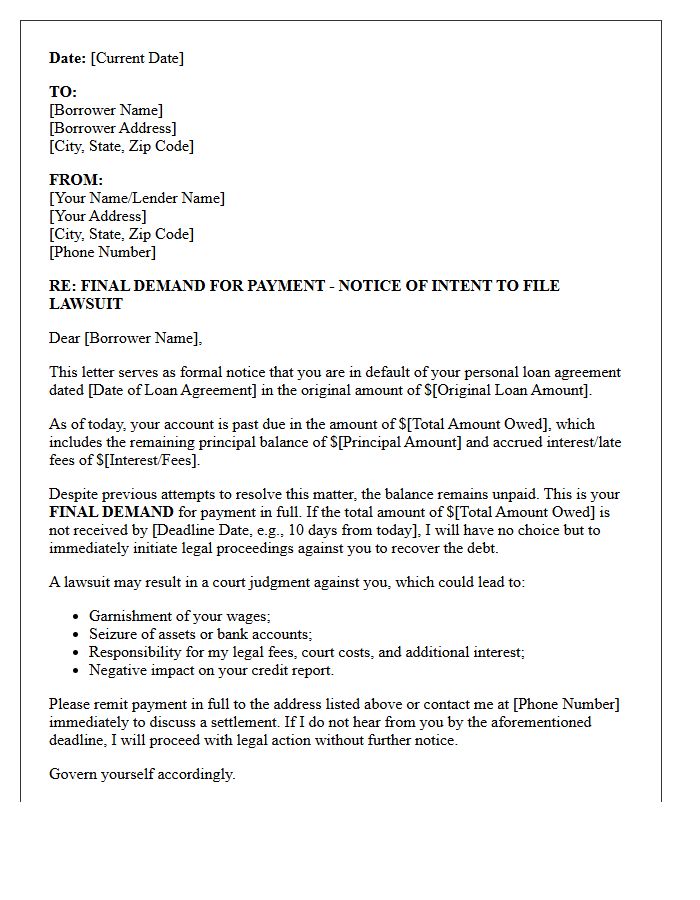
A Final Demand and Intent to Sue Letter is a formal legal notice sent to a borrower regarding a defaulted personal loan. It serves as the last opportunity to settle the outstanding debt before the creditor initiates a lawsuit. This document outlines the total balance due, including interest and late fees, and provides a strict deadline for payment. Receiving this letter indicates that the lender is prepared to pursue litigation, which may result in wage garnishment, asset seizure, or a significant decrease in your credit score if the debt remains unpaid.
Pre-Litigation Warning Letter for Personal Loan Agreement Default
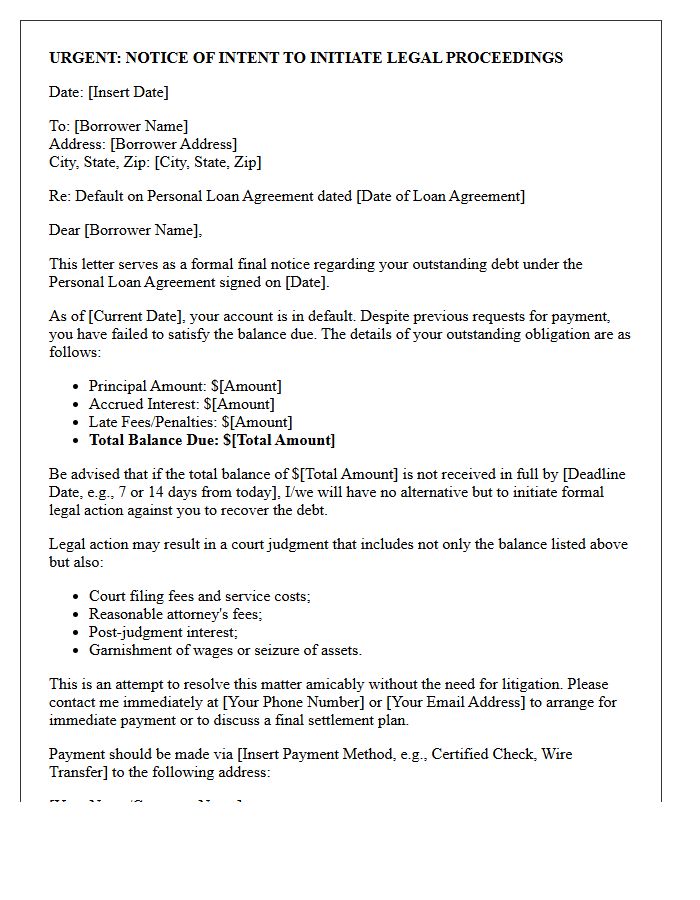
A Pre-Litigation Warning Letter serves as a formal notice to a borrower who has defaulted on a personal loan agreement. This critical document highlights the breach of contract and specifies the outstanding debt, including interest and late fees. It acts as a final opportunity for the debtor to settle the balance or arrange a payment plan before legal proceedings commence. Issuing this letter is a vital procedural step to demonstrate good faith in court and can effectively resolve disputes without expensive, time-consuming litigation.
Debt Collection Intent to Sue Letter for Unpaid Personal Loan
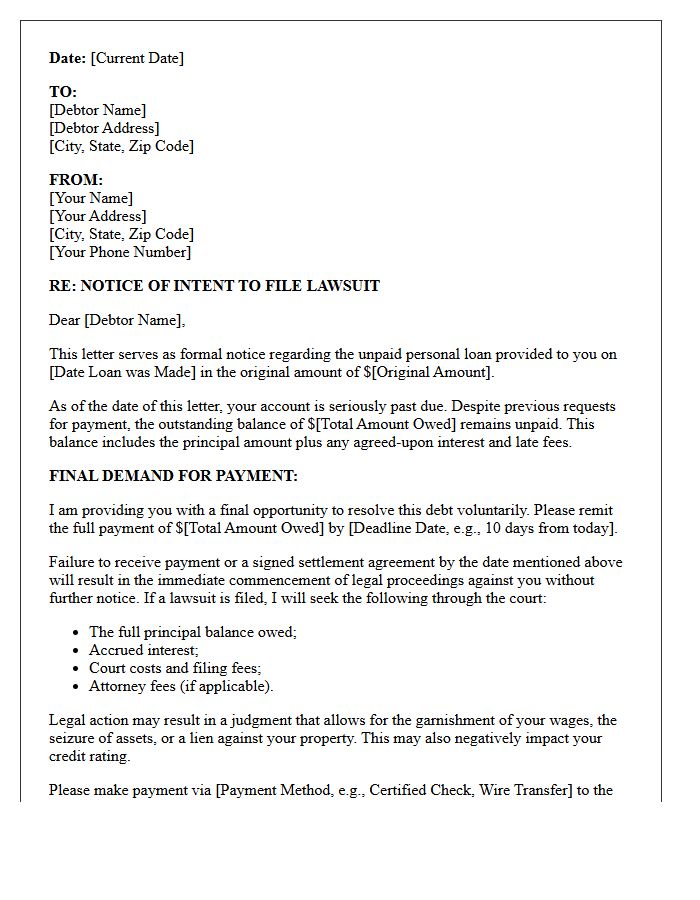
Receiving a Debt Collection Intent to Sue Letter is a formal warning that legal action is imminent. This document serves as a final demand for payment regarding an unpaid personal loan before a summons and complaint are filed in court. It is critical to verify the debt's accuracy and respond within the specified timeframe to avoid a default judgment. Ignoring this notice can lead to wage garnishment or bank levies. Promptly seeking legal advice or negotiating a settlement can prevent a costly lawsuit and further damage to your credit score.
Notice of Legal Action Letter Regarding Defaulted Personal Loan
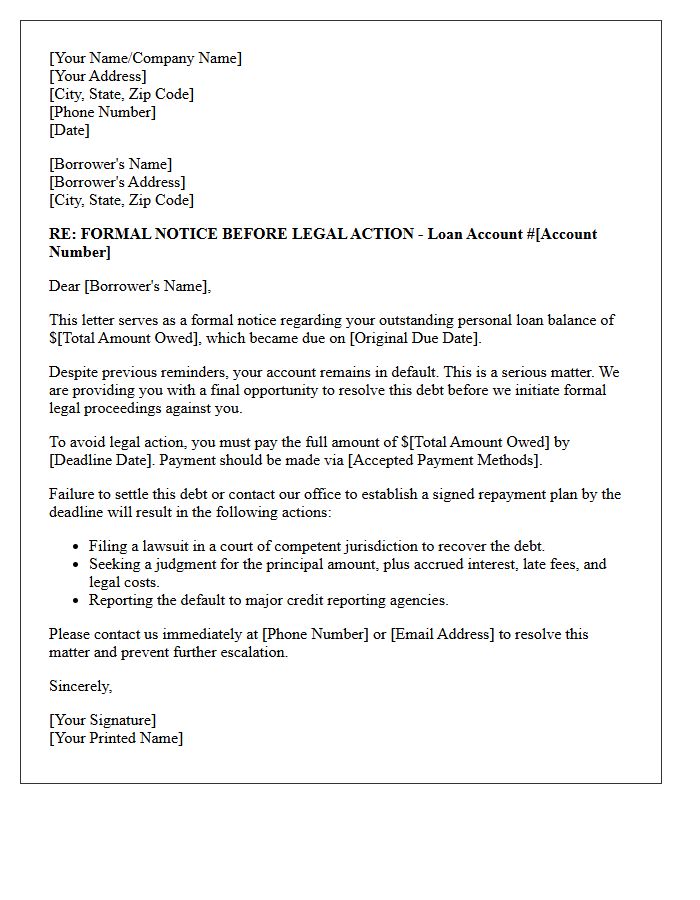
Receiving a Notice of Legal Action indicates that your creditor intends to file a lawsuit to recover a defaulted personal loan. This formal warning signifies the final stage before litigation, potentially leading to wage garnishment or asset seizure. It is critical to verify the debt's accuracy and respond immediately to avoid a default judgment. You should review the deadline provided, seek legal advice, or negotiate a settlement agreement to resolve the delinquency and protect your financial standing before the case proceeds to court.
Final Notice and Intent to Sue Letter for Defaulted Promissory Note
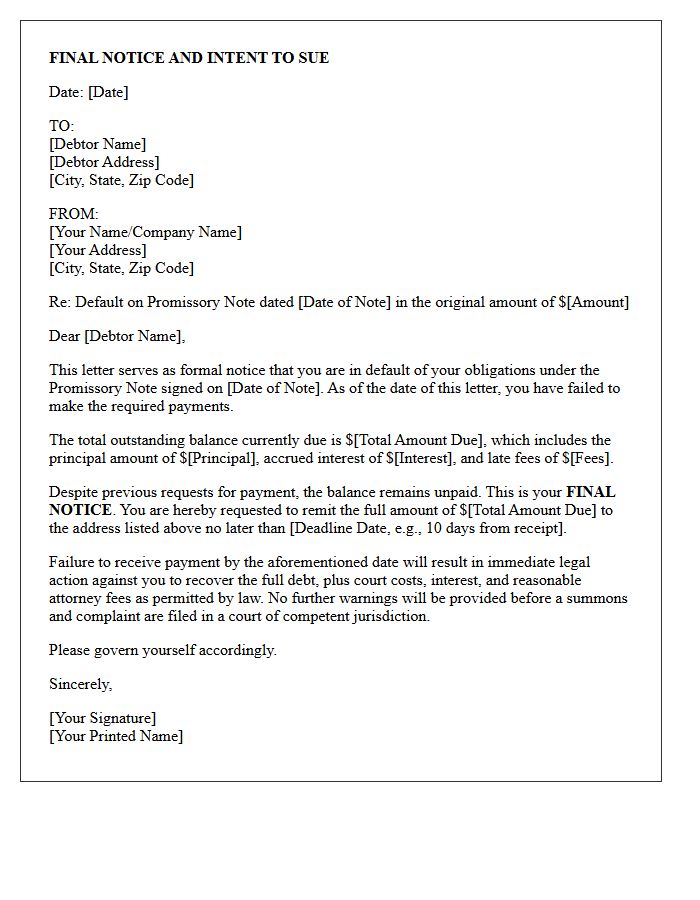
A Final Notice and Intent to Sue is a critical legal warning issued when a borrower fails to repay a defaulted promissory note. This formal communication serves as the final opportunity to settle the debt before litigation begins. It outlines the specific amount owed, including interest and late fees, and sets a strict deadline for payment. Receiving this letter indicates that the lender is prepared to file a lawsuit to obtain a court judgment, which may lead to wage garnishment or asset seizure. Immediate legal counsel or repayment negotiation is essential.
Legal Proceedings Initiation Letter for Defaulted Personal Loan Agreement
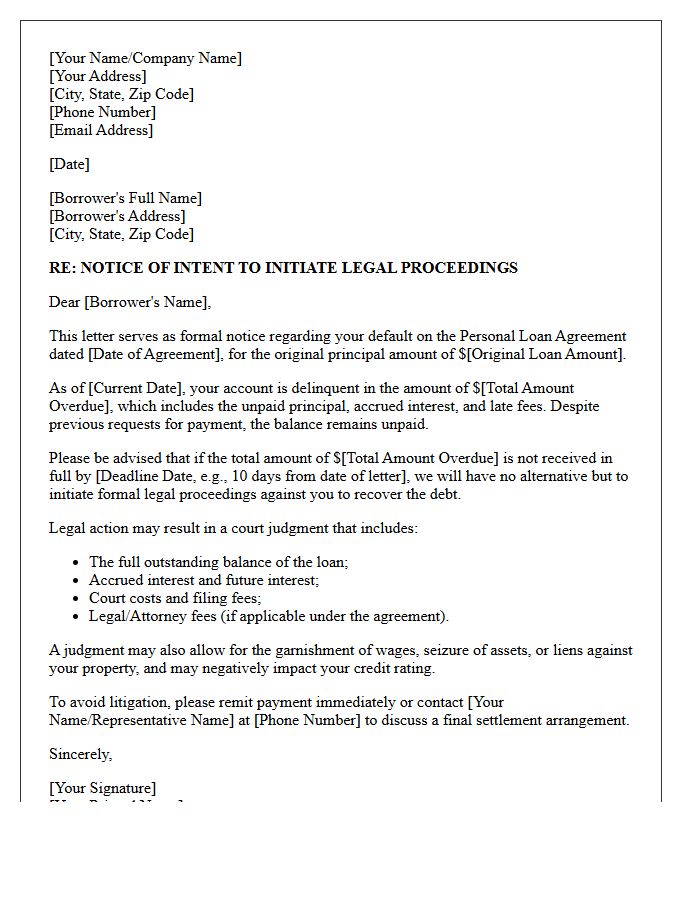
A legal proceedings initiation letter serves as a formal letter of claim issued before filing a lawsuit. It notifies a borrower that their defaulted personal loan agreement has triggered litigation procedures. This document details the total outstanding debt, accrued interest, and a strict deadline for repayment to avoid court action. Receiving this notice is a critical final opportunity to settle or negotiate a repayment plan. Ignoring this warning typically leads to a county court judgment (CCJ) or significant damage to the debtor's credit rating and financial standing.
Attorney Demand and Intent to Sue Letter for Personal Loan Default
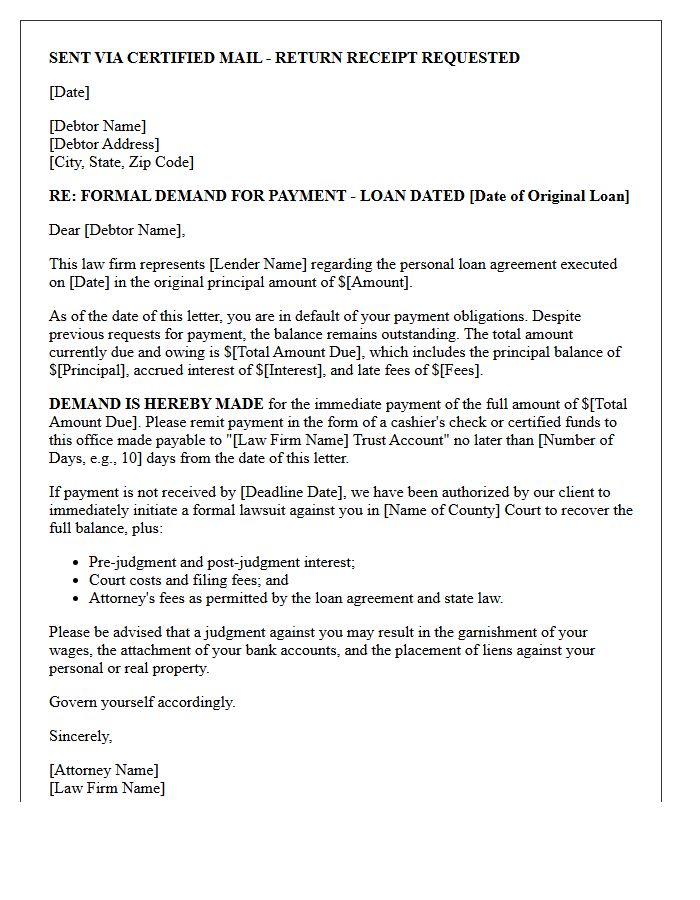
An Attorney Demand Letter serves as a formal notice to a borrower regarding a personal loan default. This legal document outlines the specific amount owed, including accrued interest and late fees, while establishing a final deadline for repayment. It signifies a serious Intent to Sue, warning that failure to comply will result in a civil lawsuit to recover the debt. Receiving this letter is a critical signal to seek legal counsel or negotiate a settlement immediately to avoid litigation, court costs, and potential wage garnishment or asset seizure.
Breach of Personal Loan Agreement Intent to Sue Letter
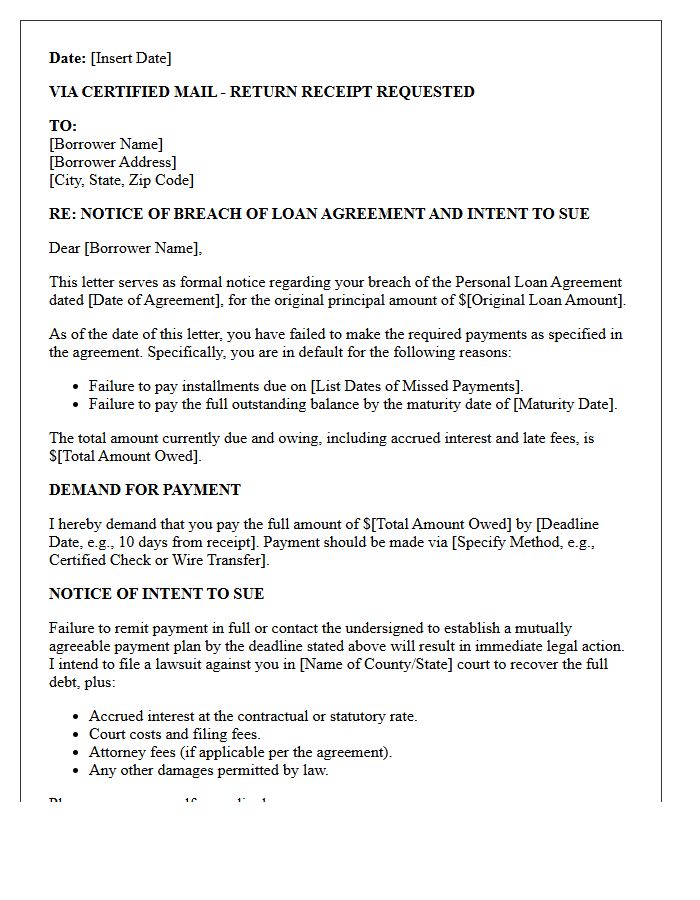
A Breach of Personal Loan Agreement Intent to Sue Letter is a formal legal notice issued by a lender to a borrower who has defaulted on their repayment terms. This document serves as a final demand for payment, clearly outlining the outstanding balance and a strict deadline for resolution. Receiving this letter indicates that the creditor is prepared to initiate a lawsuit to recover funds. It is a critical opportunity for the debtor to negotiate a settlement or repayment plan to avoid costly court proceedings and severe damage to their credit score.
Debt Recovery Intent to Litigate Letter for Personal Loan Default
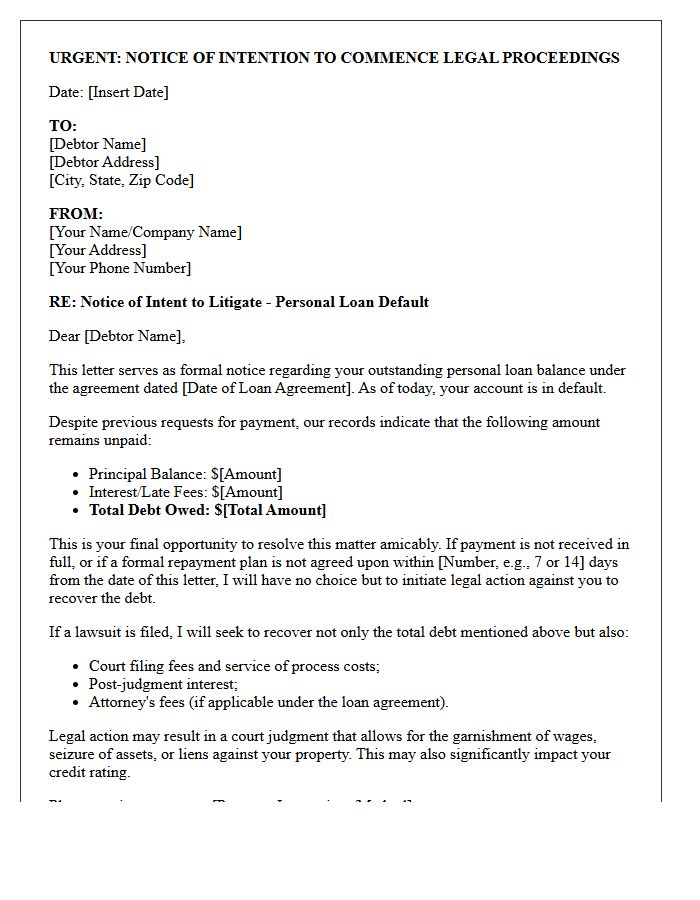
A Debt Recovery Intent to Litigate letter is a formal notice sent to a borrower following a personal loan default. It serves as a final warning that legal action will commence unless the outstanding balance is settled immediately. This document is a critical step in pre-legal proceedings, providing a specific deadline for payment to avoid court intervention. Receiving this letter signifies that the creditor is prepared to seek a judgment, which may lead to wage garnishment or asset seizure. Promptly addressing this notice is essential to mitigate further legal costs and severe credit damage.
Final Resolution or Intent to Sue Letter for Defaulted Loan Agreement
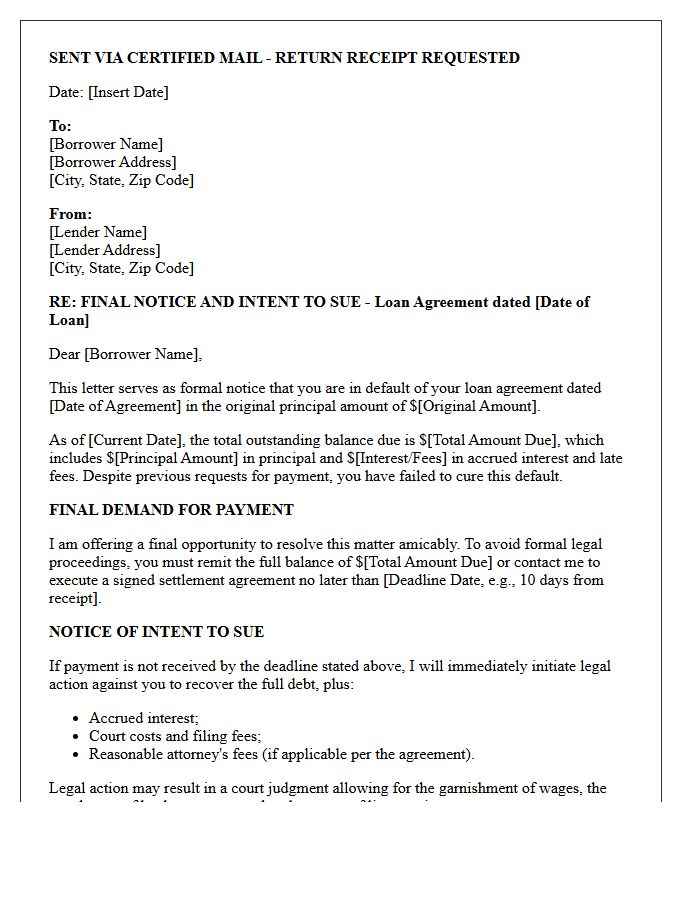
A Final Resolution or Intent to Sue letter is a formal notice issued when a borrower defaults on a loan agreement. This document serves as a final warning before legal action commences. It outlines the total debt owed, provides a deadline for payment, and offers a last chance to settle the account. Receiving this letter indicates that the creditor is prepared to file a lawsuit to obtain a judgment. To avoid court costs and wage garnishment, borrowers must respond promptly to negotiate a settlement or establish a repayment plan.
Notice of Pending Lawsuit Letter for Defaulted Personal Loan
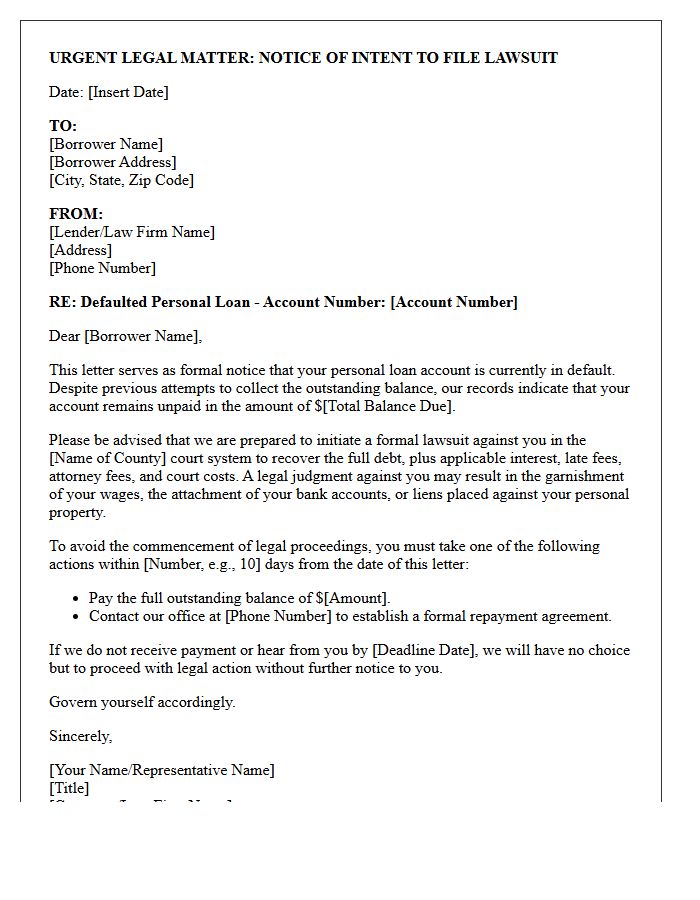
Receiving a Notice of Pending Lawsuit indicates that a creditor or debt collector has filed a formal summons against you for a defaulted personal loan. This legal document signifies the start of litigation to recover the unpaid balance, potentially leading to wage garnishment or bank levies. It is crucial to file a written answer with the court within the specified deadline to avoid a default judgment. Always verify the debt's validity and consider consulting a legal professional to explore settlement options or defense strategies before the hearing date expires.
Collection Agency Intent to Sue Letter for Defaulted Personal Loan Agreement
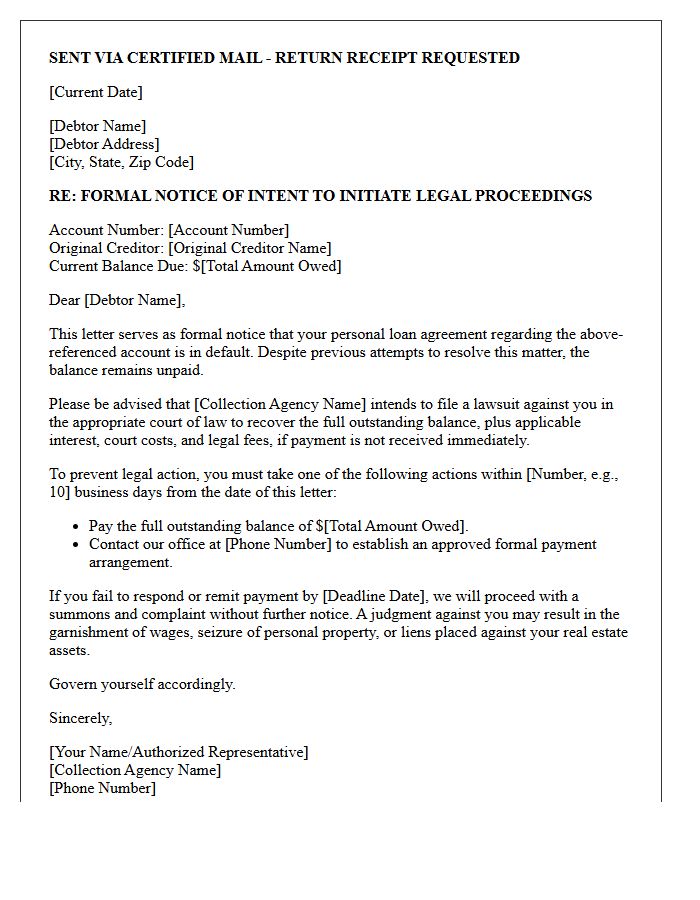
Receiving a Collection Agency Intent to Sue Letter signals that a creditor may initiate legal action to recover a defaulted personal loan. This formal notice acts as a final warning before a lawsuit is filed in civil court. It is crucial to verify the debt's accuracy and the statute of limitations immediately. Ignoring this document can lead to a default judgment, resulting in wage garnishment or bank levies. Promptly responding or negotiating a settlement can prevent costly litigation and further damage to your credit profile.
What are the legal requirements for sending a formal Intent to Sue for a defaulted personal loan?
To initiate a legal claim for a defaulted personal loan, the lender must typically issue a formal "Demand Letter" or "Notice of Intent to Sue." This document must clearly state the total amount owed including interest, the specific terms of the breached contract, a deadline for payment to avoid litigation, and a clear warning that failure to comply will result in a lawsuit being filed in civil or small claims court.
Can a lender sue for a personal loan default without a written contract?
Yes, a lender can sue for a defaulted personal loan even without a formal written contract, provided they can prove an oral agreement existed or present evidence of the debt. Evidence such as bank statements showing the transfer of funds, text messages, emails discussing repayment, or a history of partial payments can be used to establish the debt's validity and the borrower's intent to repay.
What is the statute of limitations for suing a borrower over a defaulted loan agreement?
The statute of limitations for filing a lawsuit on a defaulted personal loan varies by state, typically ranging from three to ten years. The clock generally starts from the date of the last payment or the date the loan was officially declared in default. Once this legal timeframe expires, the debt is considered "time-barred," and the lender loses the legal right to win a judgment in court.
What legal remedies are available to a lender after winning a lawsuit for loan default?
If a lender successfully sues and obtains a court judgment, they can pursue several collection remedies depending on state law. These include wage garnishments, where a portion of the borrower's paycheck is diverted to the lender; bank account levies, which allow for the direct seizure of funds; and judgment liens placed against the borrower's personal property or real estate.
How can a borrower respond to an Intent to Sue notice for a personal loan?
Upon receiving a notice of intent to sue, a borrower has several options to prevent litigation: they can negotiate a lump-sum settlement for less than the total balance, propose a structured payment plan to cure the default, or seek debt mediation. If the borrower believes the debt is inaccurate, they should send a formal debt verification letter requesting a full accounting of the balance and proof of the original agreement.

Comments