
Unpaid invoices can severely disrupt your business cash flow. When clients ignore payment requests, sending a formal intent to sue is a critical legal step to recover outstanding freelance and contractor fees. This professional notice signals your readiness for litigation and often prompts immediate settlement. To help you secure your earnings, below are some ready to use templates.

Image cover: Demand Letter Templates for Unpaid Freelance and Contractor Invoices
Letter Samples List
- Final Demand Letter Before Legal Action for Freelance Debt
- Notice of Intent to Sue Letter for Unpaid Contractor Invoices
- Debt Collection Letter of Intent to Litigate Freelance Services
- Pre-Suit Demand Letter for Outstanding Independent Contractor Fees
- Formal Letter of Intent to File Suit for Past Due Freelance Invoices
- Collection Agency Letter of Intent to Sue for Contractor Arrears
- Last Chance Settlement Letter Before Freelance Invoice Litigation
- Notice of Legal Action Letter for Delinquent Contractor Accounts
- Statutory Demand Letter for Unpaid Freelance Contracting Work
- Breach of Contract and Intent to Sue Letter for Freelance Nonpayment
- Third-Party Collection Letter Initiating Legal Action for Unpaid Invoices
- Final Notice Letter Regarding Impending Lawsuit for Contractor Debt
Final Demand Letter Before Legal Action for Freelance Debt
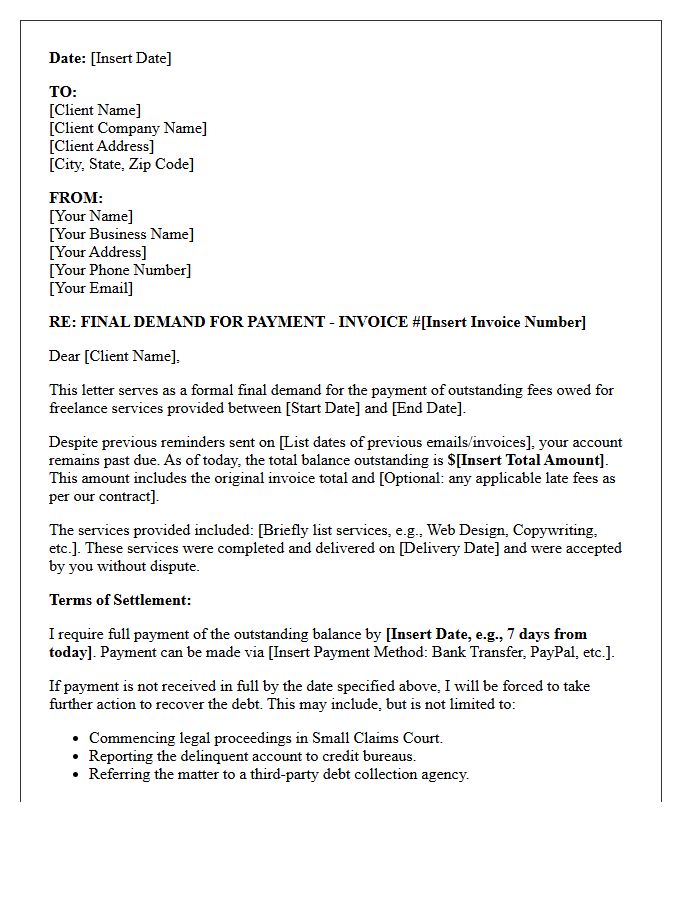
A final demand letter is the formal ultimatum sent to a non-paying client before initiating litigation. It must clearly state the outstanding balance, the original due date, and a firm deadline for payment to avoid further action. This document serves as critical evidence of your attempt to resolve the debt amicably, which is essential for small claims court or debt collection proceedings. By professionally outlining the legal consequences and potential interest charges, you create a final opportunity for the debtor to settle the invoice without expensive court fees.
Notice of Intent to Sue Letter for Unpaid Contractor Invoices
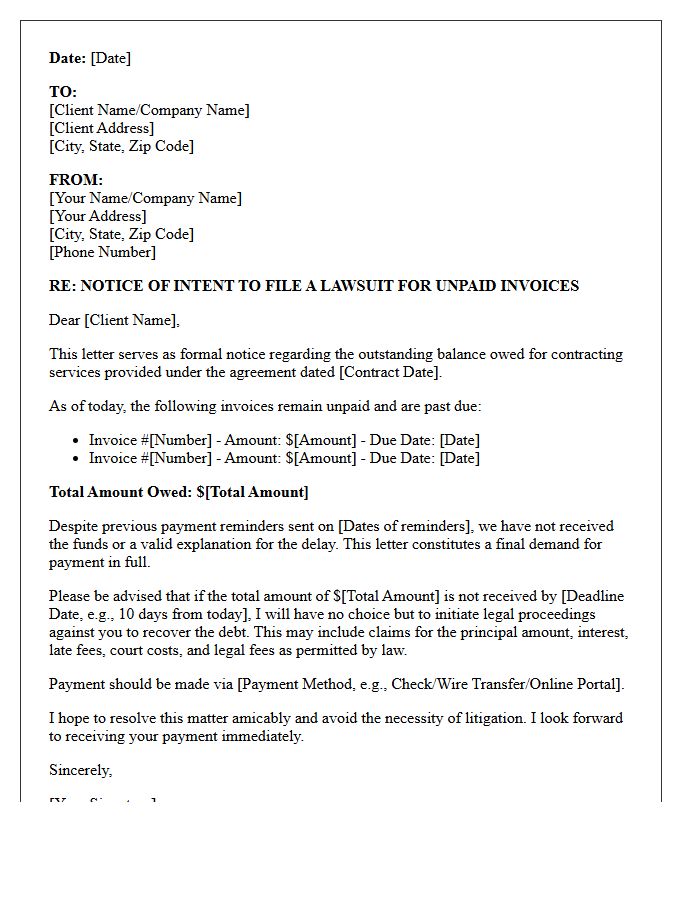
A Notice of Intent to Sue is a formal legal demand sent to a client before initiating a lawsuit for unpaid contractor invoices. This document serves as a final warning, clearly stating the outstanding balance, the original payment terms, and a specific deadline for settlement. Sending this letter is a critical step in debt collection because it demonstrates professional resolve and often prompts payment without costly litigation. In many jurisdictions, it is a required procedural prerequisite that ensures the court sees you attempted to resolve the dispute through formal communication first.
Debt Collection Letter of Intent to Litigate Freelance Services
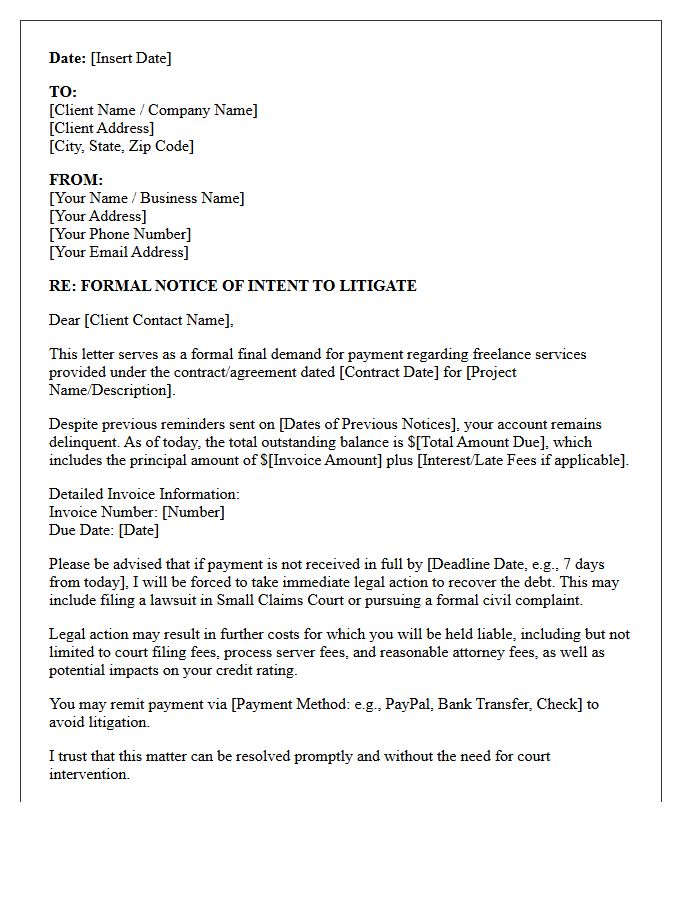
A Letter of Intent to Litigate serves as a final formal warning before a freelancer initiates legal action for unpaid invoices. This document creates an official paper trail, proving you attempted to resolve the debt amicably. It must clearly state the outstanding balance, the deadline for payment, and the specific legal consequences of continued non-payment. Sending this notice via certified mail often prompts delinquent clients to settle accounts immediately to avoid lawsuits, court costs, and potential damage to their professional reputation.
Pre-Suit Demand Letter for Outstanding Independent Contractor Fees
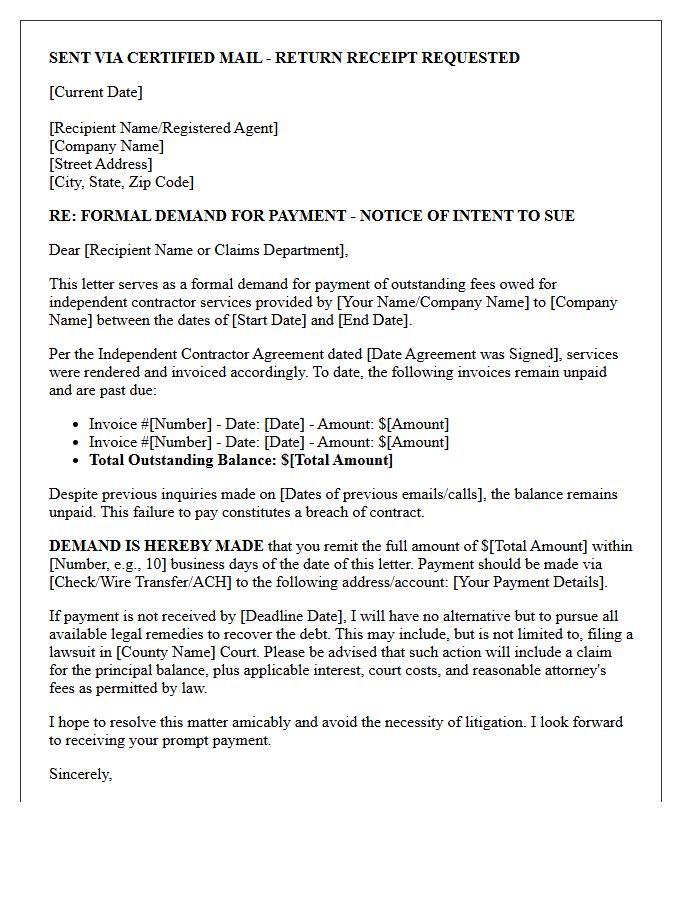
A Pre-Suit Demand Letter is a formal legal notice sent to a client before initiating litigation for unpaid invoices. It serves as a final opportunity to resolve outstanding independent contractor fees through settlement rather than costly court proceedings. This document must clearly detail the services rendered, the total amount owed, and a firm deadline for payment. By demonstrating professional intent and providing evidence of the breach of contract, this letter often encourages immediate restitution while establishing a critical paper trail for future legal action if the debt remains unpaid.
Formal Letter of Intent to File Suit for Past Due Freelance Invoices
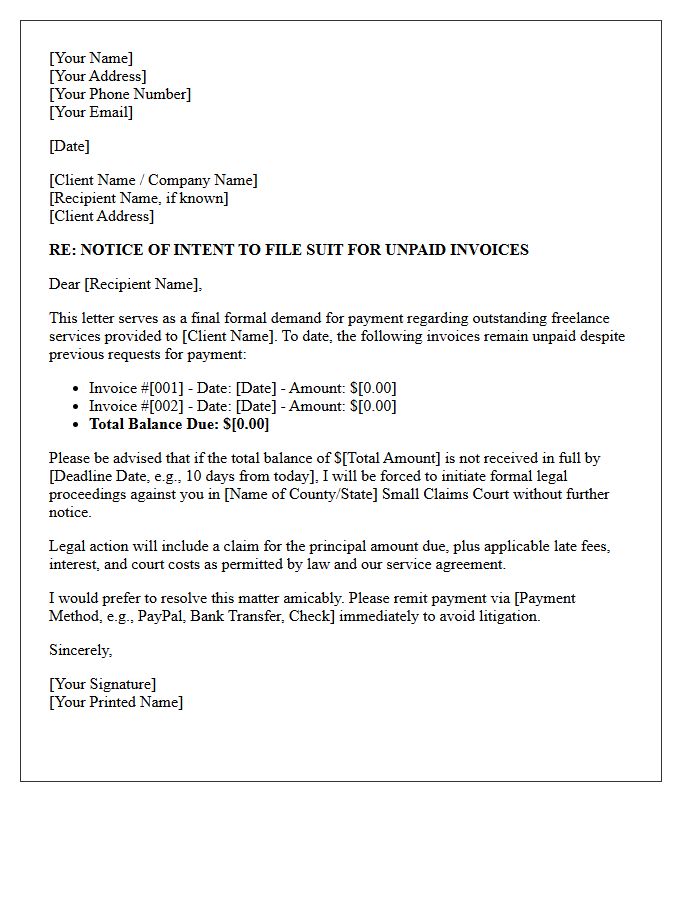
A formal Letter of Intent to File Suit serves as a final notice before initiating legal action against a non-paying client. It professionally demands the immediate settlement of past due freelance invoices while establishing a clear deadline for payment. This document is essential for debt recovery as it demonstrates your readiness for litigation and serves as vital evidence in small claims court. By outlining the specific amounts owed and threatened legal consequences, you create a formal paper trail that often motivates delinquent clients to resolve outstanding balances without further legal proceedings.
Collection Agency Letter of Intent to Sue for Contractor Arrears
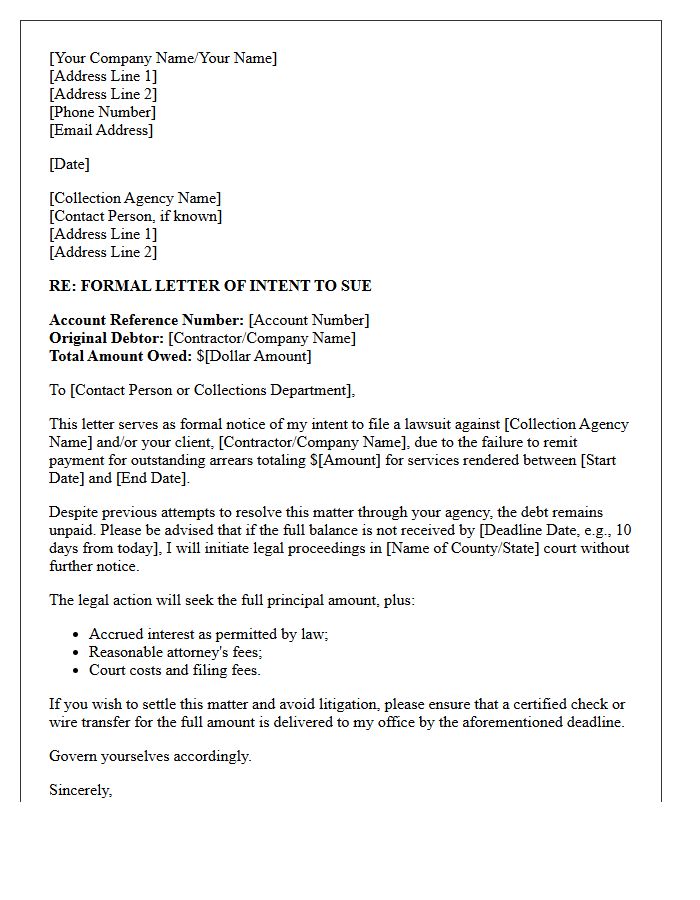
A Letter of Intent to Sue serves as a final formal notice sent by a collection agency to a contractor regarding unpaid arrears. This document warns that legal action is imminent unless the debt is settled immediately. It highlights the specific amount owed, the original contract terms, and a strict deadline for payment. Receiving this letter indicates that the dispute is escalating from standard collection efforts to litigation. It is a critical opportunity for contractors to negotiate a settlement or verify the debt before facing costly court proceedings and potential damage to their business reputation.
Last Chance Settlement Letter Before Freelance Invoice Litigation
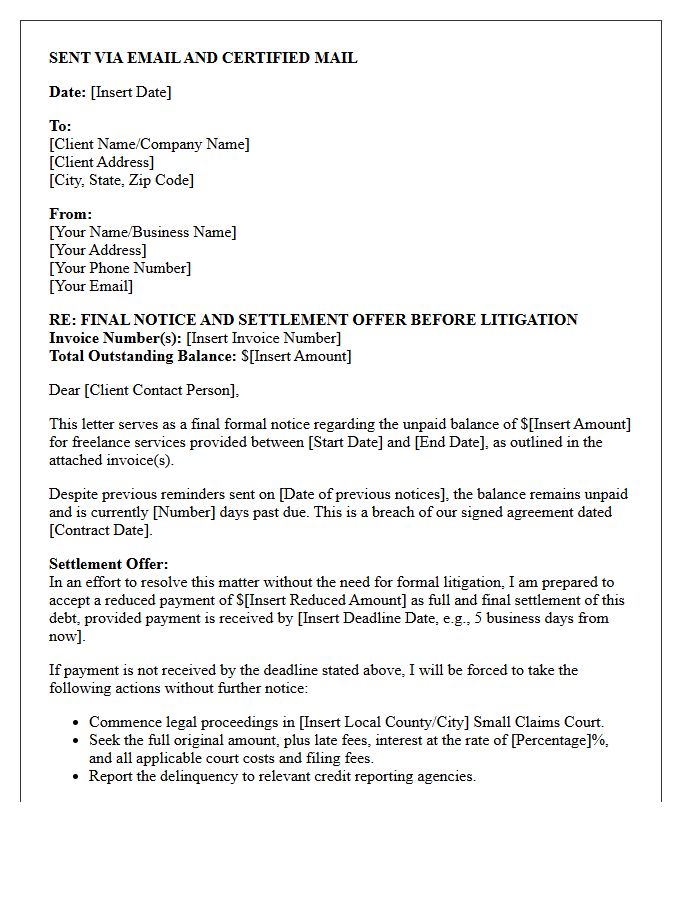
A Last Chance Settlement Letter is the final formal notice sent before initiating litigation for unpaid freelance invoices. It serves as a pre-action protocol, offering the client a definitive window to resolve the debt without court intervention. This document must clearly state the outstanding balance, original due dates, and a specific deadline for payment. By demonstrating a final attempt at mediation, it strengthens your legal position if a lawsuit becomes necessary. Use this letter to signal professional resolve and provide a clear path to avoid costly legal proceedings and potential credit damage.
Notice of Legal Action Letter for Delinquent Contractor Accounts
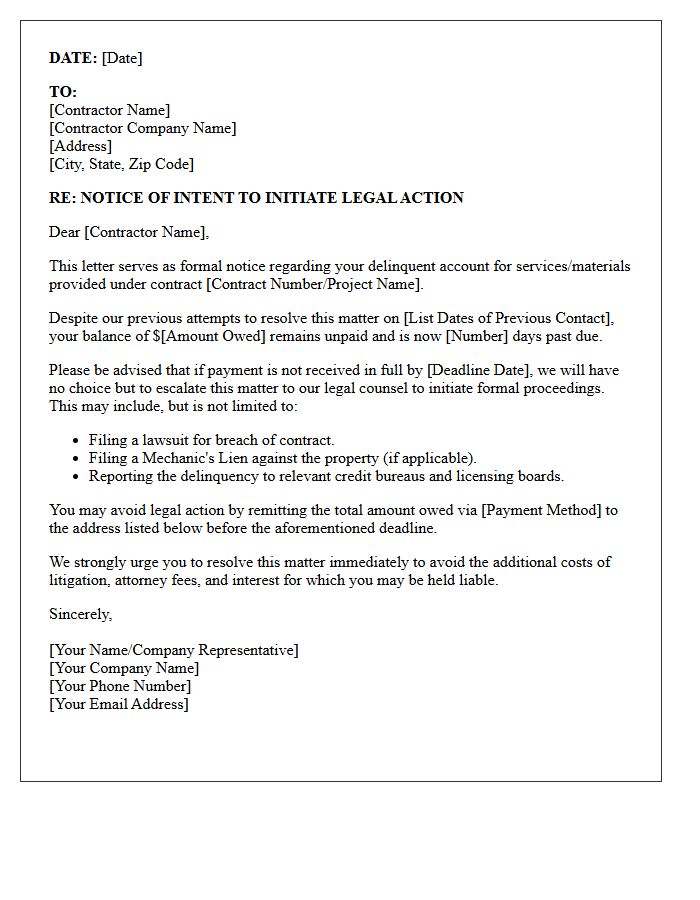
A Notice of Legal Action serves as a final formal warning to a delinquent contractor before initiating a lawsuit. This document highlights the breach of contract and specifies the outstanding debt amount. It provides a final opportunity for the contractor to settle the balance or propose a payment plan to avoid costly litigation and potential mechanic's liens. Sending this letter demonstrates your intent to pursue legal remedies, often prompting immediate resolution. Always ensure the notice includes a clear deadline and is delivered via certified mail to establish a verifiable paper trail for court proceedings.
Statutory Demand Letter for Unpaid Freelance Contracting Work
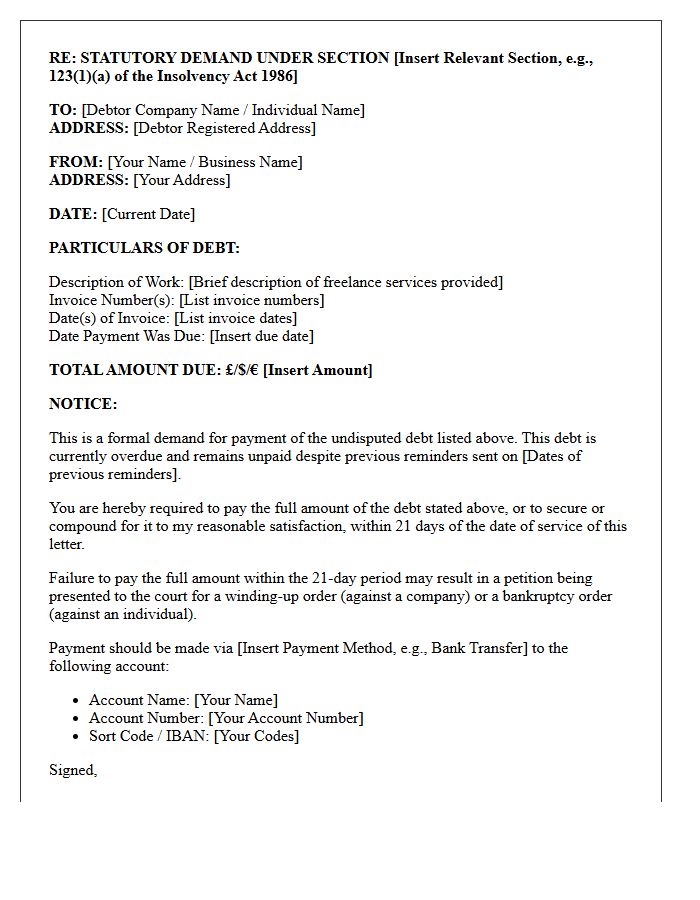
A Statutory Demand is a formal legal notice used to recover unpaid fees for freelance contracting work exceeding £750. It serves as a powerful precursor to winding-up petitions or bankruptcy proceedings, giving the debtor 21 days to pay. This process bypasses standard court claims, exerting significant pressure on non-paying clients. However, it must only be used for undisputed debts. If a genuine dispute exists, the court may set the demand aside, potentially resulting in legal costs against the freelancer. It is a strategic tool for enforcing payment and ensuring financial recovery.
Breach of Contract and Intent to Sue Letter for Freelance Nonpayment
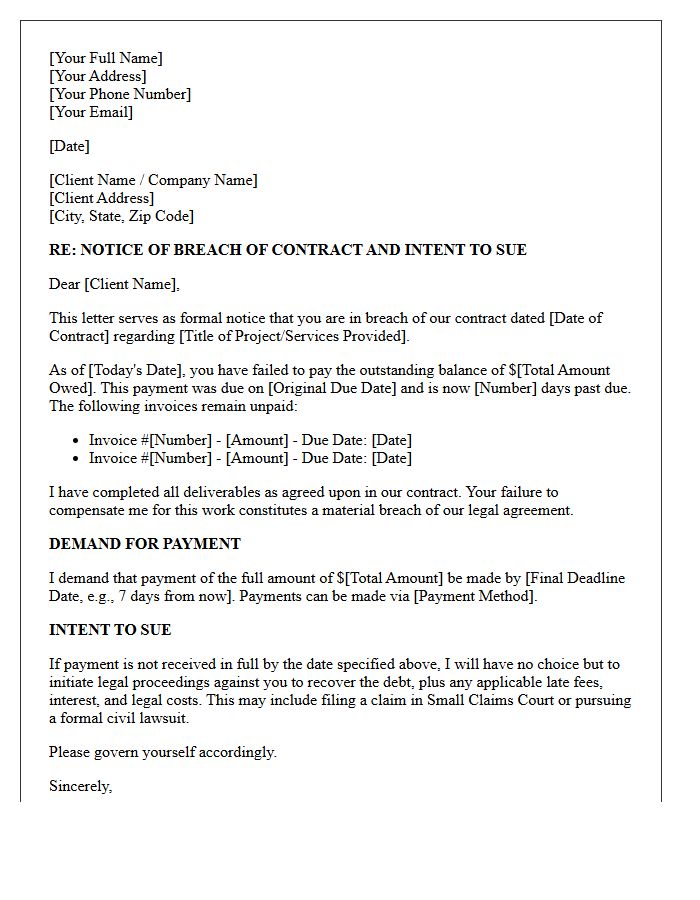
When facing freelance nonpayment, a formal Breach of Contract occurs if a client violates agreed terms. To recover funds, you should issue an Intent to Sue Letter. This professional notice serves as a final demand, outlining the outstanding debt, original deadlines, and legal action steps if payment isn't received. It creates a critical paper trail for small claims court, often prompting immediate resolution without litigation. Always attach the original invoice and contract to demonstrate clear liability and preserve your rights during the dispute process.
Third-Party Collection Letter Initiating Legal Action for Unpaid Invoices
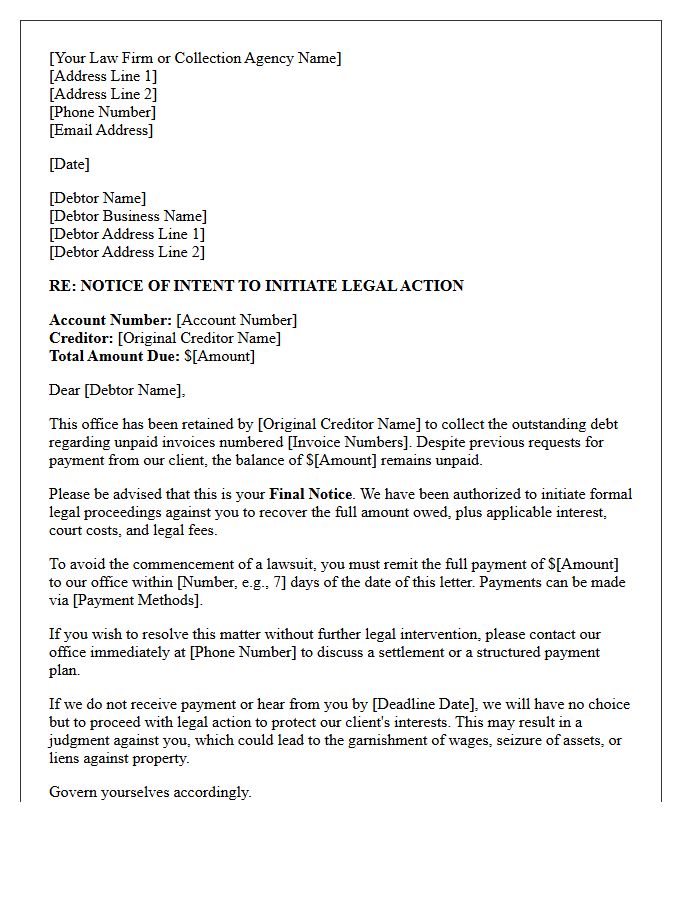
Receiving a third-party collection letter indicating legal action is a critical escalation in debt recovery. This formal notice signifies that a creditor has engaged a specialized agency or law firm to secure payment for unpaid invoices through litigation. It is essential to verify the debt's accuracy and respond within the specified timeframe to prevent a court judgment. Ignoring this document can lead to severe financial consequences, including wage garnishment or asset liens. Proactive communication or settling the balance can often halt legal proceedings before they impact your credit standing permanently.
Final Notice Letter Regarding Impending Lawsuit for Contractor Debt
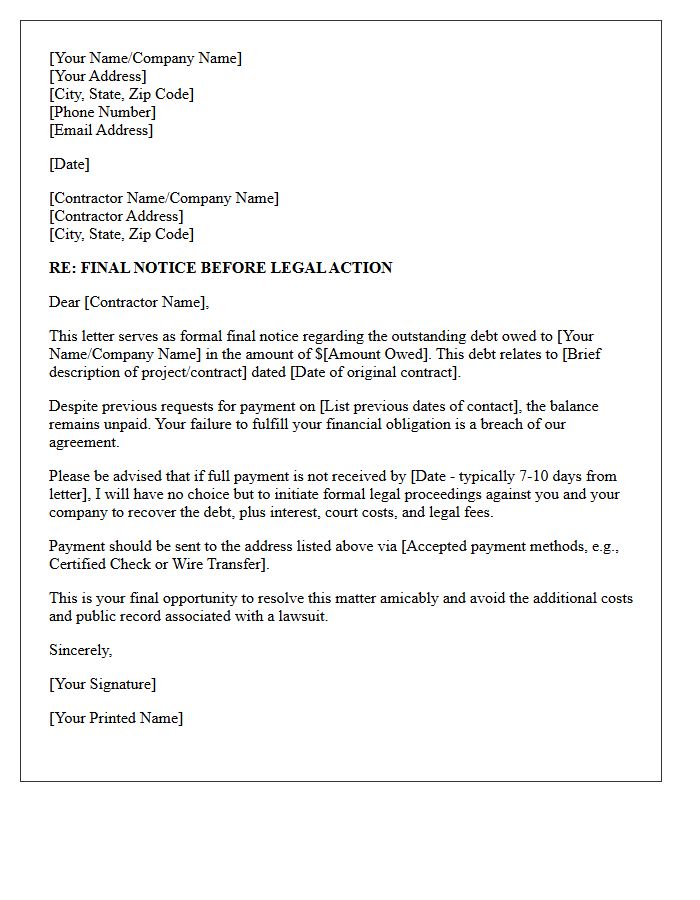
A Final Notice Letter is a critical legal warning issued before initiating a formal lawsuit to recover unpaid contractor debt. This document serves as a pre-litigation notice, demanding immediate payment to avoid costly courtroom proceedings and potential judgments. It establishes a formal paper trail, proving the creditor's intent to resolve the dispute through due process. Ignoring this notice can lead to legal action, property liens, or damaged credit scores. It is the final opportunity for a debtor to settle outstanding balances before a process server delivers a formal summons.
What is the first step if a client refuses to pay a freelance invoice?
The first step is typically sending a formal demand letter via certified mail. This document outlines the exact amount owed, the services provided, the original due date, and a final deadline for payment before legal action is initiated.
Can I sue a client in small claims court for unpaid contractor fees?
Yes, small claims court is a common venue for recovering unpaid invoices, provided the amount falls within your local jurisdiction's monetary limits. This process is generally faster and less expensive than superior court as it often does not require a lawyer.
What evidence do I need to win a lawsuit for an outstanding invoice?
To succeed in a breach of contract claim, you should gather your signed contract or service agreement, copies of all sent invoices, proof of work delivered (deliverables), and records of communication such as emails or texts discussing the debt.
Can I recover attorney fees and interest when suing for non-payment?
You may be able to recover attorney fees and pre-judgment interest if these terms were explicitly stated in your original freelance contract. If not, recovery of these costs depends on specific state laws regarding "open accounts" or "account stated" claims.
How long do I have to sue a client for an unpaid freelance invoice?
The timeframe is determined by the statute of limitations for breach of contract in your state, which typically ranges from three to six years. It is critical to file your lawsuit before this period expires to maintain your legal right to collection.

Comments