
When property owners fail to pay assessments, boards must issue a formal intent to sue to initiate legal recovery. This critical notice outlines delinquent balances, potential litigation costs, and deadlines for payment to avoid court action. Understanding the legal requirements for these demands ensures association compliance and protects community finances. To help you get started, below are some ready to use template.
Image cover: Formal Notice of Intent to Sue for Delinquent HOA Assessments: Templates and Legal Samples
Letter Samples List
- Final Notice of Intent to Sue Letter for Delinquent Homeowner Association Dues
- Debt Collection Letter of Intent to Litigate Unpaid Homeowner Association Fees
- Pre-Legal Action Letter for Delinquent Homeowner Association Assessments
- Homeowner Association Debt Collection Intent to Sue Letter
- Notice of Pending Lawsuit Letter for Overdue Homeowner Association Dues
- Final Demand and Intent to Sue Letter for Homeowner Association Arrears
- Attorney Intent to Sue Letter for Delinquent Homeowner Association Balances
- Formal Debt Collection Letter Warning of Lawsuit for Unpaid Homeowner Association Dues
- Intent to File Suit Letter for Delinquent Association Dues
- Pre-Litigation Collection Letter for Delinquent Homeowner Assessments
- Statutory Intent to Sue Letter for Homeowner Association Debt Recovery
- Final Homeowner Association Collection Letter Proceeding to Legal Action
Final Notice of Intent to Sue Letter for Delinquent Homeowner Association Dues
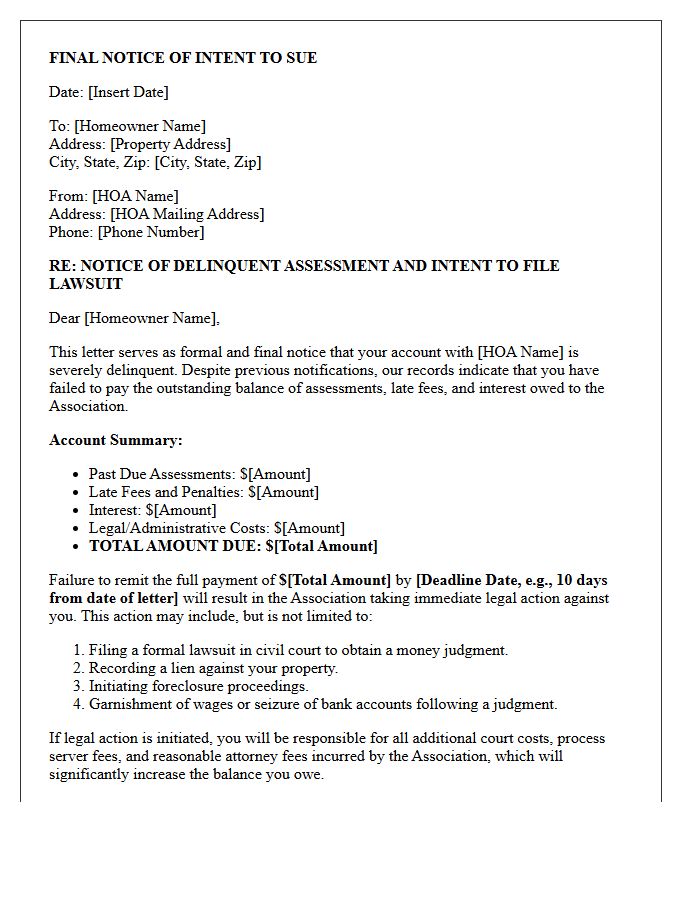
A Final Notice of Intent to Sue is the last formal warning sent to a delinquent homeowner before an HOA initiates legal action. This critical document outlines the total outstanding balance, including late fees, interest, and legal costs. To avoid a lawsuit or a property lien, the recipient must respond within the specified timeframe, typically 30 days. Failure to settle the debt or establish a payment plan may lead to foreclosure, court judgments, or wage garnishment. It serves as essential legal proof that the association attempted to resolve the debt pre-litigation.
Debt Collection Letter of Intent to Litigate Unpaid Homeowner Association Fees
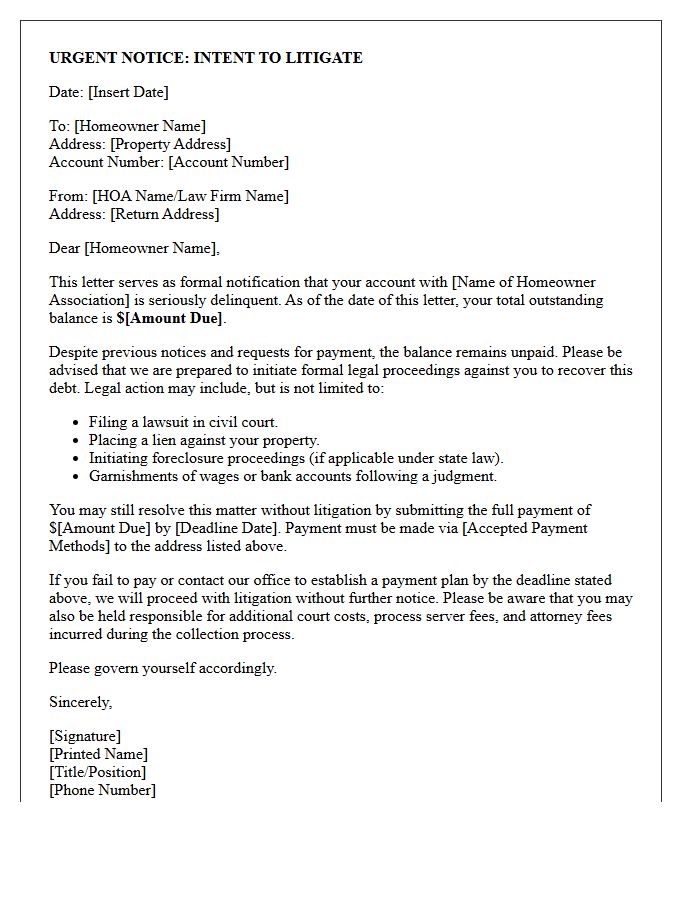
A Letter of Intent to Litigate serves as a formal final notice before a Homeowner Association (HOA) initiates a lawsuit for unpaid assessments. This document warns homeowners that failure to resolve the delinquency immediately will result in legal action, potentially leading to court judgments, wage garnishment, or even foreclosure. It is critical to respond promptly to avoid escalating attorney fees and court costs, which are typically added to the total debt. Seeking a payment plan at this stage is the most effective way to prevent formal litigation and property liens.
Pre-Legal Action Letter for Delinquent Homeowner Association Assessments
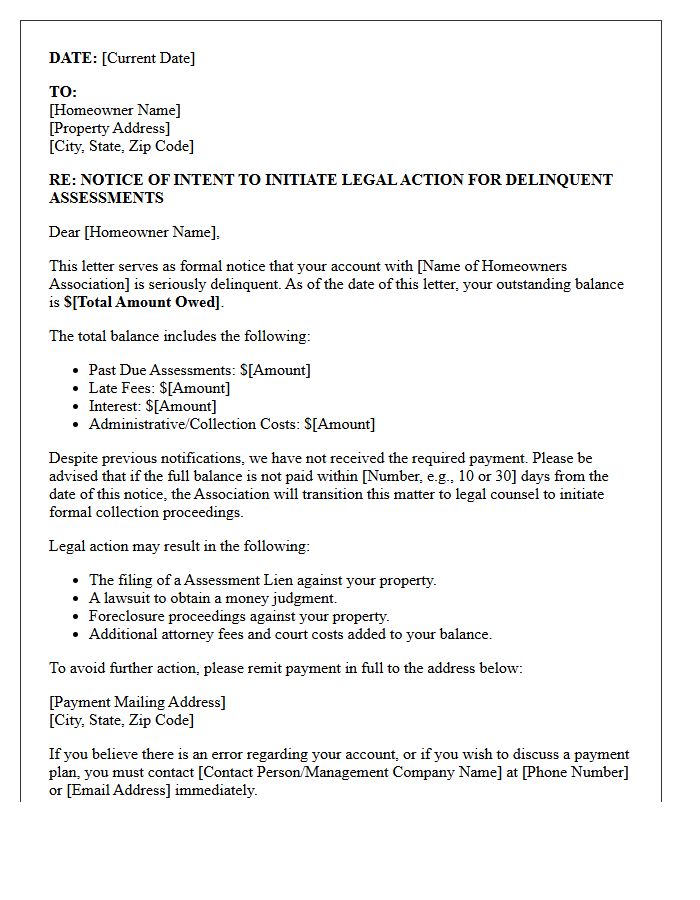
A Pre-Legal Action Letter is a formal notice sent to homeowners with delinquent HOA assessments before escalating to litigation or foreclosure. This essential document provides a final opportunity for debt resolution by detailing the total balance owed, including late fees and interest. It serves as a legal prerequisite in many jurisdictions, ensuring due process and compliance with governing documents. Receiving this letter indicates that the association is prepared to file a lien or pursuit a lawsuit, making immediate communication or payment crucial to avoid significant legal expenses.
Homeowner Association Debt Collection Intent to Sue Letter
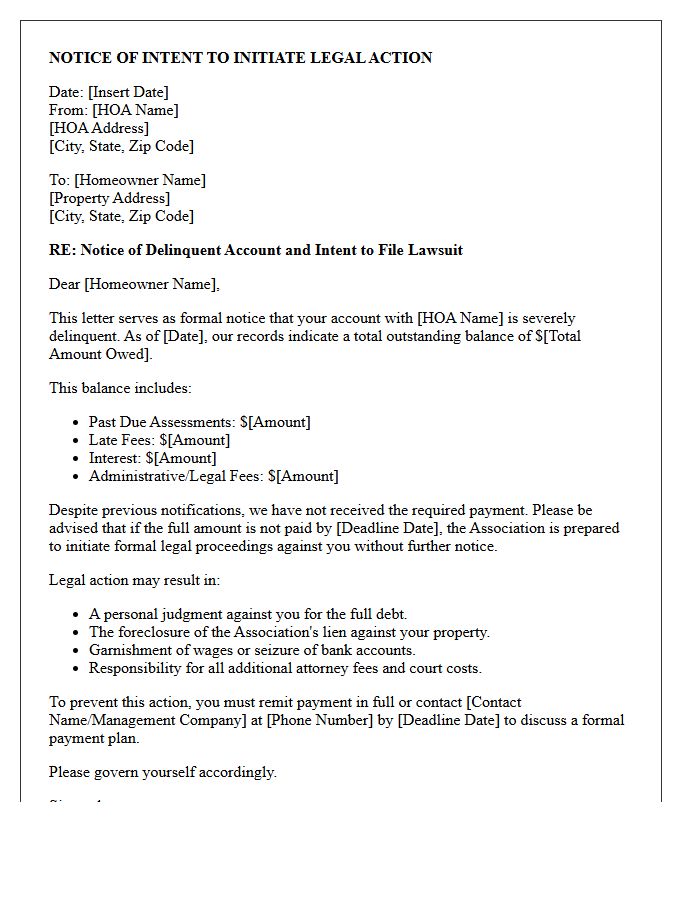
A homeowner association debt collection intent to sue letter is a formal notice warning owners of pending litigation due to delinquent assessments. This legal document signifies the final step before an HOA files a lawsuit or pursues a foreclosure to recover unpaid fees. It typically details the total balance owed, including late charges and legal costs, while providing a specific deadline for payment. Receiving this letter is critical, as failing to respond or settle the debt can lead to liens, wage garnishments, and significant additional legal expenses against the property owner.
Notice of Pending Lawsuit Letter for Overdue Homeowner Association Dues
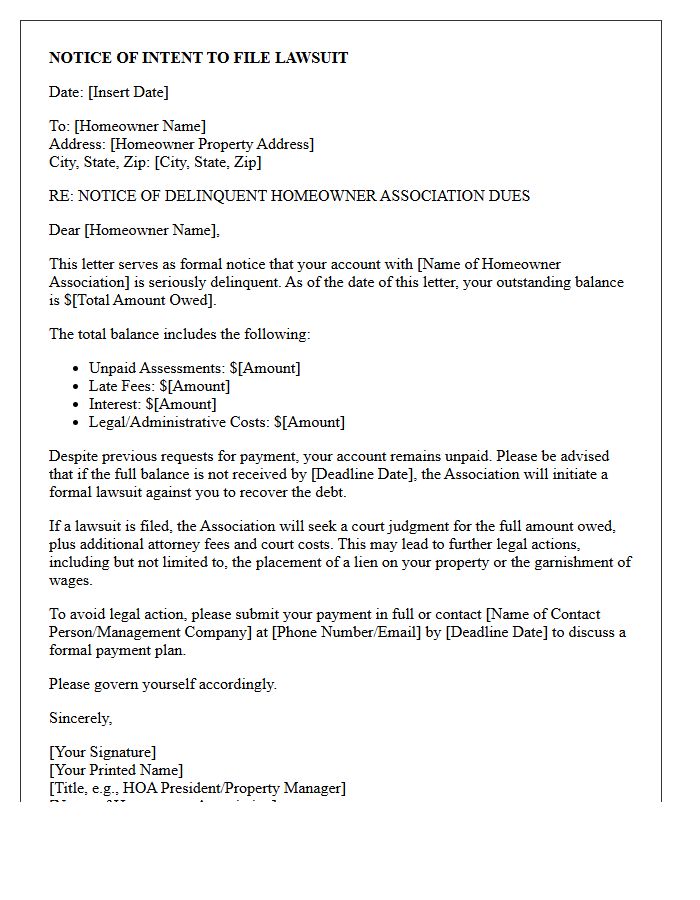
Receiving a notice of a pending lawsuit for overdue Homeowner Association (HOA) dues is a critical legal warning. This document signifies that the association is initiating formal litigation to recover unpaid assessments, late fees, and legal costs. Failure to respond can result in a default judgment, leading to wage garnishment, bank levies, or even foreclosure on your property. It is essential to verify the debt amount immediately and consider negotiating a payment plan or seeking legal counsel to protect your homeownership rights and prevent further escalating penalties.
Final Demand and Intent to Sue Letter for Homeowner Association Arrears
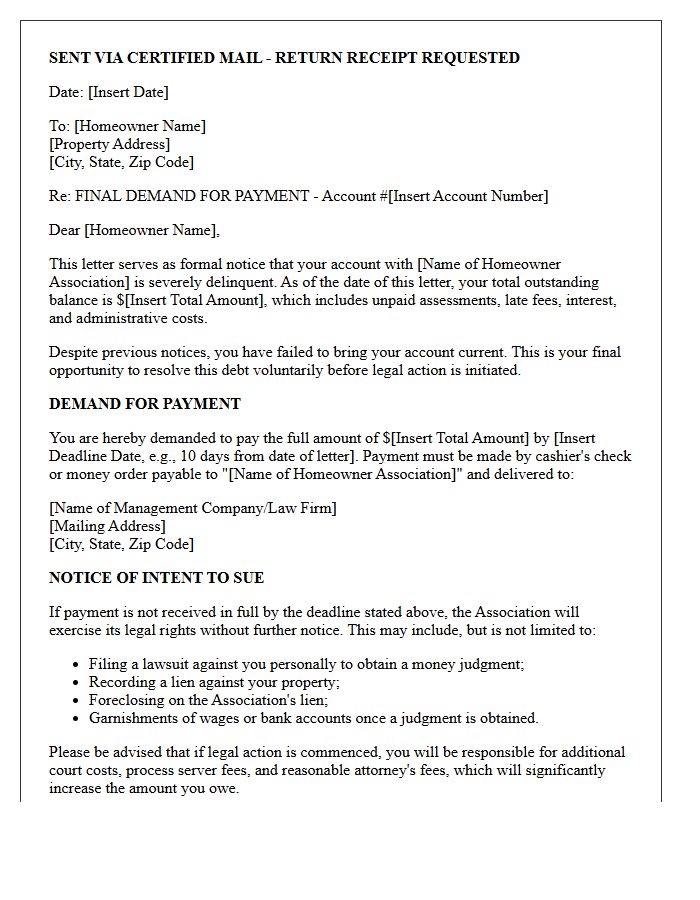
A Final Demand and Intent to Sue letter is a formal notice sent to homeowners with delinquent HOA assessments. This legal document warns that failure to resolve unpaid balances will result in a lawsuit or a property lien. It serves as a final opportunity to settle debt or enter a payment plan before escalating to foreclosure or court litigation. Homeowners must respond immediately to avoid additional legal fees, collection costs, and the potential loss of their home. Understanding these deadlines is critical for protecting property rights and financial stability.
Attorney Intent to Sue Letter for Delinquent Homeowner Association Balances
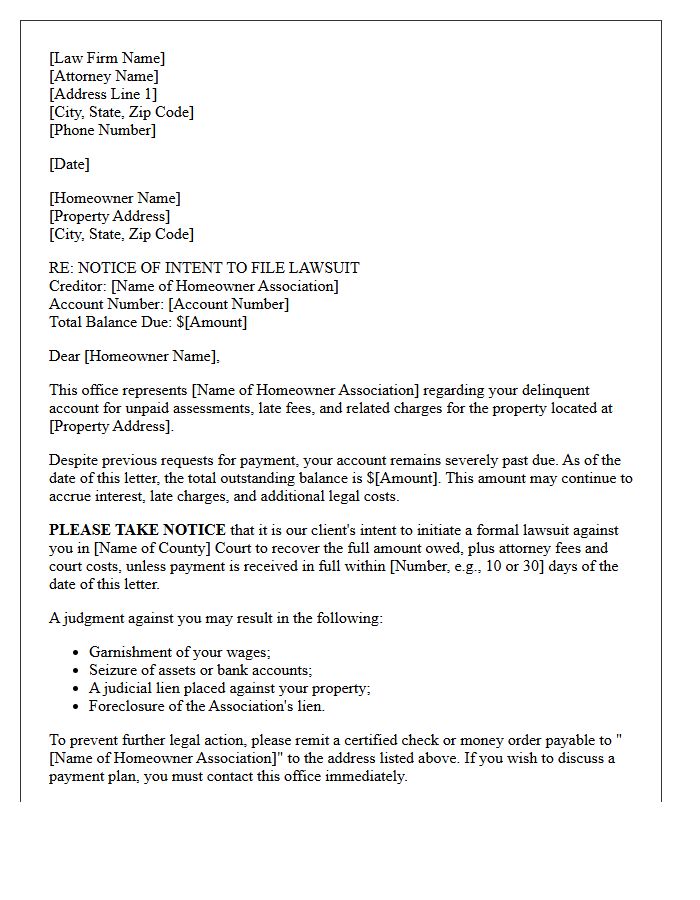
An Attorney Intent to Sue Letter serves as a formal legal notice to homeowners with overdue HOA assessments. This document warns that failing to settle delinquent balances immediately will result in a lawsuit. It typically outlines the total debt, including late fees, interest, and legal costs. Receiving this letter is a critical final opportunity to resolve the debt through a payment plan or full settlement before facing litigation, potential property liens, or foreclosure. Responding promptly is essential to avoid further legal escalation and mounting financial penalties.
Formal Debt Collection Letter Warning of Lawsuit for Unpaid Homeowner Association Dues
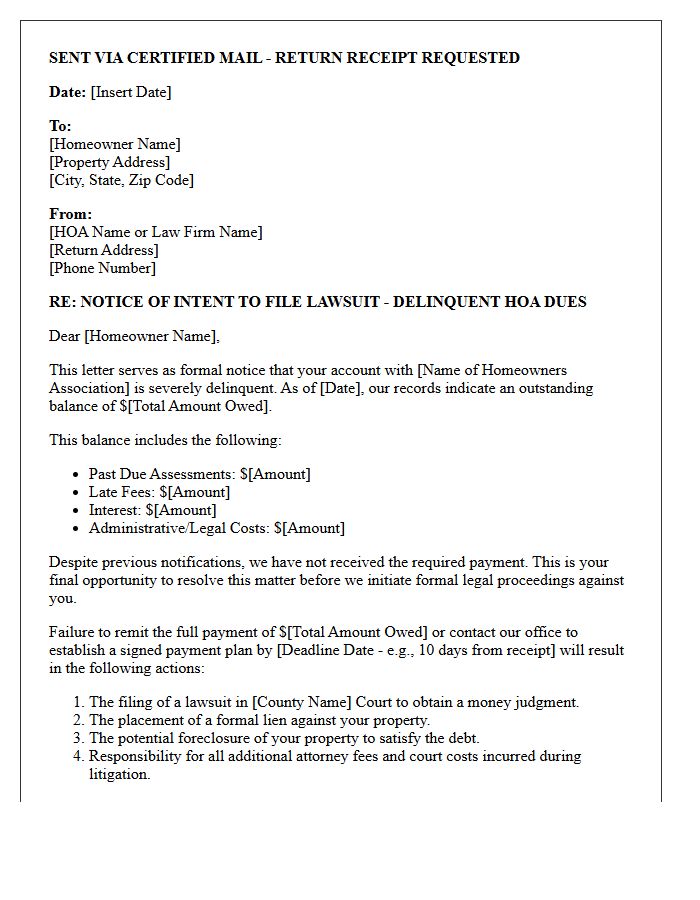
Receiving a formal lawsuit warning for unpaid homeowner association dues indicates an escalated legal phase. This document serves as a final notice that the HOA board intends to file a civil complaint to recover delinquent assessments, interest, and legal fees. Ignoring this letter can lead to a judicial foreclosure or a money judgment, potentially resulting in wage garnishment or property liens. To avoid litigation, homeowners should immediately verify the debt amount and propose a payment plan to settle the outstanding balance before the court filing deadline expires.
Intent to File Suit Letter for Delinquent Association Dues
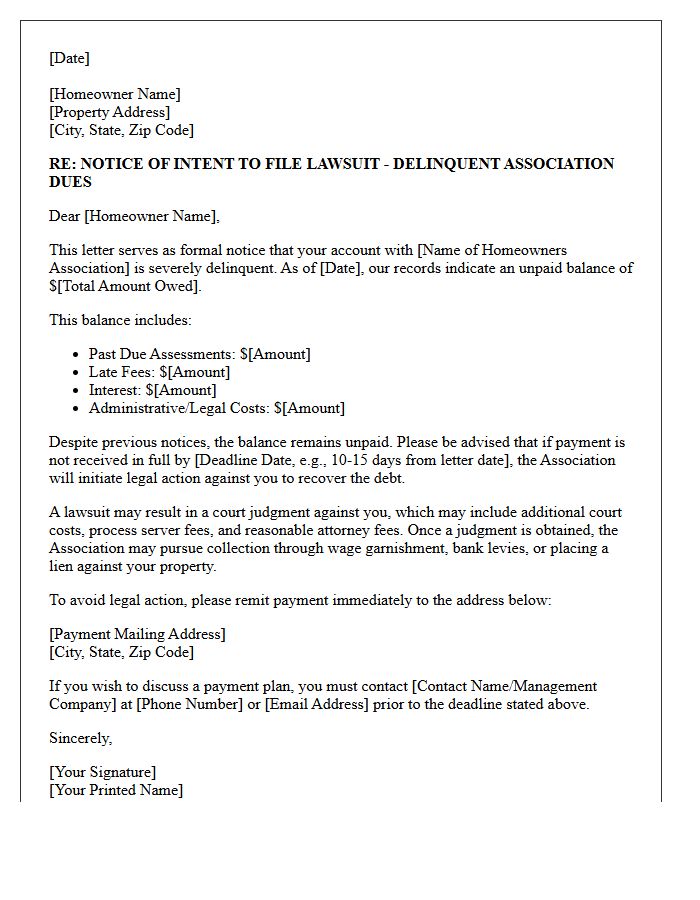
An Intent to File Suit Letter is a formal legal notice sent by a homeowners or condo association to owners with delinquent dues. This document serves as a final warning before litigation begins. It details the total balance owed, including late fees and interest, and provides a strict deadline for payment. Receiving this letter is critical because failure to comply can lead to a lawsuit, professional debt collection, or even foreclosure on the property. Addressing the notice immediately through payment or a settlement plan is essential to avoid costly legal expenses.
Pre-Litigation Collection Letter for Delinquent Homeowner Assessments
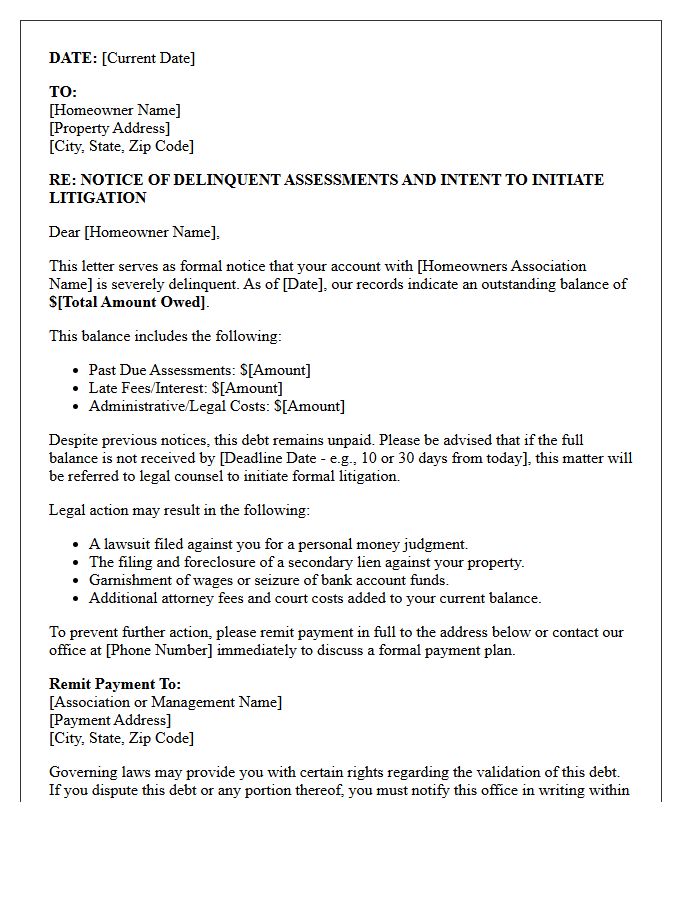
A pre-litigation collection letter serves as a formal notice sent to a delinquent homeowner before legal action commences. It informs the owner of their unpaid assessments, accrued interest, and late fees. To comply with the Fair Debt Collection Practices Act (FDCPA), the letter must outline the specific debt owed and provide a clear deadline for payment. Issuing this notice is a crucial procedural step, as it offers a final opportunity for dispute resolution or repayment plans, potentially saving the association and owner from costly courtroom litigation expenses.
Statutory Intent to Sue Letter for Homeowner Association Debt Recovery
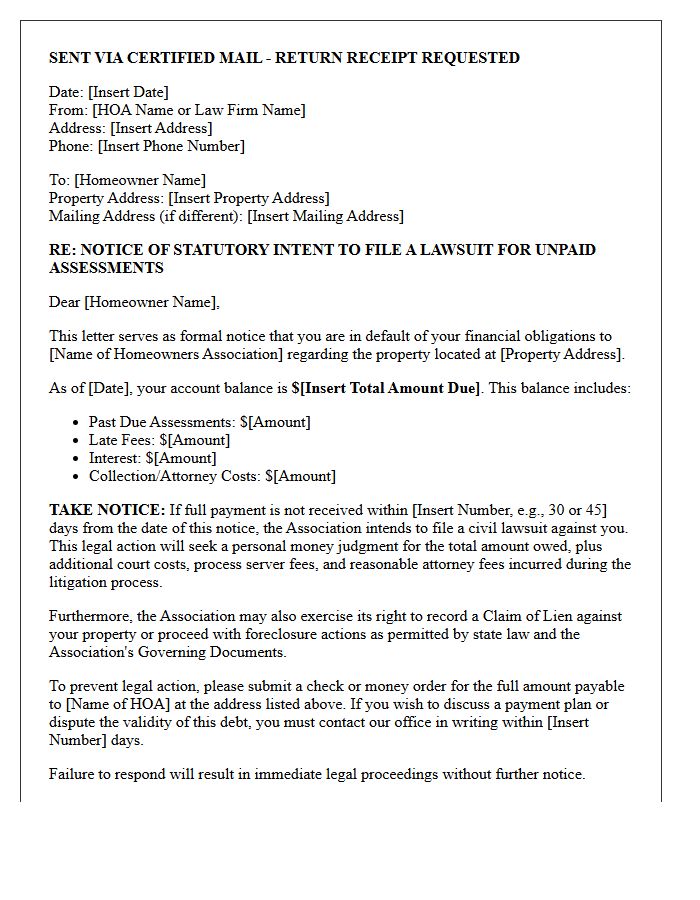
A Statutory Intent to Sue Letter is a mandatory legal notice sent by a Homeowner Association (HOA) before initiating a lawsuit for delinquent assessments. This formal document serves as a final warning, providing the homeowner a specific grace period-often 45 days-to settle the outstanding debt recovery balance or enter a payment plan. It must accurately detail all late fees, interest, and legal costs owed. Failure to respond to this notice typically results in the HOA filing a civil complaint or a foreclosure action to secure the unpaid funds against the property.
Final Homeowner Association Collection Letter Proceeding to Legal Action
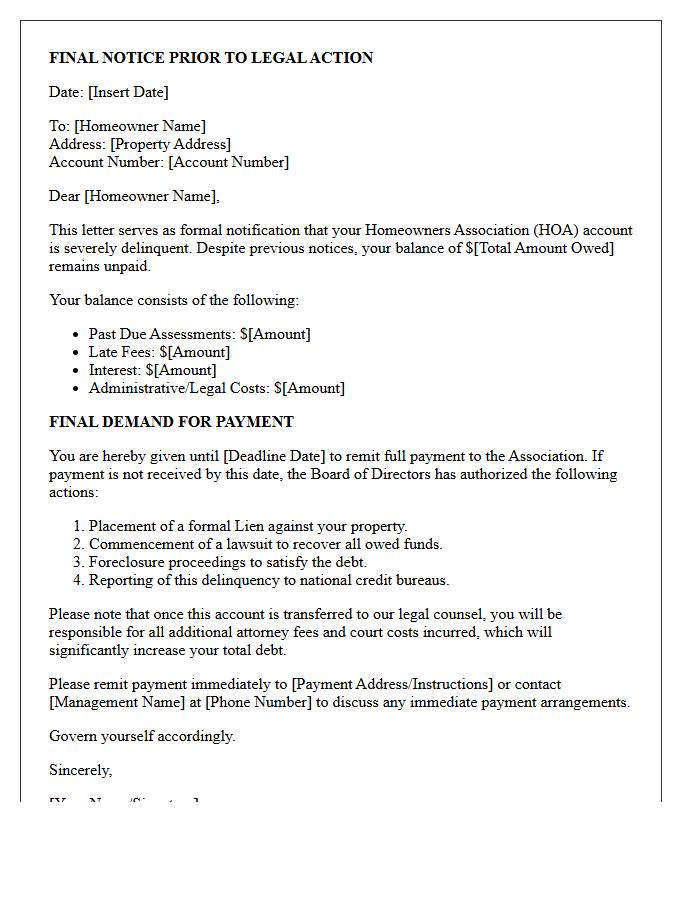
Receiving a Final Homeowner Association Collection Letter is the last warning before formal legal action begins. This notice signifies that your account is severely delinquent and will be transferred to an attorney for foreclosure or a lawsuit. To avoid additional attorney fees, court costs, and a potential lien on your property, you must pay the full balance immediately. Ignoring this document allows the HOA to escalate collection proceedings, which can result in the loss of your home. Contact the board today to discuss a payment plan or settlement options.
Can an HOA sue a homeowner for unpaid assessment dues?
Yes, most homeowners association governing documents and state laws authorize the HOA to file a civil lawsuit against a homeowner to recovery delinquent assessments, late fees, interest, and legal costs.
What is the legal process for an HOA to initiate a lawsuit for delinquent dues?
The process typically begins with a formal demand letter or "pre-lien" notice. If the debt remains unpaid after the statutory waiting period, the HOA may file a lien against the property and subsequently file a summons and complaint in civil court to obtain a money judgment.
Can an HOA foreclose on my home for unpaid monthly dues?
In many jurisdictions, an HOA has the power to initiate judicial or non-judicial foreclosure proceedings if the delinquent dues exceed a specific dollar amount or a certain period of delinquency, as defined by state statutes and the association's CC&Rs.
What happens if the HOA wins a judgment for delinquent assessments?
Once a court grants a money judgment, the HOA can employ various collection methods, including wage garnishment, seizing funds from bank accounts, or placing a judgment lien on other assets owned by the homeowner.
Can I be held responsible for the HOA's legal fees in a lawsuit?
Generally, yes. Most association bylaws and state laws include a "fee-shifting" provision, which requires the delinquent homeowner to reimburse the HOA for all reasonable attorney fees and court costs incurred during the collection and litigation process.

Comments