
A Pre-Litigation Notice of Intent is a formal legal document notifying a party of potential legal action. It serves as a final opportunity to resolve disputes through settlement before a formal complaint is filed in court. This notice outlines specific claims, damages, and a deadline for response to avoid litigation. To help you draft yours, below are some ready to use template.
Image cover: Notice of Intent to File a Lawsuit: Formal Templates and Pre-Litigation Guide
Letter Samples List
- Final Demand Letter Prior to Litigation
- Notice of Intent to File Lawsuit Letter
- Pre-Litigation Debt Recovery Letter
- Legal Action Warning Letter for Unpaid Debt
- Creditor Intent to Sue Letter
- Final Notice Pre-Litigation Letter
- Commercial Debt Collection Lawsuit Letter
- Pre-Suit Claim and Demand Letter
- Imminent Litigation Notice Letter
- Breach of Contract and Lawsuit Intent Letter
- Outstanding Balance Legal Proceeding Letter
- Debt Collection Final Resolution Letter
- Attorney Pre-Litigation Demand Letter
Final Demand Letter Prior to Litigation
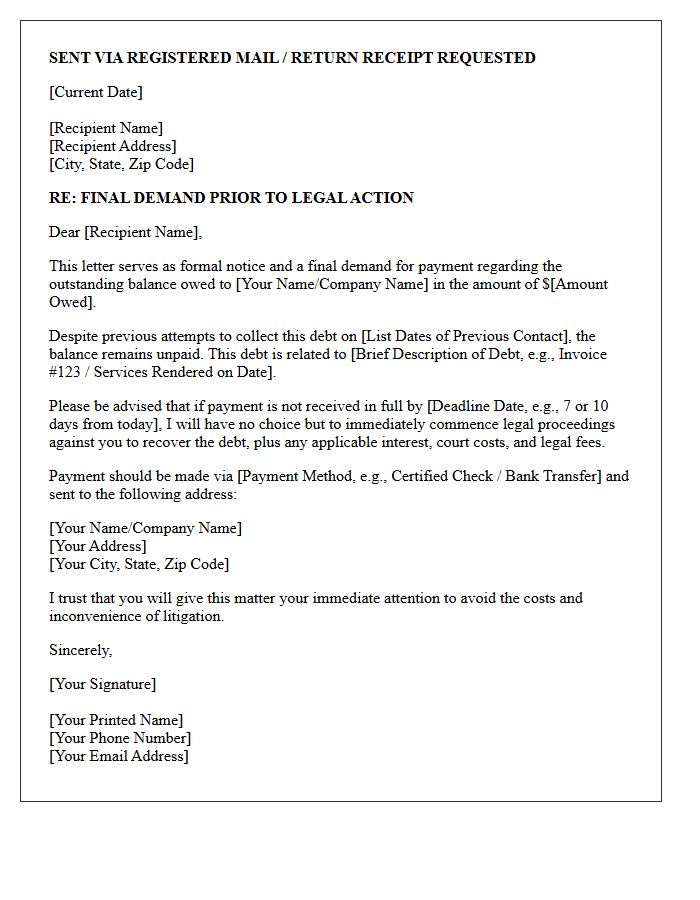
A final demand letter is a critical formal notice sent to a debtor or opposing party before initiating legal action. This document serves as a notice of intent to sue, clearly outlining the outstanding debt, specific performance required, and a strict deadline for compliance. It provides a last opportunity for dispute resolution to avoid costly court proceedings. In many jurisdictions, presenting this letter is a mandatory procedural step to demonstrate to the court that you attempted a good-faith settlement. Failure to respond typically results in the immediate commencement of litigation.
Notice of Intent to File Lawsuit Letter
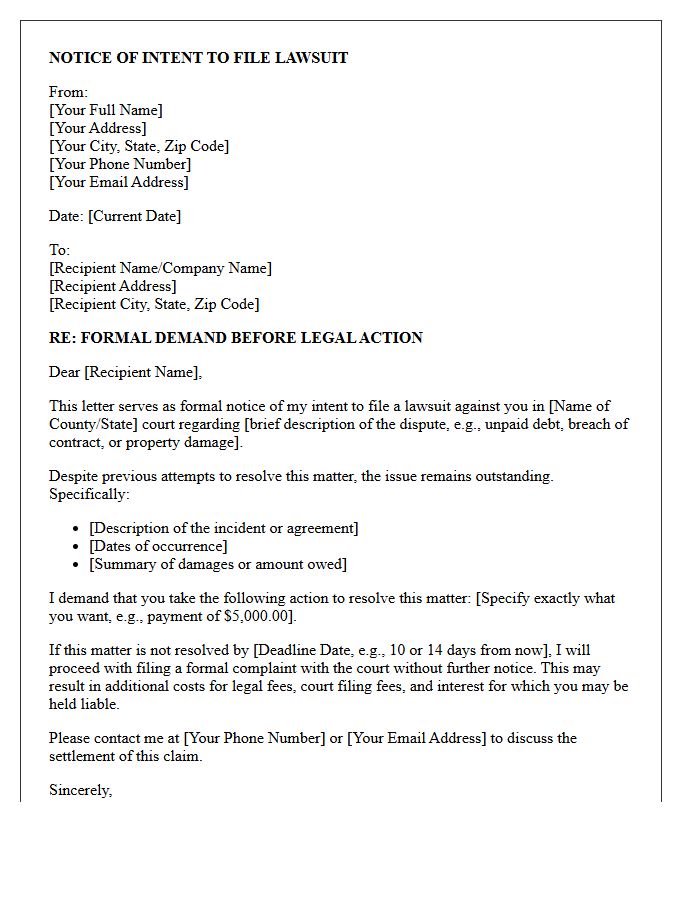
A Notice of Intent to File Lawsuit is a formal legal document notifying a party of your plan to initiate litigation. It serves as a final opportunity to resolve a dispute through settlement or mediation before court intervention. The letter must clearly outline the factual basis of the claim, the legal violations, and the specific remedies or damages sought. Providing this notice is often a statutory requirement in specific legal matters, such as medical malpractice or government claims, ensuring all parties have a chance to avoid costly legal proceedings.
Pre-Litigation Debt Recovery Letter
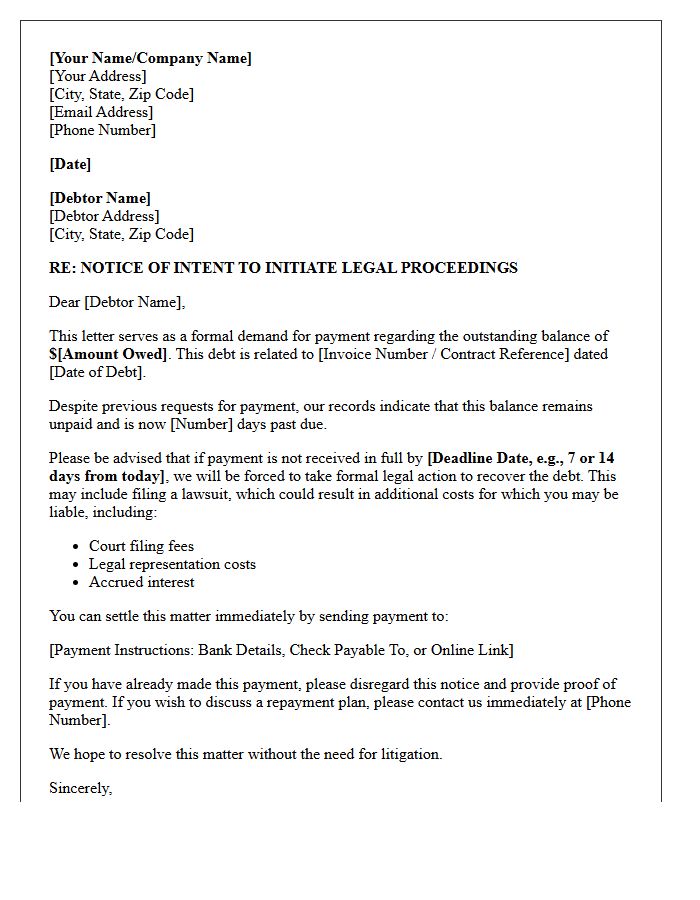
A Pre-Litigation Debt Recovery Letter, also known as a Letter Before Action, is a formal notice sent to a debtor before initiating legal proceedings. This essential document serves as a final demand for payment, clearly outlining the amount owed and the deadline for settlement. Sending this Letter of Claim demonstrates a good-faith effort to resolve the dispute out of court, satisfying judicial protocols. It acts as a powerful tool to encourage immediate payment while providing necessary legal evidence should formal litigation become unavoidable to recover your outstanding funds.
Legal Action Warning Letter for Unpaid Debt
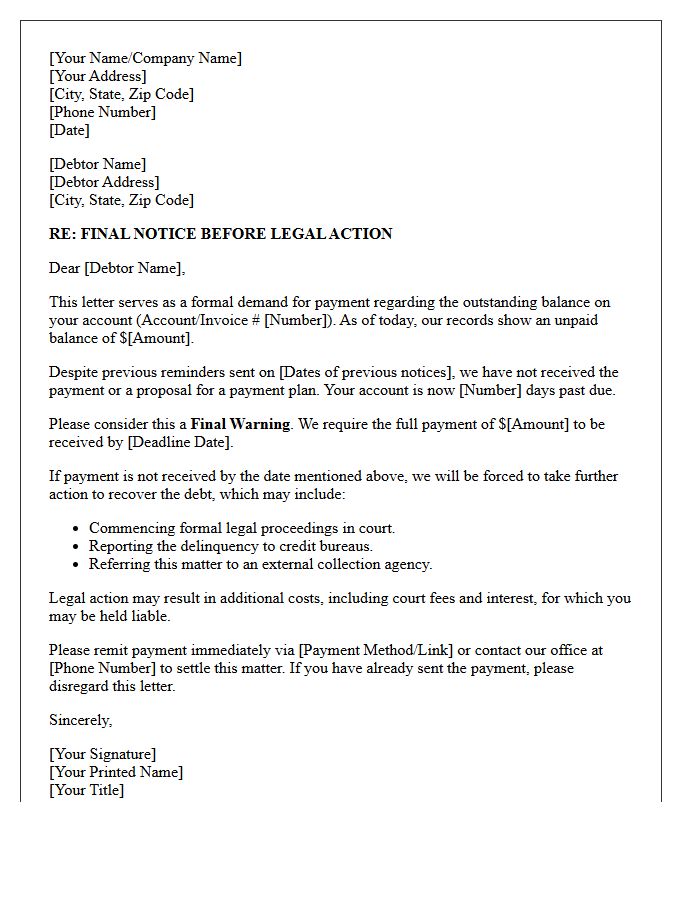
A legal action warning letter, or Letter Before Action, is a formal notice demanding payment for an outstanding debt. It serves as a final opportunity to settle the balance before litigation begins. To be legally valid, it must clearly state the amount owed, a deadline for payment, and the specific legal consequences of non-compliance. Receiving this document is a critical signal to seek legal advice or negotiate a settlement immediately to avoid court proceedings, additional interest, and negative impacts on your credit score.
Creditor Intent to Sue Letter
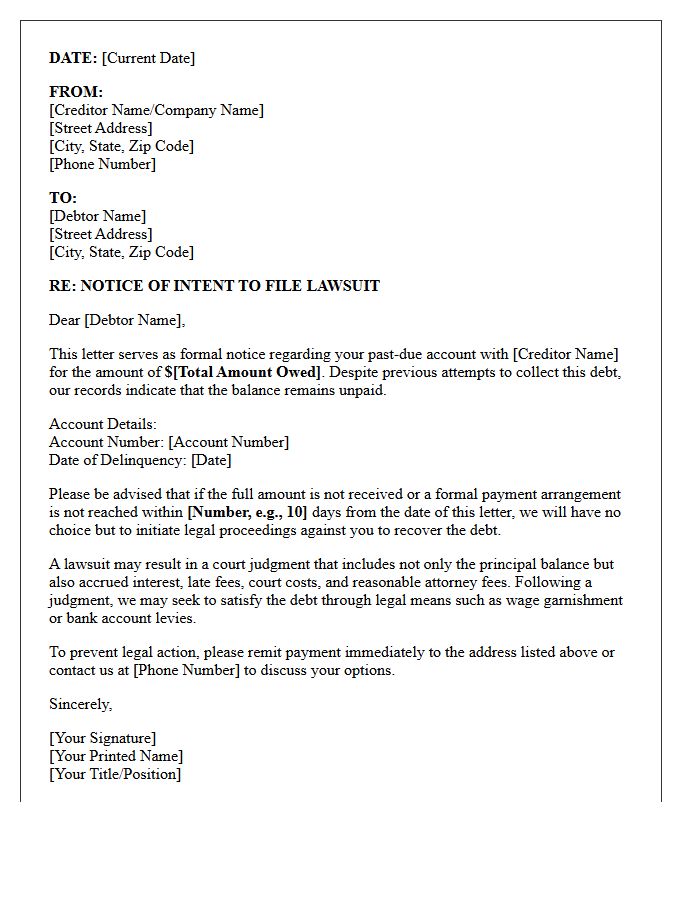
A Creditor Intent to Sue Letter is a formal legal notice warning a debtor of imminent litigation to recover unpaid balances. This document serves as a final opportunity to resolve the debt through a settlement or payment plan before a lawsuit is filed in court. Receiving this letter indicates that the creditor may seek a judgment to authorize wage garnishment or property liens. It is crucial to verify the debt's validity and respond promptly to avoid costly legal fees and further credit damage during the collection process.
Final Notice Pre-Litigation Letter
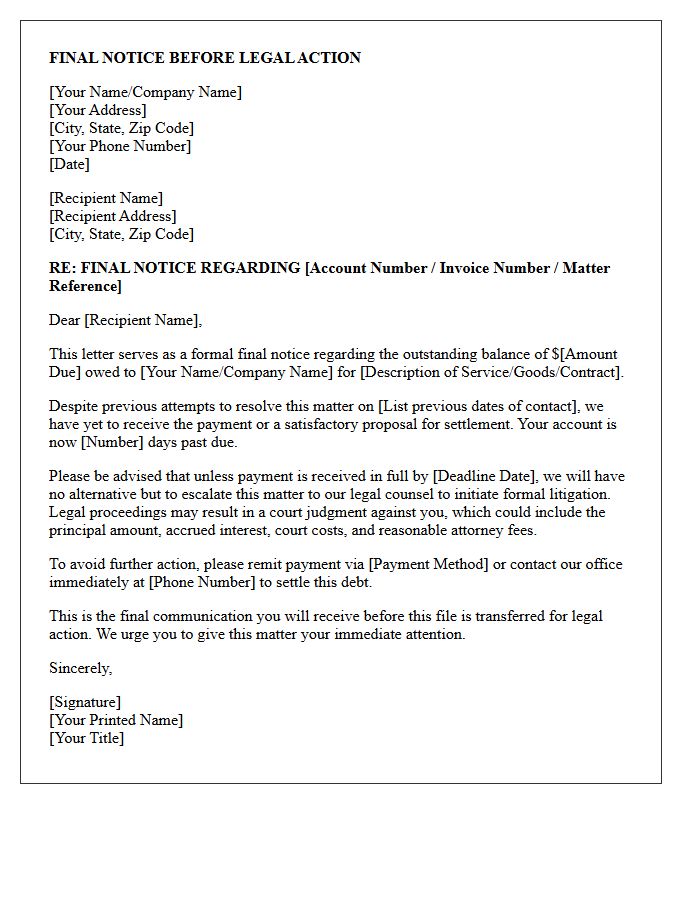
A Final Notice Pre-Litigation Letter is a formal legal warning issued before a lawsuit is filed. It serves as a last chance for a debtor or defaulting party to resolve a dispute through payment or settlement. This document outlines the legal claims, specifies a firm deadline, and states that failure to comply will result in immediate court action. Receiving this letter indicates that the sender has exhausted informal collection efforts and is prepared to initiate formal legal proceedings to protect their interests.
Commercial Debt Collection Lawsuit Letter
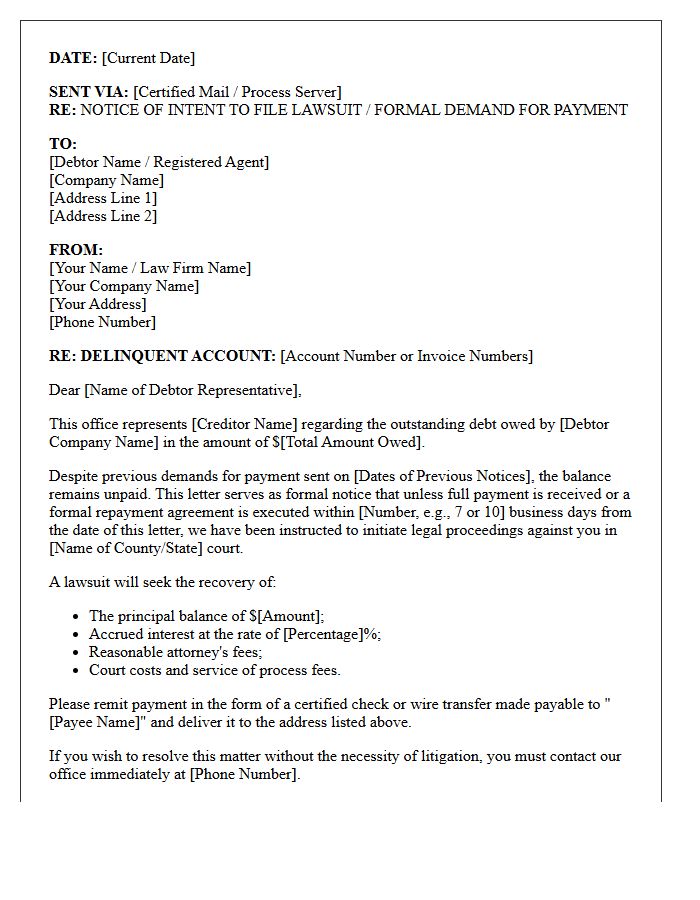
Receiving a commercial debt collection lawsuit letter indicates that a creditor has filed a legal complaint to recover unpaid business debts. It is critical to respond within the court's deadline to avoid a default judgment, which grants the creditor power to seize assets or garnish bank accounts. Unlike consumer debt, business disputes often involve complex contracts and higher financial stakes. You should immediately verify the debt's accuracy and consult legal counsel to explore settlement options or prepare a formal defense to protect your company's financial stability and operational future.
Pre-Suit Claim and Demand Letter
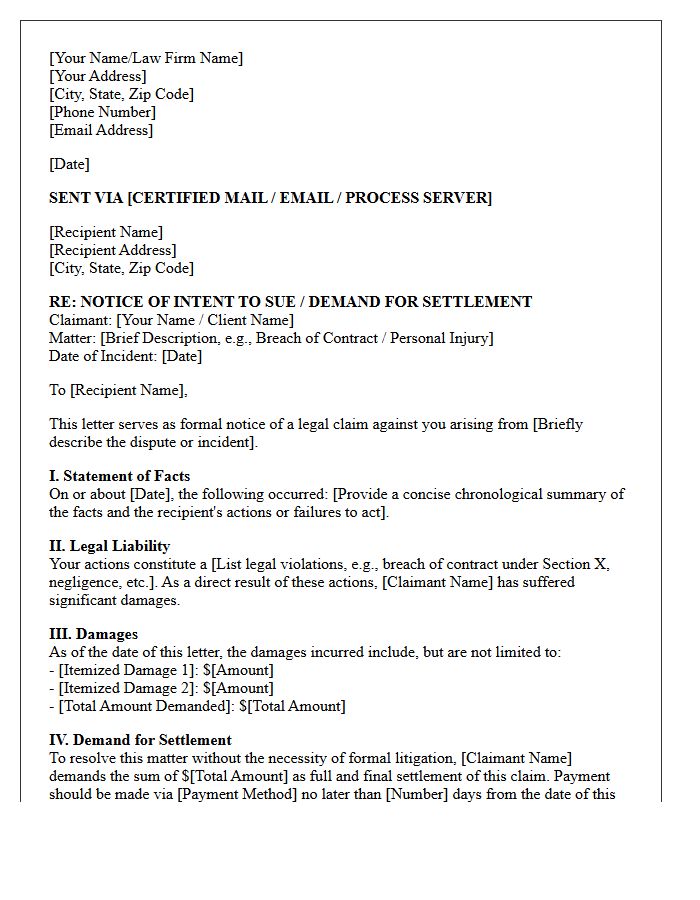
A Pre-Suit Claim and Demand Letter is a formal legal notice sent before initiating litigation. Its primary purpose is to notify the opposing party of specific legal grievances and demand restitution or corrective action. This document serves as a final opportunity to reach a settlement outside of court, potentially saving time and legal fees. It must clearly outline the facts, legal basis for the claim, and a strict deadline for a response. Providing this notice is often a mandatory prerequisite for filing certain types of lawsuits under specific jurisdictional rules.
Imminent Litigation Notice Letter
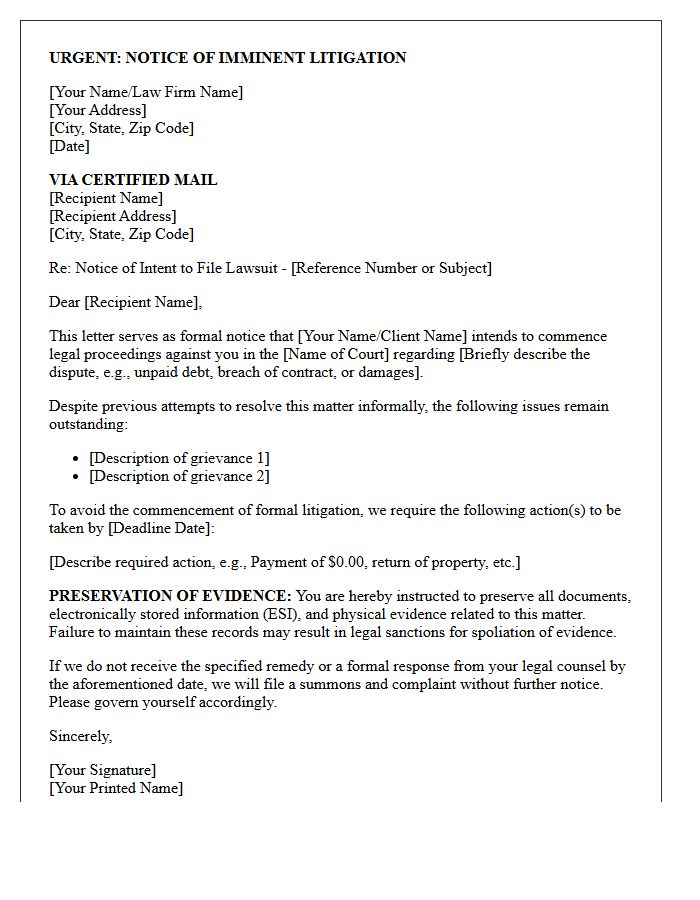
An Imminent Litigation Notice Letter, often called a demand letter, serves as a formal notification that legal action will commence unless specific demands are met. This document is a critical pre-litigation step designed to encourage a settlement and establish a timeline for compliance. It officially puts the recipient on notice of a dispute, potentially triggering a legal hold on relevant evidence. Receiving such a letter requires immediate professional review to assess liability, preserve documentation, and determine whether to negotiate or prepare for an impending lawsuit.
Breach of Contract and Lawsuit Intent Letter
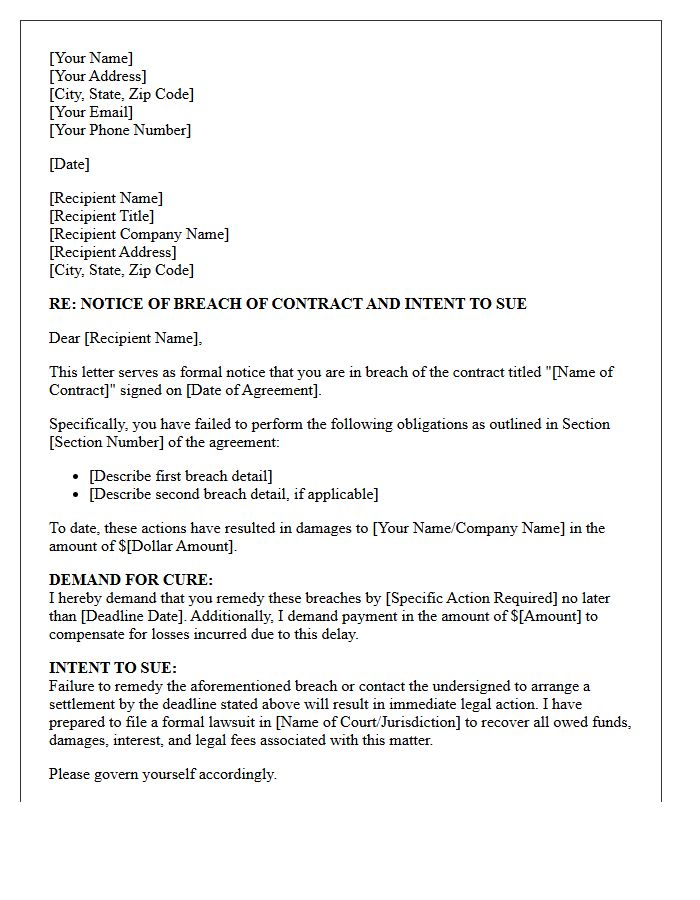
A Breach of Contract occurs when one party fails to fulfill binding obligations. To resolve this legally, you must issue a Lawsuit Intent Letter, also known as a demand letter. This formal document notifies the defaulting party of their specific violations and provides a final opportunity to remedy the situation before litigation begins. It serves as critical evidence of your attempt to settle out of court. Clearly stating the required corrective actions and a strict deadline is essential for protecting your legal rights and establishing a cause of action for future court proceedings.
Outstanding Balance Legal Proceeding Letter
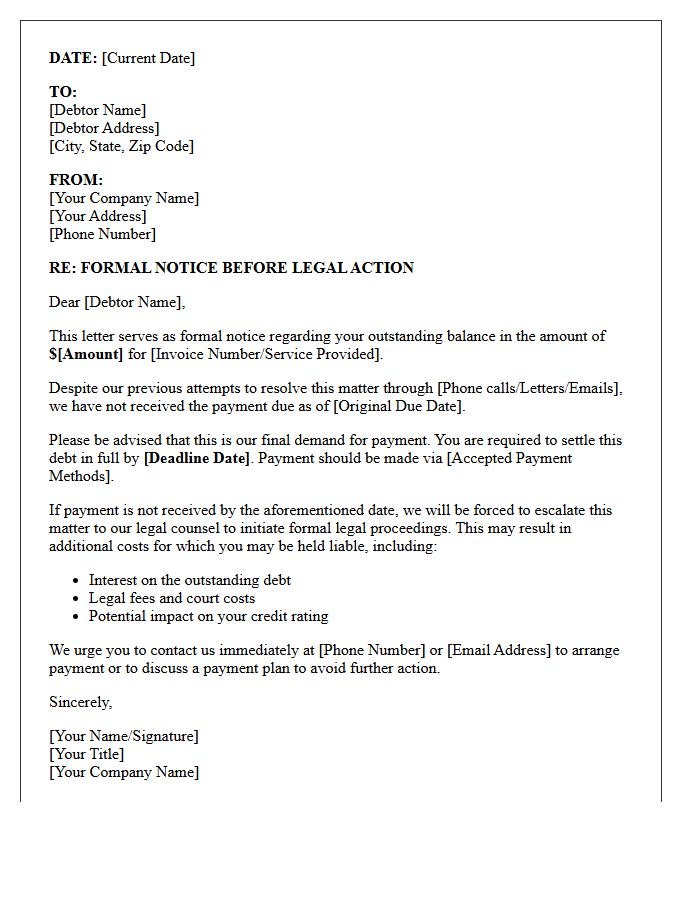
An Outstanding Balance Legal Proceeding Letter is a formal notice sent to a debtor before formal litigation begins. This document, often called a Letter Before Action, serves as a final demand for payment. It outlines the total debt owed, provides a strict deadline for settlement, and warns of impending court action or credit damage. Receiving this letter is a critical signal to seek legal advice or negotiate a repayment plan immediately to avoid additional court costs, interest, and potential judgments that could negatively impact your long-term financial standing.
Debt Collection Final Resolution Letter
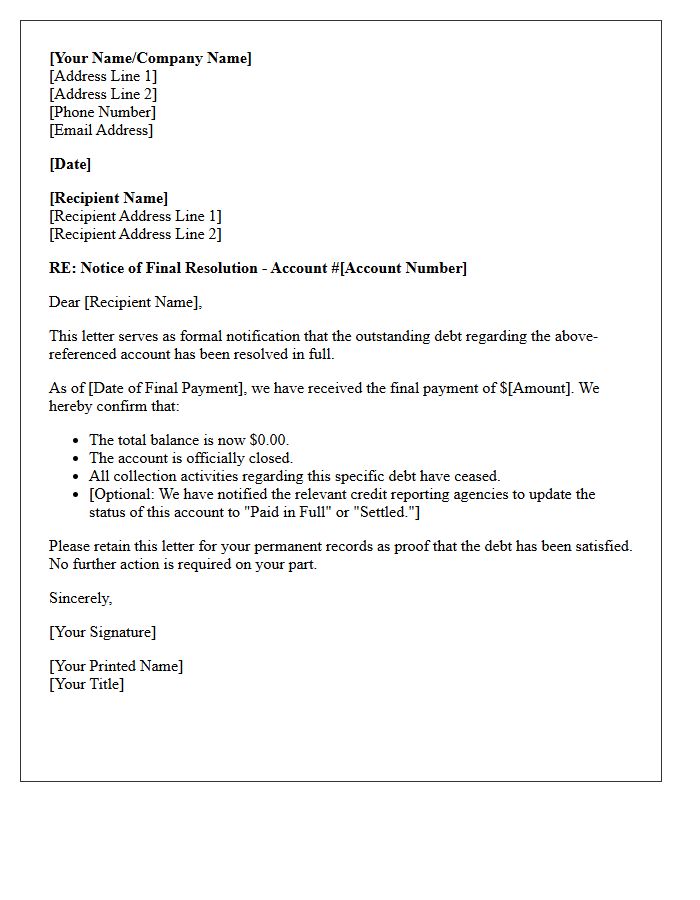
A Debt Collection Final Resolution Letter serves as formal confirmation that a financial obligation is fully satisfied. This critical document provides legal protection against future collection attempts or duplicate claims regarding the same account. It should clearly state the settled amount, the zero balance status, and instructions to update credit reporting agencies. Retaining this permanent record is essential to resolve disputes and verify your financial standing during background checks or loan applications. Always ensure the letter is signed by an authorized representative to guarantee its validity.
Attorney Pre-Litigation Demand Letter
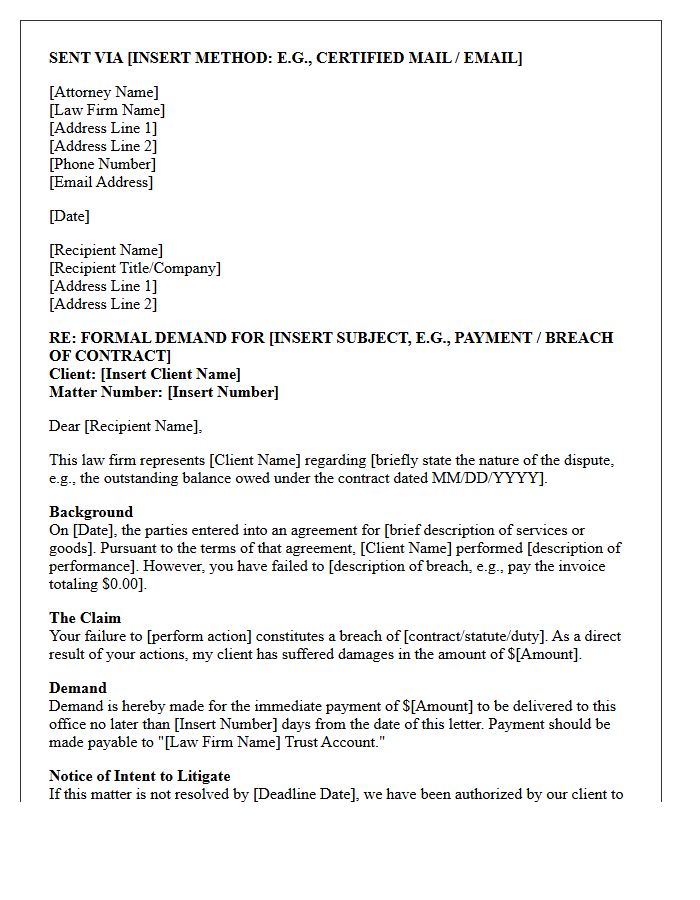
A pre-litigation demand letter is a formal legal notice sent by an attorney to resolve a dispute before filing a lawsuit. This document outlines the legal claims, specifies the damages incurred, and sets a strict deadline for a response. Its primary purpose is to encourage a settlement, saving both parties time and legal expenses. Receiving such a letter signifies that legal action is imminent unless the recipient complies with the demands. It serves as crucial evidence of a good-faith effort to mediate, often influencing future court proceedings and potential recovery of costs.
What is a Pre-Litigation Notice of Intent to File a Lawsuit?
A Pre-Litigation Notice of Intent to File a Lawsuit is a formal legal document sent by an aggrieved party to a potential defendant. It serves as an official warning that a legal claim exists and that a formal lawsuit will be initiated in court if the dispute is not resolved within a specified timeframe.
Is it mandatory to send a Notice of Intent before filing a lawsuit?
Whether a notice is mandatory depends on the jurisdiction and the type of case. While many civil disputes do not strictly require one, certain legal actions-such as medical malpractice claims, government tort claims, or specific breach of contract cases-often have statutory requirements that a formal notice be served before a summons and complaint can be filed.
What key information must be included in a Notice of Intent?
A legally sound Notice of Intent should include the identity of the claimant, a detailed factual description of the events leading to the dispute, the specific legal grounds for the claim, a clear demand for a remedy (such as monetary compensation), and a deadline for the recipient to respond before litigation commences.
What are the primary benefits of sending a Pre-Litigation Notice?
Sending a notice can facilitate an early settlement, saving both parties the time and expense of a trial. It also establishes a clear timeline of events, demonstrates to the court that a good-faith effort was made to resolve the conflict, and can sometimes trigger insurance coverage or tolling agreements regarding the statute of limitations.
What should I do if I receive a Pre-Litigation Notice of Intent?
If you receive a Notice of Intent, you should immediately review the allegations and consult with legal counsel. Failing to respond by the stated deadline may result in the immediate filing of a lawsuit, whereas a timely response can open negotiations, allow for a defense evaluation, or lead to alternative dispute resolution (ADR) like mediation.

Comments