
Managing delinquent healthcare debt requires a clear legal strategy. An Intent to Sue for Unpaid Medical Accounts serves as a final formal notice before initiating litigation to recover outstanding balances. This document outlines the debt details, provides a deadline for payment, and signals your readiness for court action to protect your practice's revenue. To assist your process, below are some ready to use template.
Image cover: Final Notice Before Legal Action: Unpaid Medical Debt Demand Letter Templates
Letter Samples List
- Final Demand Letter for Unpaid Medical Accounts
- Notice of Intent to Sue Letter for Medical Debt
- Pre-Litigation Warning Letter for Outstanding Medical Bills
- Formal Legal Action Intent Letter for Healthcare Balances
- Final Collection Letter Before Lawsuit for Medical Accounts
- Delinquent Medical Account Intent to Sue Letter
- Attorney Representation Letter for Medical Debt Lawsuits
- Impending Litigation Notice Letter for Unpaid Clinic Services
- Medical Provider Debt Summons Warning Letter
- Final Settlement Offer Before Litigation Letter for Medical Accounts
- Hospital Arrears Legal Action Imminent Letter
- Healthcare Collection Agency Intent to Sue Letter
- Statutory Notice of Intent to File Suit Letter for Medical Debt
Final Demand Letter for Unpaid Medical Accounts
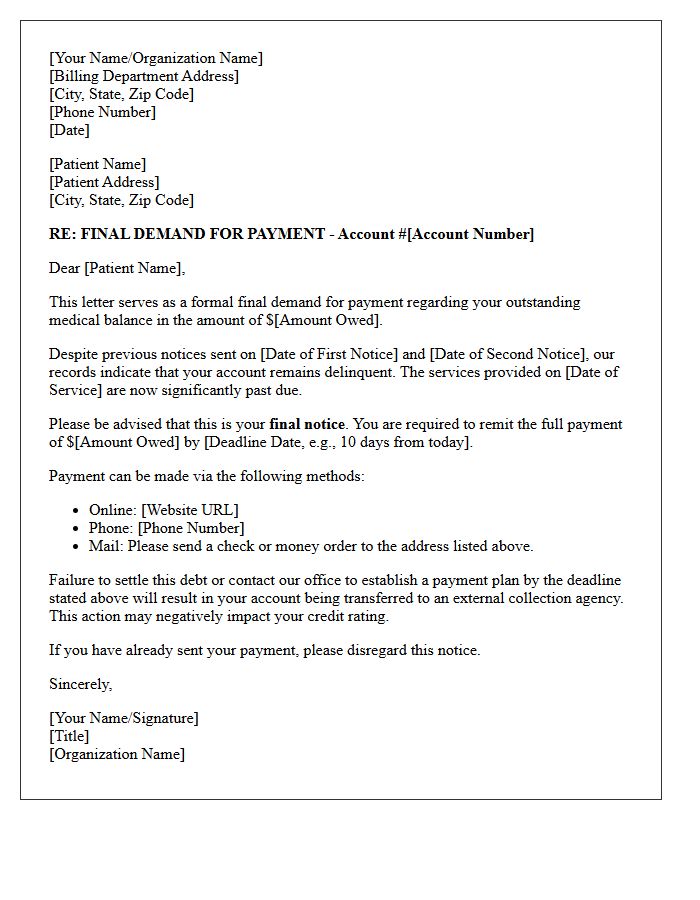
A final demand letter is a formal notice issued before initiating legal action or reporting debt to credit bureaus. It serves as the last opportunity for a patient to settle unpaid medical accounts through payment or a settlement plan. It is crucial to verify that all insurance adjustments and billing codes are accurate before responding. Ignoring this document often leads to medical debt collection, which can severely impact your credit score. Timely communication with the healthcare provider's billing department can often resolve disputes and prevent further litigation or collection activities.
Notice of Intent to Sue Letter for Medical Debt
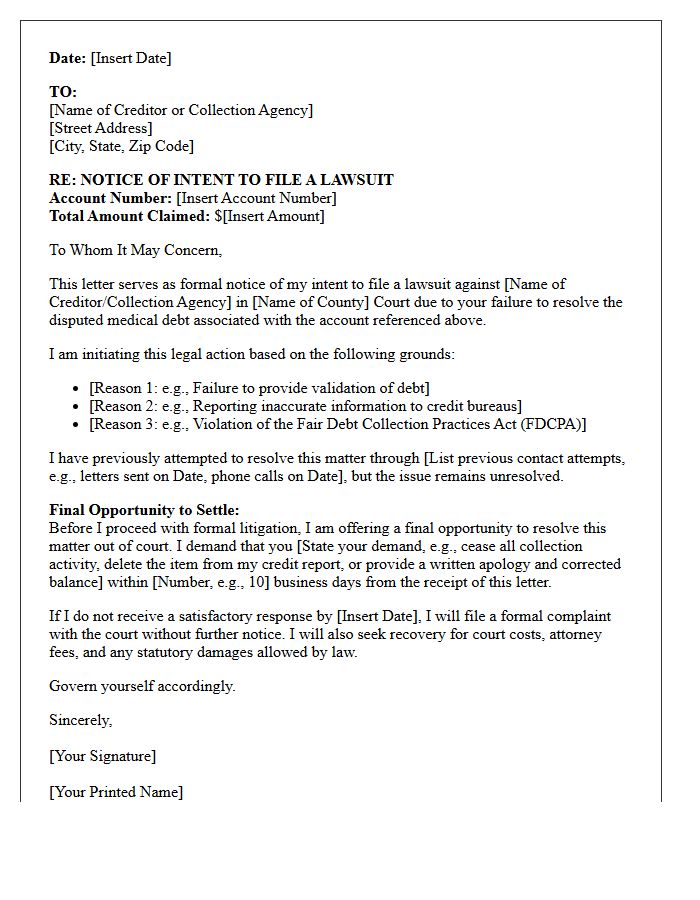
A Notice of Intent to Sue is a formal warning that a healthcare provider or collection agency plans to initiate legal action to recover unpaid medical bills. Receiving this letter indicates that the debt collector is preparing to file a lawsuit to obtain a court judgment. This legal status could lead to wage garnishment or property liens. It is critical to respond immediately by verifying the debt, requesting itemized billing, or negotiating a payment plan to prevent costly litigation and further damage to your credit score.
Pre-Litigation Warning Letter for Outstanding Medical Bills
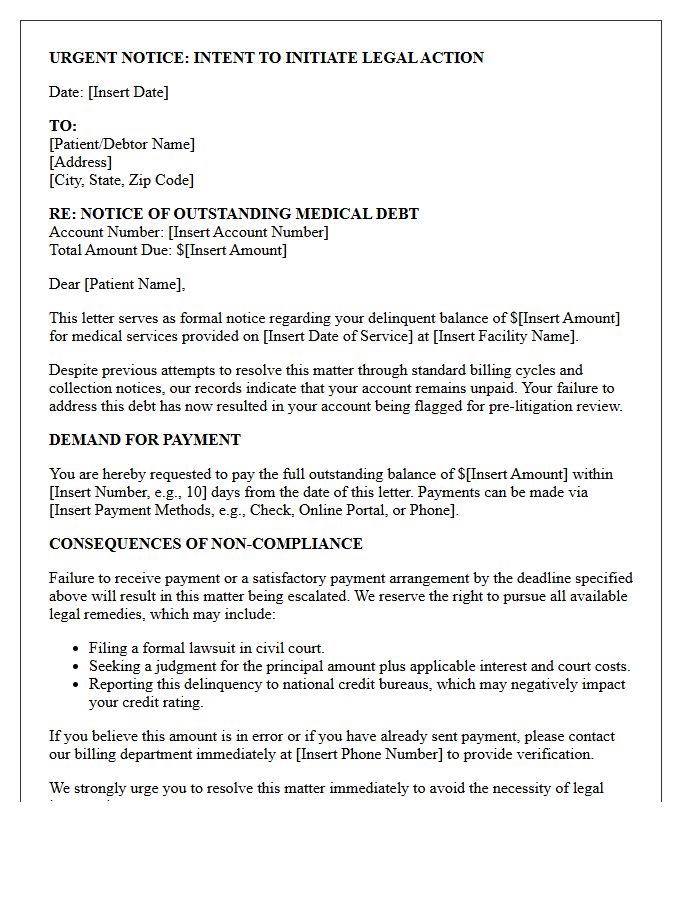
A Pre-Litigation Warning Letter serves as a formal final notice before a healthcare provider or collection agency initiates legal action. Receiving this demand letter indicates that your outstanding medical debt is being escalated to a courtroom process. It is the last opportunity to resolve the balance through settlement negotiations or a payment plan to avoid a lawsuit. Ignoring this notice can lead to court judgments, potential wage garnishment, or significant credit score damage. Always verify the debt's accuracy and respond promptly to protect your financial legal rights.
Formal Legal Action Intent Letter for Healthcare Balances
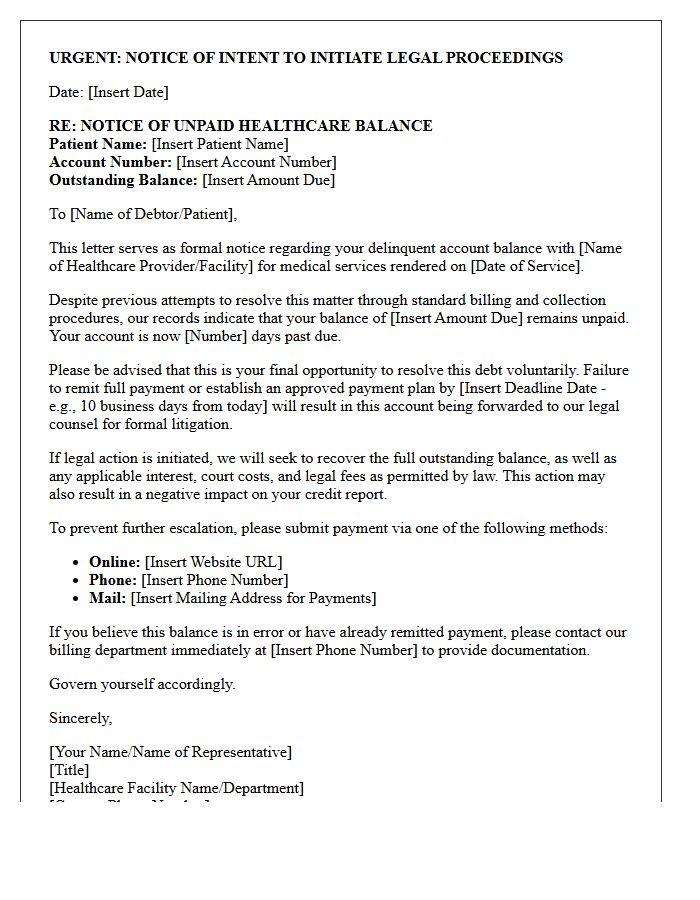
A Formal Legal Action Intent Letter serves as a final notice regarding overdue healthcare balances. This document formally notifies the patient that failure to settle the outstanding debt or establish a payment plan will result in litigation or collections referral. It outlines the specific amount owed, services rendered, and a strict deadline for response. Sending this letter is a critical step in the revenue cycle, ensuring legal compliance and providing a last opportunity to resolve financial obligations before court involvement or potential credit score impacts occur.
Final Collection Letter Before Lawsuit for Medical Accounts
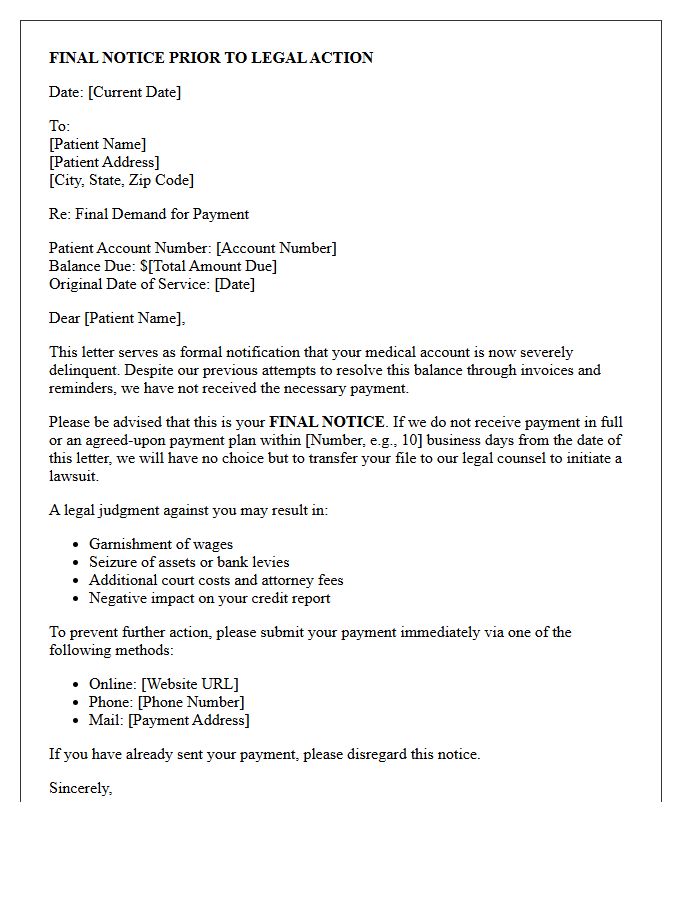
A Final Collection Letter Before Lawsuit is a formal notice indicating that your medical debt is transitioning to legal action. This document serves as your last opportunity to resolve the balance through payment or a settlement before a process server delivers a summons. Ignoring this notice often leads to a court judgment, potentially resulting in wage garnishment or bank levies. It is critical to verify the debt's accuracy immediately, as you may still negotiate a hardship waiver or structured payment plan to avoid costly litigation and long-term credit damage.
Delinquent Medical Account Intent to Sue Letter
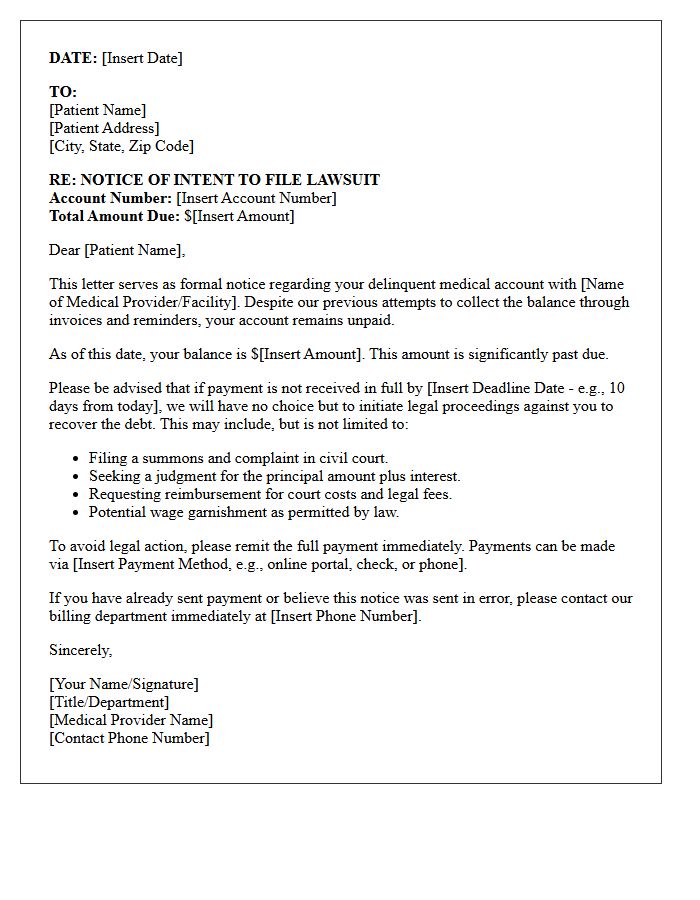
A Delinquent Medical Account Intent to Sue Letter is a formal legal notice indicating that a healthcare provider or collection agency prepares to initiate a lawsuit. This final demand for payment serves as a critical warning before litigation begins. Receiving this document means your medical debt is severely overdue, potentially leading to wage garnishment or bank levies if ignored. It is essential to verify the debt's accuracy and respond promptly to negotiate a settlement or payment plan to avoid costly court fees and significant damage to your credit score.
Attorney Representation Letter for Medical Debt Lawsuits
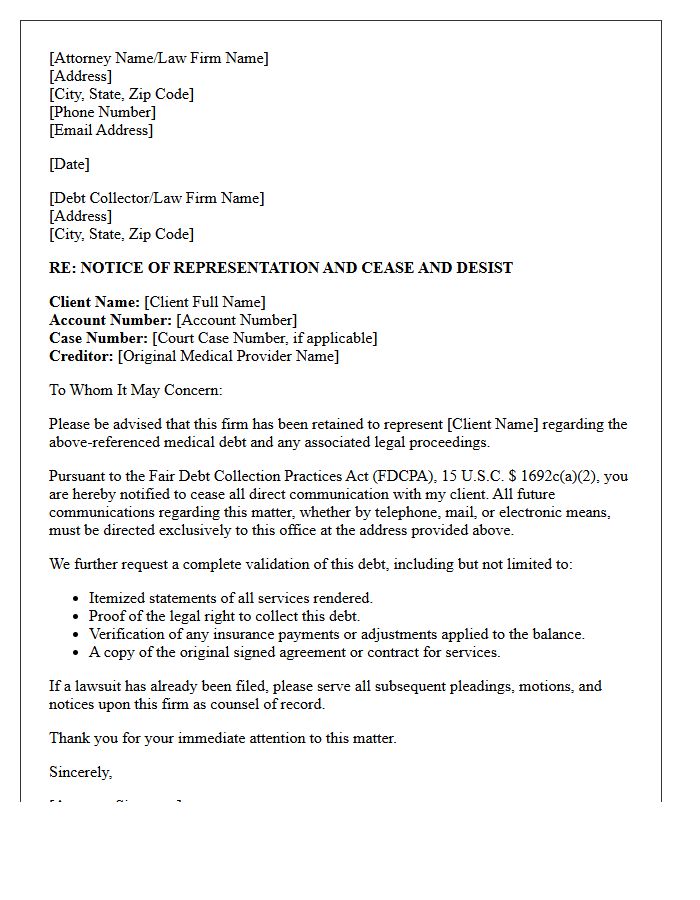
An Attorney Representation Letter is a formal notice sent to creditors or collection agencies confirming you have hired legal counsel. Once received, the Fair Debt Collection Practices Act (FDCPA) mandates that collectors stop contacting you directly and communicate only through your lawyer. This document is a critical defense in medical debt lawsuits, as it prevents harassment and ensures all settlement negotiations or litigation strategies are handled professionally. Providing this notice early can help protect your rights, prevent default judgments, and facilitate a legal resolution regarding disputed healthcare costs.
Impending Litigation Notice Letter for Unpaid Clinic Services
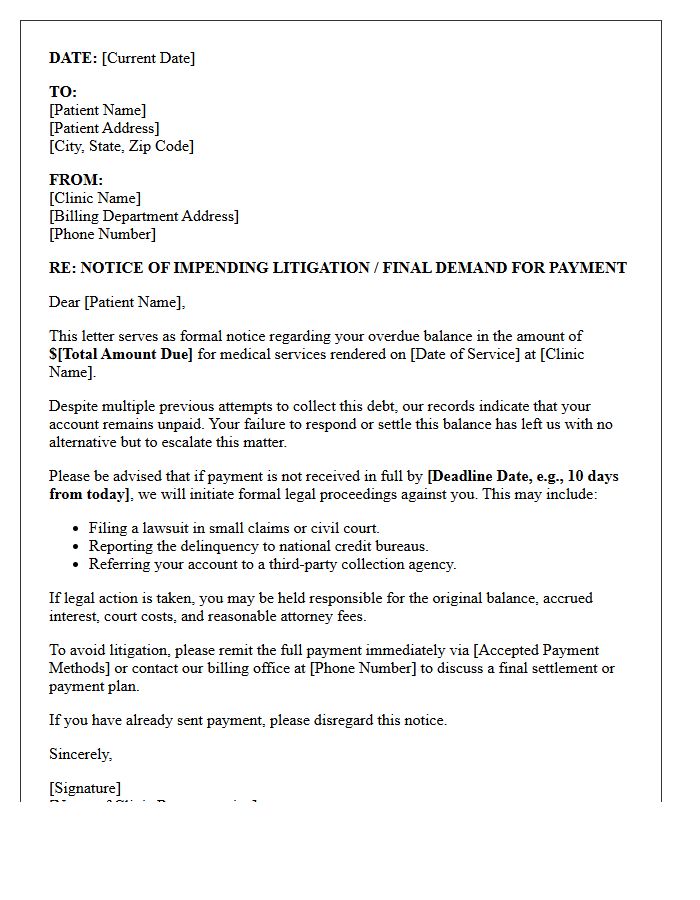
An Impending Litigation Notice Letter is a formal warning that a healthcare provider intends to file a lawsuit to recover unpaid clinic services. This document serves as a final opportunity to resolve outstanding medical debt before entering the legal system. It is critically important to verify the debt's accuracy and respond immediately to avoid additional costs, such as legal fees and interest. Ignoring this notice can lead to a court judgment, potential wage garnishment, or significant damage to your credit score. Seek professional advice to negotiate a settlement or payment plan.
Medical Provider Debt Summons Warning Letter
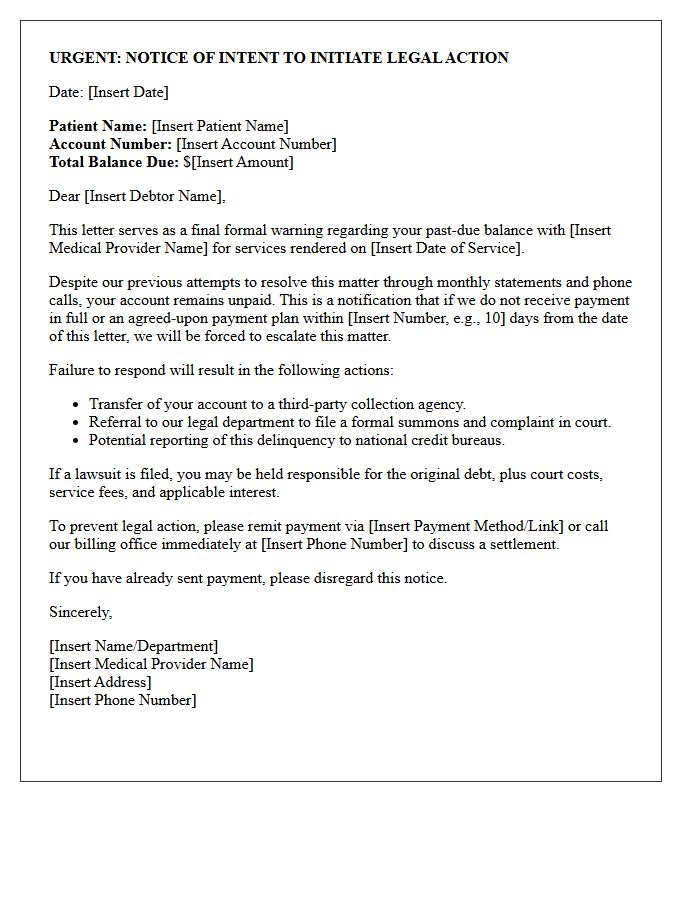
Receiving a Medical Provider Debt Summons is a formal legal notice indicating a lawsuit has been filed against you for unpaid healthcare bills. It is critical to respond by the court deadline to avoid a default judgment, which could lead to wage garnishment or bank levies. Before paying, verify the debt's accuracy and ensure the statute of limitations has not expired. Seeking legal advice or negotiating a settlement can often reduce the total amount owed and prevent further litigation consequences.
Final Settlement Offer Before Litigation Letter for Medical Accounts
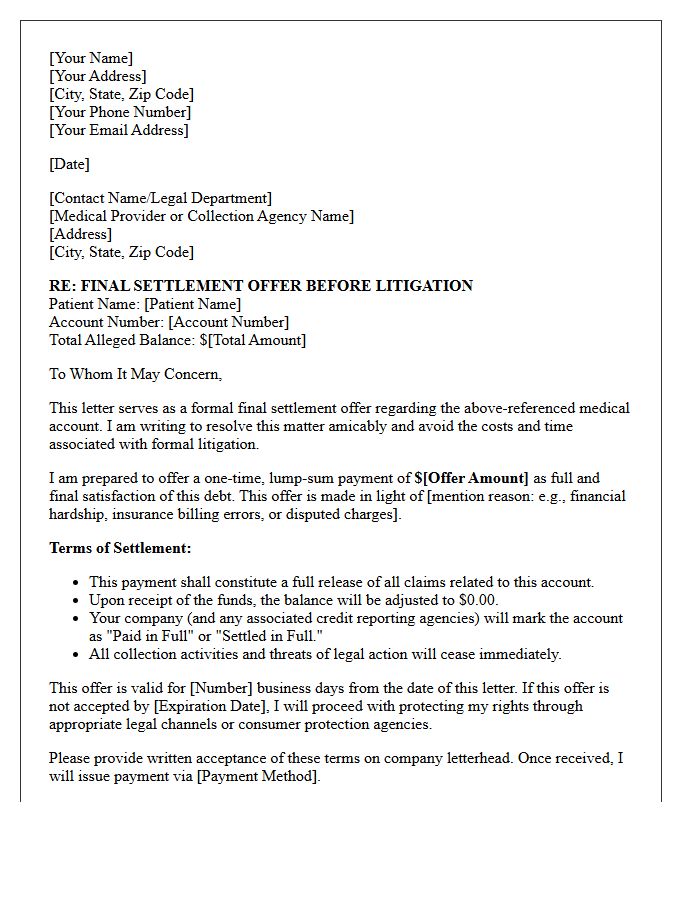
A final settlement offer before litigation is a critical legal notice sent to resolve delinquent medical accounts. This letter serves as a formal last chance for patients to settle debts at a reduced rate before a provider initiates a formal lawsuit. It must clearly state the outstanding balance, the settlement amount, and a strict payment deadline. Receiving this document signifies that the creditor is prepared to seek a court judgment, which can lead to wage garnishment or liens if the offer is ignored or not negotiated promptly.
Hospital Arrears Legal Action Imminent Letter
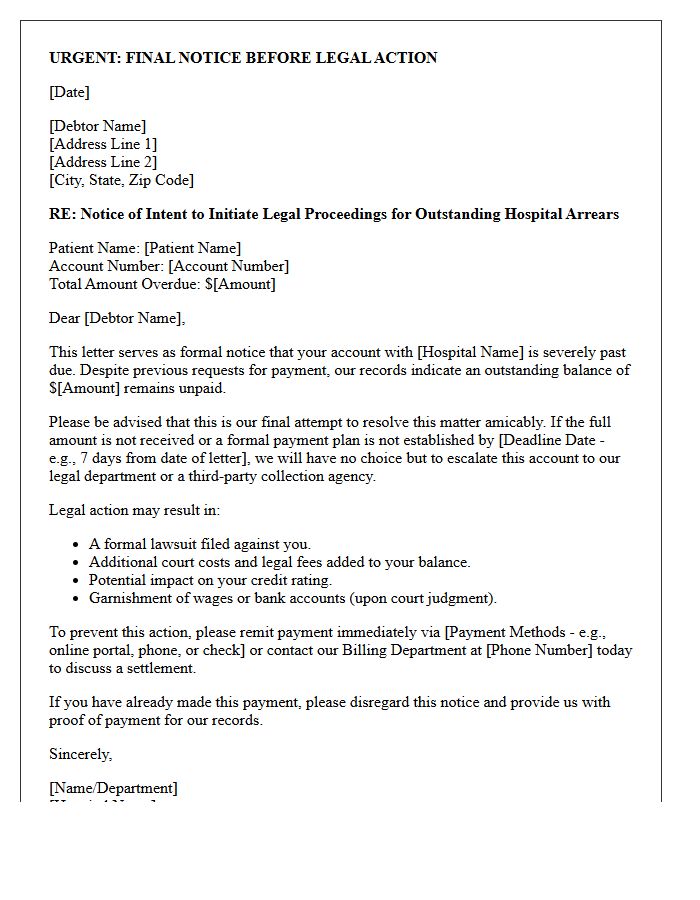
Receiving a Hospital Arrears Legal Action Imminent Letter indicates that your medical debt has been escalated for litigation. This formal notice serves as a final warning before the healthcare provider or a collection agency initiates a lawsuit to recover unpaid balances. It is critical to act immediately to avoid court summons, wage garnishment, or property liens. Contact the billing department to negotiate a settlement or establish a payment plan. Ignoring this document can lead to severe long-term damage to your credit score and additional legal fees.
Healthcare Collection Agency Intent to Sue Letter
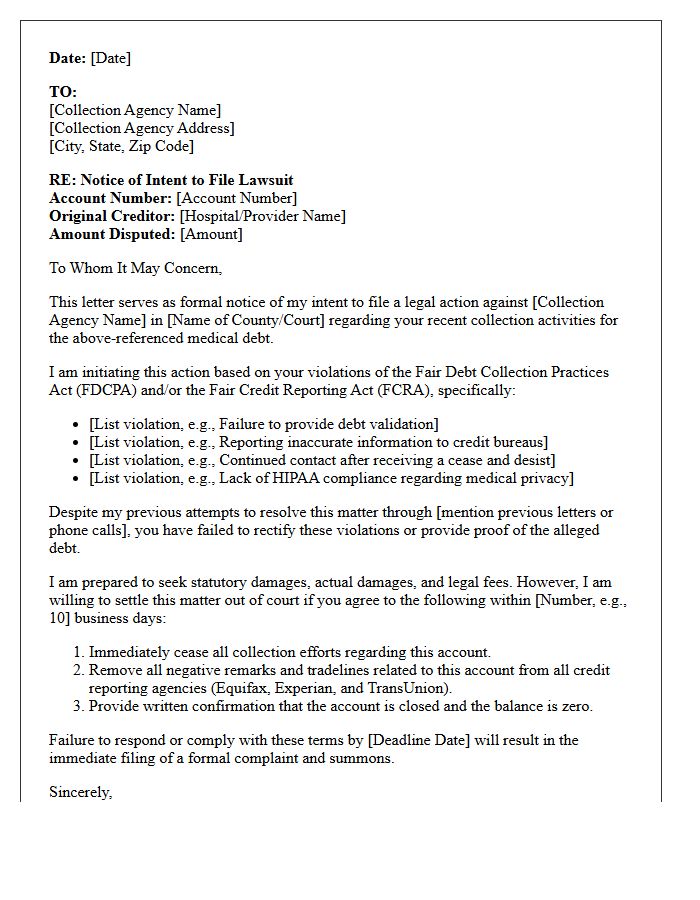
Receiving a Healthcare Collection Agency Intent to Sue Letter signifies that a medical debt collector is preparing for legal action to recover unpaid balances. This formal notice is a final warning before a lawsuit is filed in court. It is critical to verify the debt's accuracy and the statute of limitations immediately. You have the right to request debt validation in writing. Ignoring this letter may lead to a default judgment, resulting in potential wage garnishment or bank levies. Promptly negotiating a settlement or payment plan can often prevent formal litigation.
Statutory Notice of Intent to File Suit Letter for Medical Debt
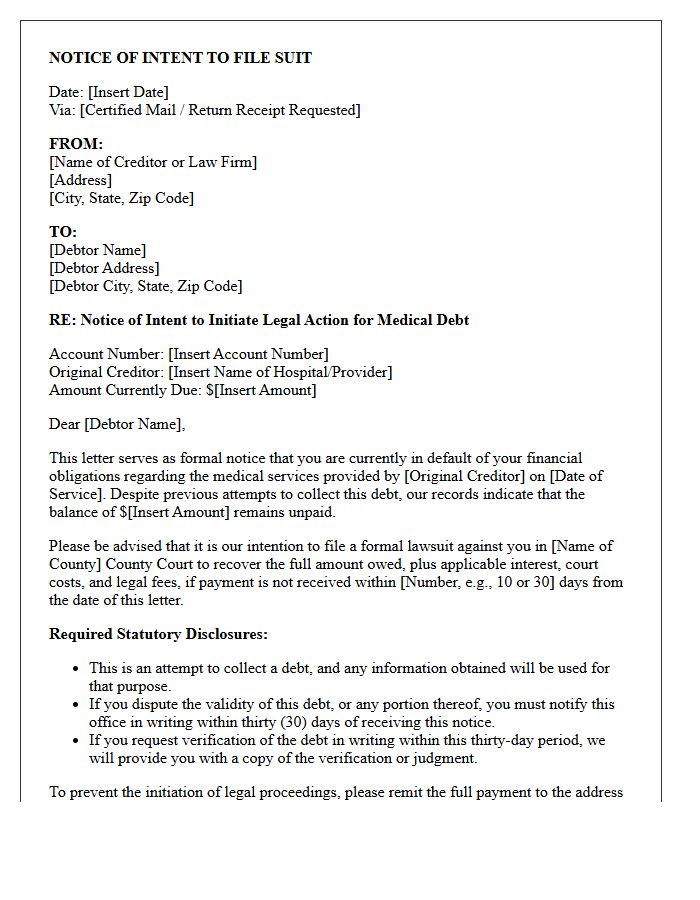
A statutory notice of intent to file suit is a formal legal notification required in many jurisdictions before a creditor initiates a lawsuit for medical debt. This document serves as a final warning, granting the debtor a specific period-often 30 days-to resolve the balance or dispute the charges. Receiving this letter indicates that litigation is imminent. It is critical to verify the debt's accuracy and the statute of limitations immediately. Responding promptly can prevent a court judgment, potential wage garnishment, or further damage to your credit report.
Can a healthcare provider sue me for unpaid medical bills?
Yes, healthcare providers and hospitals have the legal right to sue patients to recover outstanding balances. If the account remains delinquent after internal collection attempts, the provider may file a lawsuit or sell the debt to a third-party collection agency that can initiate legal proceedings.
What happens if I receive a summons for a medical debt lawsuit?
If you receive a formal summons or complaint, you must file a written response with the court within the specified timeframe (usually 20 to 30 days). Ignoring the summons can lead to a default judgment, which allows the creditor to pursue aggressive collection methods such as wage garnishment or bank levies.
Can my wages be garnished for unpaid medical accounts?
In many states, if a medical provider wins a lawsuit and obtains a court judgment against you, they can apply for a wage garnishment order. This requires your employer to withhold a portion of your earnings to pay off the debt, subject to state and federal limits on the amount that can be taken.
Is there a statute of limitations on suing for medical debt?
Yes, every state has a statute of limitations that limits the timeframe in which a creditor can legally sue for unpaid medical bills. This period typically ranges from three to six years, depending on whether the debt is considered an oral agreement, a written contract, or an open-ended account.
How can I stop a lawsuit for medical debt before it goes to court?
You can often prevent legal action by negotiating a settlement or a structured payment plan with the medical provider's billing department or the assigned collection agency. Demonstrating financial hardship or requesting a "charity care" review may also lead to a debt reduction or dismissal if you meet specific income requirements.


Comments