
Failing to settle outstanding balances can lead to legal action and credit damage. An Intent to Sue serves as a final formal warning before a service provider or collection agency initiates a lawsuit to recover unpaid utility and telecommunication debts. Understanding your rights and the legal process is essential for resolving these disputes effectively. To assist you, below are some ready to use template.
Image cover: Final Notice: Debt Collection Letter Templates for Unpaid Utility and Telecom Bills
Letter Samples List
- Final Demand Letter for Unpaid Utility and Telecommunication Bills
- Notice of Intent to Sue Letter for Delinquent Utility Accounts
- Pre-Litigation Warning Letter for Outstanding Telecommunication Debt
- Legal Action Notification Letter for Unpaid Utility Services
- Debt Collection Intent to Sue Letter for Telecommunication Arrears
- Final Notice of Pending Lawsuit Letter for Utility Balances
- Telecommunication Debt Recovery Intent to Litigate Letter
- Utility Account Default and Intent to Sue Letter
- Pre-Suit Demand Letter for Unpaid Broadband and Utility Invoices
- Final Legal Warning Letter for Delinquent Telecommunication Bills
- Notice of Intent to File Suit Letter for Utility Debt Collection
- Telecommunication Service Arrears Legal Action Demand Letter
- Intent to Litigate Letter for Unpaid Utility and Telephony Balances
Final Demand Letter for Unpaid Utility and Telecommunication Bills
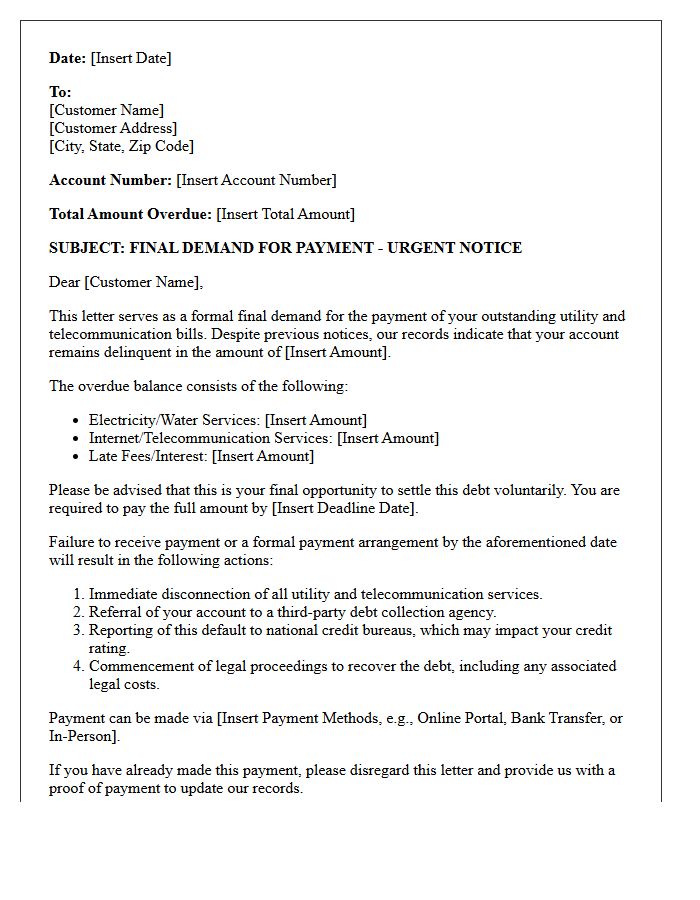
A Final Demand Letter serves as a formal legal notice before service disconnection or litigation. It specifies the outstanding balance for utility or telecommunication services, providing a strict deadline for payment. Receiving this document indicates that the provider may initiate debt collection proceedings or report the delinquency to credit bureaus, severely impacting your credit score. To avoid additional late fees and legal costs, you must prioritize an immediate response by settling the debt or negotiating a repayment plan to prevent permanent loss of essential services.
Notice of Intent to Sue Letter for Delinquent Utility Accounts
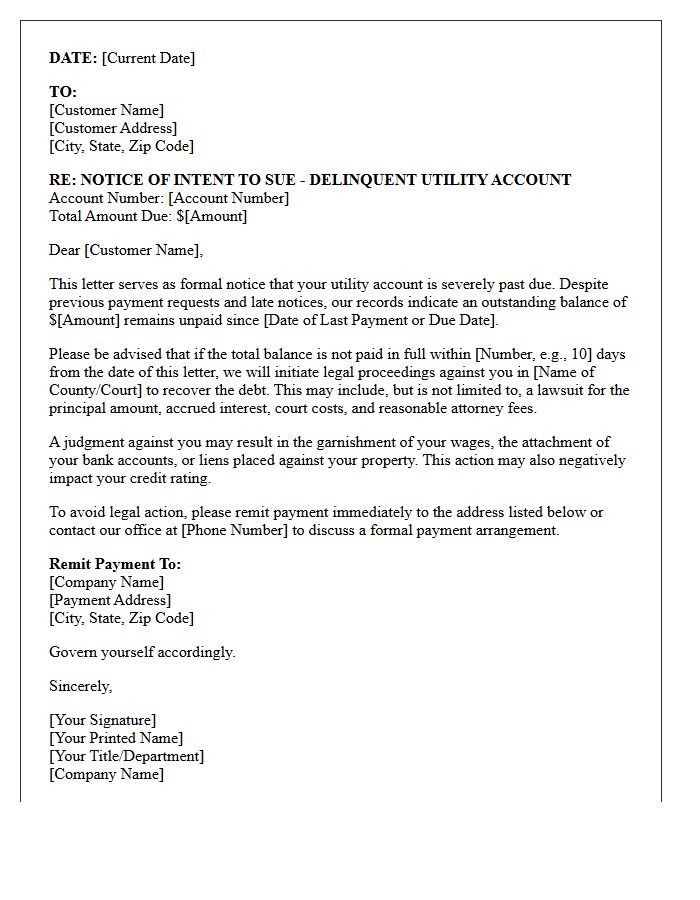
A Notice of Intent to Sue is a formal legal warning sent to consumers with delinquent utility accounts before a collection lawsuit begins. This document serves as a final opportunity to settle outstanding balances or establish a payment plan to avoid litigation. Receiving this notice indicates that the utility provider may seek a court judgment to garnish wages or place liens on property. It is crucial to verify the debt's accuracy and respond promptly to prevent additional legal fees and significant damage to your credit score.
Pre-Litigation Warning Letter for Outstanding Telecommunication Debt
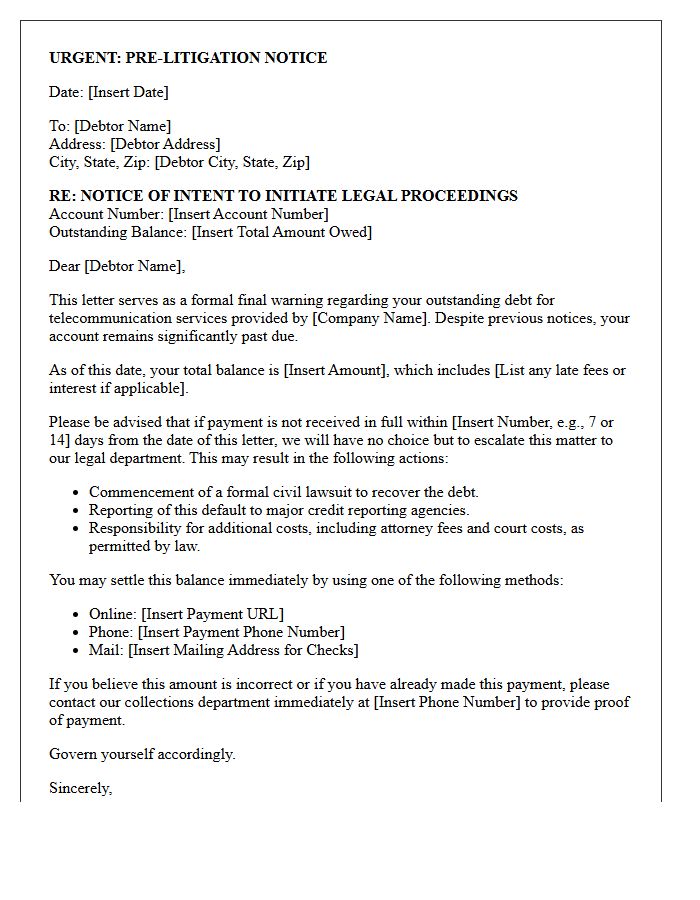
A Pre-Litigation Warning Letter is a formal notice sent to resolve outstanding telecommunication debt before legal action begins. This document serves as a final opportunity to settle unpaid mobile or internet bills, preventing a formal lawsuit and further credit score damage. It outlines the specific amount owed, payment deadlines, and potential consequences of non-payment, such as court proceedings or debt collection agency involvement. Reviewing this letter immediately is crucial to negotiate a settlement, verify the debt's accuracy, and avoid costly statutory interest or legal fees associated with litigation.
Legal Action Notification Letter for Unpaid Utility Services
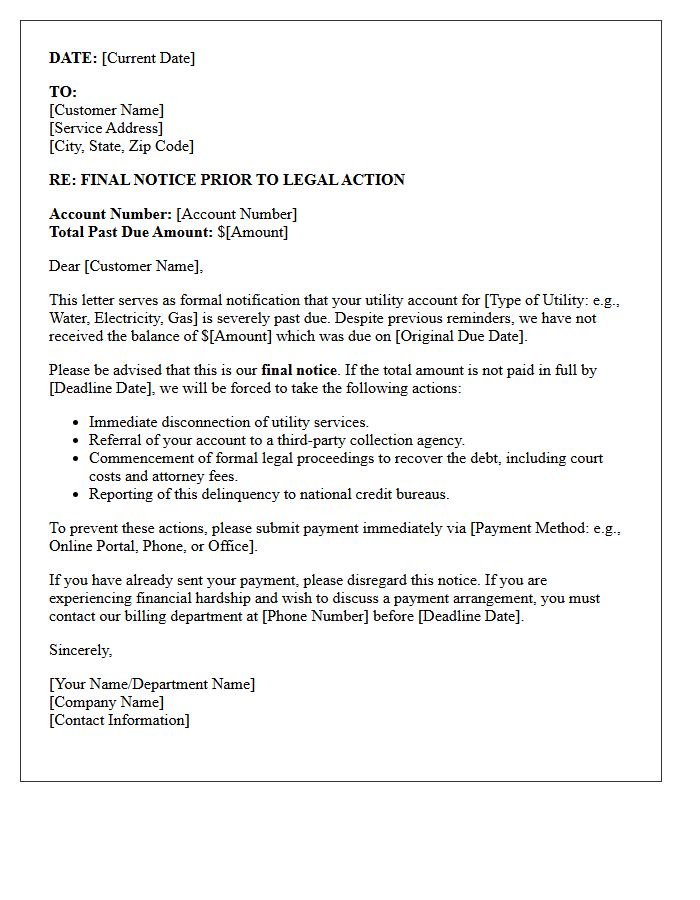
A Legal Action Notification Letter is a formal warning issued when utility bills remain overdue after multiple reminders. This document serves as a final notice before the provider initiates litigation or debt collection processes. It outlines the total balance, specifies a firm payment deadline, and describes potential consequences like service disconnection or credit score damage. Receiving this letter indicates that legal proceedings are imminent; therefore, immediate communication or settlement is essential to avoid court costs and additional interest charges. Always verify the debt's accuracy before making a final payment.
Debt Collection Intent to Sue Letter for Telecommunication Arrears
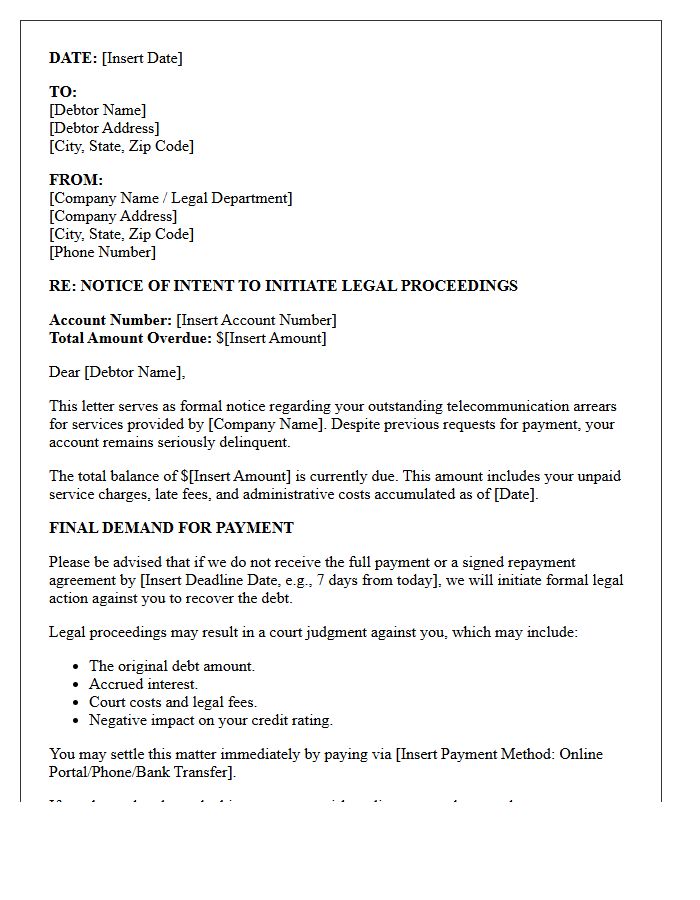
A debt collection intent to sue letter for telecommunication arrears is a formal notice of legal action issued by service providers or agencies. This document signifies the final warning before a lawsuit is filed to recover unpaid phone or internet bills. It is crucial to verify the debt's accuracy and the statute of limitations immediately. Ignoring this letter can lead to a default judgment, resulting in wage garnishment or bank levies. Promptly negotiating a settlement or requesting debt validation can prevent costly courtroom proceedings and further damage to your credit score.
Final Notice of Pending Lawsuit Letter for Utility Balances
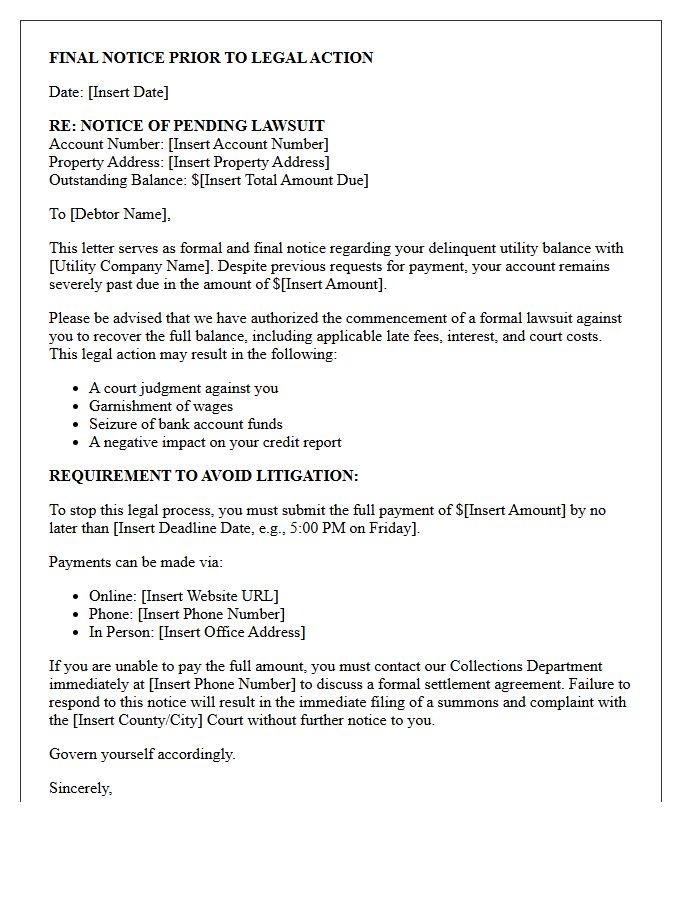
A Final Notice of Pending Lawsuit is a critical legal warning indicating that a utility provider intends to sue for unpaid balances. This document serves as the last opportunity to resolve a debt before litigation commences. Receiving this notice means you may face a court summons, potential wage garnishment, or property liens if the balance remains unaddressed. It is essential to verify the debt's accuracy and contact the provider immediately to negotiate a settlement or payment plan to avoid costly legal fees and significant damage to your credit score.
Telecommunication Debt Recovery Intent to Litigate Letter
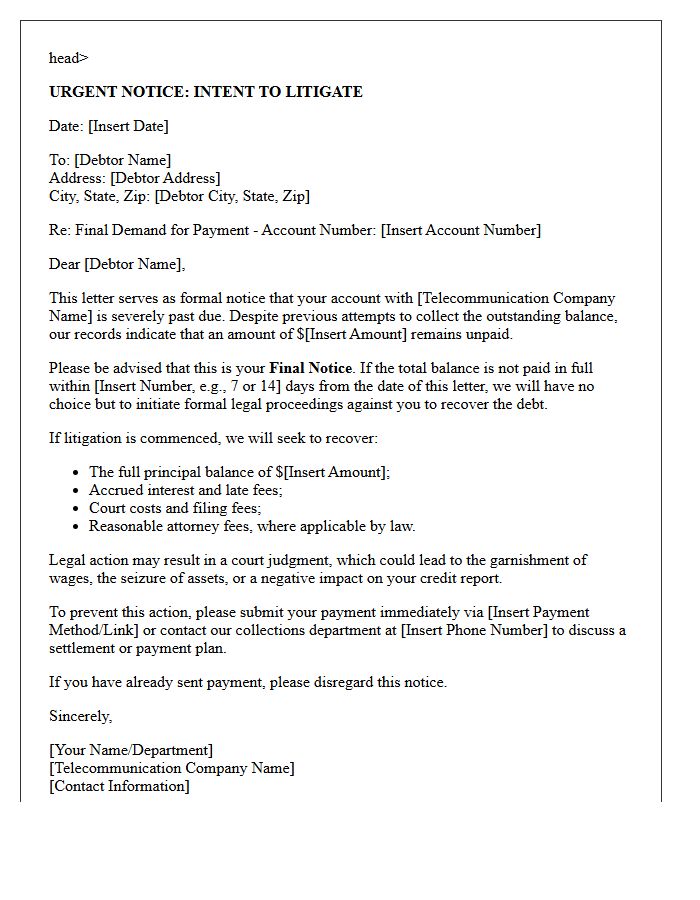
A Telecommunication Debt Recovery Intent to Litigate Letter is a formal legal notice issued before a lawsuit begins. This document serves as a final demand for payment regarding unpaid mobile or internet contracts. It highlights the statutory demand for the outstanding balance and warns that failure to settle may lead to court proceedings, additional legal fees, and negative impacts on your credit score. Receiving this letter indicates that the creditor is prepared to take judicial action to recover the debt, making immediate communication or settlement crucial to avoid litigation.
Utility Account Default and Intent to Sue Letter
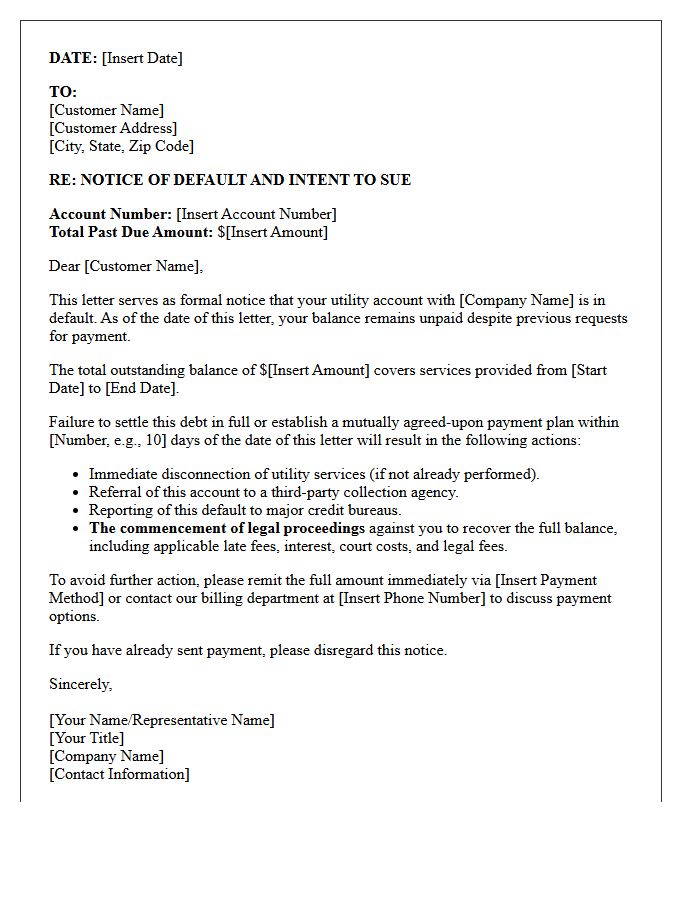
A Utility Account Default occurs when you fail to pay essential service bills, leading to service disconnection and credit damage. Receiving an Intent to Sue Letter is a final legal warning indicating the provider or a collection agency plans to initiate a lawsuit to recover the debt. To prevent legal action and wage garnishment, you must respond immediately by arranging a payment plan or disputing inaccuracies. Ignoring this formal notice allows the creditor to obtain a court judgment, making the debt significantly harder to resolve later.
Pre-Suit Demand Letter for Unpaid Broadband and Utility Invoices
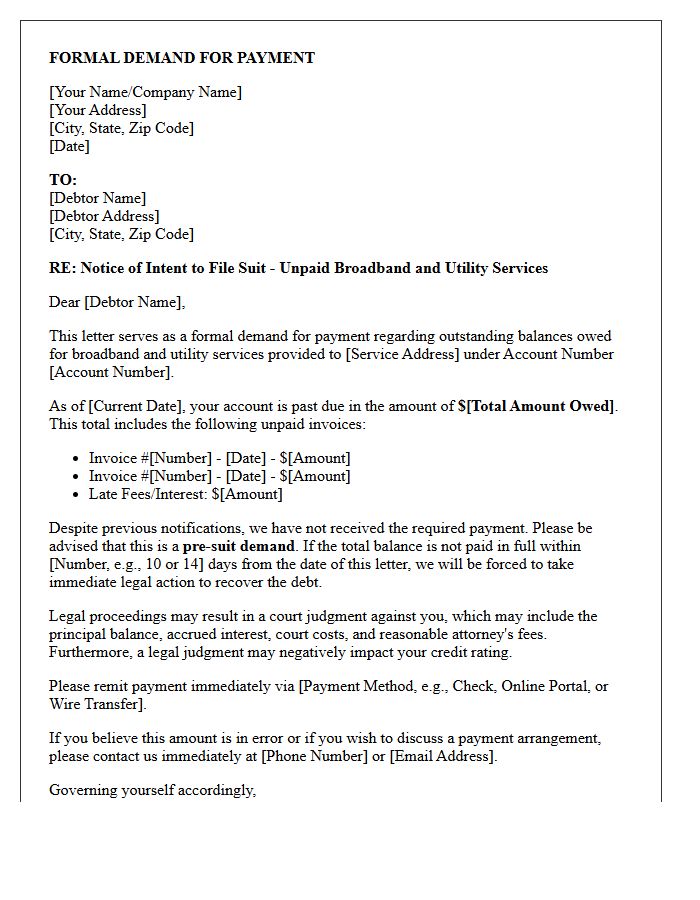
A Pre-Suit Demand Letter serves as a formal legal notice to a debtor before initiating litigation for unpaid broadband and utility invoices. This document outlines the specific outstanding balance, services provided, and a strict deadline for payment. It functions as a critical step in debt recovery, demonstrating a good-faith effort to resolve the dispute out of court. Sending this letter can often trigger immediate settlement, saving time and legal fees while ensuring you have met procedural requirements for potential future court filings or collections actions.
Final Legal Warning Letter for Delinquent Telecommunication Bills
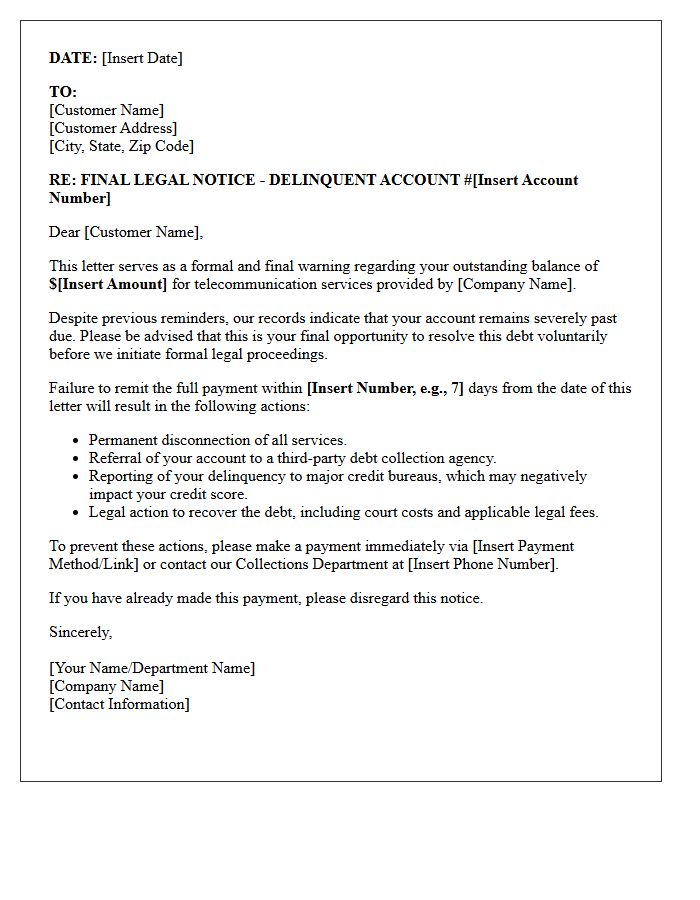
A final legal warning letter for delinquent telecommunication bills is a formal notice issued before initiating litigation or debt collection. This document serves as a last opportunity to settle outstanding balances to avoid legal action, additional court fees, and severe credit score damage. Receiving this letter indicates that the service provider may disconnect your line permanently and report the default to national credit bureaus. It is crucial to respond immediately by paying the full amount or negotiating a settlement plan to prevent long-term financial consequences and potential asset garnishment.
Notice of Intent to File Suit Letter for Utility Debt Collection
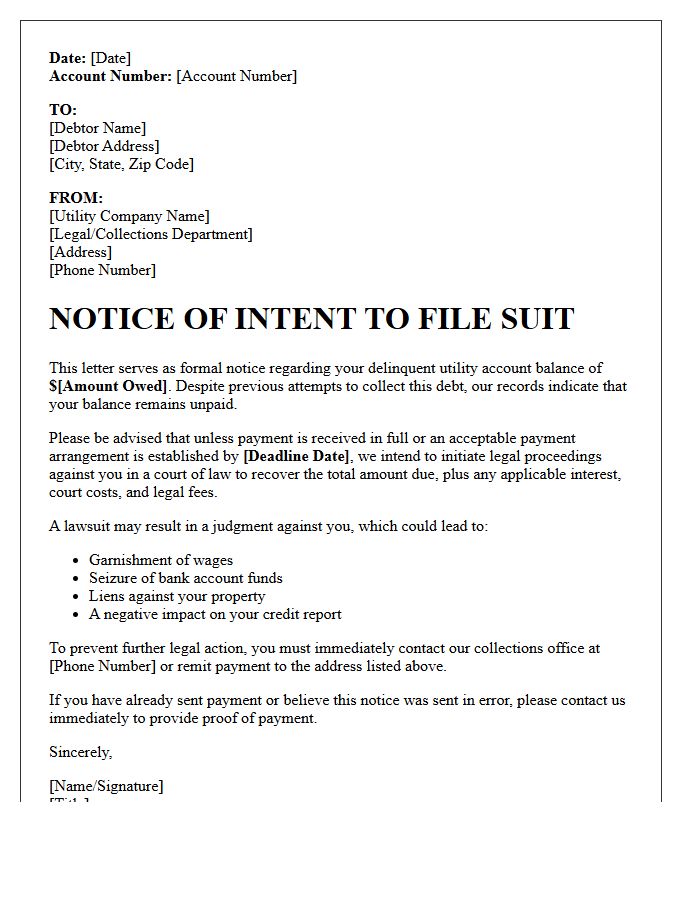
A Notice of Intent to File Suit is a final formal warning sent by a utility provider or collection agency before initiating legal action. This critical document notifies the consumer of an outstanding utility debt and provides a final opportunity to resolve the balance. Receiving this letter indicates that the creditor intends to seek a court judgment to recover funds. It is essential to respond promptly to avoid potential litigation, additional legal fees, or negative impacts on your credit score. Always verify the debt's accuracy and consider negotiating a settlement or payment plan immediately.
Telecommunication Service Arrears Legal Action Demand Letter
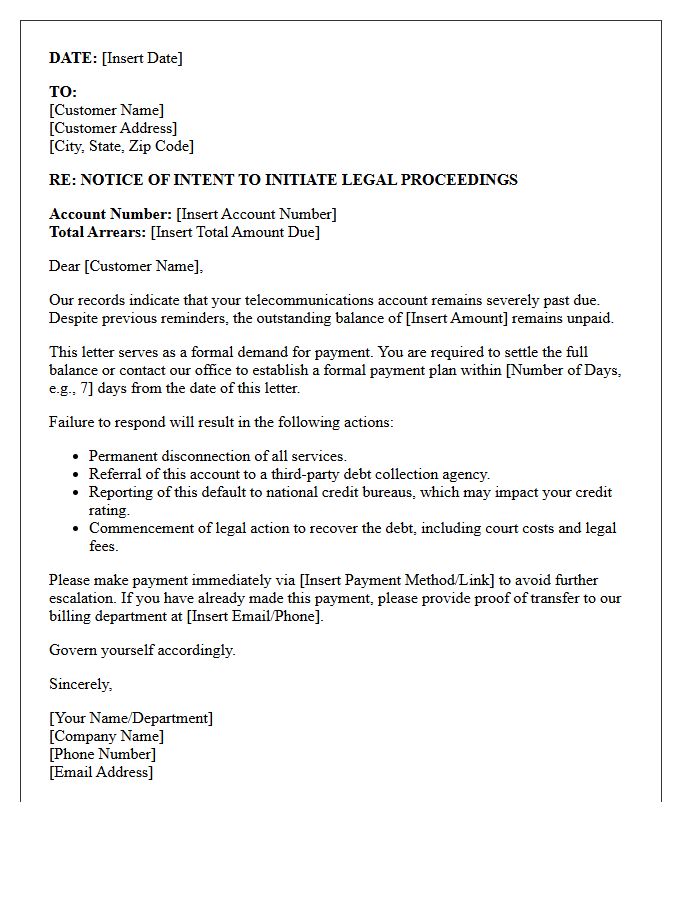
Receiving a Telecommunication Service Arrears Legal Action Demand Letter is a formal notice that your account is significantly overdue. This document serves as a final warning before the provider initiates litigation or involves third-party debt collectors. It outlines the total outstanding balance, payment deadlines, and potential consequences, such as credit score damage or court summons. To avoid further legal escalations and additional administrative fees, you should immediately verify the debt, contact the service provider to negotiate a settlement plan, or provide proof of payment if the claim is inaccurate.
Intent to Litigate Letter for Unpaid Utility and Telephony Balances
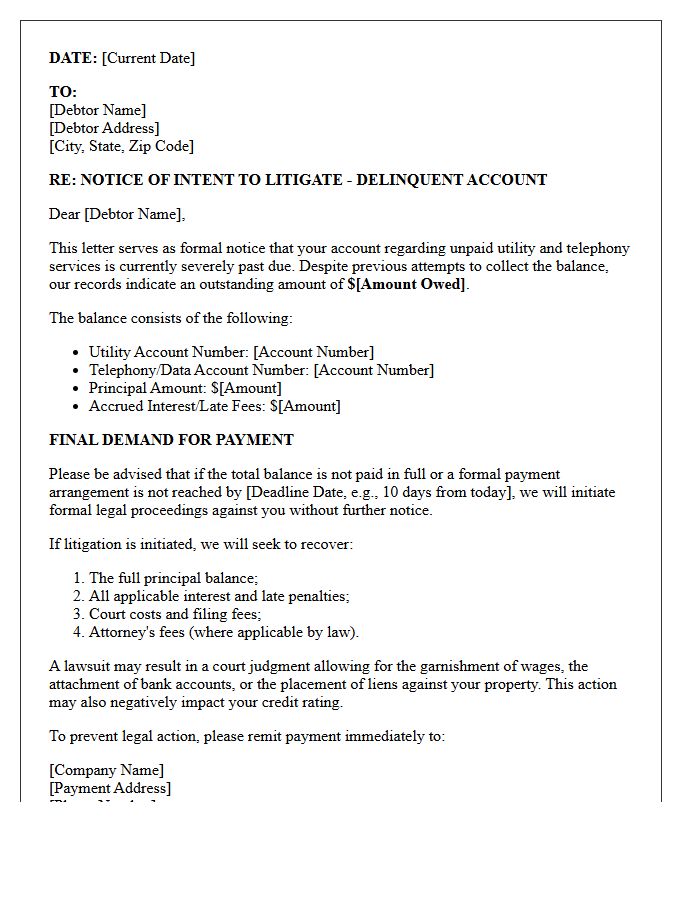
An Intent to Litigate Letter serves as a formal final notice before a creditor initiates legal action to recover unpaid utility and telephony balances. This document warns the debtor that failure to settle outstanding debts or establish a payment plan will result in a lawsuit. It is a critical step in the debt collection process, often required to demonstrate a good-faith effort to resolve the dispute out of court. Receiving this letter indicates that the provider is prepared to pursue legal remedies, which may impact your credit score and incur additional court costs.
What legal actions can I take if a tenant or individual refuses to pay utility and telecommunication bills?
If an individual fails to pay agreed-upon utility or telecom bills, you can initiate a civil lawsuit to recover the debt. Depending on the amount owed, this is typically handled in Small Claims Court or a local civil court. Before filing, it is standard procedure to send a formal Demand Letter via certified mail to establish a legal intent to sue.
Can I sue for unpaid internet, cable, and phone bills under a shared lease?
Yes, you can sue for unpaid telecommunication expenses if there is a written or verbal agreement to share these costs. To succeed in court, you should provide evidence such as the service contract, itemized billing statements, and proof of any previous payments or communications confirming the defendant's responsibility for their portion of the bill.
What evidence is required to win a lawsuit for unpaid utility debts?
To prevail in a lawsuit for unpaid utilities, you must provide documentation including the service provider's invoices, proof of payment by the plaintiff, any written lease or roommate agreements, and records of requests for payment (such as emails or text messages). This evidence demonstrates both the existence of the debt and the defendant's failure to fulfill their obligation.
Is a Demand Letter necessary before filing a lawsuit for utility arrears?
While not always a strict legal requirement in every jurisdiction, a formal Demand Letter is highly recommended. It serves as professional notice of your intent to sue, provides the debtor a final opportunity to settle the balance, and acts as evidence in court that you attempted to resolve the dispute in good faith before seeking judicial intervention.
Can I recover court costs and interest when suing for unpaid telecom bills?
In many jurisdictions, if you win your case for unpaid utility or telecom bills, the court may allow you to recover filing fees, process server costs, and in some cases, statutory interest. You must specifically request these damages in your initial claim to ensure the judge considers them as part of the final judgment.


Comments