
Protect your financial interests by sending a formal Notice of Intent to Sue for Bad Check. This essential legal document demands payment for dishonored checks before initiating litigation, helping you recover funds and applicable fees efficiently. Understanding the statutory requirements for demand letters ensures your claim remains valid in court. To simplify the process, below are some ready to use templates.
Image cover: Demand for Payment: Formal Notice of Intent to Legalize Dishonored Checks and Recover Funds
Letter Samples List
- Notice of Intent to Sue for Bad Check Letter
- Dishonored Payment Legal Action Warning Letter
- Final Demand and Intent to Sue Letter
- Bad Check Debt Collection Litigation Notice Letter
- Pre-Suit Demand Letter for Returned Check
- Dishonored Funds Intent to Litigate Letter
- Returned Payment Final Warning Letter
- Notice of Lawsuit for Insufficient Funds Letter
- Debt Collection Dishonored Check Action Letter
- Intent to File Suit for Bounced Check Letter
- Statutory Bad Check Demand Letter
- Commercial Debt Dishonored Payment Notice Letter
- Legal Proceedings Notice for Unpaid Check Letter
Notice of Intent to Sue for Bad Check Letter
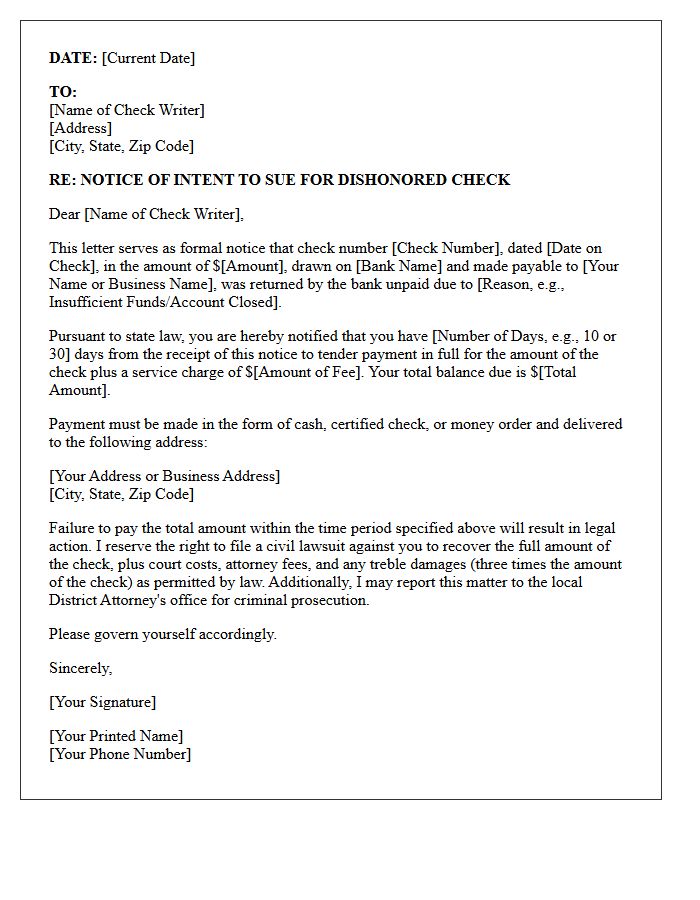
A Notice of Intent to Sue for a Bad Check is a formal demand letter sent to a person who issued a payment that was returned for insufficient funds or closed accounts. This document serves as a final legal warning before initiating litigation. It must typically include the check amount, date, and a specific deadline for repayment. Sending this notice is often a mandatory legal prerequisite under state laws to recover the original debt, service fees, and potentially treble damages or court costs during a civil lawsuit.
Dishonored Payment Legal Action Warning Letter
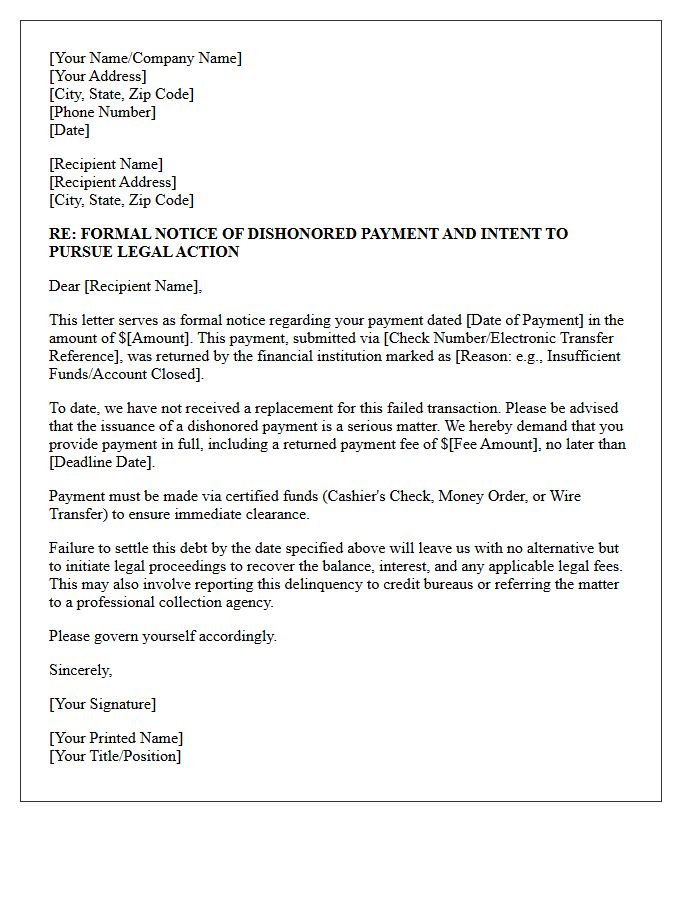
A Dishonored Payment Legal Action Warning Letter is a formal notification issued when a check or electronic transfer fails due to insufficient funds. This document serves as a final opportunity for the debtor to settle the outstanding balance plus applicable fees before litigation begins. It outlines specific deadlines and potential legal consequences, including civil penalties or criminal charges under state laws. Receiving this letter indicates that the creditor is prepared to pursue a formal lawsuit to recover the debt, making immediate communication or payment essential to avoid court intervention.
Final Demand and Intent to Sue Letter
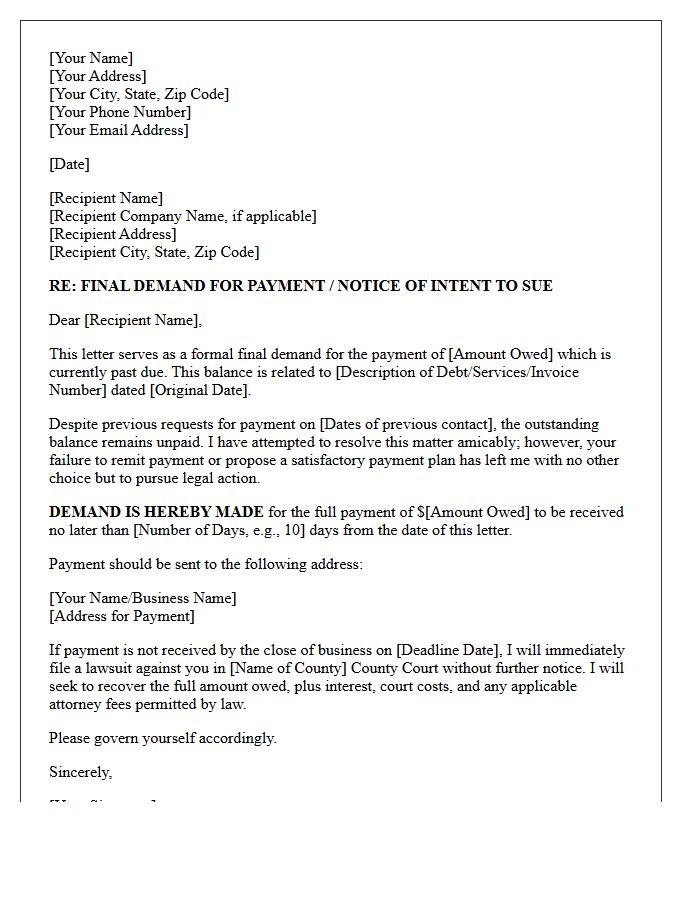
A Final Demand Letter serves as a formal ultimatum sent to a debtor before initiating legal proceedings. It clearly outlines the outstanding debt, specifies a strict deadline for payment, and declares a Notice of Intent to Sue if the obligation remains unmet. This document is essential for demonstrating to a court that you attempted to resolve the dispute in good faith. By providing a final opportunity for settlement, it minimizes legal costs and acts as critical evidence of pre-litigation efforts in professional or personal financial disputes.
Bad Check Debt Collection Litigation Notice Letter
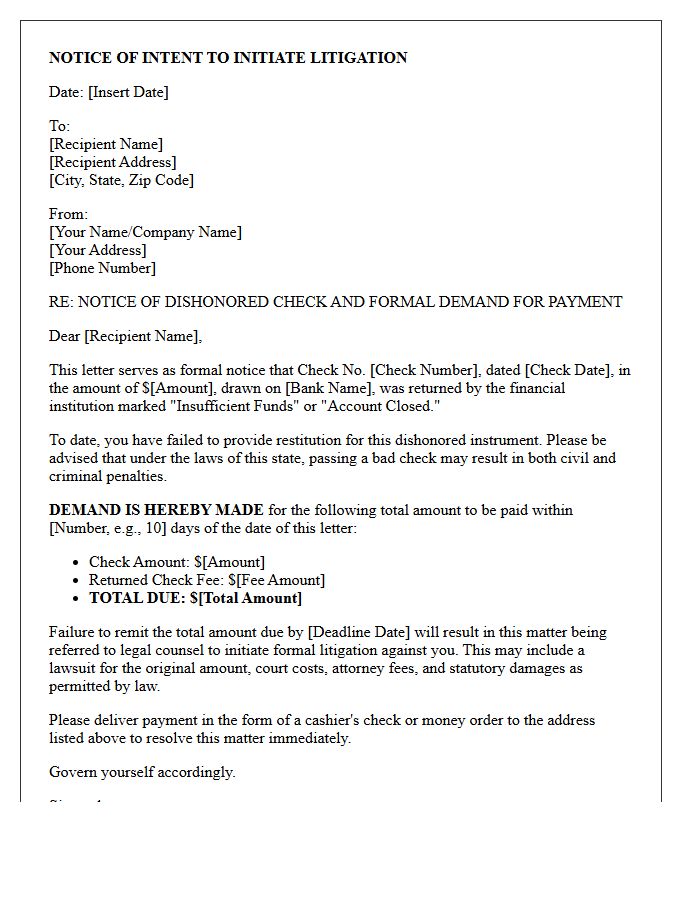
A Bad Check Debt Collection Litigation Notice Letter is a formal legal warning issued when a payment is returned for non-sufficient funds. It signifies that the creditor intends to initiate a lawsuit to recover the balance plus statutory damages. To protect your rights, you must verify the debt's validity and respond within the specified timeframe. Ignoring this notice can lead to civil judgments, wage garnishment, or criminal charges in certain jurisdictions. Always prioritize legal compliance by addressing the demand or seeking professional counsel immediately to avoid escalated court costs.
Pre-Suit Demand Letter for Returned Check
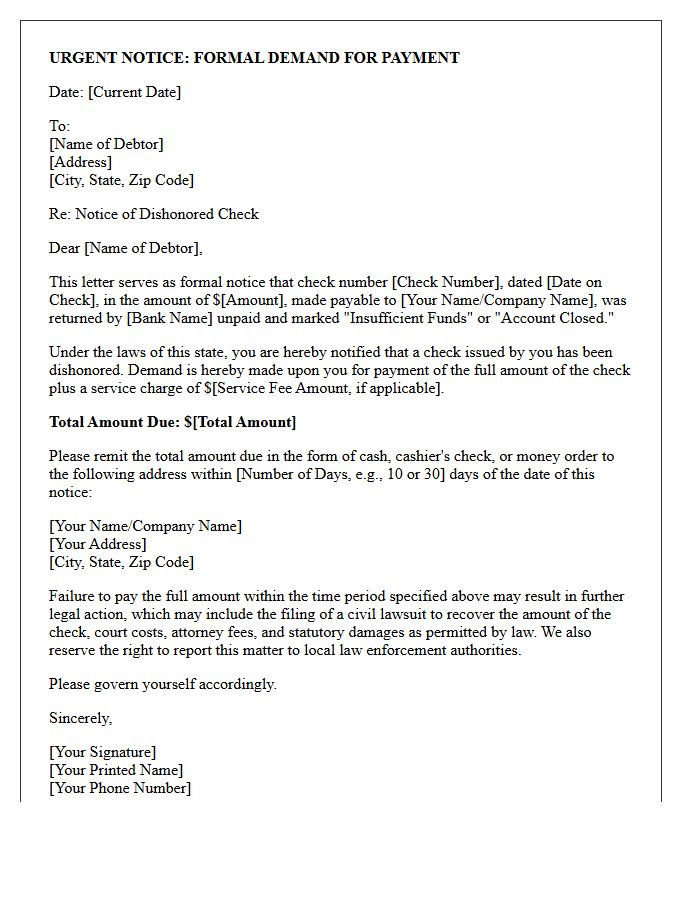
A Pre-Suit Demand Letter is a formal legal notice sent to a drawer before initiating litigation for a returned check. It serves as a final opportunity for the issuer to pay the full amount plus applicable bank fees. In many jurisdictions, sending this formal demand is a statutory requirement to recover treble damages, which can triple the original check amount. The letter must be sent via certified mail to prove receipt, providing a specific deadline, typically 30 days, to settle the debt and avoid civil penalties or criminal prosecution.
Dishonored Funds Intent to Litigate Letter
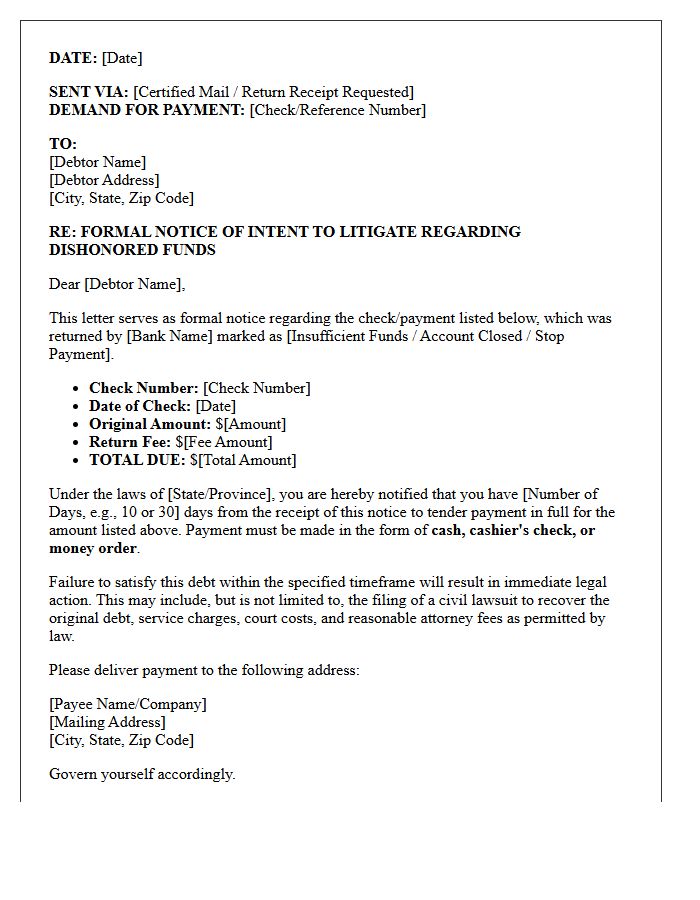
A Dishonored Funds Intent to Litigate Letter serves as a final formal notice demanding payment for a returned check or failed electronic transfer. This document informs the debtor that legal action is imminent unless the outstanding balance and applicable statutory fees are settled within a specific timeframe. It acts as essential evidence in court, proving the creditor attempted an amicable resolution before filing a lawsuit. Issuing this letter is a critical procedural step to recover financial losses while adhering to debt collection laws and protecting your legal rights.
Returned Payment Final Warning Letter
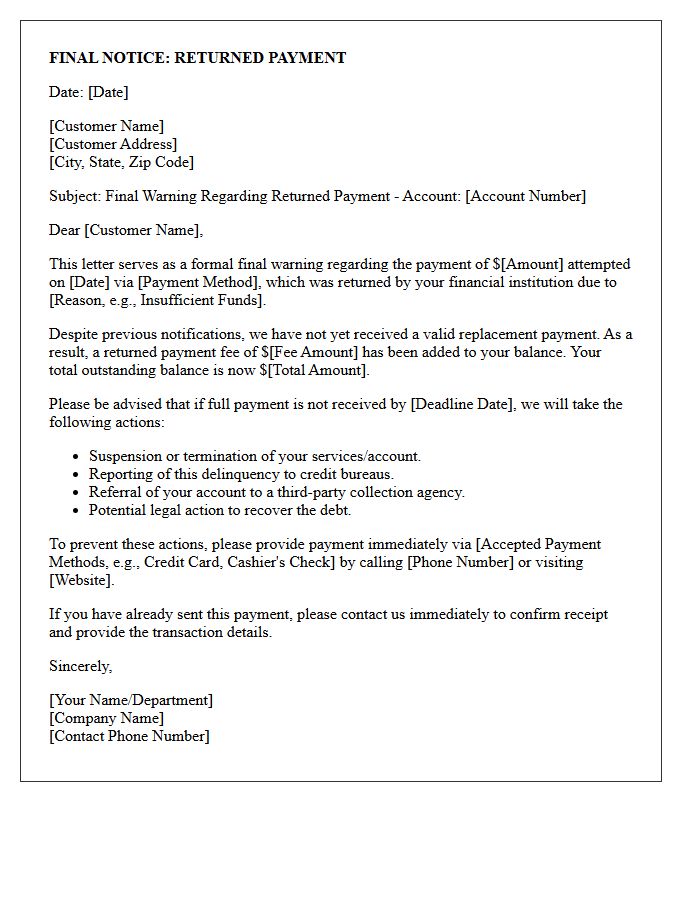
A Returned Payment Final Warning Letter is a critical legal notice issued when a previous transaction fails due to insufficient funds or account issues. It serves as the last opportunity for a debtor to settle their balance before the creditor initiates aggressive collection actions or legal proceedings. To avoid severe credit score damage and additional late fees, recipients must provide immediate payment via a guaranteed method, such as a wire transfer or certified check. Ignoring this formal demand typically results in contract termination and the referral of the debt to a professional collection agency.
Notice of Lawsuit for Insufficient Funds Letter
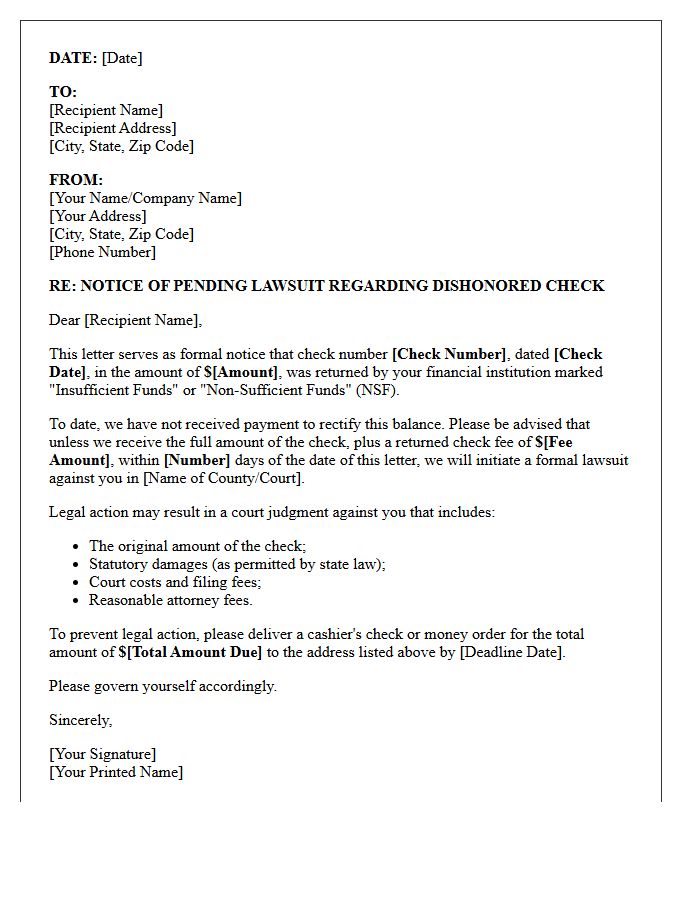
A Notice of Lawsuit for Insufficient Funds is a formal legal document notifying a debtor that a civil complaint has been filed due to a bounced check. This letter serves as a final demand for payment, often including the original amount plus statutory damages and legal fees. Under many jurisdictions, writing a bad check can lead to both civil liability and criminal charges. It is critical to respond within the specified timeframe to avoid a default judgment, which allows creditors to pursue wage garnishment or asset seizure to recover the debt.
Debt Collection Dishonored Check Action Letter
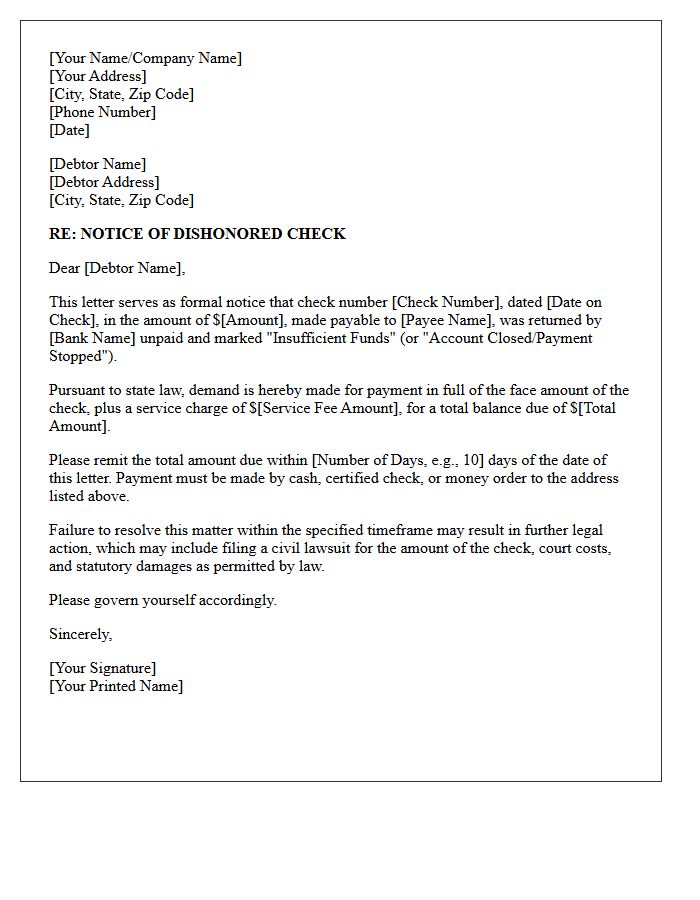
A Debt Collection Dishonored Check Action Letter is a formal legal notice sent when a payment is returned for insufficient funds. This document serves as a final demand, informing the issuer of their liability for the face value plus statutory penalties. It provides a specific deadline for restitution, typically 30 days, before legal escalation occurs. Properly serving this letter is a critical prerequisite for pursuing civil damages or criminal charges under state laws, ensuring the creditor has followed mandatory procedures to recover owed funds effectively.
Intent to File Suit for Bounced Check Letter
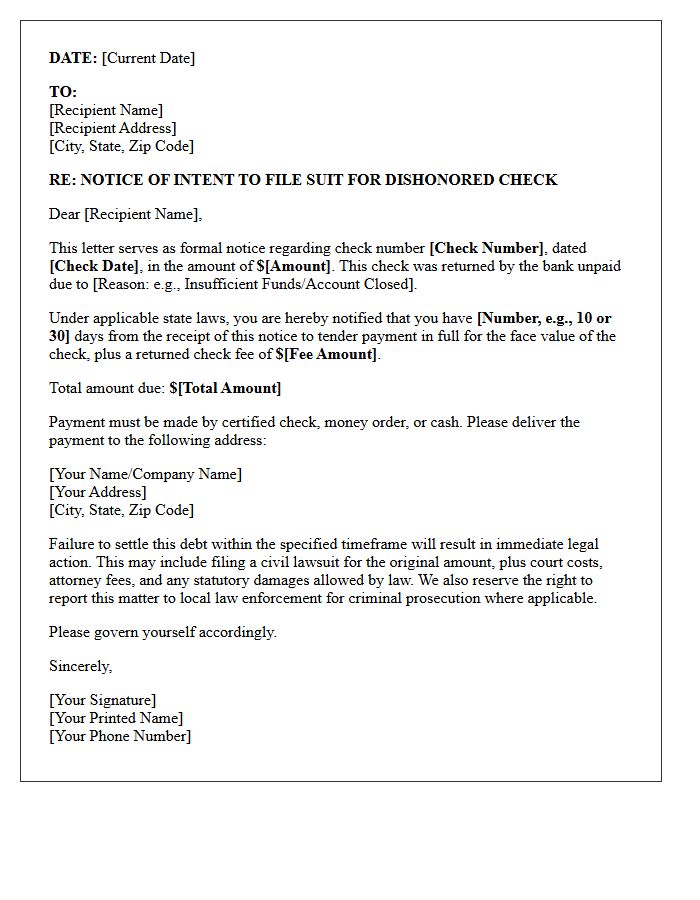
An Intent to File Suit for a bounced check is a formal legal notice sent to a debtor demanding payment for a dishonored check. This letter serves as a final warning before initiating litigation. It typically provides a specific deadline, often 10 to 30 days, to settle the debt plus applicable bank fees. Sending this formal demand is a mandatory pre-suit requirement in many jurisdictions to recover statutory damages or attorney fees. It establishes a paper trail of your attempt to resolve the matter outside of court.
Statutory Bad Check Demand Letter
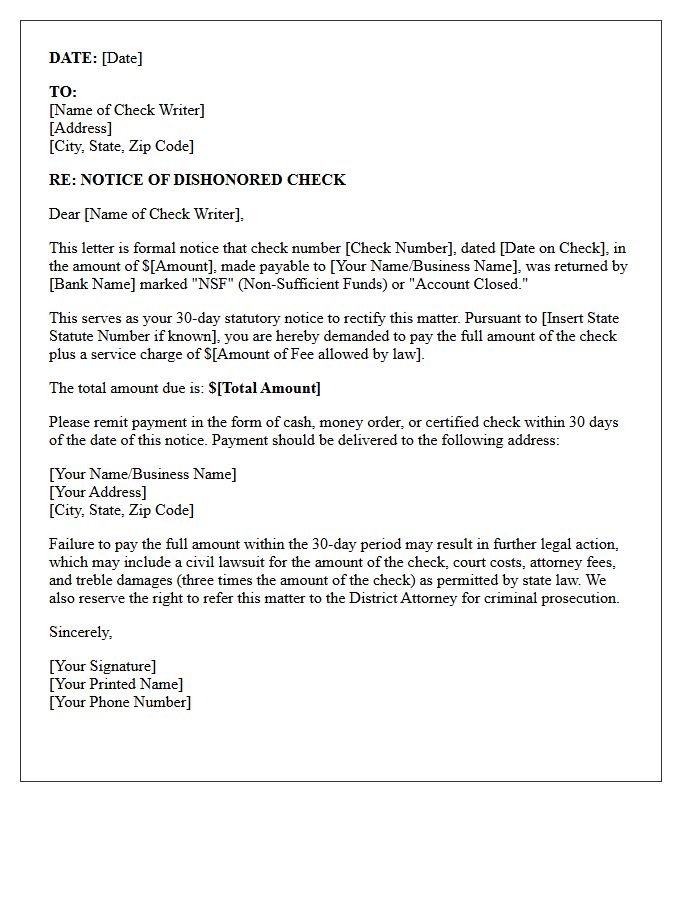
A Statutory Bad Check Demand Letter is a formal legal notice sent to a drawer who issued a dishonored check. Under most state laws, providing this written notice is a mandatory prerequisite before seeking treble damages or filing a criminal complaint. The letter must typically give the recipient a specific period, often 30 days, to pay the full amount plus service fees. Properly serving this document serves as legal evidence of intent to defraud, significantly increasing the sender's ability to recover losses and associated legal costs through the court system.
Commercial Debt Dishonored Payment Notice Letter
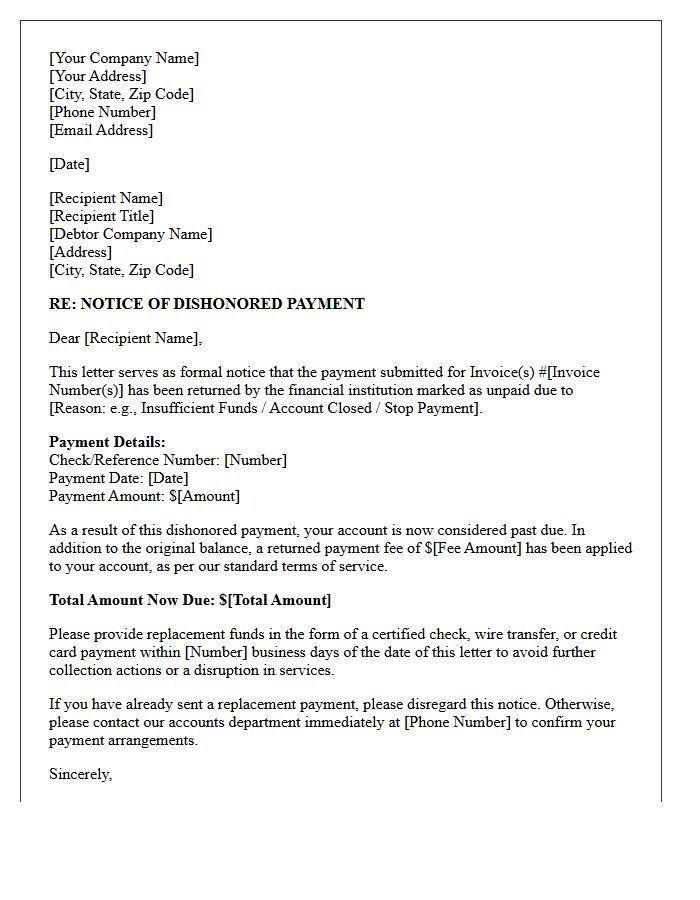
A Commercial Debt Dishonored Payment Notice Letter is a formal legal demand sent after a business transaction payment fails. This document serves as official evidence that a default has occurred, typically due to insufficient funds or a stopped check. It is a critical step for debt recovery, as it establishes a deadline for the debtor to rectify the balance before legal action or late fees are applied. Issuing this notice protects your creditor rights and provides the necessary documentation required for potential litigation or reporting to credit bureaus.
Legal Proceedings Notice for Unpaid Check Letter
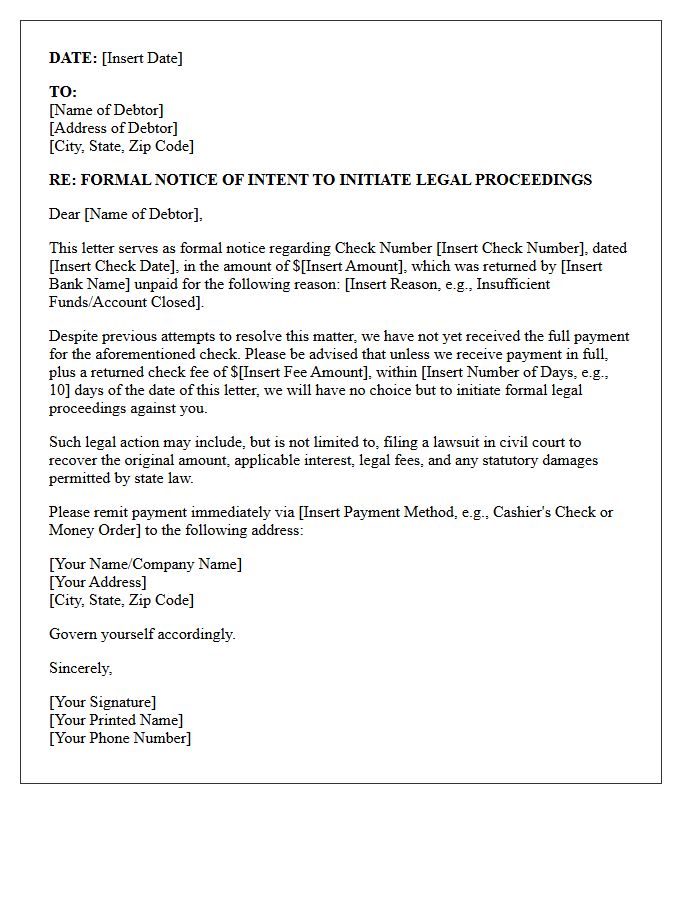
A Legal Proceedings Notice for an unpaid check is a formal demand letter notifying a debtor of potential litigation. It serves as a final opportunity to settle the outstanding balance plus applicable bank fees before court action begins. Under many jurisdictions, this document is a mandatory prerequisite to prove legal intent and can trigger statutory damages or criminal penalties for "bad checks." Receiving this notice requires immediate action to avoid judgment liens, additional legal costs, and negative impacts on your credit standing. Always verify the debt's validity upon receipt.
What is a Notice of Intent to Sue for a bad check?
A Notice of Intent to Sue for a bad check is a formal legal demand letter sent to a payer whose check was dishonored by the bank due to non-sufficient funds (NSF) or a closed account. This document serves as a final warning, notifying the debtor that they have a specific period-typically 10 to 30 days-to settle the debt before legal action is initiated in civil or small claims court.
What information must be included in a Dishonored Payment Notice?
To be legally valid, the notice should include the date of the check, the check number, the exact amount owed, the name of the bank that dishonored the payment, and the specific reason for return. It must also clearly state the deadline for payment and the potential legal consequences, including liability for statutory damages, court costs, and attorney fees if the balance remains unpaid.
Can I collect extra fees for a dishonored payment?
Yes, most state laws allow creditors to charge a service fee for a returned check, though the maximum allowable amount varies by jurisdiction. Furthermore, if the debtor fails to respond to the Notice of Intent to Sue within the statutory timeframe, the creditor may be entitled to seek "treble damages"-which can be up to three times the original check amount-plus legal expenses in court.
How should a Notice of Intent to Sue be delivered to the debtor?
For the notice to be admissible as evidence of a good-faith effort to collect, it should be sent via Certified Mail with a Return Receipt Requested. This provides the sender with a USPS tracking record and a signed proof of delivery, which is often a mandatory procedural requirement before a judge will award statutory damages in a bad check lawsuit.
What happens if the debtor does not pay after receiving the notice?
If the deadline specified in the notice passes without payment, the creditor can file a lawsuit in small claims or civil court to recover the original debt and associated fees. In many jurisdictions, intentionally issuing a check with the knowledge that it will not clear is also considered a criminal offense, and the creditor may choose to report the incident to the local District Attorney or police department for prosecution.

Comments