
Unpaid invoices can disrupt cash flow and strain client relationships. Sending a Professional Services Past Due Notice Letter is an essential step to recover outstanding payments while maintaining a formal tone. Clear communication ensures your firm gets paid without escalating to legal action prematurely. To help you streamline your accounts receivable process, below are some ready to use template options.

Image cover: Effective Past Due Notice Templates for Professional Services
Letter Samples List
- First Friendly Reminder for Past Due Professional Services Letter
- Second Notice of Outstanding Professional Fees Letter
- Urgent Request for Overdue Account Payment Letter
- Final Demand for Professional Services Payment Letter
- Notice of Intent to Suspend Professional Services Letter
- Pre-Collection Agency Warning Letter
- Notice of Account Placement in Debt Collection Letter
- Final Attempt to Settle Outstanding Balance Letter
- Demand for Payment of Delinquent Professional Invoice Letter
- Notice of Impending Legal Action for Debt Recovery Letter
- Breach of Contract for Unpaid Professional Services Letter
- Debt Collection Settlement Offer Letter
First Friendly Reminder for Past Due Professional Services Letter
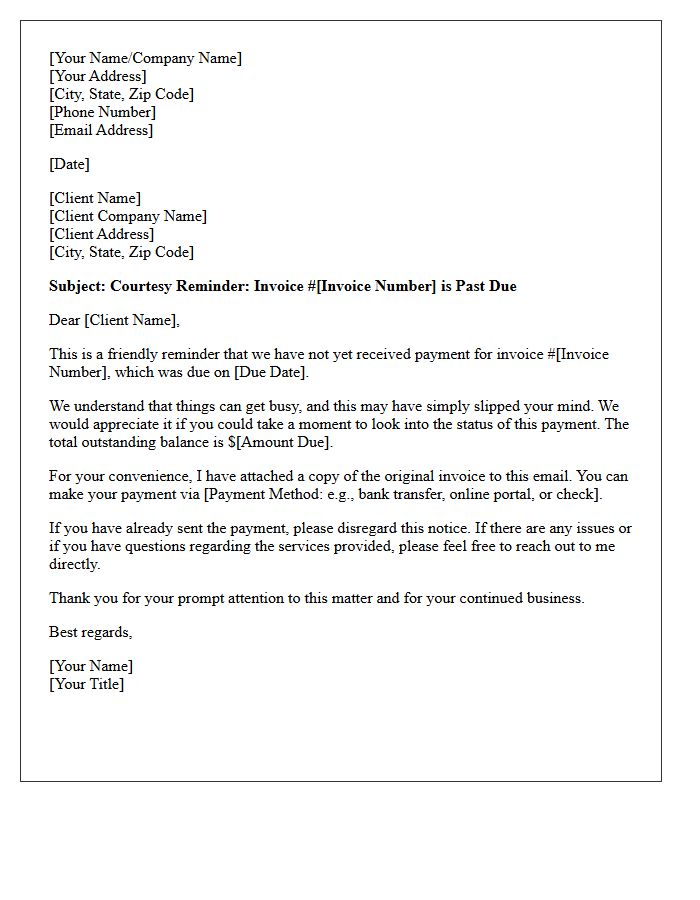
A first friendly reminder for past due professional services should maintain a professional tone to preserve the client relationship. Clearly state the outstanding balance, invoice number, and original due date. Assume the oversight was unintentional and provide convenient payment options or links to settle the account immediately. Including a copy of the original invoice ensures clarity and reduces administrative friction. This initial communication serves as a gentle nudge, encouraging prompt debt recovery while keeping the door open for future collaboration and positive business interactions.
Second Notice of Outstanding Professional Fees Letter
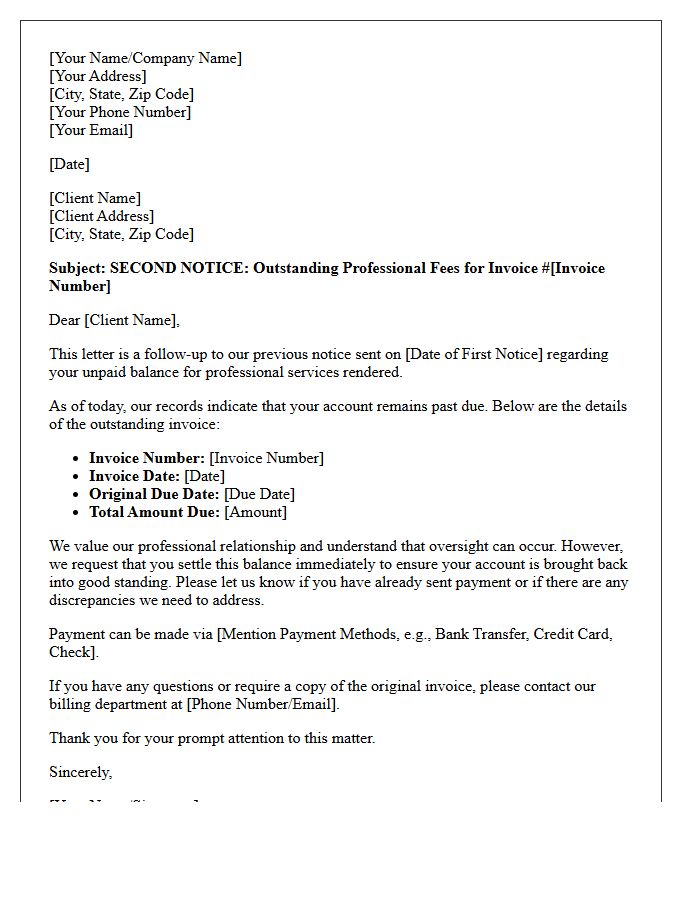
A Second Notice of Outstanding Professional Fees serves as a formal follow-up to a previous invoice, emphasizing the urgency of settling unpaid balances. It is a critical step in accounts receivable management, professionally reminding clients of their contractual obligations. This letter should clearly state the overdue amount, original due date, and potential late penalties. Providing convenient payment methods and a final deadline helps prevent further legal action or service suspension. Maintaining a firm yet polite tone is essential for preserving the professional relationship while ensuring necessary cash flow for your business.
Urgent Request for Overdue Account Payment Letter
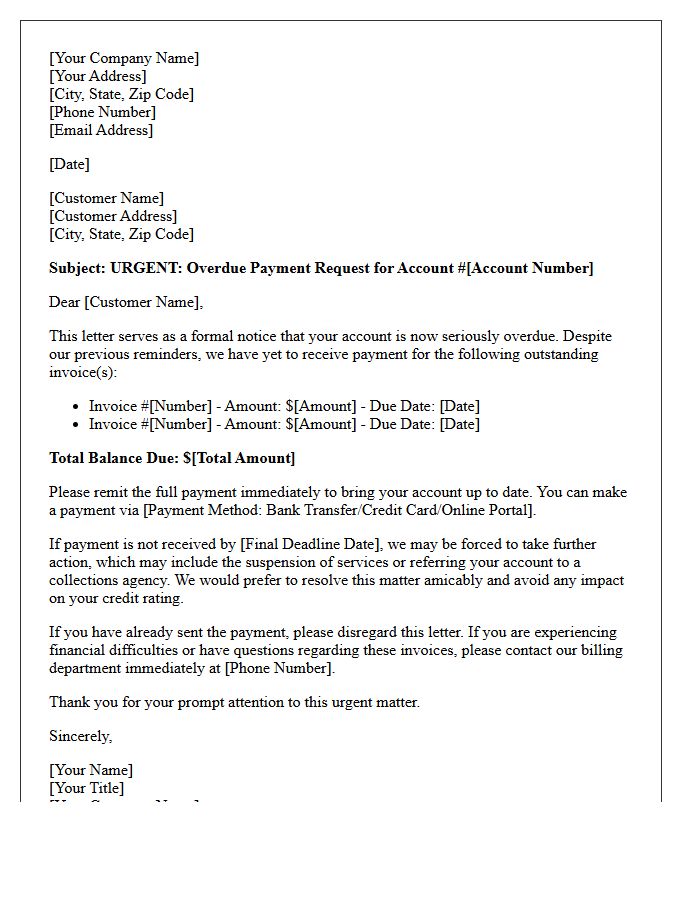
An Urgent Request for Overdue Account Payment Letter is a formal notification sent to collect outstanding debts. It must clearly state the exact balance due, the original invoice date, and a firm deadline for remittance. Effective letters maintain a professional yet assertive tone to encourage immediate action while preserving the business relationship. Always include accepted payment methods and contact details for disputes. Promptly sending this final notice is a critical step before escalating to a collection agency or pursuing legal action for non-payment.
Final Demand for Professional Services Payment Letter
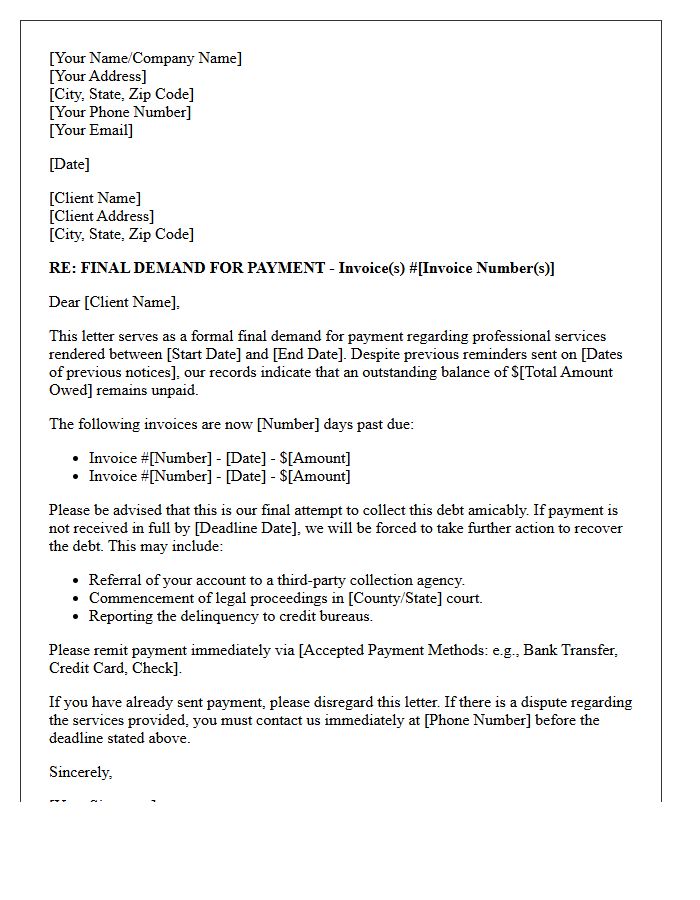
A final demand letter for professional services is a formal notice sent to a client to secure overdue payments before initiating legal action. This document must clearly state the outstanding balance, original invoice dates, and a firm final deadline for settlement. It serves as crucial legal evidence of your attempt to resolve the debt amicably. To be effective, maintain a professional tone while explicitly outlining the consequences of non-payment, such as debt collection referrals or litigation, ensuring your business protects its cash flow and contractual rights effectively.
Notice of Intent to Suspend Professional Services Letter
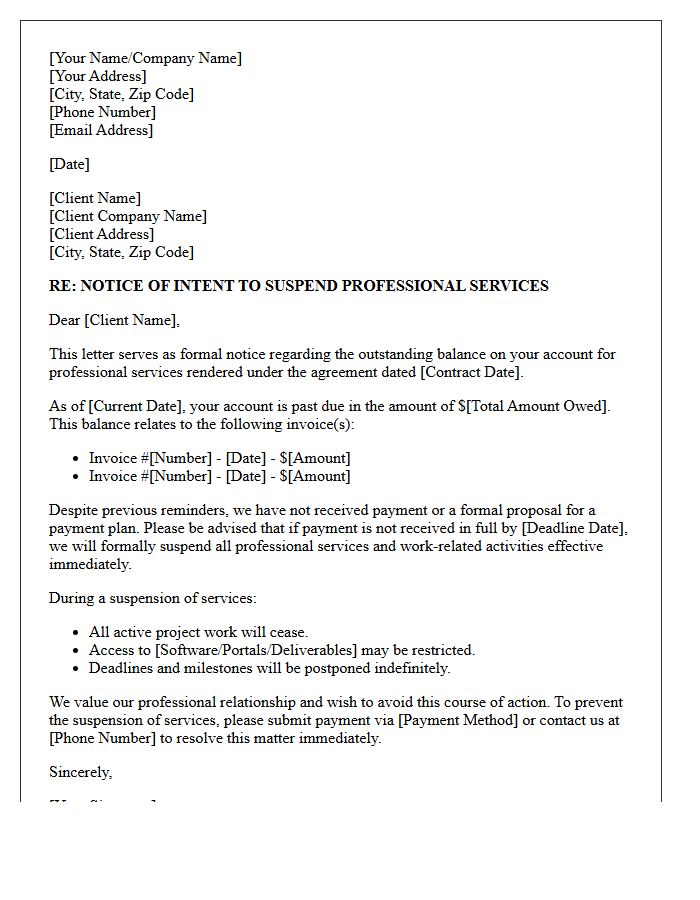
A Notice of Intent to Suspend Professional Services is a formal legal communication issued when a client breaches contract terms, typically due to non-payment. This document serves as a final warning, notifying the recipient that all active work will cease unless outstanding obligations are met by a specific deadline. It protects the provider's legal rights, mitigates further financial loss, and creates a clear paper trail for potential litigation or debt recovery. Sending this notice is a critical step in professional risk management and effective accounts receivable handling.
Pre-Collection Agency Warning Letter
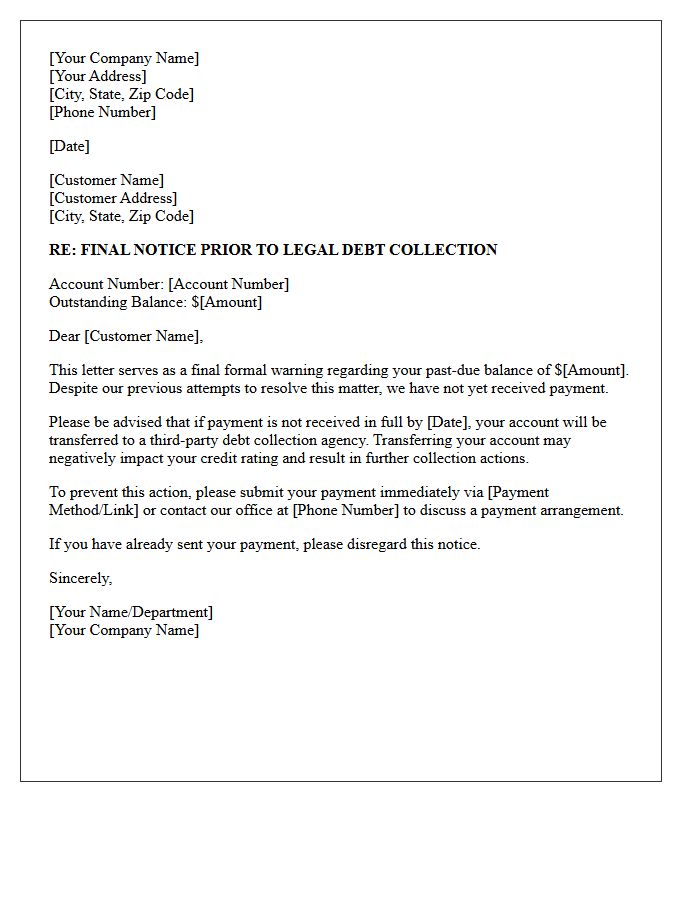
A Pre-Collection Agency Warning Letter serves as a final notice before an overdue account is transferred to a third-party debt collector. This formal communication provides a grace period for the debtor to settle balances or arrange a payment plan without damaging their credit score. It clearly outlines the total debt, payment deadlines, and potential legal or financial consequences of inaction. Receiving this letter is a critical opportunity to resolve outstanding obligations privately and avoid the aggressive tactics and long-term reporting associated with formal collection agencies.
Notice of Account Placement in Debt Collection Letter
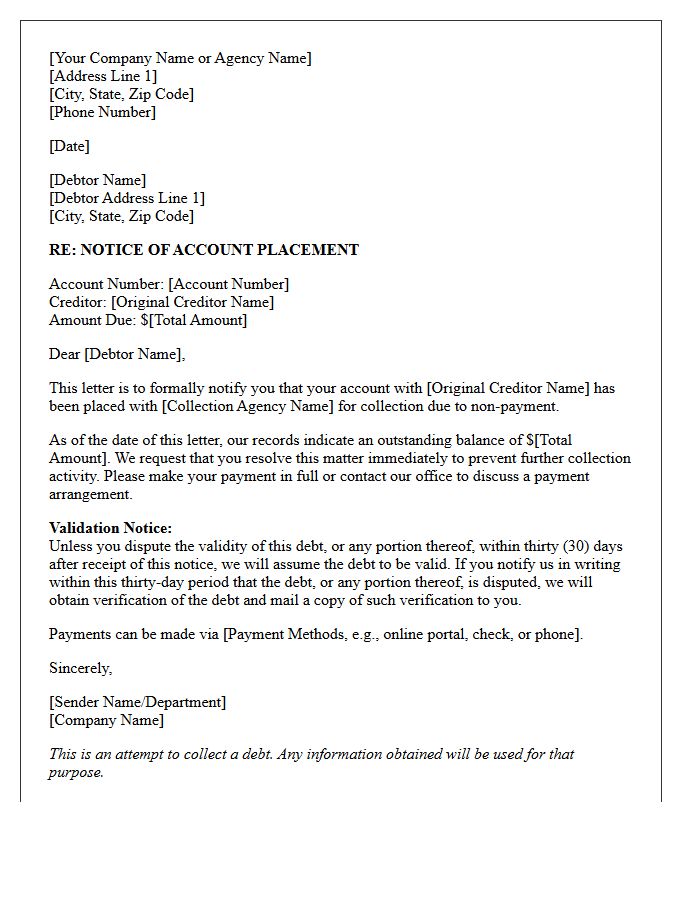
Receiving a notice of account placement indicates your past-due debt has been transferred to a collection agency. This letter serves as a formal validation notice, outlining your right to dispute the debt within thirty days. To protect your credit score, you must verify the creditor's identity and the exact amount owed. Promptly addressing this notice through written communication can prevent further legal action or aggressive recovery efforts. Understanding your rights under the Fair Debt Collection Practices Act is essential for resolving the balance and maintaining financial stability.
Final Attempt to Settle Outstanding Balance Letter
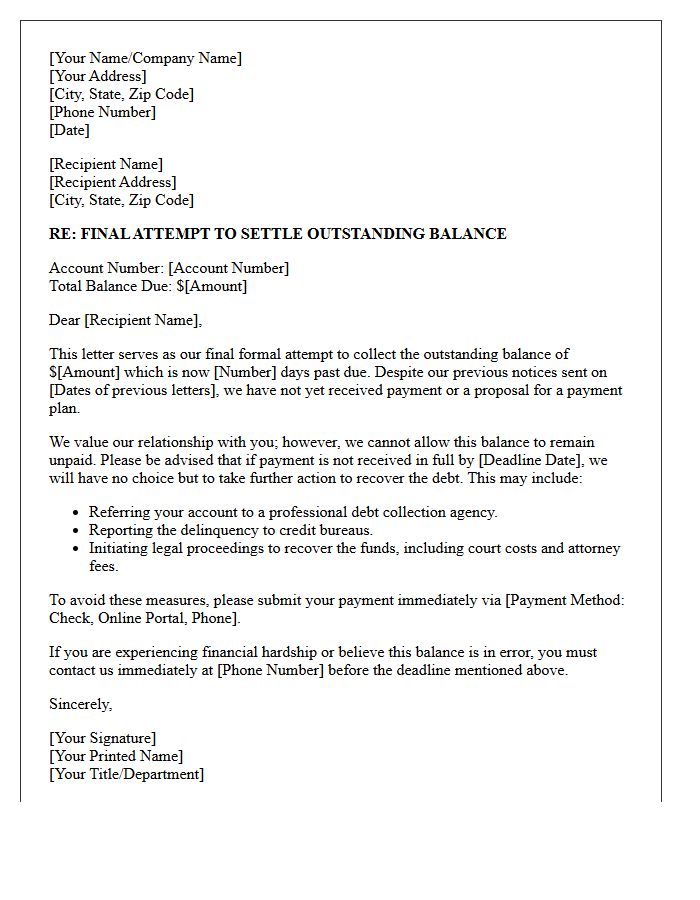
A Final Attempt to Settle Outstanding Balance Letter serves as a formal, last-chance notice before escalating to legal action or debt collection agencies. This document must clearly state the total delinquent amount, original due dates, and a firm deadline for payment. It provides debtors a final opportunity to resolve the financial obligation amicably. To ensure legal compliance and clarity, include acceptable payment methods and contact details. Sending this via certified mail provides essential proof of delivery, protecting your rights if formal litigation becomes necessary to recover the unpaid funds.
Demand for Payment of Delinquent Professional Invoice Letter
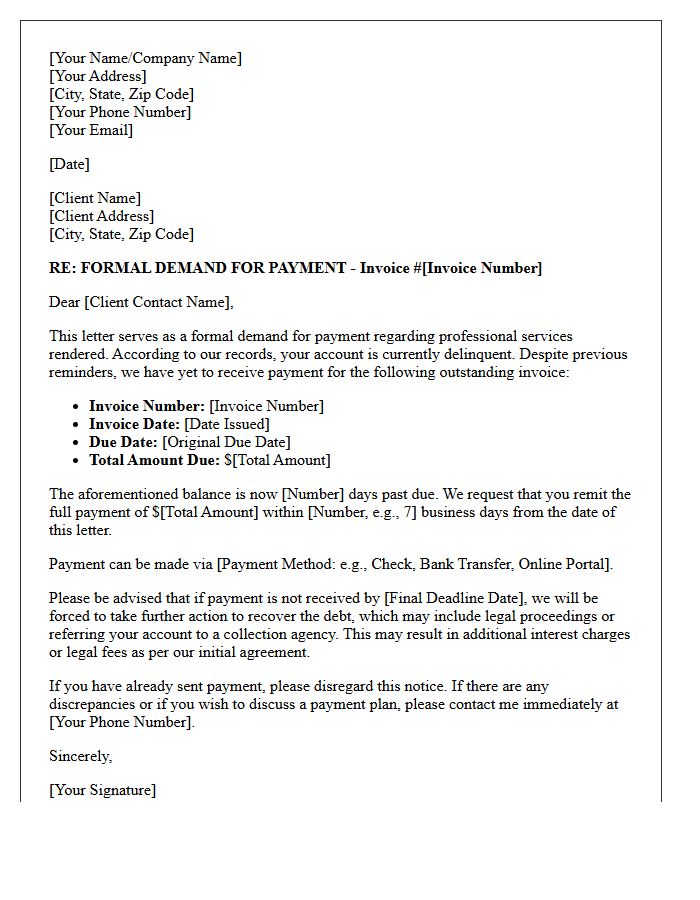
A Demand for Payment is a formal notice used to collect delinquent professional invoices. It serves as a final warning before pursuing legal action or debt collection services. To ensure enforceability, the letter must clearly state the original due date, the total outstanding balance including late fees, and a specific deadline for payment. Professionalism is vital to maintain business relationships while creating a necessary paper trail. Clearly outlining the consequences of non-payment often encourages immediate settlement and protects your contractual rights during potential litigation or arbitration processes.
Notice of Impending Legal Action for Debt Recovery Letter
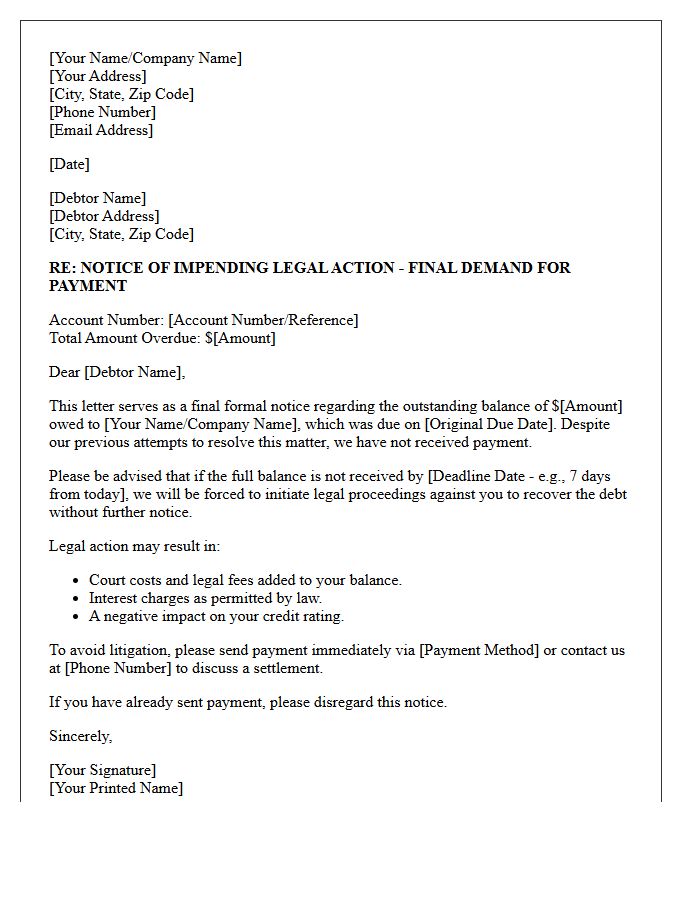
A Notice of Impending Legal Action is a formal warning that a creditor intends to initiate a lawsuit to reclaim unpaid funds. This Letter before Claim serves as a final opportunity to settle the debt or arrange a payment plan before court proceedings begin. It must outline the specific amount owed, the deadline for payment, and potential consequences like County Court Judgments (CCJs). Receiving this document is a critical signal to seek legal advice or contact the creditor immediately to avoid additional costs and long-term damage to your credit score.
Breach of Contract for Unpaid Professional Services Letter
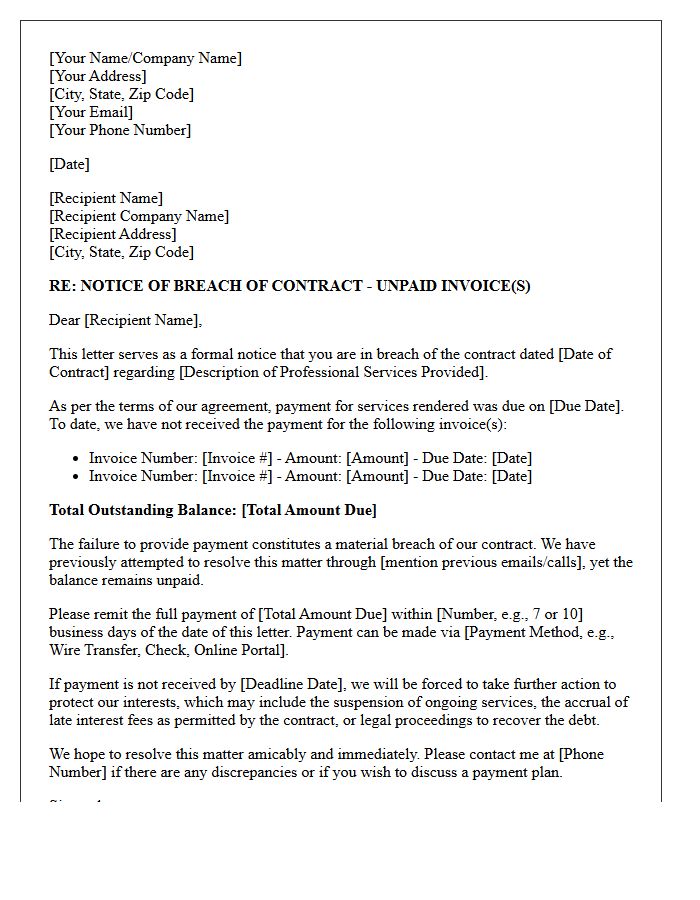
A formal Breach of Contract letter is the essential first step in recovering unpaid professional fees. This legal notice officially informs the client of their failure to meet payment obligations outlined in your agreement. It must clearly state the outstanding balance, the specific services rendered, and a final deadline for settlement. Sending this demand letter establishes a paper trail, demonstrates professional intent to pursue legal remedies, and serves as vital evidence should you need to escalate the dispute to small claims court or collections to ensure financial restitution.
Debt Collection Settlement Offer Letter
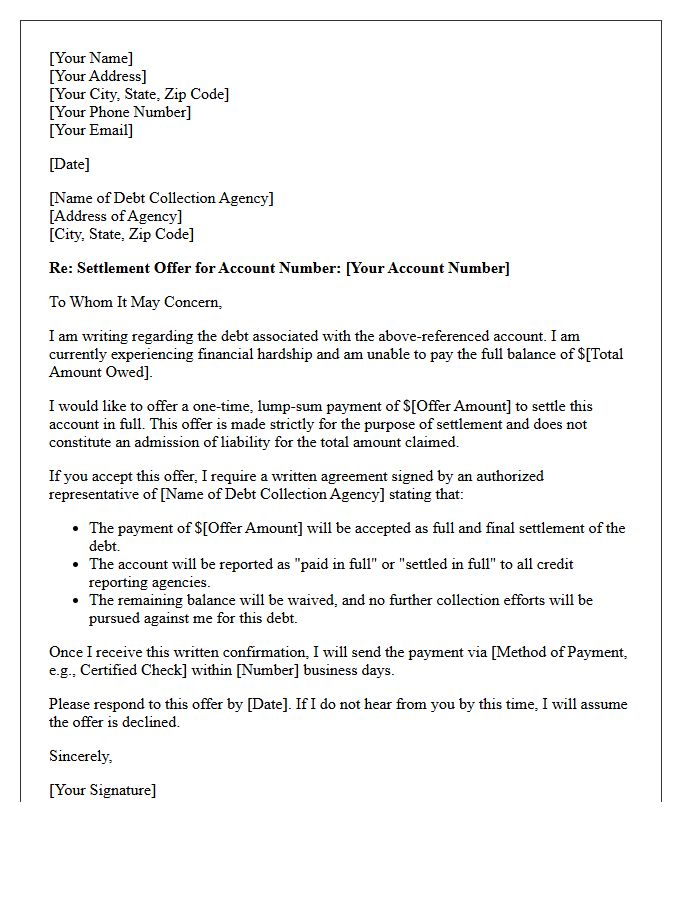
A Debt Collection Settlement Offer Letter is a formal document used to negotiate a reduced payout on outstanding arrears. To ensure a legally binding agreement, clearly state the specific amount you are willing to pay and demand that the remaining balance be forgiven in writing. It is essential to request a "paid in full" status on your credit report to protect your financial history. Always send this proposal via certified mail to maintain a paper trail and never send payment until the agency provides a signed acceptance of your terms.
What should be included in a professional services past due notice?
A professional past due notice should include the original invoice number, the total amount owed, the services provided, the original due date, and clear instructions for making an immediate payment to avoid further action.
When is the best time to send a first past due notice for unpaid services?
It is standard practice to send the first professional past due notice 1 to 5 days after the invoice deadline has passed. This serves as a polite reminder in case the client simply overlooked the payment date.
How do I write a firm but polite late payment demand letter?
Maintain a professional tone by referencing the signed service agreement, clearly stating the number of days the payment is overdue, and requesting a confirmation of payment. Avoid aggressive language in the initial notices to preserve the client relationship.
Can I charge late fees on a professional services past due invoice?
Yes, you can charge late fees or interest on overdue payments, provided that these terms were clearly outlined in your original contract or service agreement and comply with local commercial laws.
What are the next steps if a professional services invoice remains unpaid?
If the past due notice is ignored, the next steps include sending a formal "Final Demand for Payment," suspending ongoing services, and eventually escalating the matter to a collections agency or pursuing legal action through small claims court.

Comments