
Disputing inaccurate charges on your energy or water statements requires a formal Utility Bill Debt Validation Notice Letter. This document protects your consumer rights by forcing providers to prove the debt's legitimacy before collection actions proceed. It is an essential tool for correcting billing errors and preventing credit score damage. To simplify the process, below are some ready to use template options.
Image cover: Proven Debt Validation Letter Templates for Disputing Utility Bills
Letter Samples List
- Initial Utility Debt Collection Demand Letter
- Second Notice Utility Arrears Collection Letter
- Final Warning Utility Service Disconnection Letter
- Overdue Utility Account Settlement Offer Letter
- Disputed Utility Charge Verification Response Letter
- Utility Debt Payment Plan Agreement Letter
- Cease And Desist Utility Debt Collection Letter
- Unpaid Utility Balance Default Notice Letter
- Post-Disconnection Utility Debt Recovery Letter
- Utility Bill Fraudulent Account Dispute Letter
- Outstanding Utility Balance Legal Action Notice Letter
- Utility Debt Statute Of Limitations Inquiry Letter
- Delinquent Utility Account Agency Transfer Letter
Initial Utility Debt Collection Demand Letter
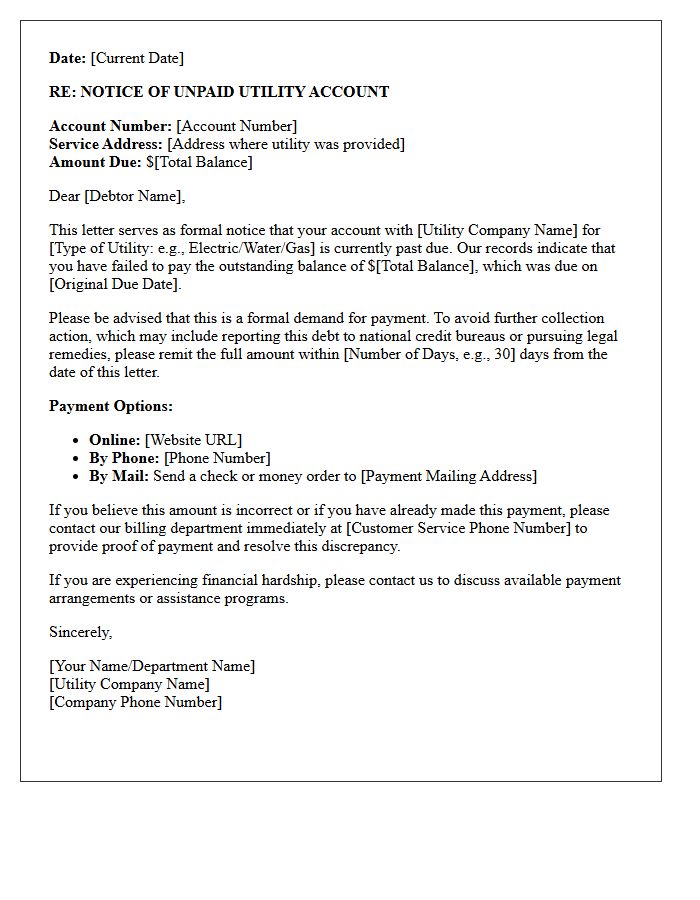
An Initial Utility Debt Collection Demand Letter is a formal notice sent to consumers regarding outstanding service balances. Under the Fair Debt Collection Practices Act (FDCPA), this document must include the exact amount owed, the creditor's name, and a validation notice. You have a legal right to dispute the debt within thirty days of receipt. Verification stops collection activities until proof is provided. Reviewing these letters immediately is crucial to avoid service disconnection, negative credit reporting, or potential legal action by third-party agencies seeking recovery of the unpaid utility funds.
Second Notice Utility Arrears Collection Letter
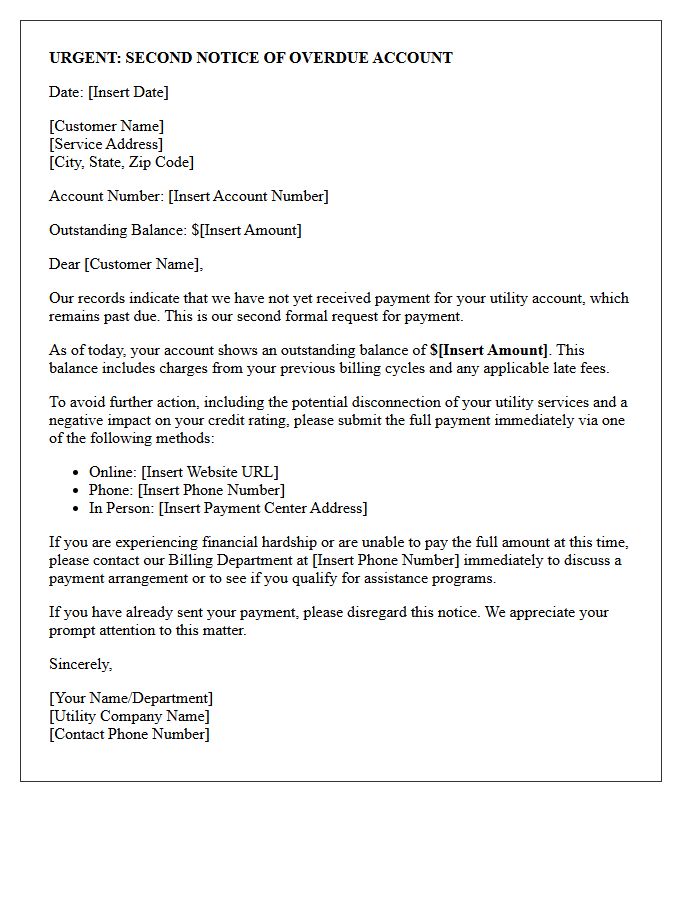
A Second Notice Utility Arrears Collection Letter serves as a critical final warning before service disconnection. This document indicates that your account remains overdue despite previous reminders. It typically outlines the total balance, payment deadlines, and potential termination of essential services. Recipients should immediately contact their provider to discuss repayment plans or financial assistance programs. Ignoring this formal notice can lead to additional late fees, credit score damage, and legal action. Prompt communication is essential to maintain utility access and resolve outstanding debt effectively.
Final Warning Utility Service Disconnection Letter
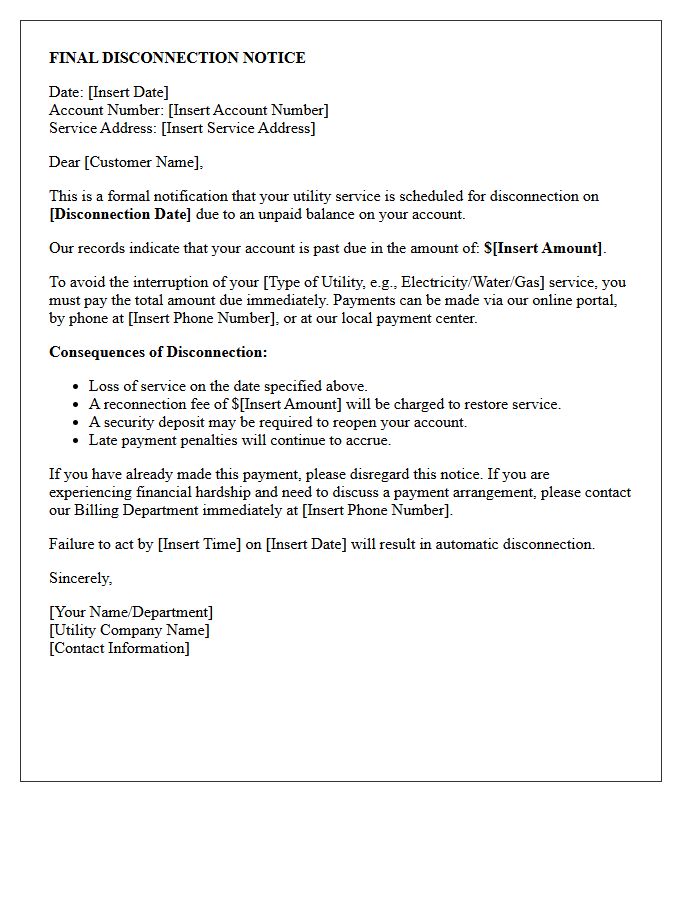
A final warning utility disconnection letter is a critical termination notice issued before services are stopped. This document indicates that your account is severely past due and immediate payment is required to avoid losing electricity, water, or gas. It typically outlines the total balance owed, the deadline for payment, and potential reconnection fees. To prevent a service interruption, consumers should contact their provider immediately to discuss payment arrangements or financial assistance programs. Ignoring this formal notification will lead to a loss of essential services and may negatively impact your credit score.
Overdue Utility Account Settlement Offer Letter
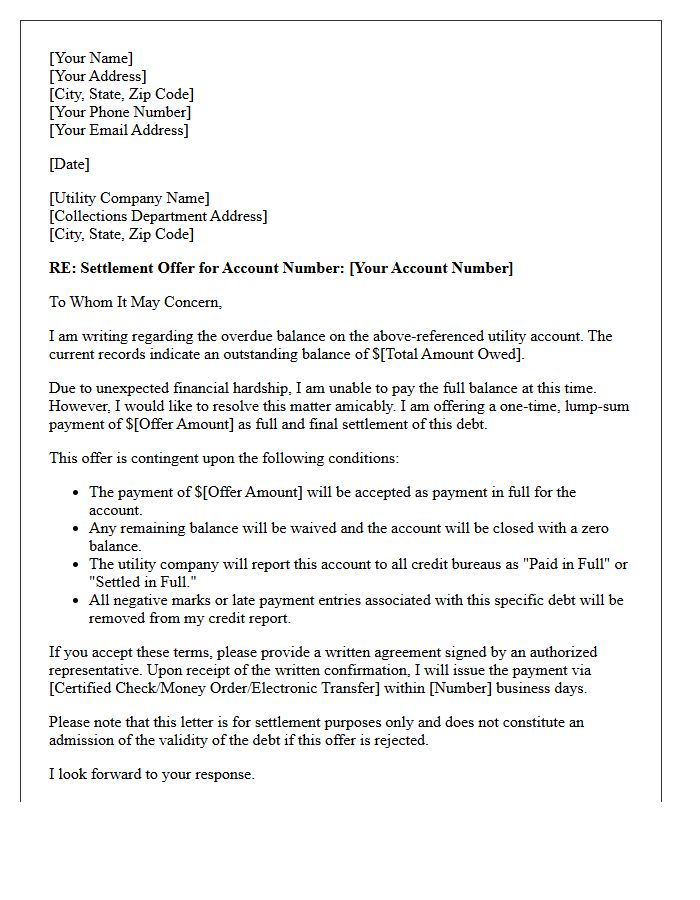
An Overdue Utility Account Settlement Offer Letter is a formal proposal sent to a service provider to resolve unpaid balances. This document highlights your intention to pay a reduced lump sum or structured amount in exchange for debt forgiveness. It serves as a crucial tool for debt negotiation and credit protection. Ensure the agreement is documented in writing to prevent further collection actions. Using this letter can help you restore essential services while managing financial hardship effectively and avoiding long-term negative impacts on your credit score.
Disputed Utility Charge Verification Response Letter
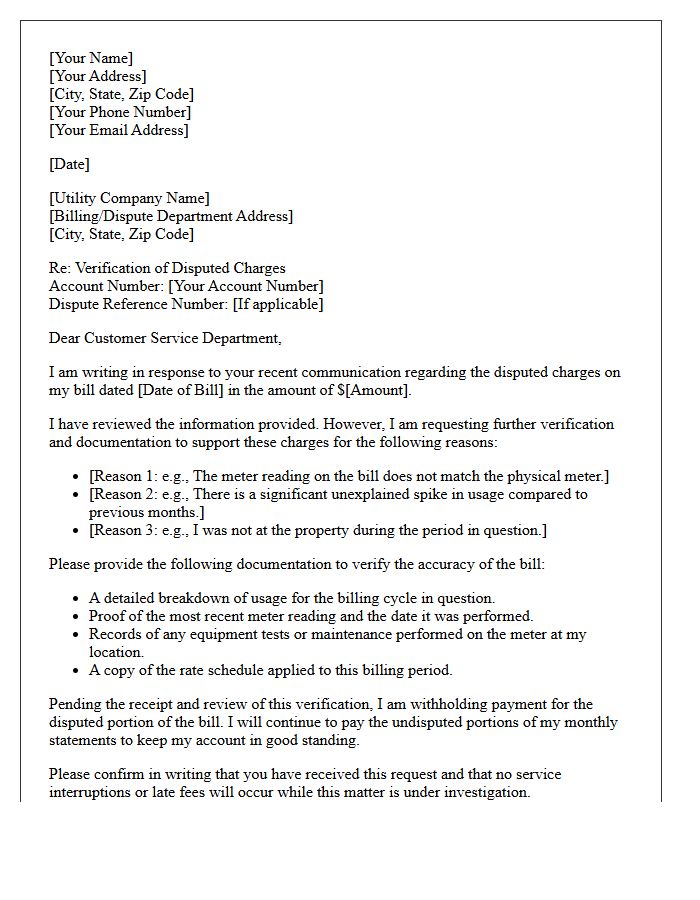
A Disputed Utility Charge Verification Response Letter is a formal document used to contest billing inaccuracies or unauthorized fees. This written notice requires utility providers to provide detailed evidence, such as meter readings or historical usage logs, to justify specific costs. Sending this letter is essential for protecting consumer rights and preventing service disconnection during a billing dispute. It establishes a clear paper trail, ensuring the utility company performs a thorough investigation into meter malfunctions or administrative errors while temporarily halting collection efforts on the contested amount.
Utility Debt Payment Plan Agreement Letter
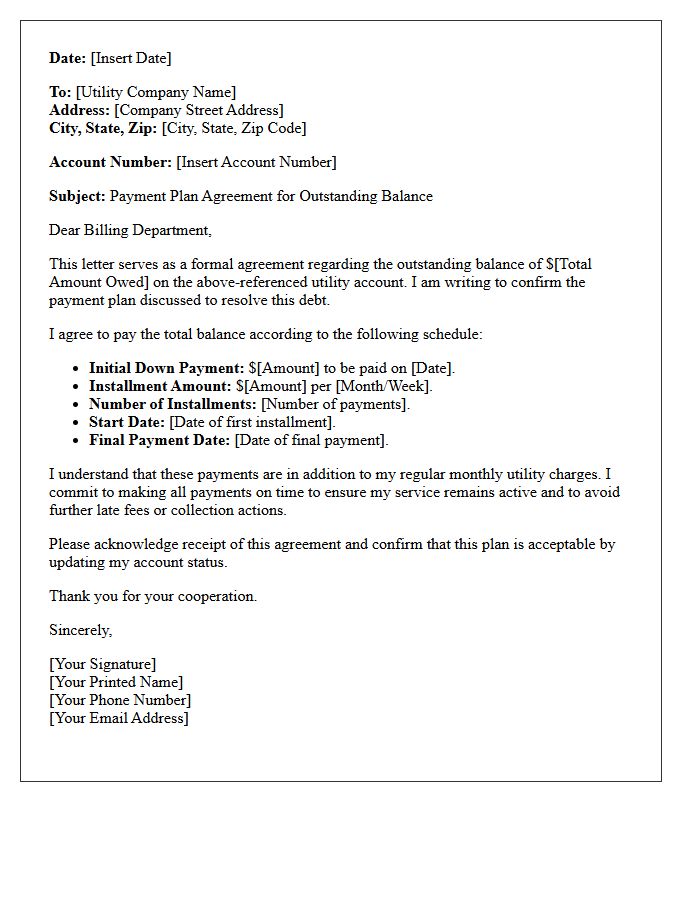
A Utility Debt Payment Plan Agreement Letter is a formal contract between a consumer and a service provider to resolve outstanding balances. This document outlines a structured repayment schedule, detailing specific installment amounts and due dates to prevent service disconnection. It serves as legal protection for both parties, ensuring transparency regarding interest rates or late fees. Residents facing financial hardship should request this written agreement to maintain essential services while systematically reducing their debt through a mutually agreed-upon financial strategy.
Cease And Desist Utility Debt Collection Letter
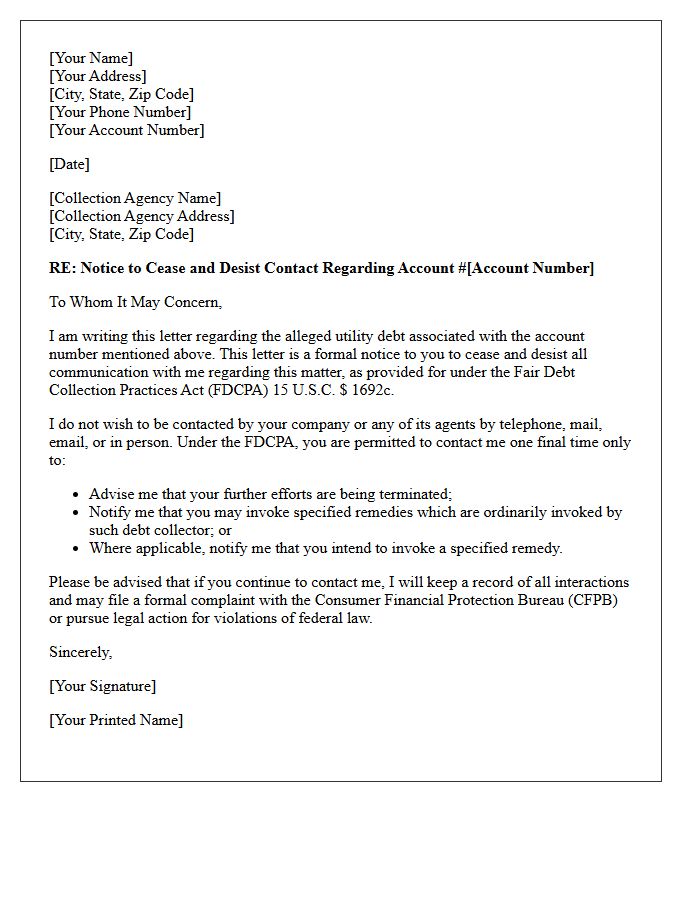
A cease and desist letter is a critical tool for stopping harassment from third-party agencies. By invoking the Fair Debt Collection Practices Act (FDCPA), you legally mandate that collectors stop contacting you via phone or mail. While this prevents further communication, it does not erase the underlying utility debt or stop legal action. Always send the notice via certified mail to maintain a paper trail. This process empowers consumers to regain privacy and manage their financial disputes without the pressure of constant, aggressive collection tactics.
Unpaid Utility Balance Default Notice Letter
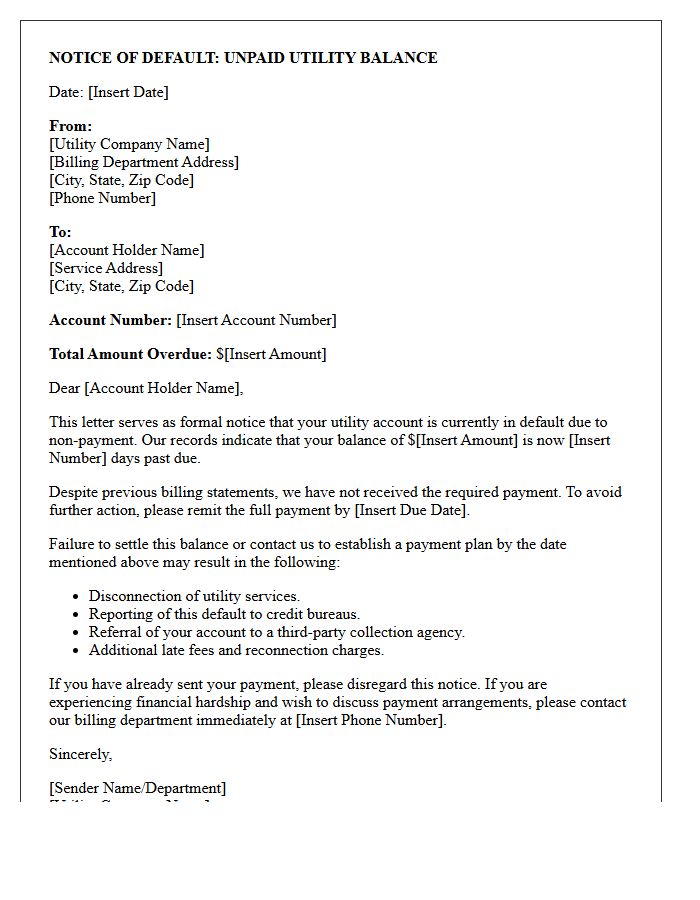
An Unpaid Utility Balance Default Notice Letter is a formal warning issued by service providers when an account remains delinquent. This document serves as a final demand for payment before disconnection occurs. It outlines the total outstanding debt, the deadline for settlement, and potential legal consequences or credit score damage. Receiving this notice is critical because it marks the final opportunity to arrange a payment plan or dispute errors. Addressing it immediately prevents service interruptions and additional late fees or collection agency involvement in the future.
Post-Disconnection Utility Debt Recovery Letter
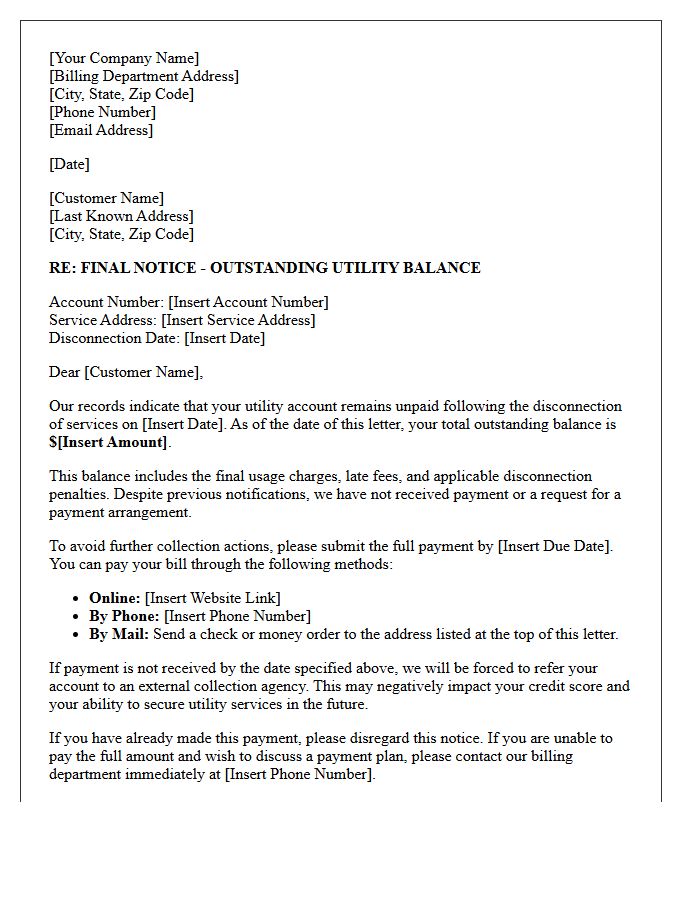
A Post-Disconnection Utility Debt Recovery Letter is a formal notification issued by service providers to collect outstanding balances after a service contract has ended. It serves as a final opportunity for debt settlement before the account is referred to third-party collection agencies. This document details the final meter readings, applicable late fees, and specific payment deadlines. Timely communication is essential to prevent credit score damage and legal action. Always verify the debt's accuracy and explore repayment plans to resolve the liability and maintain your financial reputation.
Utility Bill Fraudulent Account Dispute Letter
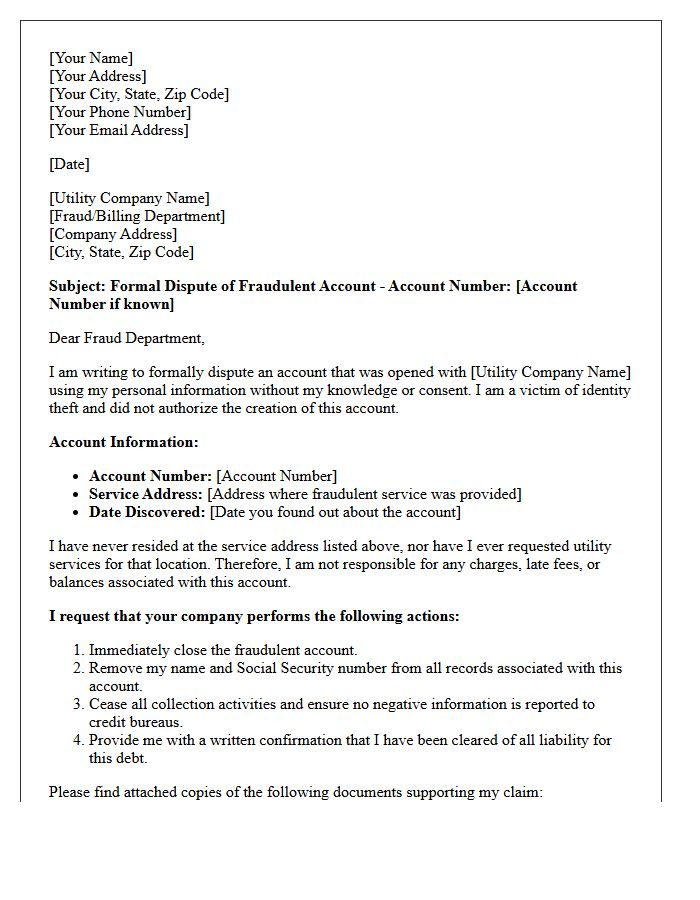
A Utility Bill Fraudulent Account Dispute Letter is a formal legal notice used to contest identity theft. You must explicitly state that the account was opened without your consent and include a Police Report or Identity Theft Affidavit as evidence. Demand an immediate investigation, the closure of the fraudulent account, and the removal of negative marks from your credit report. Sending this document via certified mail ensures a paper trail for legal protection under the Fair Credit Reporting Act, which is essential for restoring your financial integrity and credit score.
Outstanding Utility Balance Legal Action Notice Letter
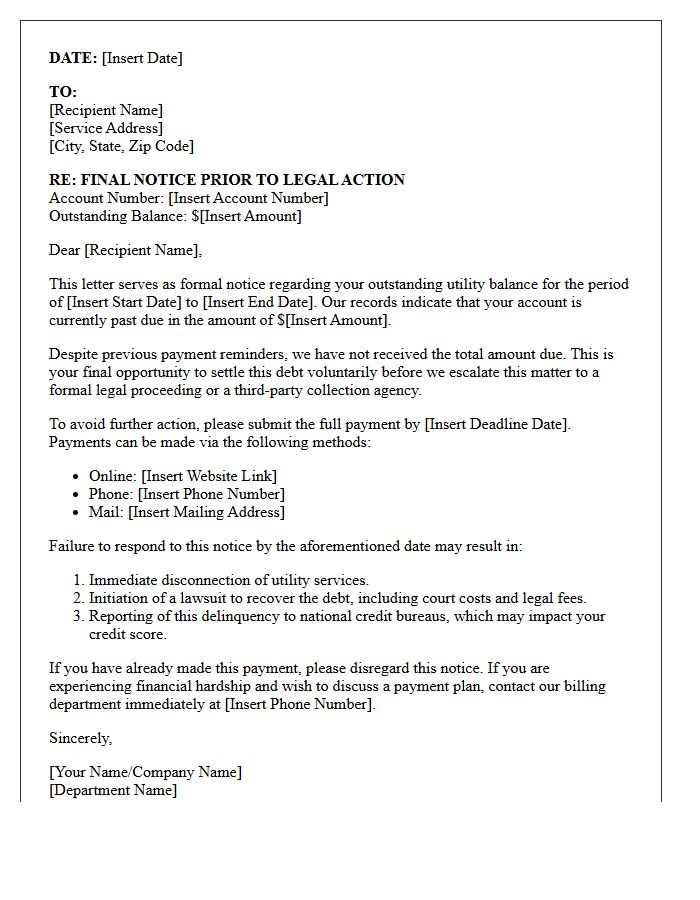
An Outstanding Utility Balance Legal Action Notice Letter is a formal warning issued by service providers before initiating litigation or debt collection. This document signifies a critical breach of contract due to non-payment. It serves as a final opportunity for the consumer to settle arrears or establish a payment plan to avoid court proceedings, credit score damage, or service disconnection. Receiving this notice requires immediate attention to prevent additional legal fees and long-term financial consequences. Always verify the debt accuracy and respond promptly to the utility company's legal department.
Utility Debt Statute Of Limitations Inquiry Letter
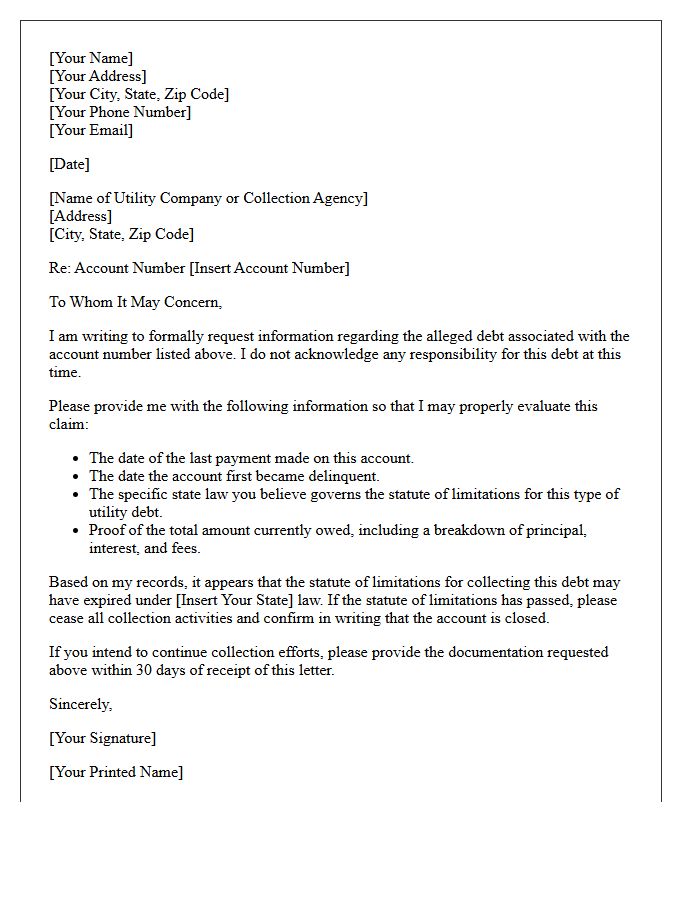
A Utility Debt Statute of Limitations Inquiry Letter is a formal request used to verify if an old balance is legally enforceable. Each state sets specific time limits for collecting utility arrears; once this period expires, the debt becomes time-barred. Sending this inquiry forces the provider to provide proof of the debt's age and prevents improper collection tactics. Use this document to protect your rights before making payments, as acknowledging the debt could inadvertently restart the statutory clock. Always send via certified mail for a verifiable paper trail.
Delinquent Utility Account Agency Transfer Letter
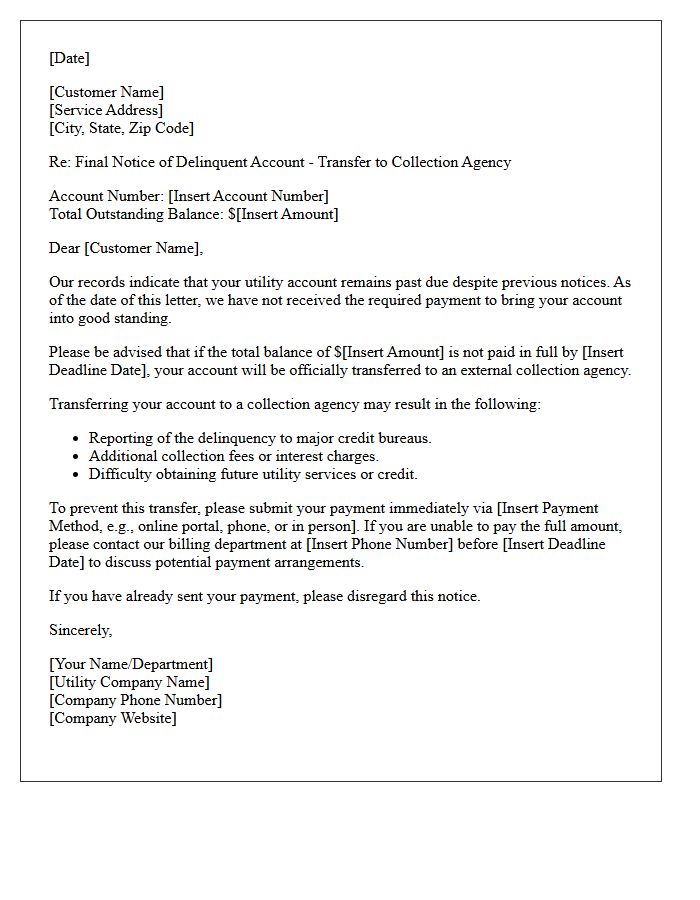
A Delinquent Utility Account Agency Transfer Letter is a formal notification that your overdue balance has been reassigned to a third-party collection agency. This legal document signifies that the utility provider no longer manages the debt directly. It is crucial to verify the debt amount and the agency's credentials immediately to protect your credit score. Upon receipt, you should request a formal debt validation to ensure accuracy and prevent potential legal action or further service disruptions. Prompt communication helps negotiate payment plans and settles the outstanding liability effectively.
What is a Utility Bill Debt Validation Notice Letter?
A utility bill debt validation notice is a formal letter sent to a debt collection agency requesting legal proof that you owe a specific balance for services like electricity, water, or gas. Under the Fair Debt Collection Practices Act (FDCPA), you have the right to challenge the accuracy of the debt before making a payment.
How long do I have to send a debt validation request for a utility bill?
You have 30 days from the date you receive the initial notice from a collection agency to send a debt validation letter. If you send the request within this timeframe, the collector must cease all collection activities until they provide written verification of the utility debt.
What information should be included in a utility debt validation letter?
Your letter should request the name of the original utility provider, the account number, a detailed breakdown of the balance owed, and proof that the collection agency is legally authorized to collect in your state. Do not admit to owing the debt or promise to pay while requesting validation.
Can a utility debt validation letter stop credit reporting?
Yes, if you dispute the debt within the 30-day window, the collection agency cannot report the item to credit bureaus until they have validated it. If it is already on your credit report and they cannot provide proof of the debt, they are legally required to remove the derogatory mark.
What happens if the collection agency fails to validate my utility debt?
If a collection agency cannot provide documentation proving the debt is yours and the amount is accurate, they are legally prohibited from continuing collection efforts. In this case, you can demand they stop contacting you and request that the account be deleted from your credit profile.

Comments