
An Escrow Funds Refund Letter is a formal request sent to a lender or title company to reclaim surplus money held in an escrow account after a mortgage payoff or overpayment. This document ensures your legal right to a timely reimbursement of your personal funds. To help you draft a professional notice, below are some ready to use template.
Image cover: Requesting Your Escrow Refund: Professional Letter Templates and Guide
Letter Samples List
- Mortgage Payoff Escrow Refund Letter
- Annual Escrow Analysis Surplus Refund Letter
- Property Sale Escrow Balance Refund Letter
- Refinance Escrow Account Closure Refund Letter
- Escrow Requirement Cancellation Refund Letter
- Duplicate Escrow Payment Refund Letter
- Escrow Account Overage Disbursement Letter
- Loan Paid In Full Escrow Refund Letter
- Voluntary Escrow Account Closure Refund Letter
- Tax And Insurance Escrow Surplus Refund Letter
- Escrow Error Correction Refund Letter
- Mortgage Servicing Transfer Escrow Refund Letter
Mortgage Payoff Escrow Refund Letter
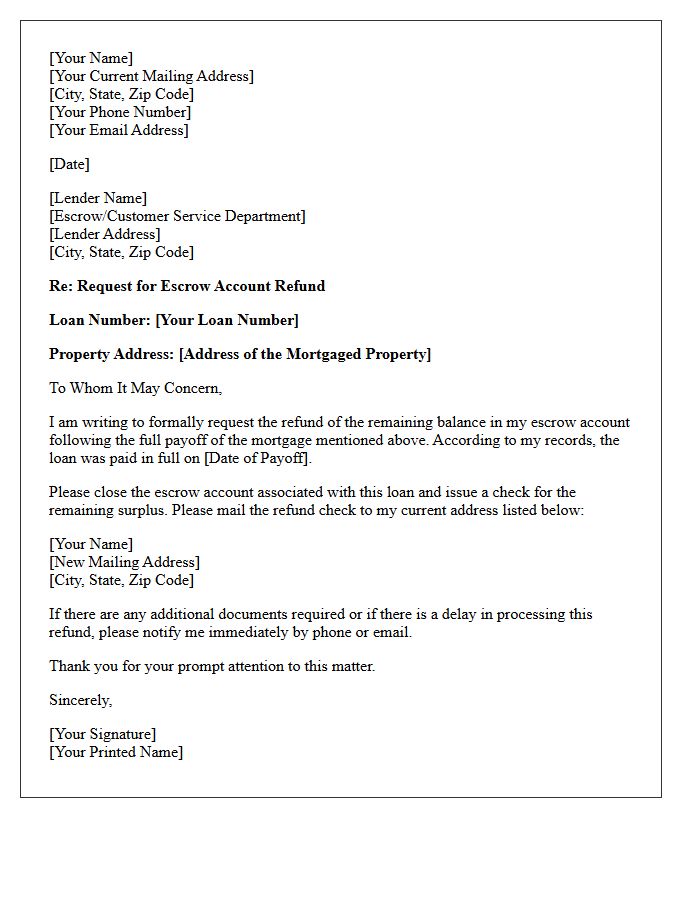
A Mortgage Payoff Escrow Refund Letter is an official document sent by your lender after you fully repay your loan. It confirms your account balance is zero and notifies you of a surplus remaining in your escrow account. By law, lenders must issue this refund check-typically covering prepaid property taxes and insurance-within 20 to 30 days of closing the account. Always verify your current mailing address with the servicer to ensure you receive these funds promptly. This letter serves as final proof that your financial obligation is satisfied.
Annual Escrow Analysis Surplus Refund Letter
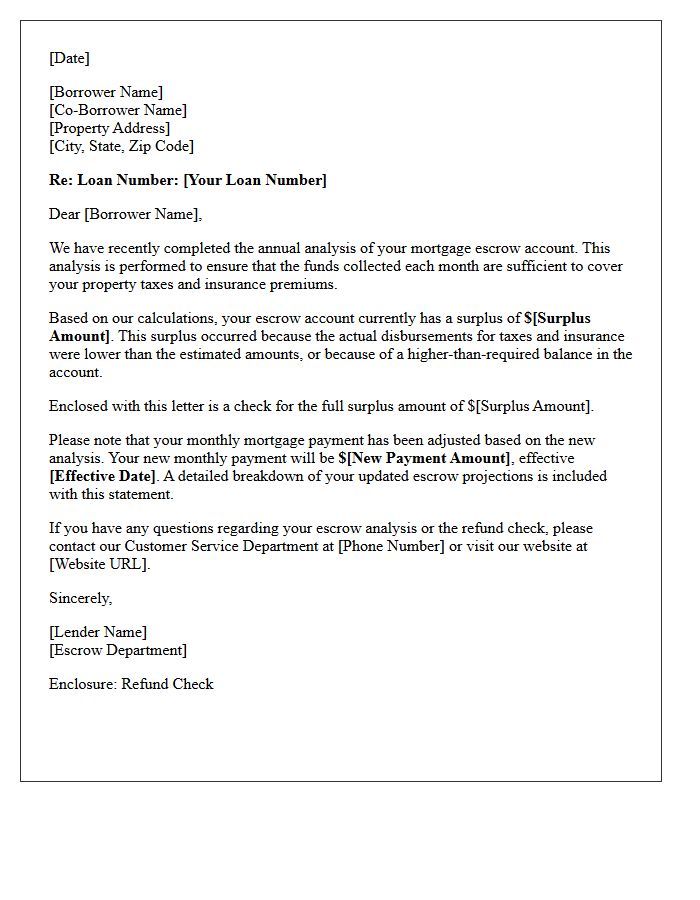
An Annual Escrow Analysis compares your property tax and insurance payments against your account balance. If your lender collected more funds than necessary to maintain the required minimum balance, you will receive a surplus refund. This letter details your new monthly mortgage payment and includes a check for the overage. It is crucial to review this document annually, as a surplus often indicates your escrow account is overfunded, whereas a shortage could increase your future monthly housing costs significantly.
Property Sale Escrow Balance Refund Letter
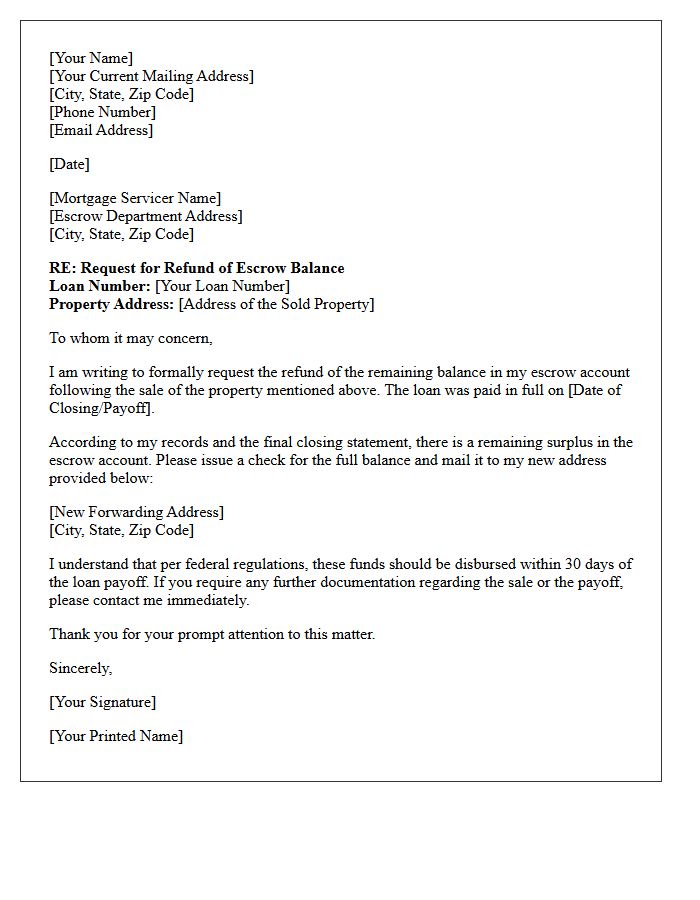
A Property Sale Escrow Balance Refund Letter is a formal request sent to a mortgage lender after closing. When a home is sold and the loan is paid in full, any surplus in the escrow account-typically used for taxes and insurance-must be returned to the seller. Legally, lenders must issue this refund check within 30 days of payoff. The letter ensures the servicer has your new mailing address to prevent delays. Always verify your final statement to ensure the returned amount matches the remaining balance reported during the sale.
Refinance Escrow Account Closure Refund Letter
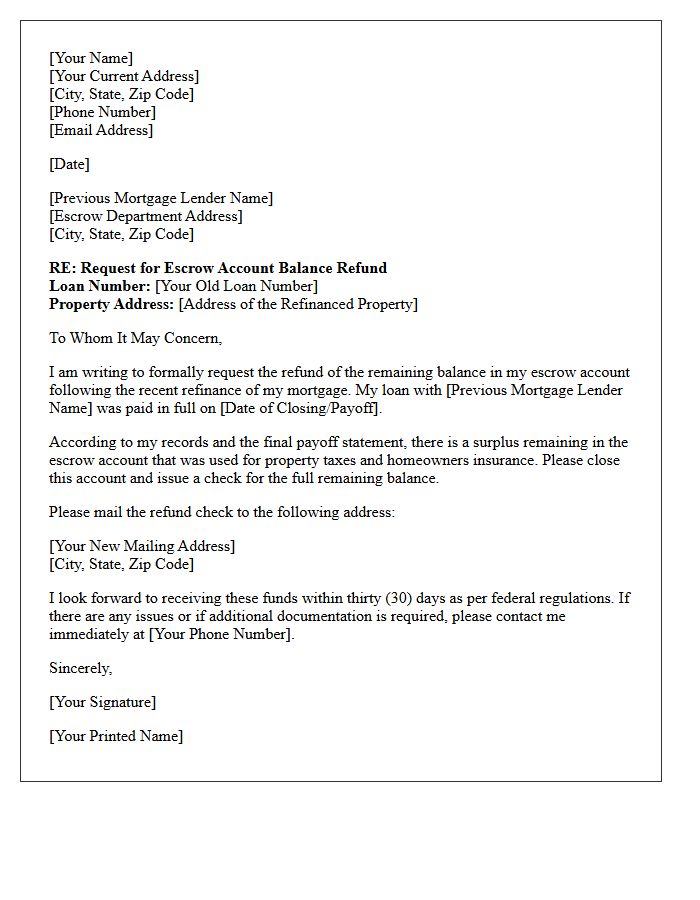
A Refinance Escrow Account Closure Refund Letter confirms the final distribution of surplus funds after paying off your previous mortgage. When you refinance, your old lender must close your escrow account and issue a check for the remaining balance, typically within 30 days. It is essential to verify your mailing address with the servicer to ensure the refund reaches you promptly. This letter serves as official documentation that your prior tax and insurance obligations are settled, providing a clear financial trail for your records during the loan transition process.
Escrow Requirement Cancellation Refund Letter
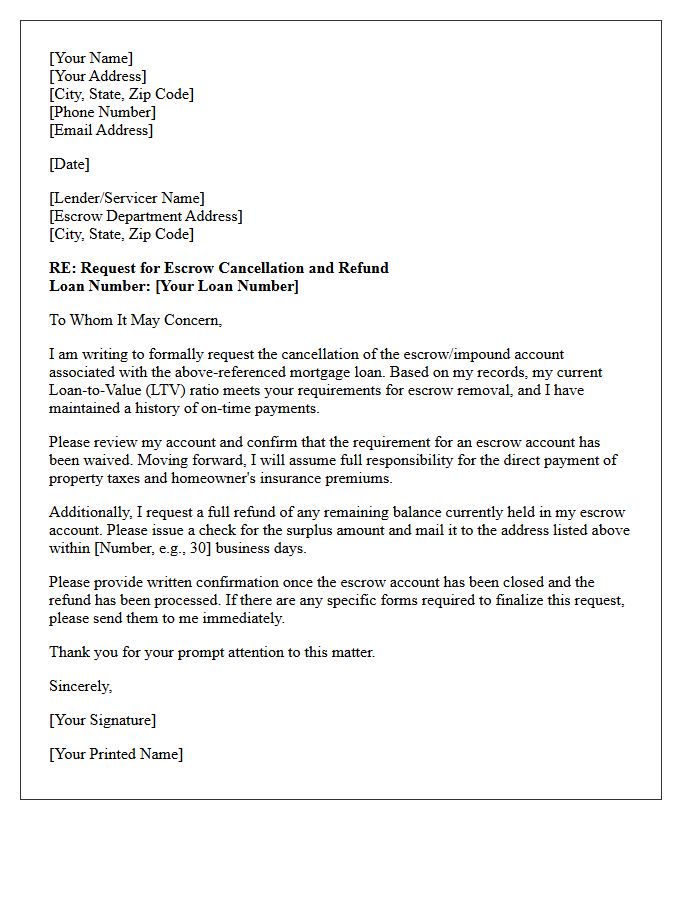
An Escrow Requirement Cancellation Refund Letter is a formal request sent to a mortgage lender to terminate an impound account. Homeowners use this document once they reach a specific equity threshold, typically 20%, to manage their own property taxes and insurance. Upon approval, the lender must refund any remaining surplus funds held in the account. Providing clear account details and a formal request for surplus reimbursement ensures a smooth transition and legal compliance. Always verify your loan's specific eligibility criteria before submitting the cancellation request to ensure the escrow balance is returned promptly.
Duplicate Escrow Payment Refund Letter
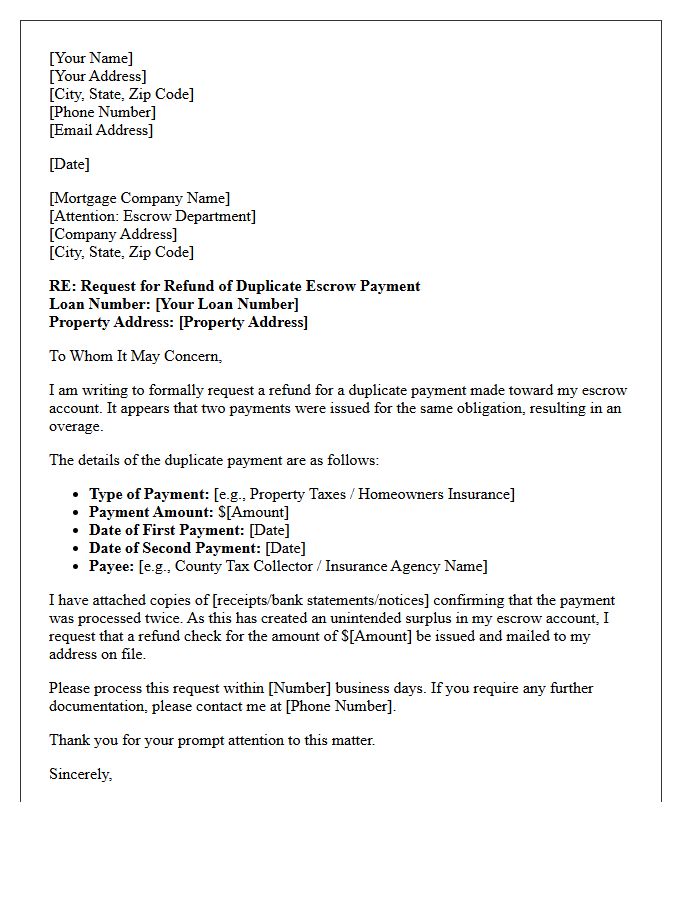
A Duplicate Escrow Payment Refund Letter is a formal request sent to a mortgage lender when surplus funds occur due to double payments. This typically happens during property transfers or refinancing if both the title company and the borrower pay the tax or insurance bill. To secure your reimbursement, clearly state the overpayment amount, provide proof of payment, and include your loan account details. Promptly notifying your servicer ensures the excess capital is returned to you rather than remaining idle in an escrow account.
Escrow Account Overage Disbursement Letter
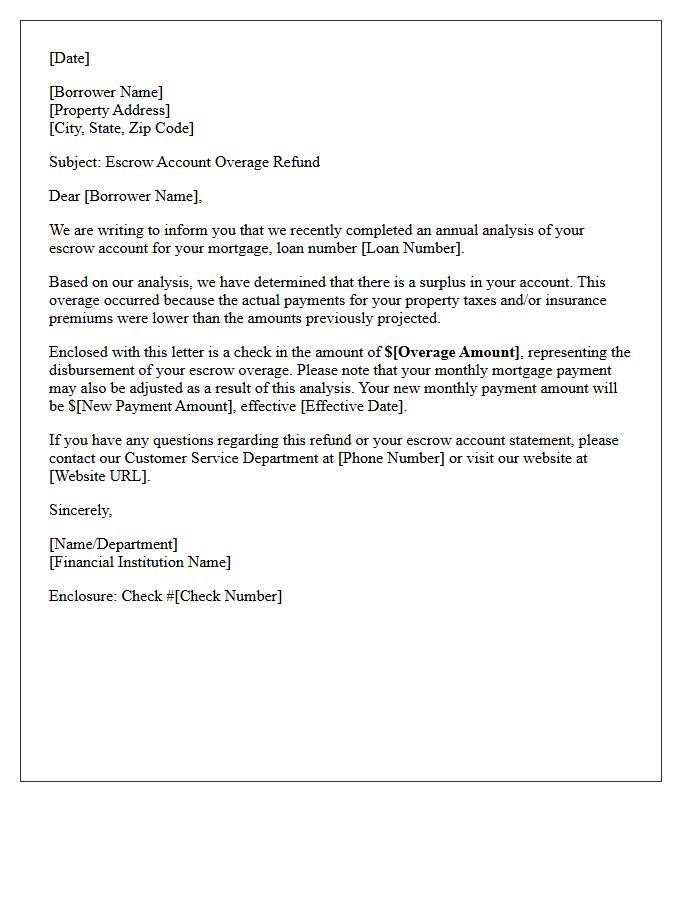
An Escrow Account Overage Disbursement Letter notifies homeowners of a surplus in their mortgage impound account. This occurs when property taxes or insurance premiums are lower than estimated. Federal law requires lenders to issue a refund check if the overage exceeds a specific threshold, typically fifty dollars. Recipients should verify their mortgage statement to ensure future monthly payments adjust accordingly. Always deposit the check promptly, as these disbursements often have expiration dates, and keep the letter for tax records to document changes in deductible payments.
Loan Paid In Full Escrow Refund Letter
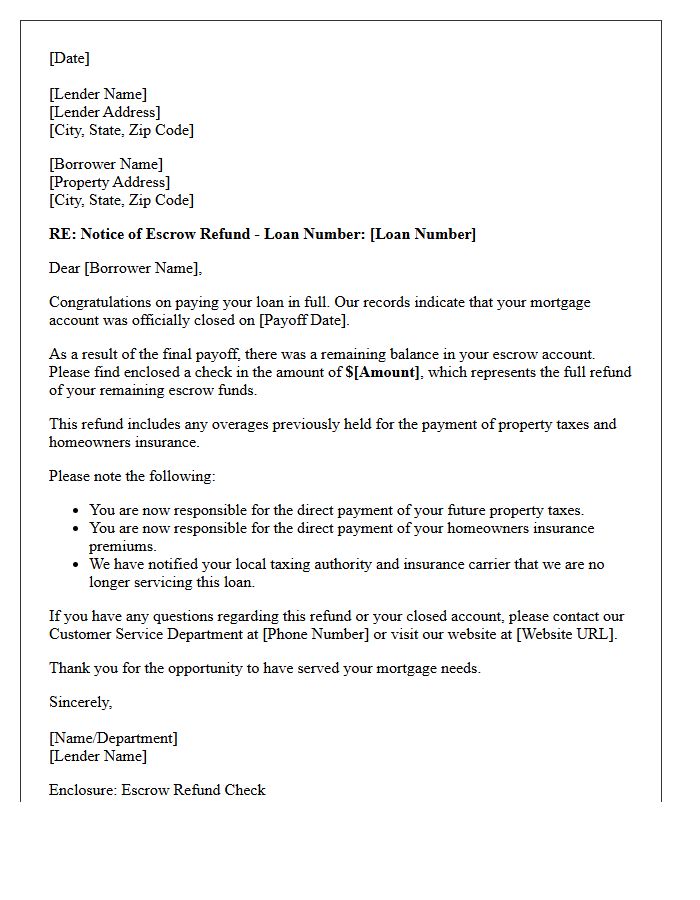
A Loan Paid In Full Escrow Refund Letter is an official document sent by mortgage lenders after a debt is settled. It confirms the surplus balance remaining in your impound account, typically from prepaid taxes or insurance. Lenders are legally required to issue this refund check within 20 to 30 days of payoff. Always verify your mailing address is current to ensure delivery. If you do not receive your escrow reimbursement within the mandatory timeframe, contact your loan servicer immediately to prevent funds from being sent to state unclaimed property offices.
Voluntary Escrow Account Closure Refund Letter
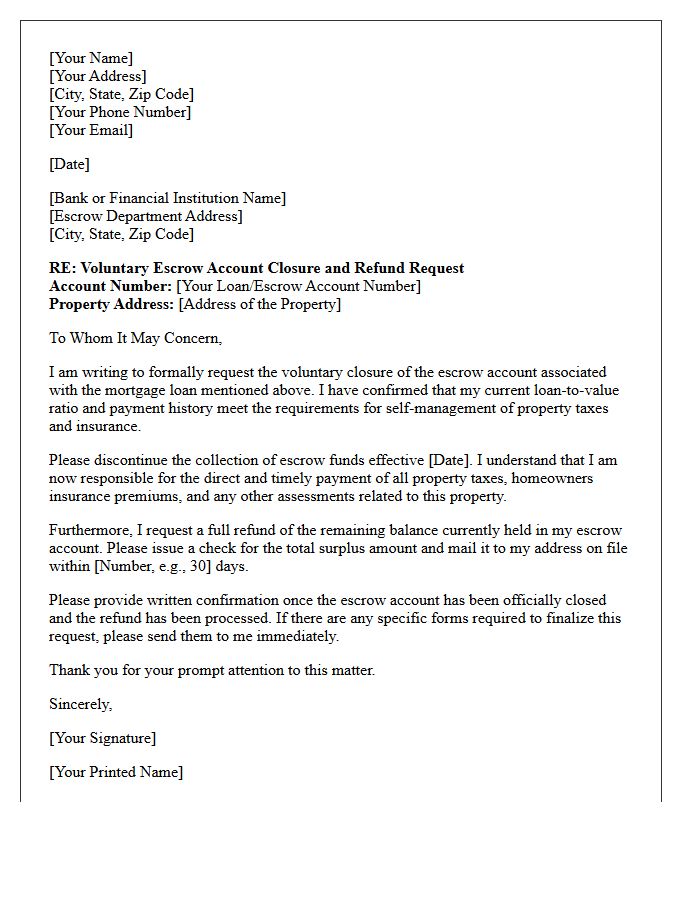
A Voluntary Escrow Account Closure Refund Letter is a formal request sent to a mortgage lender to terminate an impound account. To ensure a successful surplus refund, the homeowner must typically prove a specific equity threshold, often 20%, and maintain a history of on-time payments. Once approved, the lender is legally required to return remaining funds within a specific timeframe. This process grants homeowners direct control over property taxes and insurance payments, though it requires disciplined personal budgeting to meet these future financial obligations independently.
Tax And Insurance Escrow Surplus Refund Letter
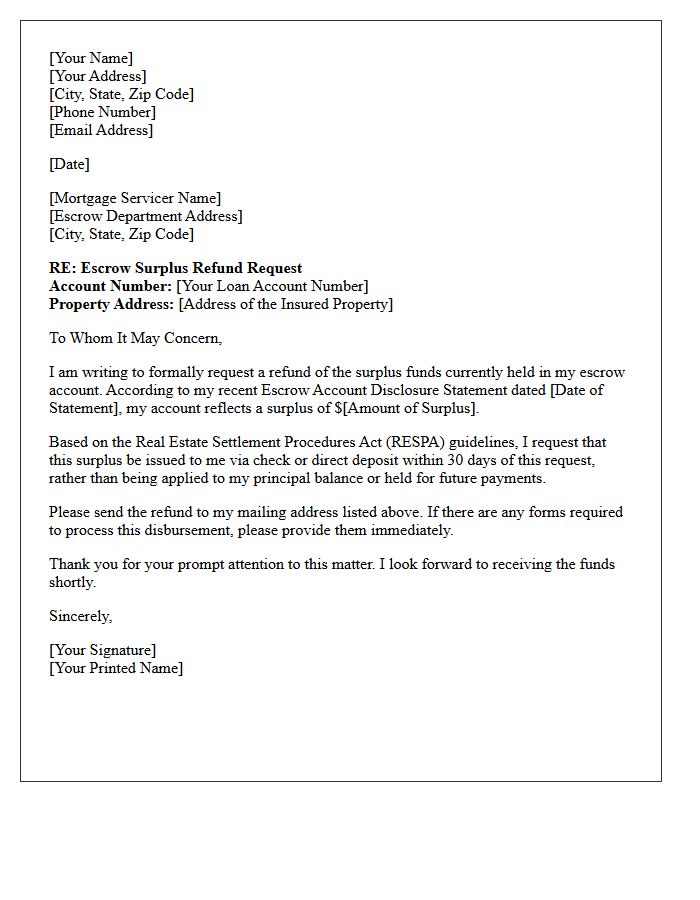
A Tax and Insurance Escrow Surplus Refund Letter informs homeowners that their escrow account contains excess funds after an annual analysis. This typically occurs when property taxes or insurance premiums were lower than projected. The letter confirms the surplus amount and details when a refund check will be issued. It is essential to review the updated mortgage statement, as a refund often precedes a change in your monthly payment. Always verify the sender's authenticity to protect against potential financial fraud while ensuring your disbursement is accurately processed.
Escrow Error Correction Refund Letter
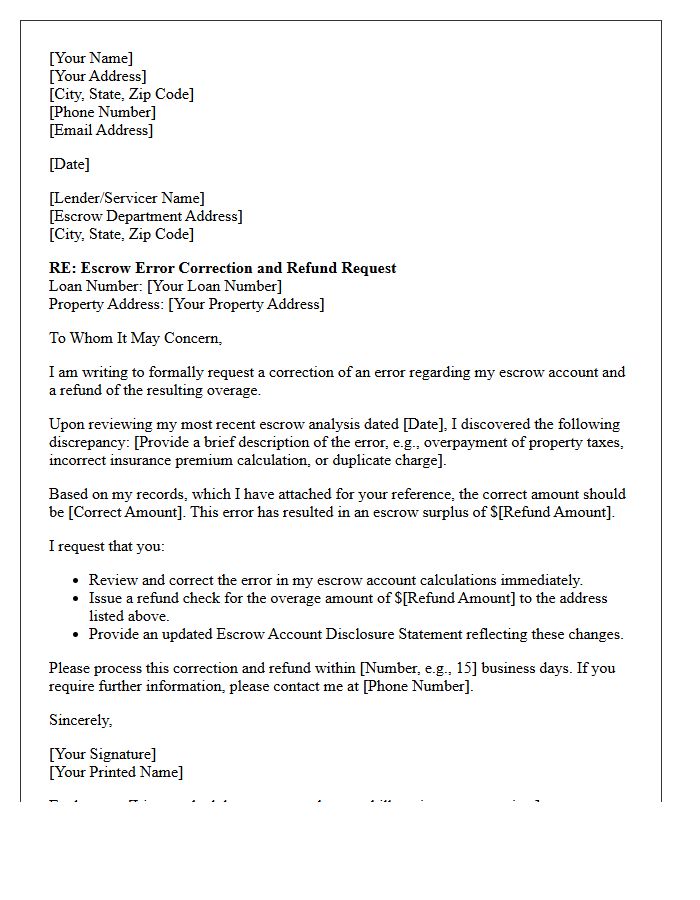
An Escrow Error Correction Refund Letter is a formal request sent to mortgage lenders to rectify servicing inaccuracies. This document is essential when an overage is detected or if an escrow analysis incorrectly calculates taxes and insurance. Homeowners should clearly detail the specific discrepancy and provide supporting evidence. Under the Real Estate Settlement Procedures Act (RESPA), lenders are legally obligated to investigate these claims and issue a refund for excess funds within specific timeframes. Sending this letter protects your financial interests and ensures your monthly payments remain accurate.
Mortgage Servicing Transfer Escrow Refund Letter
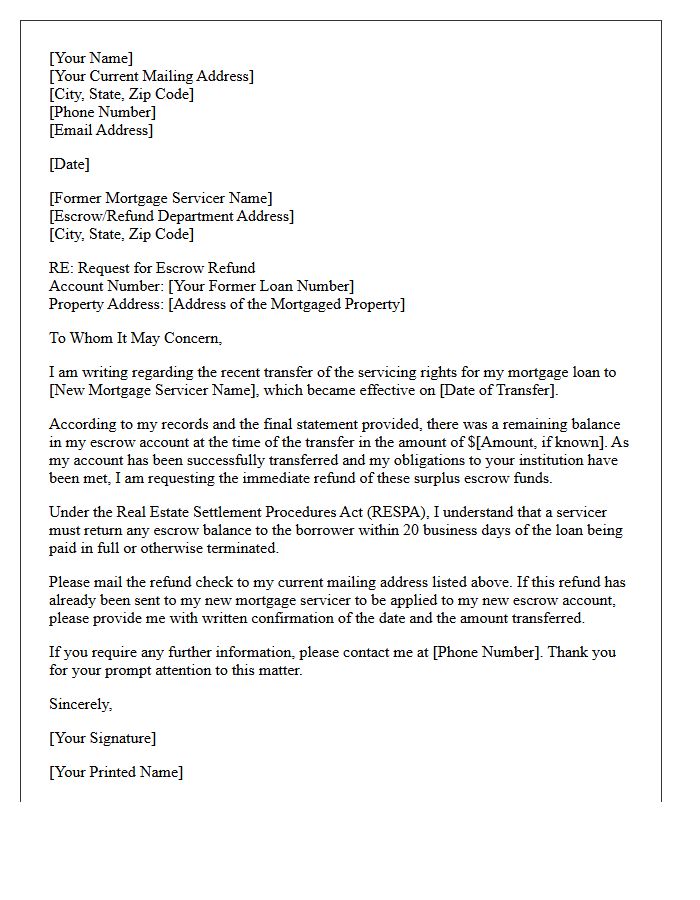
When your loan moves to a new lender, you may receive a Mortgage Servicing Transfer Escrow Refund Letter. This document confirms that your previous servicer has closed your account and is returning any surplus funds held in your escrow account for taxes and insurance. It is essential to verify the refund amount and ensure your new servicer established a replacement escrow balance to avoid payment gaps. Always keep this letter for your financial records to track the transfer of funds between institutions and confirm your account status.
What is an escrow funds refund letter?
An escrow funds refund letter is a formal written request sent to a mortgage lender or title company asking for the return of surplus money remaining in an escrow account after a loan payoff, property sale, or overpayment.
When should I receive my escrow refund check?
According to federal RESPA guidelines, lenders are generally required to refund any surplus escrow balance exceeding $50 within 20 days of a mortgage being paid in full or a surplus being identified during an annual escrow analysis.
How do I write a letter to request an escrow refund?
To request a refund, write a letter including your full name, mortgage account number, property address, and the specific reason for the request (such as a loan payoff or account overage), then mail it to your lender's qualified written request department.
What happens to my escrow balance after I sell my house?
After a home sale, the lender uses the remaining escrow balance to pay off any final tax or insurance obligations and then issues a refund check to the borrower for the remaining surplus amount within the legal timeframe.
What information should be included in an escrow refund request?
A professionally formatted escrow refund letter should include the date, your contact information, the loan account number, the current escrow balance amount, and clear instructions on where to mail the refund check.

Comments