
Receiving a Notice of Default for delinquent property taxes is a serious legal warning that your home may face foreclosure. This official document signifies that tax payments are overdue and legal action has commenced to recover the debt. Understanding your rights and timelines is essential to protecting your ownership. To help you respond effectively, below are some ready to use templates.
Image cover: Official Notice of Default and Templates for Delinquent Property Taxes
Letter Samples List
- Notice of Default for Delinquent Property Taxes Letter
- Mortgage Lender Letter Regarding Delinquent Property Tax Default
- Delinquent Property Tax Notice of Default Letter
- Property Tax Delinquency and Mortgage Default Warning Letter
- Final Notice Letter for Defaulted Property Taxes on Mortgaged Property
- Letter of Default Notice for Unpaid Property Taxes
- Mortgage Default Letter for Delinquent Property Tax Obligations
- Notice of Mortgage Default and Delinquent Property Tax Letter
- Delinquent Tax Default Notice Letter From Mortgage Lender
- Official Letter of Notice of Default for Delinquent Property Taxes
- Property Tax Default Warning Letter for Mortgage Borrowers
- Action Required Letter for Delinquent Property Tax Default
Notice of Default for Delinquent Property Taxes Letter
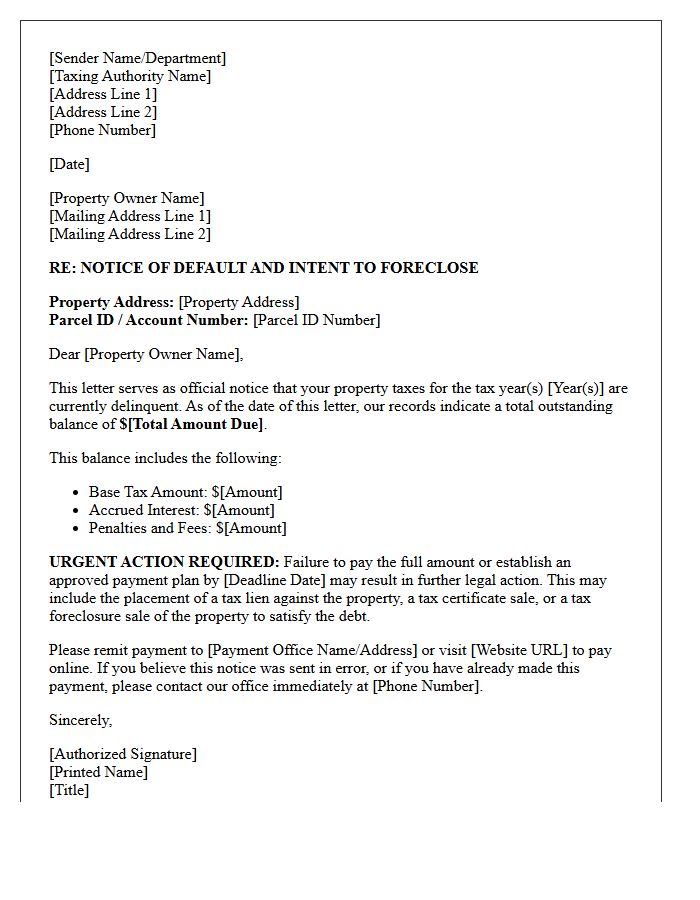
A Notice of Default is a formal legal warning issued by a government authority when property taxes remain unpaid. This document signifies that the tax delinquency has triggered the foreclosure process, placing your property ownership at severe risk. It outlines the total debt owed, including accrued interest and late penalties. To prevent a tax sale or public auction, owners must pay the full amount or negotiate a repayment plan by the specified deadline. Promptly addressing this notice is essential to protecting your real estate equity and avoiding permanent loss of the asset.
Mortgage Lender Letter Regarding Delinquent Property Tax Default
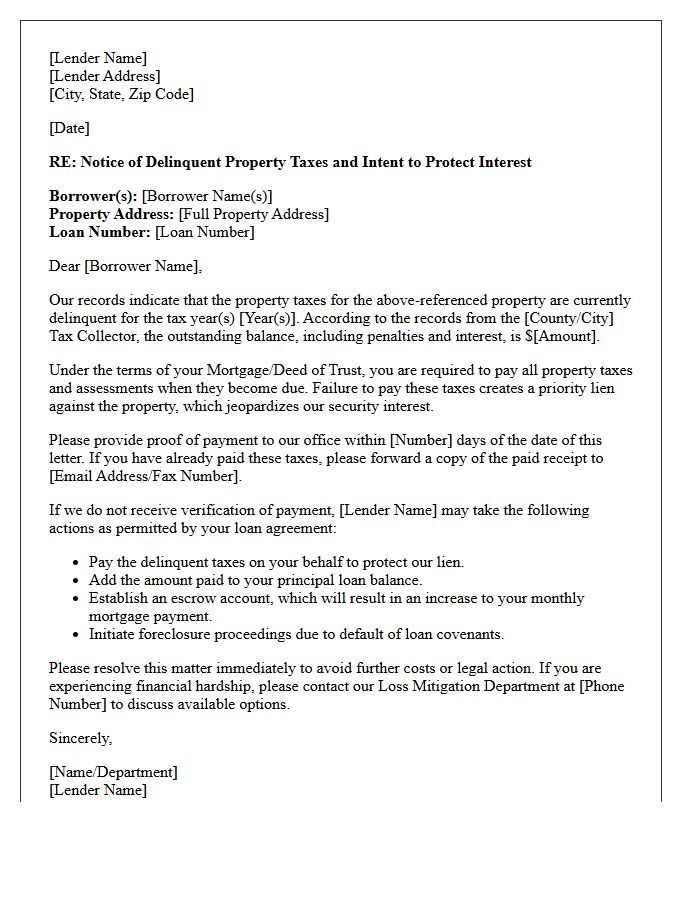
A mortgage lender letter regarding delinquent property taxes is a formal notice that your tax default jeopardizes the loan agreement. Since unpaid taxes create a priority lien that supersedes the mortgage, lenders may pay the balance themselves to protect their collateral. This typically results in an escrow shortage, significantly increasing your monthly payments or triggering foreclosure proceedings. Homeowners must provide proof of payment immediately or negotiate a repayment plan to resolve the delinquency and avoid legal action against the property title.
Delinquent Property Tax Notice of Default Letter
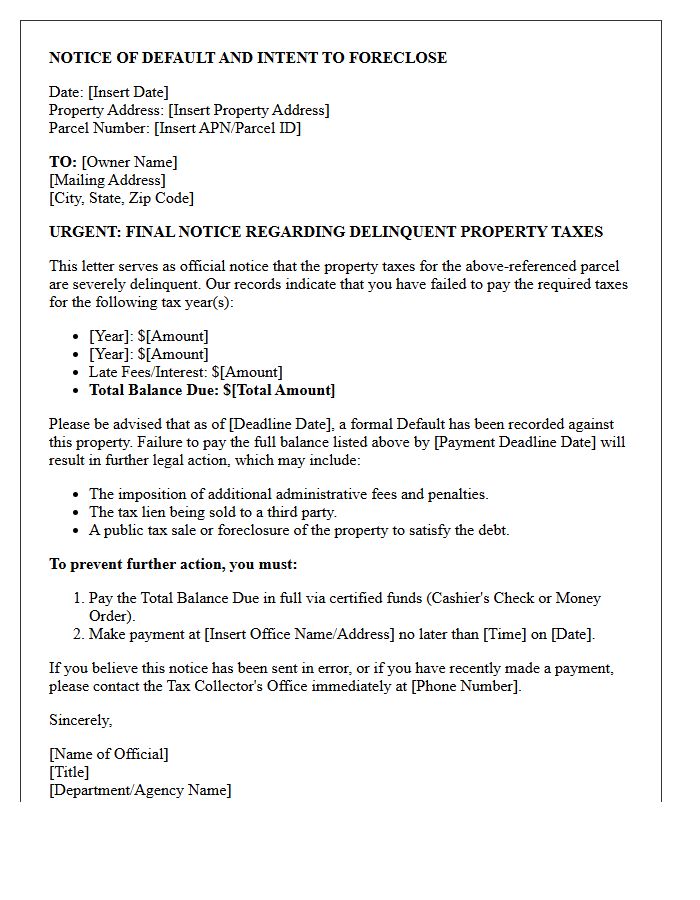
Receiving a Delinquent Property Tax Notice of Default Letter is a formal warning that your real estate taxes are past due. This legal notification indicates that the government has initiated a tax lien or foreclosure process against your property. To prevent a public auction or loss of ownership, you must pay the outstanding balance, including accrued interest and penalties, by the specified deadline. It is crucial to contact your local tax collector immediately to discuss repayment plans or exemptions to protect your equity and legal rights.
Property Tax Delinquency and Mortgage Default Warning Letter
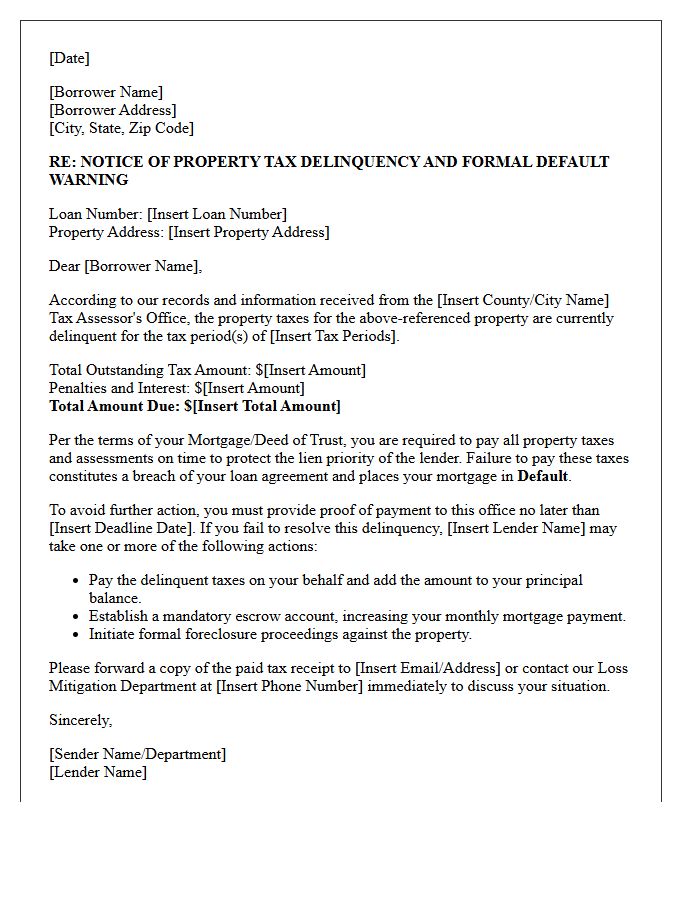
A property tax delinquency and mortgage default warning letter is a formal notice stating that unpaid taxes have triggered a breach of your loan agreement. Lenders issue these alerts because tax liens take seniority over mortgages, risking their collateral. To avoid foreclosure, homeowners must settle the debt immediately or arrange a payment plan. Ignoring this document allows the bank to pay the taxes themselves and add the cost to your balance, often leading to accelerated default and legal action to repossess the home.
Final Notice Letter for Defaulted Property Taxes on Mortgaged Property
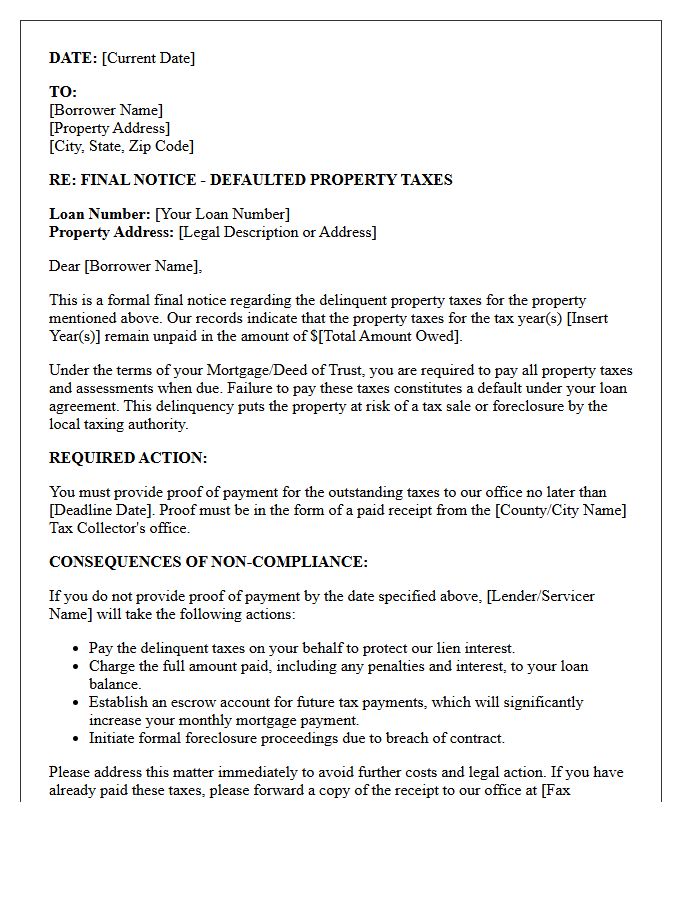
Receiving a final notice for defaulted property taxes on a mortgaged home is a critical legal warning. This document signifies that the taxing authority may initiate a tax sale or foreclosure to recoup unpaid debts. Because most mortgages include an escrow agreement, your lender might pay the taxes themselves to protect their lien, subsequently increasing your monthly payments or declaring a mortgage default. To avoid losing your property, you must immediately contact the tax collector or your loan servicer to arrange a payment plan or settle the delinquent balance full.
Letter of Default Notice for Unpaid Property Taxes
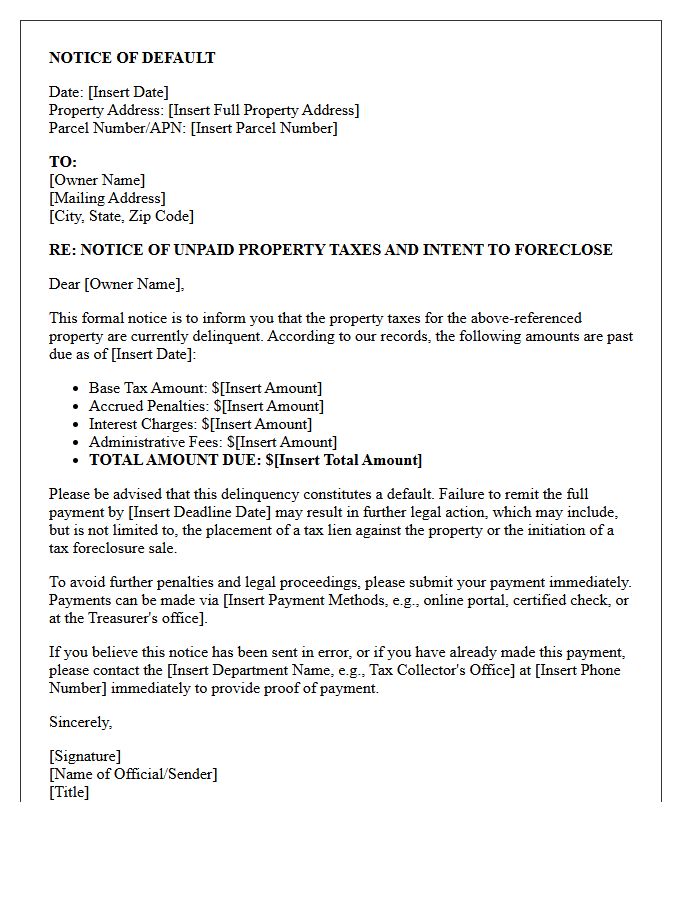
A Letter of Default Notice is a formal legal warning issued when property taxes remain delinquent. Receiving this document signifies that the taxing authority has initiated the foreclosure process to recover unpaid debts. It outlines the total balance due, including accrued interest and penalties, while providing a strict deadline for payment. Ignoring this notice risks the loss of ownership through a tax sale or public auction. To protect your property, you must promptly pay the arrears or negotiate a repayment plan with the local tax assessor's office immediately.
Mortgage Default Letter for Delinquent Property Tax Obligations
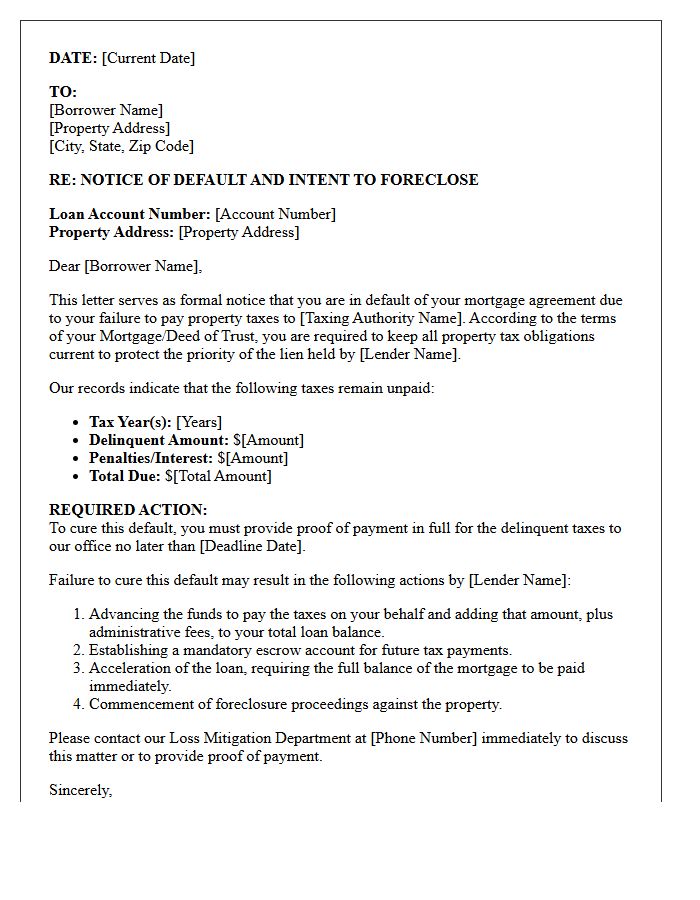
A mortgage default letter regarding delinquent property taxes serves as a formal notice that your lender may initiate foreclosure. Since most mortgages include an escrow requirement, failing to pay taxes creates a superior lien that jeopardizes the bank's collateral. Receiving this letter means you have breached your loan agreement. To protect your home, you must provide proof of payment or negotiate a repayment plan immediately. Ignoring this document allows the lender to pay the debt on your behalf and demand full reimbursement, often leading to increased monthly payments or legal action.
Notice of Mortgage Default and Delinquent Property Tax Letter
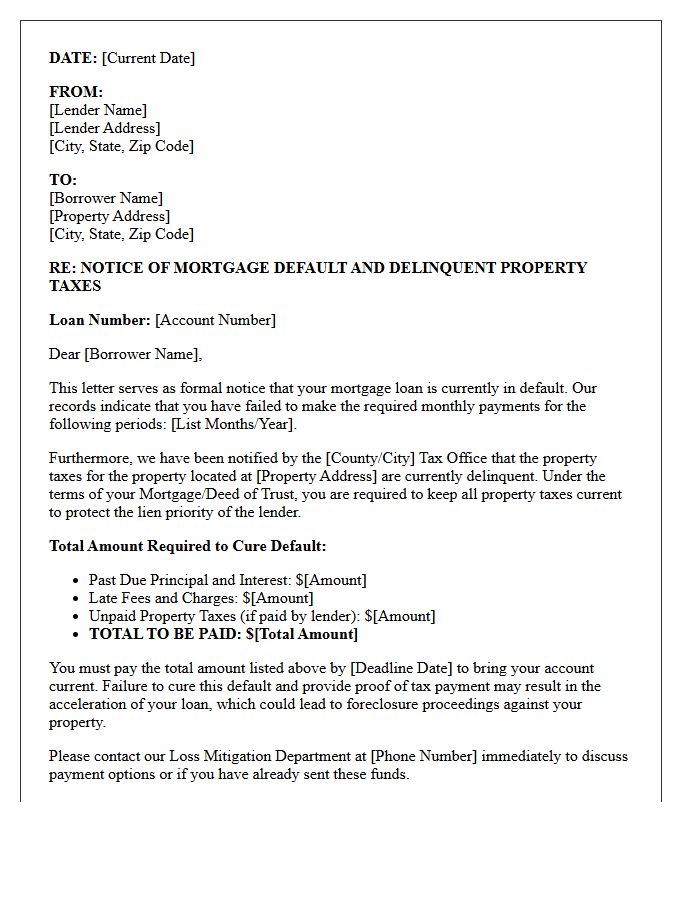
Receiving a Notice of Mortgage Default or a delinquent property tax letter is a critical legal warning that your property is at risk of foreclosure. These documents signify a breach of contract or statutory obligation, triggering a specific grace period to resolve the debt. To protect your homeownership, you must immediately contact your lender or local tax authority to discuss repayment plans or loss mitigation options. Ignoring these notices allows the legal process to accelerate, eventually leading to a public auction and the loss of your home equity.
Delinquent Tax Default Notice Letter From Mortgage Lender
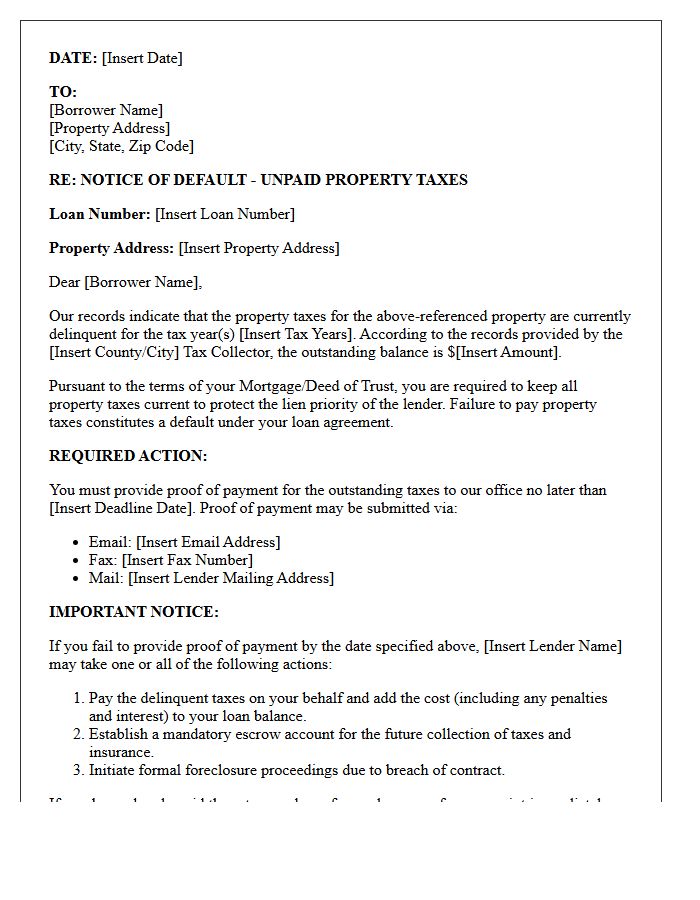
A delinquent tax default notice is a critical warning from your mortgage lender indicating that unpaid property taxes have breached your loan agreement. Since unpaid taxes create a prior lien that supersedes the mortgage, lenders issue this notice to protect their collateral. Failure to resolve the debt can trigger an acceleration clause, demanding immediate full repayment of the loan. To avoid foreclosure, homeowners must promptly pay the taxing authority or negotiate a repayment plan, as the lender may otherwise pay the balance and add it to your monthly escrow obligations.
Official Letter of Notice of Default for Delinquent Property Taxes
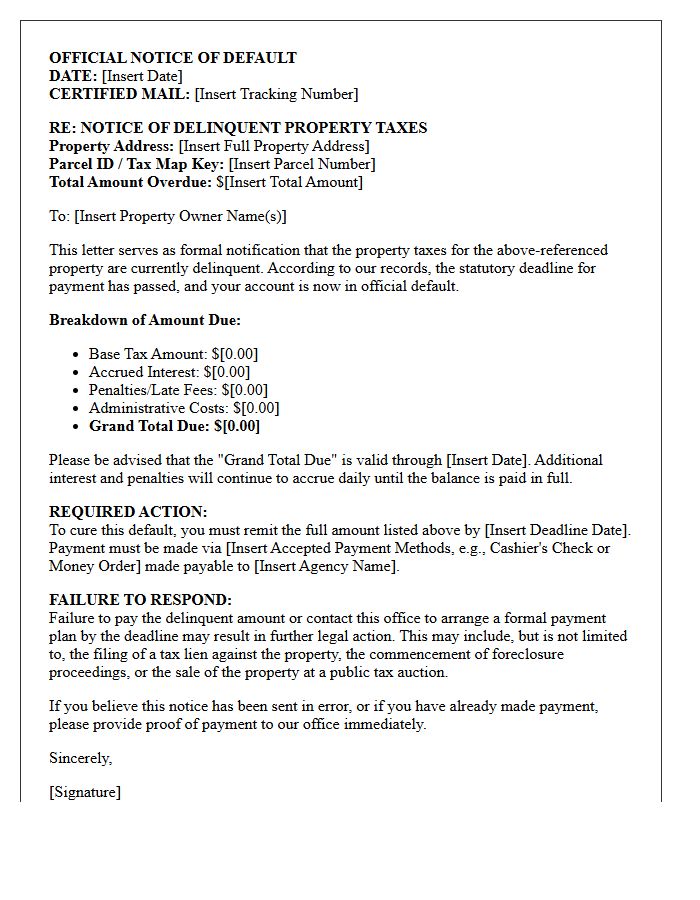
An official Notice of Default for delinquent property taxes is a formal legal warning issued when a homeowner fails to pay municipal taxes. This document serves as the final step before the government initiates a tax foreclosure or tax sale process to recover unpaid debts. It specifies the total amount owed, including accrued interest and penalties, and provides a strict deadline for payment. To protect your ownership rights and prevent the loss of your home, you must prioritize immediate legal action or establish a formal payment plan with local authorities.
Property Tax Default Warning Letter for Mortgage Borrowers
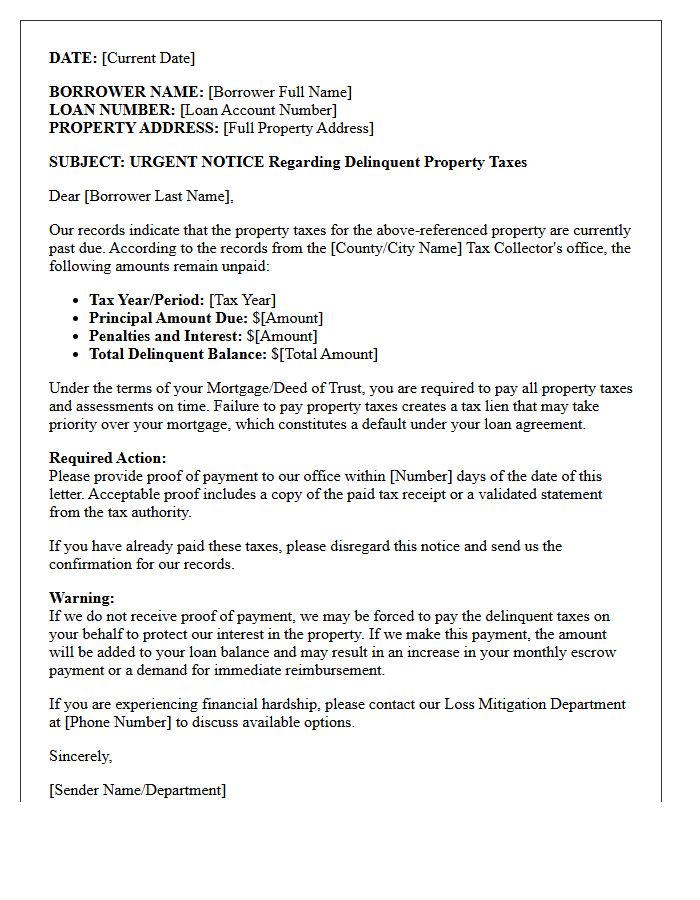
A Property Tax Default Warning Letter is a critical notice from your mortgage lender indicating that unpaid property taxes are threatening their legal interest in the home. Because tax liens typically take priority over mortgages, the lender may issue a Notice of Default to protect the collateral. To prevent foreclosure, borrowers must immediately pay the delinquency or establish an escrow impound account. Ignoring this warning allows the lender to advance funds to the county and demand immediate reimbursement, potentially accelerating the loan or initiating legal action against the homeowner.
Action Required Letter for Delinquent Property Tax Default
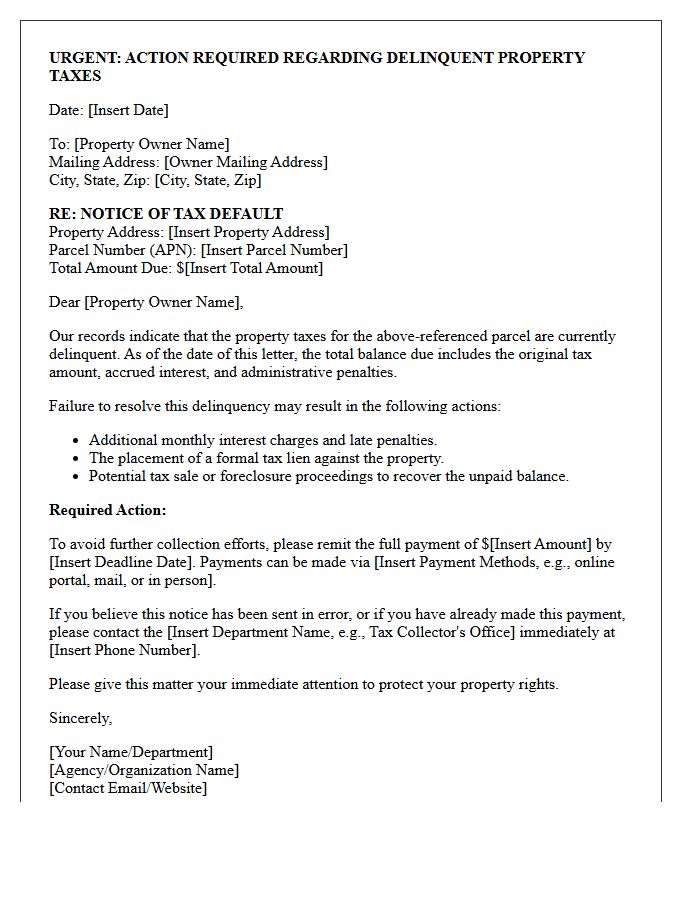
Receiving an Action Required Letter signifies that your real estate taxes are severely overdue, entering a state of tax default. This formal notice is a final warning that the government may initiate a tax sale or foreclosure to recover unpaid balances. To protect your property rights, you must immediately pay the delinquent amount or establish a formal payment plan. Ignoring this document leads to the loss of ownership and additional legal fees. Urgent redemption is necessary to halt the enforcement process and secure your deed before the state-mandated deadline.
What is a Notice of Default for delinquent property taxes?
A Notice of Default is an official legal notification issued by a county tax collector or treasurer informing a property owner that their property taxes are severely past due. This document serves as a formal warning that the government has initiated the initial stages of the tax foreclosure or tax sale process.
How long do I have to pay after receiving a Notice of Default?
The timeline varies by state and local jurisdiction, but generally, owners have a "redemption period" ranging from a few months to several years. Failure to pay the full amount due, including interest and penalties, before the expiration of this period will result in the loss of the property through a public auction or tax deed sale.
What are the consequences of ignoring a tax delinquency notice?
Ignoring a Notice of Default will lead to the accrual of high interest rates, administrative fees, and legal penalties. Ultimately, the taxing authority will exercise its right to seize the property and sell it at a tax sale to recover the unpaid debts, which results in the owner losing all equity and titles to the home.
Can I set up a payment plan after receiving a Notice of Default?
In many jurisdictions, the tax collector's office offers installment agreements or partial payment plans to help owners avoid foreclosure. However, these programs typically must be entered into before a specific "Point of No Return" or the scheduled date of a tax sale; you must contact your local county treasurer immediately to negotiate these terms.
How can I stop a tax foreclosure once a Notice of Default is filed?
The most direct way to stop a tax foreclosure is to pay the delinquent balance in full, known as "redeeming" the property. Other options include applying for a property tax hardship waiver (if eligible), filing for bankruptcy to trigger an automatic stay, or selling the property to pay off the tax lien before the foreclosure auction occurs.

Comments