
A Reverse Mortgage Payoff Letter is an official document from your lender detailing the exact amount required to settle your loan balance. It includes the principal, interest, and any applicable fees. Obtaining this statement is a critical step when selling a home or refinancing to clear the debt. To help you get started, below are some ready to use template.
Image cover: Requesting a Reverse Mortgage Payoff Letter: Templates and Expert Guide
Letter Samples List
- Standard Reverse Mortgage Payoff Letter
- Heir Intent to Payoff Letter
- Estate Settlement Payoff Demand Letter
- Maturity Event Payoff Notice Letter
- Authorized Third-Party Payoff Request Letter
- Short Sale Payoff Approval Letter
- Deed in Lieu Payoff Agreement Letter
- Payoff Good Through Date Letter
- Updated Reverse Mortgage Payoff Letter
- Final Funds Receipt Confirmation Letter
- Release of Lien Payoff Letter
- Non-Recourse Limit Payoff Letter
- Refinance Transaction Payoff Letter
Standard Reverse Mortgage Payoff Letter
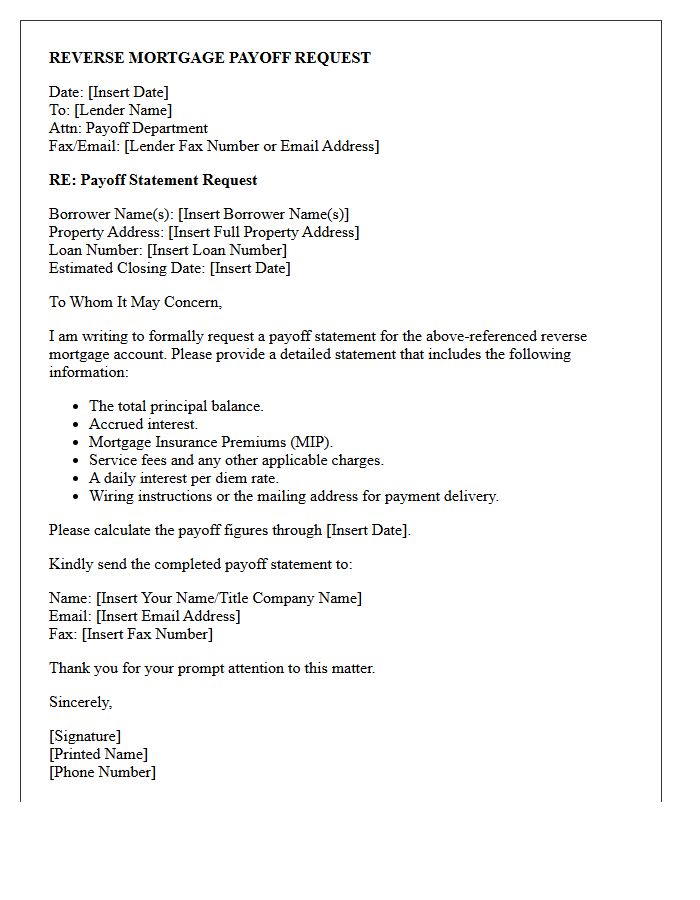
A Standard Reverse Mortgage Payoff Letter provides the exact balance required to satisfy the loan, including principal, mortgage insurance premiums, and accrued interest. It is essential for heirs or owners planning to sell the property or refinance. The document specifies a good-through date to account for daily interest accumulation. Obtaining this official statement ensures clear communication with the servicer and facilitates a smooth title transfer. Always verify the per diem rate to avoid shortfalls during the final settlement process.
Heir Intent to Payoff Letter
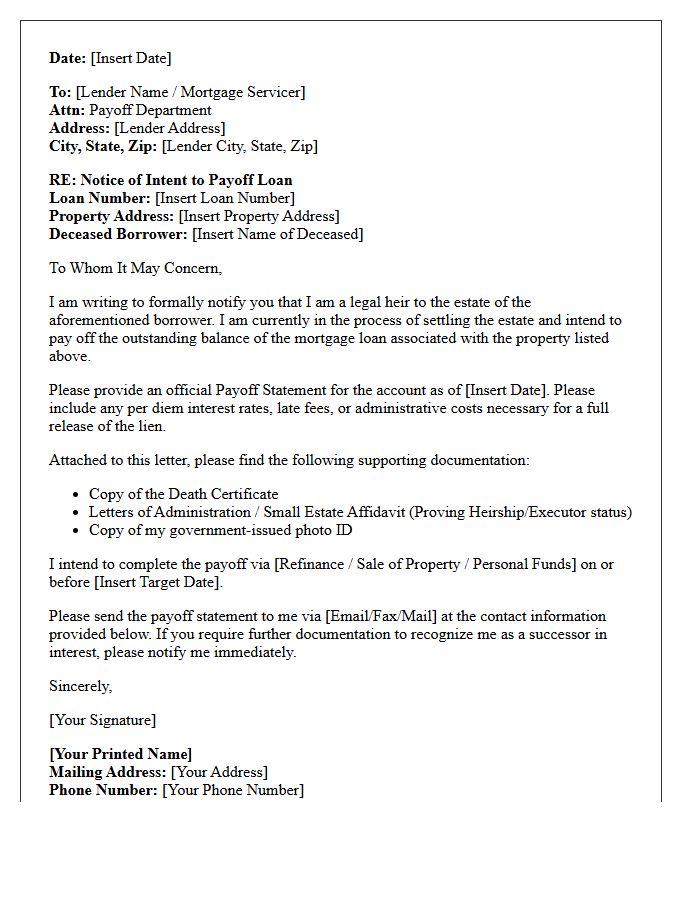
An Heir Intent to Payoff Letter is a formal legal document notifying a mortgage lender that a beneficiary intends to settle an outstanding debt. This is essential during probate to prevent foreclosure on a deceased person's property. The letter establishes a clear timeline for the redemption of the loan, often through refinancing or the sale of assets. Providing this written notice protects the estate's interest and ensures the lender pauses liquidation proceedings while the heir secures necessary financing to retain ownership of the home.
Estate Settlement Payoff Demand Letter
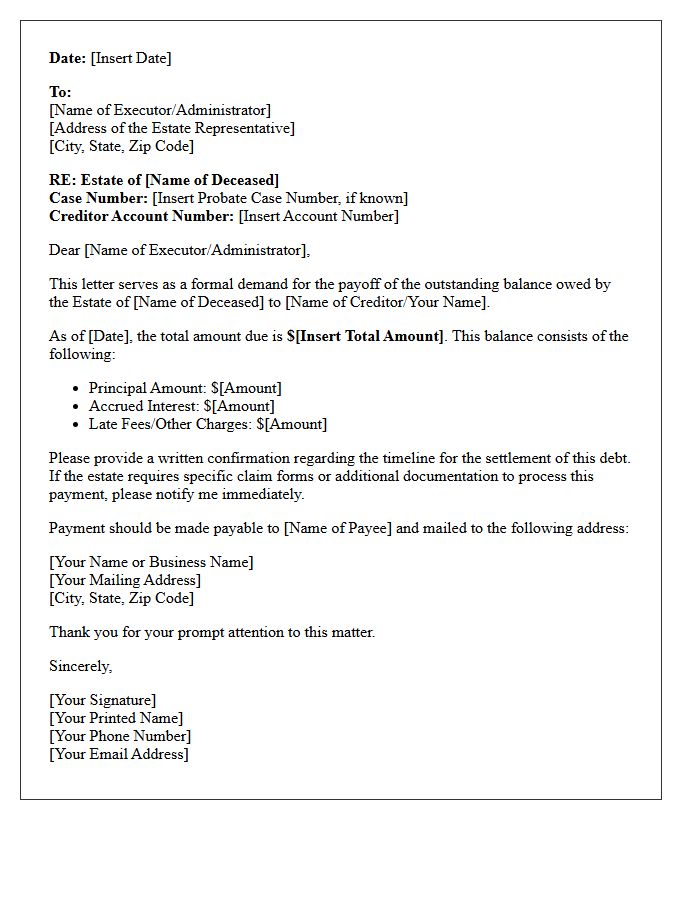
An Estate Settlement Payoff Demand Letter is a formal document sent to creditors to determine the exact outstanding balance of a decedent's debt. It is crucial for executors to request this to ensure legal compliance during probate. The letter protects the estate from overpayment and provides a clear financial snapshot for asset distribution. Obtaining a written payoff statement helps shield the executor from personal liability by establishing an official record of satisfied obligations before the final inheritance is disbursed to beneficiaries.
Maturity Event Payoff Notice Letter
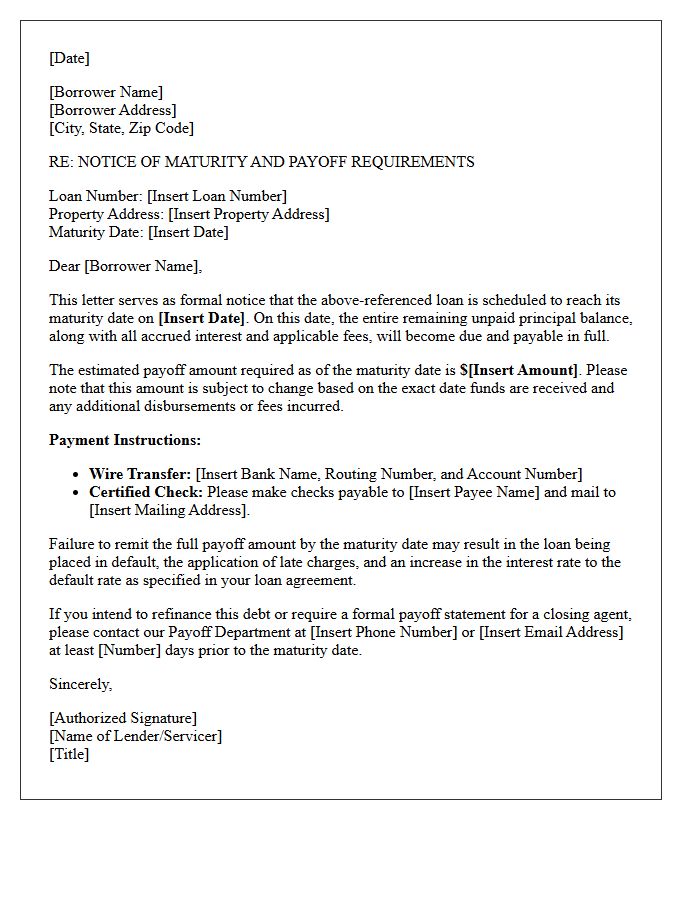
A Maturity Event Payoff Notice Letter is a formal document issued by a lender when a loan reaches its final due date. It specifies the total outstanding balance, including principal, accrued interest, and applicable fees required to fully satisfy the debt. This notice is critical for borrowers to ensure timely repayment and avoid default penalties. Receiving this letter signifies the end of the credit term, necessitating immediate action to coordinate the final wire transfer or payment method to clear the obligation and release any underlying collateral.
Authorized Third-Party Payoff Request Letter
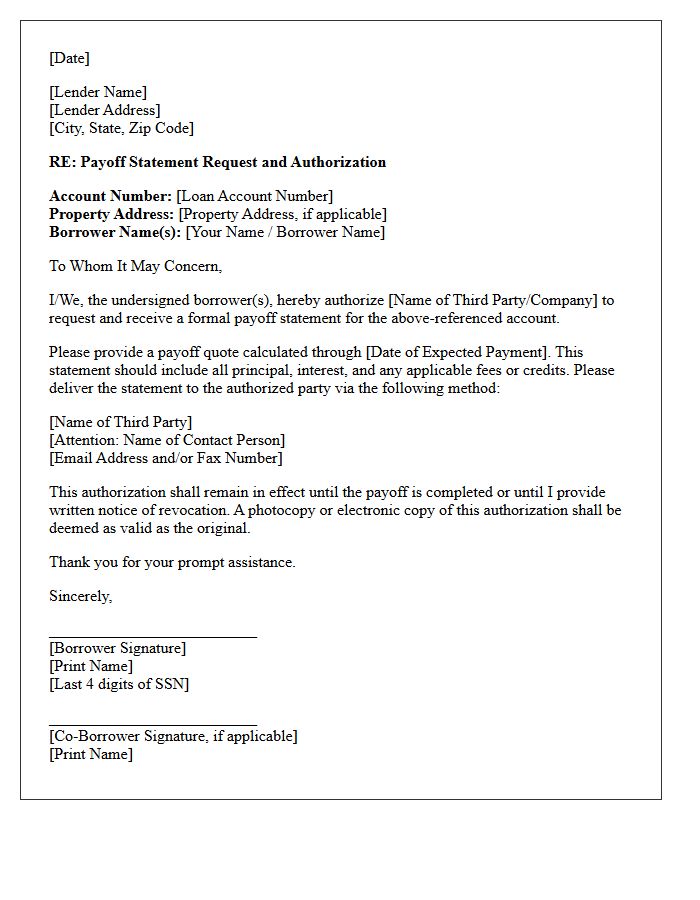
An Authorized Third-Party Payoff Request Letter is a formal document that permits a designated representative, such as a real estate agent or attorney, to obtain precise debt settlement figures from a lender. This authorization is essential for mortgage closings or vehicle title transfers to ensure privacy compliance. The letter must include the account number, the borrower's notarized signature, and clear contact details. Using this document streamlines the debt satisfaction process by allowing experts to coordinate final payments directly with financial institutions on the borrower's behalf.
Short Sale Payoff Approval Letter
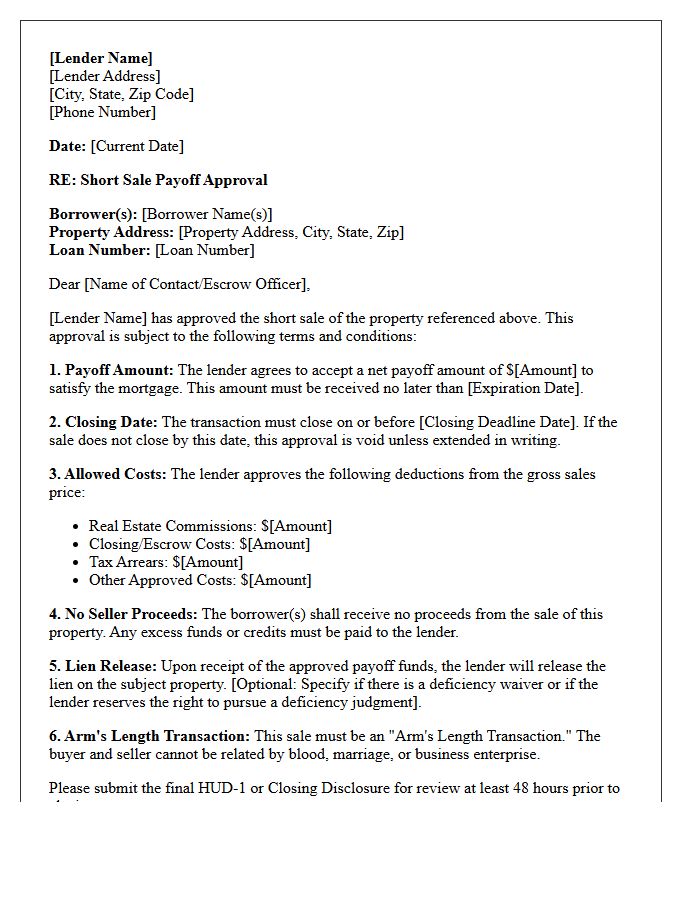
A Short Sale Payoff Approval Letter is a formal document issued by a mortgage lender consenting to the sale of a property for less than the outstanding loan balance. This critical letter outlines the specific net proceeds the bank will accept and provides a definitive deadline for closing. It must explicitly state whether the lender will waive the deficiency balance or pursue the homeowner for the remaining debt. Obtaining this written confirmation is the final milestone in preventing foreclosure and ensuring a clear title transfer to the new buyer.
Deed in Lieu Payoff Agreement Letter
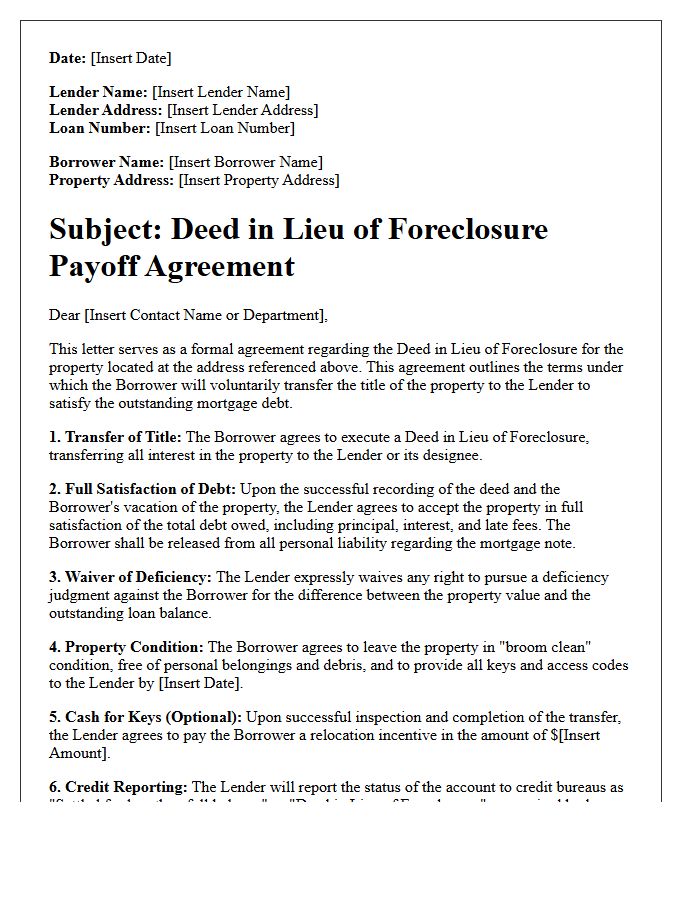
A Deed in Lieu Payoff Agreement Letter is a formal document where a lender agrees to accept the voluntary transfer of a property's title to satisfy a mortgage debt. This legal alternative to foreclosure helps homeowners avoid public legal proceedings while potentially mitigating credit score damage. The letter must clearly outline terms regarding the release of liability and specify if any deficiency balance is waived. Ensuring the agreement is legally binding protects the borrower from future collection efforts and formalizes the debt cancellation process effectively.
Payoff Good Through Date Letter
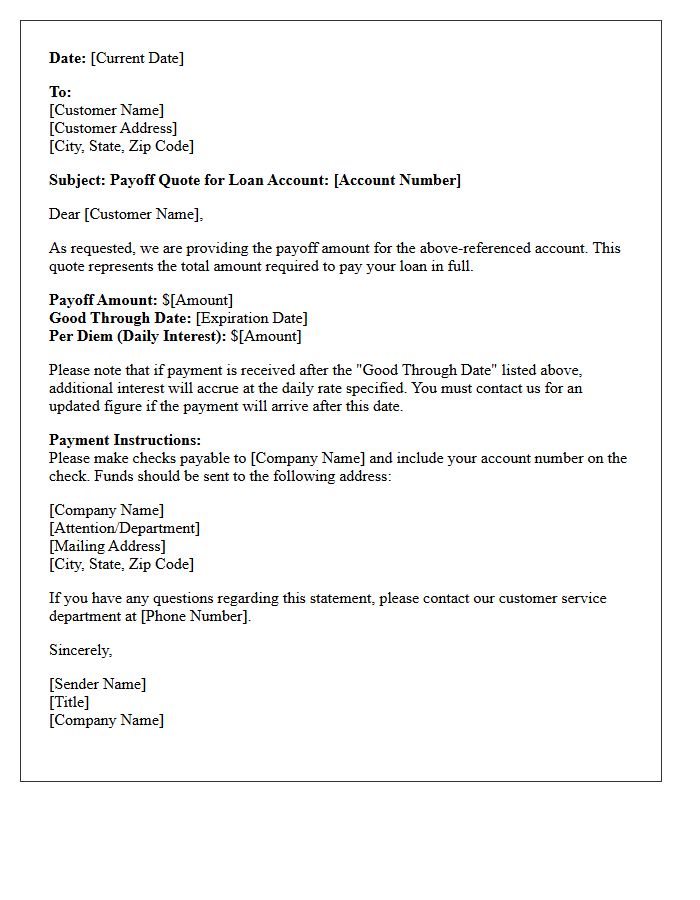
A Payoff Good Through Date Letter is a legal document specifying the exact amount required to settle a loan in full by a fixed deadline. It is essential for real estate closings and refinancing because it accounts for the principal balance plus daily accrued interest. If payment is received after this specific date, the quote expires, and a new calculation is necessary. Always verify the per diem rate to ensure your final payment covers the remaining debt and prevents late fees or processing delays.
Updated Reverse Mortgage Payoff Letter
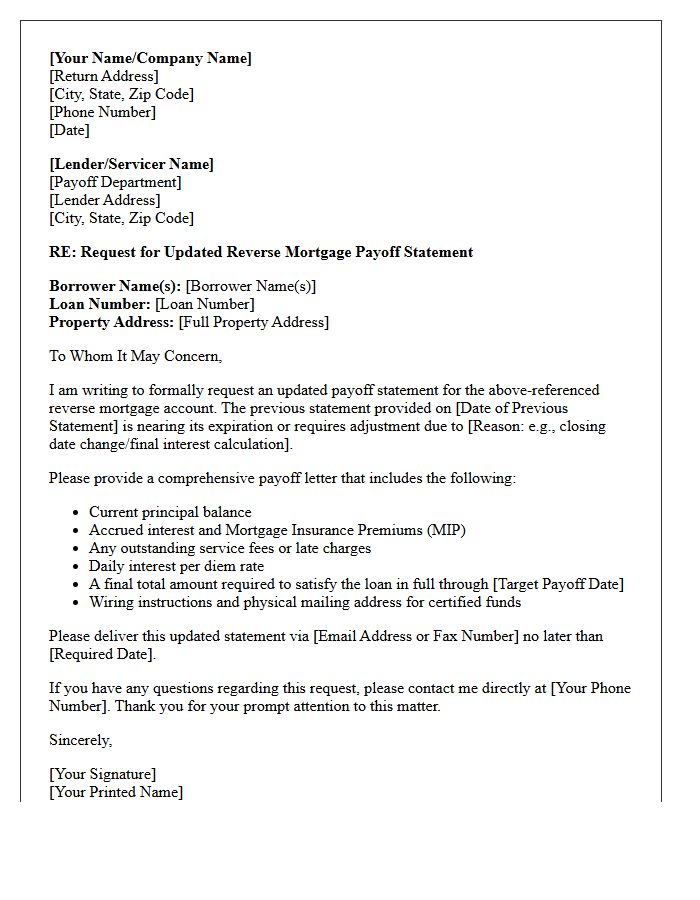
An updated reverse mortgage payoff letter provides the exact total balance required to fully satisfy the loan by a specific date. It is a legal document detailing the principal, accrued interest, and mortgage insurance premiums. Borrowers or heirs must request this current statement to ensure accurate repayment during a home sale or refinancing. Because interest accumulates daily, an older statement will be obsolete; always verify the "good through" date to avoid underpayment penalties and ensure a smooth title transfer.
Final Funds Receipt Confirmation Letter
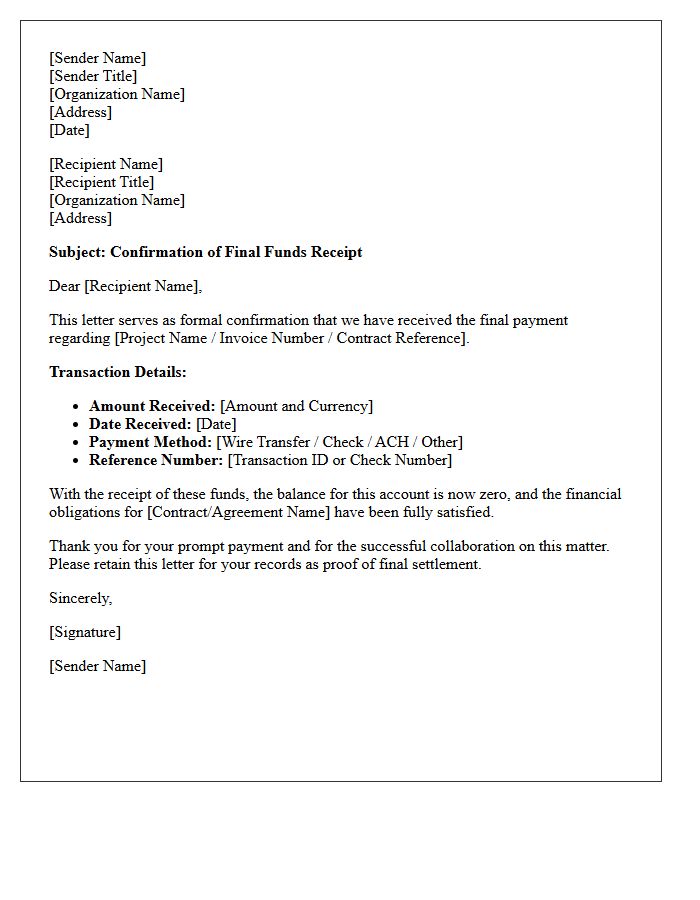
A Final Funds Receipt Confirmation Letter serves as a formal legal acknowledgment that all financial obligations have been met. This document is essential for closing transactions, such as real estate deals or service contracts, by providing written proof of payment. It protects both parties by preventing future disputes regarding outstanding balances. Ensure the letter includes the exact amount received, the date of transfer, and a clear statement of account closure to maintain accurate records and ensure complete legal compliance during the final settlement process.
Release of Lien Payoff Letter
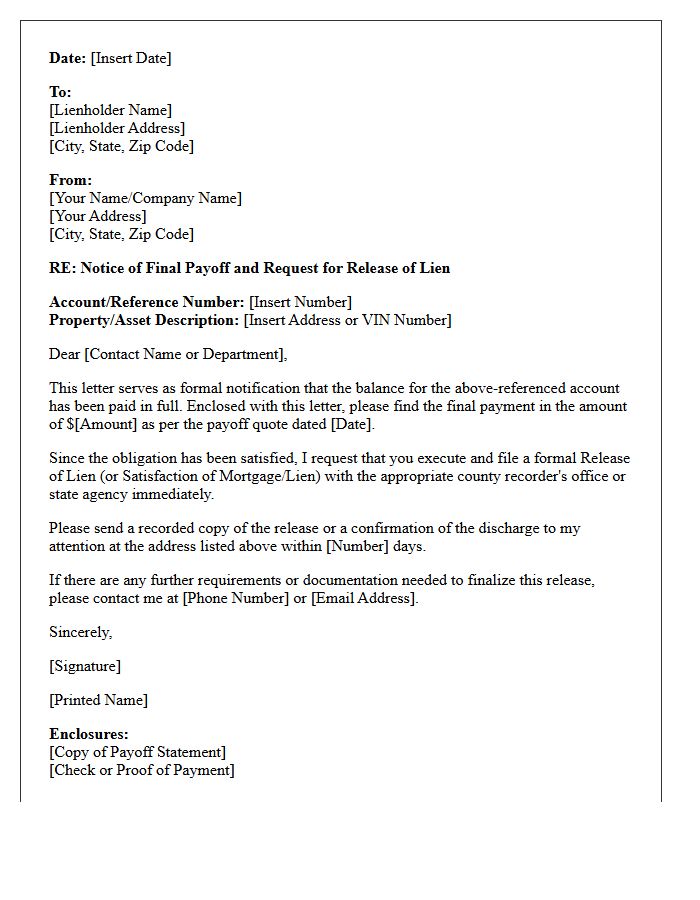
A Release of Lien Payoff Letter is a legal document confirming that a debt, typically a mortgage or vehicle loan, has been fully satisfied. Once the final payment is processed, the creditor issues this notice to formally extinguish the lien against the property. It is crucial for homeowners and car owners to obtain this record to clear the title, allowing for a future sale or transfer of ownership. Always verify that the document is recorded with the local county office to ensure the public record reflects your debt-free status.
Non-Recourse Limit Payoff Letter
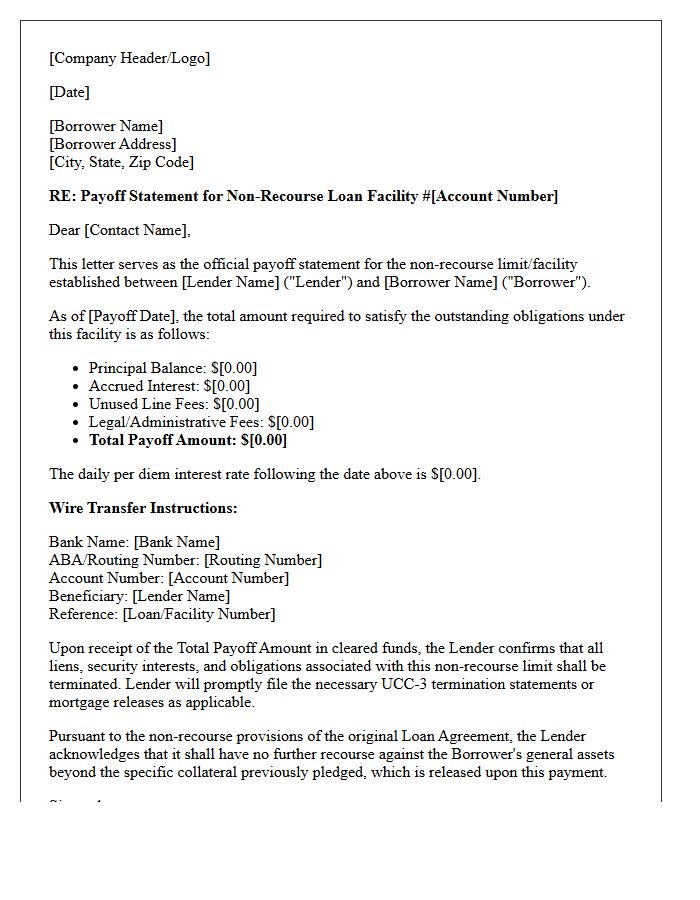
A Non-Recourse Limit Payoff Letter is a legal document confirming that a lender's recovery rights are restricted solely to the collateral. This letter specifies the exact amount required to satisfy a debt while ensuring the borrower maintains no personal liability for any remaining balance. It is a critical component in commercial real estate and structured finance, providing a clear release of lien once the defined payment is received. Obtaining this document protects your personal assets by formalizing that the debt obligation is fully settled without further recourse against the individual or parent entity.
Refinance Transaction Payoff Letter
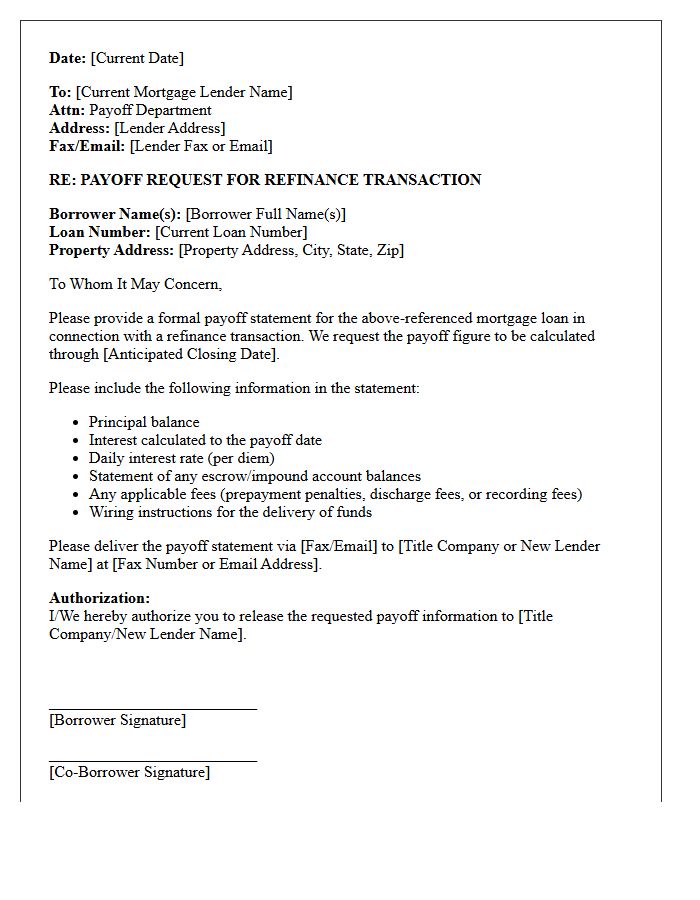
A Refinance Transaction Payoff Letter is a formal document from your current lender detailing the exact amount required to fully satisfy your mortgage. It includes the outstanding principal balance, daily interest charges, and any applicable statement fees. This document is essential for the closing agent to ensure the previous lien is cleared correctly. Always verify the expiration date on the letter, as a new statement is necessary if the closing is delayed, ensuring the final debt settlement is accurate and complete.
How do I request a reverse mortgage payoff letter?
To request a payoff letter, the borrower or their authorized representative must contact the loan servicer's customer service department directly. You will typically need to provide the property address, loan number, and a specific "good-through" date for the final calculation.
What information is included in a reverse mortgage payoff statement?
A reverse mortgage payoff statement includes the current principal balance, accrued interest, mortgage insurance premiums (MIP), and any service fees or late charges. It also provides wiring instructions and a daily interest rate for calculations beyond the statement date.
How long does it take to receive a payoff letter from a reverse mortgage servicer?
Most reverse mortgage servicers provide the payoff letter within 3 to 5 business days after receiving a formal request. However, if the loan is in probate or foreclosure, the processing time may be longer depending on the servicer's legal department.
Can an heir request a payoff letter for a reverse mortgage?
Yes, an heir can request a payoff letter, but they must first provide legal documentation to the servicer proving they are the authorized successor-in-interest. This usually includes a death certificate and letters of administration or a will.
Does a reverse mortgage payoff letter include the 95% rule for heirs?
While a standard payoff letter shows the full balance due, heirs of a HECM (Home Equity Conversion Mortgage) have the right to pay off the loan for the lesser of the full balance or 95% of the home's current appraised value. You may need to request a specific "short payoff" evaluation to reflect this amount.


Comments