
Managing your mortgage effectively requires knowing how to keep your interest rate when changing properties. A Rate Lock Transfer Request Letter is a formal document sent to your lender to move an existing rate lock from one property to another. This process can save thousands in financing costs. To help you get started, below are some ready to use template options.
Image cover: Direct Mortgage Rate Lock Transfer Request: Professional Letter Samples and Templates
Letter Samples List
- Standard Rate Lock Transfer Request Letter
- Property Address Change Rate Lock Transfer Letter
- Broker to Lender Rate Lock Transfer Request Letter
- Loan Program Change Rate Lock Transfer Letter
- Borrower Reassignment Rate Lock Transfer Request Letter
- Conventional to FHA Rate Lock Transfer Letter
- Rate Lock Transfer and Extension Request Letter
- New Construction Rate Lock Transfer Request Letter
- Hardship Exception Rate Lock Transfer Letter
- Appraisal Discrepancy Rate Lock Transfer Request Letter
- Conforming to Jumbo Rate Lock Transfer Letter
- Correspondent to Wholesale Rate Lock Transfer Letter
Standard Rate Lock Transfer Request Letter
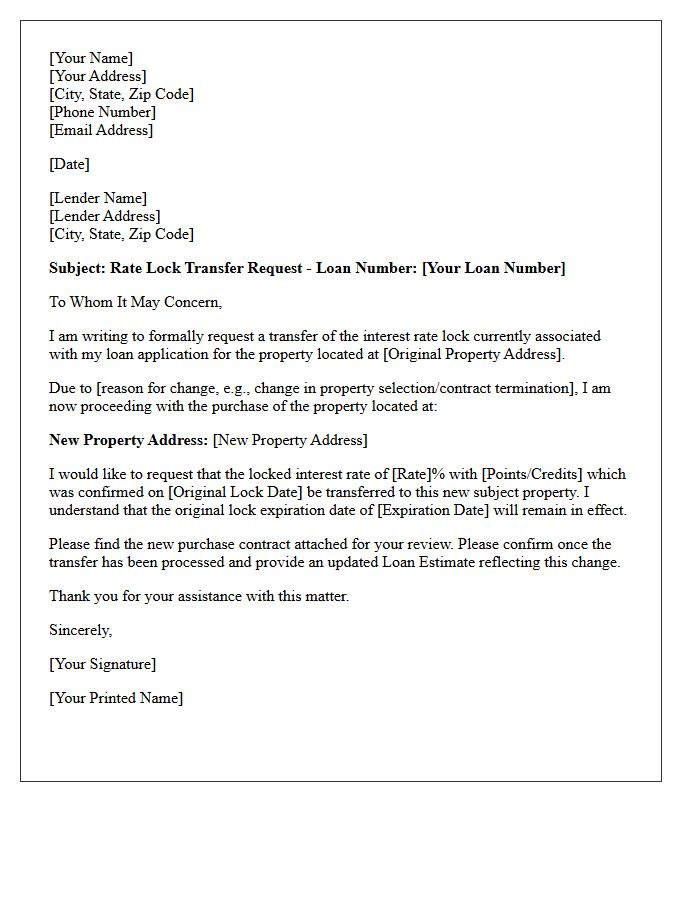
A Standard Rate Lock Transfer Request Letter is a formal document used to move an existing interest rate guarantee from one property to another. This typically occurs when a collateral substitution is necessary due to a change in the purchase contract. Borrowers must ensure the new property meets all original underwriting guidelines. Timely submission is critical to preserve favorable financing terms and avoid expiration. This letter protects the buyer against market volatility during the mortgage application process, ensuring consistency in monthly payment estimates and overall loan costs.
Property Address Change Rate Lock Transfer Letter
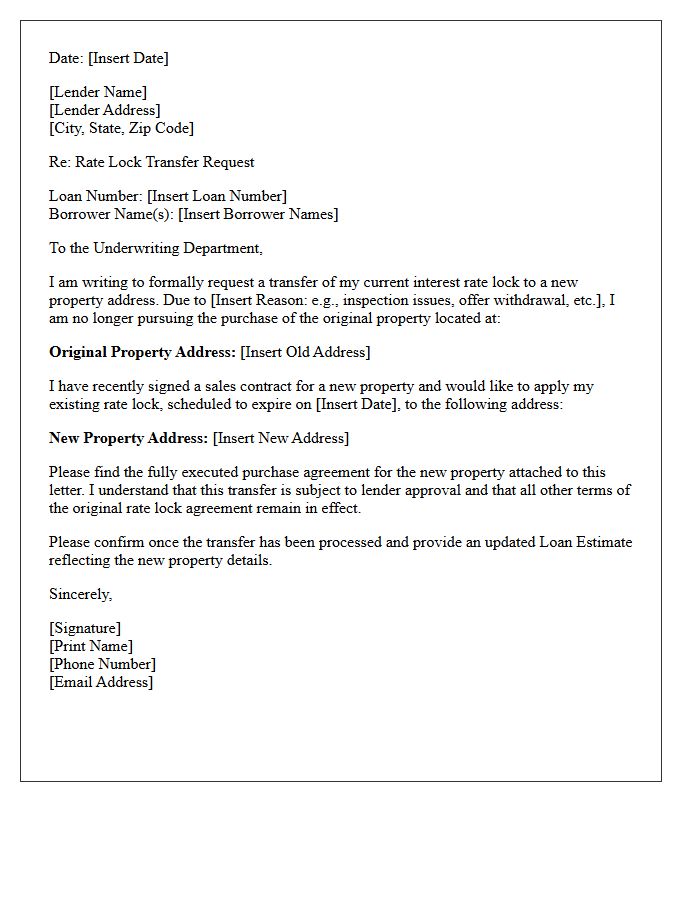
A Property Address Change Rate Lock Transfer Letter is a vital document used when a homebuyer changes their target property after securing a mortgage rate. This letter formally requests the lender to transfer the existing interest rate lock to a new collateral address. It must be submitted promptly to ensure the rate lock agreement remains valid under the same terms. Since lenders often have strict policies regarding property swaps, providing this written notification helps maintain financial stability and prevents potential expiration or costly rate increases during your home purchase journey.
Broker to Lender Rate Lock Transfer Request Letter
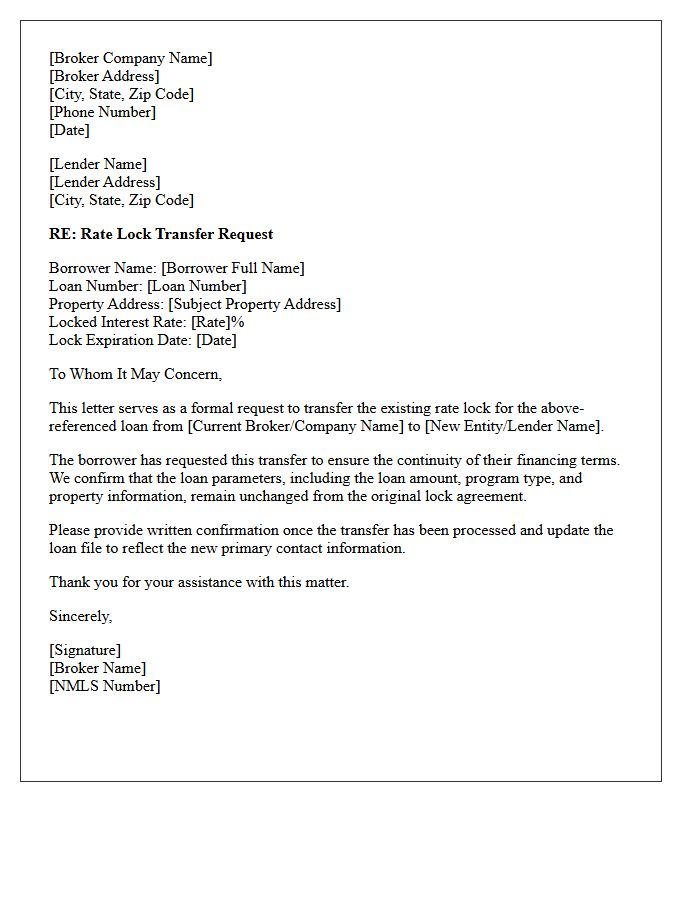
A Broker to Lender Rate Lock Transfer Request Letter is a formal document used to move an existing interest rate lock from one financial institution to another. This process typically occurs when a mortgage broker changes the underlying wholesale lender to secure better terms for the borrower. The letter must clearly state the loan details, the current lock expiration date, and the specific reason for the transfer. It ensures continuity of pricing, preventing the borrower from losing a favorable rate due to administrative shifts during the home financing process.
Loan Program Change Rate Lock Transfer Letter
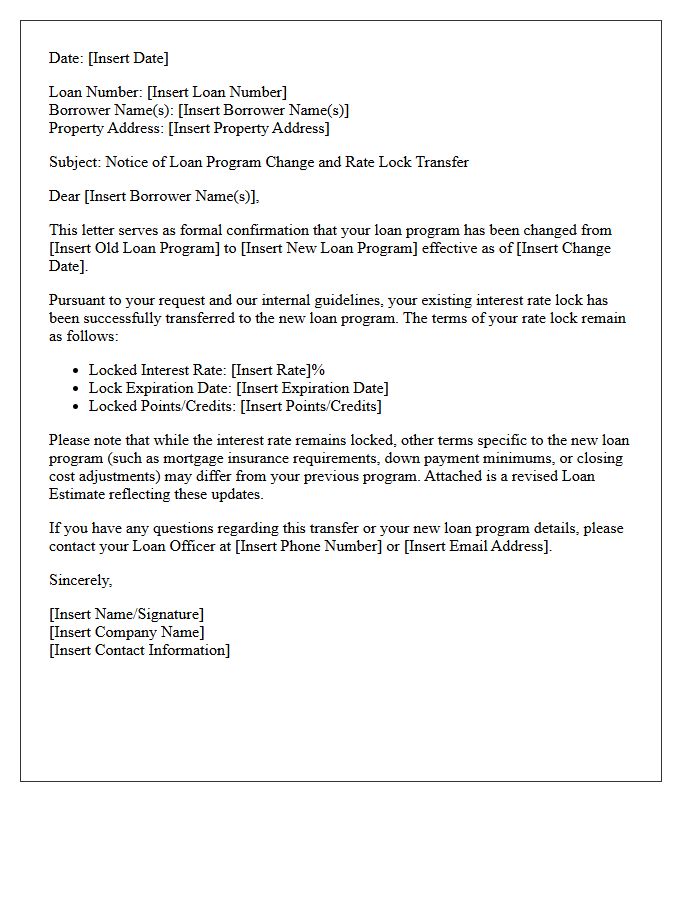
A Loan Program Change Rate Lock Transfer Letter is a formal document used when a borrower switches mortgage products while maintaining their original interest rate lock. This process ensures financial stability during underwriting updates. It is essential to confirm that both the old and new loan programs are compatible under the lender's specific lock-in policy. Borrowers must verify that the expiration date remains valid and that no unauthorized fees are added during the conversion. This letter protects your rate against market volatility during transitions between conventional, FHA, or VA loan structures.
Borrower Reassignment Rate Lock Transfer Request Letter
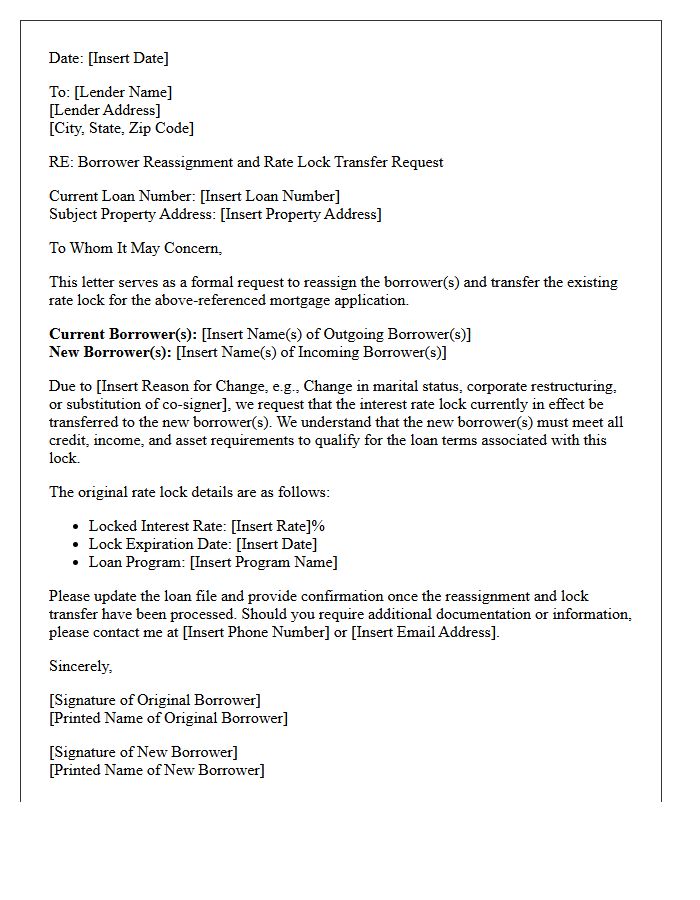
A Borrower Reassignment Rate Lock Transfer Request Letter is a formal document used to move an existing interest rate lock from one loan file to another. This typically occurs when a borrower changes properties or needs to restructure their financing while retaining their original rate commitment. For a successful transfer, the new loan must meet the lender's specific eligibility criteria and stay within original timeframe constraints. Submitting this request promptly ensures financial consistency and protects the borrower from market volatility during the mortgage application process.
Conventional to FHA Rate Lock Transfer Letter
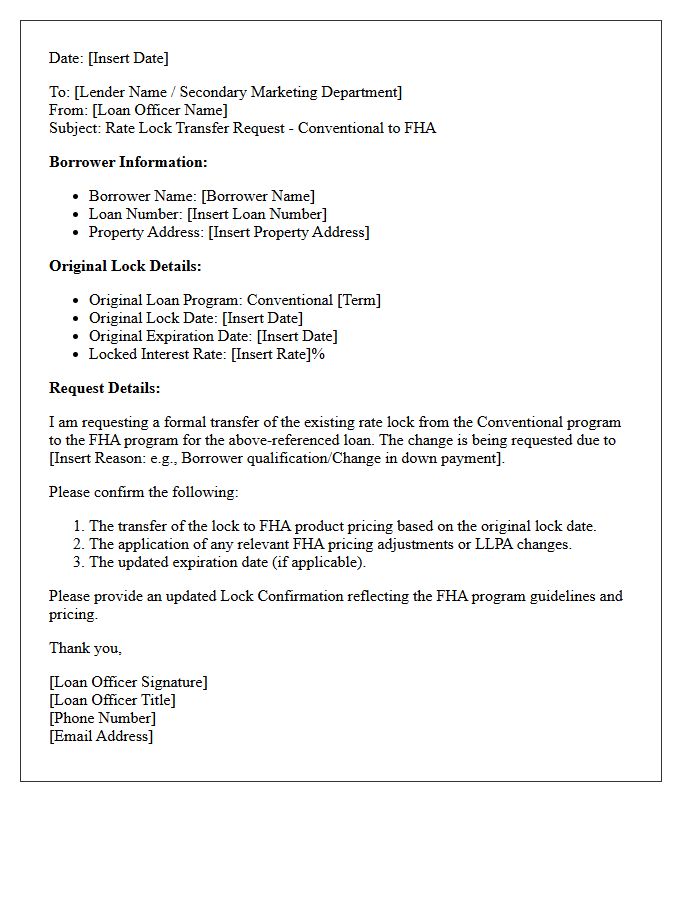
A Conventional to FHA Rate Lock Transfer Letter is a formal request to move a locked interest rate between different loan programs. The Rate Lock Transfer is essential when a borrower switches to an FHA loan due to credit or down payment requirements. Lenders must document this change to maintain pricing consistency while adhering to secondary market guidelines. It ensures the original lock terms remain valid under the new FHA case number, protecting the borrower from market volatility during the transition period.
Rate Lock Transfer and Extension Request Letter
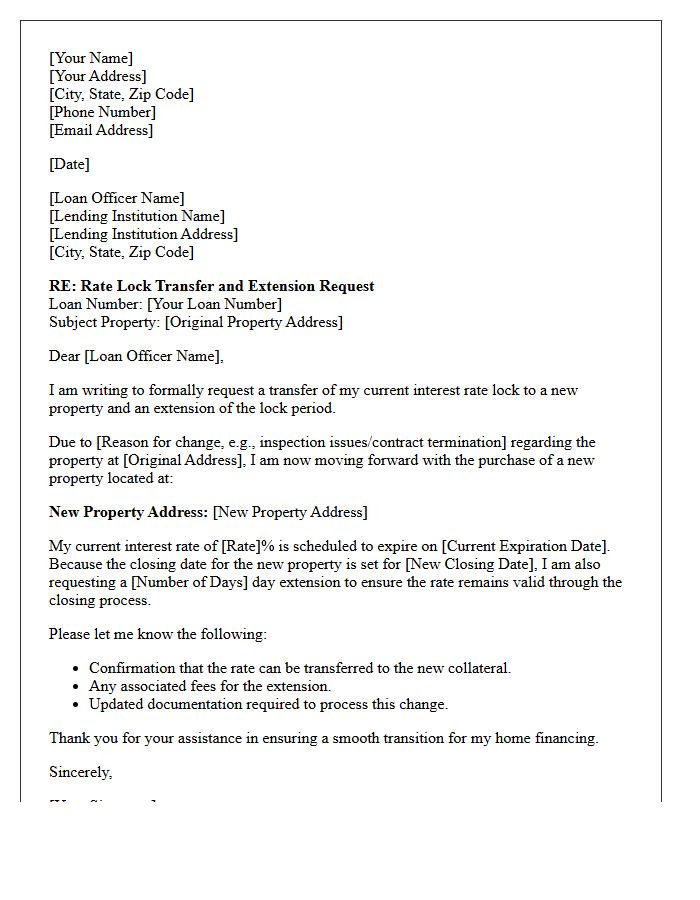
A Rate Lock Transfer and Extension Request Letter is a formal document used to protect your current interest rate when mortgage processing delays occur. It ensures the lender honors the original locked-in rate despite market fluctuations or property changes. To be effective, the letter must clearly state the loan application number, the specific expiration date, and the justification for the request. Timely submission is critical to avoid higher monthly payments. Always confirm whether the extension involves additional fees or if the delay was caused by the lender's internal administrative timeline.
New Construction Rate Lock Transfer Request Letter
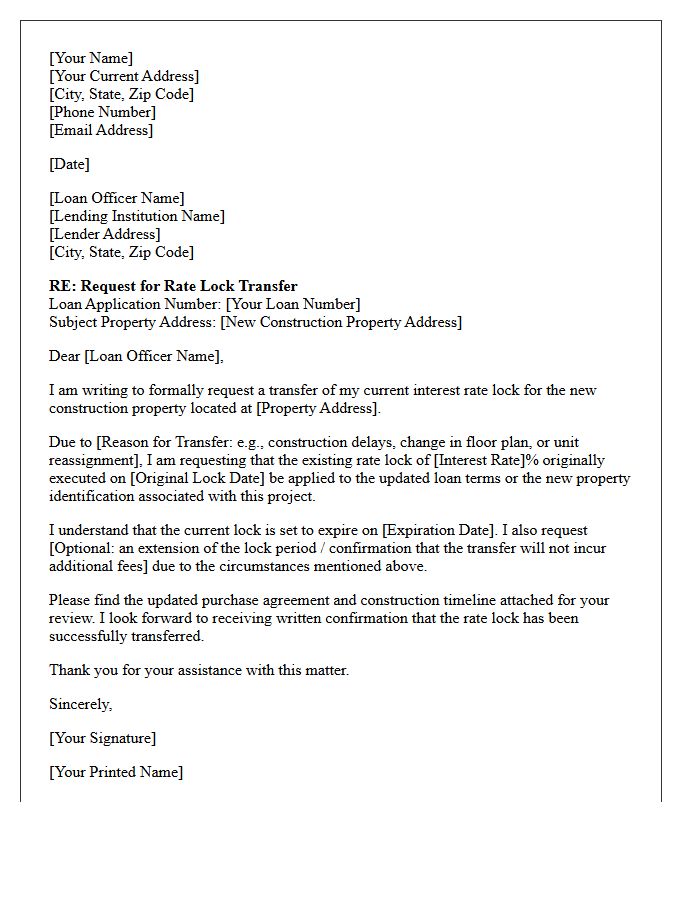
A New Construction Rate Lock Transfer Request Letter is a formal document used to move an existing mortgage interest rate to a different property. This process, often called a float-down or substitution, is crucial when a build is delayed or a buyer switches lots. Homeowners must submit this written request to their lender to maintain favorable financing terms. Ensuring the transfer eligibility is met prevents losing a lower rate in a rising market. Timely communication with your loan officer is essential to secure your financial commitment during the construction phase.
Hardship Exception Rate Lock Transfer Letter
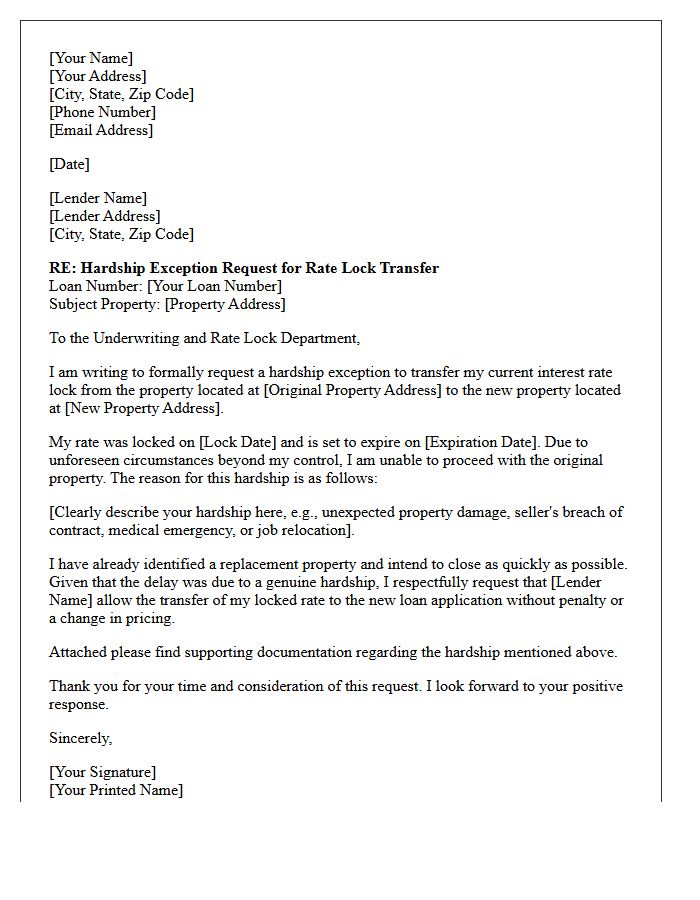
A Hardship Exception Rate Lock Transfer Letter is a formal request allowing borrowers to transfer a locked interest rate to a new property when unforeseen circumstances occur. This exception typically applies to situations like construction delays or natural disasters. It prevents financial loss by maintaining favorable financing terms despite a change in the original collateral. Lenders require documented proof of the hardship to approve the transfer. Understanding this process is vital for protecting your loan commitment during unpredictable real estate transitions.
Appraisal Discrepancy Rate Lock Transfer Request Letter
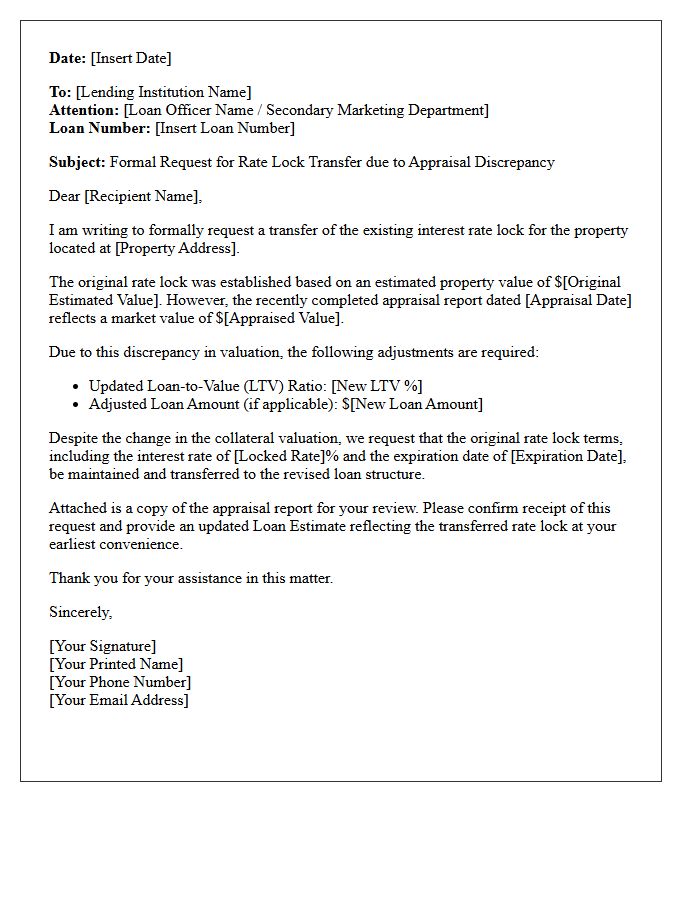
An Appraisal Discrepancy Rate Lock Transfer Request Letter is a formal document used when a property's appraised value falls below the expected price. This discrepancy often impacts the loan-to-value ratio, potentially jeopardizing the original interest rate agreement. Borrowers or lenders use this letter to request a lock transfer, ensuring the initial rate remains valid despite the valuation change. It provides essential justification and financial transparency to the underwriter, helping to maintain loan stability and prevent unexpected cost increases during the closing process.
Conforming to Jumbo Rate Lock Transfer Letter
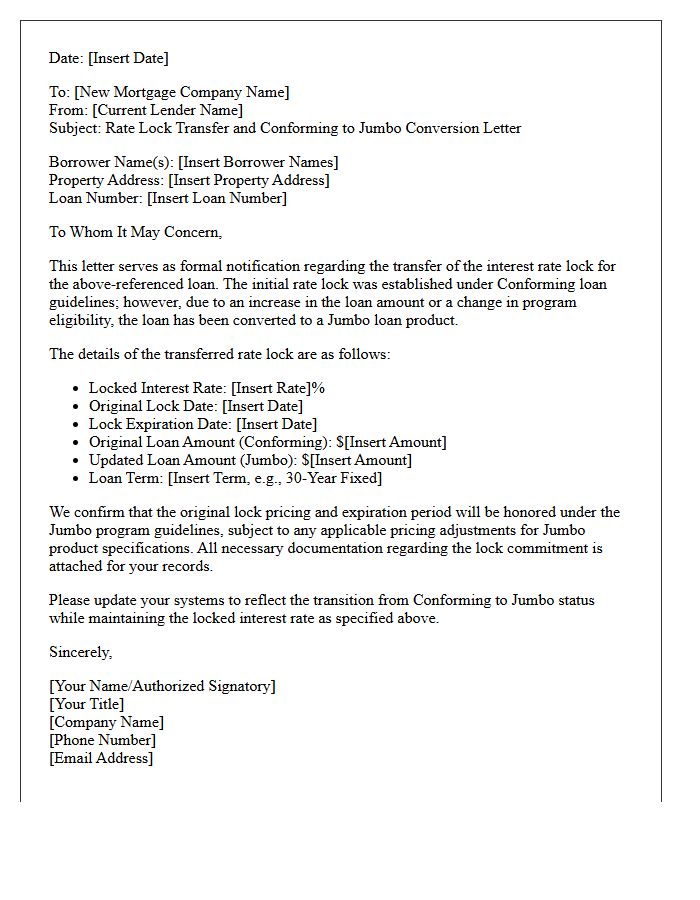
A Jumbo Rate Lock Transfer Letter is essential when switching lenders while maintaining an existing interest rate. It serves as formal documentation that the original investor or secondary market entity agrees to honor the locked terms. To ensure compliance, the letter must clearly state the loan amount, expiration date, and specific rate. Proper execution is vital because conforming to jumbo guidelines requires strict adherence to secondary market standards, ensuring the new lender accepts the transferred risk without financial penalties or rate increases for the borrower.
Correspondent to Wholesale Rate Lock Transfer Letter
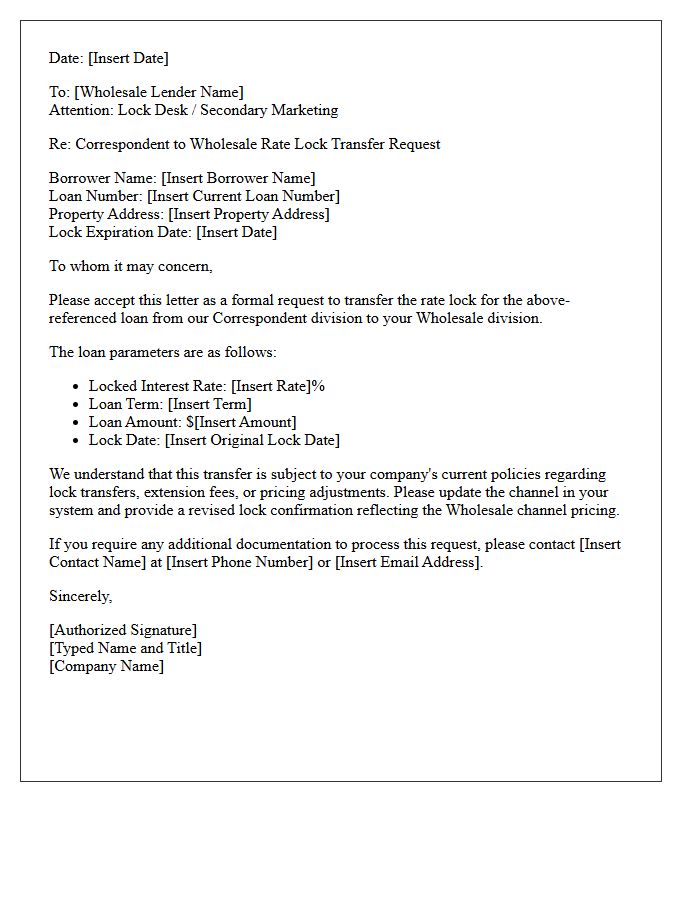
A Correspondent to Wholesale Rate Lock Transfer Letter is a formal document used when a mortgage loan originates with one lender but moves to another for underwriting. This legal agreement ensures that the original interest rate remains protected during the transition. It identifies the borrower, property, and specific lock expiration dates to prevent pricing discrepancies. Both parties must sign to confirm the transfer of financial responsibility. Understanding this process is vital for maintaining closing timelines and ensuring the borrower receives the promised market terms without unexpected rate increases during the handoff.
What is a Rate Lock Transfer Request Letter?
A Rate Lock Transfer Request Letter is a formal document submitted by a borrower to a mortgage lender requesting to move a previously guaranteed interest rate from one property or loan application to another.
When should I use a Rate Lock Transfer Request Letter?
You should use this letter if your original property purchase falls through or if you change loan programs and wish to retain the lower interest rate secured during your initial application period.
What key information must be included in a rate transfer request?
The letter must include the original loan application number, the locked interest rate, the expiration date of the current lock, the address of the new property, and a clear justification for the transfer.
Is a rate lock transfer guaranteed by the lender?
No, rate lock transfers are subject to lender policies and investor guidelines. Some lenders may require the new loan to have similar terms, and a transfer fee or "extension fee" may apply depending on the timing.
Can I transfer a rate lock to a different mortgage lender?
Generally, interest rate locks are non-transferable between different financial institutions. A Rate Lock Transfer Request Letter is typically used for internal transfers within the same lending institution.

Comments