
Safeguarding your household or workplace requires a comprehensive Severe Weather Preparedness Protocol to mitigate risks during extreme environmental events. Establishing clear evacuation routes, emergency communication plans, and survival supply kits ensures rapid response when disaster strikes. Prioritizing proactive safety measures significantly reduces vulnerability to unpredictable storms and life-threatening conditions. To help you get started, below are some ready to use template.
Image cover: Emergency Ready: Essential Severe Weather Protocols and Planning Templates
Letter Samples List
- Letter Regarding Hurricane Preparedness Guidelines for Tenants
- Winter Storm Warning and Facility Preparation Letter
- Letter Outlining Emergency Evacuation Routes and Procedures
- Balcony and Patio Securing Protocol Letter
- Letter Requiring Removal of Loose Exterior Items
- Emergency Contact Information Update Request Letter
- Shelter-in-Place Protocol Instruction Letter
- Letter Announcing Temporary Amenity Closures Due to Severe Weather
- Power Outage and Backup Generator Protocol Letter
- Post-Storm Property Damage Assessment Letter
- Letter Regarding Debris Cleanup and Hazard Avoidance
- Maintenance Request Protocol Following Severe Weather Letter
- Letter Confirming Resumption of Normal Property Operations
- Annual Severe Weather Preparedness Acknowledgment Letter
- Flood Zone Safety and Preparedness Advisory Letter
Letter Regarding Hurricane Preparedness Guidelines for Tenants
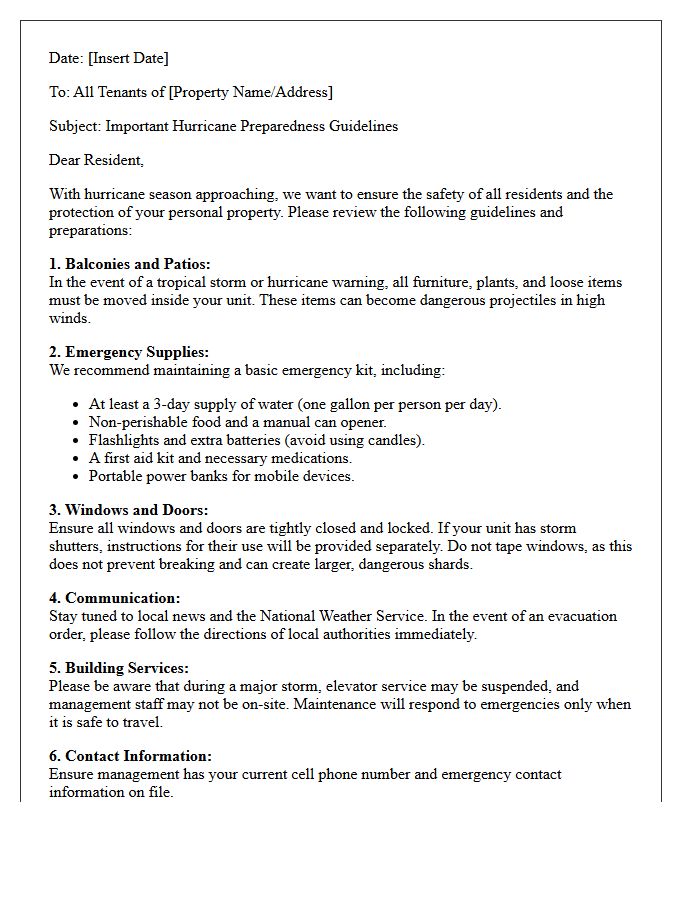
A formal letter regarding hurricane preparedness guidelines provides tenants with essential safety protocols before a storm. It outlines critical evacuation routes, emergency contact numbers, and procedures for securing windows or outdoor furniture. Landlords use this document to clarify responsibilities, such as when to activate storm shutters or report property damage. Understanding these instructions ensures tenant safety and minimizes potential liability. Residents must review these emergency procedures immediately to gather necessary supplies and protect their belongings effectively during extreme weather events.
Winter Storm Warning and Facility Preparation Letter
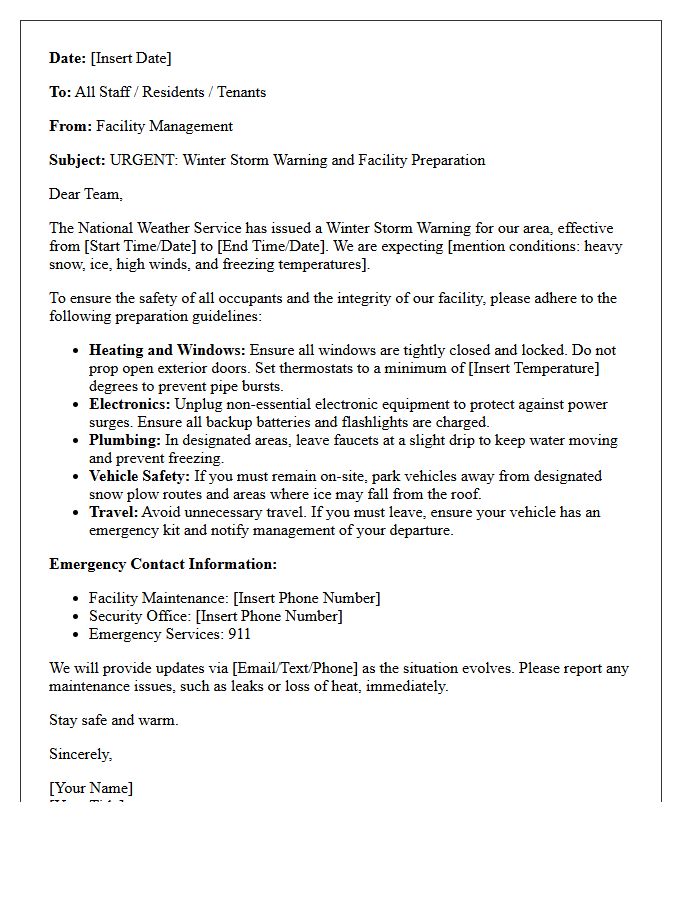
A Winter Storm Warning signifies that severe winter weather is imminent, requiring immediate action to protect personnel and property. When issuing a facility preparation letter, administrators must emphasize proactive maintenance, such as testing backup generators and clearing emergency exits. Essential steps include insulating pipes to prevent bursts and securing outdoor equipment against high winds. Clear communication regarding site closures or modified hours ensures safety. Establishing a coordinated response plan before the storm hits minimizes operational downtime and mitigates potential structural damage during extreme freeze events.
Letter Outlining Emergency Evacuation Routes and Procedures
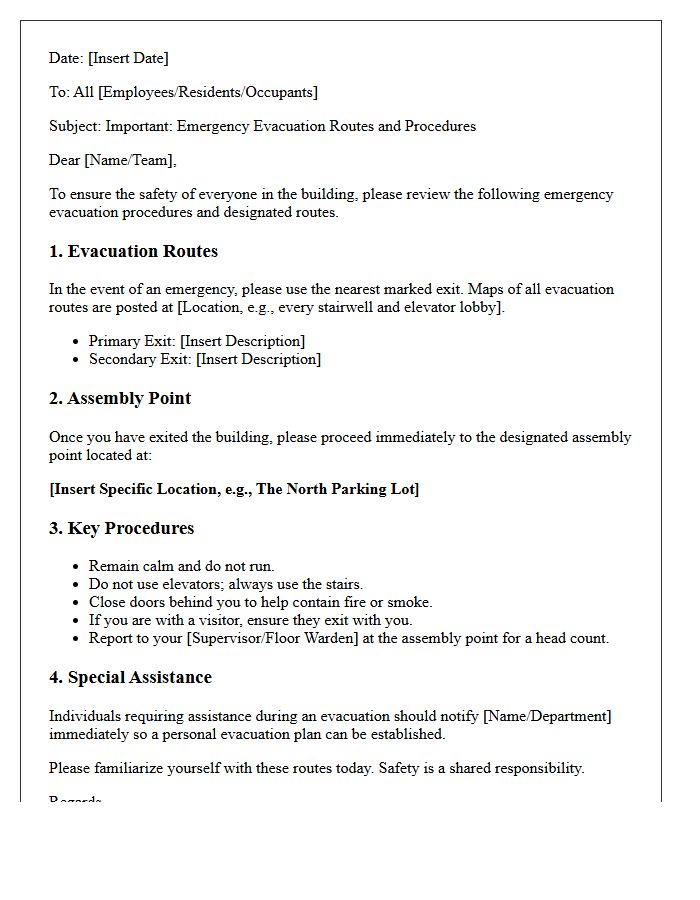
An emergency evacuation letter provides critical instructions to ensure safety during a crisis. It identifies primary and secondary egress paths and specifies designated assembly points for headcounts. The document outlines essential responsibilities, such as assisting individuals with mobility challenges and securing hazardous equipment. Understanding these evacuation procedures minimizes confusion and reduces response time during fires or natural disasters. Regularly reviewing these maps and protocols ensures that all occupants can exit the premises quickly and reach a secure location without panic or delay.
Balcony and Patio Securing Protocol Letter
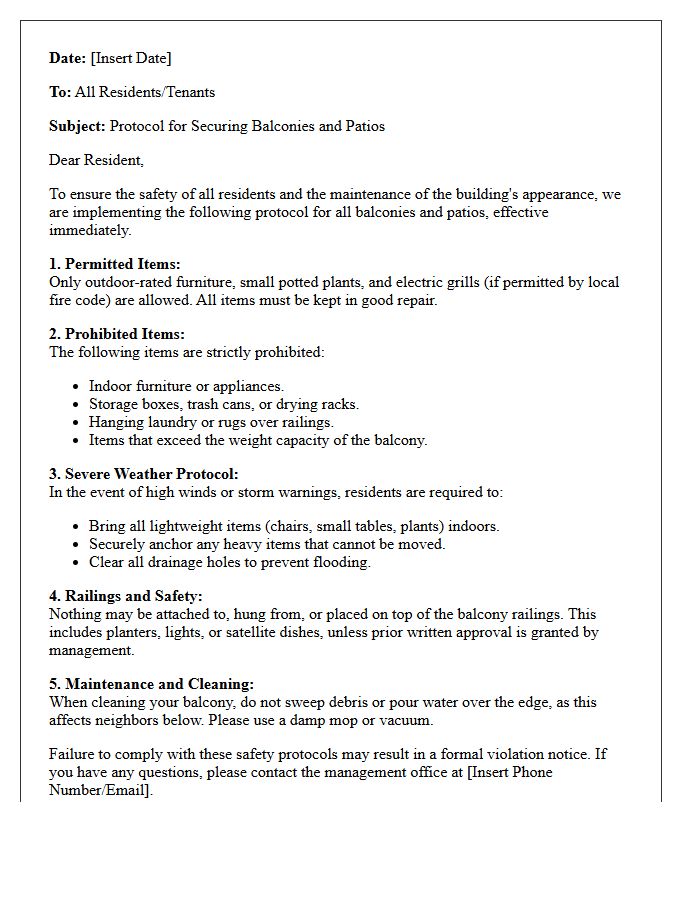
A Balcony and Patio Securing Protocol Letter is a formal notice issued by building management to ensure outdoor safety and compliance. It outlines mandatory requirements for securing loose items, such as furniture and plants, against high winds or storms. Residents must adhere to these guidelines to prevent property damage and personal injury. Following this protocol is essential for liability protection and maintaining building structural integrity. Always review specific deadlines and prohibited items listed in the letter to ensure full compliance with safety standards.
Letter Requiring Removal of Loose Exterior Items
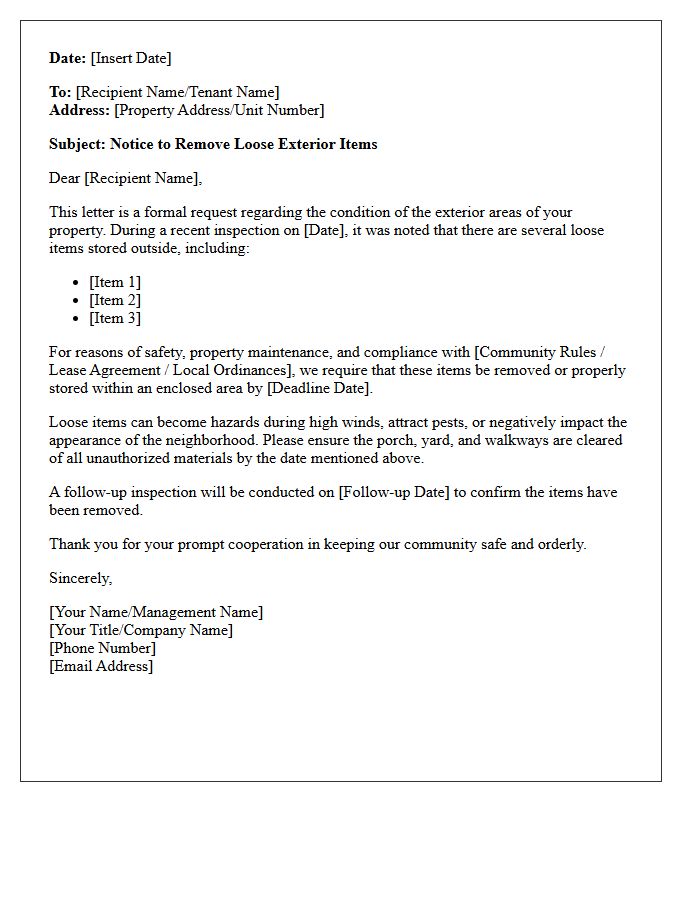
A Loose Exterior Items Removal Letter is a formal notice issued to residents or tenants requesting the immediate clearance of unattached objects from balconies, porches, or yards. This communication is critical for maintaining neighborhood safety and aesthetic standards. It typically highlights potential hazards during severe weather, such as high winds, where loose items can become dangerous projectiles. Receiving this letter necessitates prompt action to ensure compliance with local ordinances or homeowners' association (HOA) regulations, preventing potential fines and protecting the community's overall property value.
Emergency Contact Information Update Request Letter
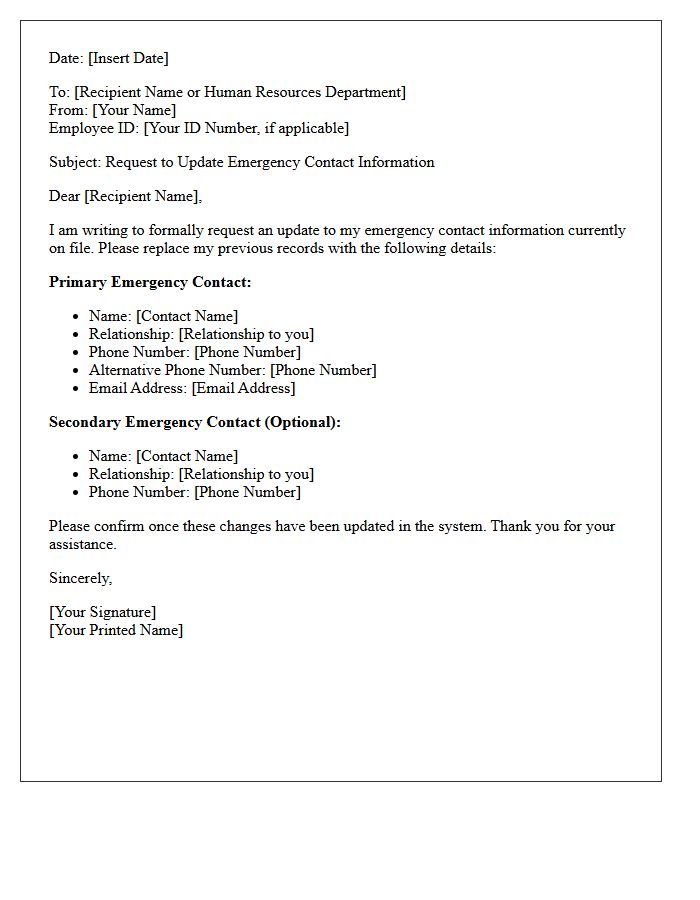
An Emergency Contact Information Update Request Letter is a vital document used by organizations to ensure employee safety. It ensures that personnel files contain accurate, current contact details for use during medical crises or workplace accidents. Keeping these records up-to-date allows management to notify the correct individuals immediately when urgent situations arise. Periodically reviewing and returning this form helps maintain a secure and responsive work environment, protecting both the individual and the company through proactive communication readiness.
Shelter-in-Place Protocol Instruction Letter
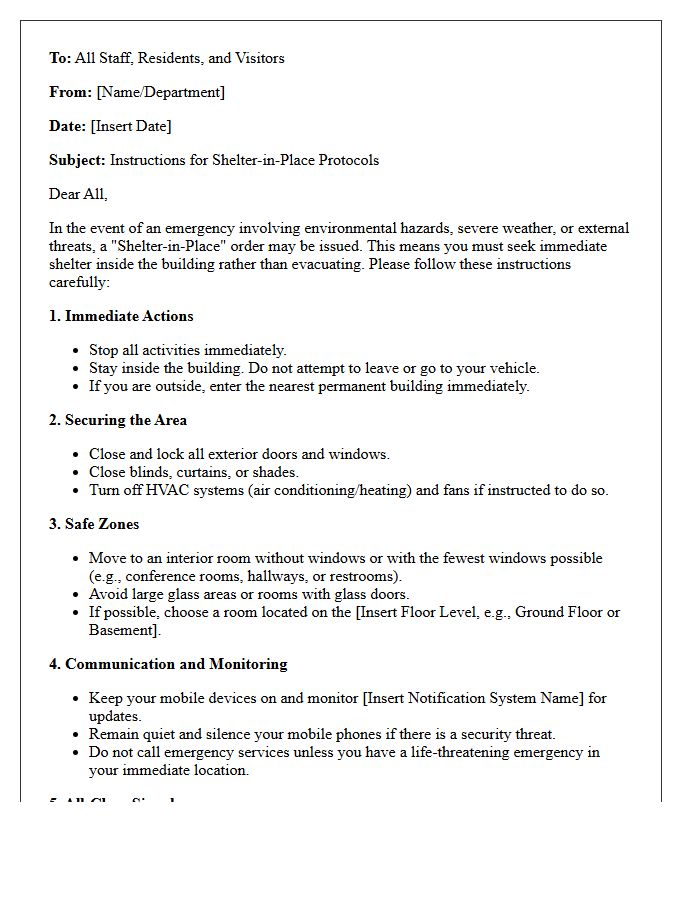
A Shelter-in-Place Protocol Instruction Letter provides critical safety steps during immediate environmental or security threats. It outlines how to secure a building by locking doors, closing windows, and deactivating ventilation systems to prevent outside air intake. Recipients must move to a designated interior room, ideally without windows, to minimize exposure to hazards. This document ensures clear communication and organized emergency response, helping individuals remain protected until authorities issue an "all-clear" signal. Understanding these specific procedures is vital for personal safety and effective emergency preparedness within any facility or residence.
Letter Announcing Temporary Amenity Closures Due to Severe Weather
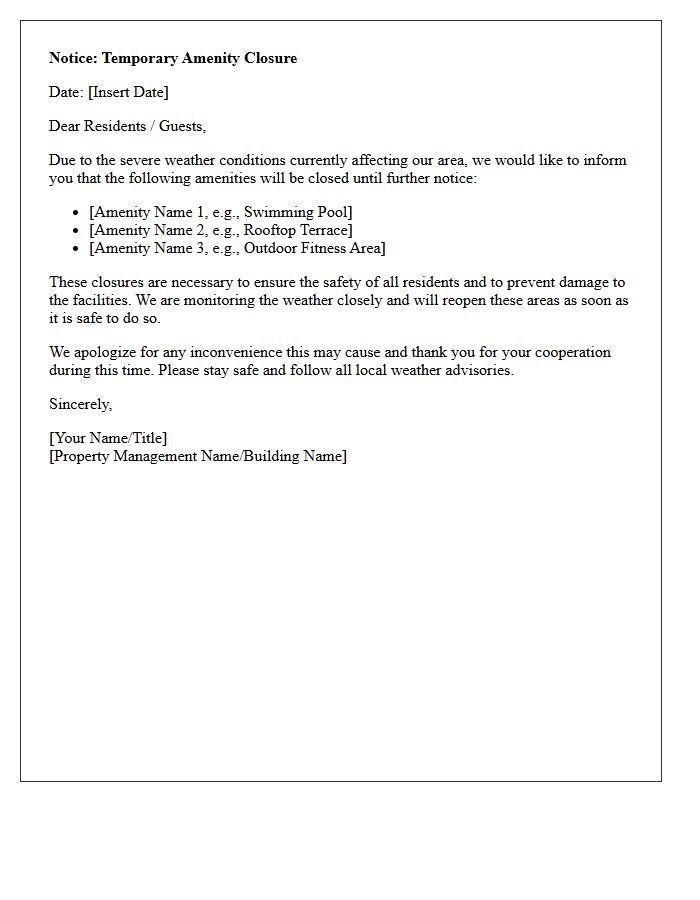
Dear residents, please be advised that several on-site amenities are temporarily closed to ensure your safety during the current severe weather conditions. Impacted areas include the outdoor pool, rooftop lounge, and garden terraces. We prioritize resident security above all else. These facilities will remain inaccessible until a formal safety inspection is completed following the storm. Please monitor your email for a reopening announcement once conditions improve. We appreciate your patience and cooperation as we navigate these emergency precautions to keep our community protected from potential hazards.
Power Outage and Backup Generator Protocol Letter
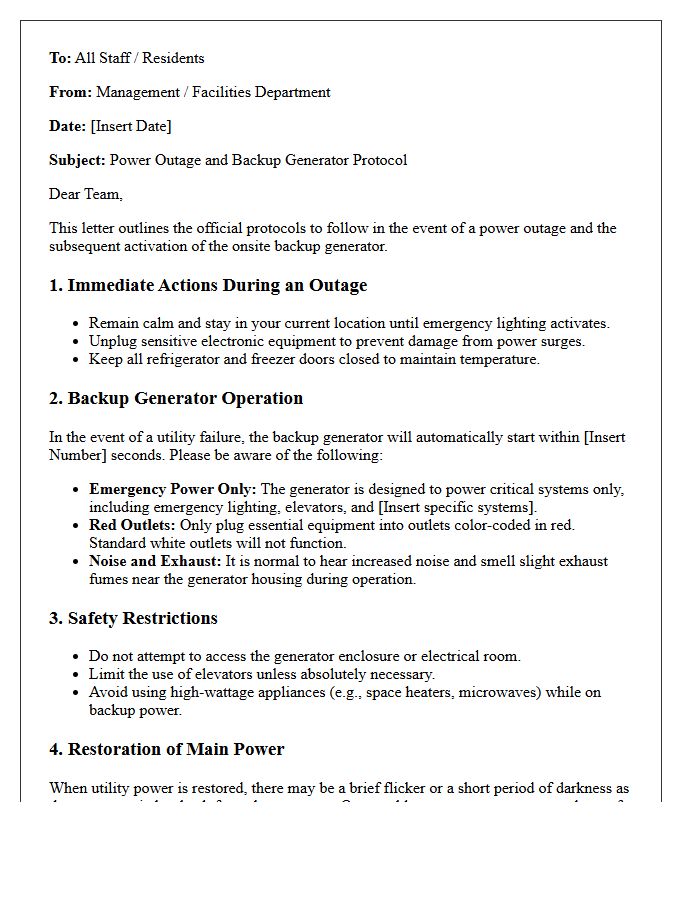
A Power Outage and Backup Generator Protocol Letter provides essential instructions for residents or employees during electrical failures. It clearly outlines safety procedures, maintenance schedules, and the specific equipment supported by backup power. Understanding these guidelines ensures a coordinated response and minimizes risks such as carbon monoxide poisoning or equipment damage. This formal document serves as a critical emergency preparedness tool, establishing clear expectations for power restoration and the proper operation of onsite generators to maintain safety and operational continuity throughout the duration of any utility disruption.
Post-Storm Property Damage Assessment Letter
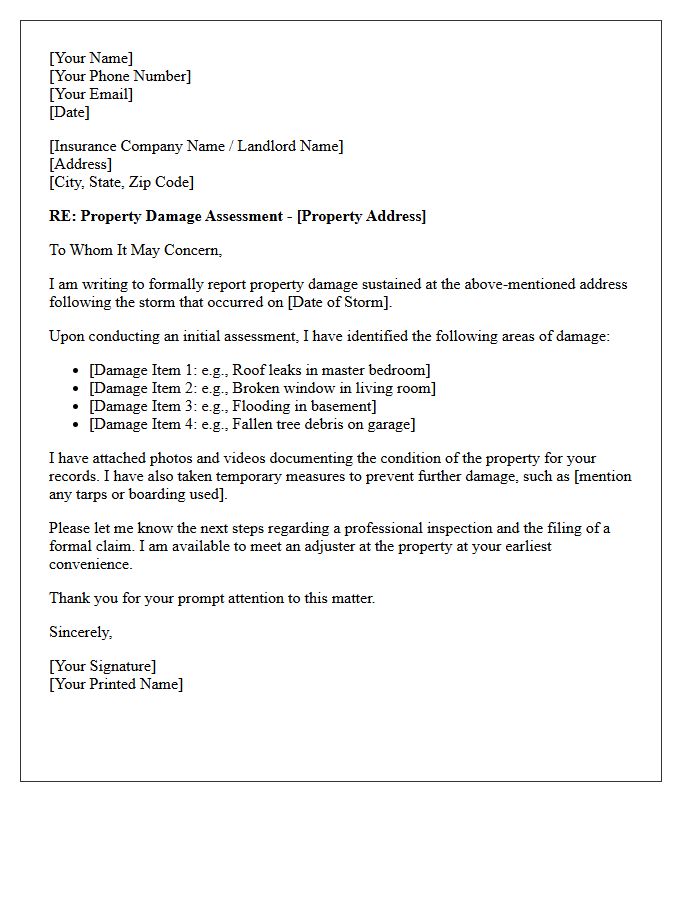
A Post-Storm Property Damage Assessment Letter is a formal document sent to your insurance provider to report structural impacts following severe weather. This timely notification ensures that all losses, from roof leaks to window breakage, are documented for the claims process. It serves as a legal record of damage, protecting your right to fair compensation. Providing clear photos and detailed descriptions within this letter helps adjusters evaluate the scene accurately, facilitating a smoother insurance claim settlement and securing the necessary funds for essential building repairs.
Letter Regarding Debris Cleanup and Hazard Avoidance
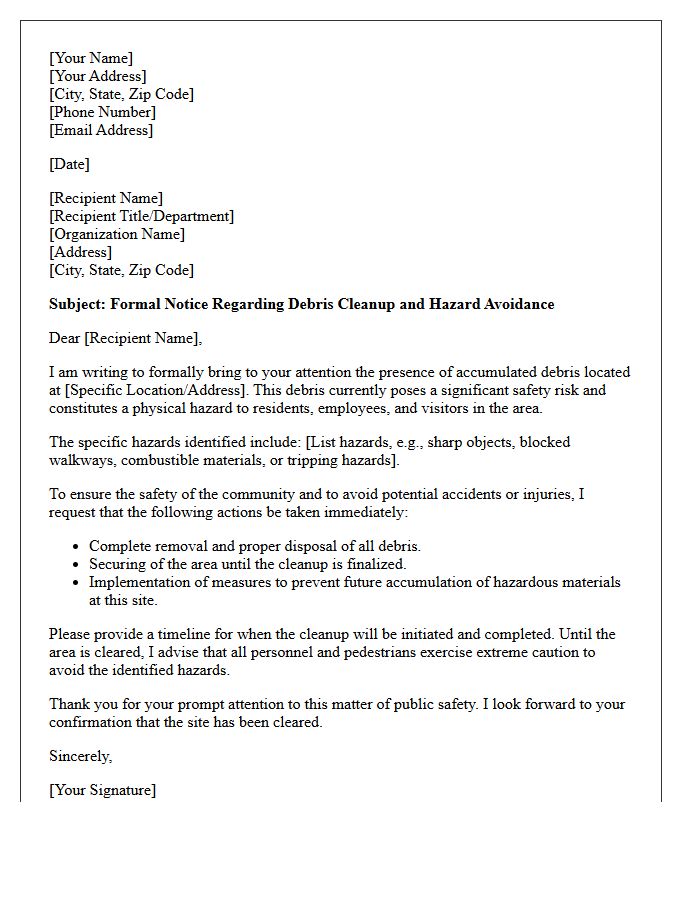
A formal letter regarding debris cleanup serves as a safety notice to property owners following a disaster. It outlines specific protocols for the removal of hazardous materials and structural waste to prevent injuries. Key instructions often include separation requirements for different types of debris, such as electronics or organic waste, to ensure efficient collection. Adhering to these guidelines is essential for hazard avoidance and maintaining public health standards. Property owners must follow the documented timeline to ensure local authorities can safely clear the area and restore community infrastructure promptly.
Maintenance Request Protocol Following Severe Weather Letter
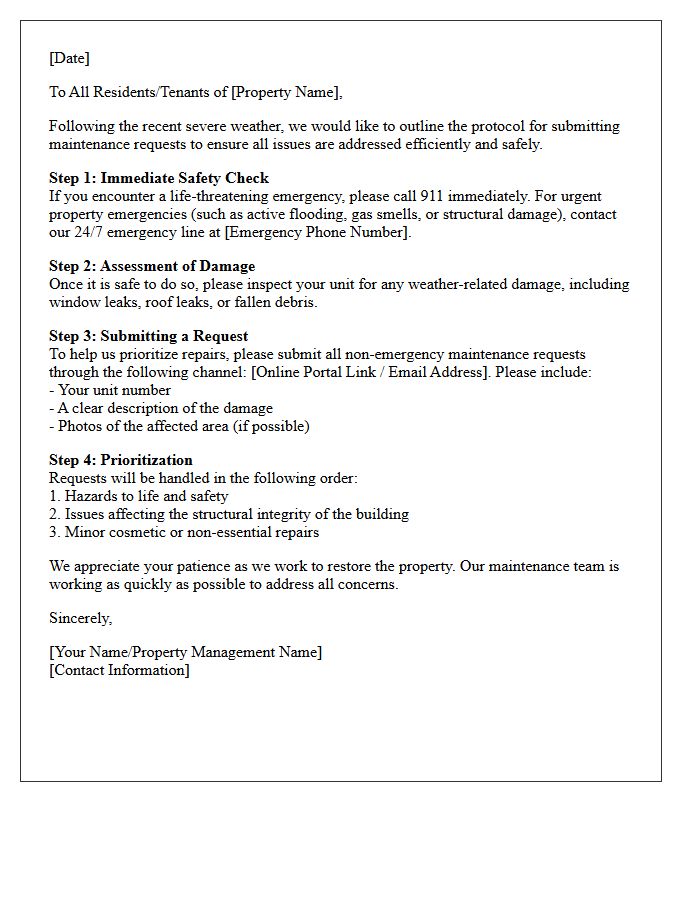
When drafting a Maintenance Request Protocol Following Severe Weather Letter, prioritize immediate safety and structural integrity. Residents must report exterior damage, leaks, or electrical hazards through formal channels to ensure documentation for insurance claims. Property managers should outline a clear priority hierarchy for repairs, moving from emergency stabilization to cosmetic fixes. Always include specific safety instructions regarding fallen trees or downed power lines. Effective communication ensures swift remediation, protects property value, and maintains a safe living environment for all tenants after a major storm event.
Letter Confirming Resumption of Normal Property Operations
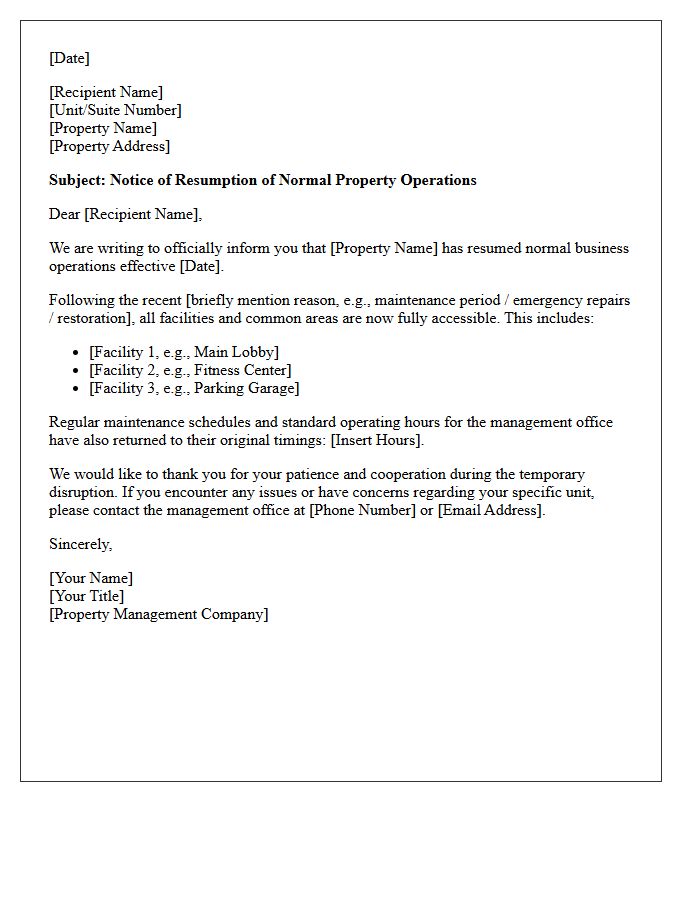
A letter confirming the resumption of normal operations officially notifies tenants that emergency repairs, maintenance, or restrictions have concluded. This document is essential for restoring full access to amenities and services while outlining any updated safety protocols. It ensures clear communication, manages expectations, and serves as a formal record that the property is once again safe and fully functional. Tenants should review the effective date and any specific instructions to ensure a seamless transition back to standard routines following a period of disruption or limited site activity.
Annual Severe Weather Preparedness Acknowledgment Letter
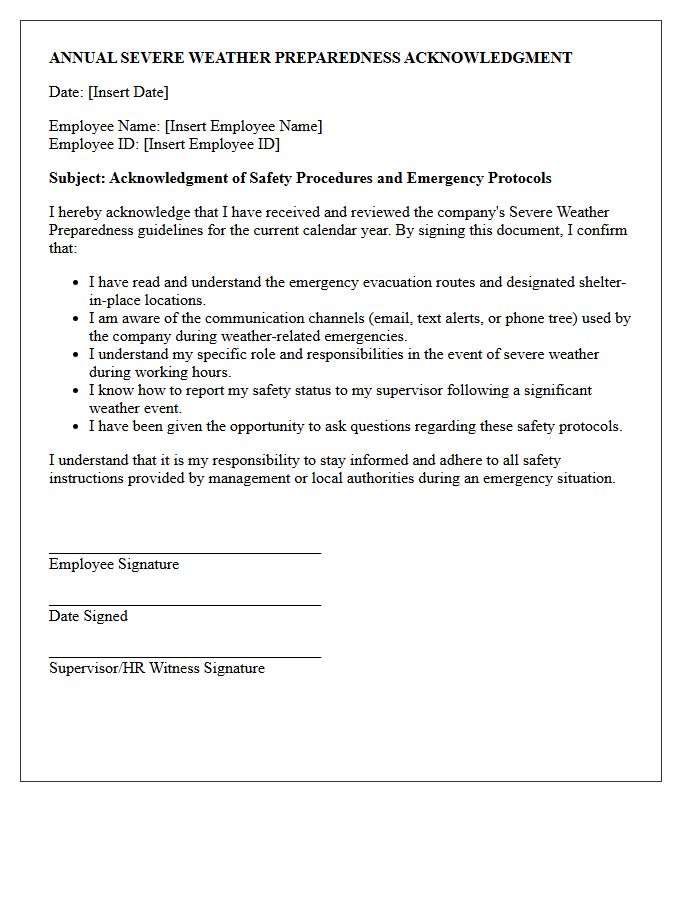
The Annual Severe Weather Preparedness Acknowledgment Letter is a critical document used by organizations to confirm that employees have received and understood emergency protocols. This letter ensures legal compliance and workplace safety by outlining procedures for tornadoes, floods, or storms. By signing, individuals verify their awareness of evacuation routes and shelter locations. Staying informed through this annual update minimizes risks and ensures a coordinated response during life-threatening weather events. It is a vital component of a comprehensive emergency action plan designed to protect lives and maintain operational readiness.
Flood Zone Safety and Preparedness Advisory Letter
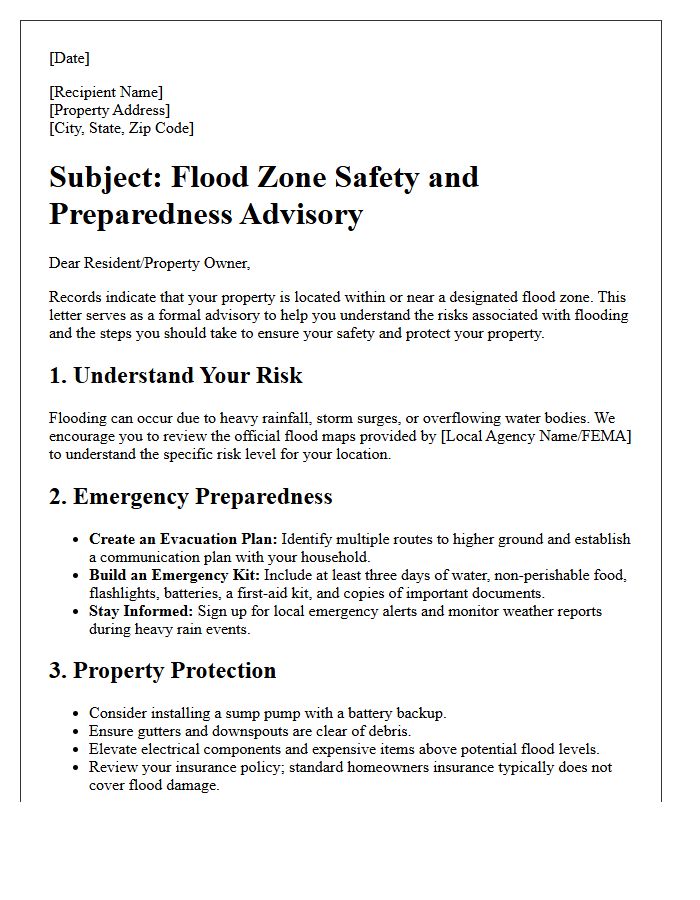
A Flood Zone Safety and Preparedness Advisory Letter is a critical document notifying property owners of their potential environmental risk levels. It provides essential data regarding local floodplains and mandatory flood insurance requirements. To ensure safety, recipients should immediately review evacuation routes, secure emergency supplies, and implement mitigation strategies like elevating utilities. Understanding this advisory helps minimize financial loss and ensures compliance with building codes. Always verify your specific risk zone designation to maintain adequate protection against rising waters and unpredictable weather events.
What are the essential components of a severe weather emergency kit?
An emergency kit should include a three-day supply of water (one gallon per person per day), non-perishable food, a battery-powered or hand-crank weather radio, a flashlight with extra batteries, a first aid kit, essential medications, and copies of important personal documents in a waterproof container.
How can I identify the safest location in my home during a tornado or high-wind event?
The safest location is typically the lowest level of the building, such as a basement or storm cellar. If a basement is unavailable, move to an interior room on the lowest floor, such as a closet or bathroom, staying away from windows, skylights, and exterior walls.
What is the difference between a severe weather watch and a severe weather warning?
A "watch" means that severe weather conditions are possible in your area and you should remain alert. A "warning" means that severe weather has been sighted or indicated by radar, posing an immediate danger to life and property; you must take cover or evacuate immediately.
How should a household communication plan be structured for severe weather?
A robust communication plan should include a designated out-of-town contact person that all family members can reach, established meeting locations for different scenarios, and a list of emergency phone numbers programmed into all mobile devices and posted physically in the home.
What immediate steps should be taken to secure a property before a predicted storm?
Property preparation includes clearing rain gutters of debris, trimming overhanging tree branches, securing or storing outdoor furniture and loose objects, and ensuring that backup power sources, such as generators, are fueled and positioned in well-ventilated outdoor areas.

Comments