
Failing to settle a citation on time can lead to increased penalties and vehicle booting. This guide explains how to draft a professional Notice of Late Parking Fee Payment to resolve outstanding balances efficiently. Learn about legal requirements, grace periods, and clear communication strategies to ensure prompt collection. To help you get started, below are some ready to use template.
Image cover: Professional Late Parking Fee Notice Templates and Samples
Letter Samples List
- First Notice of Late Parking Fee Letter
- Friendly Reminder Letter for Outstanding Parking Dues
- Second Warning Letter for Overdue Parking Payment
- Urgent Notice Letter Regarding Unpaid Parking Fees
- Final Demand Letter for Delinquent Parking Account
- Intent to Revoke Parking Privileges Letter
- Notice of Towing Due to Unpaid Parking Fees Letter
- Late Payment Penalty Assessment Letter for Parking Space
- Suspension of Parking Facility Access Due to Nonpayment Letter
- Notice of Default on Parking Addendum Letter
- Property Management Final Resolution Letter for Parking Arrears
- Collection Agency Referral Letter for Unpaid Parking Balance
First Notice of Late Parking Fee Letter
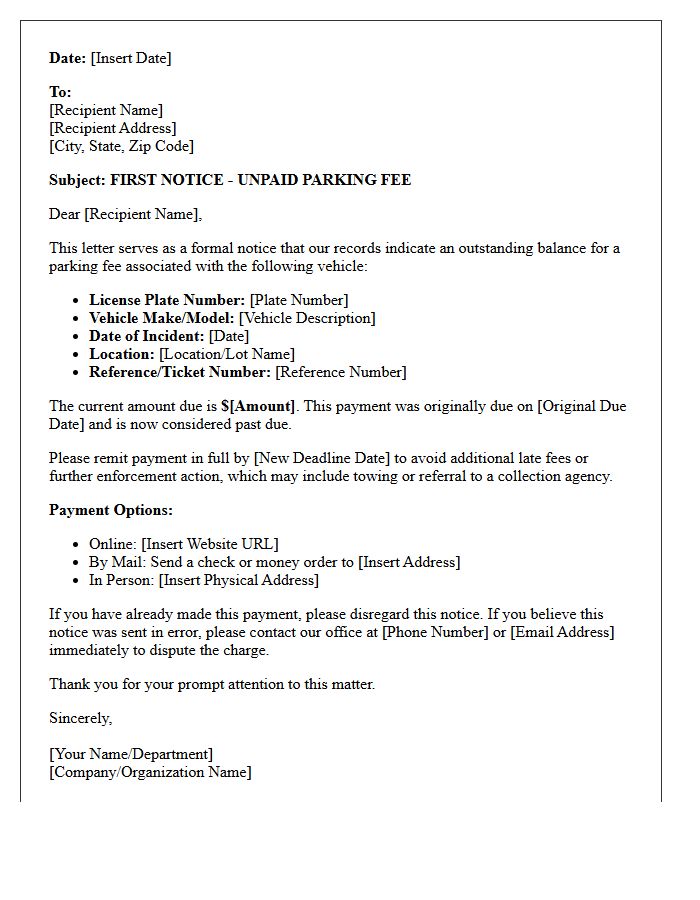
A First Notice of Late Parking Fee Letter serves as a formal reminder that a parking charge remains unpaid past its initial deadline. This document typically outlines the original violation details, the outstanding balance, and any added late penalties or administrative fees. It is crucial to address this notice immediately to avoid further escalations, such as vehicle booting, towing, or debt collection agency involvement. To resolve the matter, you should either submit the full payment through the specified methods or follow the included instructions to file a formal appeal.
Friendly Reminder Letter for Outstanding Parking Dues
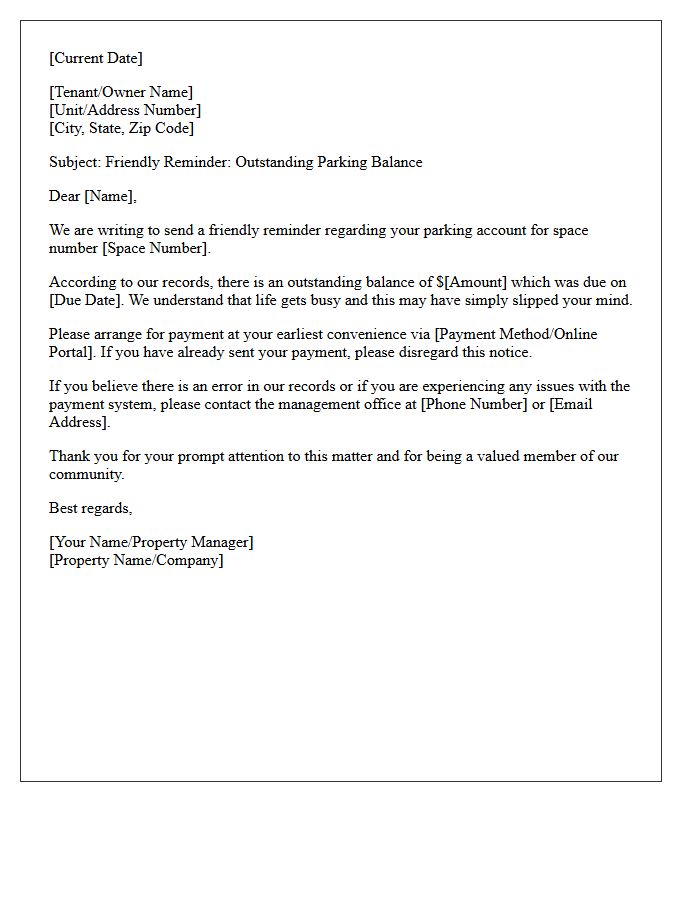
A friendly reminder letter for outstanding parking dues serves as a professional notification to resolve unpaid citations before penalties escalate. It is essential to clearly state the license plate number, violation date, and total amount owed. Providing convenient payment links and a deadline for dispute resolution helps maintain positive relations while ensuring compliance. Promptly addressing these notices prevents additional late fees, vehicle booting, or collection actions. Always double-check the payment instructions provided to ensure your account is accurately credited and your record remains clear.
Second Warning Letter for Overdue Parking Payment
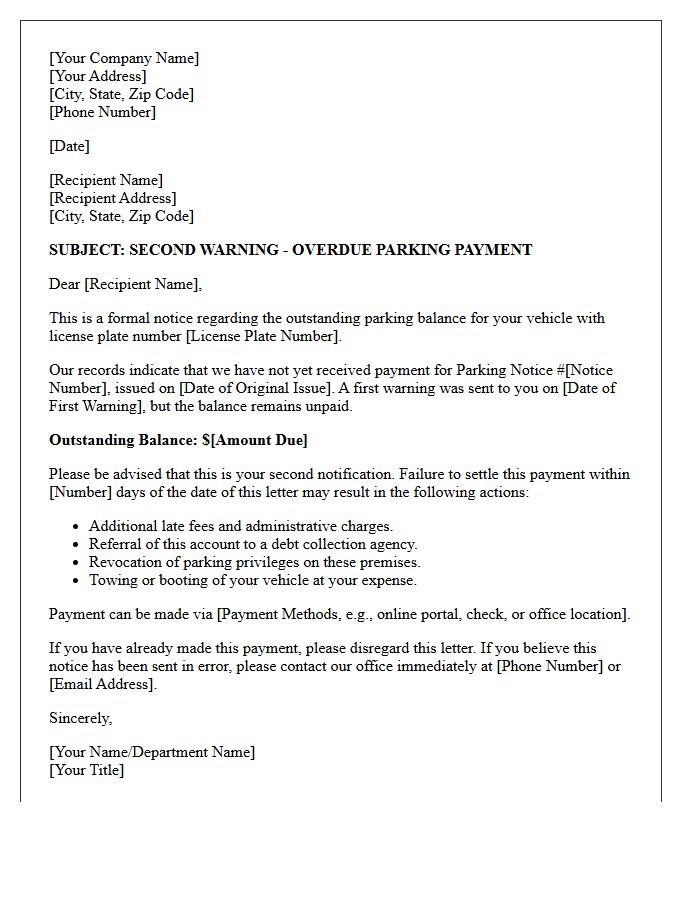
A Second Warning Letter serves as a final formal notice before your unpaid parking fine escalates to legal action or debt collection. It is crucial to address this overdue payment immediately to avoid additional late fees, vehicle immobilization, or court summons. Receiving this document indicates that the grace period has expired and your right to an informal appeal may be restricted. Always verify the fine details and settle the balance through authorized channels to protect your credit rating and prevent further enforcement measures.
Urgent Notice Letter Regarding Unpaid Parking Fees
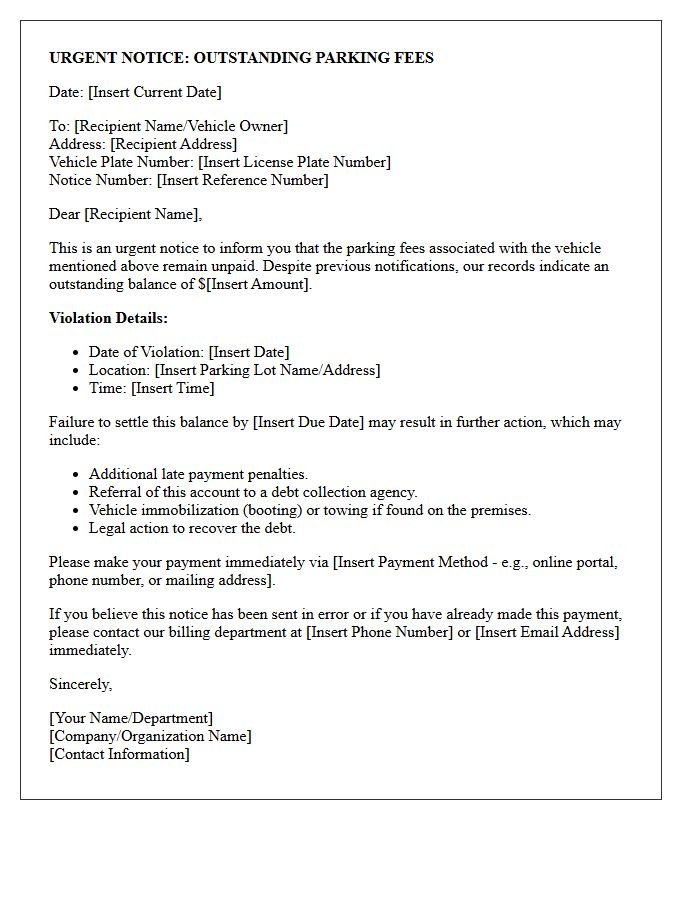
Receiving an Urgent Notice Letter Regarding Unpaid Parking Fees requires immediate attention to avoid escalating penalties. This formal notification serves as a final warning for outstanding balances associated with vehicle parking violations. Failure to settle the debt or file a formal appeal within the specified timeframe may lead to additional late fees, collection agency involvement, or legal action. Carefully verify the ticket details, including location and vehicle information, and follow the provided instructions to make a payment or contest the charge to protect your credit score and driving record.
Final Demand Letter for Delinquent Parking Account
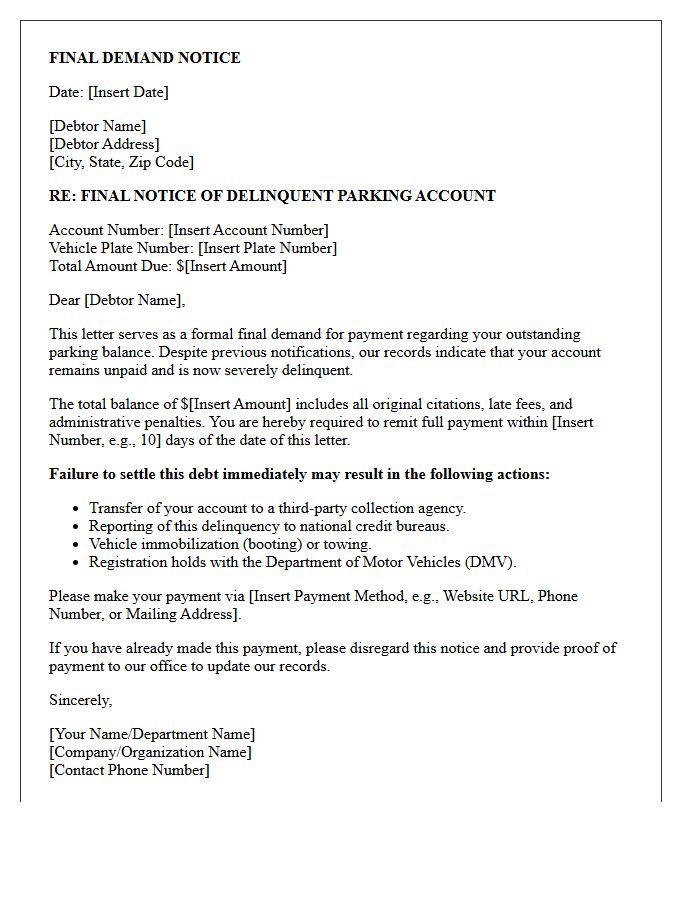
A final demand letter for a delinquent parking account is a formal notification representing the last opportunity to settle unpaid citations before aggressive action. Failure to pay by the specified deadline typically results in the debt being transferred to a collections agency, which can negatively impact your credit score. Furthermore, your vehicle may be subject to booting or towing. To avoid additional legal fees and administrative penalties, you must remit payment immediately or initiate a formal dispute process as outlined in the notice to resolve the outstanding balance.
Intent to Revoke Parking Privileges Letter
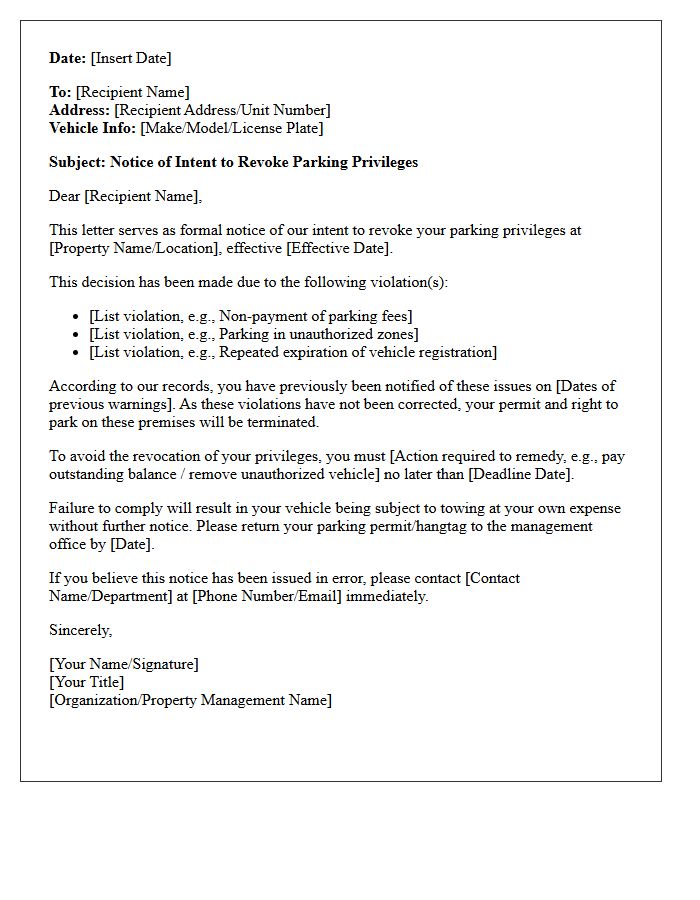
An Intent to Revoke Parking Privileges Letter is a formal notice issued by a landlord or HOA warning a tenant of a pending termination of their parking rights. This legal document typically cites specific lease violations, such as non-payment, unauthorized vehicles, or safety hazards. To protect your rights, it is essential to address the cited issues within the compliance period stated in the letter. Failure to rectify the situation usually results in the immediate removal of vehicle access or towing at the owner's expense.
Notice of Towing Due to Unpaid Parking Fees Letter
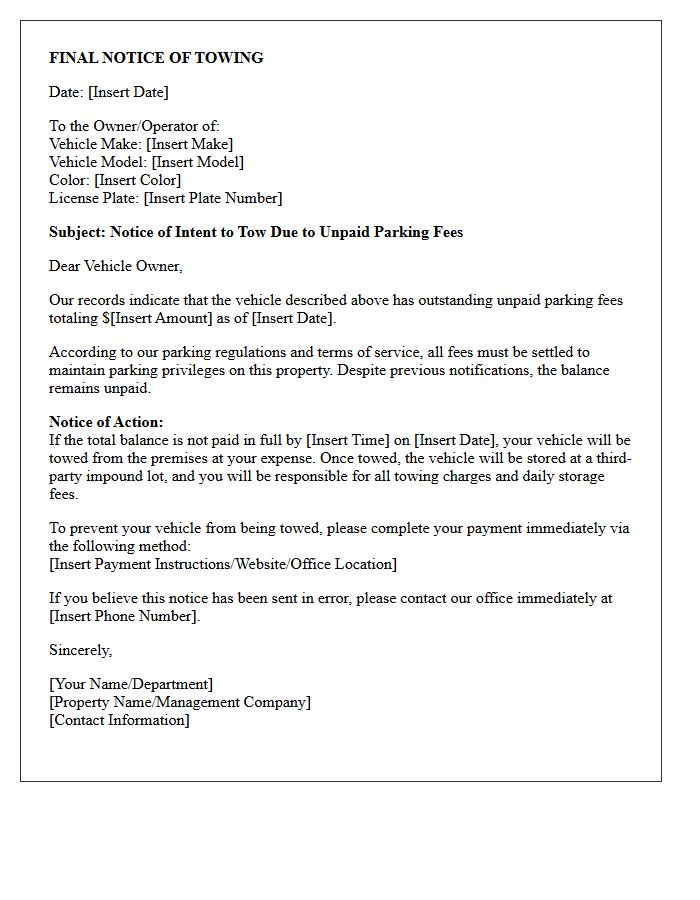
A Notice of Towing is a formal warning issued when a vehicle has multiple unpaid parking fees. This letter serves as a final legal notification before your car is impounded. To prevent vehicle seizure, you must settle all outstanding balances or dispute the citations within the specified deadline. Ignoring this notice typically results in towing at the owner's expense, plus additional storage fees. Always verify the authenticity of the notice and contact the issuing authority immediately to arrange payment and avoid the loss of your vehicle.
Late Payment Penalty Assessment Letter for Parking Space
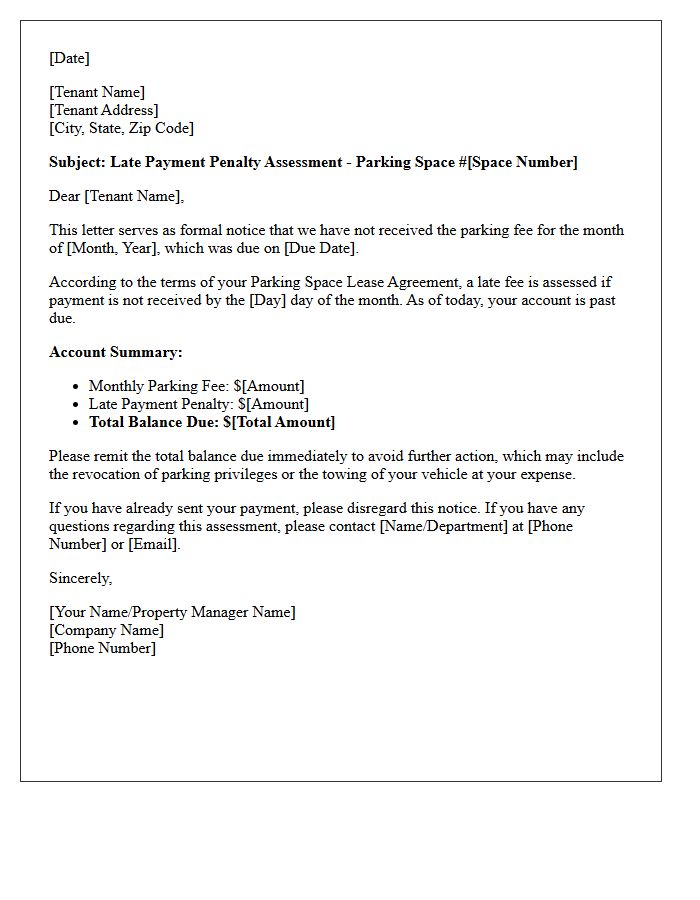
A Late Payment Penalty Assessment Letter is a formal notice issued when a parking fee remains unpaid past its due date. This document outlines the original balance, the additional penalty charges, and the final deadline for payment. It serves as a legal record of default, warning the recipient that failure to settle the debt may lead to vehicle towing, immobilization, or collection agency involvement. To avoid escalating costs, it is essential to respond immediately or file a formal appeal if the assessment is believed to be inaccurate.
Suspension of Parking Facility Access Due to Nonpayment Letter
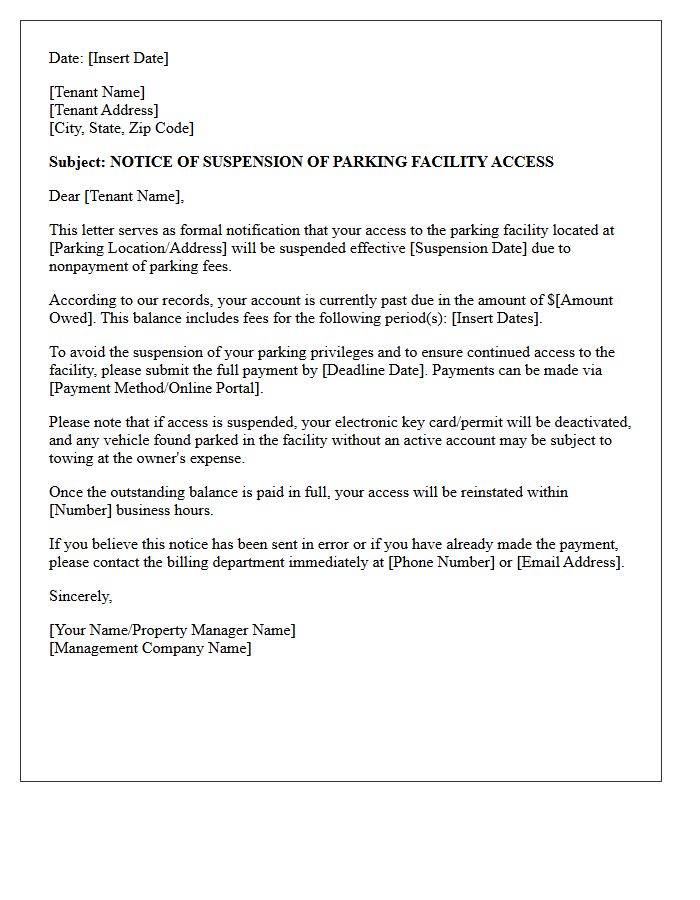
A Suspension of Parking Facility Access letter notifies a permit holder that their parking privileges are revoked due to nonpayment of outstanding fees. This formal notice specifies the effective date of the suspension and outlines the total balance due. To regain access, the recipient must settle all delinquent charges immediately. Failure to comply may lead to vehicle towing or permanent permit cancellation. Timely account reconciliation is essential to ensure uninterrupted facility usage and avoid additional administrative penalties or legal recovery actions.
Notice of Default on Parking Addendum Letter
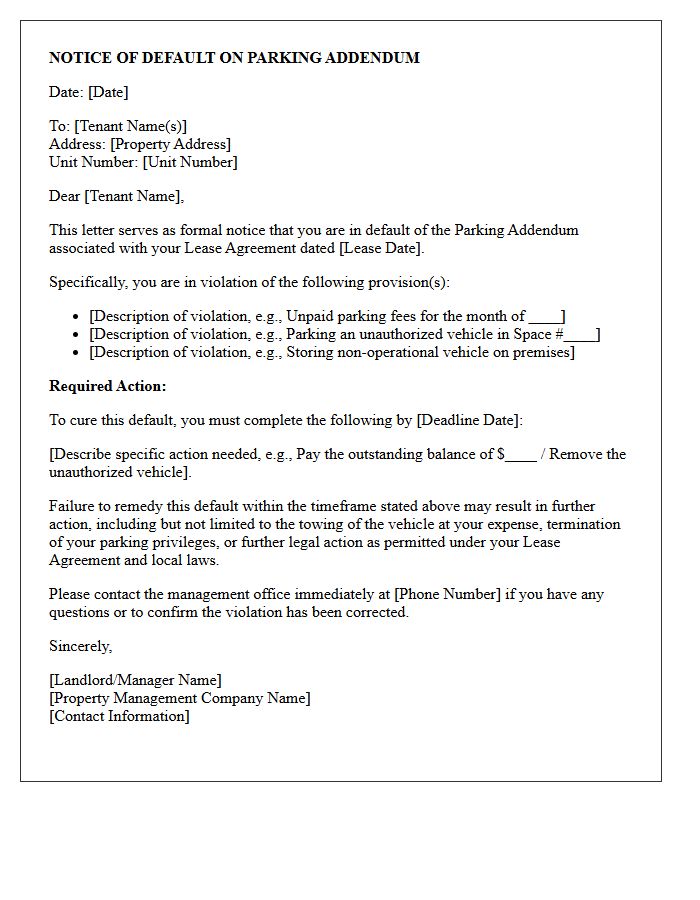
A Notice of Default on Parking Addendum is a formal legal warning issued when a tenant violates specific vehicle-related terms in their lease. Receiving this letter signifies a material breach of contract, often due to unauthorized parking, expired registrations, or blocking access. It is crucial to address the violation immediately within the specified cure period to avoid vehicle towing, monetary fines, or potential eviction. To protect your residency, provide written proof of compliance to the landlord once the issue is resolved to ensure the default is officially cleared.
Property Management Final Resolution Letter for Parking Arrears
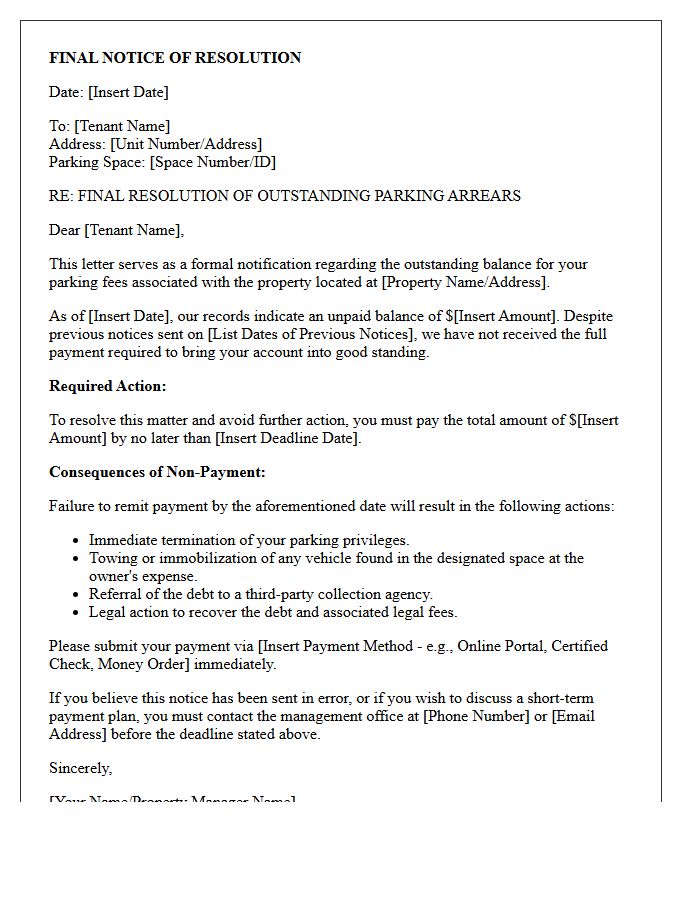
A property management final resolution letter serves as a formal notice to resolve outstanding parking arrears before escalating to legal action or towing. It clearly outlines the total debt, payment deadlines, and potential consequences of non-compliance. This document ensures transparency and provides a final opportunity for the tenant to settle balances or dispute charges. To maintain professional compliance, the letter must include specific vehicle details and reference the original lease agreement. Timely response is essential to prevent the permanent loss of parking privileges or damage to one's credit score.
Collection Agency Referral Letter for Unpaid Parking Balance
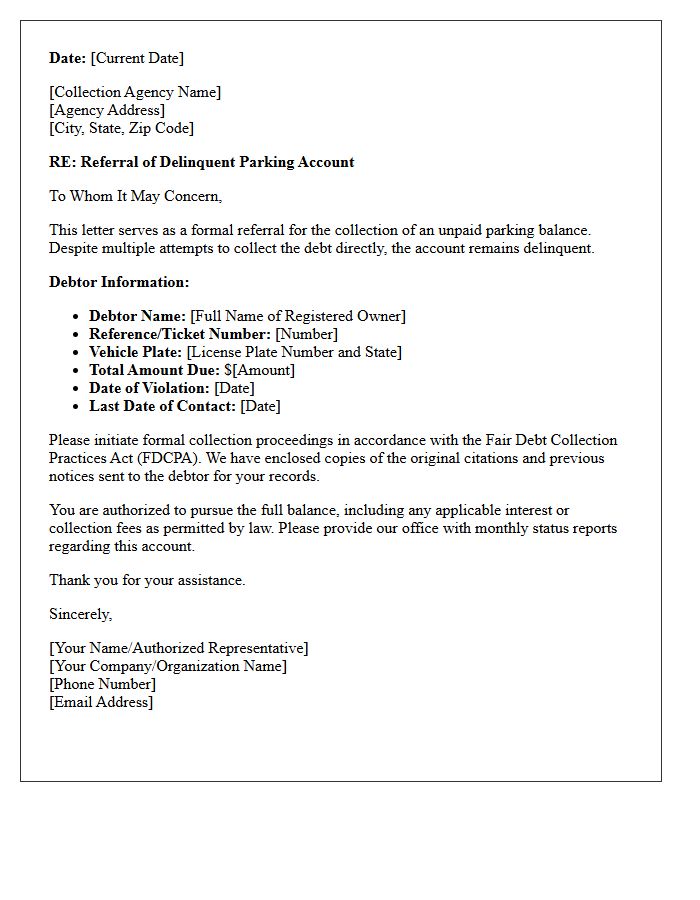
A collection agency referral letter serves as a final notice before an unpaid parking balance is transferred to a third-party debt collector. This formal document warns the debtor that failure to settle the outstanding citation immediately will result in escalated recovery efforts. Such actions often lead to credit score damage and additional collection fees. Receiving this letter is the last opportunity to resolve the debt directly with the original issuing authority to avoid long-term financial consequences and potential legal action associated with delinquent accounts.
What is a Notice of Late Parking Fee Payment?
A Notice of Late Parking Fee Payment is an official notification issued when a parking citation or garage fee remains unpaid past its initial due date. This notice typically includes the original fine amount, accrued late penalties, and a final deadline for payment to avoid further collection actions.
How can I pay my overdue parking fine?
You can pay your late parking fee online through our secure payment portal, by mail using a check or money order, or in person at the municipal clerk's office. Please ensure you have your citation number and vehicle license plate information ready to process the transaction.
What are the penalties for late parking fee payments?
Failure to pay a parking fee by the initial deadline results in a predetermined late penalty, which is added to the base fine. If the debt remains outstanding after the second notice, your account may be referred to a collection agency, and your vehicle may be subject to booting or towing.
Can I dispute a Notice of Late Parking Fee Payment?
Yes, you can contest a late notice if you believe it was issued in error or if you have proof of prior payment. To initiate an appeal, you must submit a written dispute form along with supporting evidence, such as a payment receipt or valid parking permit, within the timeframe specified on the notice.
What happens if I ignore a late parking fee notice?
Ignoring a late parking fee notice can lead to escalating financial penalties, the suspension of your vehicle registration, and a negative impact on your credit score. Persistent unpaid violations often result in a "lien" against the vehicle or the inability to renew your driver's license.

Comments