
Managing unpaid payments requires professional communication to ensure swift resolution. A Notice of Returned Check and Late Fees formally informs clients of failed transactions and associated penalties due to insufficient funds. Clear documentation helps maintain cash flow and sets firm expectations for reimbursement. To simplify your process and maintain professional relationships, below are some ready to use templates.

Image cover: Professional Templates for Returned Check and Late Fee Notifications
Letter Samples List
- Notice of Returned Check and Late Fees Letter
- Property Management Bounced Check and Penalty Letter
- Tenant Insufficient Funds and Late Fee Notice Letter
- Returned Rent Payment and Account Balance Update Letter
- Notice of Dishonored Rent Check and Late Fee Letter
- Unpaid Rent Returned Check and Penalty Assessment Letter
- Property Management Notice of Failed Payment Letter
- Tenant Returned Item and Outstanding Late Fees Letter
- Notice of Bank Returned Check and Rent Penalty Letter
- Lease Violation Returned Check and Fee Demand Letter
- Insufficient Funds Rent Payment and Late Charge Letter
- Declined Rent Check and Associated Late Fees Letter
Notice of Returned Check and Late Fees Letter
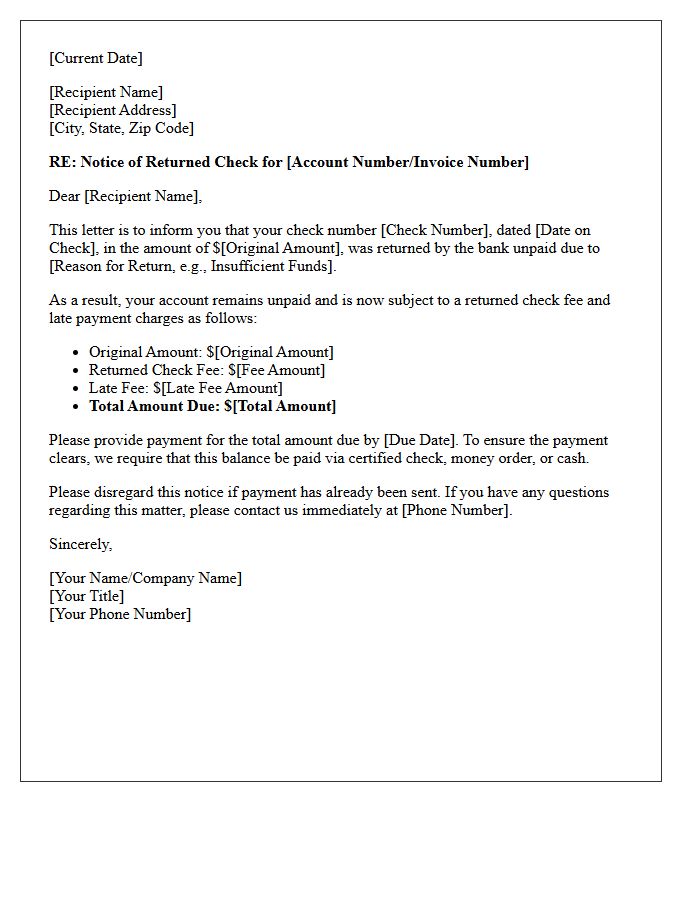
A Notice of Returned Check and Late Fees Letter is a formal document issued when a payment fails due to insufficient funds. This notification informs the recipient that their check was dishonored by the bank, necessitating immediate repayment. The letter typically outlines the original balance plus additional late fees and administrative penalties. It serves as a legal record, providing a deadline to settle the debt to avoid further collection actions or credit damage. Promptly addressing this notice is essential to maintain a positive financial reputation and prevent potential legal consequences.
Property Management Bounced Check and Penalty Letter
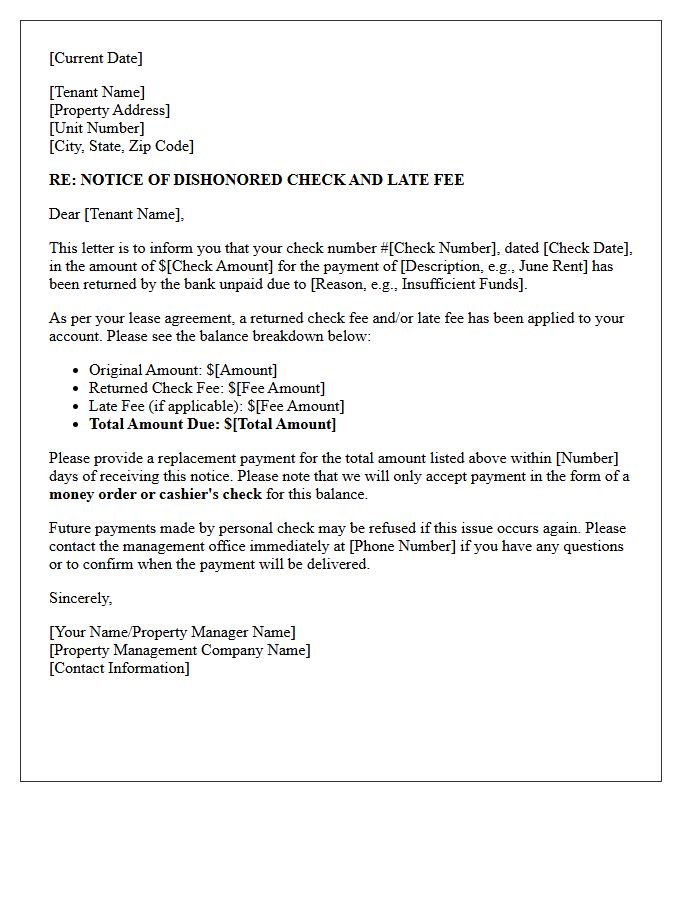
When a tenant's payment fails, a property manager must issue a formal Notice of Dishonored Check to demand immediate payment. This penalty letter should clearly state the original rent amount plus any applicable NSF fees permitted by local law. To maintain legal compliance, include a deadline for the tenant to provide certified funds, such as a money order or cashier's check. Promptly documenting a bounced check protects the landlord's rights during potential eviction proceedings and ensures clear communication regarding financial delinquency and associated administrative penalties.
Tenant Insufficient Funds and Late Fee Notice Letter
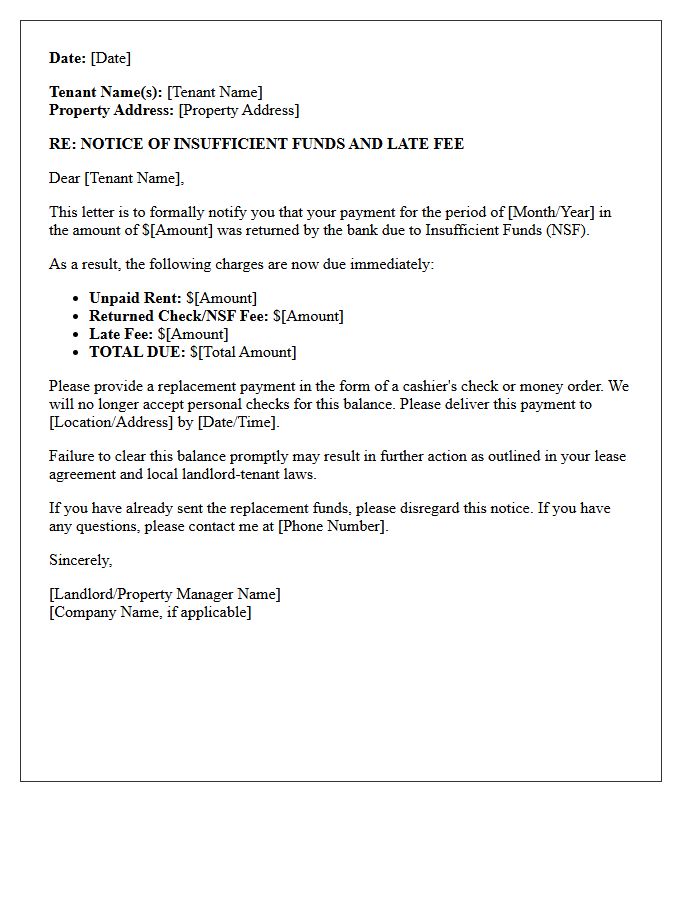
A Tenant Insufficient Funds and Late Fee Notice is a formal document notifying a renter that their payment failed due to non-sufficient funds (NSF). This letter officially demands immediate repayment of the original rent plus any applicable late fees and bank penalties specified in the lease. It serves as a critical legal record for property managers if further eviction proceedings become necessary. To ensure compliance, the notice must clearly state the total balance due, the required payment method, and the deadline to rectify the payment default promptly.
Returned Rent Payment and Account Balance Update Letter
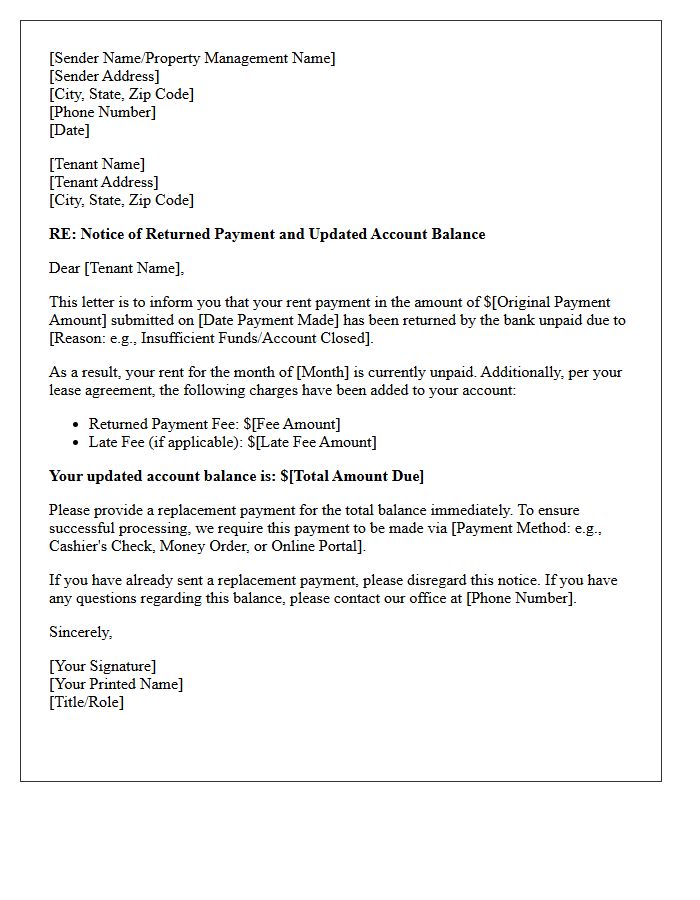
A returned rent payment notice informs tenants that their recent transaction failed due to insufficient funds or technical errors. This letter serves as a formal demand for immediate repayment, typically including an updated account balance that reflects the original rent amount plus mandatory late fees and NSF charges. Timely resolution is essential to prevent legal action or negative impacts on credit history. Tenants should review the outstanding balance carefully and provide a secure payment method, such as a cashier's check, to restore their account to good standing promptly.
Notice of Dishonored Rent Check and Late Fee Letter
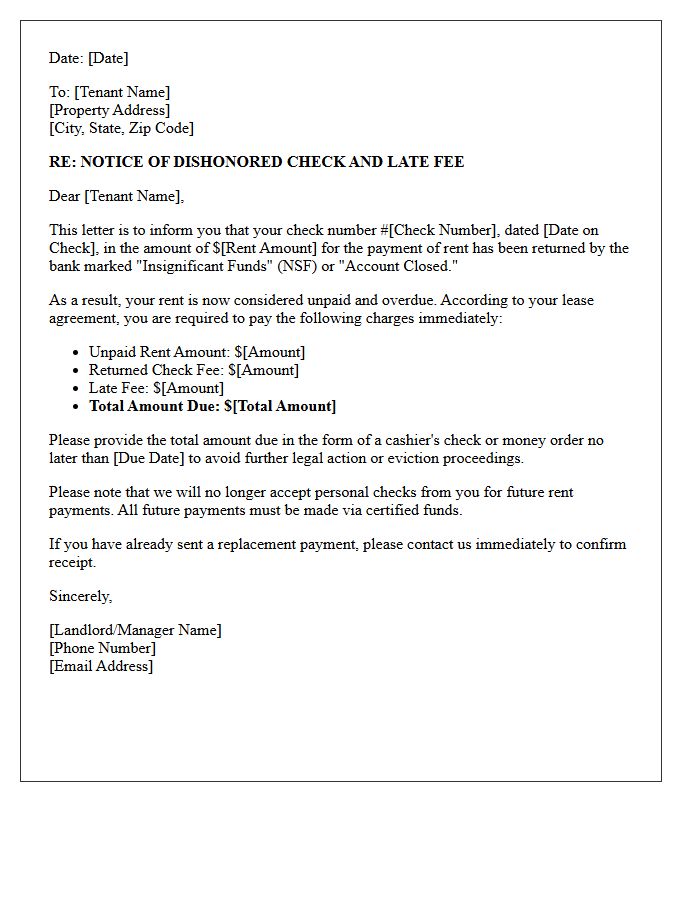
A Notice of Dishonored Rent Check is a formal legal document issued by a landlord when a tenant's payment is returned for insufficient funds. This letter officially notifies the tenant that their payment failed and demands an immediate replacement payment, typically via certified funds. It serves as crucial evidence for potential eviction proceedings. Most notices also outline required late fees and returned check penalties as specified in the lease agreement. Promptly addressing this notice is essential to maintain tenancy rights and avoid further legal action or damage to credit scores.
Unpaid Rent Returned Check and Penalty Assessment Letter
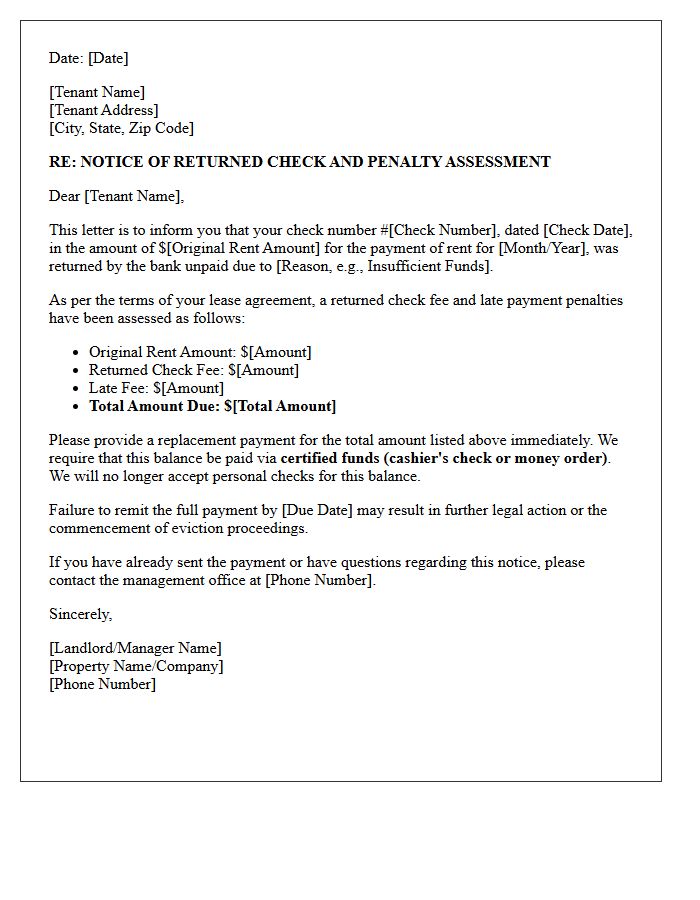
An Unpaid Rent Returned Check and Penalty Assessment Letter serves as formal notice that a tenant's payment failed due to insufficient funds. This document legally demands immediate repayment of the original rent amount plus any contractual late fees and bank penalties. It provides critical written evidence for potential eviction proceedings or debt collection. Landlords must specify the total balance due, accepted payment methods, and a strict deadline to avoid further legal action. Issuing this letter promptly protects the landlord's financial rights and maintains clear communication regarding lease compliance and payment expectations.
Property Management Notice of Failed Payment Letter
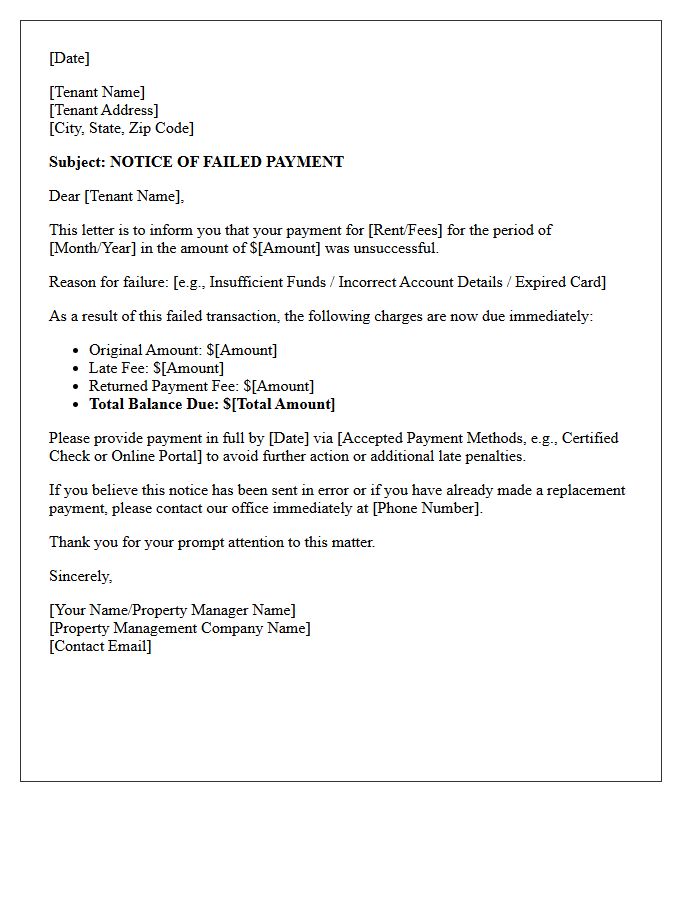
A Notice of Failed Payment is a formal document sent by property managers when a tenant's rent transaction is declined. This letter serves as legal notification of a breach of contract and typically includes the original amount due plus any applicable late fees or NSF charges. It is essential to provide clear instructions on how to rectify the balance immediately to avoid further eviction proceedings. Accurate record-keeping of these notices ensures a transparent audit trail for both landlords and tenants during lease enforcement disputes.
Tenant Returned Item and Outstanding Late Fees Letter
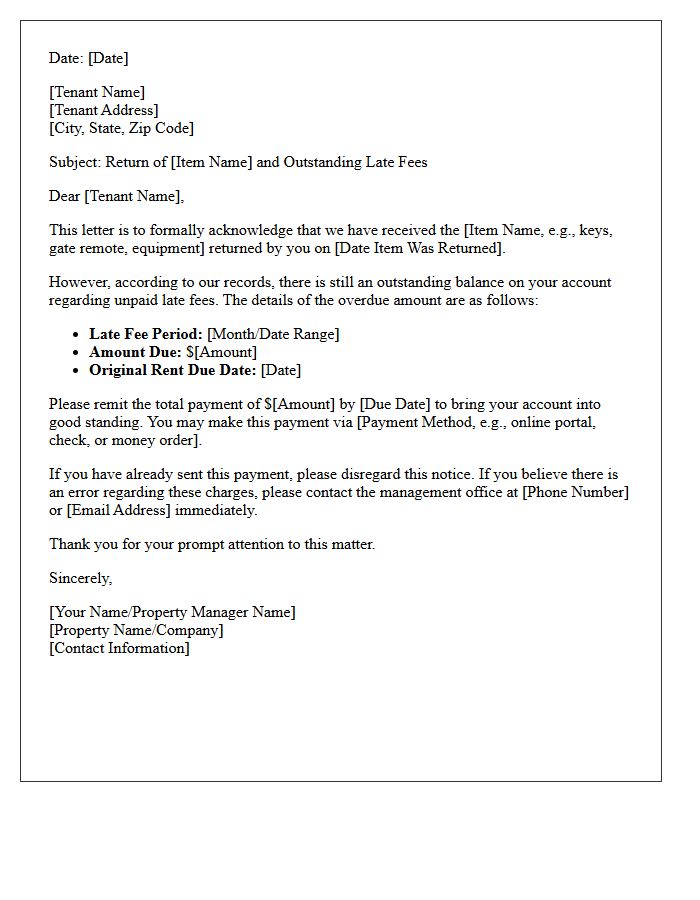
A Tenant Returned Item and Outstanding Late Fees Letter serves as formal notification regarding unpaid financial obligations following a tenancy. It clearly documents specific debts, such as returned check charges and accumulated late penalties, ensuring legal clarity for both parties. Providing an itemized breakdown is essential for debt recovery and may serve as evidence in small claims court. This professional correspondence sets a firm deadline for payment, helping landlords maintain accurate accounting records while protecting their right to legal recourse if the balance remains outstanding.
Notice of Bank Returned Check and Rent Penalty Letter
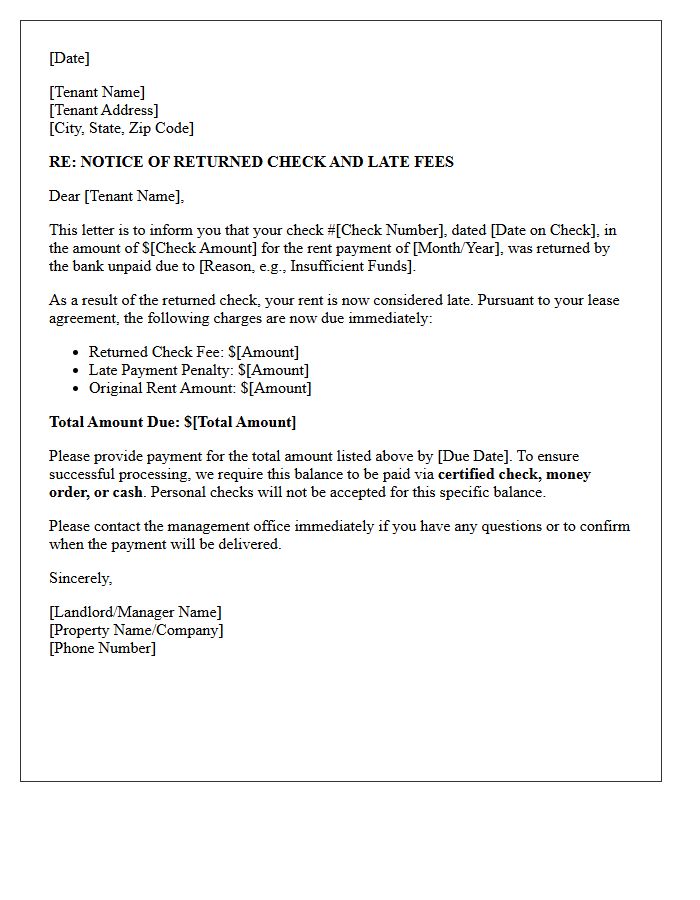
A Notice of Bank Returned Check and Rent Penalty Letter informs a tenant that their payment failed due to insufficient funds. It serves as a formal demand for the original rent amount plus a returned check fee and any applicable late penalties. This document is crucial for documenting payment breaches and serves as legal evidence if an eviction process becomes necessary. Tenants should resolve the balance immediately via certified funds to avoid further legal action or negative impacts on their credit history and rental standing.
Lease Violation Returned Check and Fee Demand Letter
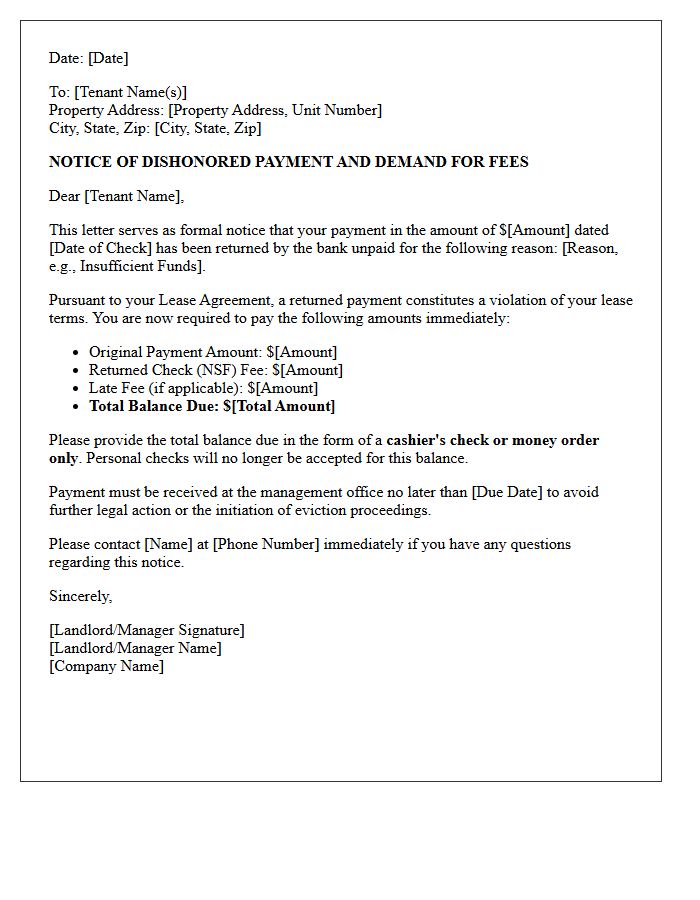
A Lease Violation Returned Check and Fee Demand Letter serves as formal notice that a rent payment was dishonored by the bank. This document informs the tenant of the failed transaction, identifies the specific lease provision violated, and demands immediate reimbursement. It typically includes the original rent amount plus a NSF fee. Sending this letter is a critical step in maintaining a paper trail for legal compliance, ensuring the landlord preserves their right to pursue eviction or further collection actions if the balance remains unpaid.
Insufficient Funds Rent Payment and Late Charge Letter
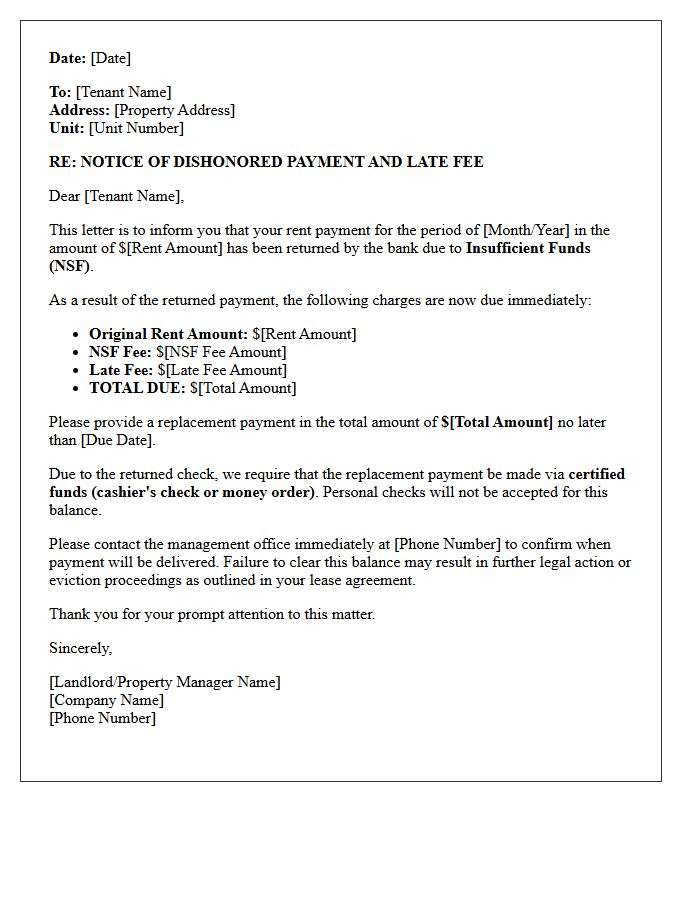
An Insufficient Funds (NSF) notice informs tenants that their rent payment failed due to lack of capital. This formal letter serves as a legal record, demand for immediate repayment, and notification of Late Charges. It typically outlines the original rent amount, the specific NSF Fee incurred, and the new total balance due. To avoid further legal action or eviction proceedings, tenants must usually provide guaranteed funds, such as a cashier's check or money order, within a strict timeframe specified in the lease agreement.
Declined Rent Check and Associated Late Fees Letter
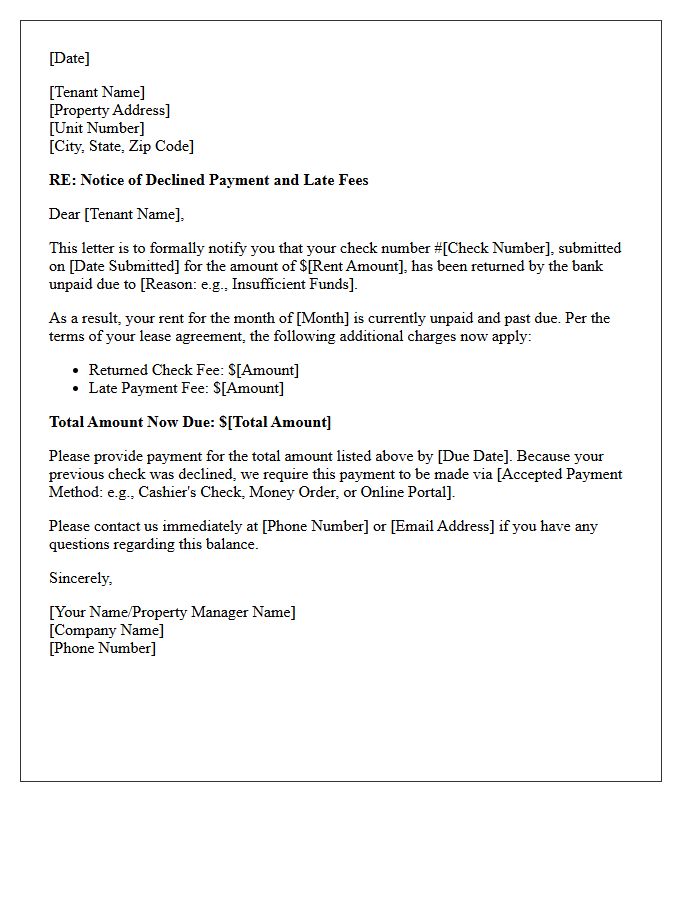
A Declined Rent Check Letter is a formal notice sent by landlords when a tenant's payment fails due to insufficient funds. It is crucial to clearly state the original rent amount, the specific reason for the decline, and the exact late fees incurred as per the lease agreement. Providing a strict deadline for replacement payment via certified funds helps prevent further legal action or eviction proceedings. Maintaining a professional record of this correspondence ensures legal protection for both parties regarding financial defaults and payment history.
What is a Notice of Returned Check?
A Notice of Returned Check is a formal communication sent to a payer when their payment cannot be processed by the bank, typically due to non-sufficient funds (NSF) or a closed account.
What are the common reasons for a returned check?
The most frequent reasons include insufficient funds (NSF) in the account, payment being stopped by the issuer, an invalid or closed bank account, or mismatched signatures.
How much are the late fees and returned check penalties?
The total amount owed usually includes the original payment balance plus a flat returned check fee (NSF fee) and any applicable late interest charges as outlined in your contract or local state law.
How can I resolve a returned check notice?
To resolve the notice, you must immediately provide an alternative form of payment, such as a cashier's check, money order, or electronic wire transfer, covering both the original amount and the penalty fees.
What happens if a returned check is not paid?
Failure to settle a returned check may result in the suspension of services, negative reporting to credit bureaus, additional collection costs, and potential legal action under civil or criminal check fraud statutes.


Comments