
Protect your financial reputation by understanding a Notice of Debt Collection and Credit Reporting Intent. This formal communication warns consumers of overdue balances before they impact credit scores. Learning how to respond effectively can prevent long-term credit damage and legal action. To help you draft a professional response or formal notice, below are some ready to use templates.
Image cover: Final Notice: Impending Credit Reporting and Debt Collection Templates
Letter Samples List
- Initial Notice of Debt Collection Letter
- Final Demand Letter for Outstanding Tenant Balances
- Notice of Intent to Report Delinquent Rent Letter
- Post-Move-Out Debt Collection and Credit Reporting Letter
- Property Damage Balance Collection Letter
- Broken Lease Penalty Debt Collection Letter
- Eviction Judgment Debt Recovery Letter
- Delinquent Homeowner Association Dues Collection Letter
- Notice of Imminent Credit Bureau Reporting Letter
- Commercial Lease Default and Debt Collection Letter
- Unpaid Utility Balance Collection Letter
- Final Warning Letter Before Third-Party Debt Assignment
Initial Notice of Debt Collection Letter
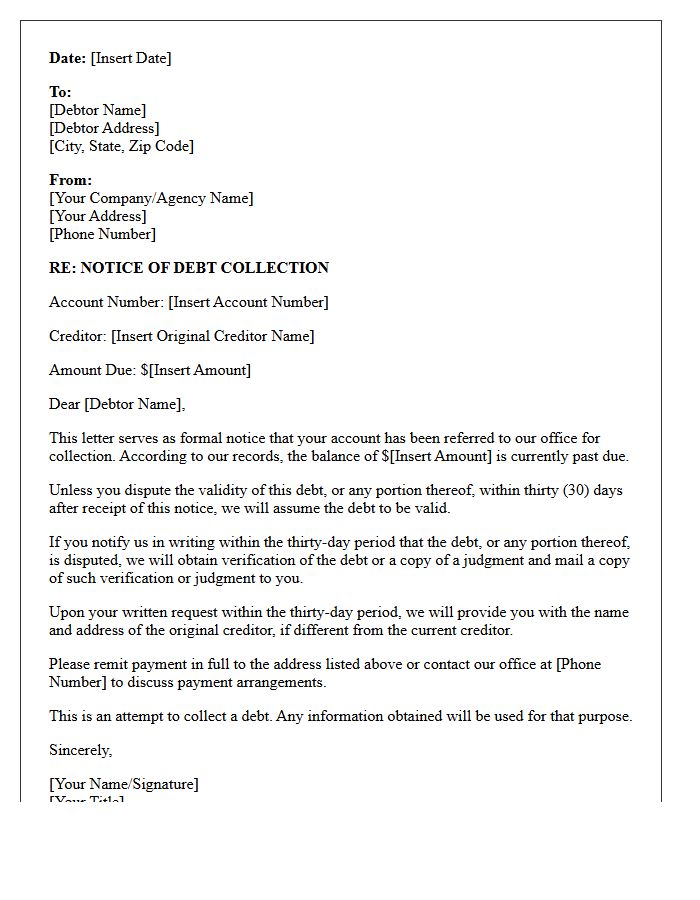
An Initial Notice of Debt Collection is a formal communication triggering your legal rights under the Fair Debt Collection Practices Act (FDCPA). Upon receipt, you have a thirty-day validation period to dispute the debt's accuracy in writing. This letter must disclose the total amount owed, the creditor's identity, and instructions for verification. Ignoring this notice can lead to negative credit reporting or legal action. Always verify the debt's legitimacy before making payments to ensure the collector is authorized and the statute of limitations has not expired on the balance.
Final Demand Letter for Outstanding Tenant Balances
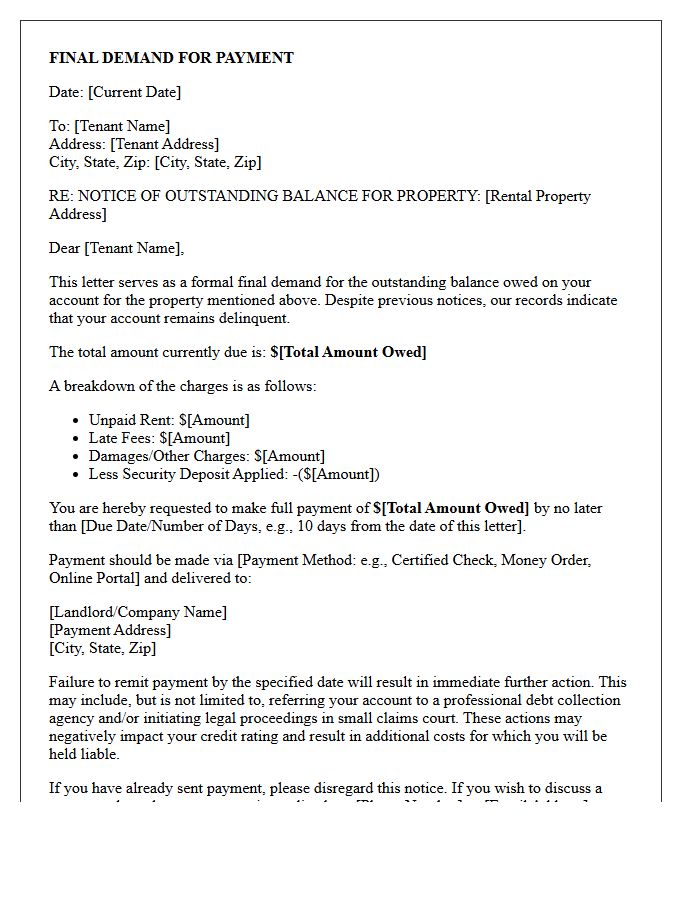
A Final Demand Letter is the formal legal notice sent to a tenant before initiating litigation or debt collection. This document explicitly outlines the total unpaid rent, utilities, and late fees owed. It serves as a final opportunity for the tenant to settle their outstanding balance within a specified timeframe, usually ten days. Providing clear payment instructions and warning of impending legal action creates a vital paper trail for court proceedings, demonstrating that the landlord attempted to resolve the dispute amicably before seeking an eviction or a money judgment.
Notice of Intent to Report Delinquent Rent Letter
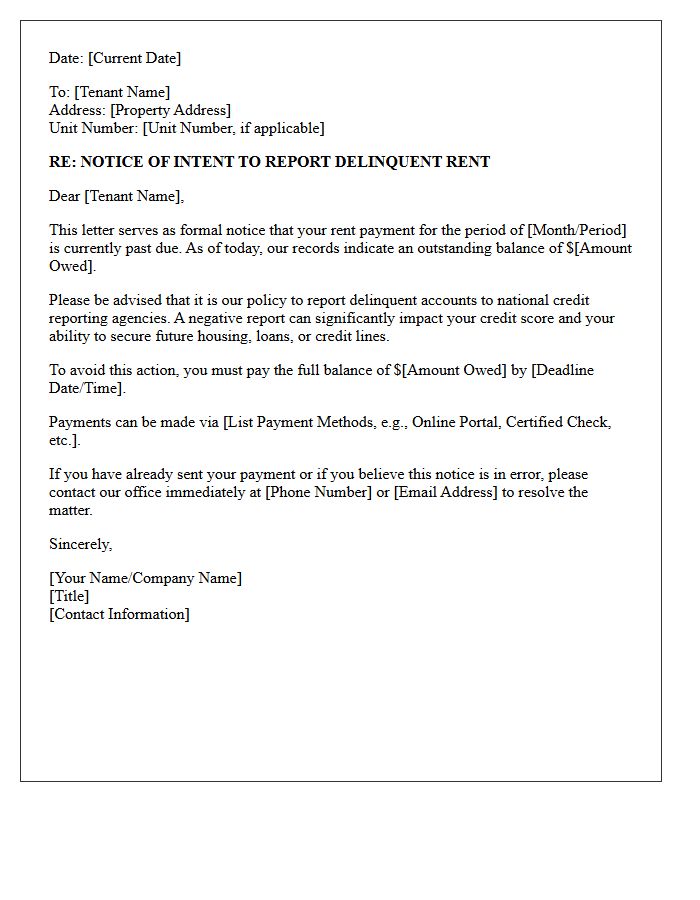
A Notice of Intent to Report Delinquent Rent is a formal warning issued by a landlord before submitting late payment history to credit bureaus. The most important thing to know is that this letter provides a final opportunity to settle outstanding debt or negotiate a repayment plan to avoid severe credit score damage. Receiving this notice signals that legal action or debt collection may follow. Timely communication is essential to prevent a long-term negative impact on your financial profile and future housing eligibility.
Post-Move-Out Debt Collection and Credit Reporting Letter
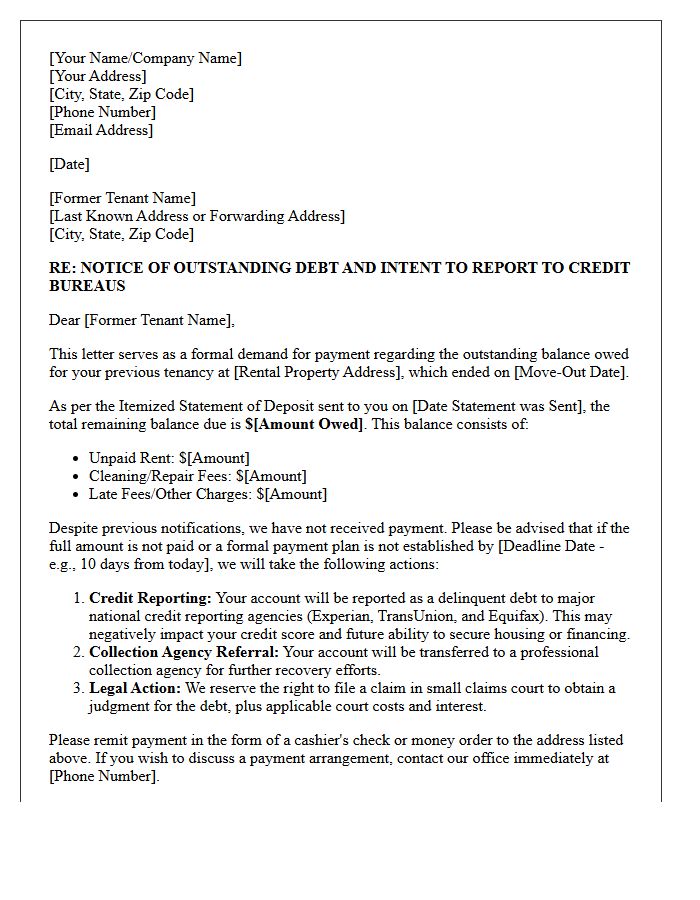
A post-move-out debt collection letter notifies former tenants of alleged unpaid rent or property damages. It is crucial to respond within 30 days to request debt validation, ensuring the charges are accurate and documented. Failure to address these claims can lead to negative credit reporting, severely lowering your credit score and hindering future housing applications. Always verify your state's security deposit laws and keep records of your move-out inspection to dispute unfair charges and protect your financial reputation from aggressive collection tactics.
Property Damage Balance Collection Letter
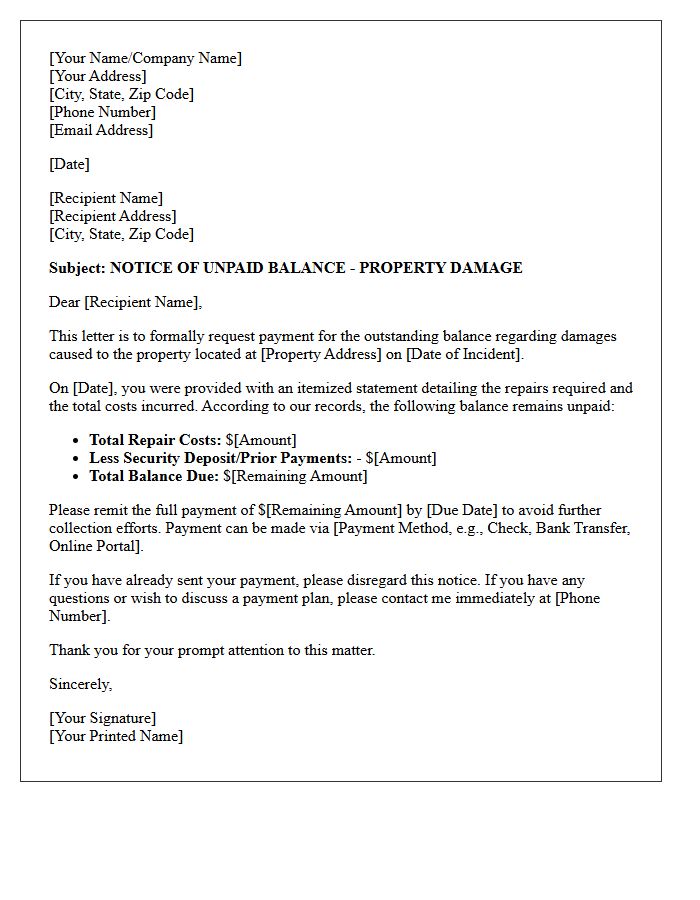
A property damage balance collection letter is a formal demand for payment sent to a party responsible for causing physical harm to assets. The most critical element is providing clear documentation of the incident and repair costs. To ensure legal compliance and professional recovery, you must include the final outstanding balance and a specific deadline for settlement. This document serves as an essential step before initiating formal litigation or credit reporting. Accurately outlining the liability and damage assessment helps expedite the reimbursement process while maintaining a detailed paper trail for insurance claims.
Broken Lease Penalty Debt Collection Letter
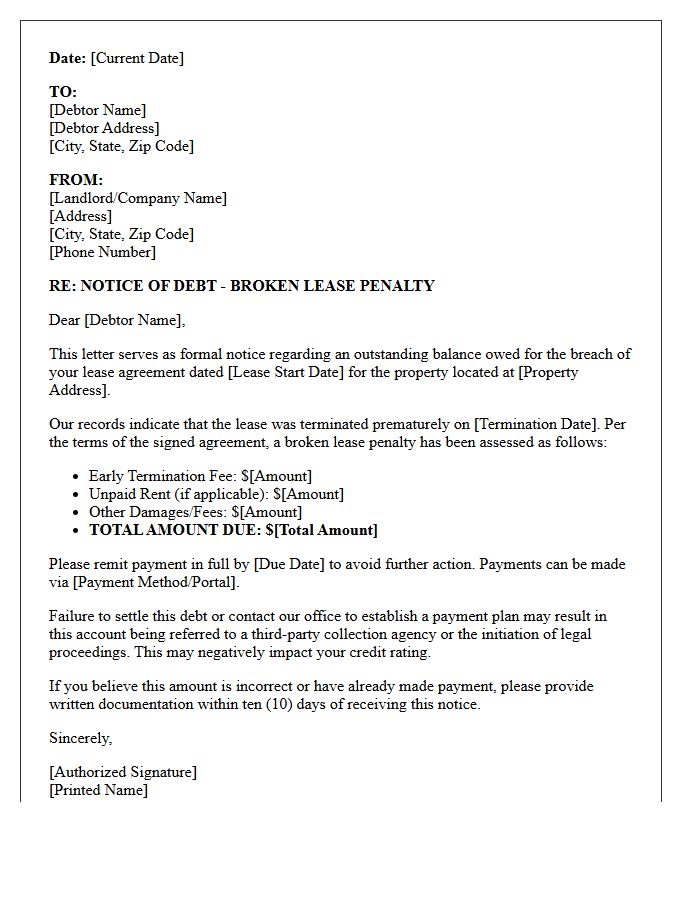
Receiving a broken lease penalty debt collection letter signifies that a landlord or agency is pursuing unpaid rent, damages, or early termination fees. It is crucial to verify the debt by requesting a written validation notice within thirty days. Do not ignore this letter, as an unresolved balance can severely damage your credit score and hinder future housing applications. Review your original lease agreement to confirm the charges are lawful and consider negotiating a settlement or payment plan to prevent further legal action or persistent collection efforts.
Eviction Judgment Debt Recovery Letter
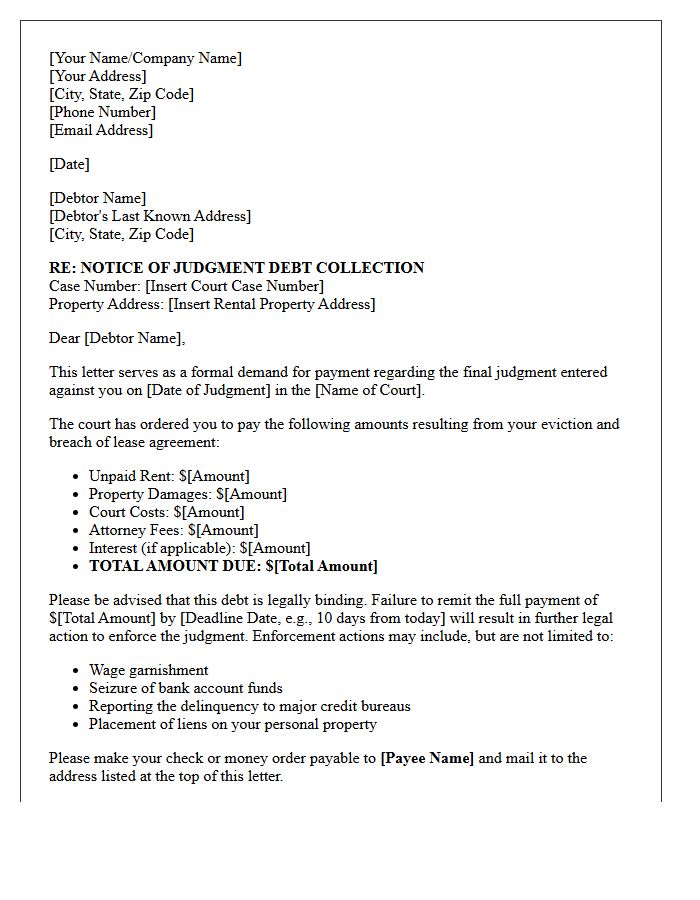
An Eviction Judgment Debt Recovery Letter serves as a formal demand for payment following a court order. This document notifies a former tenant of their legal obligation to settle outstanding rent or property damages. It is a critical step in judgment enforcement, providing clear notice before escalating to wage garnishment or asset seizure. To ensure effectiveness, the letter should include the case number, total amount owed, and a deadline for payment. Professional communication helps landlords recover lost revenue while maintaining legal compliance with local debt collection regulations.
Delinquent Homeowner Association Dues Collection Letter
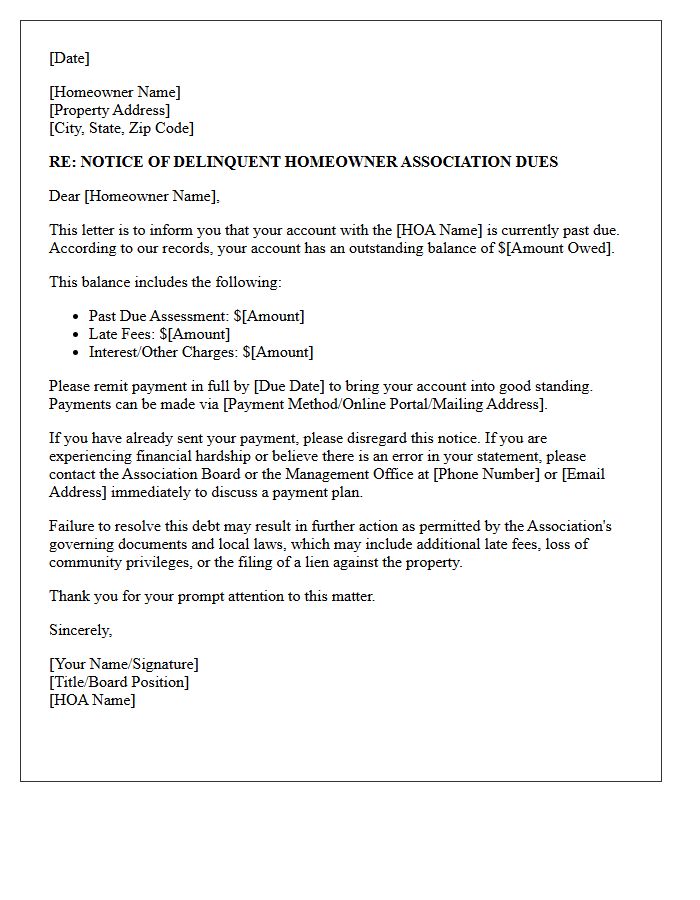
A delinquent HOA dues collection letter serves as a formal notification to homeowners regarding unpaid assessments. This document is a critical step in the debt recovery process, outlining the total balance owed, including late fees and interest. It establishes a clear timeline for payment to avoid further legal action or property liens. Providing a formal notice ensures compliance with association bylaws and state laws, offering the owner a final opportunity to resolve the financial obligation and maintain community stability through consistent funding for shared services and amenities.
Notice of Imminent Credit Bureau Reporting Letter
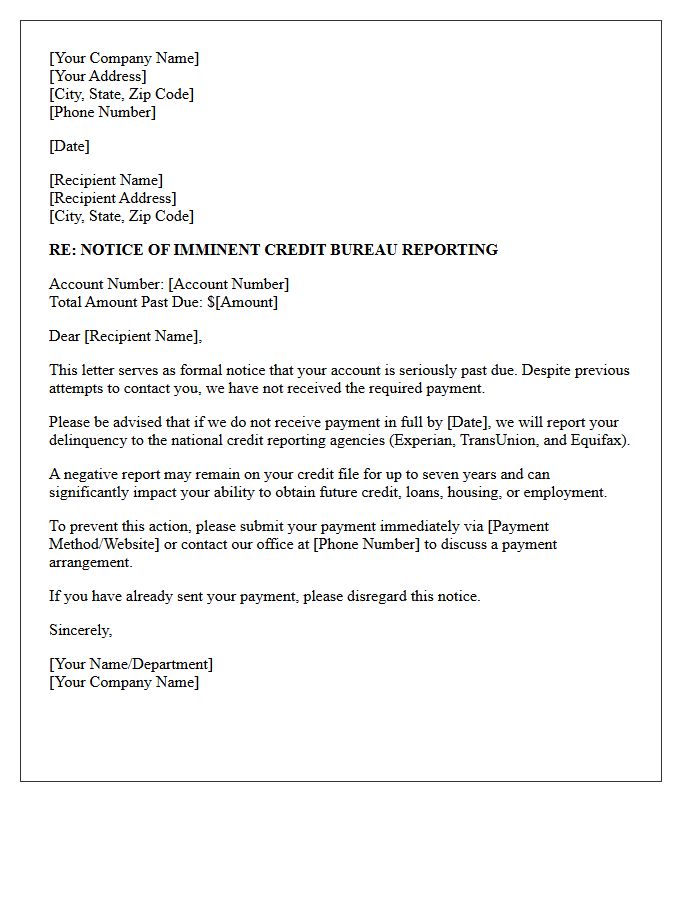
A Notice of Imminent Credit Bureau Reporting is a formal warning that a past-due debt will soon be shared with credit agencies. Receiving this letter means you have a final grace period, typically 30 days, to settle the balance or dispute the charge. To protect your credit score from significant damage, you must act quickly. Resolving the debt before the deadline prevents a negative remark from appearing on your credit report, which could otherwise hinder your future ability to secure loans, housing, or favorable interest rates.
Commercial Lease Default and Debt Collection Letter
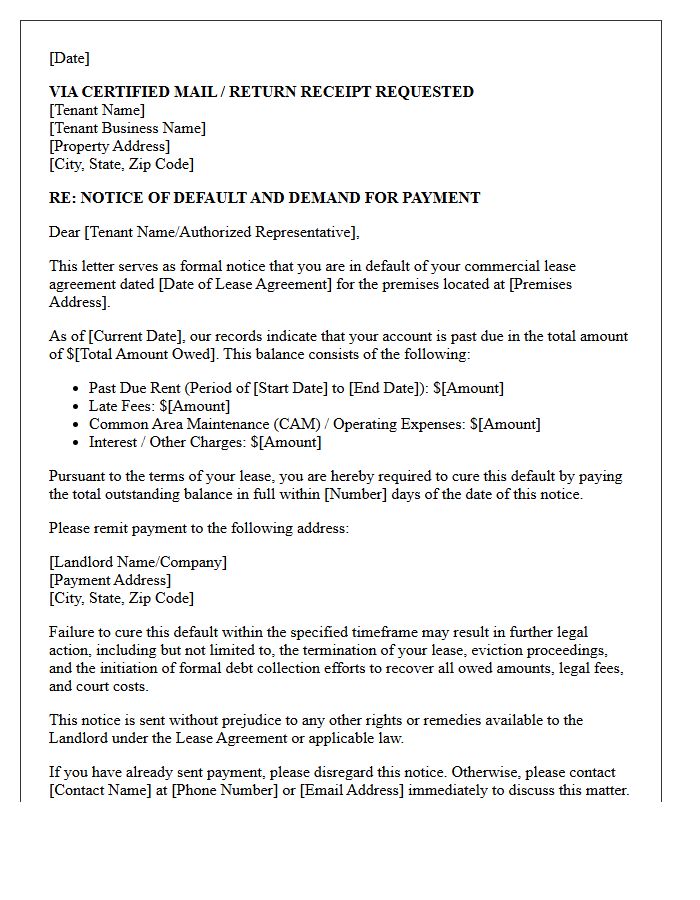
A Commercial Lease Default notice is a formal legal document issued when a tenant breaches contractual obligations, typically for non-payment of rent. This Debt Collection Letter serves as a mandatory prerequisite for eviction proceedings, outlining the specific amount owed and the timeframe to cure the default. Landlords must ensure precise adherence to lease terms and local statutes to maintain legal leverage. Promptly addressing delinquencies minimizes financial loss and clarifies the potential for lease termination or legal action to recover outstanding arrears effectively.
Unpaid Utility Balance Collection Letter
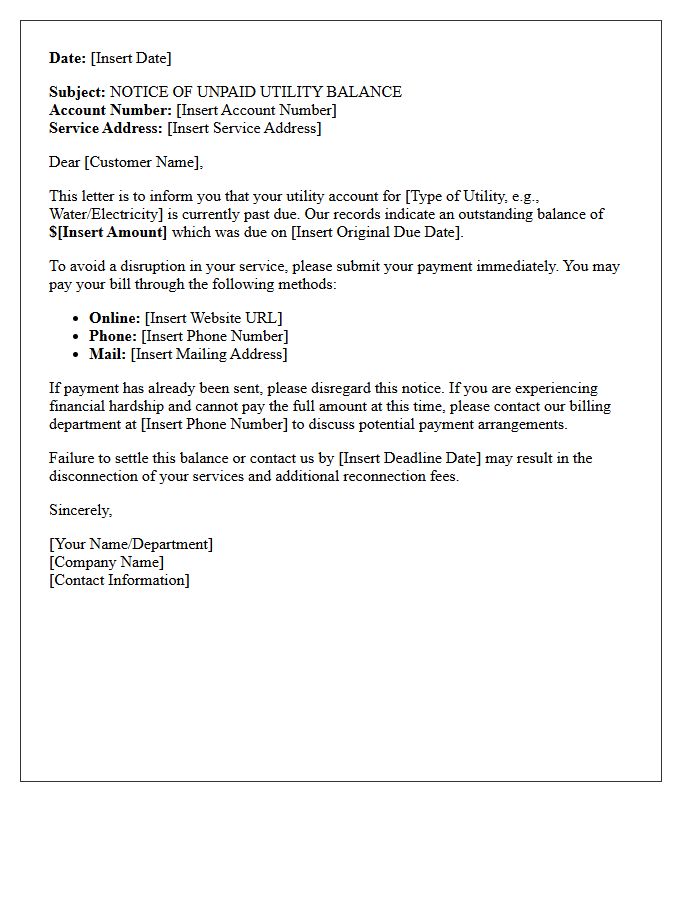
Receiving an Unpaid Utility Balance Collection Letter indicates that a service provider has transferred your delinquent debt to a third-party agency. It is crucial to validate the debt immediately to ensure the amount is accurate and within the legal statute of limitations. Failing to address this notice can severely damage your credit score and lead to legal action or wage garnishment. You have a legal right to dispute errors or negotiate a settlement agreement to resolve the balance and prevent long-term financial consequences from outstanding utility obligations.
Final Warning Letter Before Third-Party Debt Assignment
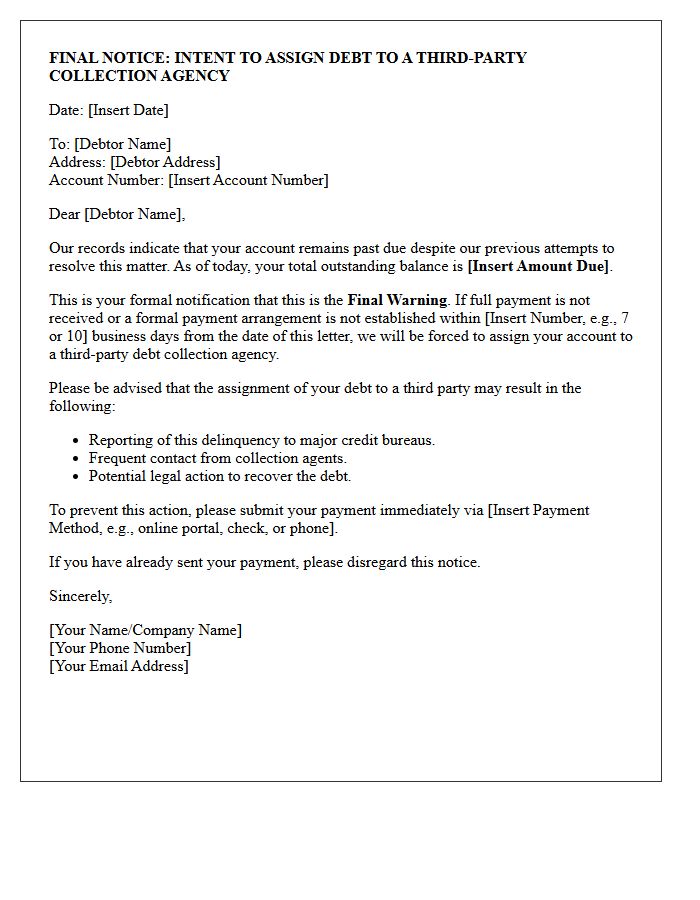
A final warning letter serves as a formal notice that your delinquent account is facing imminent third-party debt assignment. This critical document warns that failure to provide immediate payment or establish a settlement will result in your file being transferred to an external collection agency. Once assigned, the debt may negatively impact your credit score and lead to persistent recovery efforts. To prevent this escalation and protect your financial standing, you must respond within the specified grace period to resolve the outstanding balance directly with the original creditor.
What is a Notice of Debt Collection and Credit Reporting Intent?
A Notice of Debt Collection and Credit Reporting Intent is a formal communication sent by a creditor or collection agency informing a debtor that an unpaid account is being placed for collection and may be reported to national credit bureaus if the balance is not resolved.
How long do I have to respond to a debt collection notice before it affects my credit score?
Under federal law, consumers typically have a 30-day validation period to dispute the debt or request verification before the collection agency can report the negative information to credit bureaus like Experian, Equifax, and TransUnion.
Can I stop a debt from being reported to credit bureaus after receiving this notice?
Yes, you can often prevent credit reporting by paying the debt in full, settling for a partial amount, or successfully disputing the validity of the debt within the 30-day window specified in the notice.
What information must be included in a legal debt validation notice?
A legally compliant notice must include the total amount owed, the name of the original creditor, a statement providing 30 days to dispute the debt, and a declaration that the agency will provide verification of the debt if requested in writing.
Does receiving a notice of intent to report mean my credit score has already dropped?
Not necessarily. A notice of intent serves as a warning; the impact on your credit score typically occurs only after the 30-day grace period expires and the collector officially submits the delinquent account data to the credit reporting agencies.

Comments