
A Notice of Intent to File Unlawful Detainer is a critical legal warning sent by landlords to tenants before initiating a formal eviction lawsuit. This document serves as a final demand for compliance or possession of the property, ensuring due process is followed under local housing laws. To simplify your legal preparations, below are some ready to use templates.
Image cover: Formal Notice of Intent to File Unlawful Detainer: Professional Templates and Examples
Letter Samples List
- Property Management Company Letterhead
- Date Of Letter Issuance
- Tenant Legal Name And Property Address
- Subject Of Intent To File Unlawful Detainer Letter
- Formal Letter Salutation
- Reference To Original Lease Agreement
- Detailed Explanation Of Lease Violation
- Total Outstanding Balance Or Required Cure Action
- Strict Deadline To Vacate Premises Or Comply
- Warning Of Court Action And Eviction Letter Consequences
- Notification Of Financial Liability For Legal Costs
- Property Manager Official Signature
- Certificate Of Letter Service Delivery Method
Property Management Company Letterhead
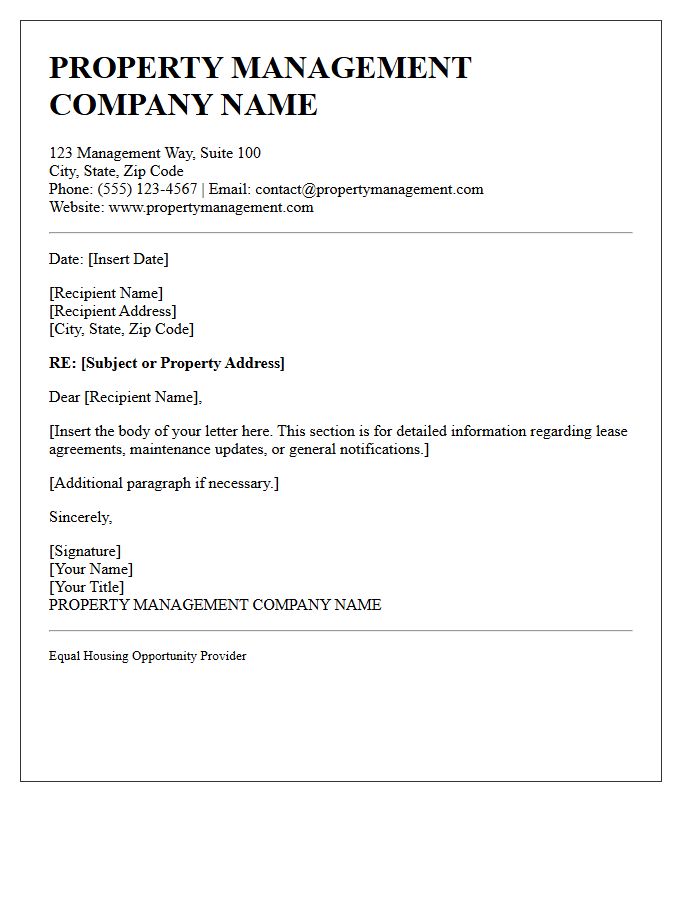
A professional Property Management Company Letterhead serves as a critical legal identifier for all official correspondence. It must clearly display the company's name, logo, physical address, and contact details to establish credibility with tenants and vendors. Using a standardized template ensures brand consistency and provides a formal structure for legal notices, lease agreements, and financial statements. Including license numbers or professional affiliations can further enhance trust, ensuring that every document issued is recognized as an authoritative and authentic record of the business.
Date Of Letter Issuance
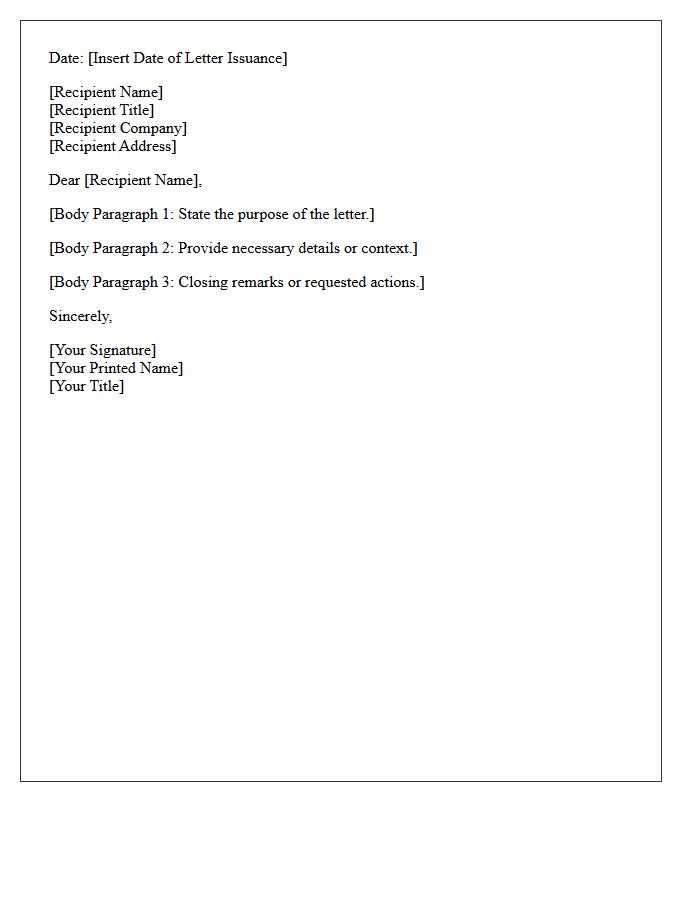
The Date of Letter Issuance is the official calendar date a document is formally generated and dispatched. It serves as the primary reference for legal deadlines, notice periods, and document validity. Understanding this date is crucial for tracking compliance timelines and ensuring timely responses to formal requests. In many jurisdictions, this date marks the beginning of the "statutory period," making it the most significant marker for determining when specific rights or obligations take effect. Always verify this date to avoid missing critical submission windows or expiration terms.
Tenant Legal Name And Property Address
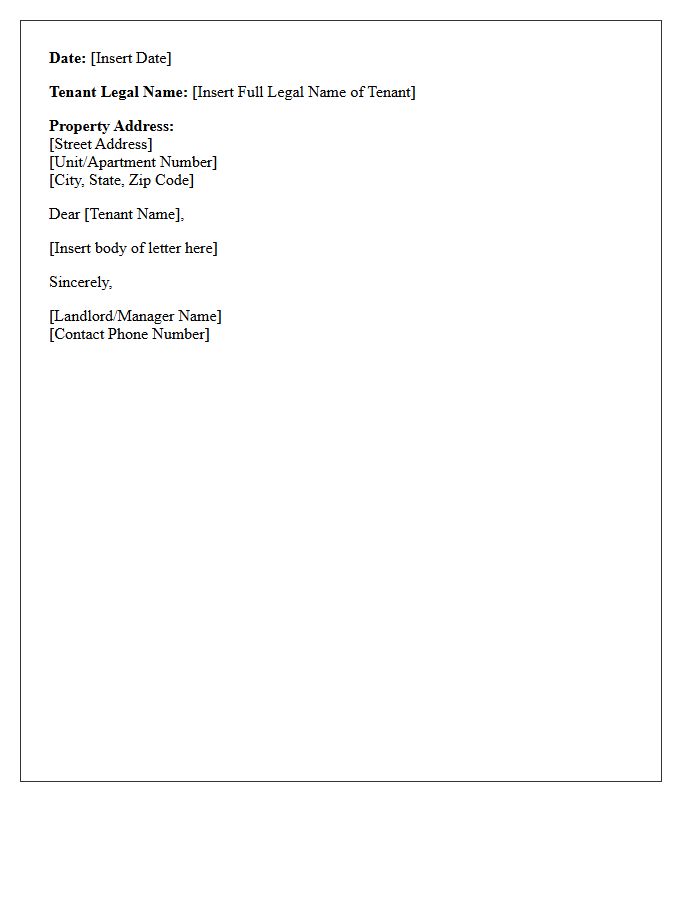
The Tenant Legal Name must match official government identification exactly to ensure the lease is legally binding and enforceable. Accuracy prevents identity disputes during legal proceedings. Equally critical is the Property Address, which must include the specific unit number, street, city, and zip code to define the precise premises under contract. Correctly documenting both elements is the foundation of a valid rental agreement, protecting the rights of both parties and ensuring clear jurisdictional authority for any future housing compliance or judicial matters.
Subject Of Intent To File Unlawful Detainer Letter
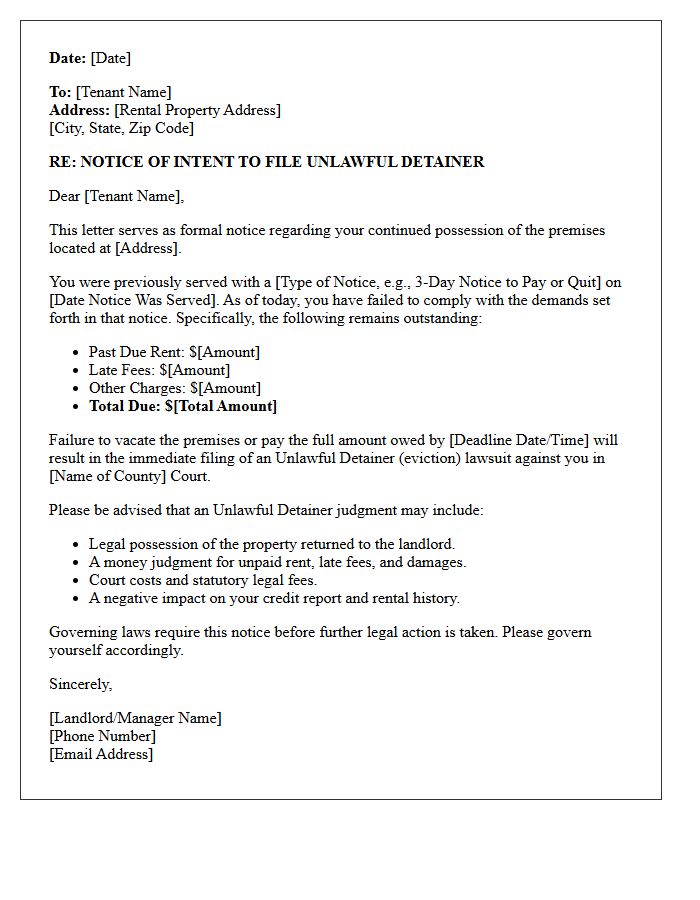
A Notice of Intent to File an Unlawful Detainer is a formal legal warning sent by a landlord to a tenant before initiating an eviction lawsuit. This letter typically demands the resolution of lease violations, such as unpaid rent or property damage, within a specific timeframe. It serves as a final opportunity for the tenant to vacate or comply before court proceedings begin. Properly serving this notice is a mandatory procedural step to ensure the legal validity of any subsequent eviction action under local housing laws.
Formal Letter Salutation
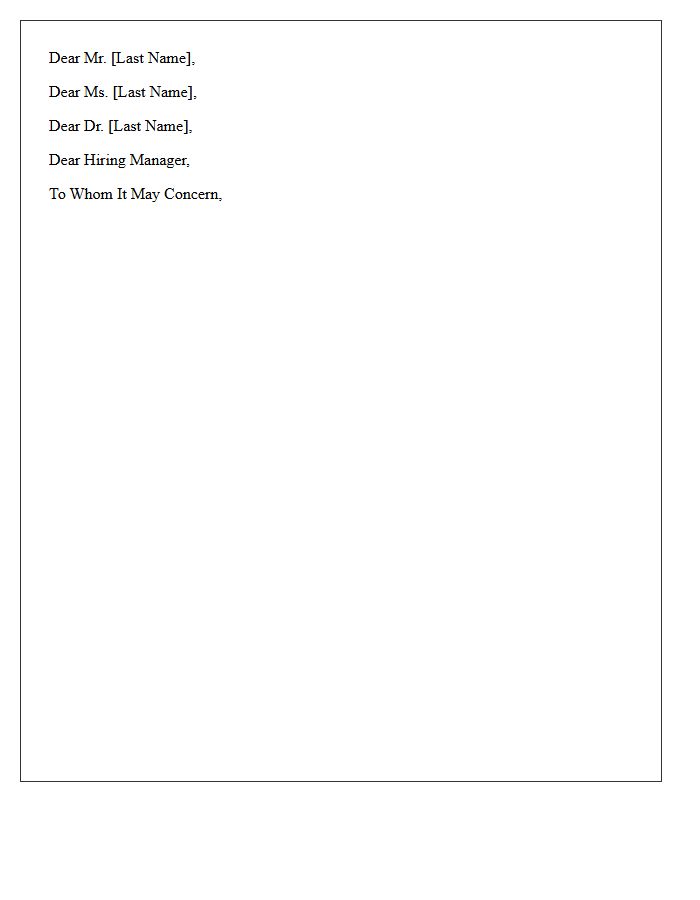
A formal letter salutation is essential for establishing a professional tone. If the recipient's name is known, use "Dear" followed by their title and surname. For instances where the specific contact person is unknown, the traditional phrases "Dear Sir or Madam" or "To Whom It May Concern" are standard. Always ensure the greeting matches the level of formality required for the context, as it creates the first impression. Proper punctuation, typically a comma or a colon in business settings, should follow the name to maintain professionalism throughout your correspondence.
Reference To Original Lease Agreement
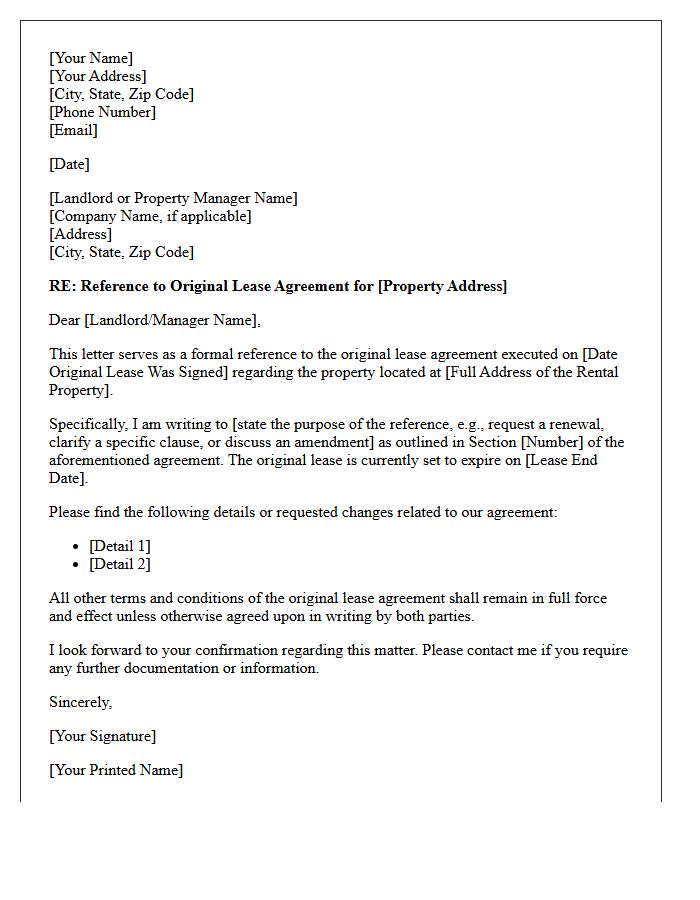
A Reference To Original Lease Agreement is a critical legal bridge used in amendments or extensions. It identifies the foundational contract by including the effective date, parties involved, and property address. This ensures that all terms from the primary document remain legally binding unless specifically modified. Proper referencing prevents ambiguity and maintains the enforceability of the original covenants during renewals or sub-leases. Always verify that the citation matches the initial document exactly to protect your legal rights and clarify the ongoing obligations of both landlord and tenant.
Detailed Explanation Of Lease Violation
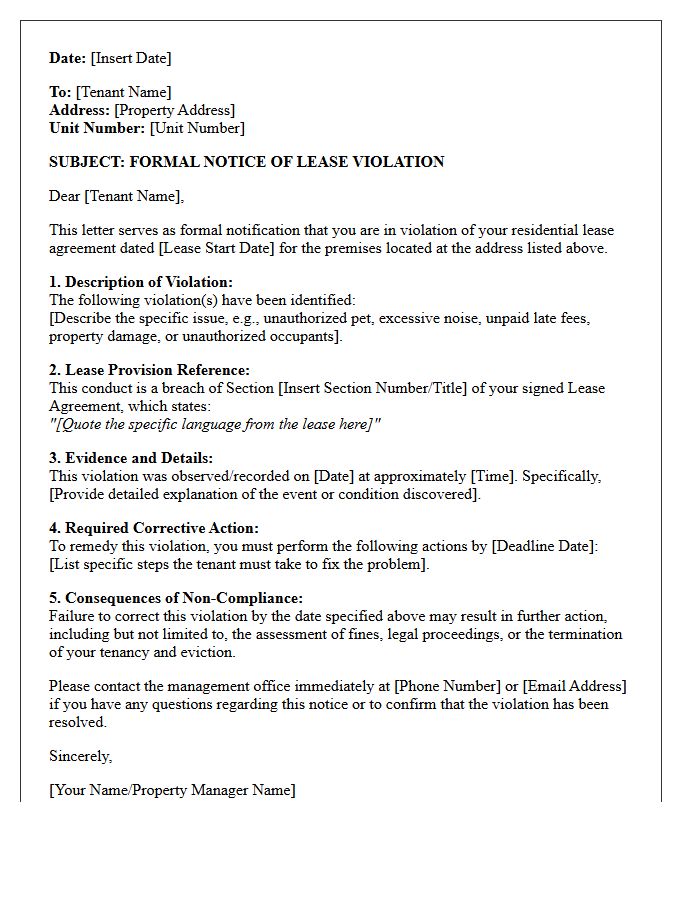
A lease violation occurs when a tenant or landlord breaches the specific terms outlined in a rental agreement. Common infractions include unauthorized pets, unpaid rent, or property damage. When a violation is identified, the landlord typically issues a formal written notice to cure the breach or vacate the premises. Failing to resolve the issue within the legal timeframe can lead to eviction proceedings. Understanding your contractual obligations is essential to maintaining housing stability and avoiding costly legal disputes or the loss of a security deposit.
Total Outstanding Balance Or Required Cure Action
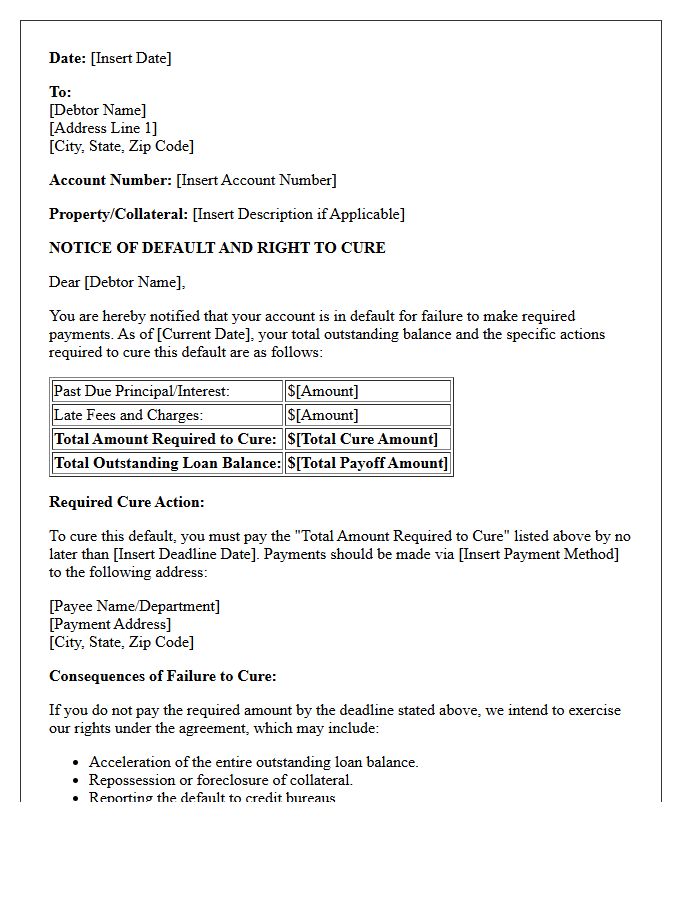
Your Total Outstanding Balance represents the full amount legally owed on an account, including principal, interest, and fees. Conversely, a Required Cure Action is a specific task, such as paying a past-due amount, to rectify a default and prevent foreclosure or repossession. While the balance reflects your total debt, the cure action is the immediate payment necessary to restore your account to good standing. Understanding these terms helps you distinguish between total liability and the urgent requirement to avoid legal or collection penalties.
Strict Deadline To Vacate Premises Or Comply
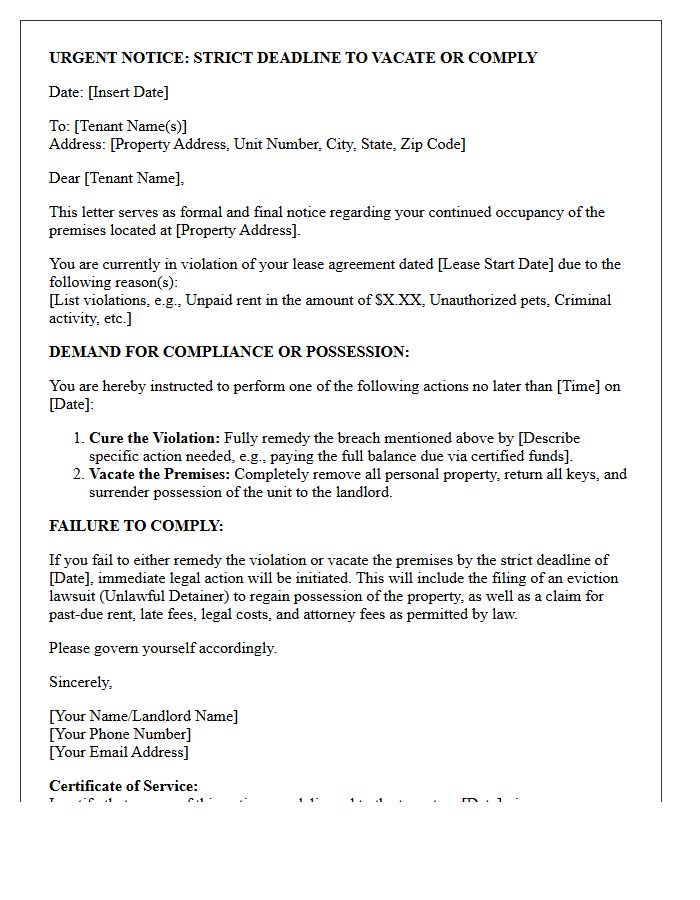
Receiving a Strict Deadline To Vacate Premises Or Comply is a critical legal notice requiring immediate action. This formal demand signifies that a tenant must either remedy a specific lease violation or permanently surrender possession of the property by a fixed date. Failure to adhere to this timeframe typically triggers an immediate eviction lawsuit. It is essential to understand that missing this cutoff often results in the loss of legal defenses, leading to forcible removal by local authorities and significant long-term damage to your credit and rental history.
Warning Of Court Action And Eviction Letter Consequences
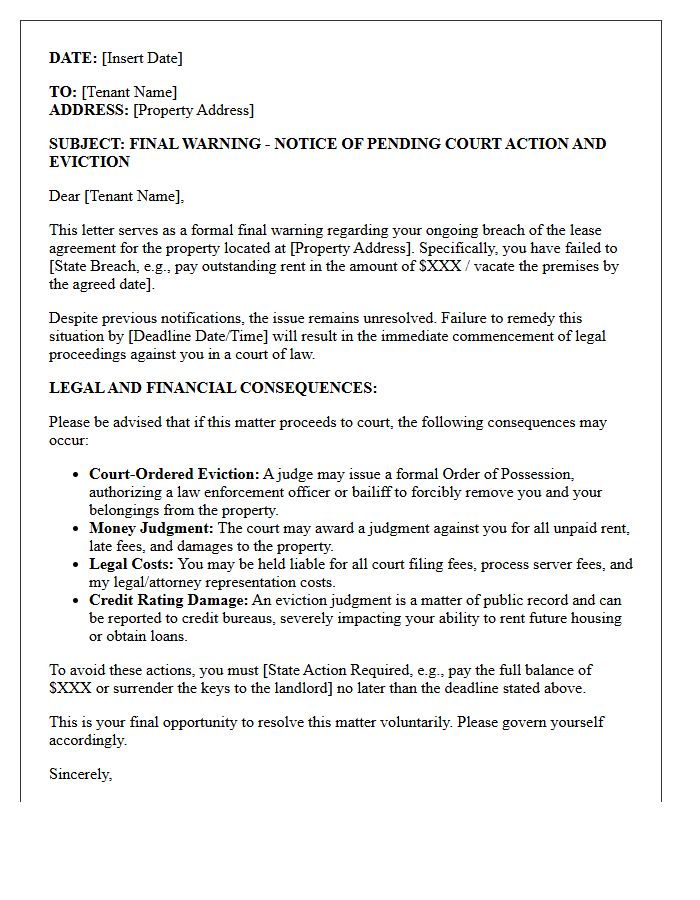
Receiving a Warning Of Court Action and Eviction Letter is a critical legal notice indicating your landlord has initiated formal proceedings to regain possession of the property. Ignoring this document can lead to a binding court order, resulting in forceful removal by bailiffs and potential homelessness. It often stems from rent arrears or lease violations. You must seek immediate legal advice or contact your local housing authority to negotiate a settlement. Failing to respond may also damage your credit rating and severely limit your ability to secure future rental housing.
Notification Of Financial Liability For Legal Costs
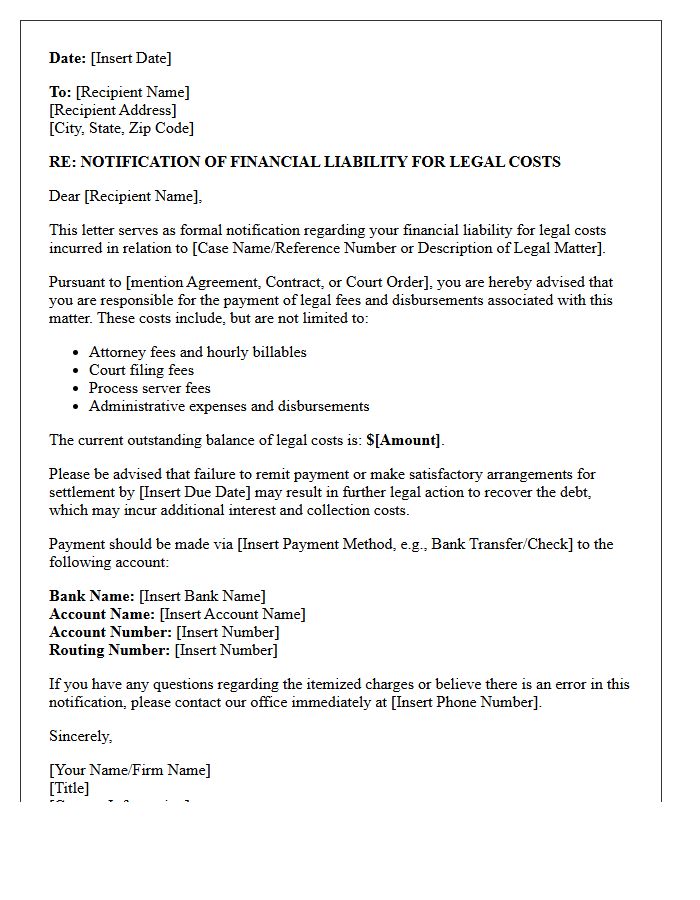
A Notification of Financial Liability is a formal document informing a party of their obligation to cover specific legal costs incurred during litigation. This notice ensures transparency regarding potential expenses, such as attorney fees, court filings, and disbursements. Under procedural rules, failure to acknowledge this liability can lead to cost penalties or adverse judgments. It is a critical safeguard in the indemnity principle, allowing parties to assess the financial risks of pursuing or defending a claim before significant expenses accumulate. Always review these notices promptly to understand your pecuniary exposure.
Property Manager Official Signature
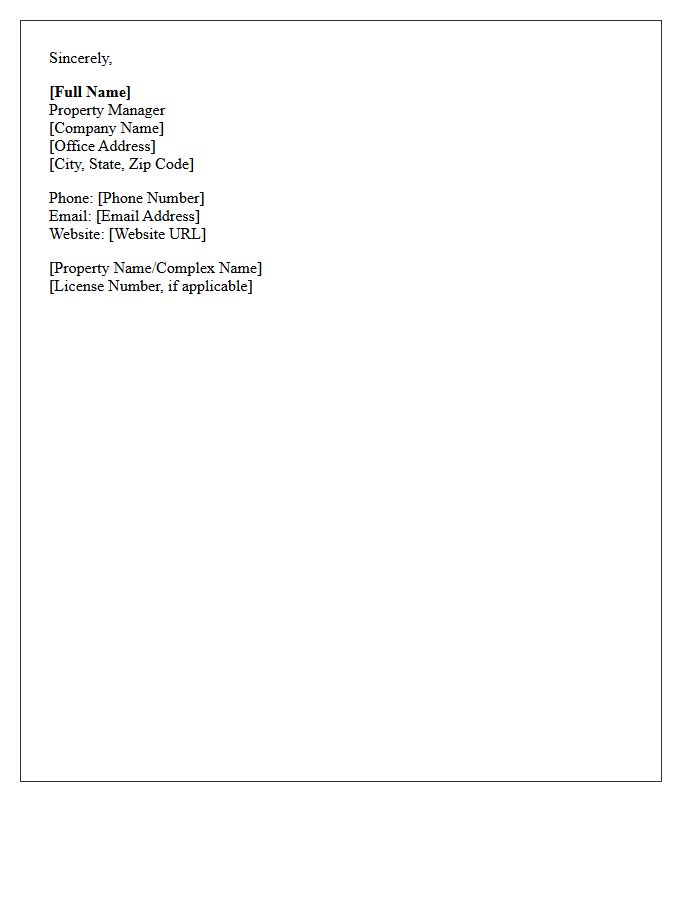
A Property Manager Official Signature serves as a legally binding validation on lease agreements and formal notices. This signature confirms that the individual has the delegated authority to act on behalf of the property owner. To ensure enforceability, the signature should always include the manager's printed name, title, and the date of execution. Using a digital signature is increasingly common, provided it complies with local electronic record laws. Always verify that the signer is authorized to prevent future disputes regarding contract validity or management responsibilities.
Certificate Of Letter Service Delivery Method
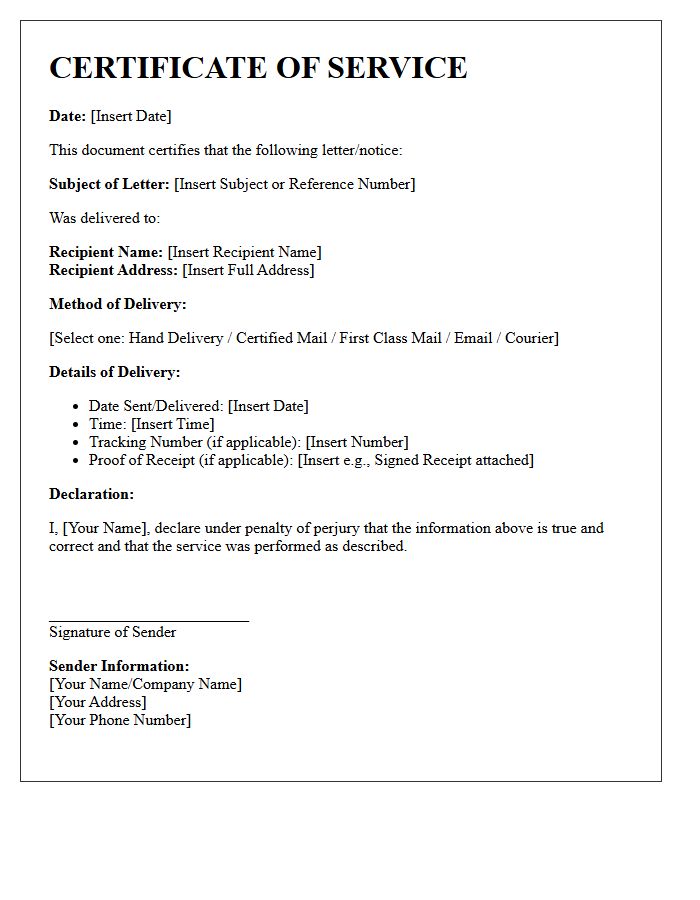
The Certificate of Letter Service provides legal proof that a document was sent through the postal system. This delivery method serves as an official receipt from the carrier, confirming the date of mailing without requiring the recipient's signature. It is an essential tool for legal compliance, ensuring senders have verifiable evidence of postage for notices, contracts, or formal correspondence. Unlike registered mail, it focuses on the act of sending rather than tracking, making it a cost-effective solution for establishing a reliable paper trail in professional and administrative proceedings.
What is a Notice of Intent to File an Unlawful Detainer?
A Notice of Intent to File an Unlawful Detainer is a formal legal warning sent by a landlord to a tenant indicating that an eviction lawsuit will be filed in court if specific lease violations, such as unpaid rent, are not resolved within a designated timeframe.
Is a Notice of Intent the same as an Eviction Notice?
While often used interchangeably, a Notice of Intent serves as the final warning (such as a 3-Day Notice to Pay or Quit) required by law before a landlord can officially file an Unlawful Detainer case with the court system to regain possession of the property.
How many days does a tenant have to respond to a Notice of Intent?
The timeframe depends on the reason for the notice and local state laws; typically, tenants are given 3, 30, 60, or 90 days to either remedy the breach or vacate the premises before the landlord proceeds with legal action.
Can a landlord file an Unlawful Detainer without providing notice?
No, landlords are legally required to serve a valid written notice before filing an Unlawful Detainer lawsuit. Failure to properly serve this notice is a common defense that can lead to the dismissal of the eviction case.
What should a tenant do after receiving a Notice of Intent to File an Unlawful Detainer?
A tenant should immediately review the notice to understand the alleged lease violation, attempt to resolve the issue with the landlord (such as paying overdue rent), and consult with legal counsel to prepare for potential court proceedings if the matter is not settled.


Comments