
When a tenancy ends, landlords must provide a Notice of Security Deposit Itemization to explain any deductions made for repairs or unpaid rent. This legal document ensures transparency and compliance with state security deposit laws, protecting both parties from future disputes. Understanding your rights and obligations is essential for a smooth move-out process. Below are some ready to use templates.
Image cover: Professional Security Deposit Itemization Templates and Official Notice Samples
Letter Samples List
- Standard Security Deposit Itemization Letter
- Full Security Deposit Refund Letter
- Partial Security Deposit Return Letter
- Balance Due Security Deposit Itemization Letter
- Move-Out Security Deposit Statement Letter
- Itemized Security Deposit Accounting Letter
- Notice of Security Deposit Withholding Letter
- Security Deposit Itemization and Demand Letter
- End of Tenancy Security Deposit Itemization Letter
- Security Deposit Reconciliation Letter
- Itemized Damage Deduction Security Deposit Letter
- Unpaid Rent Security Deposit Deduction Letter
Standard Security Deposit Itemization Letter
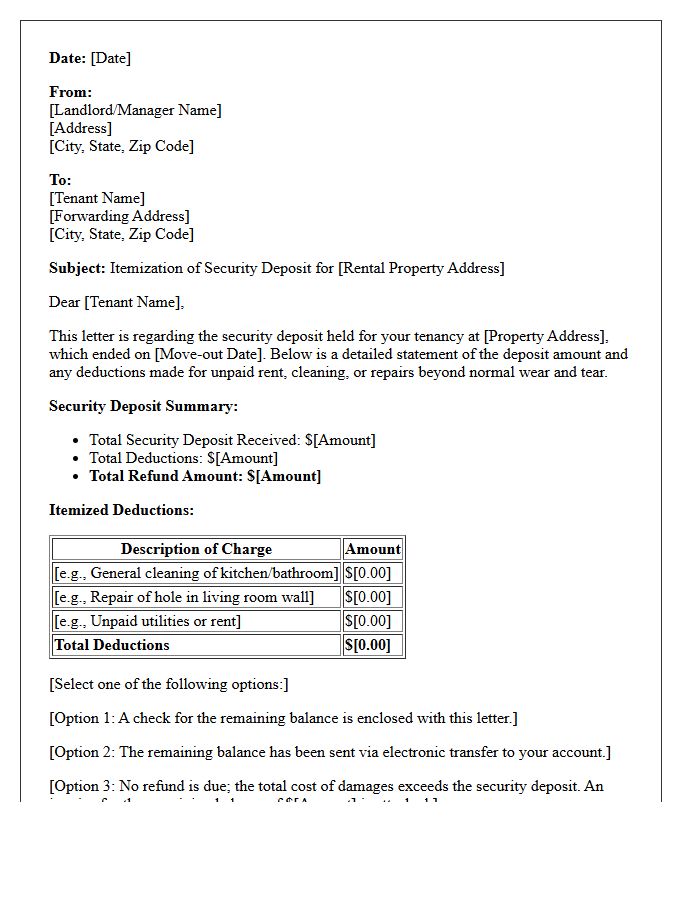
A Standard Security Deposit Itemization Letter is a legally required document sent by landlords to tenants after move-out. It must detail any deductions taken for repairs, cleaning, or unpaid rent beyond normal wear and tear. Most jurisdictions enforce strict statutory deadlines, often 14 to 30 days, to return the remaining balance. Providing an itemized list with receipts protects landlords from disputes and ensures tenants understand why funds were withheld. Failure to provide this written notice can result in legal penalties or the forfeiture of the right to retain any deposit money.
Full Security Deposit Refund Letter
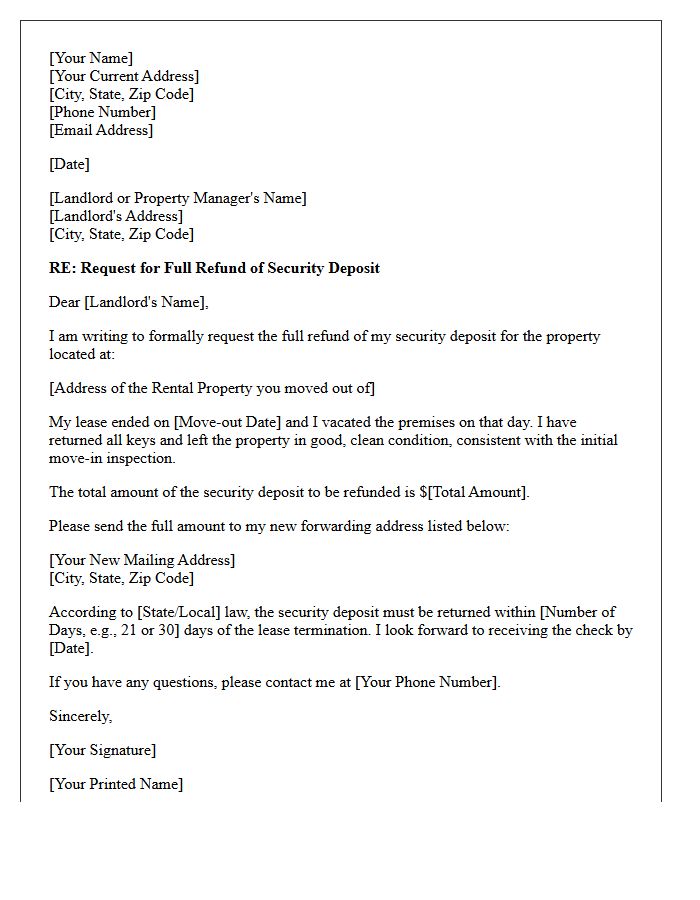
A Full Security Deposit Refund Letter is a formal notice sent by a landlord to a tenant returning the entire deposit amount. It serves as legal proof of payment and confirms that no deductions were made for damages or unpaid rent. To ensure compliance, the letter should include the move-out date, the original deposit sum, and a check or transfer confirmation. Sending this document promptly helps maintain a positive rental history and protects both parties from future legal disputes regarding the condition of the property.
Partial Security Deposit Return Letter
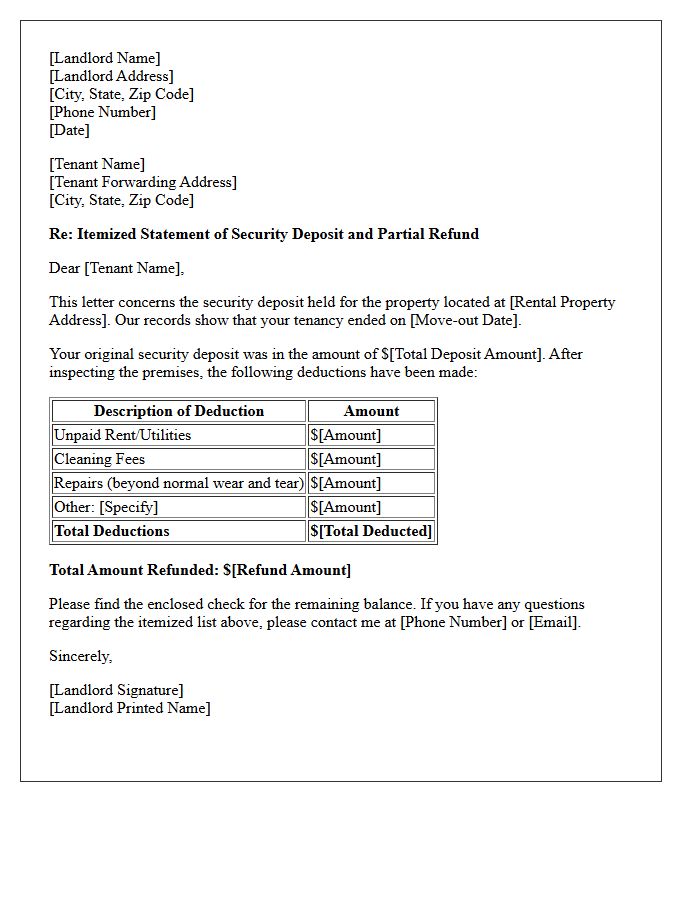
A Partial Security Deposit Return Letter is a formal document sent by a landlord to explain why the full deposit was not refunded. It must include an itemized list of deductions for specific damages or unpaid rent beyond normal wear and tear. Providing written documentation and receipts is essential to comply with local housing laws. This letter serves as legal proof of the transaction, helping to prevent future disputes. Always ensure the remaining balance is enclosed and sent within the state-mandated legal deadline to avoid potential penalties or court action.
Balance Due Security Deposit Itemization Letter
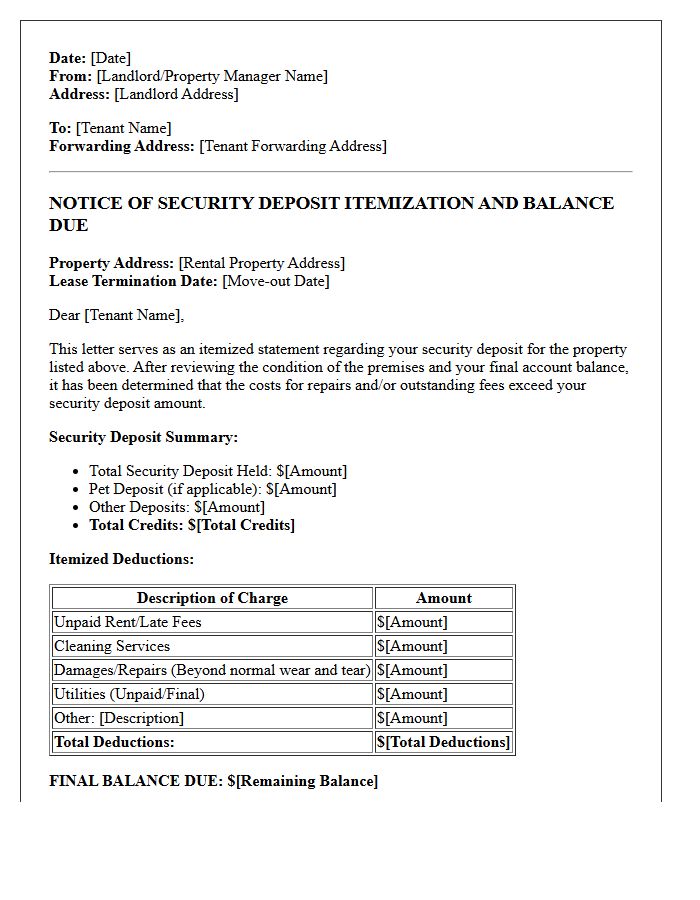
A Balance Due Security Deposit Itemization Letter is a legal notice sent by landlords when repair costs exceed the initial deposit. It must itemize all deductions clearly, providing receipts or estimates for damages beyond normal wear and tear. Tenants are legally entitled to this document within specific state deadlines. Failure to provide an accurate breakdown can lead to legal disputes. If a remaining balance exists after exhausting the deposit, the tenant is required to pay the difference to avoid potential debt collection or small claims court actions.
Move-Out Security Deposit Statement Letter
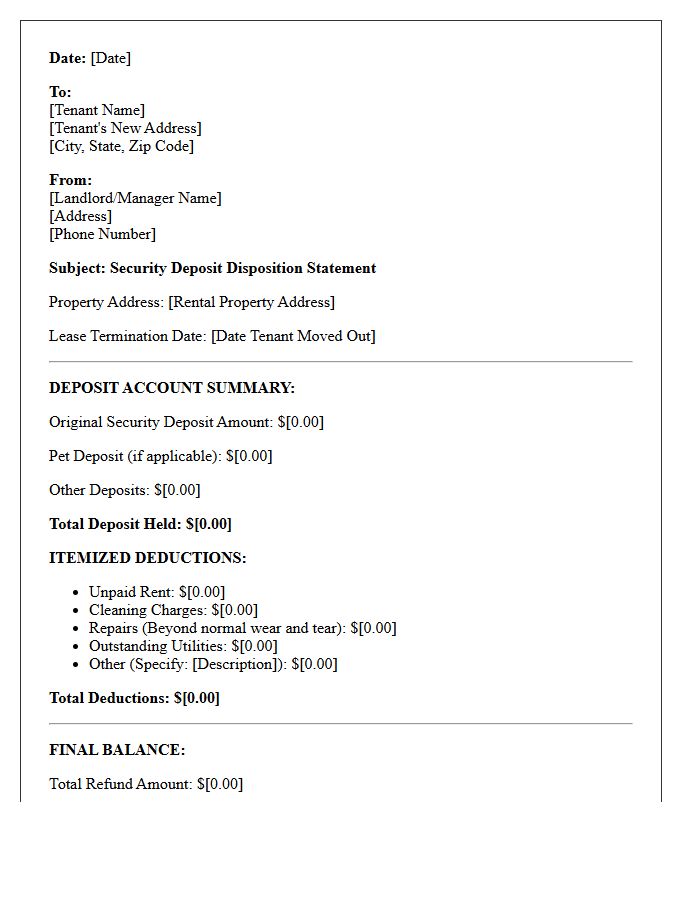
A Move-Out Security Deposit Statement Letter is a formal document detailing the final disposition of funds held by a landlord. Legally required in most regions, it specifies any itemized deductions for property damage beyond normal wear and tear, unpaid rent, or cleaning fees. This statement must be sent within a specific legal timeframe-often 14 to 30 days-along with the remaining balance. Providing a clear, documented accounting protects both parties from disputes and ensures compliance with tenant rights and local housing regulations during the lease termination process.
Itemized Security Deposit Accounting Letter
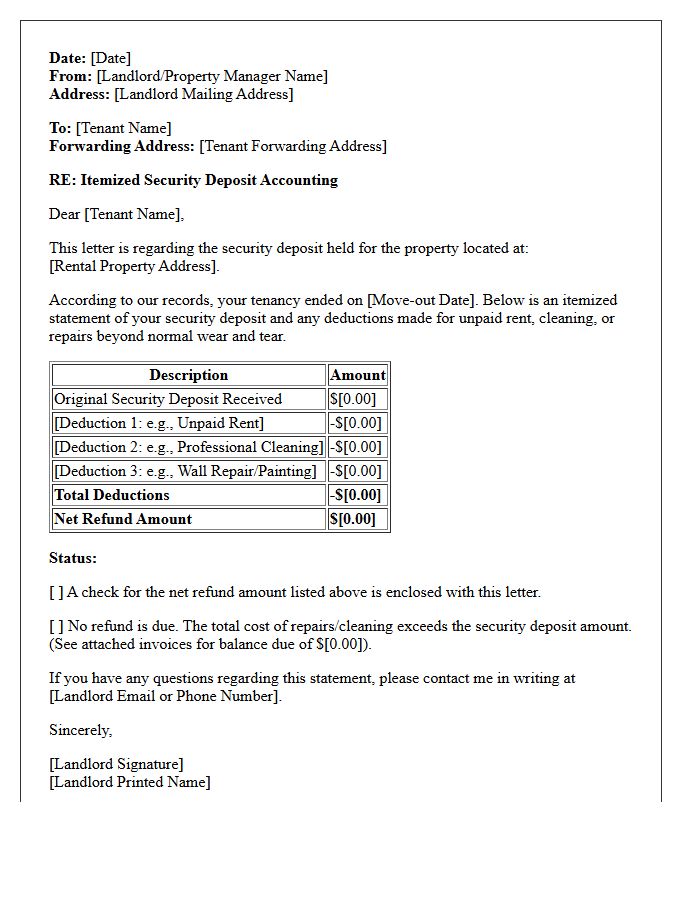
An Itemized Security Deposit Accounting Letter is a mandatory document sent by landlords to former tenants within state-mandated deadlines. It provides a detailed breakdown of any deductions taken from the initial deposit for repairs, professional cleaning, or unpaid rent. Providing specific invoices and receipts is essential to justify costs and prevent legal disputes. If the full deposit is returned, a letter is still recommended for formal record-keeping. Ensuring transparency in this statement protects landlords from wrongful withholding claims and helps maintain clear legal compliance after a lease ends.
Notice of Security Deposit Withholding Letter
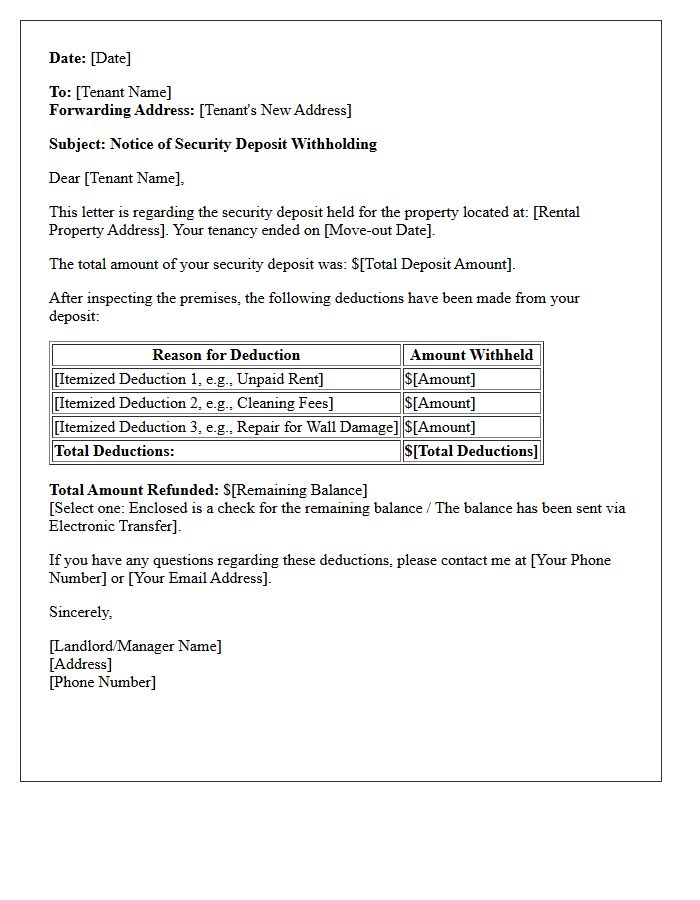
A Notice of Security Deposit Withholding Letter is a legal document used by landlords to explain why a tenant's deposit is not being returned in full. It must provide an itemized list of specific deductions, such as unpaid rent or repairs for damages exceeding normal wear and tear. To remain valid, this notice must be sent within a strict state-mandated deadline, typically 14 to 30 days after move-out. Providing clear documentation and receipts protects the landlord from potential legal disputes regarding the remaining balance.
Security Deposit Itemization and Demand Letter
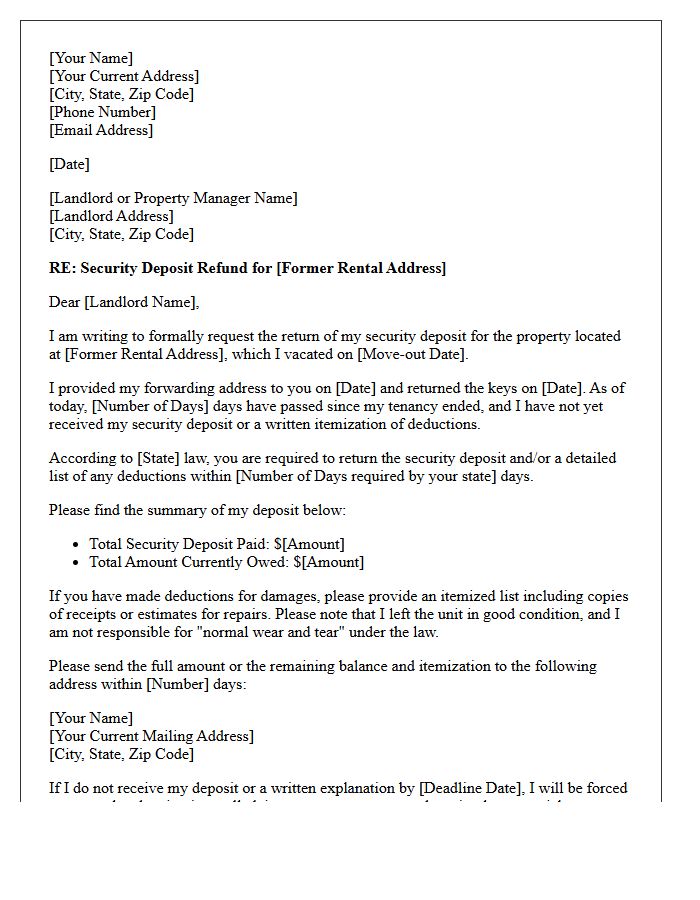
A Security Deposit Itemization is a legal document landlords must provide, usually within 30 to 60 days, detailing deductions for damages beyond normal wear and tear. If the landlord fails to return the funds or provide this statement, tenants should send a Demand Letter. This formal notice asserts your legal right to a refund and serves as essential evidence if you pursue a claim in small claims court. Understanding local state laws is critical, as missing deadlines can result in the landlord being ordered to pay double or triple damages.
End of Tenancy Security Deposit Itemization Letter
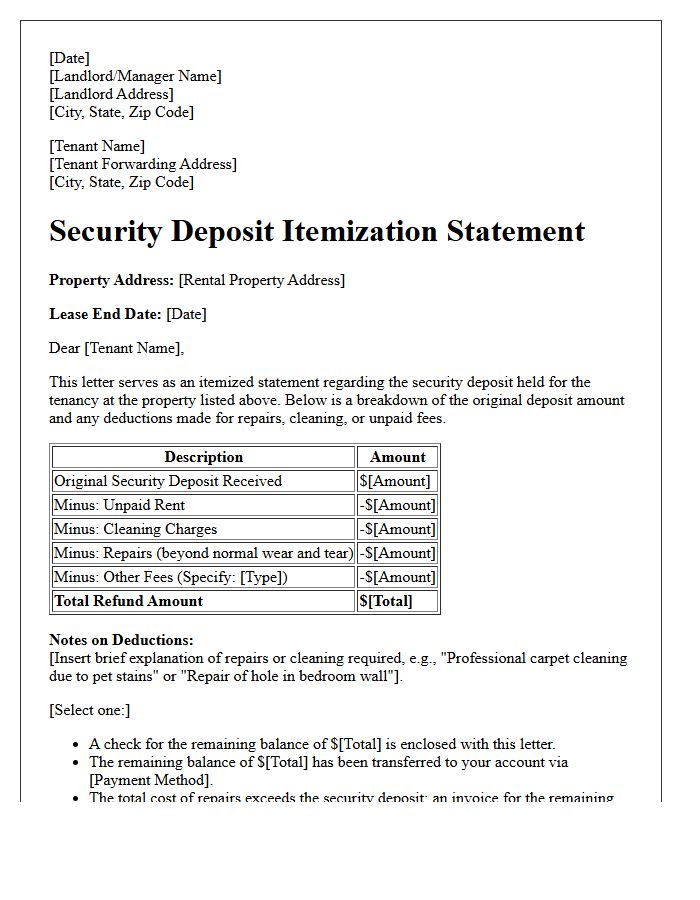
An End of Tenancy Security Deposit Itemization Letter is a legal requirement used by landlords to justify deductions from a tenant's bond. This document must provide an exhaustive list of costs for repairs, cleaning, or unpaid rent beyond normal wear and tear. To ensure transparency, it should include evidence like receipts or professional quotes. Issuing this statement within the statutory timeframe is vital for compliance and avoids legal disputes. Accurate itemization protects both parties, ensuring the return of the remaining balance is fair and legally documented.
Security Deposit Reconciliation Letter
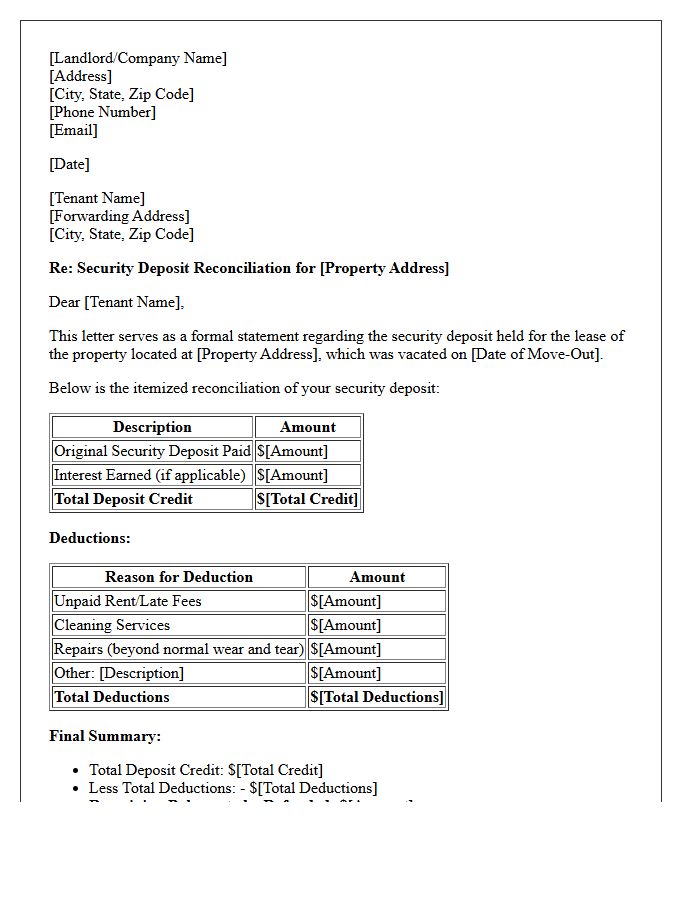
A Security Deposit Reconciliation Letter is a formal document sent by landlords to tenants within legal deadlines after a lease ends. It provides a detailed itemization of any deductions for damages beyond normal wear and tear or unpaid rent. This statement ensures transparency and specifies the net refund amount returned to the tenant. Providing an accurate, written breakdown is essential for legal compliance and protects both parties by documenting why funds were withheld or released, effectively preventing future security deposit disputes or litigation.
Itemized Damage Deduction Security Deposit Letter
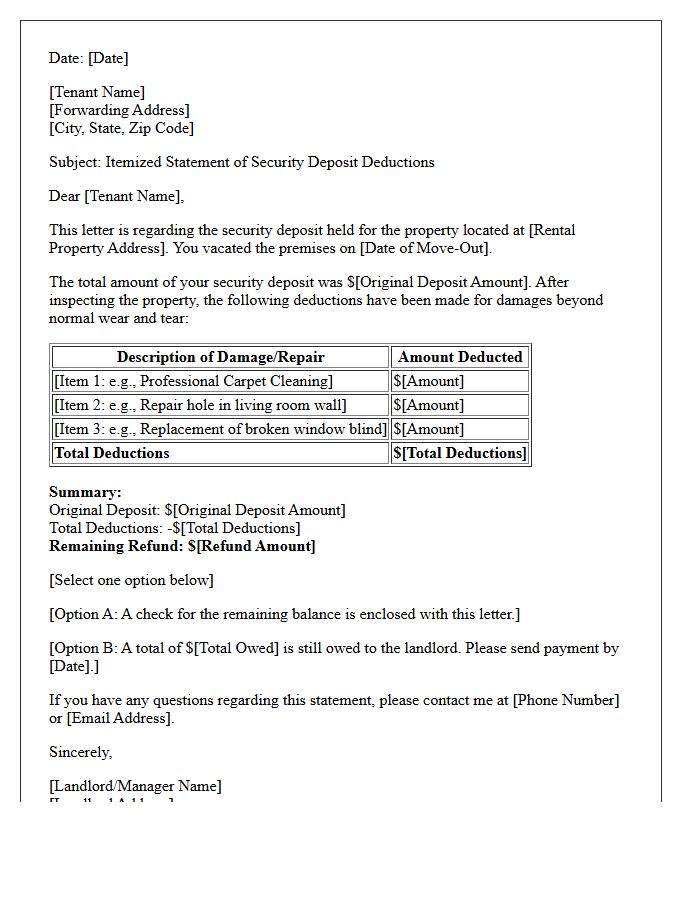
An itemized damage deduction security deposit letter is a crucial legal document used by landlords to justify withholding funds. It must clearly list specific repairs, associated costs, and remaining balances returned to the tenant. To ensure compliance, this notice must be sent within your state's legal deadline to avoid penalties or lawsuits. Providing photos and receipts as evidence protects both parties and ensures transparency. Accurate documentation serves as the primary defense in security deposit disputes, making compliance with local rental laws essential for protecting your financial interests during the move-out process.
Unpaid Rent Security Deposit Deduction Letter
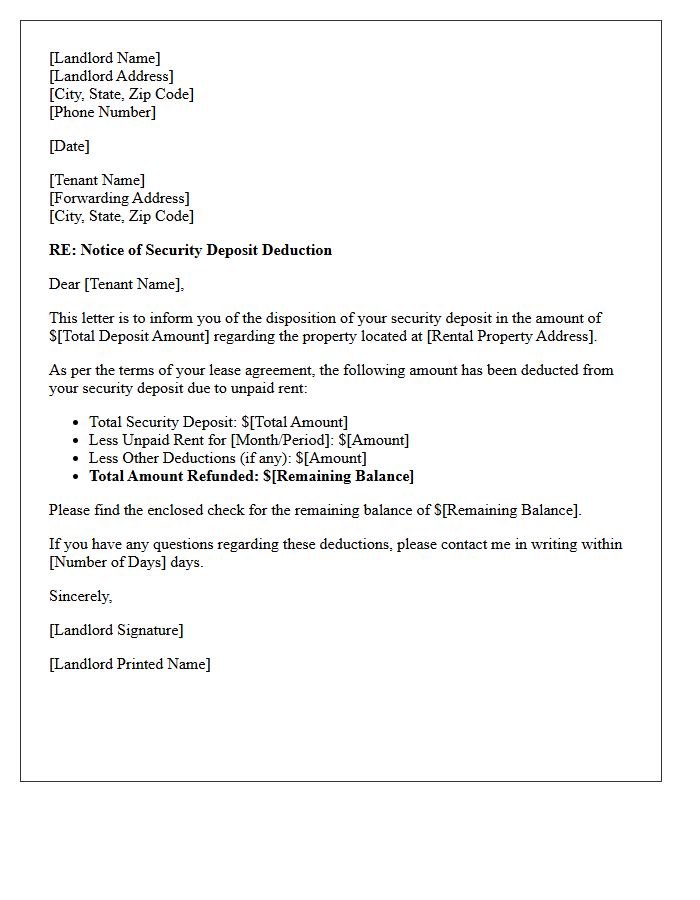
An unpaid rent security deposit deduction letter is a formal notice sent by a landlord to explain why specific funds were withheld. It must include an itemized list of missed payments and the remaining balance being returned. To remain legally compliant, this document should be mailed within the state-mandated deadline, typically 14 to 30 days after a tenant vacates. Providing clear documentation of the debt helps prevent legal disputes and ensures security deposit transparency for both parties involved in the lease termination process.
What is a Notice of Security Deposit Itemization?
A Notice of Security Deposit Itemization is a written document provided by a landlord to a tenant that outlines any deductions taken from the security deposit for repairs, cleaning, or unpaid rent after a lease ends.
How many days does a landlord have to provide a security deposit itemization?
The timeframe varies by state law, but landlords are typically required to send the itemized list and any remaining refund within 14 to 30 days after the tenant vacates the rental property.
What can be legally deducted in a security deposit itemization?
Landlords can legally deduct for unpaid rent, damages beyond normal wear and tear, and professional cleaning costs required to return the unit to its original move-in condition.
What should I do if I disagree with the charges on my security deposit itemization?
If you disagree with the deductions, you should send a formal dispute letter to the landlord via certified mail, providing evidence such as move-in/move-out photos and receipts to challenge the specific charges.
Is a landlord required to provide receipts with the security deposit itemization?
In many jurisdictions, if deductions exceed a certain dollar amount (often $125), the landlord must include copies of invoices or receipts showing the actual cost of the repairs or services performed.

Comments