
Ensure your property remains compliant with fair housing laws by implementing a formal Notice of Assistance Animal Policy Compliance. This essential document helps landlords and property managers communicate clear guidelines regarding service and emotional support animals while protecting tenant rights. Streamline your administrative process and avoid legal disputes with our expert guidance; below are some ready to use template.
Image cover: Essential Templates for Assistance Animal Policy Compliance and Notification
Letter Samples List
- Initial Request for Assistance Animal Documentation Letter
- Assistance Animal Accommodation Approval Letter
- Assistance Animal Accommodation Denial Letter
- Notice of Incomplete Assistance Animal Documentation Letter
- Assistance Animal Policy Rules Reminder Letter
- First Violation of Assistance Animal Policy Letter
- Final Warning for Assistance Animal Compliance Letter
- Notice to Remove Non-Compliant Assistance Animal Letter
- Assistance Animal Property Damage Assessment Letter
- Annual Assistance Animal Record Update Letter
- Assistance Animal Noise Complaint Warning Letter
- Assistance Animal Waste Management Violation Letter
Initial Request for Assistance Animal Documentation Letter
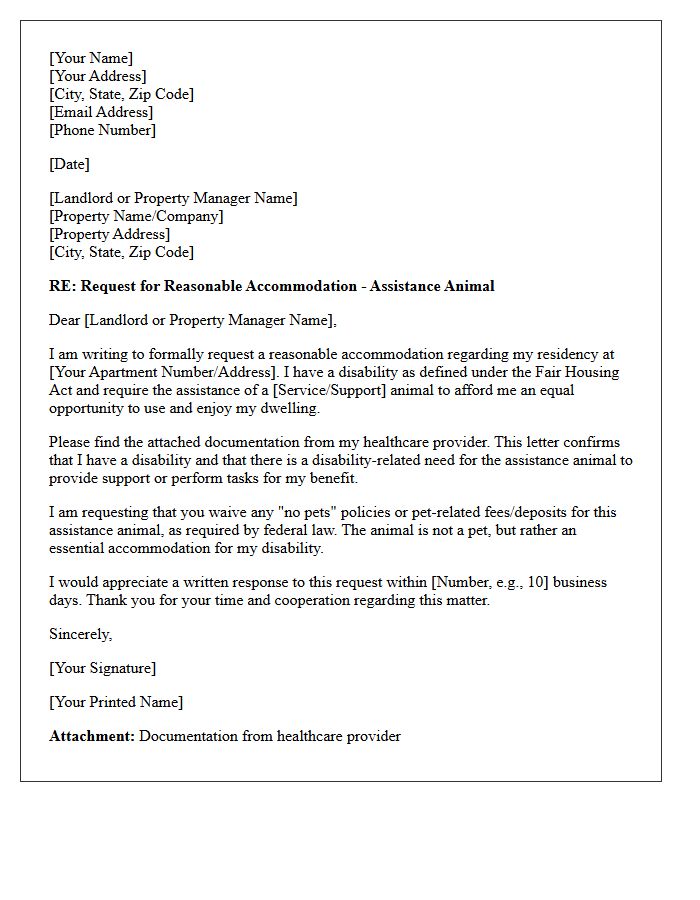
When submitting an Initial Request for Assistance Animal Documentation Letter, it is essential to establish a clear connection between a diagnosed disability and the animal's supportive role. This nexus confirms that the animal provides necessary emotional or physical relief. Under Fair Housing Act guidelines, healthcare professionals must verify the individual's need for an accommodation without disclosing sensitive medical specifics. Providing reliable documentation ensures legal compliance and helps secure housing rights by demonstrating that the assistance animal is a vital component of the owner's ongoing treatment plan and overall well-being.
Assistance Animal Accommodation Approval Letter
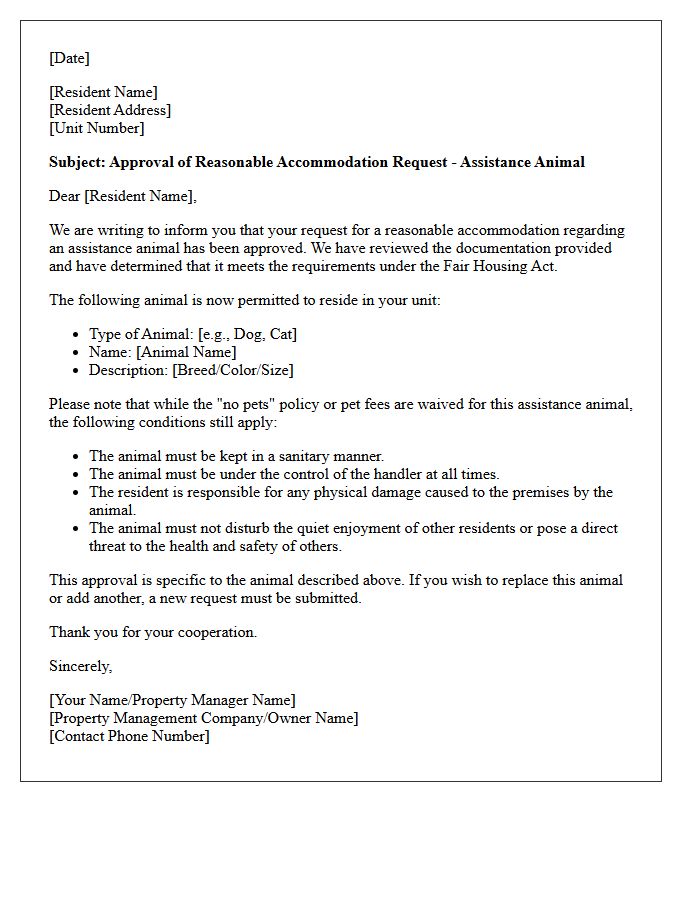
An Assistance Animal Accommodation Approval Letter is a formal document issued by a housing provider granting a tenant permission to live with a service or emotional support animal. This letter confirms that the reasonable accommodation request meets Fair Housing Act requirements. It serves as legal proof that pet fees or breed restrictions are waived for the specific animal. Tenants should keep this official authorization to protect their housing rights and prevent future disputes regarding their assistance animal status within the property.
Assistance Animal Accommodation Denial Letter
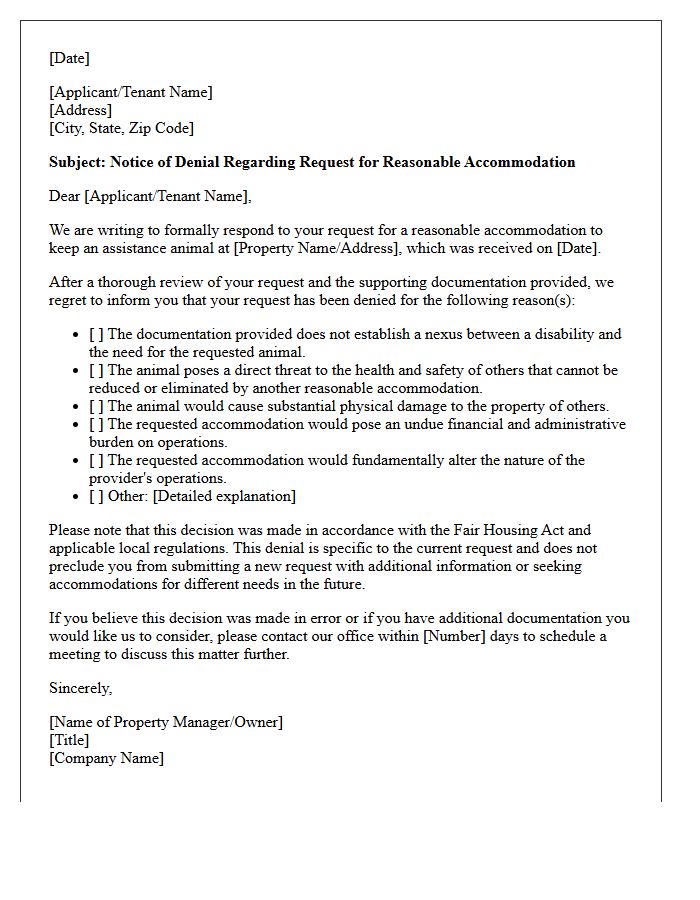
An Assistance Animal Accommodation Denial Letter is a formal document issued by housing providers when a request for an emotional support or service animal is rejected. Under the Fair Housing Act, landlords can only deny requests if the animal poses a direct threat to safety, causes substantial property damage, or creates an undue financial burden. The letter must clearly state the specific, legally valid reasons for the refusal. If the denial lacks proper justification or fails to engage in an interactive process, it may constitute illegal housing discrimination.
Notice of Incomplete Assistance Animal Documentation Letter
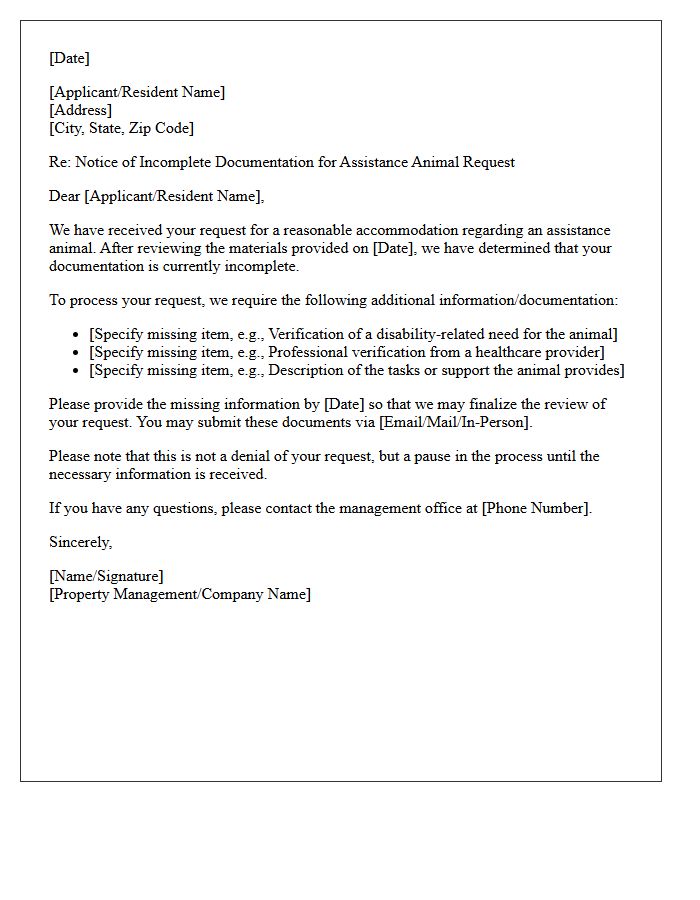
A Notice of Incomplete Assistance Animal Documentation Letter is a formal request from a housing provider for additional information when an initial request lacks sufficient proof of a disability-related need. It specifies which details are missing under Fair Housing Act guidelines. To ensure compliance, the applicant must provide reliable documentation from a qualified healthcare professional. This letter helps verify the connection between the support animal and the individual's functional limitations. Promptly addressing these gaps is essential to secure reasonable accommodation and avoid the denial of your housing request.
Assistance Animal Policy Rules Reminder Letter
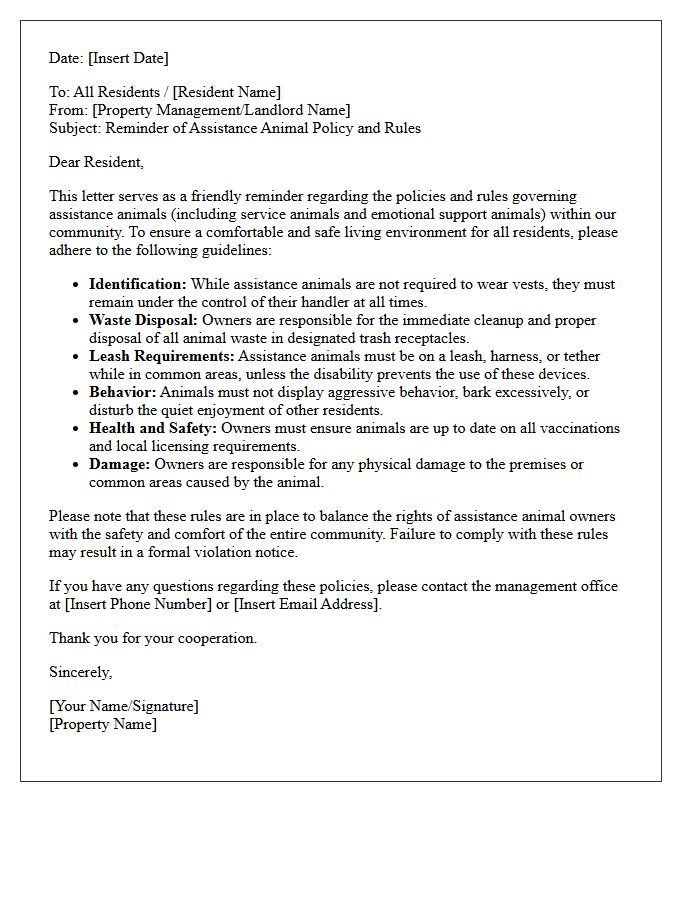
This Assistance Animal Policy Rules Reminder Letter serves as a formal notification to tenants regarding their rights and obligations. It clarifies that service animals and emotional support animals are not classified as pets under the Fair Housing Act. The document outlines essential compliance requirements, including maintaining animal hygiene, preventing noise disturbances, and ensuring proper leash control in common areas. Property managers use this notice to reinforce reasonable accommodation standards while reminding residents that they remain financially responsible for any physical damage caused by their assistance animal to the premises.
First Violation of Assistance Animal Policy Letter
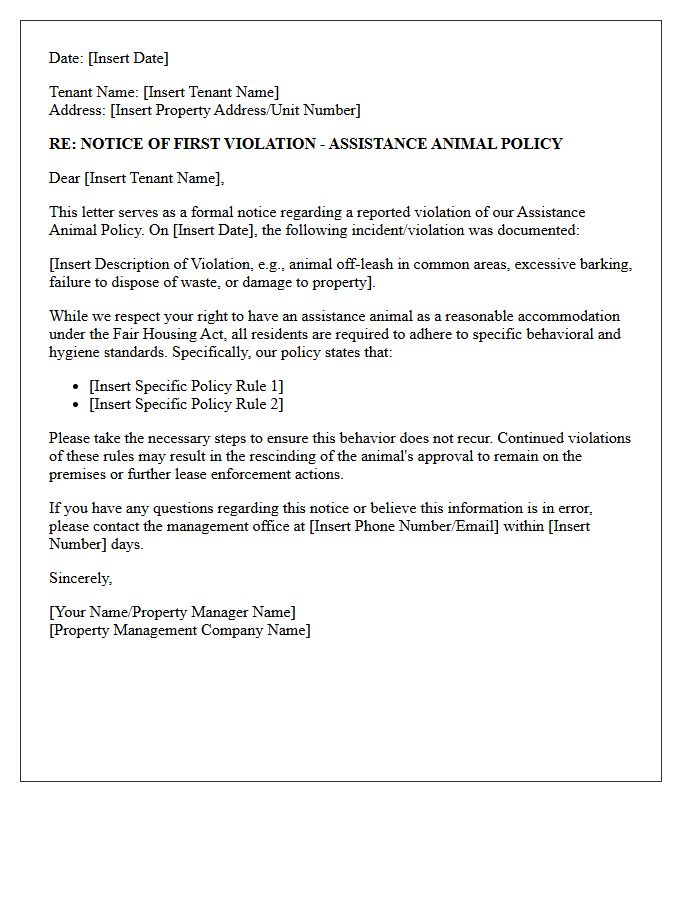
A First Violation of Assistance Animal Policy Letter is a formal notice issued when a housing provider identifies a breach of established service animal or emotional support animal rules. This document typically outlines the specific non-compliant behavior, such as noise disturbances, lack of sanitation, or safety concerns. It serves as an official warning to the resident to rectify the situation immediately. Understanding these guidelines is essential for maintaining fair housing compliance while ensuring the safety and comfort of all tenants within the residential community.
Final Warning for Assistance Animal Compliance Letter
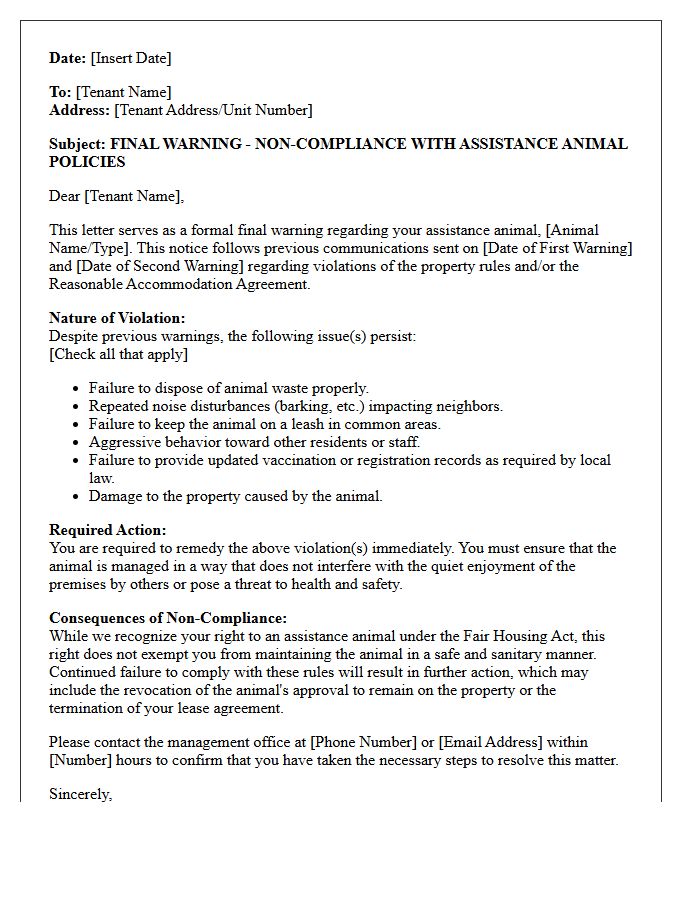
A Final Warning for Assistance Animal Compliance Letter serves as a formal notice to housing providers regarding legal obligations under the Fair Housing Act. This document demands immediate resolution for previously ignored accommodation requests or discriminatory practices. It outlines specific legal consequences and potential litigation if the property manager fails to provide reasonable accommodations for service or support animals. Issuing this final notice is a critical step in establishing a paper trail, ensuring your protected rights are respected before escalating the matter to federal authorities or a court of law.
Notice to Remove Non-Compliant Assistance Animal Letter
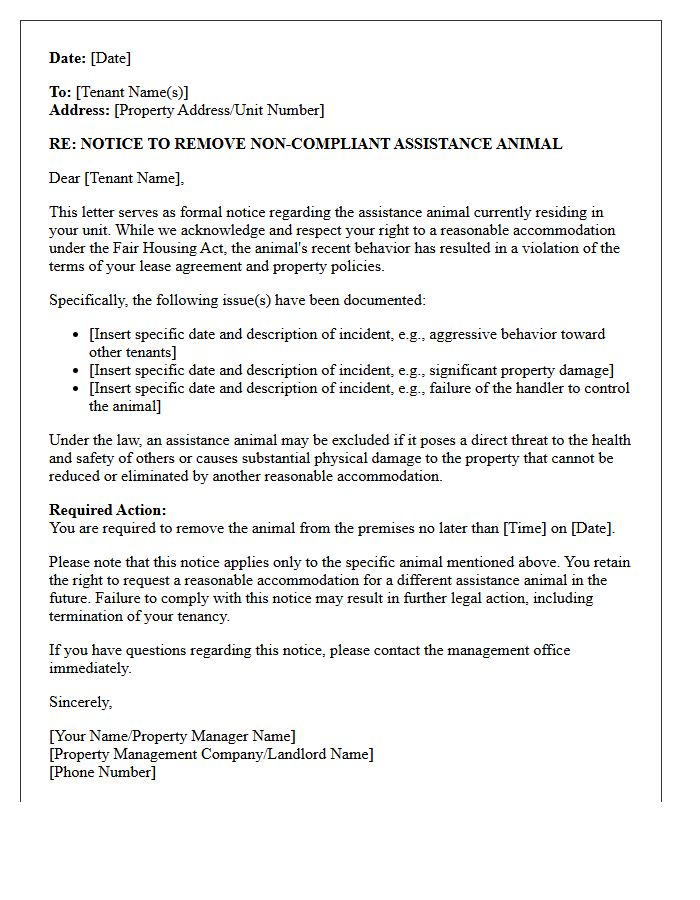
A Notice to Remove Non-Compliant Assistance Animal is a formal legal document issued by housing providers when a service or support animal poses a direct threat to safety or causes substantial property damage. While the Fair Housing Act protects disabled tenants, these rights are not absolute. This notice must clearly specify the behavioral violations or health risks involved. It is crucial to understand that the notice targets the animal's conduct, not the tenant's right to residency, allowing the individual to remain in the home without the specific disruptive animal.
Assistance Animal Property Damage Assessment Letter
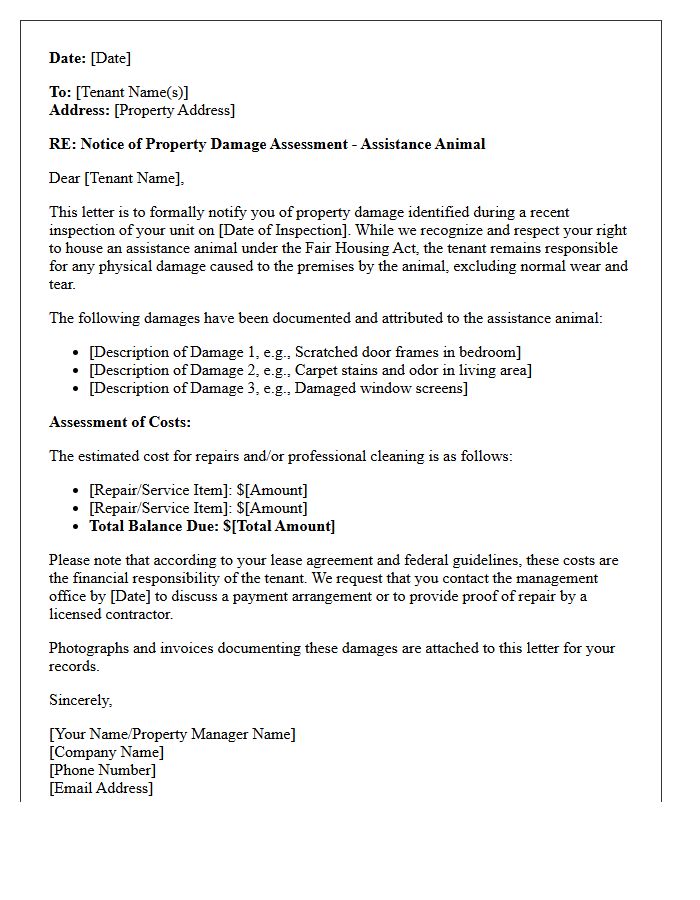
An Assistance Animal Property Damage Assessment Letter is a formal document used by housing providers to detail specific financial liabilities caused by a service or support animal. While landlords cannot charge upfront pet fees, they can seek reimbursement for physical damage exceeding normal wear and tear. This letter must provide an itemized list of repair costs and evidence to ensure transparency. It serves as a legal record for security deposit deductions, ensuring that fair housing compliance is maintained while protecting the property owner's investment from documented destruction.
Annual Assistance Animal Record Update Letter
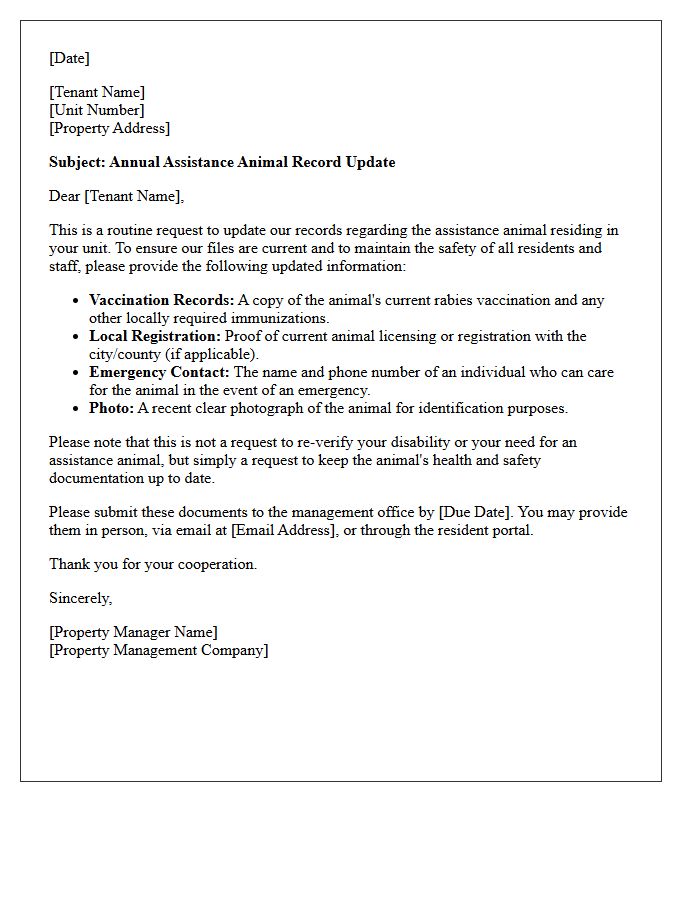
The Annual Assistance Animal Record Update Letter is a vital document used by housing providers to verify the ongoing need for a service or support animal. To maintain compliance with Fair Housing Act guidelines, tenants must typically provide updated documentation from a qualified healthcare professional. This process ensures that the disability-related need for the animal remains current. Timely submission of this letter prevents potential disputes, protects your housing rights, and ensures your accommodation remains legally valid and documented throughout your residency.
Assistance Animal Noise Complaint Warning Letter
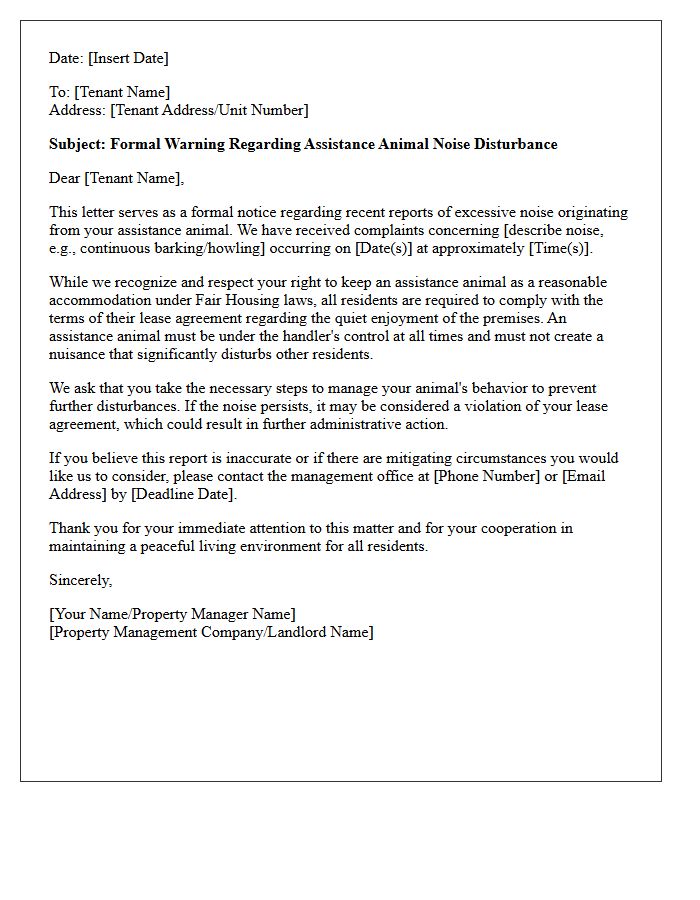
An Assistance Animal Noise Complaint Warning Letter notifies a handler that their service or support animal is causing a disturbance. Under fair housing laws, providers must allow animals but can address behavior that violates residential quiet enjoyment. This formal notice serves as an opportunity for the owner to implement corrective training or mitigation strategies. While these animals have legal protections, they must not create a nuisance or safety risk. Documenting the specific incidents helps both parties seek a reasonable accommodation while maintaining essential community standards and legal compliance.
Assistance Animal Waste Management Violation Letter
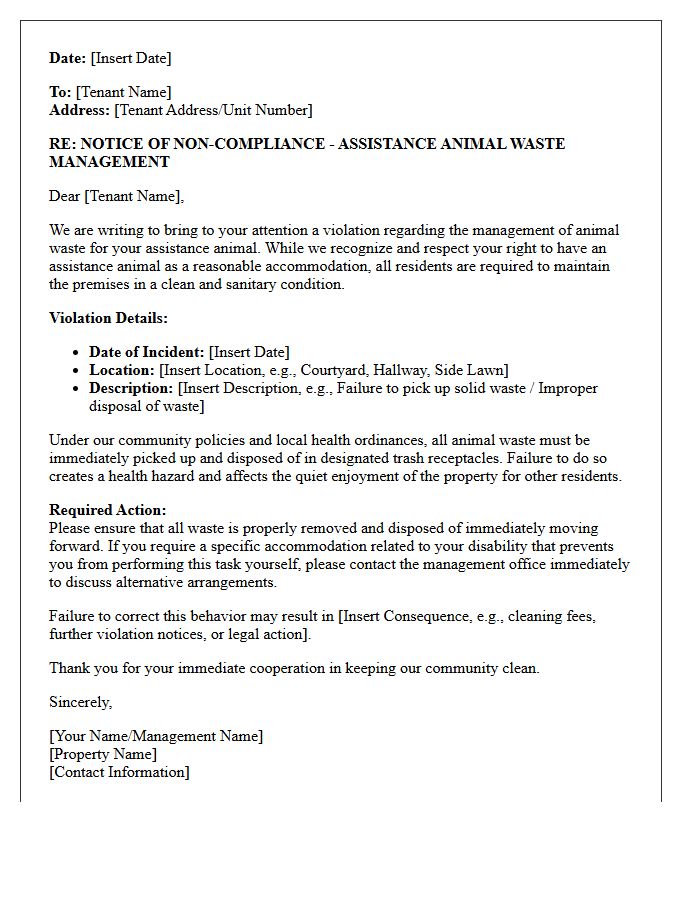
An Assistance Animal Waste Management Violation Letter is a formal notice issued by housing providers to tenants who fail to properly dispose of pet waste. While service animals are granted reasonable accommodations, owners must adhere to sanitary standards and local health ordinances. This letter typically outlines the specific incident, necessary corrective actions, and potential consequences for non-compliance. It is crucial to understand that repeated violations can jeopardize residency, as maintaining a clean environment remains a shared legal responsibility, regardless of the animal's status as a support or service aide.
What is a Notice of Assistance Animal Policy Compliance?
A Notice of Assistance Animal Policy Compliance is a formal document issued by a housing provider or property manager confirming that a resident's request for an emotional support animal (ESA) or service animal has been reviewed and meets all legal requirements under the Fair Housing Act.
What information is required to comply with an assistance animal policy?
To ensure compliance, residents must typically provide documentation from a licensed healthcare professional confirming a disability-related need for the animal, unless the disability and the need are readily apparent. The notice confirms that this documentation has been verified and accepted.
Does a compliance notice exempt me from pet fees or deposits?
Yes. Once a Notice of Assistance Animal Policy Compliance is issued, the animal is legally classified as an assistance animal rather than a pet. Under federal law, housing providers are prohibited from charging pet deposits, monthly pet rent, or application fees for verified assistance animals.
Can a notice of compliance be revoked if the animal misbehaves?
Yes. Compliance is contingent upon the animal remaining under the owner's control. A notice may be revoked if the assistance animal poses a direct threat to the health and safety of others, causes substantial physical damage to the property, or creates an unmanageable nuisance that violates community rules.
How long does it take to receive a Notice of Assistance Animal Policy Compliance?
Upon receiving a formal request and supporting documentation, housing providers are required to process the reasonable accommodation request within a "reasonable" timeframe, which is typically 10 to 14 business days, after which a formal notice of compliance or denial is issued.

Comments