
When a rental agreement concludes, providing a formal Thirty-Day Notice to Vacate is essential to ensure a smooth transition and legal compliance. This document notifies your landlord of your intent to move out, protecting your security deposit and preventing automatic renewals. Clear communication helps avoid disputes during the move-out process. To simplify this task, below are some ready to use template.
Image cover: Essential Thirty-Day Notice to Vacate Templates and Professional Samples for Lease Expiration
Letter Samples List
- Standard Thirty-Day Notice to Vacate Letter
- End of Lease Term Non-Renewal Letter
- Property Management Lease Expiration Vacate Letter
- Thirty-Day Intent to Vacate Acknowledgment Letter
- Landlord Thirty-Day Notice to Vacate Letter
- Tenant Thirty-Day End of Lease Notice Letter
- Residential Lease Termination Thirty-Day Letter
- Commercial Property Thirty-Day Notice to Vacate Letter
- Month-to-Month Tenancy End of Lease Letter
- Official Thirty-Day Move-Out Instruction Letter
- Final Thirty-Day Notice of Lease Expiration Letter
- Fixed-Term Lease Conclusion Thirty-Day Letter
Standard Thirty-Day Notice to Vacate Letter
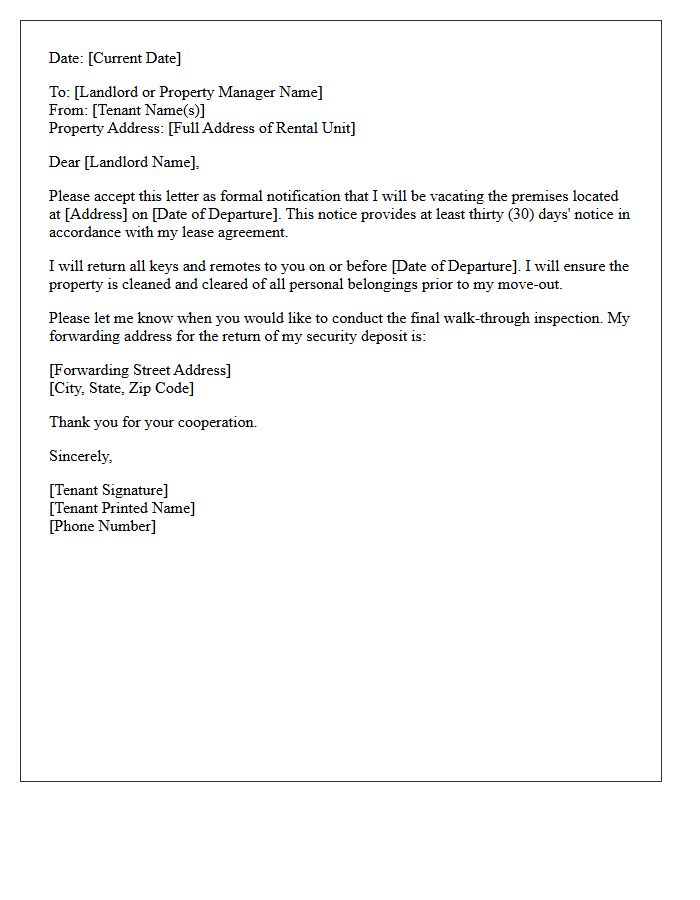
A Standard Thirty-Day Notice to Vacate Letter is a formal legal document used by tenants or landlords to terminate a month-to-month rental agreement. To ensure legal compliance, the notice must be submitted in writing, clearly stating the intended move-out date. Most jurisdictions require this document to be delivered at least thirty days before the next periodic rent payment is due. Providing clear written notification helps avoid financial penalties, ensures the return of security deposits, and maintains a transparent professional record between both parties during the lease termination process.
End of Lease Term Non-Renewal Letter
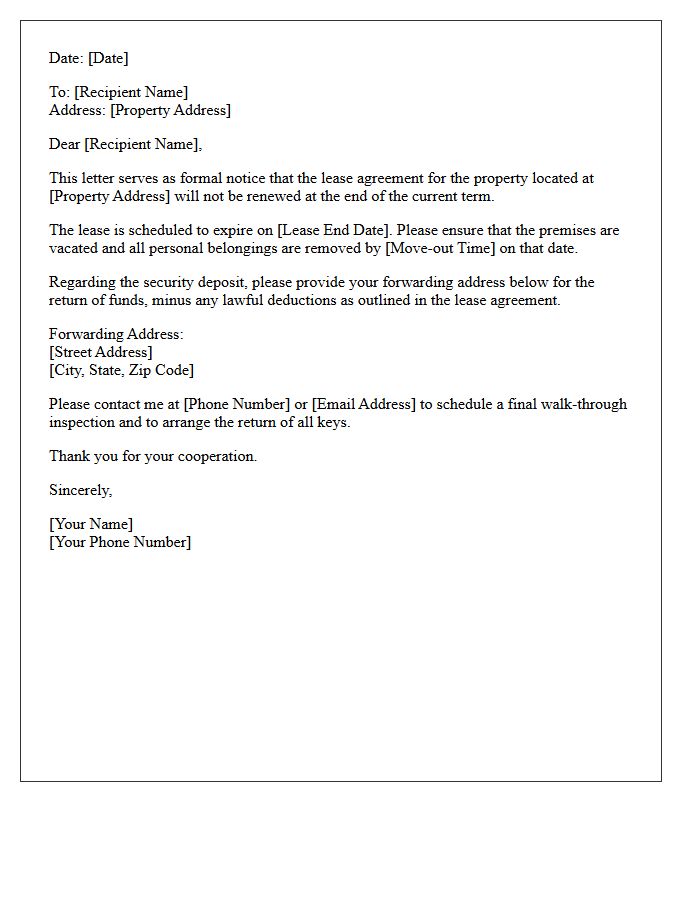
An End of Lease Term Non-Renewal Letter is a formal legal notice issued by either a landlord or tenant to signal the conclusion of a rental agreement. Its primary purpose is to confirm that the lease will not be extended, providing the required notice period specified in the original contract. This document ensures clear communication, prevents automatic renewals, and establishes a specific move-out date. Including details like security deposit procedures and property inspection times is essential for a smooth transition and protecting the legal rights of both parties involved.
Property Management Lease Expiration Vacate Letter
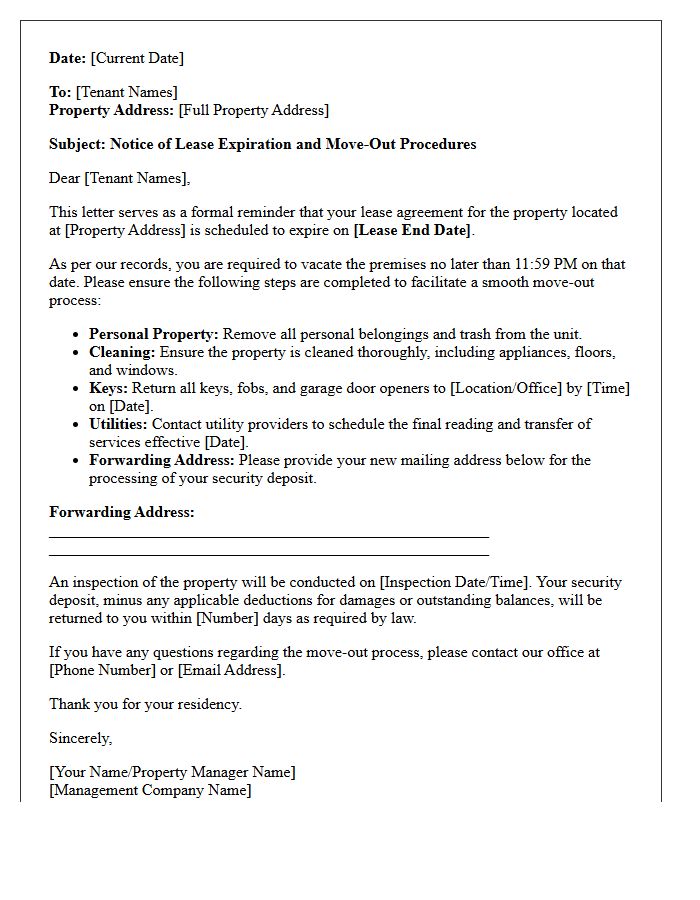
A property management lease expiration vacate letter is a formal notice sent to tenants regarding the end of their rental term. This essential document outlines whether the lease will be renewed or terminated, providing a clear move-out timeline. It must include the specific vacate date, security deposit return procedures, and final inspection requirements. Sending this notice in advance ensures legal compliance with local housing laws and facilitates a smooth tenant turnover process, protecting both the landlord's interests and the property's condition for future occupancy.
Thirty-Day Intent to Vacate Acknowledgment Letter
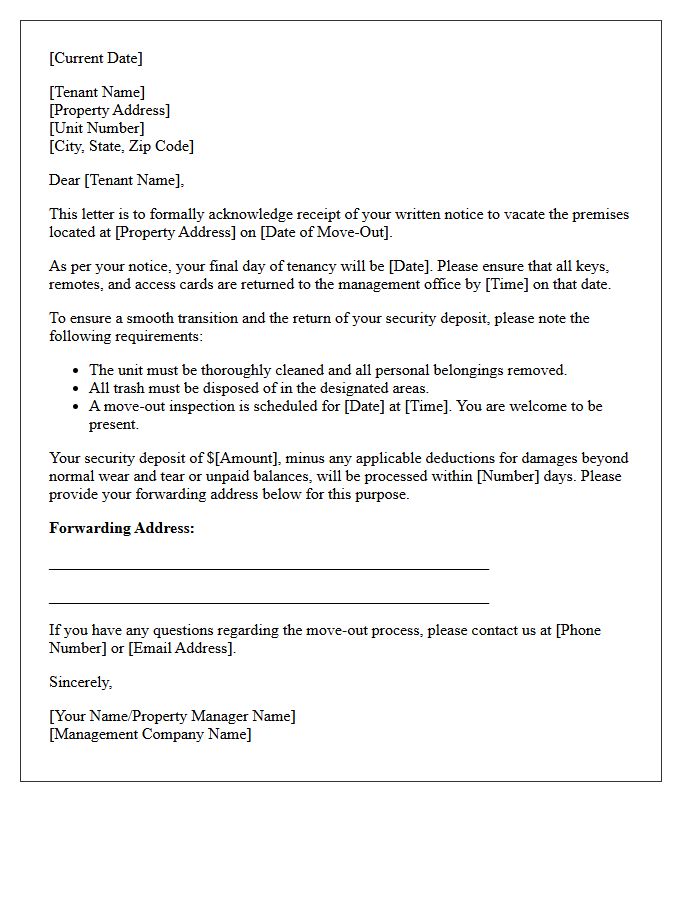
A Thirty-Day Intent to Vacate Acknowledgment Letter is a formal document sent by a landlord to confirm receipt of a tenant's termination notice. This letter officially verifies the upcoming move-out date and outlines essential next steps. It typically includes details regarding final property inspections, cleaning requirements, and the process for security deposit return. Receiving this acknowledgment ensures both parties are aligned on the legal timeline, helping to prevent disputes and ensuring a smooth transition for the rental property transition period.
Landlord Thirty-Day Notice to Vacate Letter
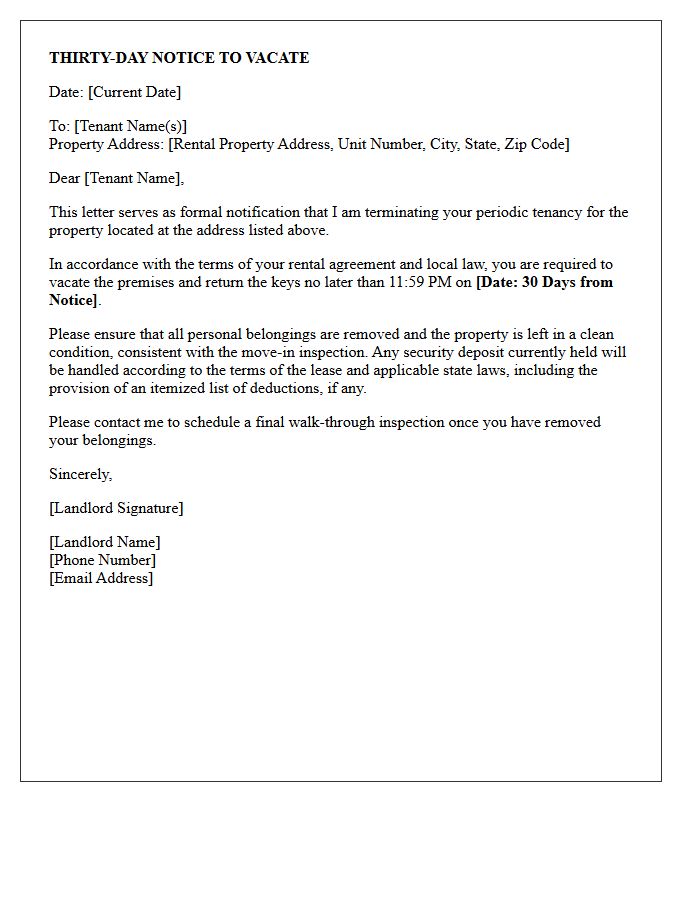
A Landlord Thirty-Day Notice to Vacate is a formal legal document used to terminate a month-to-month rental agreement. It informs the tenant they must move out within thirty days, typically without requiring a specific reason in at-will tenancies. To ensure validity, the notice must be delivered in writing and comply with local housing laws. Proper service of notice is critical; if the tenant remains after the deadline, the landlord may initiate eviction proceedings. Always verify state-specific statutes regarding timing and delivery methods to protect your property rights.
Tenant Thirty-Day End of Lease Notice Letter
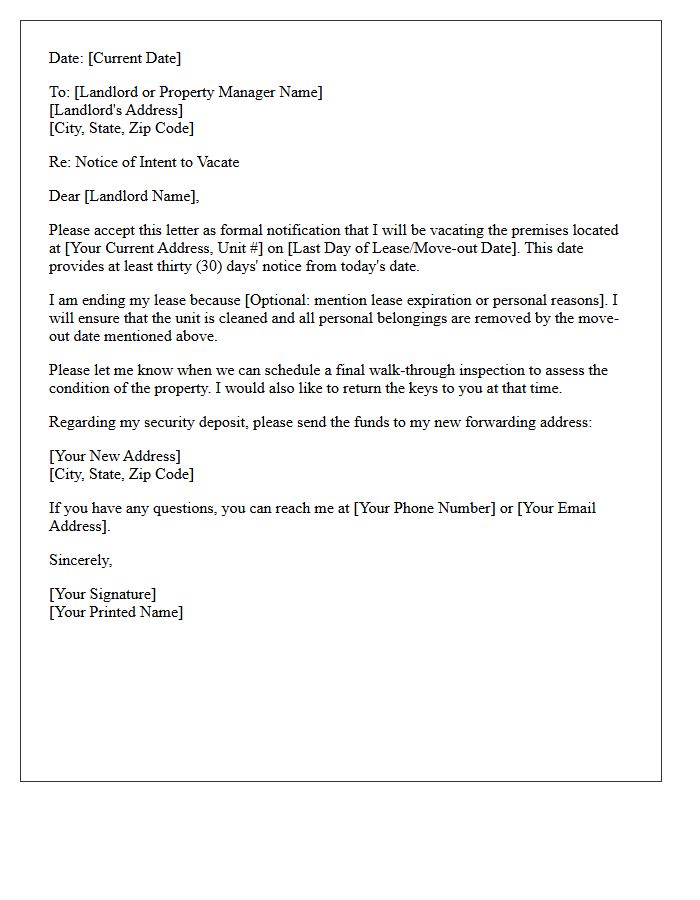
A Tenant Thirty-Day End of Lease Notice Letter is a formal written document used to inform a landlord that you intend to vacate the property. To ensure a smooth transition and protect your security deposit, you must provide this notice at least thirty days before your planned move-out date. Most rental agreements require this notification to be delivered in writing. Clearly state your final day of residency and provide a forwarding address to ensure you receive legal correspondence and the return of your funds according to local housing laws.
Residential Lease Termination Thirty-Day Letter
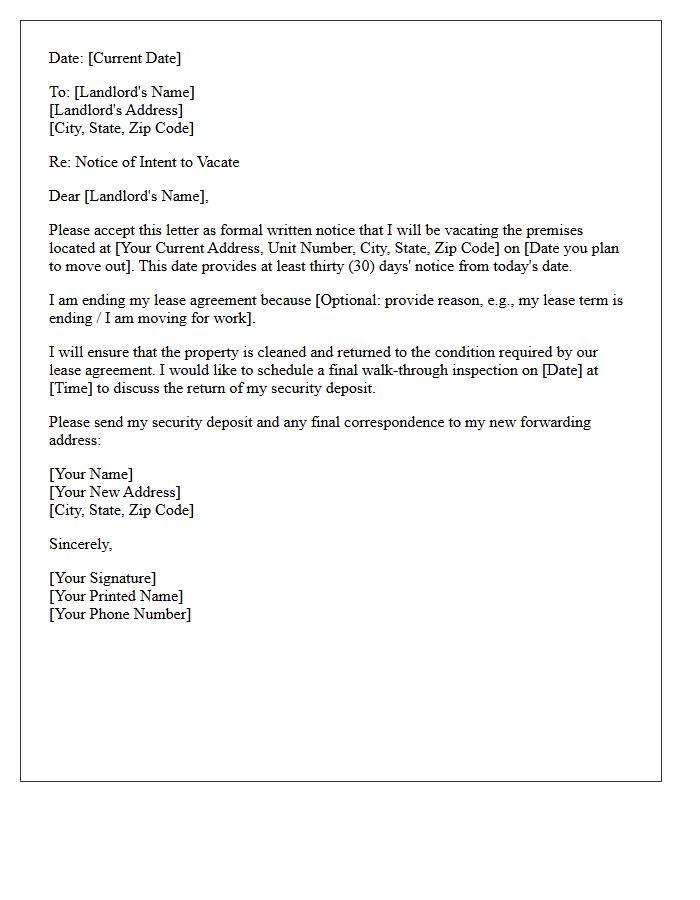
A residential lease termination thirty-day letter is a formal written notice used by landlords or tenants to end a month-to-month tenancy. This document serves as a legal record to ensure compliance with state housing laws. It must clearly state the intended move-out date and provides both parties enough time to arrange for property inspections and new living arrangements. Proper delivery is crucial to avoid automatic renewal of the rental agreement or potential legal disputes regarding the security deposit and possession of the premises.
Commercial Property Thirty-Day Notice to Vacate Letter
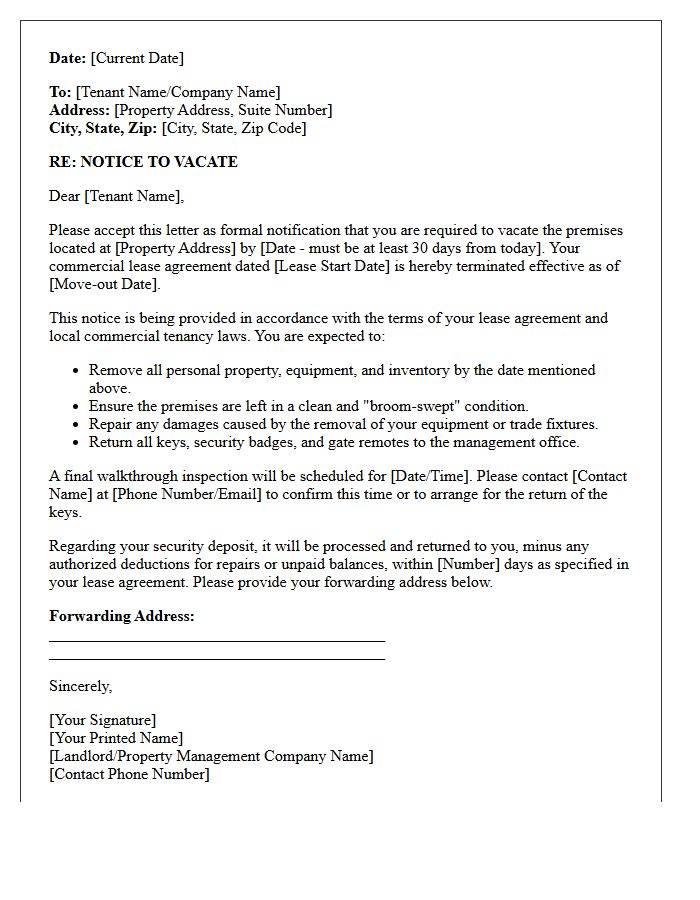
A Commercial Property Thirty-Day Notice to Vacate is a formal legal document used by landlords or tenants to terminate a lease agreement. This written communication establishes a clear timeline for possession transfer and ensures compliance with contractual obligations. It is essential to verify specific lease terms or state laws, as some commercial agreements may require longer notification periods. Providing this notice protects both parties from potential legal disputes, confirms the move-out date, and outlines expectations regarding property condition and the return of security deposits before the tenancy officially ends.
Month-to-Month Tenancy End of Lease Letter
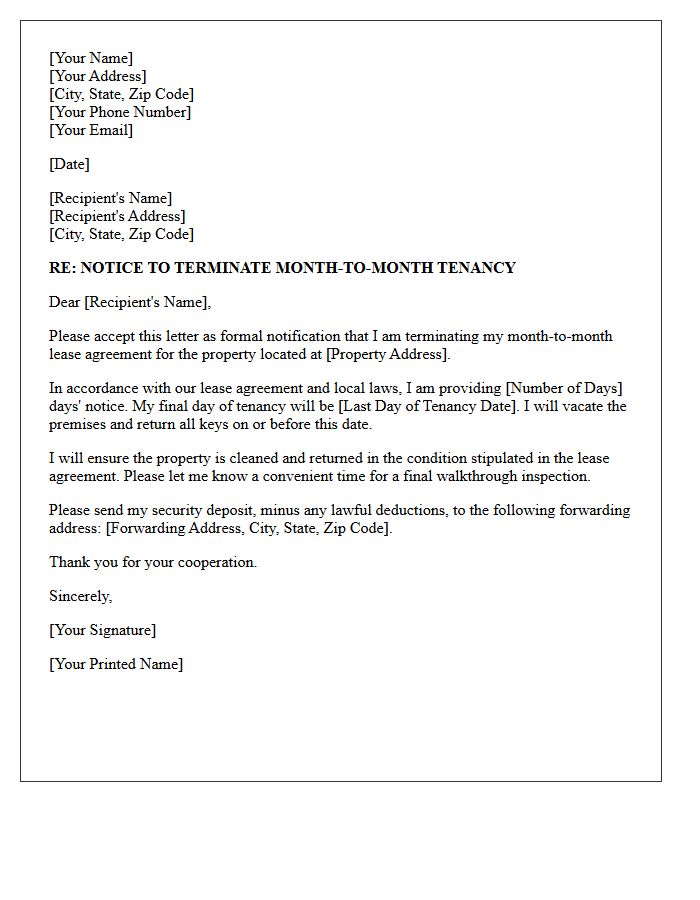
A Month-to-Month Tenancy End of Lease Letter is a formal notice used to terminate a periodic rental agreement. To ensure legal validity, it must specify the move-out date and strictly adhere to the notice period required by local laws, typically 30 days. This written document protects both parties by confirming the final day of residency and establishing a timeline for the security deposit return. Delivering this notice via certified mail provides proof of delivery, which is essential for preventing future disputes regarding lease obligations or unauthorized holdovers.
Official Thirty-Day Move-Out Instruction Letter
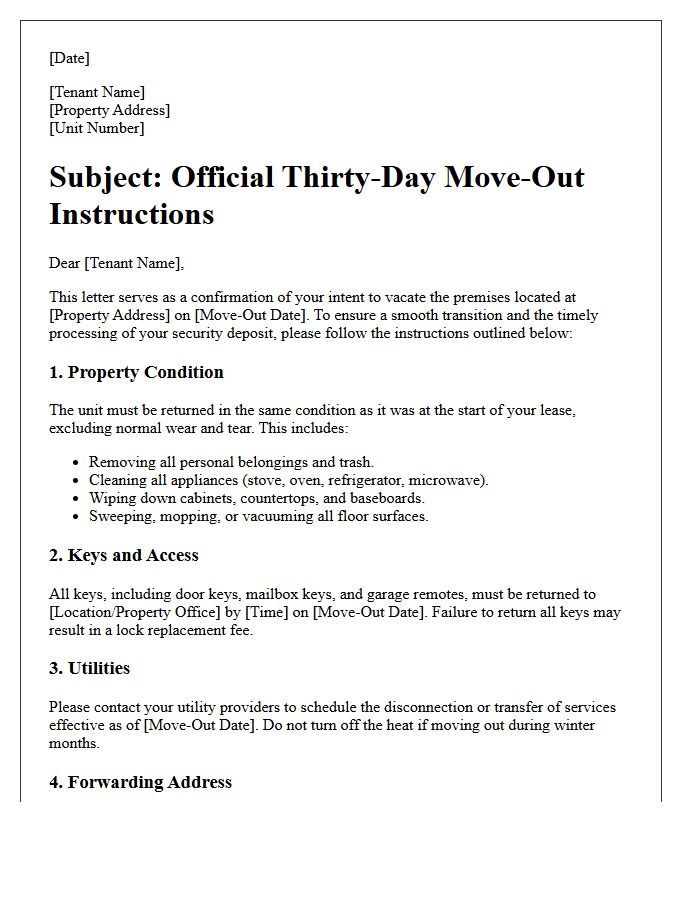
An official thirty-day move-out instruction letter is a critical document outlining the legal requirements for vacating a rental property. It specifies the exact move-out date, cleaning expectations, and procedures for the security deposit return. Following these guidelines ensures you avoid unnecessary fees and disputes. Tenants must provide written notice to the landlord, typically required at least thirty days in advance, to maintain compliance with the lease agreement. Reviewing these instructions carefully helps guarantee a smooth transition and protects your financial interests during the relocation process.
Final Thirty-Day Notice of Lease Expiration Letter
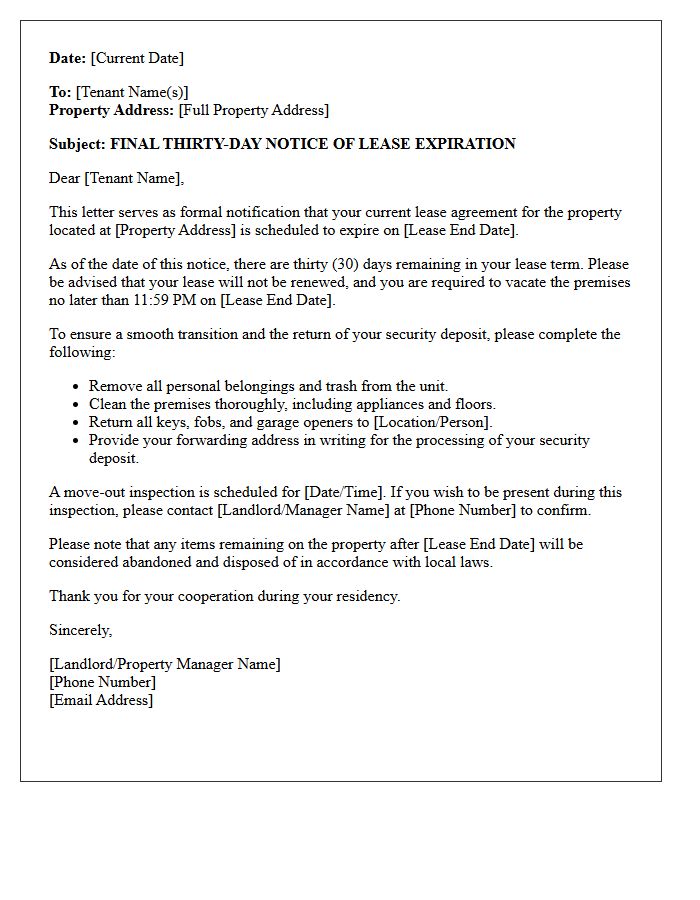
A Final Thirty-Day Notice of Lease Expiration is a critical legal document informing tenants that their rental agreement will conclude on a specific date. This formal communication clarifies whether the landlord intends to renew the contract or requires the occupant to vacate the premises. It serves as a legal safeguard, ensuring both parties comply with notice period requirements. Tenants must review the move-out procedures and deadlines outlined to avoid potential holdover penalties or automatic month-to-month transitions. Timely delivery is essential for maintaining transparent communication and facilitating a smooth property transition.
Fixed-Term Lease Conclusion Thirty-Day Letter
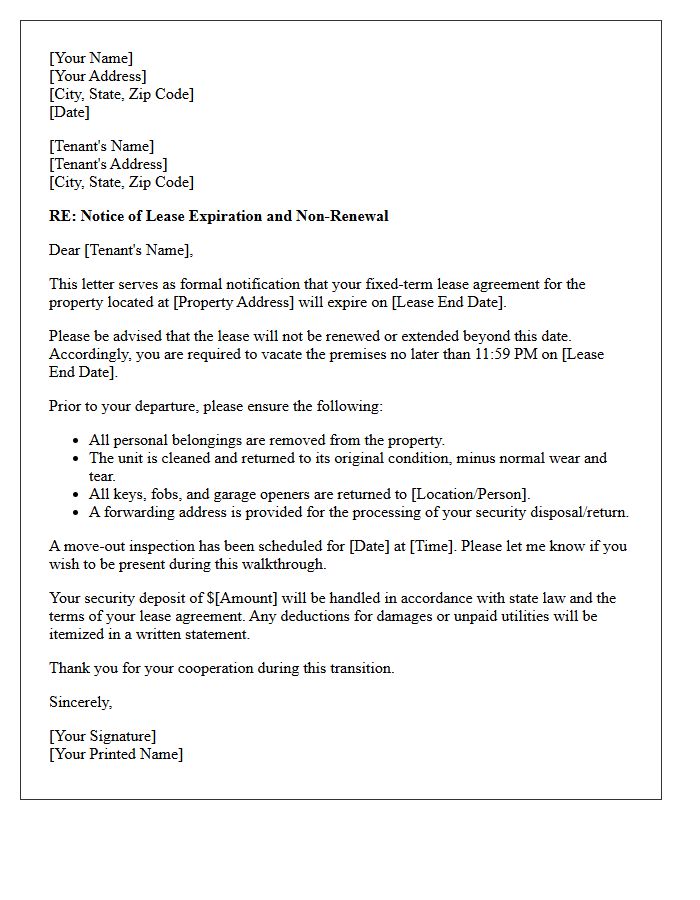
A Fixed-Term Lease Conclusion Thirty-Day Letter is a formal written notice issued to confirm the termination of a rental agreement. Even when a lease has a specific end date, landlords or tenants should provide this document thirty days in advance to clarify that the occupancy will not renew. This ensures legal compliance and provides clear instructions regarding the move-out process, security deposit returns, and property inspections. Providing timely notification prevents automatic month-to-month conversions and helps both parties avoid unexpected financial obligations or legal disputes at the end of the tenancy.
What is a Thirty-Day Notice to Vacate for the end of a lease term?
A Thirty-Day Notice to Vacate is a formal written document issued by either a landlord or a tenant stating that the rental agreement will terminate at the end of the current lease term. It serves as legal notification that the occupant intends to move out or that the owner requires the property to be vacated by a specific date.
When should I deliver a Thirty-Day Notice to Vacate?
To remain compliant with most lease agreements and local housing laws, the notice must be delivered at least 30 full days before the final day of the lease term. If you provide the notice mid-month, the 30-day period typically concludes at the end of the following full rental period, depending on state-specific statutes.
Does a Thirty-Day Notice to Vacate need to be in writing?
Yes, a Notice to Vacate must be provided in writing to be legally enforceable. Verbal notices are generally not recognized by courts. The document should include the current date, the address of the rental unit, the intended move-out date, and the signature of the party issuing the notice.
What happens if a tenant stays past the date on the Notice to Vacate?
If a tenant remains in the property after the 30-day period expires without a lease extension, they are considered a "holdover tenant." At this point, the landlord may initiate formal eviction proceedings or charge "holdover rent" as specified in the original lease agreement.
Can a landlord issue a Thirty-Day Notice to Vacate without a specific reason?
In most jurisdictions, if a fixed-term lease is ending or the tenancy is month-to-month, a landlord can issue a 30-day notice without stating a cause. However, some "just cause" eviction areas and rent-controlled jurisdictions may require a specific legal reason to terminate a tenancy even at the end of a lease term.

Comments