
A Notice of Common Area Rule Violation is a formal communication sent to residents who fail to follow community guidelines. It ensures safety, maintains property aesthetics, and upholds shared living standards within a neighborhood or building. Proper documentation helps resolve disputes efficiently and encourages compliance with HOA or building regulations. To assist you, below are some ready to use template.
Image cover: Common Area Rule Violations: Professional Notice Templates and Samples
Letter Samples List
- First Notice Letter for Excessive Noise in the Courtyard
- Warning Letter Regarding Unauthorized Pets in the Lobby
- Notice Letter for Improper Disposal of Trash in the Dumpster Area
- Violation Letter Concerning Smoking in the Shared Hallways
- Official Letter for Leaving Personal Items in the Corridors
- Warning Letter Regarding Glass Containers in the Pool Area
- Notice Letter for After-Hours Use of the Fitness Center
- Violation Letter Concerning Unregistered Vehicles in Visitor Parking
- Official Letter for Unleashed Dogs in the Community Park
- Warning Letter Regarding Unauthorized Guests in the Clubhouse
- Notice Letter for Improper Use of the Community Barbecue Grills
- Violation Letter Concerning Damage to the Shared Laundry Facilities
First Notice Letter for Excessive Noise in the Courtyard
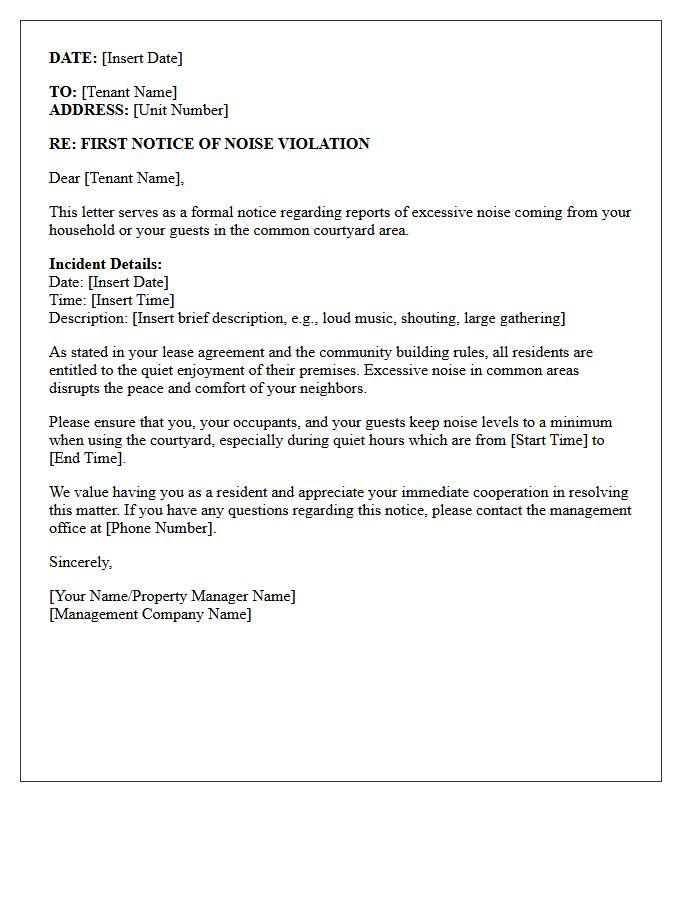
A First Notice Letter serves as an official warning regarding excessive noise occurring in a communal courtyard. This document informs residents that their behavior has violated specific community guidelines or lease agreements. It is important to address the issue immediately to avoid fines or further disciplinary action. The notice typically outlines the date of the disturbance and requests future compliance with established quiet hours to ensure a peaceful environment for all neighbors. Promptly acknowledging this formal notification is the best way to prevent the escalation of legal or residency disputes.
Warning Letter Regarding Unauthorized Pets in the Lobby
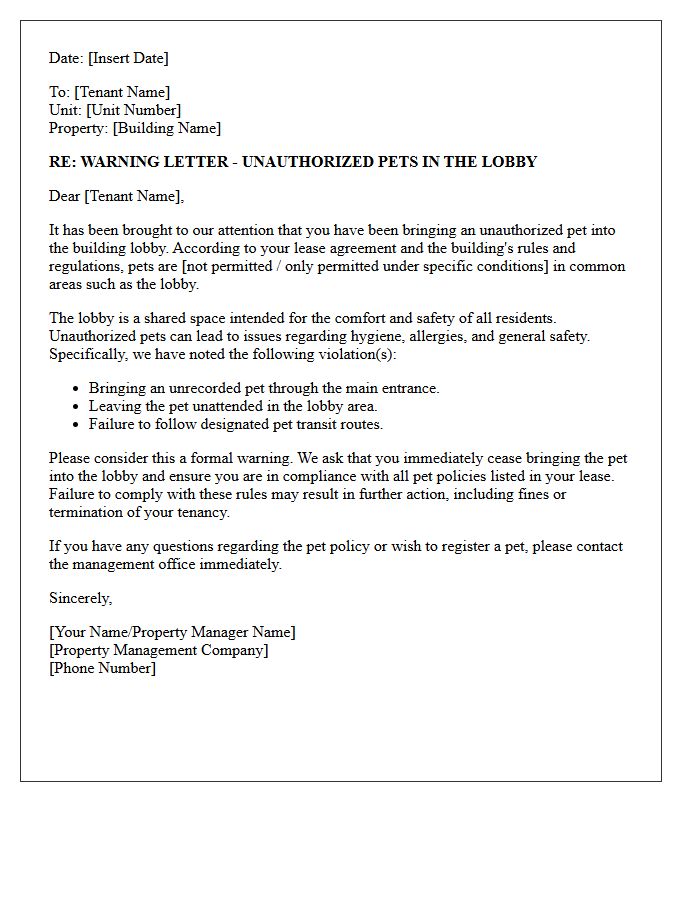
Receiving a Warning Letter Regarding Unauthorized Pets in the lobby signifies a formal notice of a lease violation. It is crucial to understand that common areas must remain clear of unregistered animals to maintain safety, hygiene, and insurance compliance. Residents must promptly register their pets with management or provide documentation for Service Animals to avoid potential fines or eviction proceedings. Always review your rental agreement regarding pet policies and restricted breeds to ensure full compliance with building regulations and to protect your residency status.
Notice Letter for Improper Disposal of Trash in the Dumpster Area
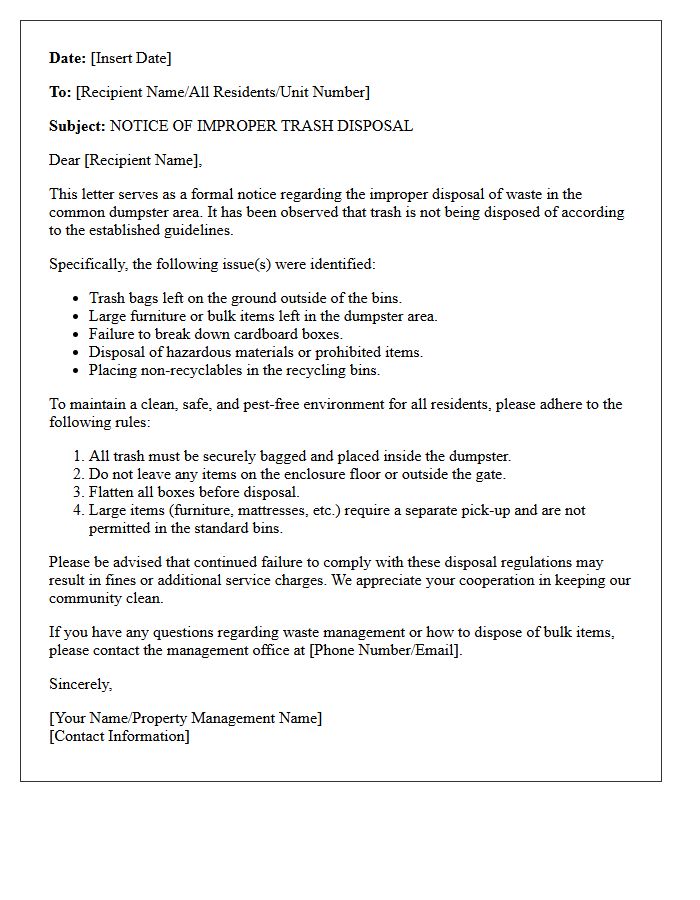
A Notice Letter for Improper Disposal is a formal warning issued to residents or businesses failing to follow waste regulations. It highlights specific violations such as illegal dumping, overflowing bins, or mixing hazardous materials with general trash. This document serves as legal documentation to enforce community compliance and maintain sanitation standards. Failure to rectify the behavior after receiving this notice can result in significant monetary fines, cleanup charges, or potential lease termination. Timely adherence to disposal guidelines ensures a safe, clean, and pest-free environment for everyone within the shared dumpster area.
Violation Letter Concerning Smoking in the Shared Hallways
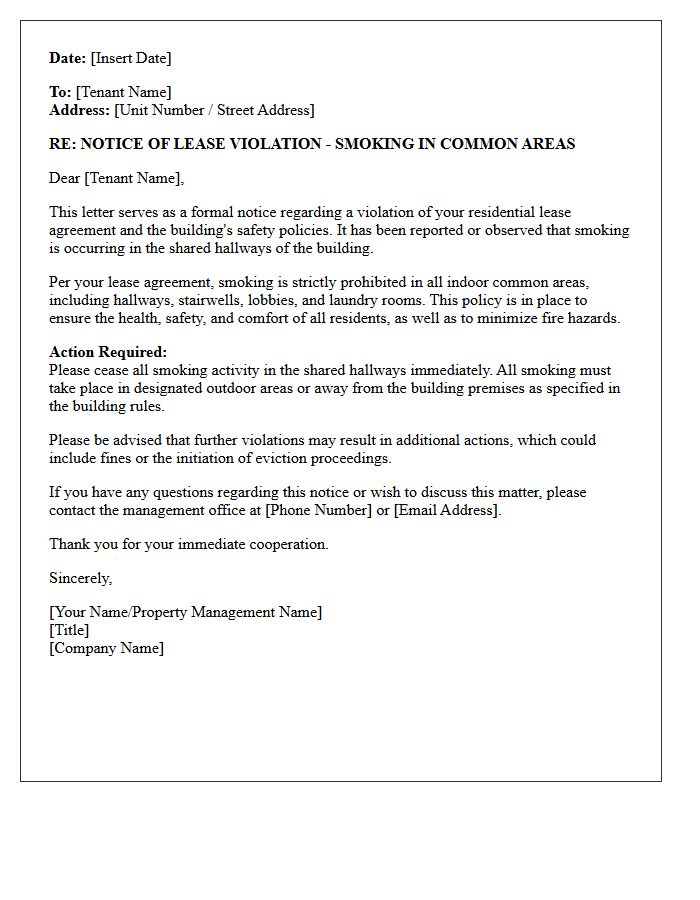
Receiving a violation letter for smoking in shared hallways indicates a breach of your lease agreement and local building codes. Hallways are communal areas where smoke poses health risks and fire hazards to all residents. To avoid fines or potential eviction, you must immediately cease smoking in all indoor public spaces. Most buildings maintain a strict zero-tolerance policy regarding air quality and safety standards. If you receive a notice, review your residency rules promptly to understand the specific penalties and corrective actions required to remain in good standing with your property management.
Official Letter for Leaving Personal Items in the Corridors
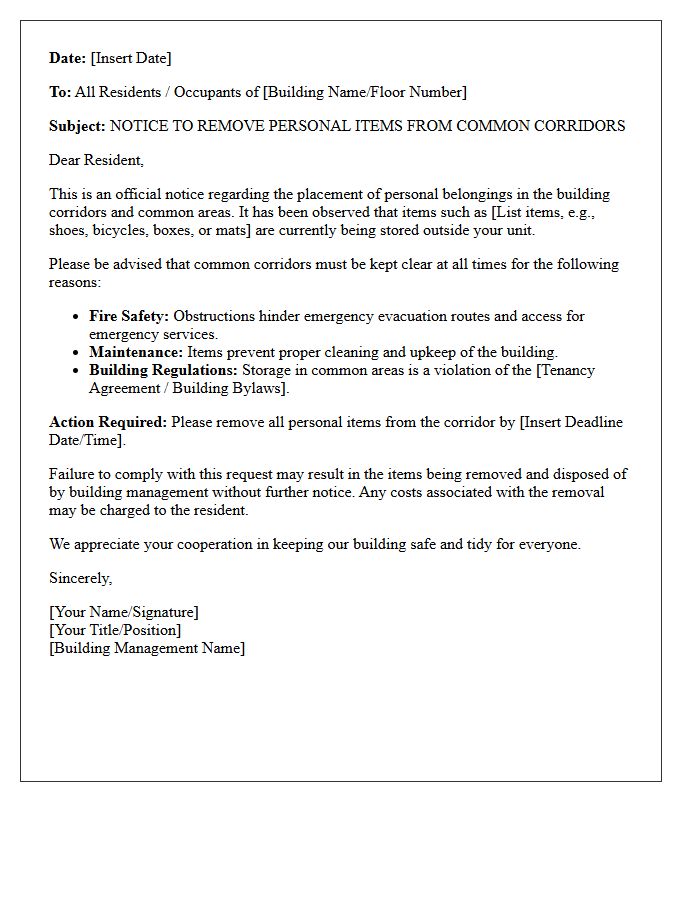
An official letter regarding personal items in building corridors serves as a formal notice to maintain fire safety and clear accessibility. Residents must ensure that hallways remain free of obstructions like bicycles, shoes, or boxes to comply with building regulations and emergency protocols. Failure to remove these belongings often leads to disposal or administrative fines by management. Always prioritize unobstructed pathways to ensure the collective security of all occupants. Clear communication between tenants and property managers is essential to prevent hazardous clutter and uphold strict safety standards within shared residential or office spaces.
Warning Letter Regarding Glass Containers in the Pool Area
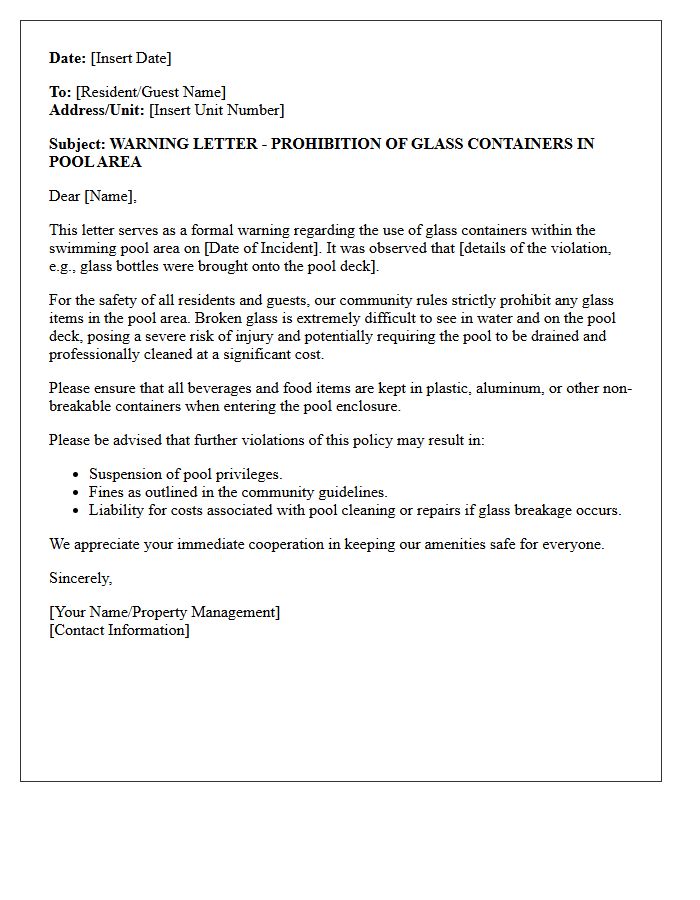
For your safety, glass containers are strictly prohibited within the pool area. Shards from broken glass are nearly invisible underwater and pose a severe risk of lacerations to swimmers. If a breakage occurs, the entire pool must be drained and professionally cleaned, leading to expensive maintenance fees and closure. Please use plastic, aluminum, or silicone alternatives to ensure a secure environment. Violators may face fines or temporary suspension of pool privileges. Help us keep the aquatic facility safe for everyone by adhering to this essential no-glass policy.
Notice Letter for After-Hours Use of the Fitness Center
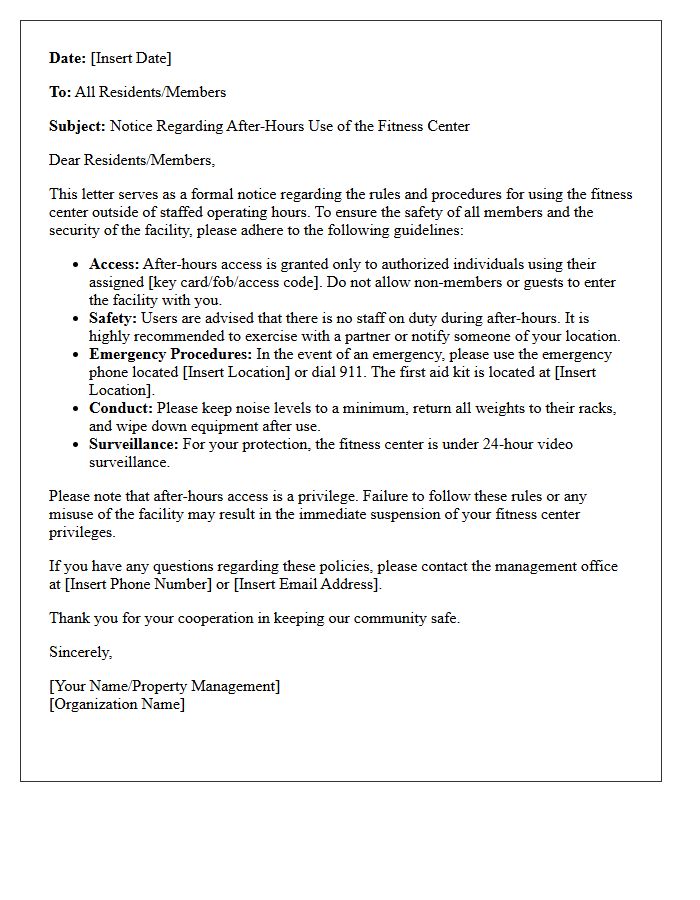
A Notice Letter for After-Hours Use is an essential legal document outlining the specific terms for accessing gym facilities outside of standard operational times. It ensures that liability waivers, safety protocols, and keycard access policies are clearly communicated to members. By signing this agreement, users acknowledge the risks of unsupervised exercise and agree to follow strictly enforced code-of-conduct rules. This document protects the property management while granting tenants the flexibility of 24/7 fitness access under defined security measures.
Violation Letter Concerning Unregistered Vehicles in Visitor Parking
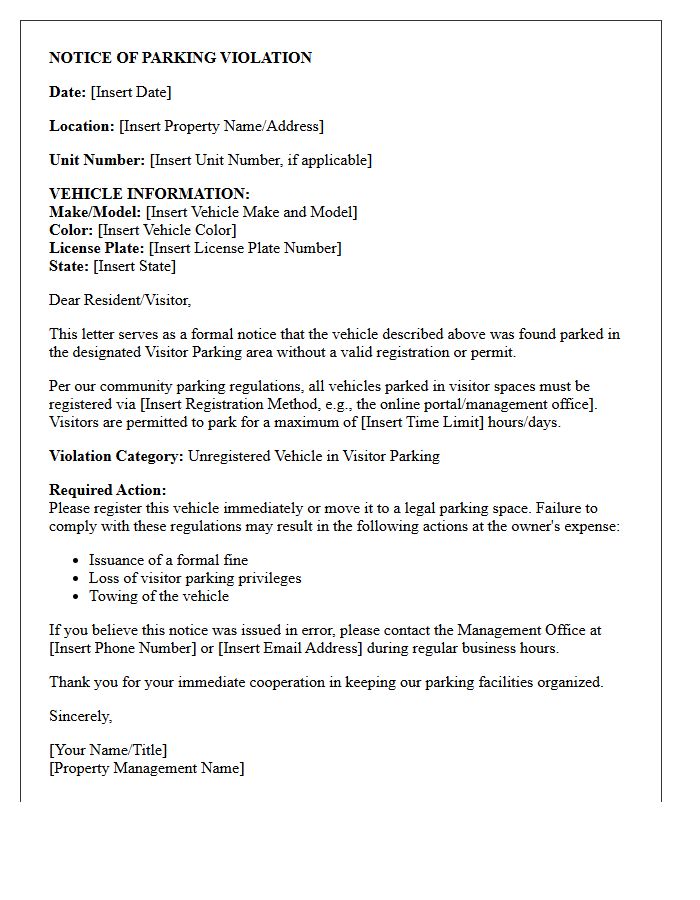
Receiving a violation letter for an unregistered vehicle in visitor parking signifies a breach of community parking regulations. Most homeowner associations and apartment complexes require active digital permits or physical passes to distinguish guests from unauthorized residents. To avoid towing or monetary fines, you must ensure the vehicle is logged into the management system immediately. If you received this notice in error, contact the parking enforcement office with your license plate details and proof of residency to dispute the citation and prevent further legal action or vehicle impoundment.
Official Letter for Unleashed Dogs in the Community Park
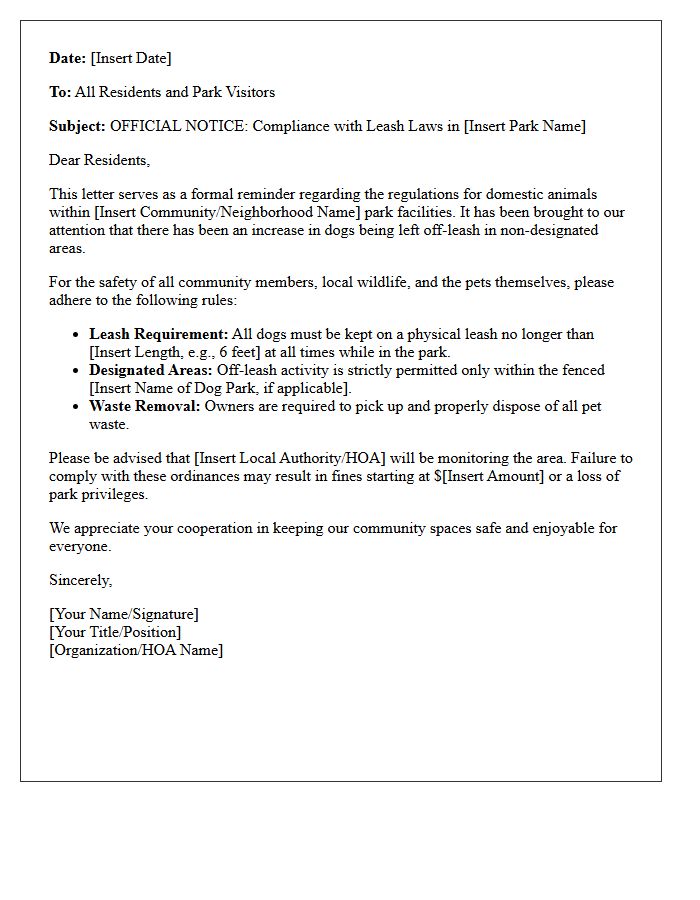
An official letter regarding unleashed dogs in the community park serves as a formal notice to enforce safety regulations and leash laws. It typically outlines compliance requirements to protect visitors and local wildlife from potential incidents. Receiving this document signifies a warning or a reminder of municipal ordinances. Adhering to these guidelines ensures a secure environment for all residents and helps pet owners avoid legal penalties or fines. Responsible pet ownership is essential for maintaining harmony and public order within shared recreational spaces.
Warning Letter Regarding Unauthorized Guests in the Clubhouse
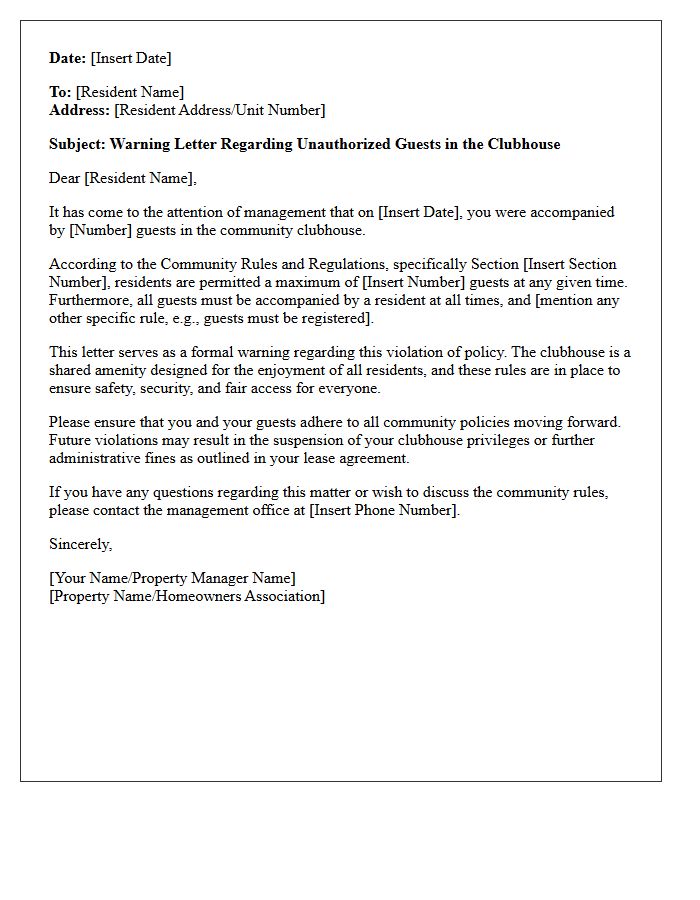
Receiving a warning letter regarding unauthorized guests in the clubhouse indicates a formal violation of community policies. Property management issues these notices when residents grant facility access to non-residents without proper supervision or prior approval. To avoid fines or the permanent suspension of your amenities privileges, you must strictly adhere to the established guest policy and capacity limits. Always ensure your visitors are registered and accompanied at all times to maintain security and compliance with your residential agreement.
Notice Letter for Improper Use of the Community Barbecue Grills
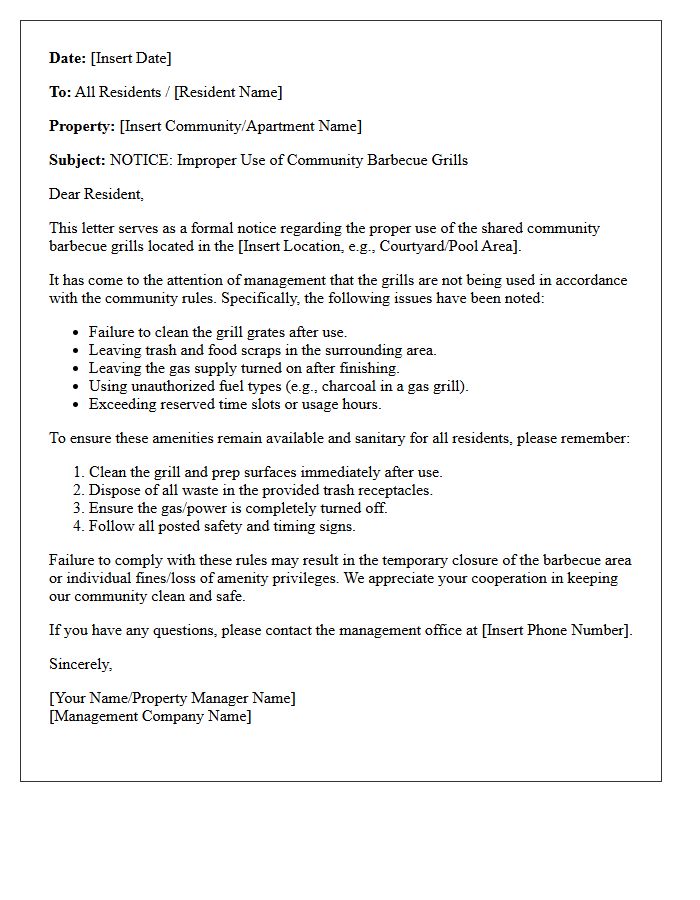
Receiving a notice letter regarding the improper use of community barbecue grills indicates a violation of established safety or sanitation rules. Residents must prioritize fire safety and grease management to avoid potential fines or loss of amenities. Common infractions include leaving the grill unattended, failing to clean grates, or improper disposal of hot coals. To maintain a positive relationship with the homeowners' association or property management, ensure you follow all posted guidelines and restore the station to its original condition after every use.
Violation Letter Concerning Damage to the Shared Laundry Facilities
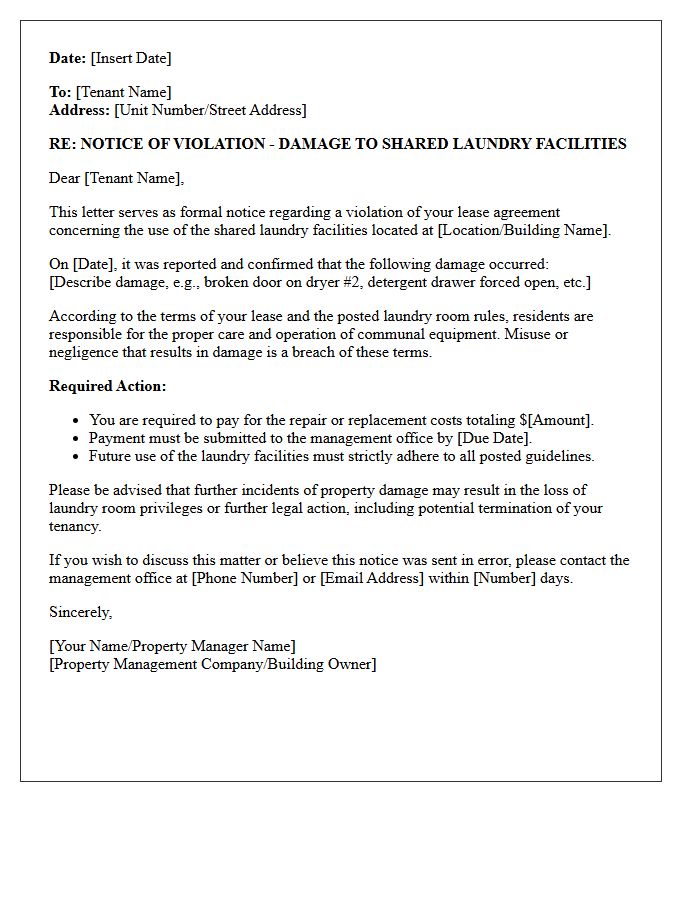
A violation letter regarding damage to shared laundry facilities serves as a formal notice that management has identified a breach of community rules. It is crucial to understand that such letters typically outline financial liability for repairs and may lead to the suspension of amenity privileges. Upon receipt, promptly review the evidence provided and check your lease agreement for specific compliance requirements. Addressing the issue immediately through clear communication can prevent further legal action or eviction proceedings while ensuring the restoration of essential building services for all residents.
What is a Notice of Common Area Rule Violation?
A Notice of Common Area Rule Violation is a formal written notification sent by a Homeowners Association (HOA) or property management company to a resident who has breached specific community regulations regarding shared spaces, such as hallways, pools, or parking lots.
What should I do if I receive a violation notice for a common area?
You should immediately read the notice to identify the specific rule breached, the date of the incident, and the required corrective action. Most notices include a deadline to remedy the issue or a process to appeal the violation if you believe it was issued in error.
Can I be fined for a first-time common area rule violation?
Whether a fine is issued depends on your community's governing documents (CC&Rs). Many associations issue a formal warning for a first offense; however, serious safety violations or repeated non-compliance typically result in monetary penalties or temporary suspension of common area privileges.
How do I dispute a common area violation notice?
To dispute a violation, follow the appeals process outlined in the notice, which usually involves submitting a written request for a hearing before the Board of Directors. Provide evidence, such as photos or witness statements, to support your claim that no violation occurred.
What are the most common reasons for receiving a common area violation?
Common violations include leaving personal property (like bicycles or shoes) in shared hallways, improper disposal of trash, unauthorized guests in recreational facilities, smoking in non-designated areas, and failing to clean up after pets in landscaped sections.

Comments