
Managing property quiet hours is essential for resident satisfaction. A Notice of Noise Policy Violation serves as a formal warning to tenants who disrupt the community peace. Clear communication helps resolve conflicts quickly while maintaining legal compliance and documenting behavioral issues for future reference. To simplify your management process, below are some ready to use templates.
Image cover: Professional Notice Templates for Noise Policy Violations
Letter Samples List
- First Warning Notice of Noise Policy Violation Letter
- Second Warning Notice of Noise Policy Violation Letter
- Final Warning Notice of Noise Policy Violation Letter
- Quiet Hours Noise Policy Violation Letter
- Neighbor Complaint Noise Policy Violation Letter
- Pet Disturbance Noise Policy Violation Letter
- Loud Music Noise Policy Violation Letter
- Unauthorized Gathering Noise Policy Violation Letter
- Lease Breach Noise Policy Violation Letter
- Chronic Noise Policy Violation Eviction Warning Letter
- Notice to Cure Noise Policy Violation Letter
First Warning Notice of Noise Policy Violation Letter
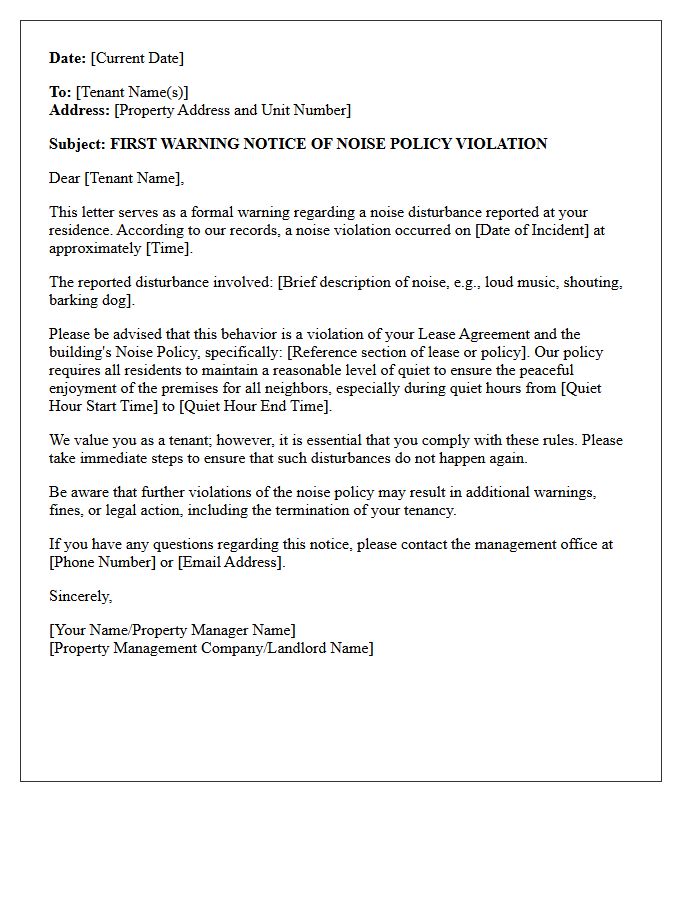
A First Warning Notice of Noise Policy Violation Letter serves as a formal official notification informing a tenant that their noise levels have exceeded acceptable limits. This document is a critical corrective measure designed to resolve disturbances without immediate legal action. It outlines the specific lease violation, provides the date of the incident, and clearly states the potential consequences of future non-compliance. Receiving this notice is a serious warning that provides an opportunity for the resident to adjust their behavior to avoid eviction or fines.
Second Warning Notice of Noise Policy Violation Letter
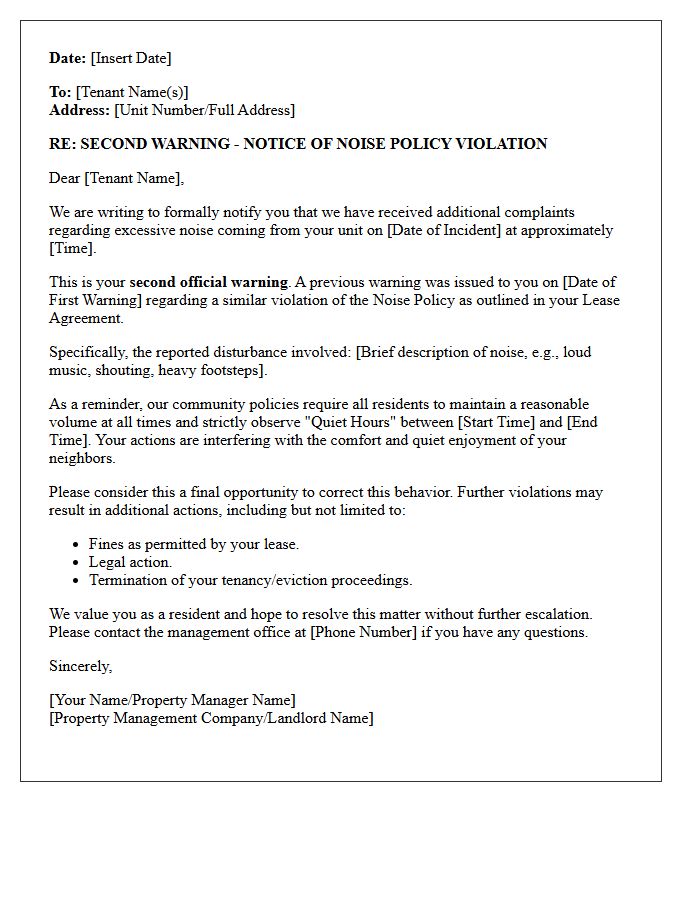
A Second Warning Notice of Noise Policy Violation Letter serves as a formal notification that a tenant has failed to comply with previous noise restrictions. This document acts as a legal record, outlining specific dates and times of continued disturbances. It warns the resident of imminent consequences, such as eviction proceedings or financial penalties, if the behavior persists. Receiving this notice indicates that the grace period has ended, making it crucial for the recipient to rectify their conduct immediately to maintain their housing agreement and avoid litigation.
Final Warning Notice of Noise Policy Violation Letter
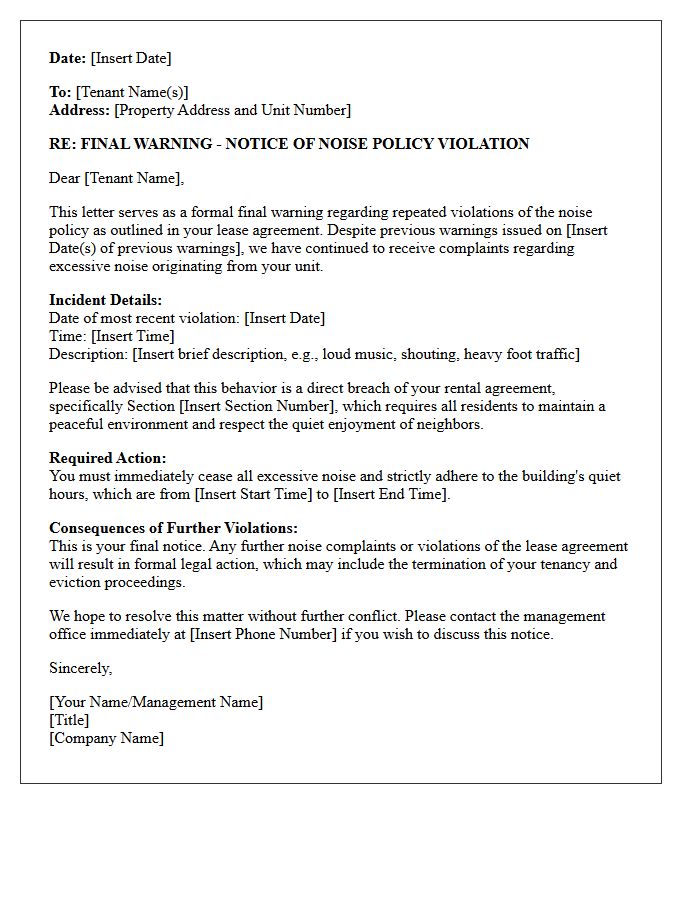
A Final Warning Notice of Noise Policy Violation Letter is a critical formal document issued to a tenant before eviction proceedings begin. This notice serves as the last opportunity for an individual to rectify persistent noise disturbances that breach their lease agreement. It clearly outlines the specific dates of incidents, the impact on neighbors, and the legal consequences of further non-compliance. Tenants must understand that failing to lower volume levels after receiving this final official warning typically results in lease termination or immediate legal action by the property management.
Quiet Hours Noise Policy Violation Letter
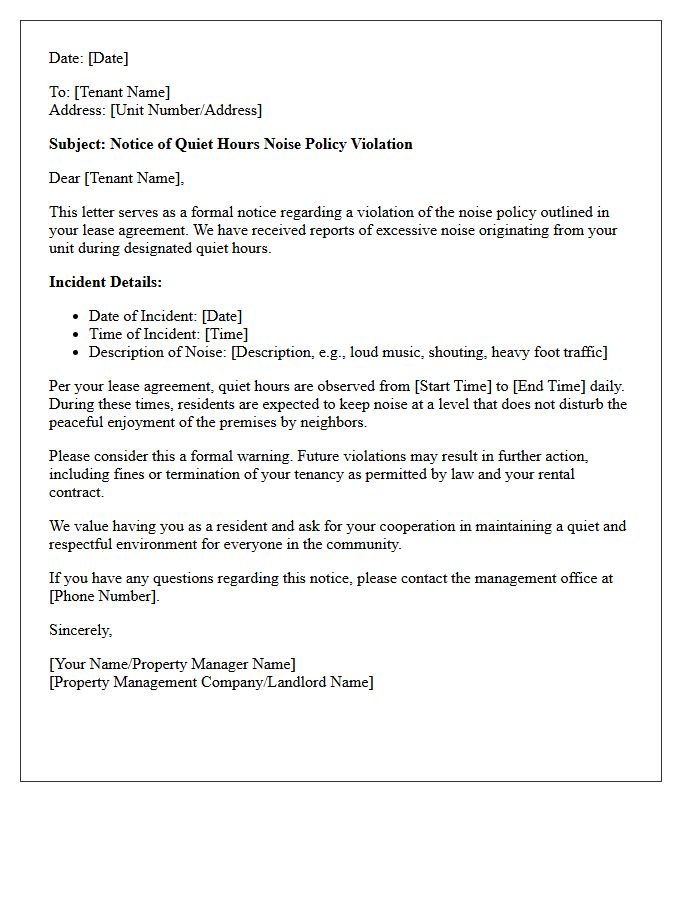
A Quiet Hours Noise Policy Violation Letter serves as a formal written notice from a landlord or property manager to a tenant. This document highlights a specific breach of contract regarding established noise regulations. It clearly outlines the date and time of the disturbance, references the lease agreement, and warns of potential legal consequences or eviction if the behavior persists. Receiving this letter is a serious matter, as it creates an official record of non-compliance that protects the rights of other residents to a peaceful environment.
Neighbor Complaint Noise Policy Violation Letter
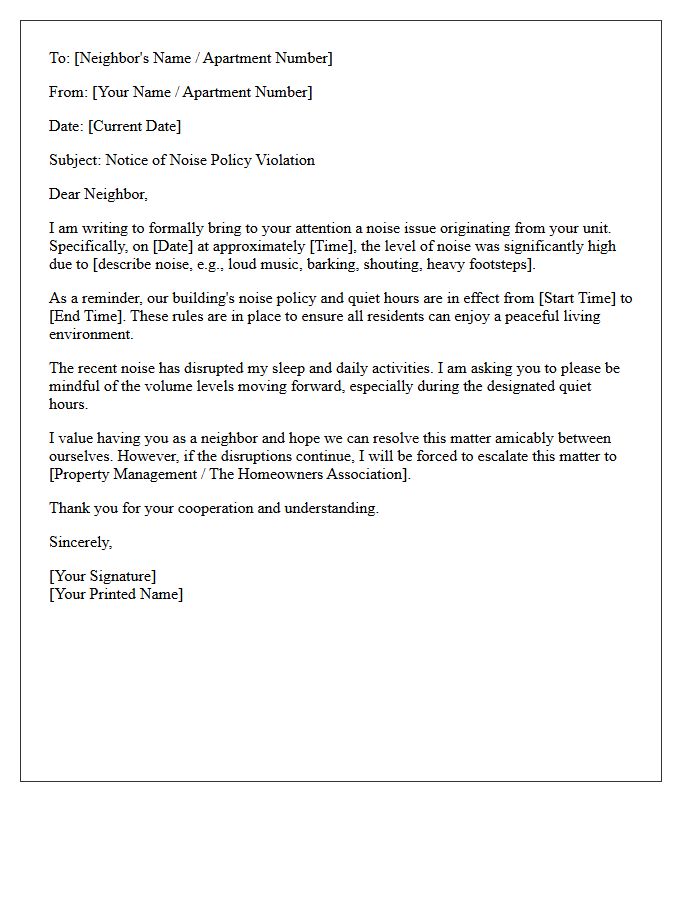
A Noise Policy Violation Letter serves as a formal written notice addressing disruptive behavior. It document specific incidents, including dates and times, to establish a legal record of the disturbance. This letter is a critical step in conflict resolution, clearly outlining the terms of the lease agreement and potential consequences like fines or eviction. By maintaining professional communication, property managers provide tenants an opportunity to correct their actions before escalating to legal enforcement, ensuring a peaceful living environment for all residents within the community.
Pet Disturbance Noise Policy Violation Letter
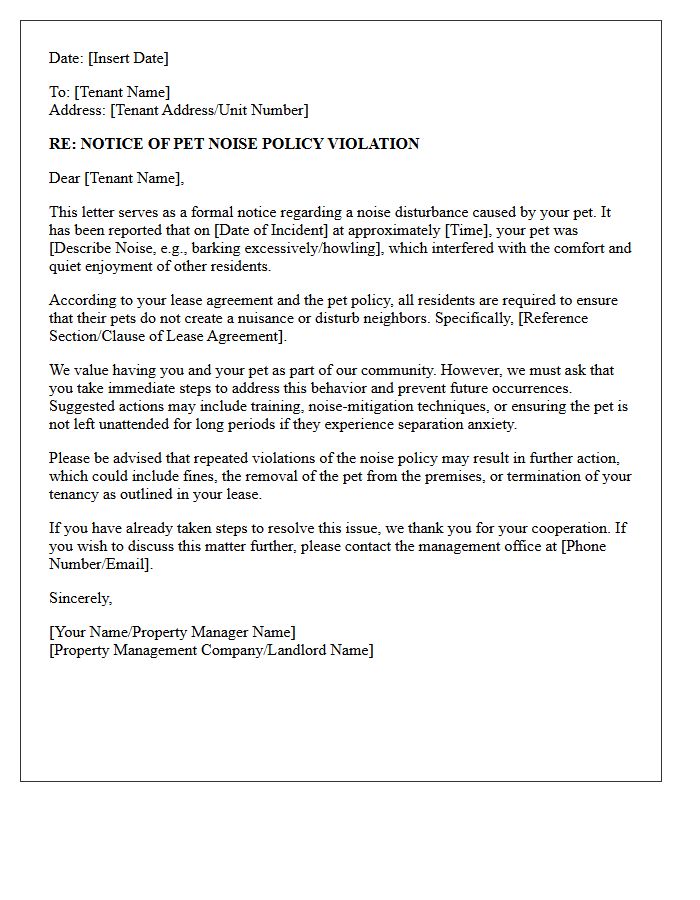
A Pet Disturbance Noise Policy Violation Letter is a formal notice issued by landlords to tenants regarding excessive animal noise. It serves as an official warning that persistent barking or scratching violates the lease agreement and disrupts the community's quiet enjoyment. The letter must clearly outline the specific incident dates and required corrective actions. Failure to address the noise grievance can lead to further penalties or potential eviction. Professional communication helps resolve the issue while maintaining a peaceful residential environment and ensuring compliance with established property rules.
Loud Music Noise Policy Violation Letter
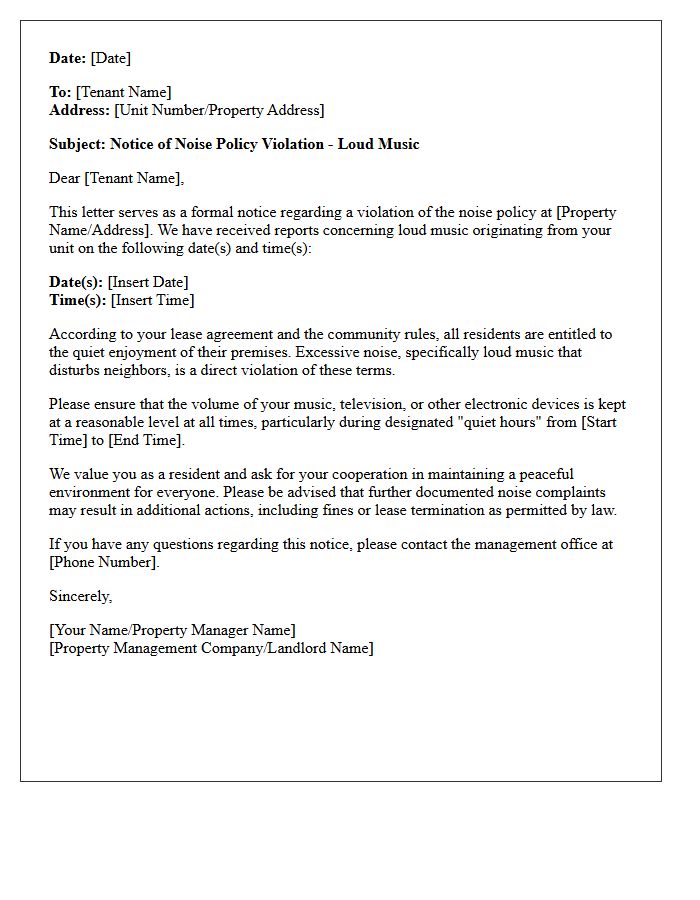
A Loud Music Noise Policy Violation Letter serves as a formal notice to residents or tenants regarding excessive sound levels. This document outlines the specific lease agreement terms or community rules breached. It is crucial to document the date, time, and nature of the disturbance to ensure legal compliance. Providing a clear warning helps mitigate future issues and maintains peaceful enjoyment for all neighbors. Addressing these complaints promptly protects property management interests and establishes a written record for potential eviction proceedings if the disruptive behavior continues despite previous warnings.
Unauthorized Gathering Noise Policy Violation Letter
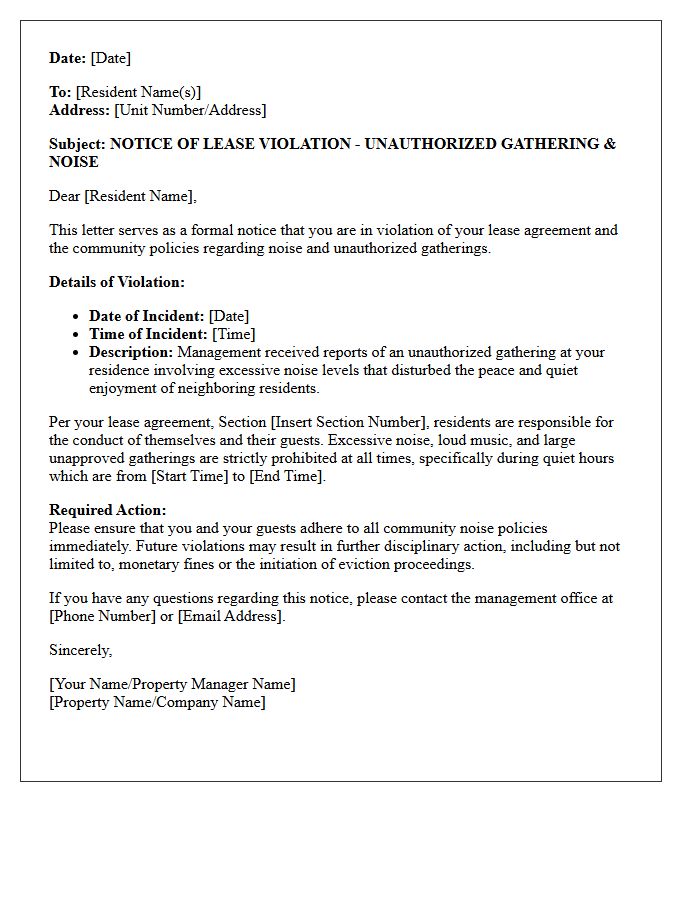
An Unauthorized Gathering Noise Policy Violation Letter is an official notice issued to tenants who exceed occupancy limits or noise levels defined in their lease. It serves as a formal warning that specific community guidelines regarding quiet hours and guest behavior were breached. Receiving this document signifies that your actions disrupted the peace, potentially leading to eviction or financial penalties. To resolve the issue, you must acknowledge the violation and ensure future compliance to maintain your residency status and avoid legal repercussions under property management regulations.
Lease Breach Noise Policy Violation Letter
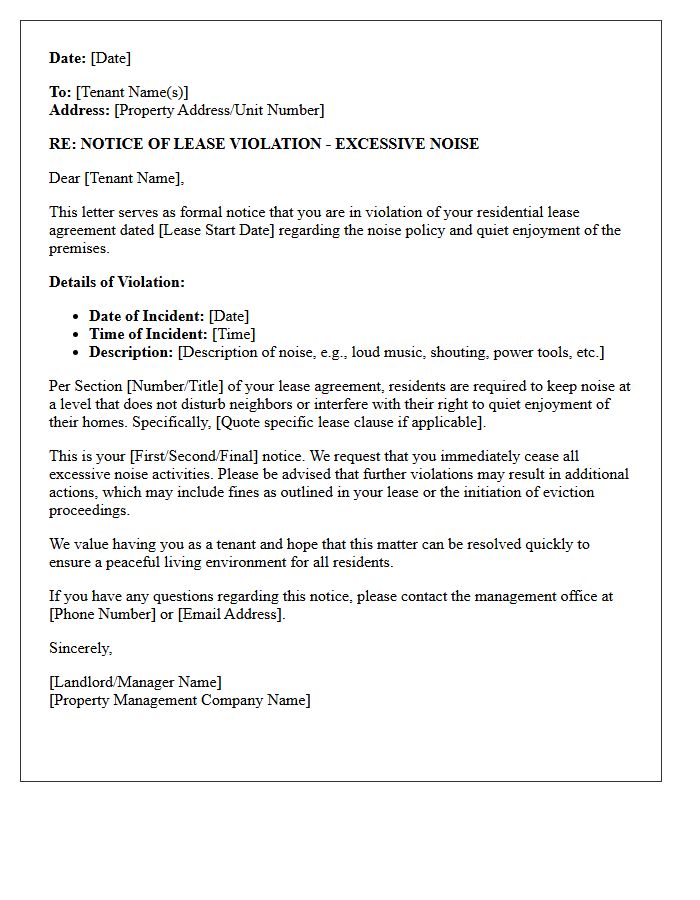
A Lease Breach Noise Policy Violation Letter serves as a formal legal notice informing a tenant that their conduct has disrupted the quiet enjoyment of neighbors. This document must clearly specify the date, time, and nature of the incident to ensure enforcement of the rental agreement. It acts as a critical warning, outlining necessary remedial actions to avoid further escalation. Maintaining a written record is essential for property managers to justify potential eviction proceedings if the noise disturbances persist despite prior formal notifications.
Chronic Noise Policy Violation Eviction Warning Letter
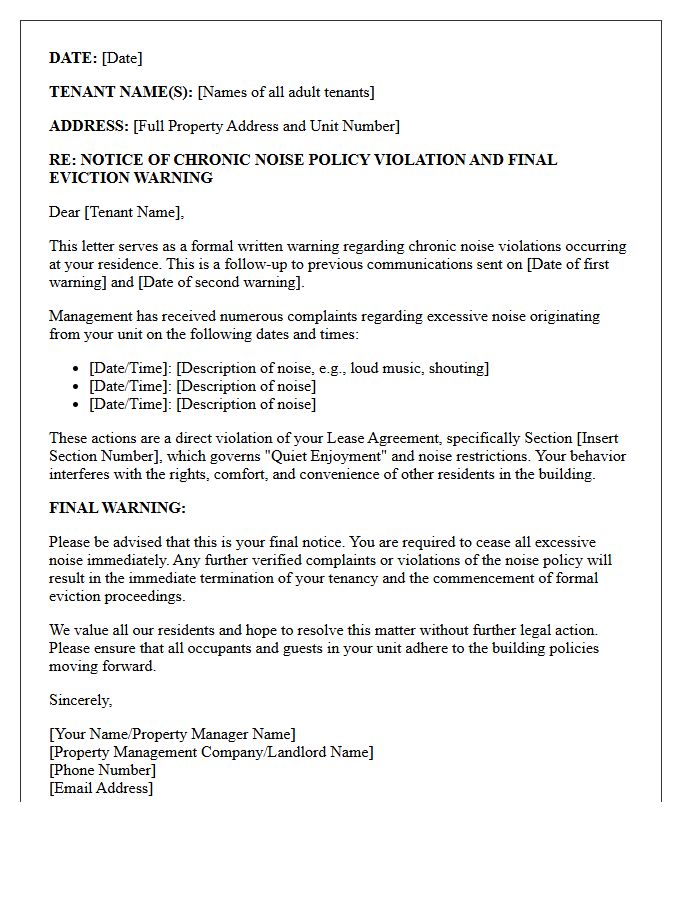
A Chronic Noise Policy Violation Eviction Warning Letter serves as a formal legal notice issued by landlords to tenants who persistently disrupt the peaceful enjoyment of the premises. This document explicitly outlines specific dates and times of excessive noise incidents that breach the lease agreement. It acts as a final opportunity for the tenant to rectify their behavior before formal eviction proceedings commence. To ensure legal validity, the letter must clearly state the violated lease clauses and provide a strict deadline for immediate compliance to avoid further legal action.
Notice to Cure Noise Policy Violation Letter
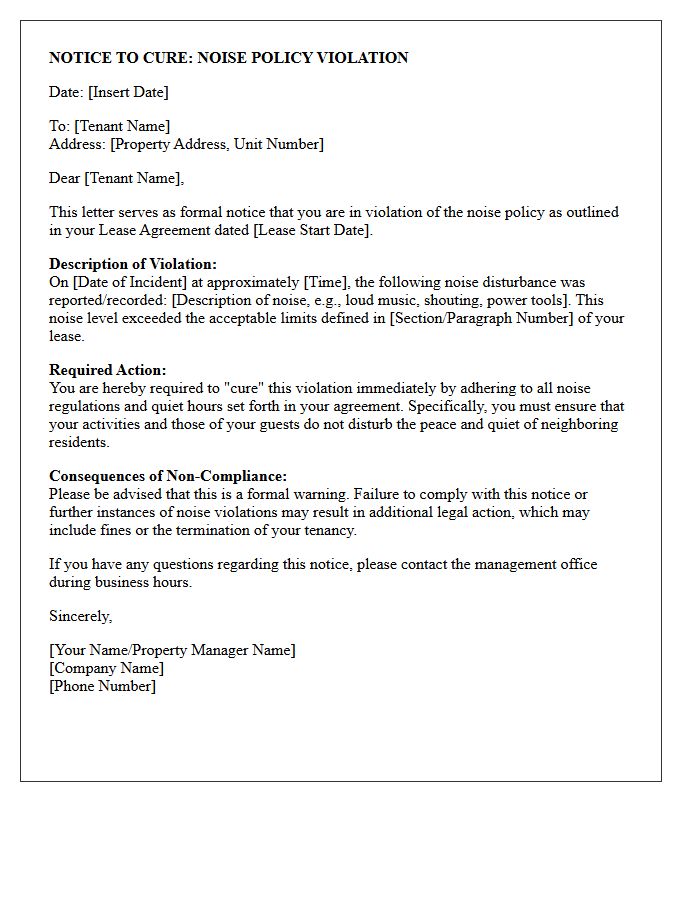
A Notice to Cure Noise Policy Violation is a formal legal document issued by a landlord to a tenant. It serves as a final warning regarding excessive noise that disrupts neighbors. The "cure" period specifies a mandatory timeframe, typically three to ten days, for the tenant to resolve the issue. Failure to comply can lead to eviction proceedings. Tenants should document their efforts to reduce noise immediately, while landlords must ensure the notice accurately details the specific dates and nature of the lease violation to remain legally enforceable.
What is a Notice of Noise Policy Violation?
A Notice of Noise Policy Violation is a formal warning issued to a resident or guest when noise levels originating from their unit exceed the permitted limits or occur during designated quiet hours, violating the terms of the lease or community guidelines.
What should I do if I receive a noise violation notice?
Upon receiving a noise violation notice, you should immediately reduce your volume, review the specific details of the complaint, and cross-reference your lease agreement to understand the community's quiet hour policies to avoid further escalation.
Can I be evicted for receiving a noise policy violation?
Yes, repeated noise policy violations can lead to eviction. Most rental agreements treat persistent noise complaints as a breach of contract; however, a single initial notice typically serves as a formal warning before further legal or financial penalties are applied.
How can I dispute an unfair noise violation notice?
To dispute a noise violation, you should submit a written response to your landlord or property management office providing evidence-such as timestamps, witness statements, or recordings-that demonstrates you were not in violation of the policy at the reported time.
What are considered standard quiet hours in most residential areas?
While specific times vary by jurisdiction and building, standard quiet hours are typically enforced from 10:00 PM to 8:00 AM on weekdays and may extend until 9:00 AM or 10:00 AM on weekends and holidays.

Comments