
A Final Security Deposit Disposition Letter is a formal document landlords use to itemize deductions and return remaining funds to former tenants. This essential notice ensures legal compliance and prevents security deposit disputes by providing a clear financial summary after move-out. Properly documenting repairs and cleaning costs protects both parties. To simplify your move-out process, below are some ready to use templates.
Image cover: Securing Your Security Deposit: Essential Disposition Letter Templates and Samples
Letter Samples List
- Full Refund Final Security Deposit Disposition Letter
- Partial Refund Final Security Deposit Disposition Letter
- Balance Owed Final Security Deposit Disposition Letter
- Zero Balance Final Security Deposit Disposition Letter
- Property Damage Deduction Final Security Deposit Disposition Letter
- Unpaid Rent Deduction Final Security Deposit Disposition Letter
- Cleaning Fee Deduction Final Security Deposit Disposition Letter
- Pet Damage Deduction Final Security Deposit Disposition Letter
- Early Lease Termination Final Security Deposit Disposition Letter
- Eviction Final Security Deposit Disposition Letter
- Abandoned Property Final Security Deposit Disposition Letter
- Roommate Release Final Security Deposit Disposition Letter
Full Refund Final Security Deposit Disposition Letter
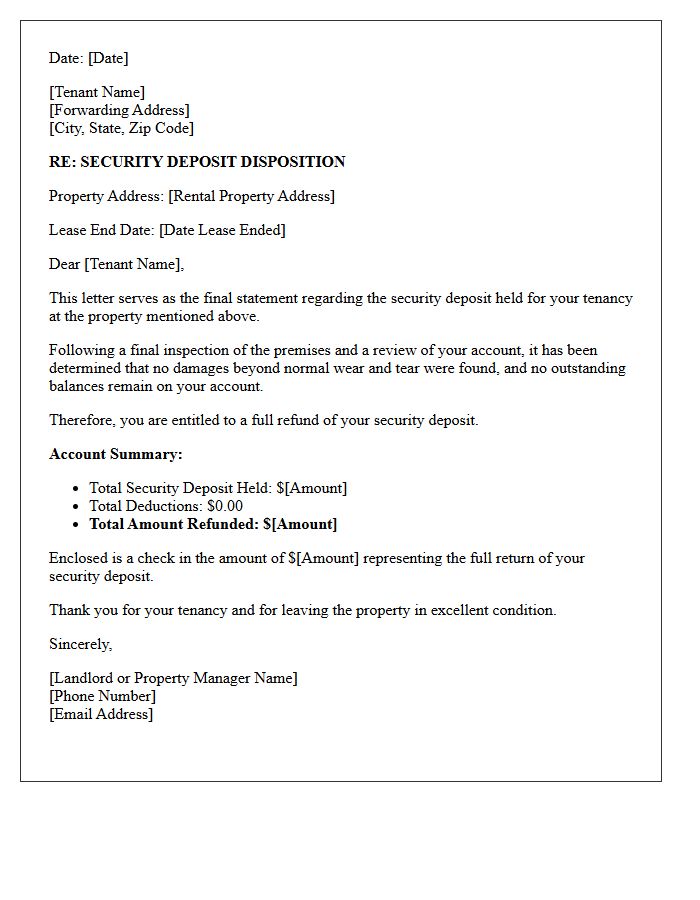
A Full Refund Final Security Deposit Disposition Letter is a formal document sent by a landlord to a tenant after a lease ends. It confirms that the property was returned in good condition, meaning no deductions for damages or cleaning were necessary. This legal notice accompanies the return of the entire original deposit amount. For tenants, receiving this letter ensures a positive rental history. For landlords, it provides a written record of the completed transaction, effectively closing the rental agreement and protecting both parties from future financial disputes or legal claims.
Partial Refund Final Security Deposit Disposition Letter
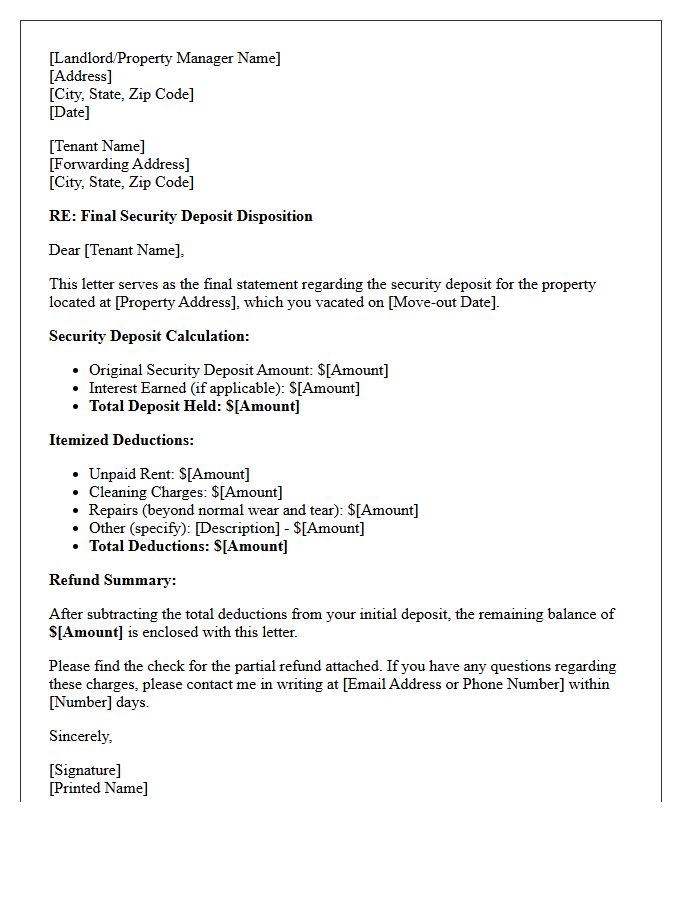
A Partial Refund Final Security Deposit Disposition Letter is a legal document issued by a landlord to a tenant after move-out. It must provide an itemized statement detailing specific deductions for damages or unpaid rent beyond normal wear and tear. This letter explains why the full amount was not returned and must be sent within state-mandated deadlines. Receiving this notice ensures transparency and serves as formal evidence if a dispute arises regarding the remaining balance refunded to the former resident.
Balance Owed Final Security Deposit Disposition Letter
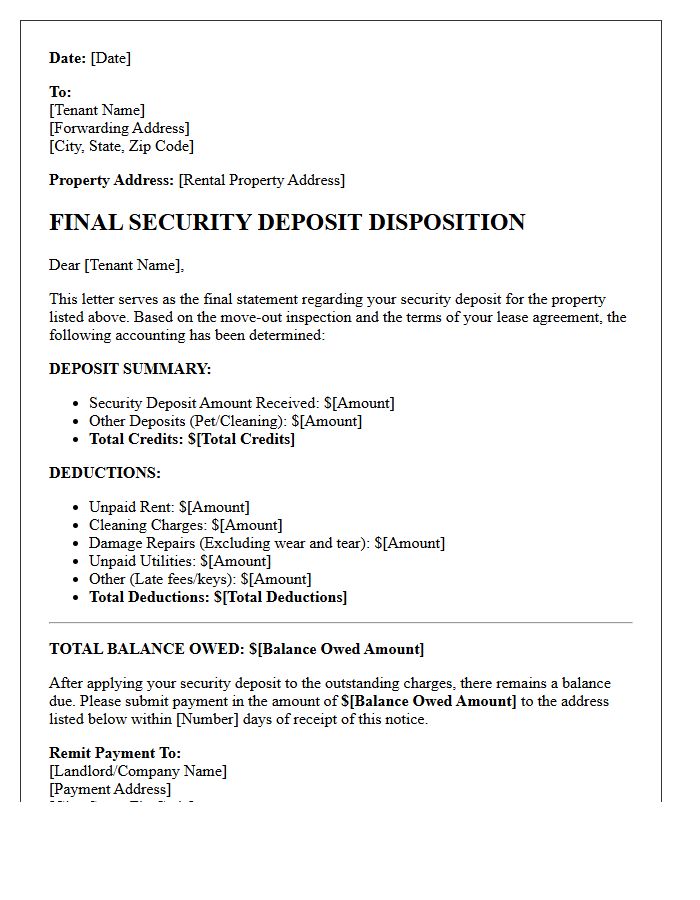
A Balance Owed Final Security Deposit Disposition Letter is a formal notice sent by landlords to former tenants when repair costs exceed the initial deposit. It serves as a legal accounting of all deductions, including cleaning fees and property damages. Tenants must pay the remaining amount by the specified deadline to avoid potential debt collection or legal action. It is essential to review all itemized charges and receipts to ensure they comply with local housing laws and reflect actual tenant liability rather than normal wear and tear.
Zero Balance Final Security Deposit Disposition Letter
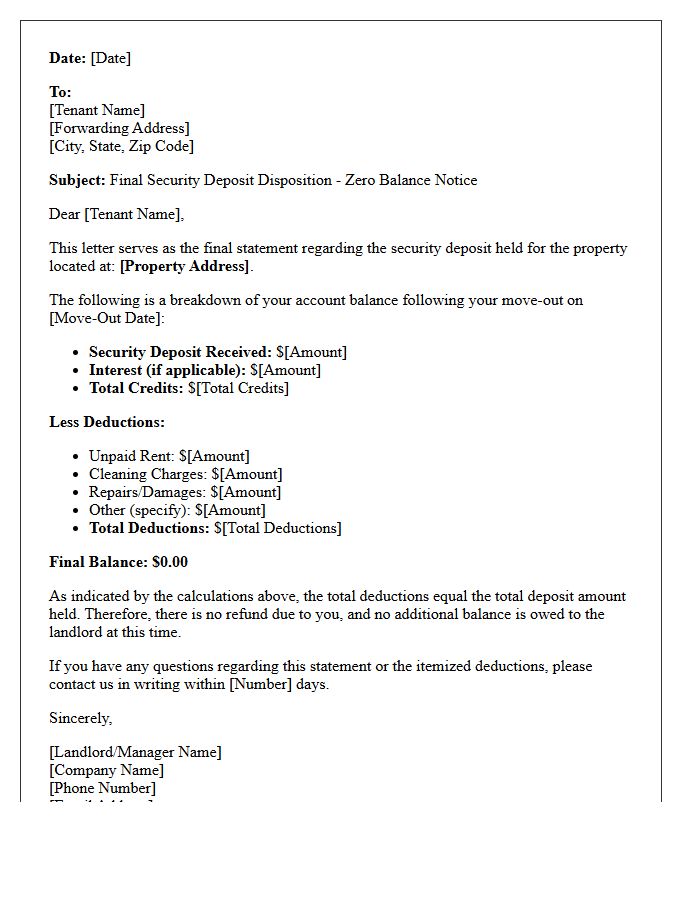
A Zero Balance Final Security Deposit Disposition Letter is a formal document issued by a landlord to a former tenant. It confirms that after auditing the security deposit and applying necessary deductions for repairs or unpaid rent, the remaining balance is exactly zero. This letter serves as legal proof of settlement, ensuring neither party owes further funds. It is essential for protecting landlords from future claims and providing tenants with a clear record of account closure. Timely delivery is often legally required under state security deposit statutes to avoid penalties.
Property Damage Deduction Final Security Deposit Disposition Letter
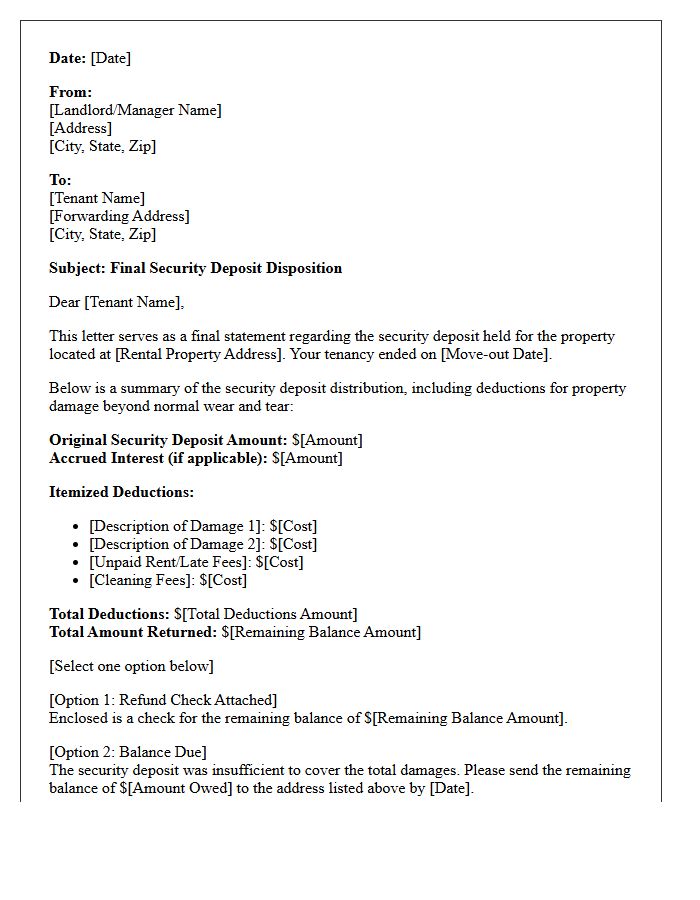
A final security deposit disposition letter must detail all property damage deductions subtracted from the original tenant deposit. To remain legally compliant, landlords should provide itemized invoices or receipts for every repair made beyond normal wear and tear. This formal accounting ensures transparency and protects against future legal disputes. It is critical to send this document within the state-mandated timeframe to avoid penalties. Clear documentation, including high-resolution photos and detailed descriptions, serves as essential evidence for justifying each financial claim made against the tenant's funds.
Unpaid Rent Deduction Final Security Deposit Disposition Letter
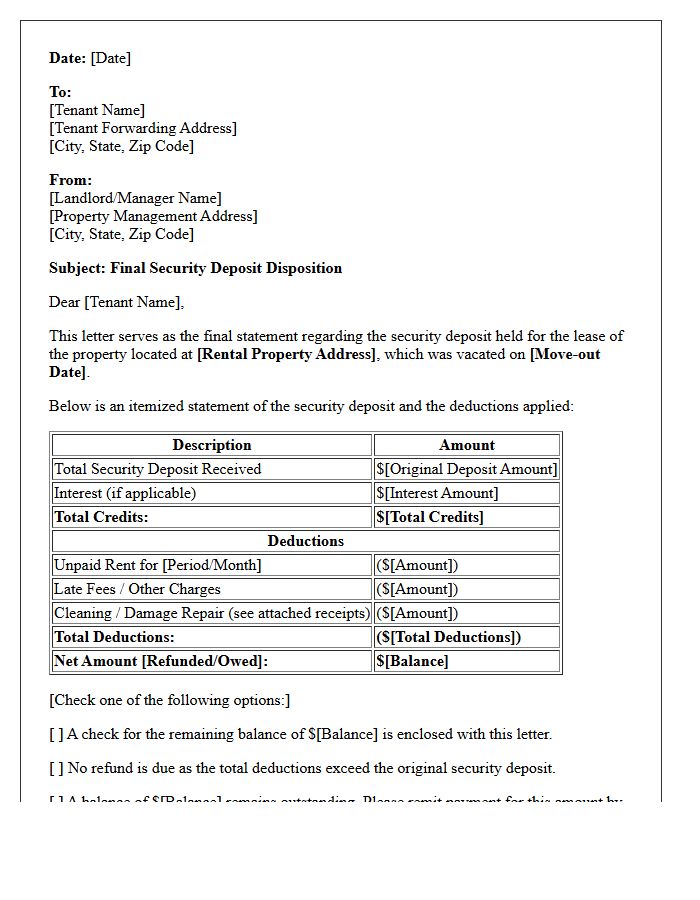
When issuing a final security deposit disposition letter, landlords may legally withhold funds for unpaid rent. To ensure compliance, the statement must provide a detailed itemization of all deductions, including the specific months and amounts owed. This document must be sent within the statutory deadline required by your state, typically 14 to 30 days after move-out. Providing clear documentation, such as a copy of the ledger, helps prevent legal disputes and ensures the final accounting is transparent for both parties during the security deposit return process.
Cleaning Fee Deduction Final Security Deposit Disposition Letter
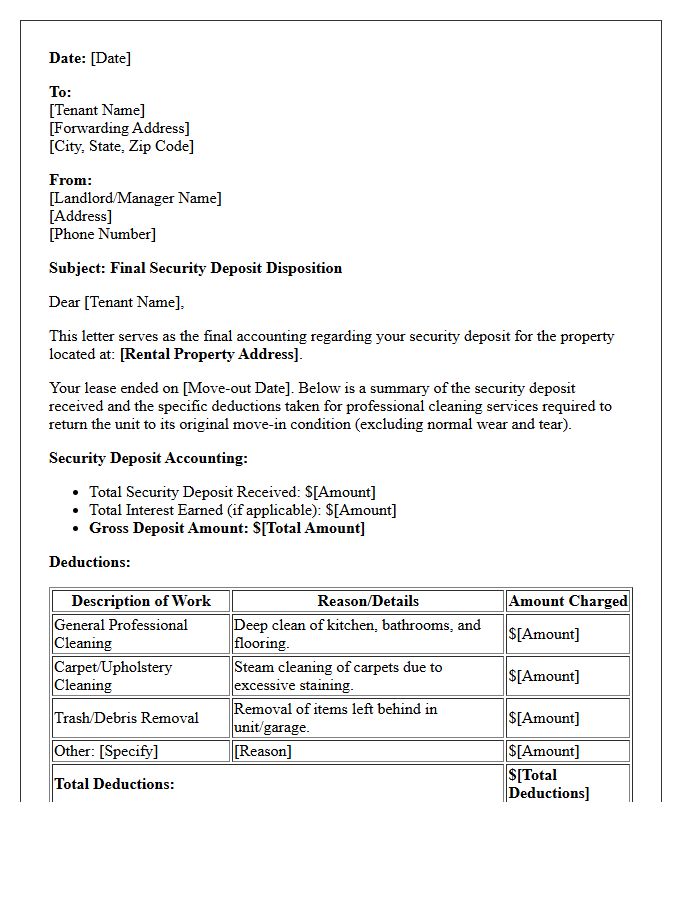
A final security deposit disposition letter must clearly itemize any cleaning fee deduction to remain legally compliant. Landlords should only charge for "professional cleaning" if the unit's condition falls below the move-in standard, excluding normal wear and tear. To avoid disputes, attach photographic evidence and detailed receipts to the statement. State laws typically require this written notice within 14 to 30 days. Ensuring transparency in these security deposit deductions protects owners from potential legal claims while providing tenants with a fair accounting of their refunded balance.
Pet Damage Deduction Final Security Deposit Disposition Letter
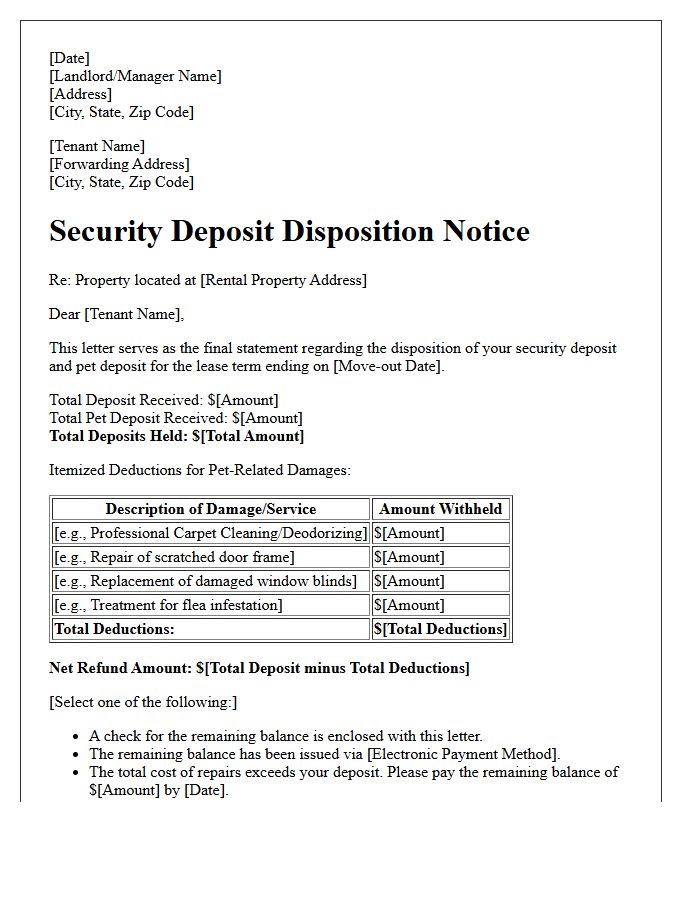
A Pet Damage Deduction must be clearly itemized in the Final Security Deposit Disposition Letter to remain legally valid. Landlords are required to provide written evidence, such as repair invoices or cleaning receipts, justifying any withheld funds. This document ensures legal compliance with local housing laws and prevents future disputes. Tenants should receive this statement within the state-mandated timeframe to understand exactly how their deposit was applied toward restoration costs. Failure to include specific details may result in the landlord being required to return the full amount.
Early Lease Termination Final Security Deposit Disposition Letter
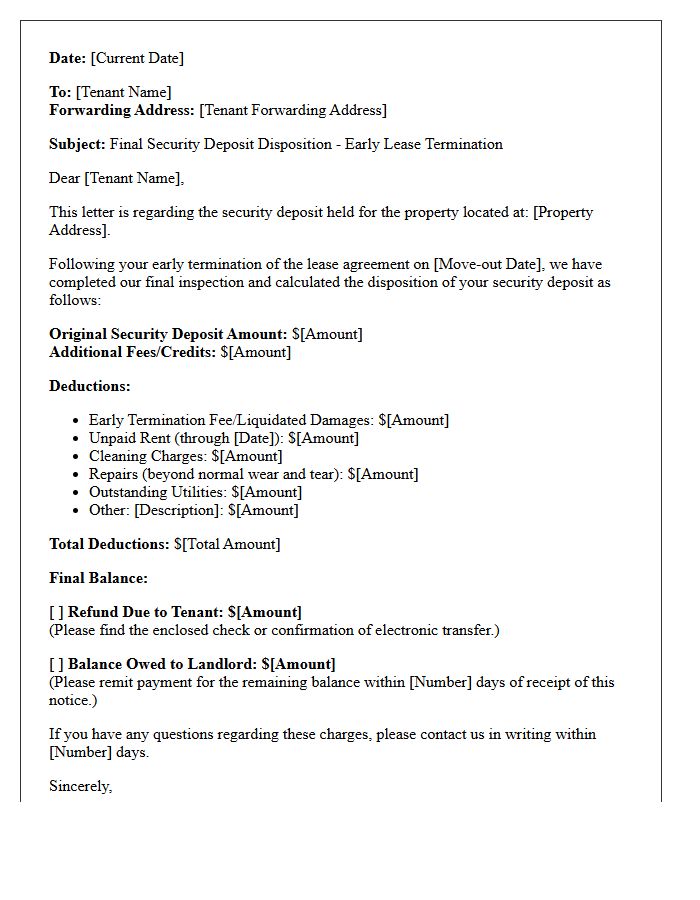
An Early Lease Termination Final Security Deposit Disposition Letter is a crucial legal document used to itemize deductions from a tenant's deposit. It must clearly outline unpaid rent, early termination fees, and property damage beyond normal wear and tear. Landlords must send this written statement within the state-mandated timeframe to avoid legal penalties. Providing an accurate financial reconciliation ensures transparency and protects both parties from future disputes. Always include a check for the remaining balance or a formal demand for any outstanding outstanding debt owed by the tenant.
Eviction Final Security Deposit Disposition Letter
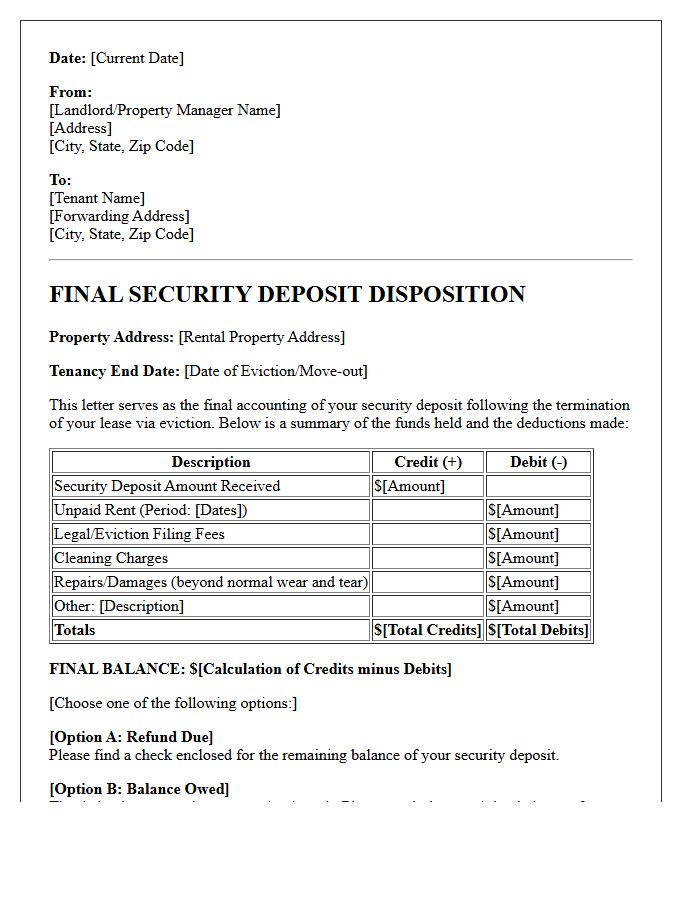
The Eviction Final Security Deposit Disposition Letter is a mandatory legal document issued after a tenant vacates. Landlords must provide an itemized statement detailing any deductions for unpaid rent or property damages. It is critical to adhere to state-specific deadlines to avoid legal penalties or forfeiture of claims. If a balance remains, the landlord must include a refund check; otherwise, they must provide an invoice for amounts owed. This document serves as final proof of the financial settlement between both parties to prevent future litigation or security deposit disputes.
Abandoned Property Final Security Deposit Disposition Letter
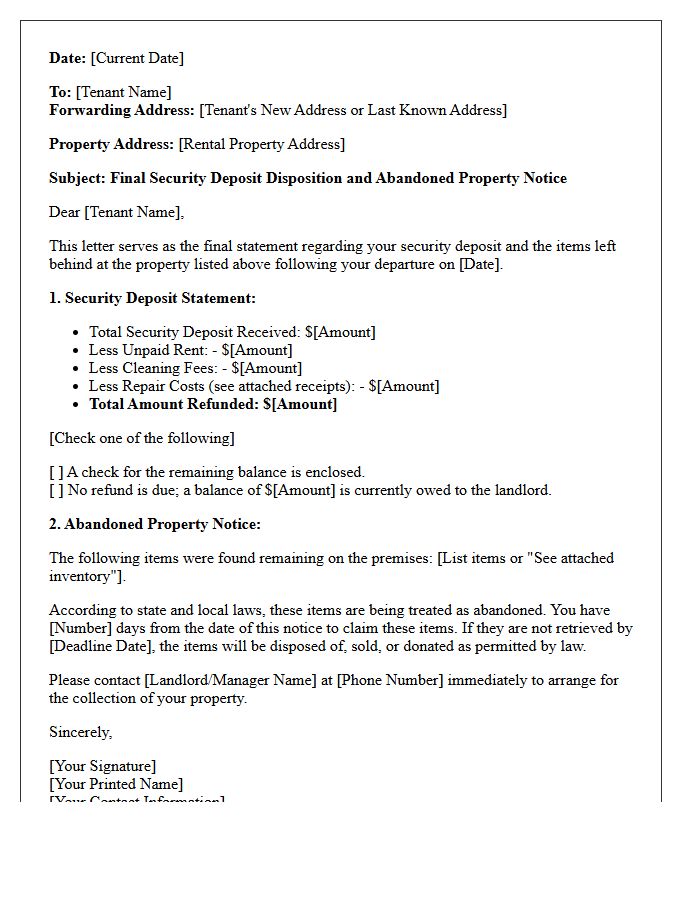
An Abandoned Property Final Security Deposit Disposition Letter is a formal notice sent to former tenants to account for their deposit after vacating. It must itemize deductions for unpaid rent, cleaning fees, or damages beyond normal wear and tear. Legal compliance requires mailing this statement within state-specific deadlines to avoid penalties. If the property was abandoned, landlords must also follow local statutes regarding the storage or disposal of left-behind belongings. Always include the remaining refund balance or a request for payment if costs exceed the initial deposit amount.
Roommate Release Final Security Deposit Disposition Letter
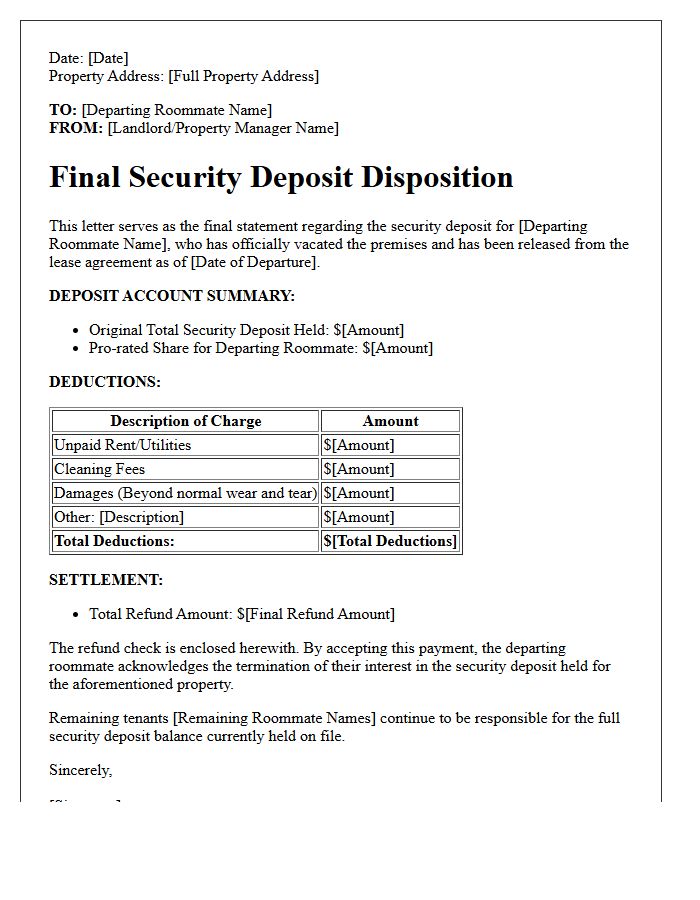
A Roommate Release Final Security Deposit Disposition Letter is a legal document detailing the return of funds when one tenant departs. It must clearly outline deductions for damages or unpaid rent to avoid future disputes. Landlords use this to provide an itemized accounting of the remaining balance distributed among residents. Both the vacating and remaining roommates should sign this agreement to ensure a legal release of liability. Timely delivery is essential to comply with local housing laws and maintain transparency regarding the security deposit status during occupancy changes.
What is a Final Security Deposit Disposition Letter?
A Final Security Deposit Disposition Letter is a formal written statement provided by a landlord to a former tenant detailing how the security deposit was applied toward unpaid rent, cleaning fees, or repairs, and outlining the remaining balance to be refunded.
When must a landlord send the security deposit disposition notice?
The deadline for sending the security deposit disposition letter varies by state law, typically ranging from 14 to 30 days after the tenant vacates the premises and returns the keys.
What should be included in a Final Security Deposit Disposition statement?
The statement should include the original deposit amount, an itemized list of deductions with descriptions of damages or unpaid charges, copies of receipts for repairs, and the final check for any remaining refund amount.
Can a landlord deduct for normal wear and tear in the disposition letter?
No, landlords are legally prohibited from deducting for normal wear and tear, such as minor carpet fading or small nail holes; deductions must be limited to damages beyond reasonable use or breach of the lease agreement.
What can a tenant do if they disagree with the security deposit deductions?
If a tenant disputes the deductions listed in the disposition letter, they should send a formal demand letter to the landlord explaining the dispute and, if unresolved, may pursue a claim in small claims court.

Comments